Table of Contents
Toggle5 Proven Ways to Use Time Under Tension for Hypertrophy
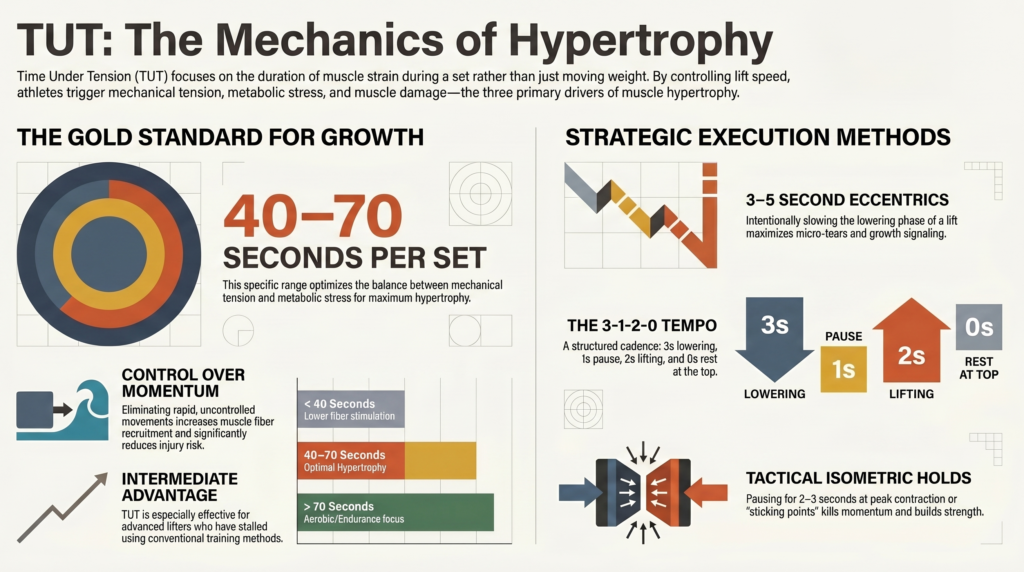
This comprehensive infographic summarizes 5 Proven Ways to Use Time Under Tension for Hypertrophy. It highlights the ideal 40–70 second range per set, the importance of controlling tempo, and the role of slow eccentrics and isometric holds. By combining these strategies, lifters can effectively target all three drivers of muscle growth: mechanical tension, metabolic stress, and muscle damage. The infographic also emphasizes minimizing momentum and focusing on controlled execution. This holistic approach ensures maximum efficiency and results in training. When consistently applied, these principles help break plateaus, improve muscle symmetry, and accelerate overall hypertrophy progress.
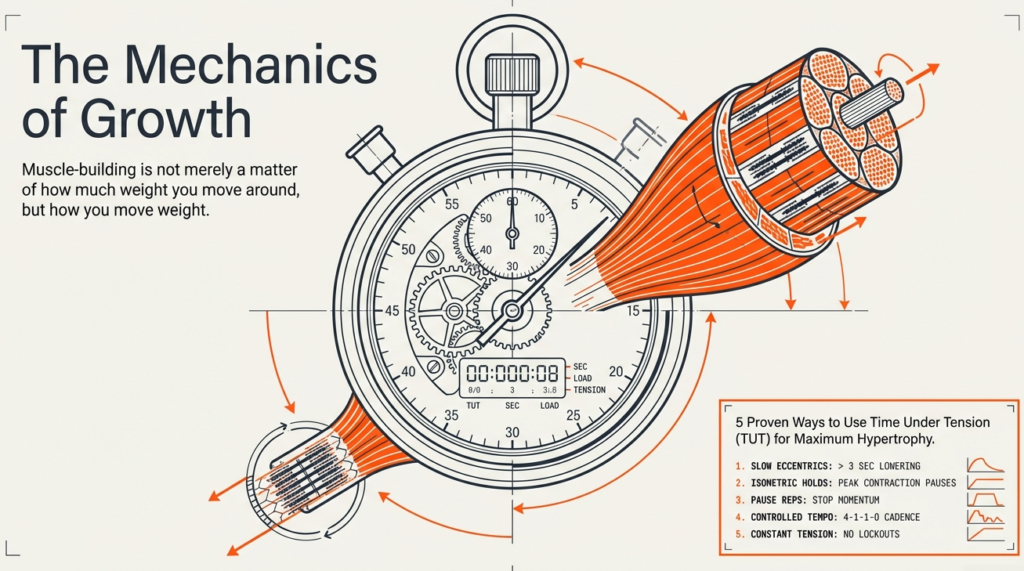
The Mechanics of Muscle Growth Through Time Under Tension
Time Under Tension (TUT) represents the foundation of effective hypertrophy training. This visual highlights how muscle growth is influenced not only by the weight lifted but by the duration of muscular strain. By increasing the time muscles remain under tension, lifters can significantly enhance metabolic stress, mechanical tension, and muscle fiber activation. Unlike traditional fast-paced lifting, controlled repetitions force muscles to work harder for longer periods, leading to better results. This concept shifts the focus from simply counting repetitions to optimizing execution quality. When applied correctly, TUT becomes a powerful tool for improving muscle size, strength, and overall training efficiency, especially for intermediate and advanced lifters.
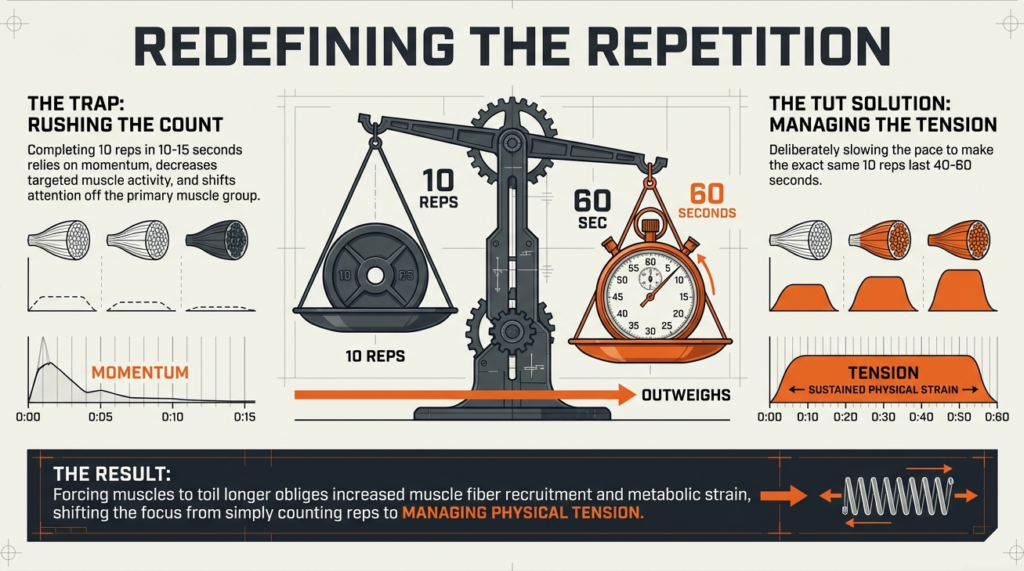
Why Slow Controlled Reps Outperform Fast Reps
This image demonstrates the critical difference between rushing repetitions and applying Time Under Tension. Fast reps rely heavily on momentum, reducing muscle engagement and shifting stress away from the target muscle. In contrast, controlled repetitions extend the duration of strain, increasing muscle fiber recruitment and metabolic stress. By slowing down the tempo, the same number of repetitions becomes significantly more effective for hypertrophy. This approach enhances the mind-muscle connection and ensures that each rep contributes to muscle growth. Instead of focusing on completing sets quickly, lifters should prioritize control and tension to maximize results and reduce injury risk during training.
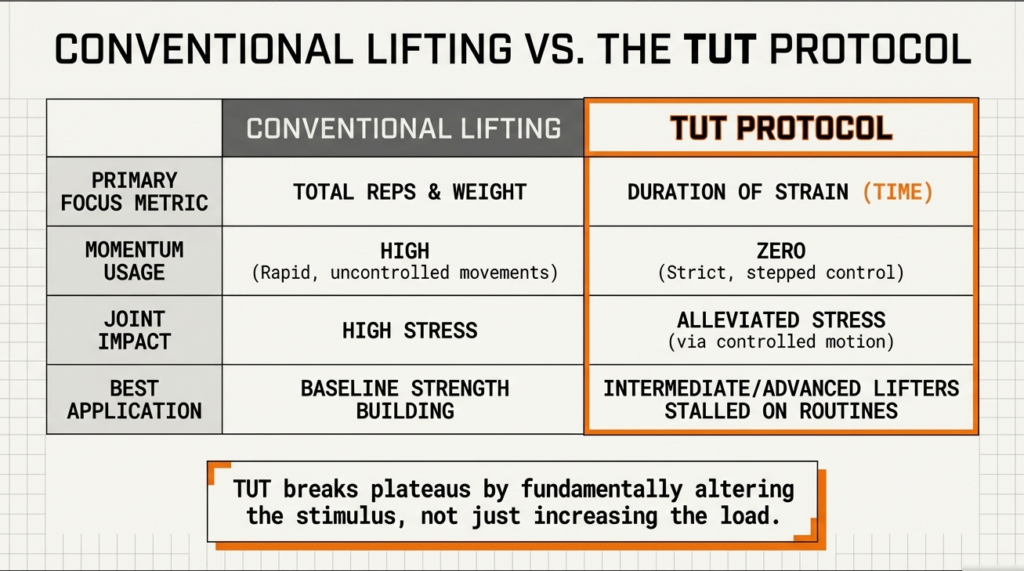
Time Under Tension vs Conventional Training
Traditional training methods often prioritize total weight lifted and repetition count, whereas Time Under Tension emphasizes the duration of muscle strain. This comparison highlights how controlled lifting reduces momentum, minimizes joint stress, and improves muscle activation. While conventional lifting builds baseline strength, TUT provides an advanced stimulus for hypertrophy by extending the working time of muscles. It is especially beneficial for individuals who have reached a plateau using standard training methods. By focusing on controlled movements and eliminating unnecessary momentum, lifters can create a safer and more effective training environment that promotes long-term muscle development and consistent progress.
The Three Drivers of Hypertrophy Explained
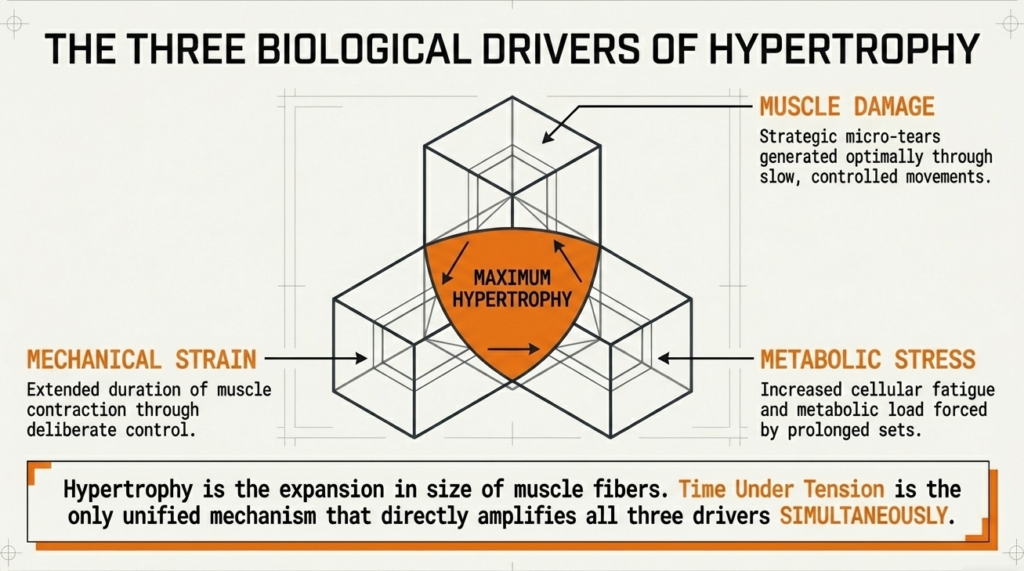
Muscle hypertrophy is driven by three primary factors: mechanical tension, metabolic stress, and muscle damage. This image clearly illustrates how Time Under Tension amplifies all three simultaneously. By prolonging muscle contraction, TUT increases mechanical load on fibers, leading to greater strength adaptation. It also elevates metabolic stress, creating the “burn” associated with effective workouts. Additionally, slow controlled movements enhance micro-tears in muscle fibers, which are essential for growth during recovery. This combination makes TUT one of the most efficient strategies for building muscle. Instead of relying on heavy weights alone, controlling tempo allows lifters to maximize hypertrophy with precision and consistency.
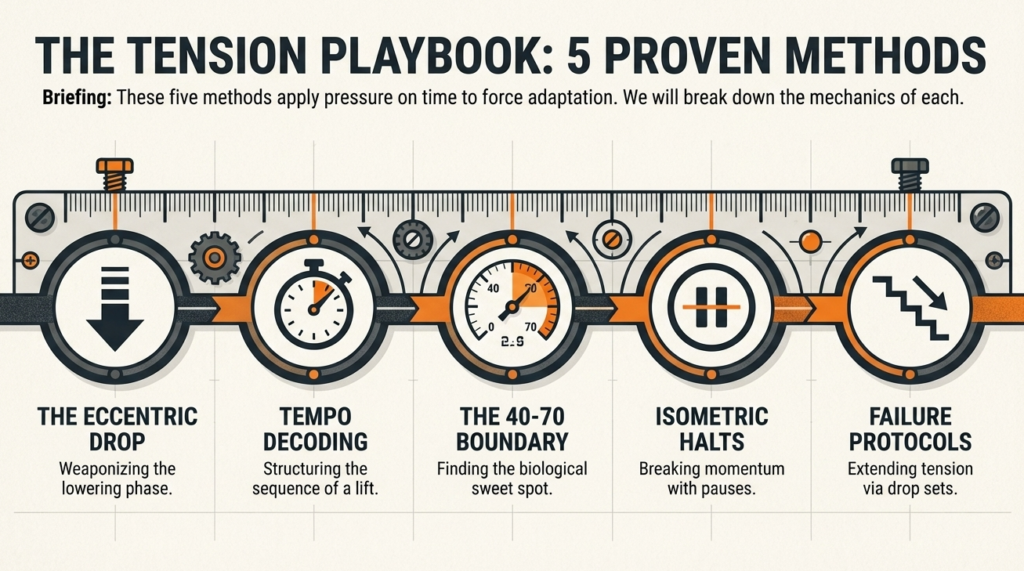
The Tension Playbook: 5 Proven Methods
This infographic outlines the five most effective methods to apply Time Under Tension for hypertrophy. These include slow eccentrics, tempo training, extended set duration, isometric holds, and advanced intensity techniques like drop sets. Each method targets muscle fibers in a unique way, ensuring continuous adaptation and growth. By combining these strategies, lifters can create a highly effective training program that avoids plateaus. The key is to apply these techniques strategically rather than all at once. When used correctly, they enhance muscle engagement, improve form, and increase overall workout efficiency. This structured approach helps maximize gains while maintaining control and safety.
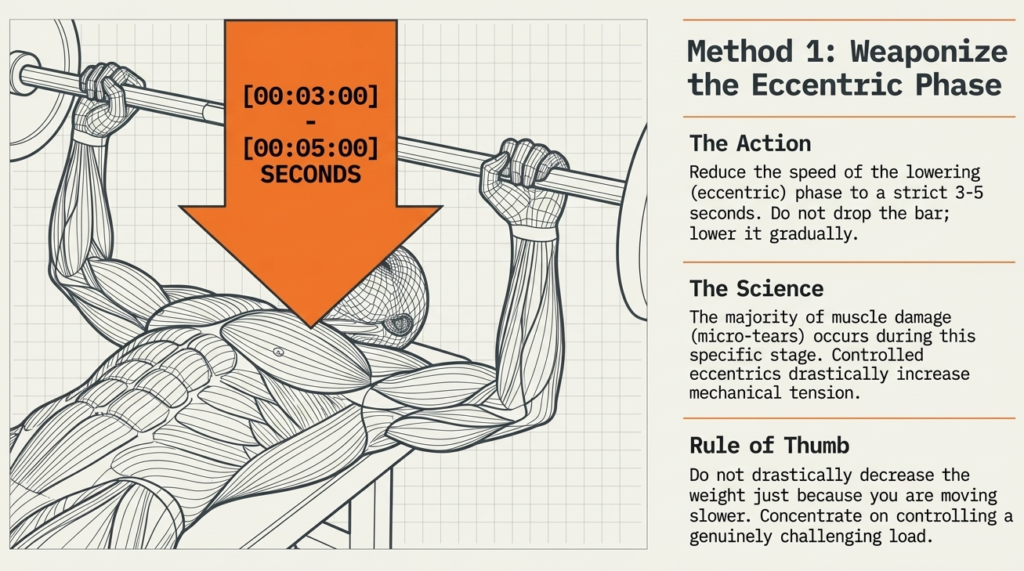
Slow Eccentric Phase for Maximum Muscle Damage
The eccentric phase, or lowering portion of a lift, is where the majority of muscle damage occurs. This method focuses on slowing that phase to 3–5 seconds, significantly increasing Time Under Tension. By controlling the descent of the weight, muscles remain engaged longer, leading to greater micro-tears and improved hypertrophy during recovery. Unlike fast repetitions, slow eccentrics eliminate momentum and force the muscle to handle the load independently. This results in higher mechanical tension and better muscle activation. Incorporating slow eccentrics into your training routine can dramatically improve muscle growth while also enhancing control and reducing injury risk.
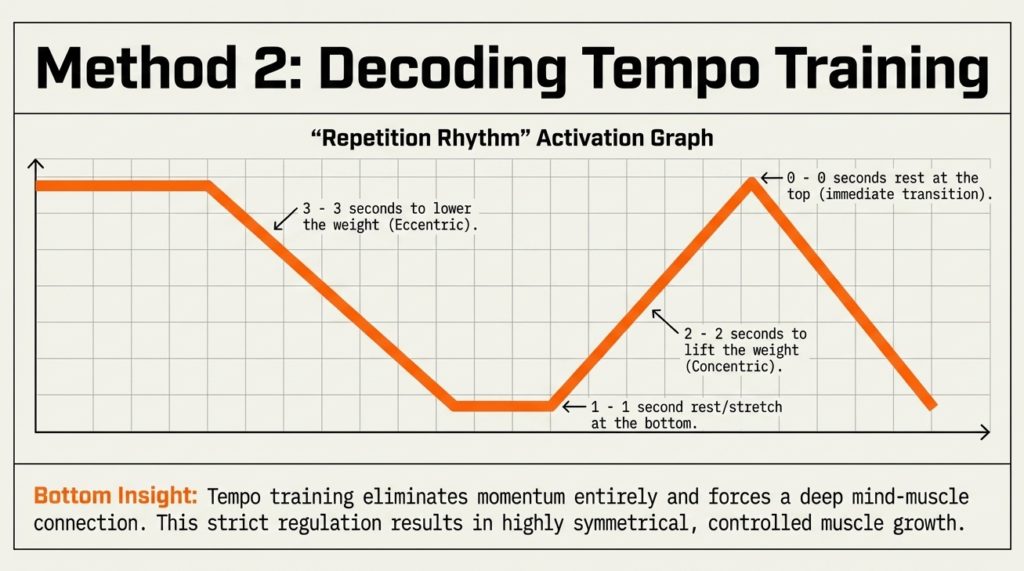
Tempo Training for Controlled Muscle Growth
Tempo training is a structured approach to controlling Time Under Tension by assigning specific durations to each phase of a lift. A common hypertrophy tempo, such as 3-1-2-0, ensures consistent tension throughout the movement. This method removes momentum and forces the muscle to work continuously, enhancing muscle fiber recruitment. By controlling both the eccentric and concentric phases, lifters can improve technique and strengthen the mind-muscle connection. Tempo training also promotes balanced muscle development and reduces the risk of injury. Over time, this disciplined approach leads to more efficient workouts and noticeable improvements in muscle size and symmetry.
The 40–70 Second Rule for Hypertrophy
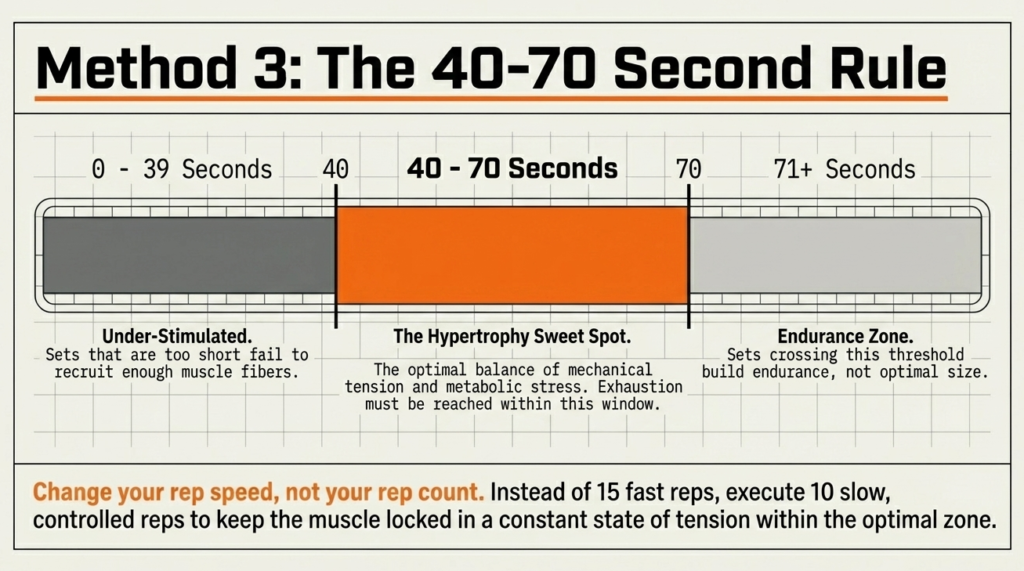
The 40–70 second rule is one of the simplest and most effective ways to apply Time Under Tension. This range represents the optimal balance between mechanical tension and metabolic stress for muscle growth. Sets shorter than 40 seconds may not fully stimulate muscle fibers, while longer sets can shift focus toward endurance rather than hypertrophy. By controlling rep speed instead of increasing repetitions, lifters can stay within this ideal window. This approach ensures maximum efficiency and effectiveness in each set. Maintaining consistent tension throughout this duration leads to better muscle fatigue, improved performance, and enhanced hypertrophy outcomes.
Isometric Holds to Maximize Muscle Tension
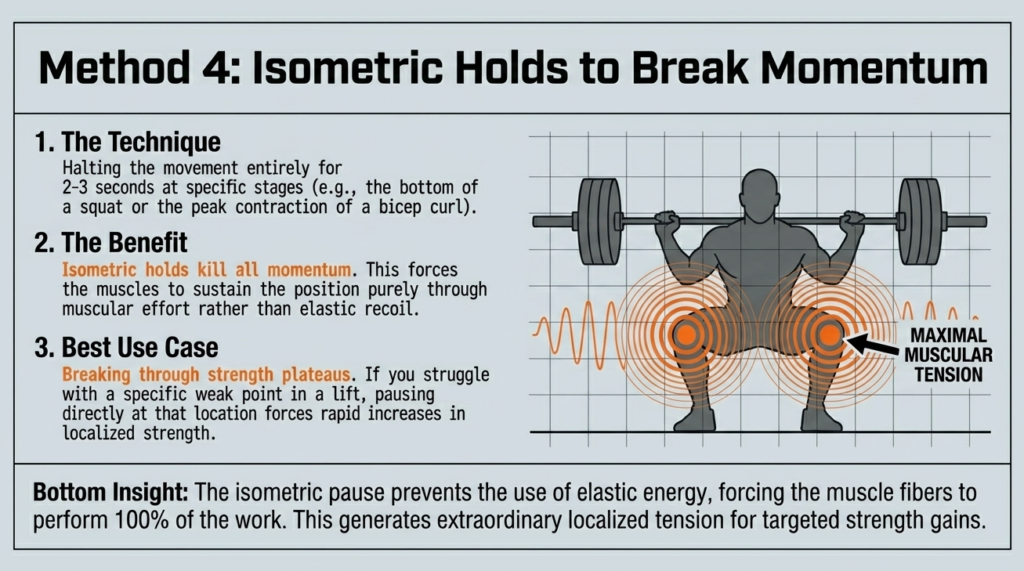
Isometric holds involve pausing at a specific point in a movement to increase muscle tension. This technique eliminates momentum and forces muscles to maintain contraction under load. Holding positions such as the bottom of a squat or the peak of a curl for 2–3 seconds significantly increases Time Under Tension. This leads to greater muscle activation and improved strength at weak points. Isometric training is particularly effective for breaking plateaus and improving control. By incorporating pauses into your workouts, you can enhance muscle engagement and build a stronger, more stable foundation for overall performance and hypertrophy.
Drop Sets and Rest-Pause for Extended Tension
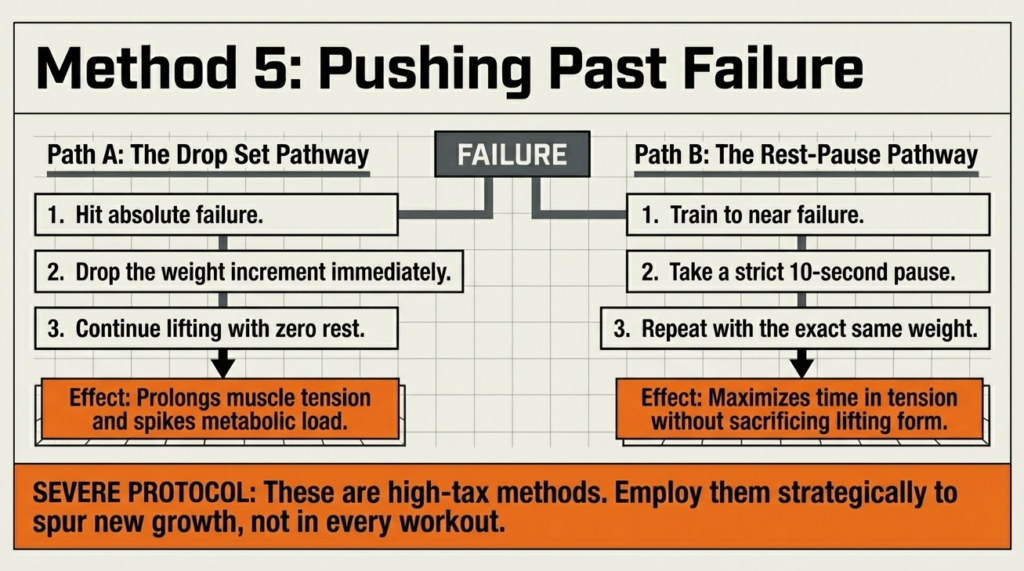
Drop sets and rest-pause training are advanced techniques designed to extend Time Under Tension beyond initial muscle failure. In a drop set, the weight is reduced immediately after failure, allowing the set to continue without rest. Rest-pause training involves short breaks between mini-sets, enabling more total work within the same set. Both methods increase metabolic stress and push muscles beyond their limits, stimulating new growth. However, these techniques are highly demanding and should be used strategically. When applied correctly, they enhance workout intensity, improve muscle endurance, and maximize hypertrophy without compromising form or control.
Common Time Under Tension Mistakes to Avoid
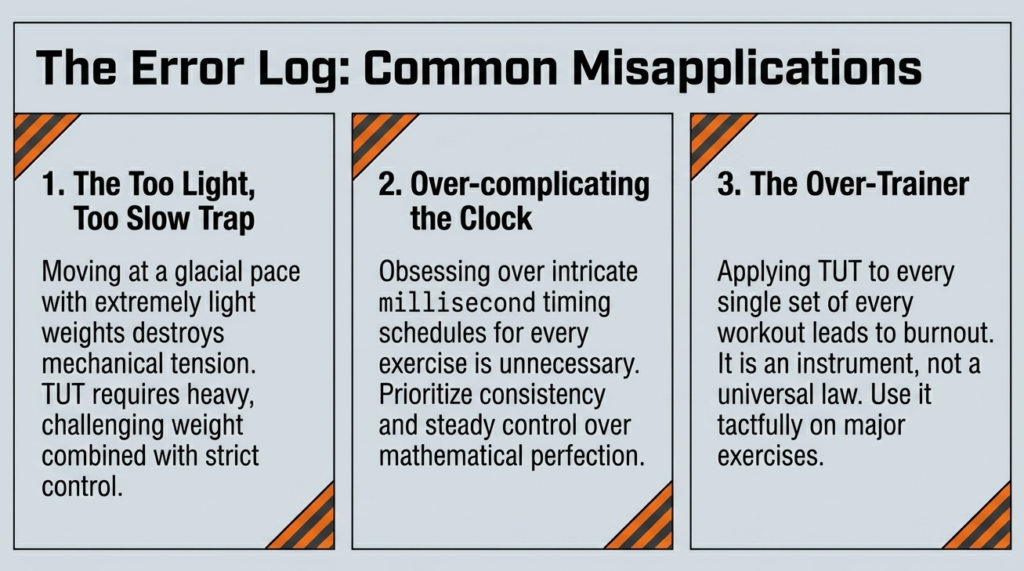
Even though Time Under Tension is highly effective, improper use can limit results. One of the most common mistakes is using weights that are too light while moving extremely slowly, which reduces mechanical tension. Another issue is overcomplicating tempo with unnecessary precision, making workouts inefficient and difficult to follow. Additionally, applying TUT to every set can lead to fatigue and overtraining. This method should be used strategically rather than excessively. By focusing on controlled movement with challenging weights and maintaining consistency, lifters can avoid these pitfalls. Proper implementation ensures better muscle activation, improved recovery, and sustainable hypertrophy progress over time.
How to Program Time Under Tension in Your Workout
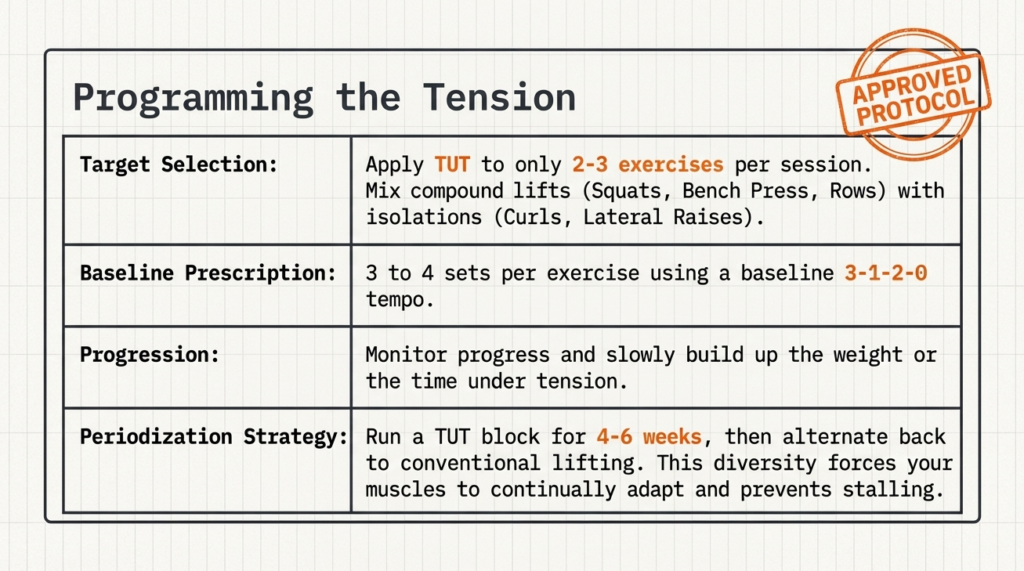
Programming Time Under Tension correctly is essential for achieving optimal results. Instead of applying it to every exercise, focus on 2–3 key movements per workout, including both compound and isolation exercises. A structured tempo such as 3-1-2-0 works well for most hypertrophy goals. Start with 3–4 sets and gradually increase either weight or time under tension as you progress. Cycling TUT phases for 4–6 weeks before returning to conventional training helps prevent plateaus. This balanced approach ensures continuous muscle adaptation without overtraining. Proper programming allows lifters to maximize gains while maintaining recovery, performance, and long-term training consistency.
Additional Benefits of Time Under Tension Training
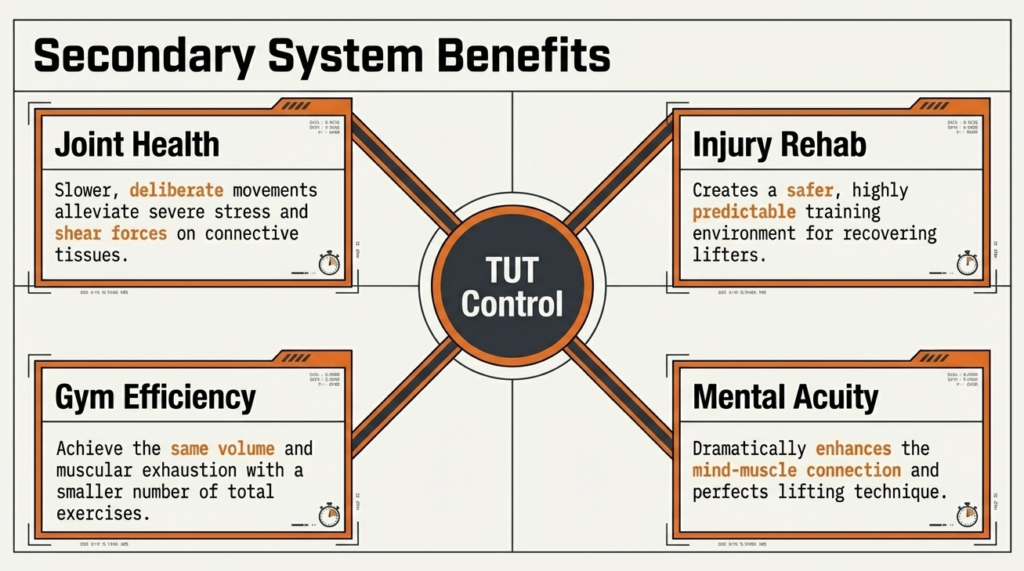
Time Under Tension offers benefits beyond hypertrophy, making it a valuable training tool. Controlled movements reduce joint stress and improve overall joint health, allowing safer workouts. It also enhances the mind-muscle connection, helping lifters focus better on target muscles. Additionally, TUT improves gym efficiency by delivering greater results with fewer exercises. For those recovering from injuries, the controlled tempo provides a safer environment for rehabilitation. These benefits make TUT suitable for both beginners and advanced athletes. By integrating this method into training, lifters can improve performance, reduce injury risk, and build a more balanced and effective physique over time.
The Smart Lifter’s Time Under Tension Checklist
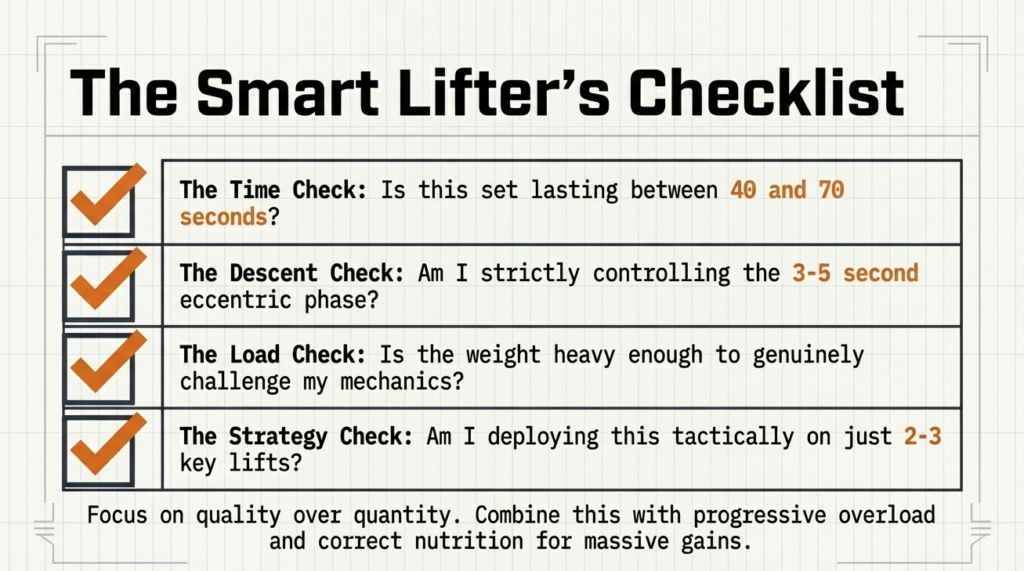
This checklist simplifies the application of Time Under Tension into practical steps. First, ensure that each set lasts between 40 and 70 seconds for optimal hypertrophy. Second, control the eccentric phase for at least 3–5 seconds. Third, use a weight that is challenging enough to stimulate muscle growth. Finally, apply TUT selectively to key exercises rather than every movement. These guidelines help maintain a balance between intensity and recovery. By following this structured approach, lifters can consistently apply TUT without overtraining. This ensures better muscle activation, improved technique, and long-term progress in strength and hypertrophy training.
Master the Clock for Maximum Muscle Growth
Mastering Time Under Tension is about shifting your mindset from lifting heavy to lifting smart. This concept emphasizes controlling every repetition and maximizing the duration of muscle engagement. By focusing on tempo, pauses, and controlled movement, lifters can significantly improve muscle activation and growth. The “clock” becomes a crucial training tool, guiding each set toward optimal tension duration. Instead of chasing numbers, this method prioritizes quality execution. Over time, this approach leads to better results, improved technique, and reduced injury risk. Consistency in applying TUT principles will ultimately transform your physique and elevate your overall training performance.
Read more: https://www.muscleandstrength.com/workouts/tut-workout-program


Gearless Physique
Physique Without Gear
Your transformation starts now. Who's with me?