Table of Contents
Toggle6-Day Push Pull Legs Workout Plan for Massive Size
This comprehensive infographic summarizes the entire 6-Day Push Pull Legs Workout Plan for Massive Size. It combines all key elements of the program, including workout structure, training frequency, and the pillars of muscle growth. The visual highlights how each muscle group is trained twice per week, ensuring optimal stimulation and recovery. It also emphasizes progressive overload, strategic variation, and the importance of recovery for long-term success. This all-in-one guide is perfect for lifters who want a clear and structured overview of the program. By following this blueprint, individuals can maximize muscle growth, improve strength, and build a balanced, aesthetic physique efficiently.

6-Day PPL Blueprint for Massive Hypertrophy
This image represents the foundational blueprint of the 6-day Push Pull Legs workout system, designed for massive size. It visually highlights how different muscle groups such as chest, shoulders, back, and legs are activated through push, pull, and leg mechanics. By structuring workouts based on movement patterns, this system ensures balanced muscle development and efficient recovery. The closed-loop training concept shown here emphasizes continuous adaptation through progressive overload and proper programming. For lifters aiming to build massive size, this blueprint simplifies complex training principles into a clear, structured approach. It reinforces the idea that intelligent workout design leads to faster, safer, and more sustainable muscle growth results.

Hypertrophy Triad: Training, Nutrition, and Recovery
This infographic explains the hypertrophy triad, which is the foundation of muscle growth in any effective training program. It highlights three essential components: training stimulus, nutritional fuel, and recovery. The gym provides the stimulus by breaking down muscle fibers through resistance training, particularly in a structured program like the 6-day PPL split. Nutrition supplies the body with the necessary macronutrients to repair and build new muscle tissue. Recovery, including sleep and active rest, allows muscles to rebuild stronger and bigger. Without all three working together, progress slows down. This visual reinforces the importance of maintaining balance between training intensity, diet, and recovery for consistent muscle gains.

Push Pull Legs Muscle Group Breakdown
This image clearly illustrates how the Push Pull Legs split divides the body into three major training categories. Push workouts target the chest, shoulders, and triceps, while pull workouts focus on the back and biceps. Leg workouts emphasize quads, hamstrings, 8. This separation allows for better recovery since each muscle group gets adequate rest before being trained again. In a 6-day PPL routine, each category is trained twice per week, maximizing hypertrophy potential. The structured division reduces overlapping fatigue and improves performance during workouts. This approach is ideal for lifters aiming for balanced muscle growth and improved strength across all major muscle groups.

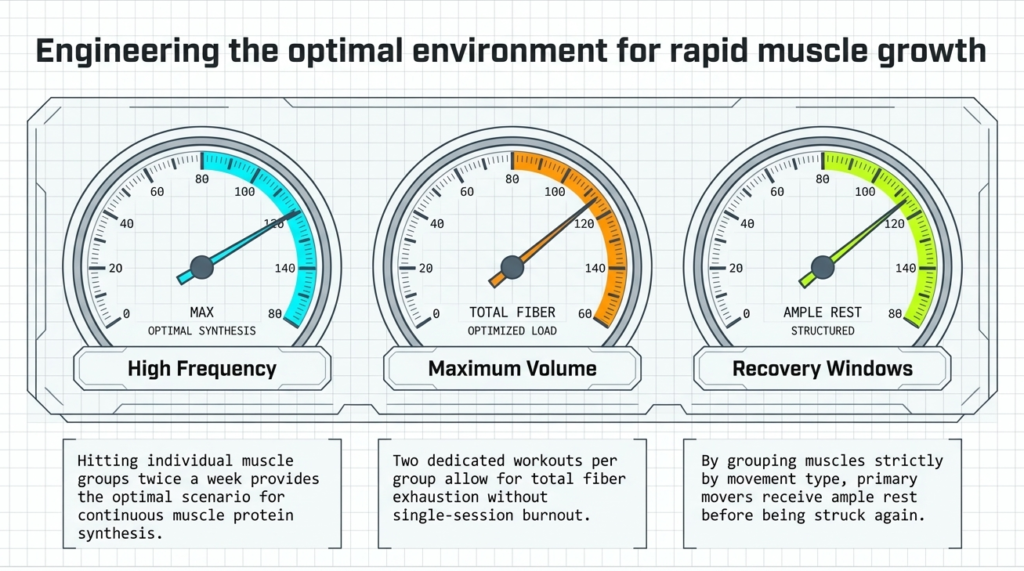
Optimal Environment for Rapid Muscle Growth
This image demonstrates the three key variables required to create an optimal muscle growth environment: training frequency, workout volume, and recovery. A 6-day PPL program ensures high frequency by training each muscle group twice weekly. Maximum volume is achieved through multiple exercises and sets targeting each muscle from different angles. Recovery windows are built into the split, allowing muscles to rest and rebuild between sessions. Together, these factors maximize muscle protein synthesis and reduce the risk of overtraining. This balanced approach helps lifters maintain consistent progress while minimizing fatigue. Understanding and applying these principles is crucial for achieving long-term hypertrophy and performance improvements.
6-Day Push Pull Legs Weekly Training Cycle
This visual explains the structure of the 6-day Push Pull Legs weekly training cycle. It shows how workouts are divided into two phases, each targeting muscles from different angles to ensure complete development. The first three days focus on chest, back thickness, and quads, while the next three days emphasize shoulders, back width, and hamstrings. The seventh day is reserved for full recovery. This structured rotation allows muscles to recover while maintaining high training frequency. It also prevents adaptation plateaus by introducing variation. For lifters aiming to build massive size, this cycle provides a consistent and effective framework that balances intensity, volume, and recovery perfectly.

Push Workout Plan: Chest vs Shoulder Focus
This image breaks down the push workout into two focused sessions: chest and shoulders. Day one emphasizes chest development with exercises like bench press and incline dumbbell press, while still engaging shoulders and triceps. Day four shifts focus to shoulders using movements like overhead press and Arnold press to build capped delts. This variation ensures that all push muscles are trained effectively without overloading a single area. It also allows for better recovery between sessions. By rotating focus, lifters can maximize hypertrophy and avoid stagnation. This strategic approach is essential for achieving a balanced and aesthetic upper body in a 6-day PPL program.

Pull Workout Plan: Back Thickness vs Width
This image highlights the two main goals of pull workouts: building back thickness and increasing width. The thickness-focused day includes heavy compound lifts like deadlifts and barbell rows to develop density and strength. The width-focused day uses exercises like pull-ups and lat pulldowns to create a wider V-taper. By separating these goals into different sessions, the program ensures targeted muscle activation and better recovery. This approach helps avoid fatigue while maximizing results. For lifters aiming to build a powerful and aesthetic back, combining thickness and width training is essential. This balanced method delivers both strength and visual impact.

Leg Workout Plan: Quad vs Hamstring Focus
This image explains how leg workouts are divided into quad-focused and hamstring-focused sessions in a 6-day PPL routine. The quad day includes squats, leg press, and lunges to build front leg strength and size. The hamstring day focuses on posterior chain exercises like Romanian deadlifts and hip thrusts. This separation allows each muscle group to be trained with maximum intensity while minimizing fatigue. It also improves recovery between sessions. Balanced lower body training is essential for both strength and aesthetics. By targeting quads and hamstrings separately, this approach ensures complete leg development and reduces the risk of muscular imbalances or injury.

Progressive Overload and Muscle Growth Curve
This graph illustrates the principle of progressive overload, which is essential for building muscle over time. It shows how gradually increasing weight, repetitions, or intensity leads to continuous muscle adaptation and growth. In a 6-day PPL program, tracking progress is crucial to ensure consistent improvements. Even small increases in performance can lead to significant long-term gains. The graph also highlights the importance of controlled progression rather than sudden increases, which can lead to injury. By focusing on steady improvement, lifters can maximize hypertrophy while maintaining proper form. Progressive overload is the driving force behind sustainable muscle development and long-term success.

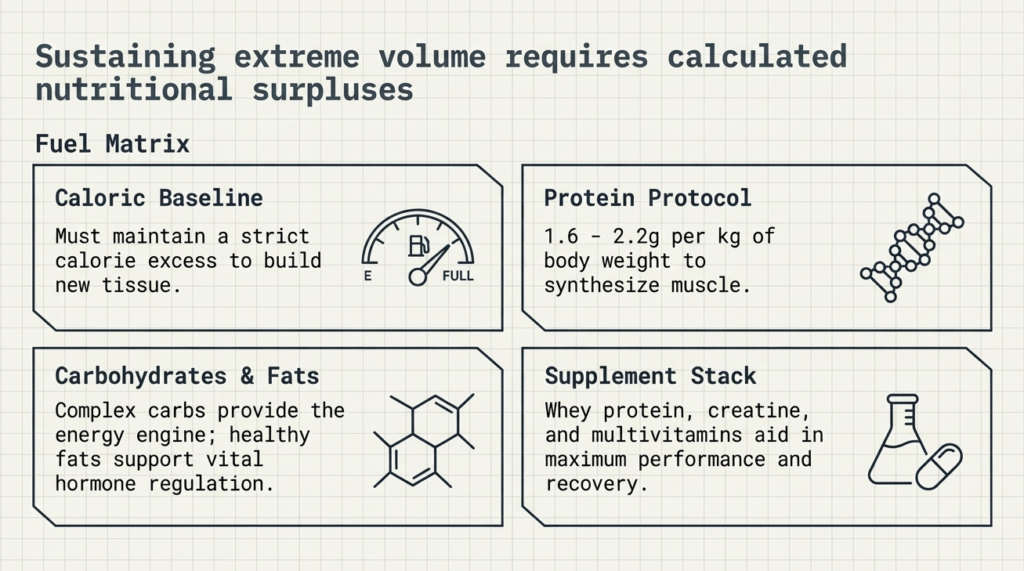
Muscle Building Nutrition and Fuel Matrix
This image explains the importance of nutrition in supporting a high-volume training program like the 6-day PPL split. It highlights key components such as maintaining a calorie surplus, consuming adequate protein, and balancing carbohydrates and fats. Protein intake between 1.6 to 2.2 grams per kilogram of body weight is essential for muscle repair and growth. Carbohydrates provide energy for intense workouts, while healthy fats support hormone production. Supplements like whey protein and creatine can further enhance performance and recovery. Without proper nutrition, even the best training program will fail to deliver results. This fuel matrix ensures the body has everything it needs to grow.
Muscle Recovery and Growth Process
This image highlights the critical role of recovery in muscle growth. It shows the process starting with muscle breakdown during training, followed by repair and growth during rest. Sleep plays a major role, with 7 to 8 hours being essential for optimal recovery. Active recovery techniques like stretching and light cardio help improve blood flow and reduce soreness. The image also emphasizes listening to your body to avoid overtraining. In a demanding program like the 6-day PPL split, recovery becomes even more important. Without proper rest, muscle growth is limited, and injury risk increases. Prioritizing recovery ensures consistent progress and long-term success.

Common Workout Mistakes and Fixes
This infographic identifies common mistakes that can hinder progress in a 6-day PPL program and provides practical solutions. Overtraining is one of the biggest issues, often caused by adding unnecessary volume beyond the plan. Ego lifting, where lifters prioritize heavy weights over proper form, increases injury risk and reduces effectiveness. Neglecting nutrition and sleep can also slow muscle growth. The solutions focus on maintaining proper technique, following the program structure, and prioritizing recovery and nutrition. By addressing these issues, lifters can optimize their performance and results. Avoiding these mistakes is essential for achieving consistent progress and building a strong, balanced physique.

Who Should Follow the 6-Day PPL Plan
This image outlines the ideal target audience for the 6-day Push Pull Legs workout plan. It emphasizes that this program is best suited for intermediate to advanced lifters with at least 6 to 12 months of consistent training experience. Beginners may find the volume and intensity overwhelming, making it less suitable without a proper foundation. The primary goal of this program is maximum hypertrophy, along with strength gains and overall physique development. It also highlights the importance of discipline, consistency, and recovery. Understanding whether this plan fits your experience level is crucial before starting. Choosing the right program ensures better results and reduces the risk of burnout.

Execute the PPL Plan and Build Your Physique
This final image serves as a motivational summary of the 6-day Push Pull Legs program. It emphasizes the importance of execution, consistency, and smart training. The framework highlights high frequency, optimal volume, and balanced biomechanics as the foundation of muscle growth. It also reinforces the need for tracking progress and applying progressive overload effectively. Building an impressive physique requires patience, discipline, and attention to detail. This image encourages lifters to stay committed to the process and trust the system. When followed correctly, the PPL structure delivers exceptional results in muscle size, strength, and overall physique development, making it one of the most effective training splits available.
Read more: https://www.muscleandstrength.com/workouts/6-day-powerbuilding-split-meal-plan


Gearless Physique
Physique Without Gear
Your transformation starts now. Who's with me?