Table of Contents
Toggle6 Advanced Training Techniques for Muscle Growth Without Steroids
This final infographic summarizes the 6 advanced training techniques for muscle growth without steroids (naturally). It combines progressive overload, time under tension, rest-pause training, frequency-based splits, and both types of drop sets into a cohesive strategy. It also emphasizes the importance of recovery, highlighting sleep and nutrition as key factors in muscle growth. This visual serves as a quick reference guide for lifters who want to optimize their training without steroids. By integrating these methods into a structured program, natural athletes can achieve consistent, sustainable progress while maintaining long-term health and performance.
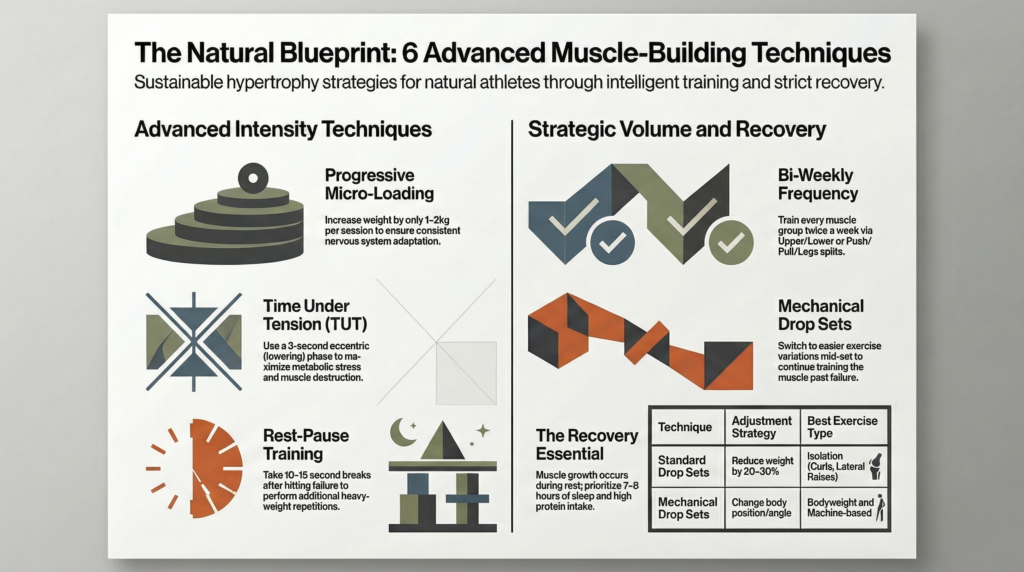
The Natural Lifter’s Blueprint for Sustainable Muscle Growth
This infographic presents the complete blueprint for natural lifters aiming to build muscle without relying on steroids. It emphasizes three core systems: biomechanical efficiency, hypertrophy programming, and recovery optimization. Instead of chasing shortcuts, natural athletes must focus on maximizing fiber recruitment, maintaining mechanical tension, and breaking plateaus through intelligent training design. The diagram highlights how leverage, neuromuscular activation, and structural load distribution influence muscle growth. It also reinforces the importance of recovery systems like sleep and nutrition. This blueprint shifts the mindset from random workouts to calculated progression, helping lifters achieve sustainable hypertrophy through precision, consistency, and long-term discipline.

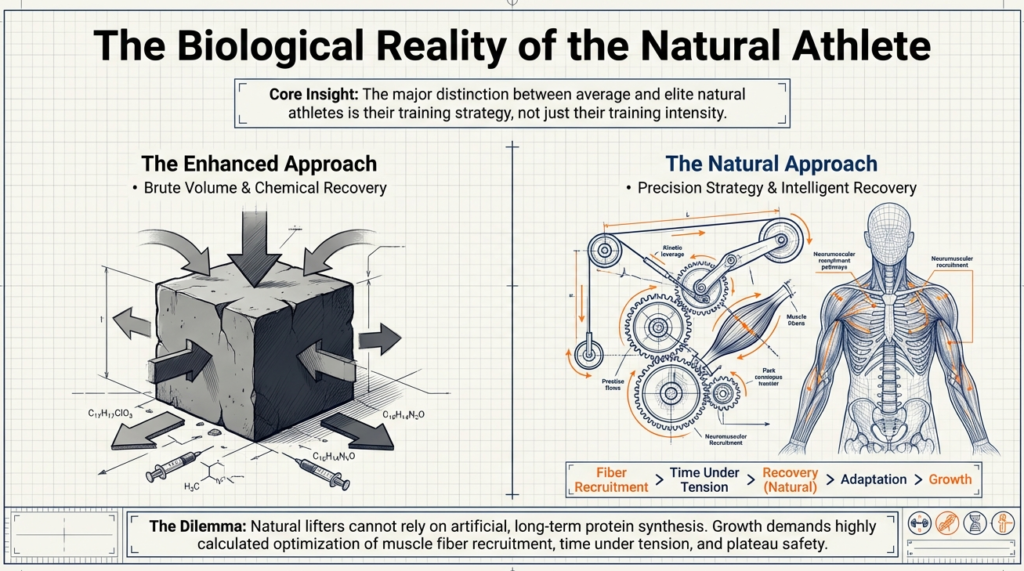
The Biological Reality of Natural vs Enhanced Athletes
This image highlights the fundamental difference between enhanced and natural athletes. Enhanced lifters depend heavily on chemical recovery and brute training volume, while natural athletes must rely on precision, strategy, and intelligent recovery systems. The infographic explains that natural lifters have shorter anabolic windows, making factors like time under tension, fiber recruitment, and recovery crucial. It reinforces that success in natural bodybuilding comes from efficiency, not excess. By focusing on controlled progression and recovery, natural athletes can achieve impressive results without compromising health. This comparison helps lifters understand why blindly copying enhanced routines often leads to burnout instead of growth.
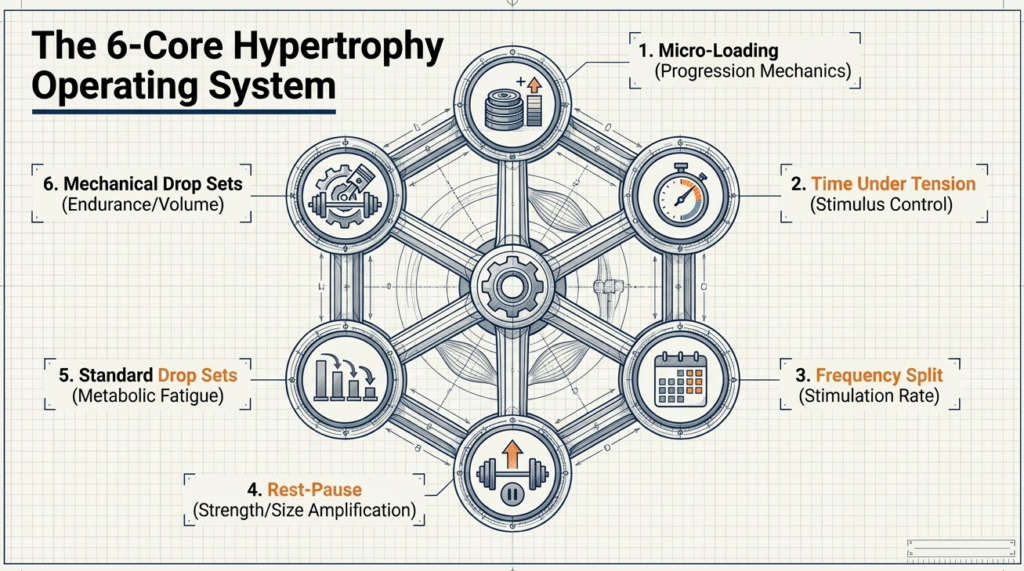
The 6 Core Hypertrophy Operating System for Natural Lifters
This infographic introduces the 6 core hypertrophy techniques that form the foundation of advanced natural training. These include micro-loading, time under tension, frequency-based training, rest-pause, drop sets, and mechanical drops. Each method targets a specific growth mechanism such as mechanical tension, metabolic stress, or muscular endurance. Together, they create a complete system for maximizing muscle growth without steroids. Instead of relying on random intensity, this structured approach ensures balanced development and consistent progression. For natural lifters, mastering these six pillars allows for smarter programming, better recovery, and long-term gains without unnecessary fatigue or injury risk.
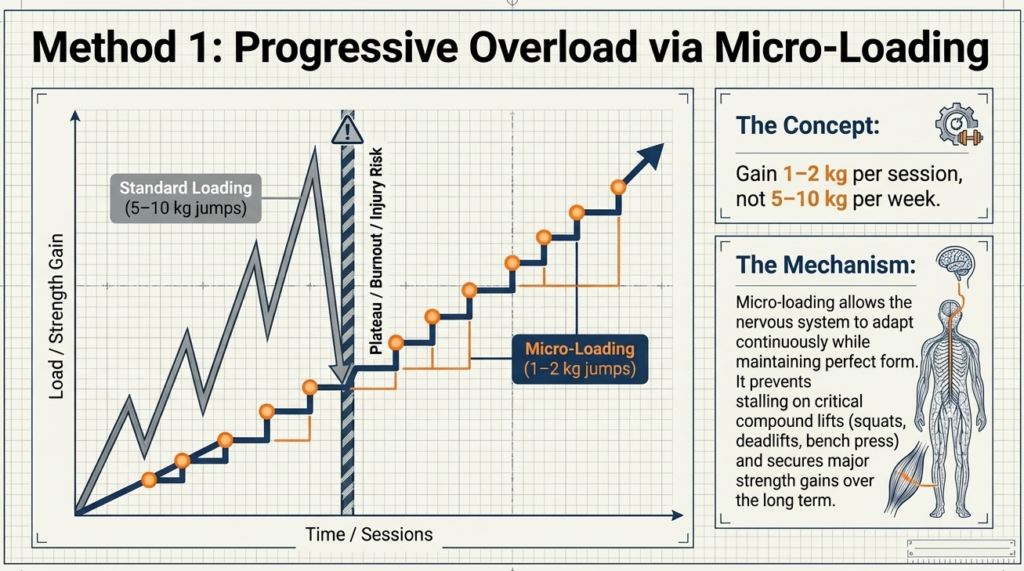
Progressive Overload Through Micro-Loading Explained
This image explains how micro-loading refines progressive overload for natural lifters. Instead of making large jumps in weight that often lead to plateaus or injury, micro-loading focuses on small, consistent increases over time. This allows the nervous system to adapt gradually while maintaining perfect form and reducing fatigue. The graph clearly shows how steady progression outperforms aggressive loading in the long run. For natural athletes, this approach is essential because recovery capacity is limited. Micro-loading ensures continuous strength gains, better technique, and sustainable muscle growth without burnout, making it one of the most effective long-term training strategies.
Time Under Tension (TUT) for Maximum Muscle Activation
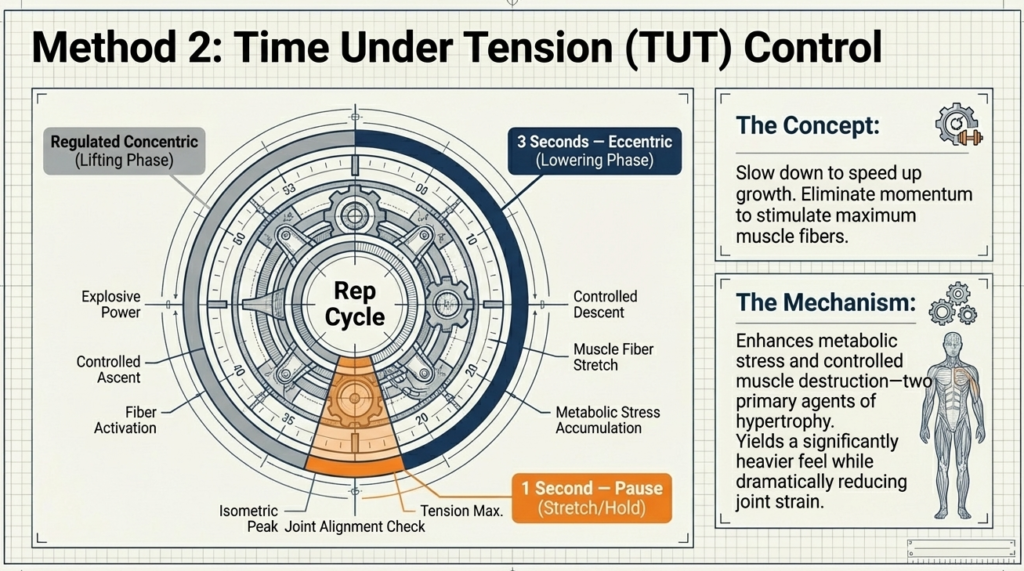
This infographic demonstrates how time under tension (TUT) enhances muscle growth by controlling rep tempo. Instead of rushing through repetitions, lifters slow down the eccentric phase, pause briefly, and maintain controlled movement throughout the lift. This increases metabolic stress and muscle fiber activation, two key drivers of hypertrophy. TUT also reduces reliance on momentum, improving mind-muscle connection and joint safety. For natural lifters, this technique allows lighter weights to feel more challenging while maximizing muscle stimulation. It’s an effective way to increase training intensity without adding excessive load, making workouts safer and more efficient.
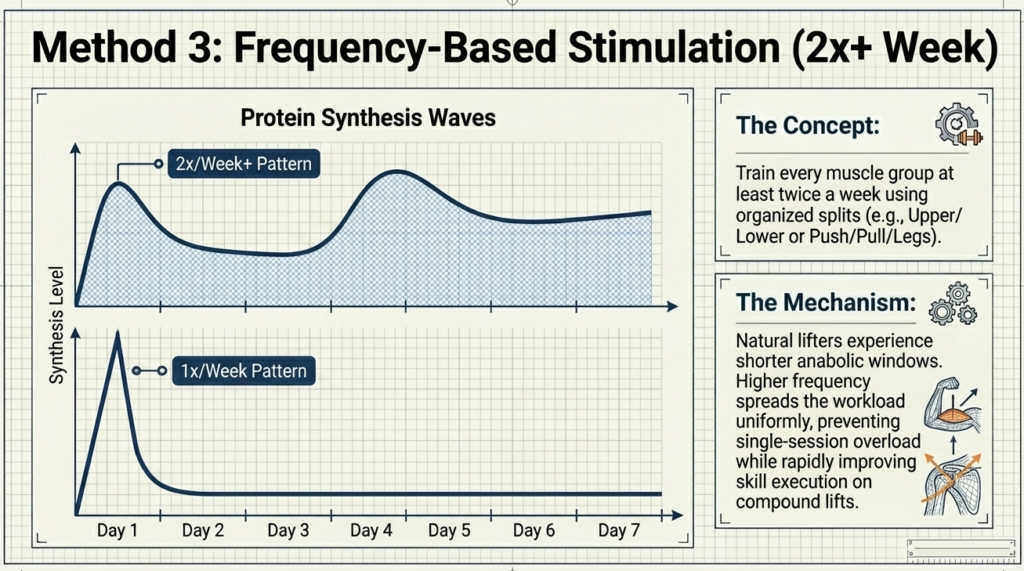
Frequency-Based Training and Protein Synthesis Optimization
This image highlights the importance of training frequency for natural lifters. It compares protein synthesis levels between training a muscle once per week versus twice per week. The data clearly shows that higher frequency leads to more consistent anabolic signaling and better muscle growth. Since natural athletes have shorter recovery and growth windows, training each muscle group more often is essential. This approach distributes volume evenly, improves skill execution, and prevents excessive fatigue from single sessions. Frequency-based training is a cornerstone of modern hypertrophy programming, helping natural lifters grow faster while maintaining recovery balance.
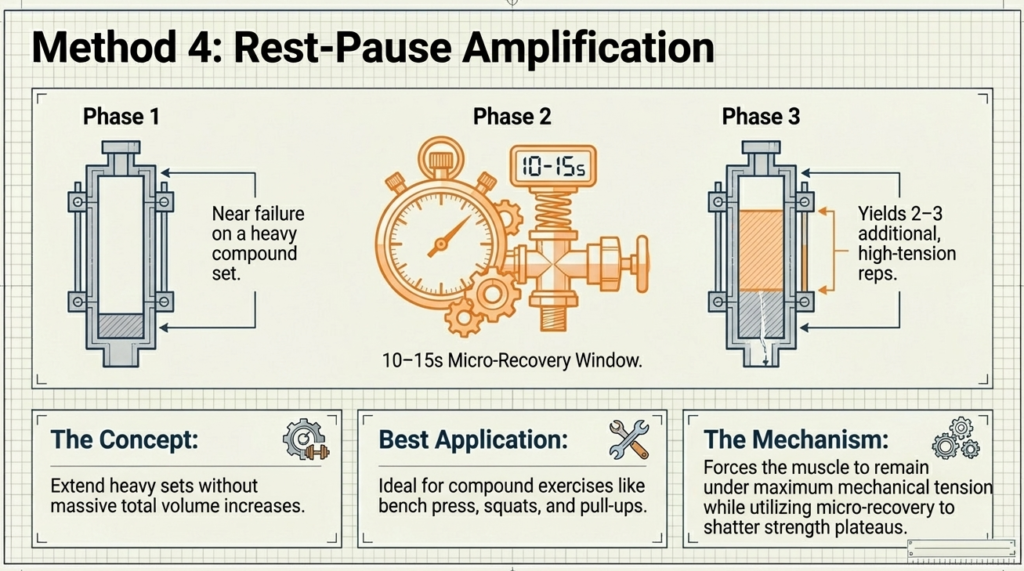
Rest-Pause Training for Strength and Hypertrophy
This infographic explains the rest-pause technique, a powerful method for increasing strength and muscle size. After reaching near failure, lifters take short 10–15 second breaks and continue the set. This allows for additional high-quality reps without reducing weight. Rest-pause training keeps muscles under high tension while providing brief recovery, making it ideal for compound exercises. For natural lifters, this method helps break strength plateaus without increasing overall workout volume excessively. It’s a highly efficient way to maximize intensity, improve performance, and stimulate growth while keeping training sessions focused and effective.
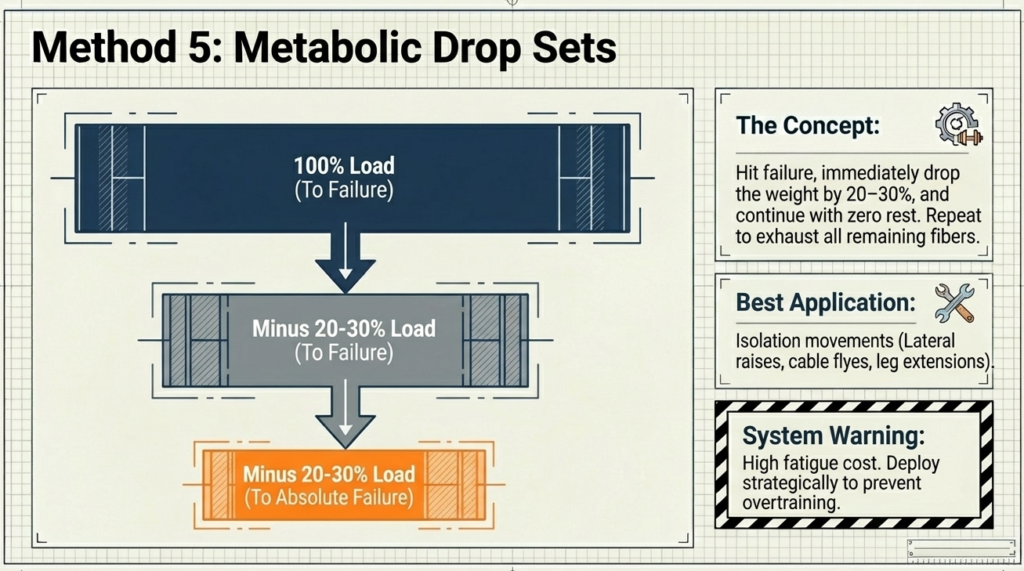
Metabolic Drop Sets for Maximum Muscle Fatigue
This image illustrates how metabolic drop sets work to maximize muscle fatigue and hypertrophy. After reaching failure, the weight is reduced by 20–30 percent, allowing the set to continue without rest. This process can be repeated multiple times to fully exhaust muscle fibers. Drop sets create intense metabolic stress, which is a key driver of muscle growth. However, they also come with a high fatigue cost, making them best suited for isolation exercises. When used strategically, drop sets can help natural lifters break plateaus and enhance muscle definition without significantly increasing training time.
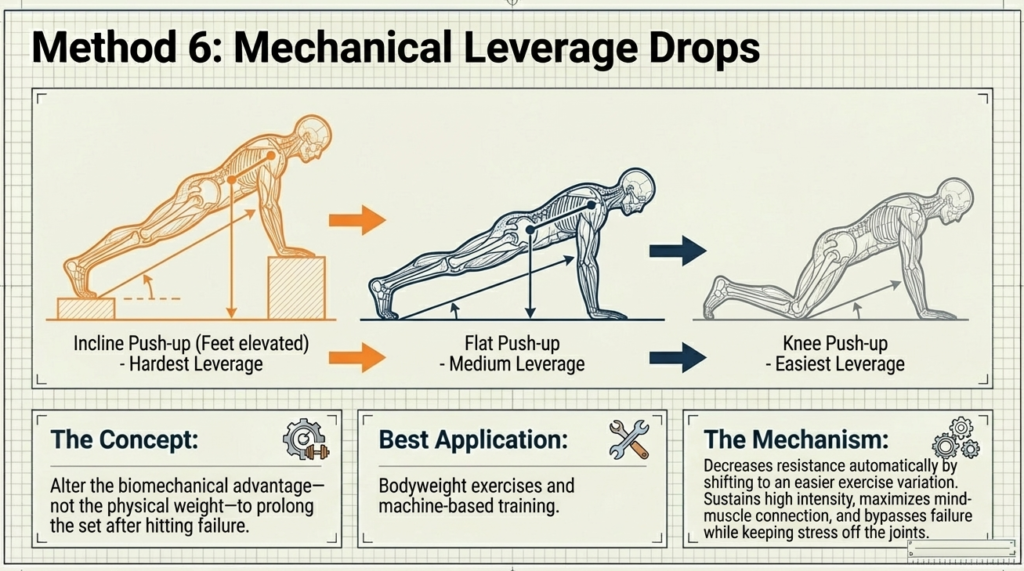
Mechanical Drop Sets Using Biomechanical Advantage
This infographic explains mechanical drop sets, a technique that extends a set by changing exercise difficulty instead of reducing weight. By shifting from harder to easier variations, such as incline to knee push-ups, lifters can continue training past failure. This method maintains intensity while reducing joint strain and fatigue. It’s especially effective for bodyweight and machine exercises. Mechanical drop sets improve endurance, enhance mind-muscle connection, and provide a safe way to increase training volume. For natural lifters, this approach offers a smart alternative to traditional drop sets, delivering high stimulus with lower systemic fatigue.
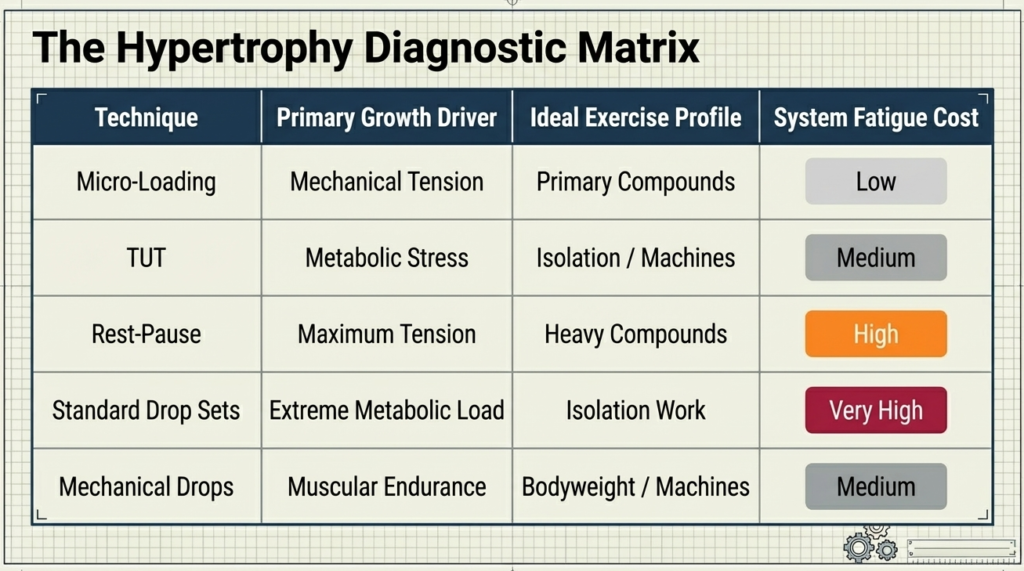
Hypertrophy Diagnostic Matrix for Training Optimization
This image provides a diagnostic matrix that categorizes different hypertrophy techniques based on their primary growth drivers and fatigue cost. It helps lifters understand when and how to use each method effectively. Techniques like micro-loading focus on mechanical tension, while drop sets emphasize metabolic stress. The matrix also highlights which exercises are best suited for each method and how much fatigue they generate. This allows for smarter programming and better recovery management. For natural lifters, this tool is invaluable in balancing intensity and sustainability, ensuring consistent progress without overtraining or burnout.
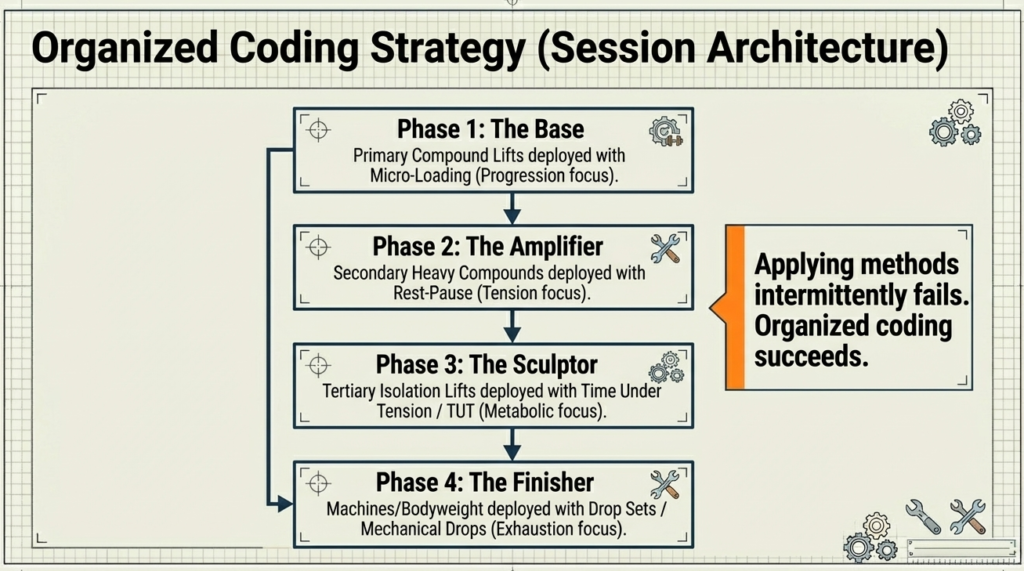
Structured Workout Session Architecture for Muscle Growth
This infographic outlines a structured approach to designing effective workout sessions. It divides training into four phases: base, amplifier, sculptor, and finisher. Each phase serves a specific purpose, from building strength with compound lifts to maximizing metabolic stress with isolation exercises. This structured approach ensures that all aspects of muscle growth are addressed within a single session. It also prevents random programming, which often leads to inefficiency and plateaus. For natural lifters, organized training is essential for balancing intensity and recovery. This method helps maximize results while minimizing wasted effort and unnecessary fatigue.
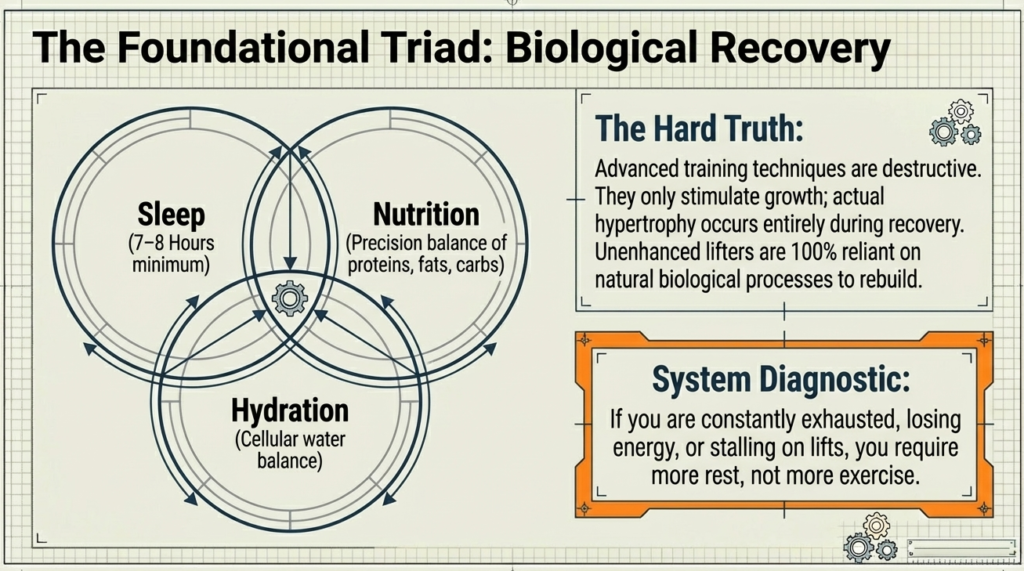
The Recovery Triad: Sleep, Nutrition, and Hydration
This image highlights the three essential pillars of recovery: sleep, nutrition, and hydration. These factors play a critical role in muscle repair and growth, especially for natural lifters who rely entirely on biological recovery processes. Adequate sleep supports hormone production, proper nutrition fuels muscle repair, and hydration ensures optimal cellular function. Without these elements, even the best training program will fail to deliver results. This infographic emphasizes that recovery is not optional—it’s the foundation of progress. Prioritizing these three factors allows lifters to train harder, recover faster, and achieve sustainable muscle growth.
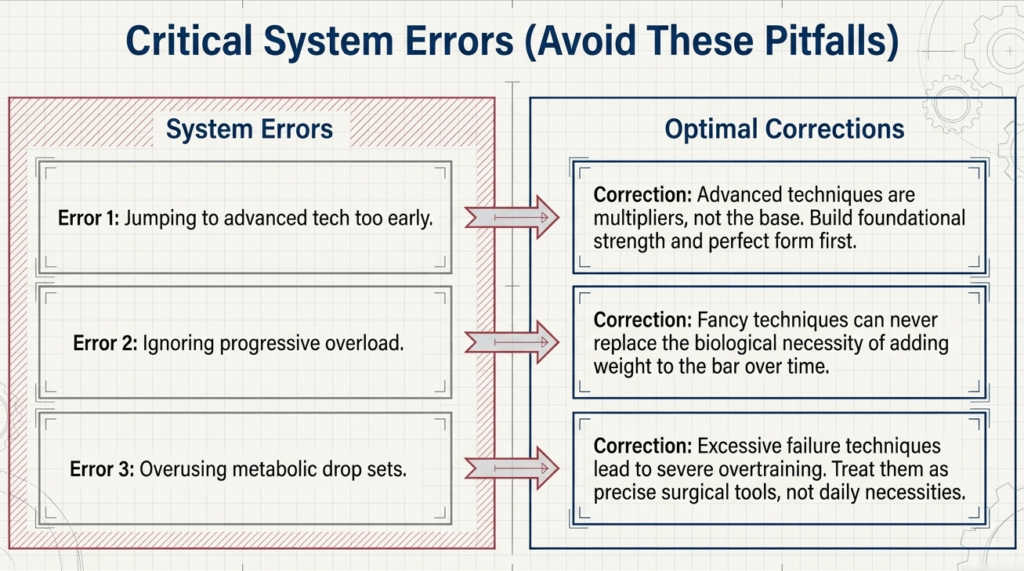
Critical Training Mistakes and How to Fix Them
This infographic highlights common training mistakes that limit muscle growth and provides practical solutions. Errors like jumping into advanced techniques too early, ignoring progressive overload, and overusing drop sets can hinder progress. The corrections emphasize building a strong foundation, focusing on gradual progression, and using advanced techniques strategically. These insights help lifters avoid unnecessary setbacks and maintain consistency. For natural athletes, avoiding these mistakes is crucial because recovery capacity is limited. By correcting these errors, lifters can train smarter, reduce injury risk, and achieve steady, long-term muscle growth.
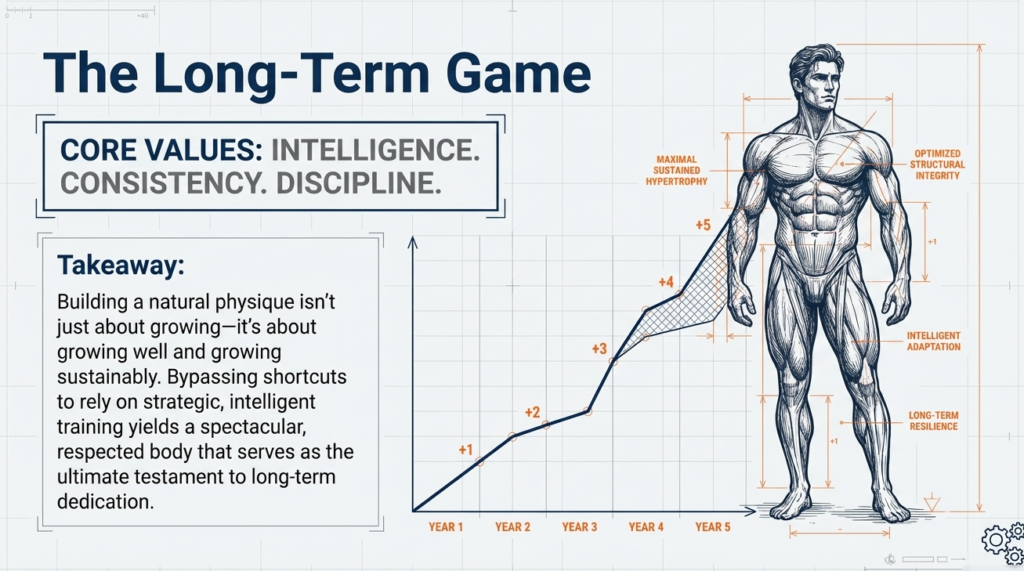
The Long-Term Natural Bodybuilding Progress Model
This image illustrates the long-term nature of natural bodybuilding. Unlike rapid transformations promised by shortcuts, true muscle growth happens gradually over years of consistent effort. The graph shows steady progress driven by intelligent training, recovery, and discipline. It reinforces that sustainable hypertrophy is built through patience and strategic programming. Natural lifters must focus on long-term development rather than quick results. This mindset leads to a stronger, healthier physique and lasting success. The image serves as a reminder that consistency and smart training will always outperform shortcuts in the pursuit of muscle growth.

Gearless Physique
Physique Without Gear
Your transformation starts now. Who's with me?