Table of Contents
ToggleOptimal Split Routines to give maximum hypertrophy in 2026.
There is no longer muscle hypertrophy in 2026 that is about random volume or imitating pro bodybuilders. Evidence, practice and sustained outcomes indicate that hypertrophy is contingent on the weekly volume dispensation, recovery effectiveness and progressive overload performance. The significance of training splits is that they determine the frequency of muscle stimulation, freshness during sets and fatigue management throughout the week.
This guide is a breakdown of the best hypertrophy splits of 2026, which the natural and enhanced lifters use alike. Every workout will have full-fledged workouts, optimal volumes, and tips to do it in the real world so that you can put them to use at once, no guesswork, no bluff.
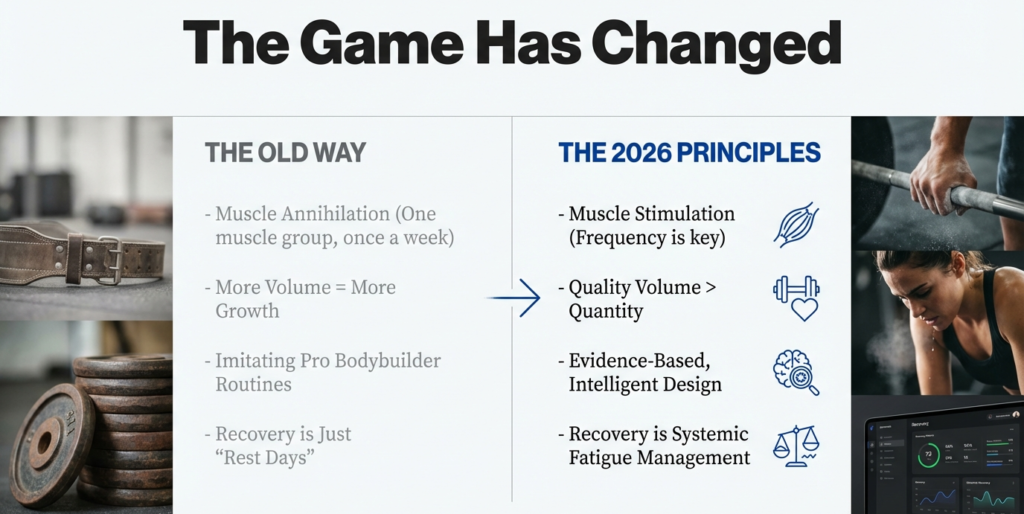
the game has changed
The game has evolved in the mode of building and maintaining hypertrophy. The previous methods were based on destroying a single muscle at a time, the imitation of professional workouts, and the automatic increase of volume pre-supposed further growth. In 2026, the muscle stimulation, rather than the destruction, guides the training. Frequency is better than fatigue, quality volume is better than mindless sets and evidence based programming is better than guesswork. Recovery is no longer rest days but smart fatigue management throughout the week.
The current lifters are more concerned with systemic recovery, performance monitoring, and sustainable development. Through repeated workouts on our muscles several times a week with regulated volume and purpose, the strength builds progressively, and the joints stay in good condition. The outcome is uniform hypertrophy through accuracy, discipline and intelligent form
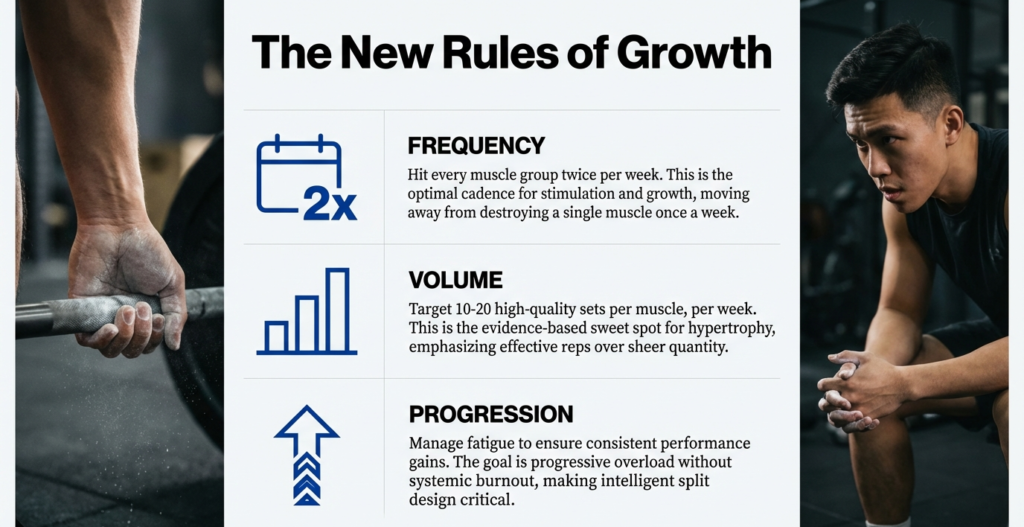
The New Rules Of Growth
There are three new rules of growth is frequency, volume, and progression. The most effective hypertrophy splits today have three rules: make every muscle work 2 times a week, 10-20 good sets a week and the management of fatigue in such a way that performance will increase over time. Modern splits are done with more frequent sessions and significantly reduced volume as compared to destruction of a single muscle in a week.
Briefer workouts that are brief and focused are superior to marathon workouts. Recovery is not given priority by use of rest days alone but by intelligent split design. It does not matter whether you are training 3 or 6 days a week, the aim is one of progressive overload without systemic burnout.
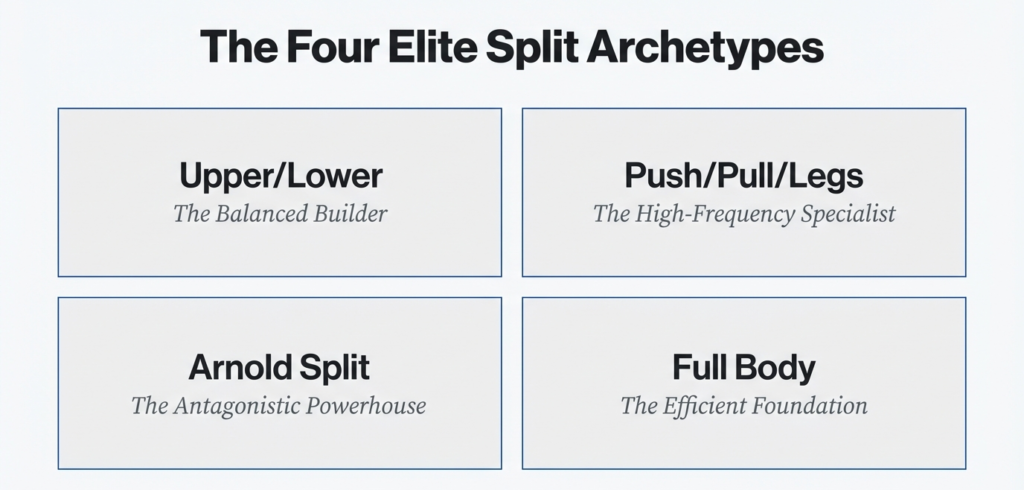
the four new elite training split
The four new-elite training divides, Upper/Lower, Push/Pull/Legs, Arnold Split, and Full Body, are the most optimal hypertrophy plans in the contemporary form of training.
- The Upper/Lower split is balanced and sustainable, which is why it is best in the long-term growth.
- Push/Pull/Legs enables greater frequency and specialization of more advanced lifters that have a good recovery capacity.
- The Arnold Split takes advantage of antagonistic muscle pairs using these muscles to maximize pump, density of the session and muscle-brain attachment.
- Full Body training lays stress on speed, mastery of movements, and systemic recovery, and is therefore the most effective with natural lifters and athletes.
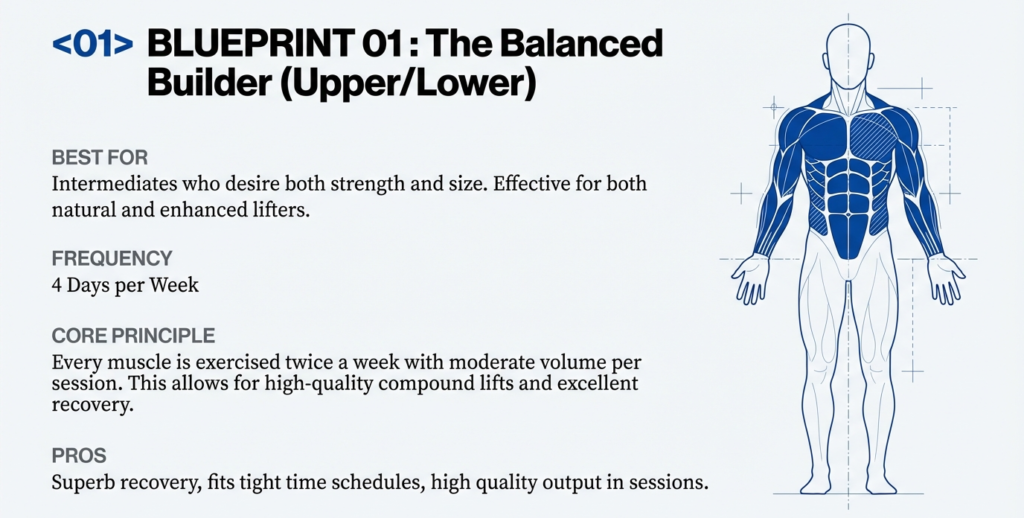
Blueprint 01: The balanced builder (upper/lower)
The upper/lower division is among the most balanced hypertrophy exercises in 2026. It offers superb recovery, can be used by both natural and enhanced lifters and it fits in tight time schedules. Every muscle is exercised twice a week and the output is high in the sessions.
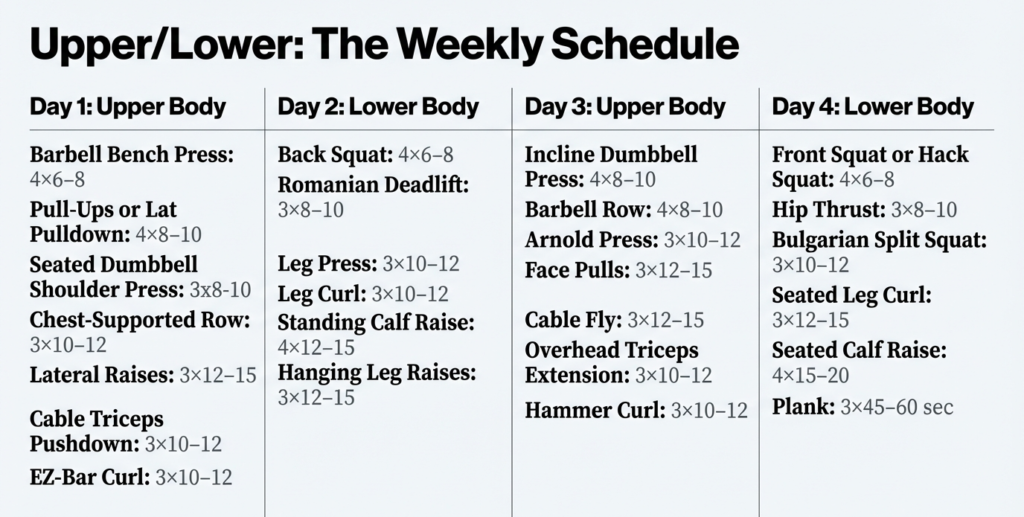
the weekly schedule: upper/lower
This division plays remarkably well with those intermediate people who desire both strength and size. Volume is moderate each session, which enables one to do better with the compound lifts and at the same time get sufficient sets that grow each week.
Upper Body – Day 1
- Barbell Bench Press – 4×6–8
- Pull-Ups or Lat Pulldown – 4×8–10
- Seated Dumbbell Shoulder Press – 3×8–10
- Chest-Supported Row – 3×10–12
- Lateral Raises – 3×12–15
- Cable Triceps Pushdown – 3×10–12
- EZ-Bar Curl – 3×10–12
Lower Body – Day 2
- Back Squat – 4×6–8
- Romanian Deadlift – 3×8–10
- Leg Press – 3×10–12
- Leg Curl – 3×10–12
- Standing Calf Raise – 4×12–15
- Hanging Leg Raises – 3×12–15
Upper Body – Day 3
- Incline Dumbbell Press – 4×8–10
- Barbell Row – 4×8–10
- Arnold Press – 3×10–12
- Face Pulls – 3×12–15
- Cable Fly – 3×12–15
- Overhead Triceps Extension – 3×10–12
- Hammer Curl – 3×10–12
Lower Body – Day 4
- Front Squat or Hack Squat – 4×6–8
- Hip Thrust – 3×8–10
- Bulgarian Split Squat – 3×10–12
- Seated Leg Curl – 3×12–15
- Seated Calf Raise – 4×15–20
- Plank – 3×45–60 sec
Read more: https://www.muscleandstrength.com/workouts/upper-lower-4-day-gym-bodybuilding-workout
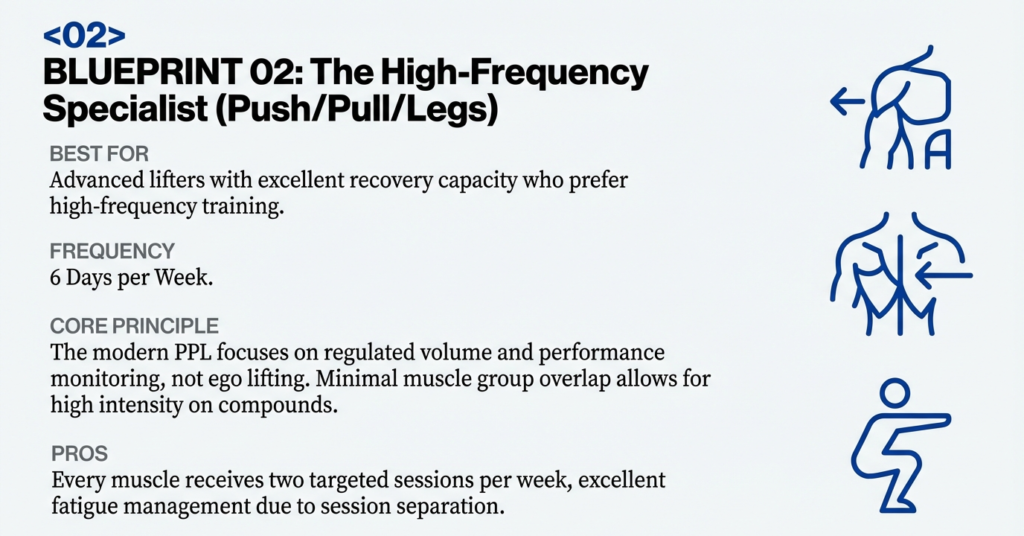
blueprint 02: The High-Frequency Specialist(Push/Pull/legs)
The Push/Pull/Legs split, also called the High-Frequency Specialist is created to suit lifters who recuperate well and who excel when there is consistent stimulation of their muscles. This model trains the individual muscle groups twice in a week with little overlap thus ensuring quality performance in the compound exercises.
A contemporary version of the PPL methodology, which focuses on controlled volume, accurate weight control, and fatigue management instead of excessive sets, should be applied in 2026. The Push/Pull/Legs split when properly performed during a fitness program provides predictable strength training, thicker muscles, and permanent hypertrophy without interfering with the recovery or joint health.
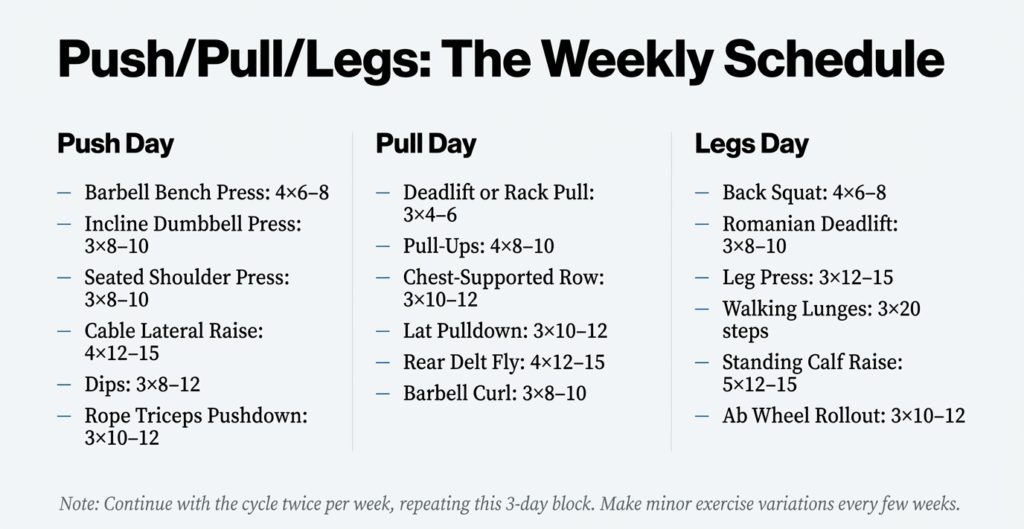
the weekly schedule: Push/Pull/Legs
Once programmed correctly Push Pull Legs will remain elite in hypertrophy in 2026. The contemporary PPL focuses on regulated volume, collaborative well-being, and performance monitoring, as opposed to ego lifting.
This division is appropriate to advanced lifters who have easy recovery and prefer increased frequency. Every muscle receives two targeted sessions per week with little overlap and thus enables high intensity on the compound movements without affecting the recovery.
Push Day
- Barbell Bench Press – 4×6–8
- Incline Dumbbell Press – 3×8–10
- Seated Shoulder Press – 3×8–10
- Cable Lateral Raise – 4×12–15
- Dips – 3×8–12
- Rope Triceps Pushdown – 3×10–12
Pull Day
- Deadlift or Rack Pull – 3×4–6
- Pull-Ups – 4×8–10
- Chest-Supported Row – 3×10–12
- Lat Pulldown – 3×10–12
- Rear Delt Fly – 4×12–15
- Barbell Curl – 3×8–10
Legs Day
- Back Squat – 4×6–8
- Romanian Deadlift – 3×8–10
- Leg Press – 3×12–15
- Walking Lunges – 3×20 steps
- Standing Calf Raise – 5×12–15
- Ab Wheel Rollout – 3×10–12
Repeat the cycle twice weekly with small exercise variations if needed.
Read more: https://www.muscleandstrength.com/workouts/6-day-powerbuilding-split-meal-plan
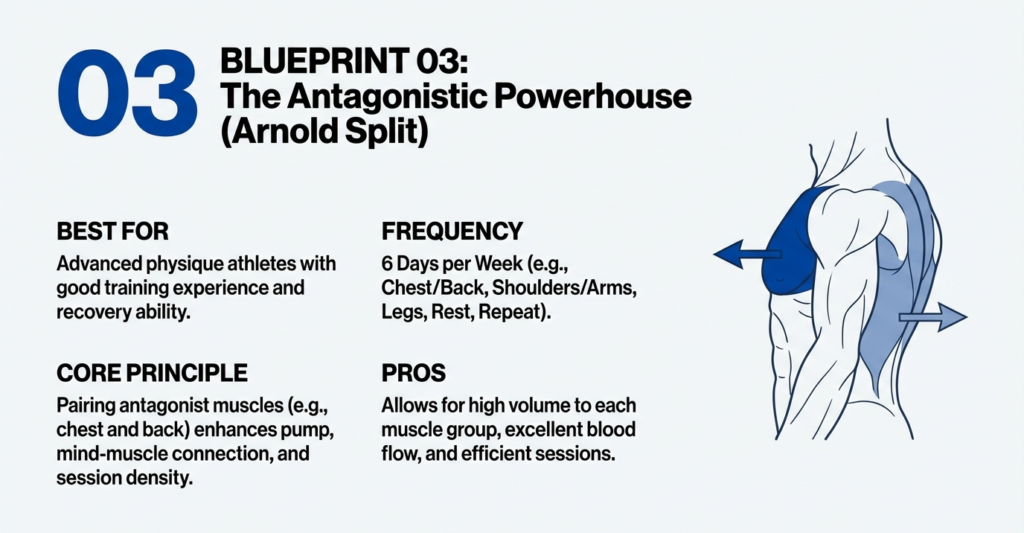
blueprint 03: the antagonistic powerhouse (Arnold split)
Arnold Split (Chest/Back, Shoulders/Arms, Legs):
The Arnold division has now returned forcefully in 2026 particularly to advanced physique athletes. Antagonizes are better paired to enhance pump, mind-muscle connection and session density.
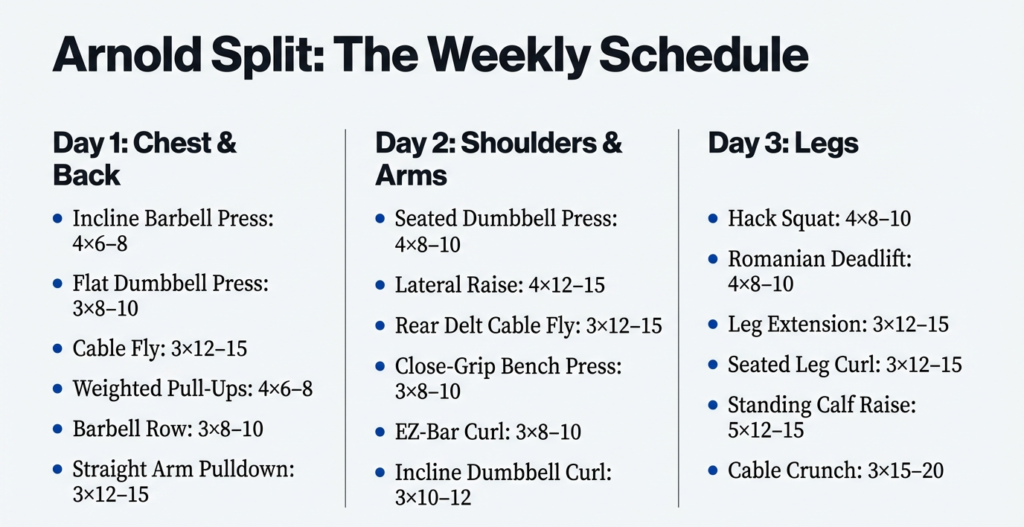
the weekly schedule: Arnold split
This division enables a high volume to each muscle group with a high blood flow and recovery. It is most effective among those lifters who have a good training experience and good recovery ability.
Chest & Back
- Incline Barbell Press – 4×6–8
- Flat Dumbbell Press – 3×8–10
- Cable Fly – 3×12–15
- Weighted Pull-Ups – 4×6–8
- Barbell Row – 3×8–10
- Straight Arm Pulldown – 3×12–15
Shoulders & Arms
- Seated Dumbbell Press – 4×8–10
- Lateral Raise – 4×12–15
- Rear Delt Cable Fly – 3×12–15
- Close-Grip Bench Press – 3×8–10
- EZ-Bar Curl – 3×8–10
- Incline Dumbbell Curl – 3×10–12
Legs
- Hack Squat – 4×8–10
- Romanian Deadlift – 4×8–10
- Leg Extension – 3×12–15
- Seated Leg Curl – 3×12–15
- Standing Calf Raise – 5×12–15
- Cable Crunch – 3×15–20
Read more: https://www.muscleandstrength.com/workouts/arnold-schwarzenegger-volume-workout-routines
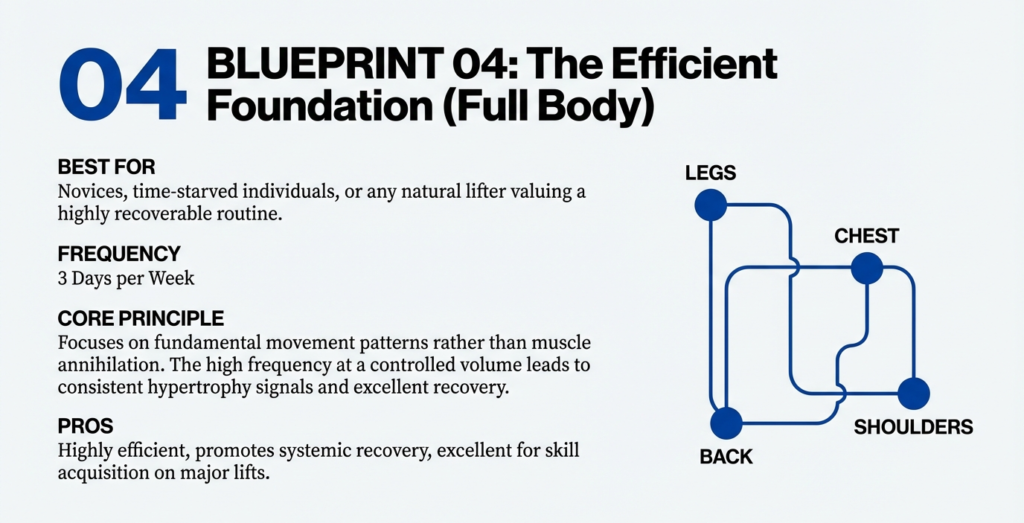
blueprint 04: The efficient foundation(full body)
Full Body Split (3 Days per Week):
Full body training is very effective in the year 2026, particularly to natural lifters. The increasing frequency at controlled volume exudes consistent hypertrophy and high recovery.
the weekly schedule: fullbody
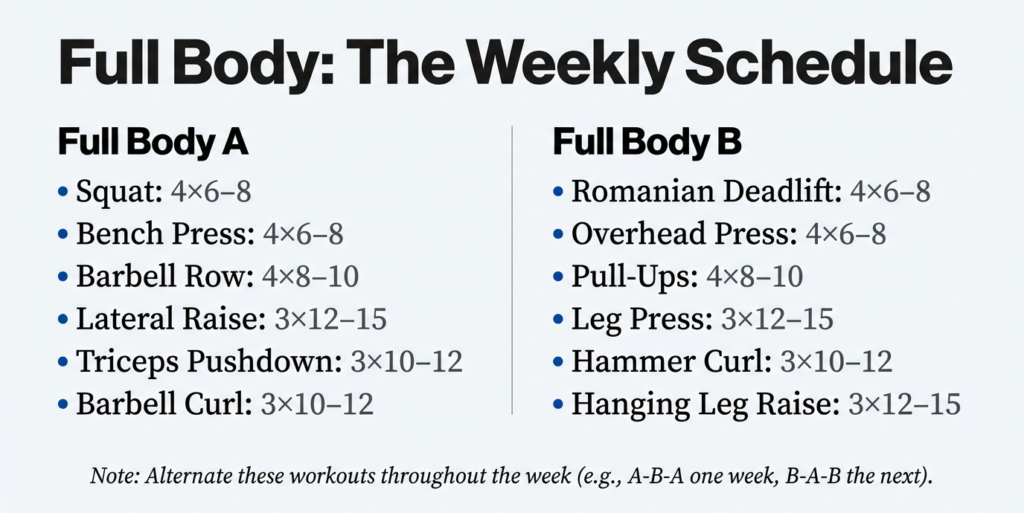
This division focuses on movement patterns as opposed to muscle annihilation. It suits the novice, time-starved workers, or any person who values a routine.
Full Body A
- Squat – 4×6–8
- Bench Press – 4×6–8
- Barbell Row – 4×8–10
- Lateral Raise – 3×12–15
- Triceps Pushdown – 3×10–12
- Barbell Curl – 3×10–12
Full Body B
- Romanian Deadlift – 4×6–8
- Overhead Press – 4×6–8
- Pull-Ups – 4×8–10
- Leg Press – 3×12–15
- Hammer Curl – 3×10–12
- Hanging Leg Raise – 3×12–15
Alternate workouts across the week.
Read more: https://www.muscleandstrength.com/workouts/muscle-strength-full-body-workout-routine
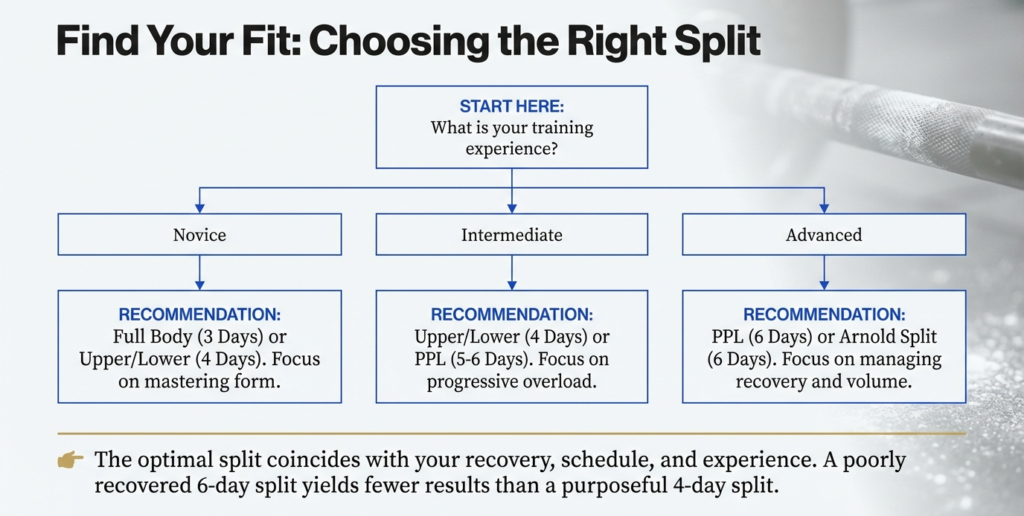
How to Select the Right Split.
The optimal division is that which coincides with your recovery, schedule and level of experience. A poor recovery training (six days) gives less results as opposed to purposeful and progressive training (four days).
Novices have a good time with full-body or upper/lower splits. The intermediates thrive with upper/lower or PPL. PPL or Arnold-type routines with fined volume control are most advantageous to advanced lifters.
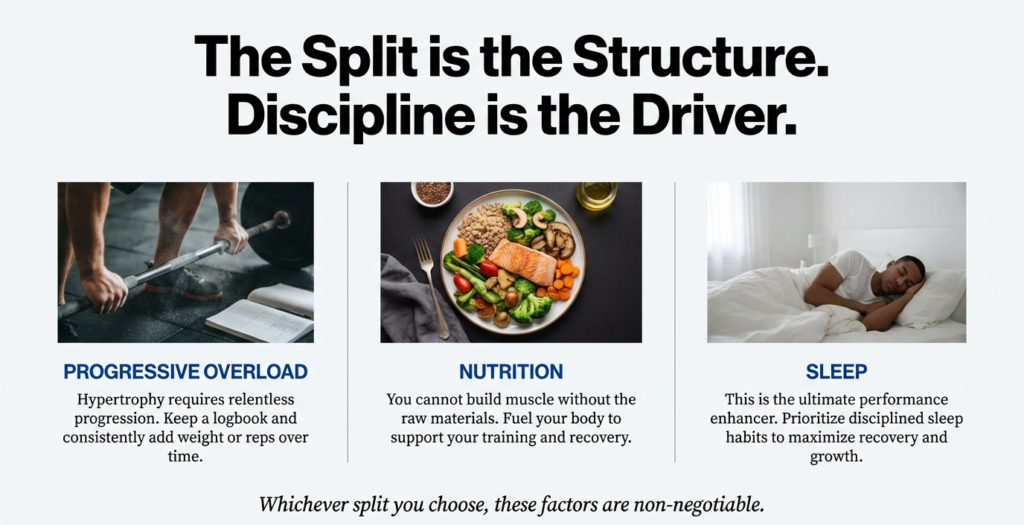
these three factors are non-negotiable
Training splits provide the structure of your program, but they are only the framework, not the driving force behind results. Real hypertrophy is built through disciplined execution of the fundamentals—progressive overload, proper nutrition, and quality sleep. Without these three pillars, even the best-designed split will fail to deliver consistent growth. Progressive overload ensures muscles are challenged over time, nutrition fuels recovery and repair, and sleep supports hormonal balance and performance. In 2026, successful lifters focus less on fancy routines and more on mastering these non-negotiables daily. Structure organizes your training, but discipline determines your outcome. When both align, muscle growth becomes consistent, sustainable, and predictable over time.
Final Takeaway
There is no magic hypertrophy split—only structure executed with accuracy and consistency. The best training routine is one you can sustain for months, not something that exhausts you within weeks. Long-term muscle development is achieved by prioritizing performance improvements rather than chasing fatigue in every workout. When training volume is appropriate, recovery is respected, and progression is applied with intention, muscle growth becomes predictable instead of accidental. Smart programming aligns effort with recovery, allowing strength to increase steadily while protecting joints from burnout. Stay disciplined with your training split, nutrition, and sleep. Train with purpose, remain consistent through phases, and allow time to work in your favor.
Real physiques are built over years, not overnight. 💪

Gearless Physique
Physique Without Gear
Your transformation starts now. Who's with me?