Table of Contents
Toggle7 Ways to Auto-Regulate Your Training for Better Results
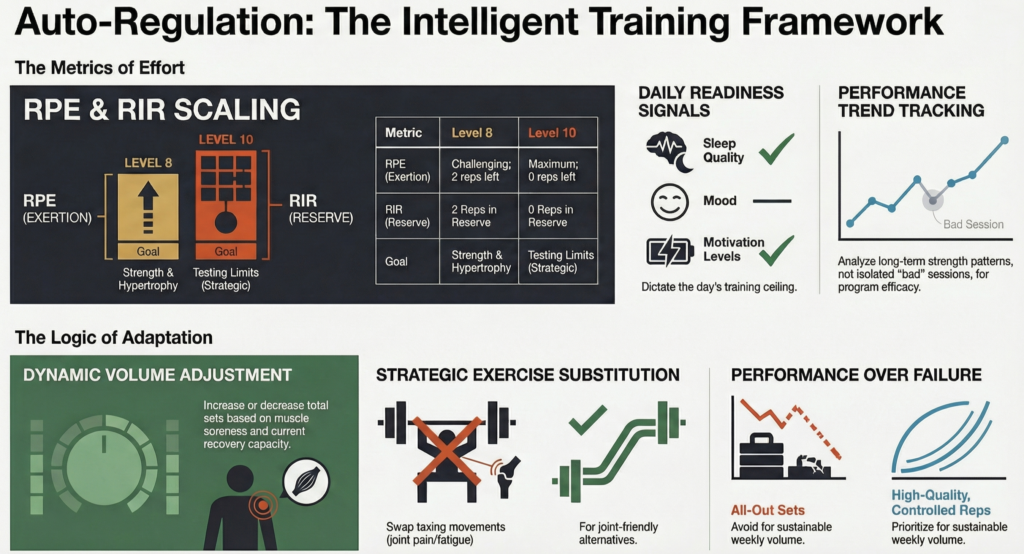
This comprehensive infographic brings together all the key elements of auto-regulate your training into one unified framework. It covers effort metrics like RPE and RIR, daily readiness signals, performance tracking, and adaptive strategies such as volume adjustment and exercise substitution. The visual shows how these components work together to create a dynamic training system that responds to real-time feedback. Instead of relying on rigid plans, this framework allows you to optimize each workout based on your current condition. It serves as a blueprint for smarter training, helping you maximize results while minimizing fatigue, injury risk, and long-term burnout.
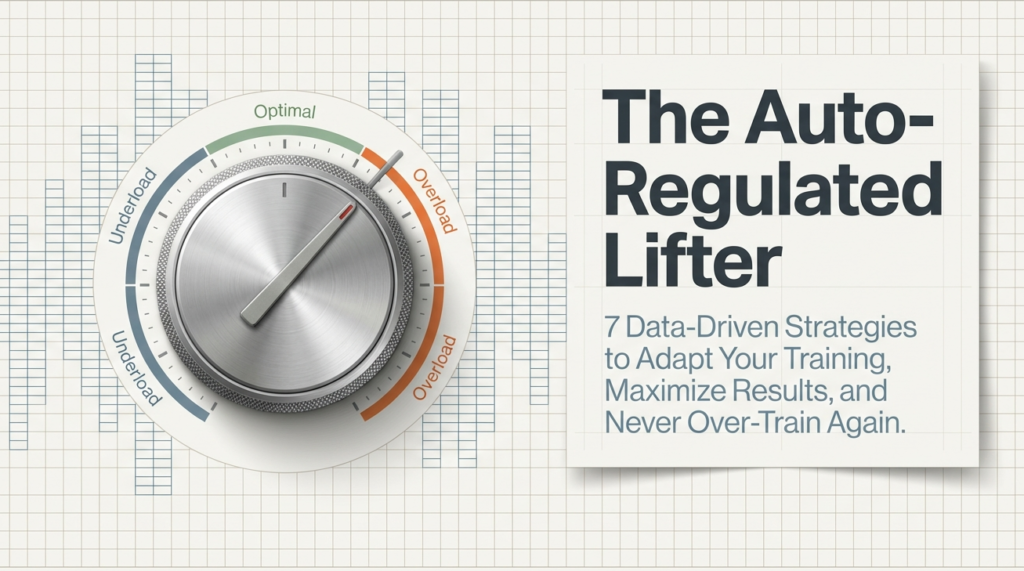
The Auto-Regulated Lifter: Training Intensity Control System
This image illustrates the core concept of auto-regulation using a dial system that ranges from underload to overload, with an optimal training zone in between. It emphasizes the importance of adjusting intensity based on how your body feels on a given day rather than blindly following a fixed program. Staying within the optimal zone ensures you are training hard enough to stimulate progress without pushing into excessive fatigue or injury risk. This visual simplifies the idea that training is not binary but exists on a spectrum. By learning to “dial in” your effort daily, you can consistently perform at your best while maintaining long-term recovery and sustainability.
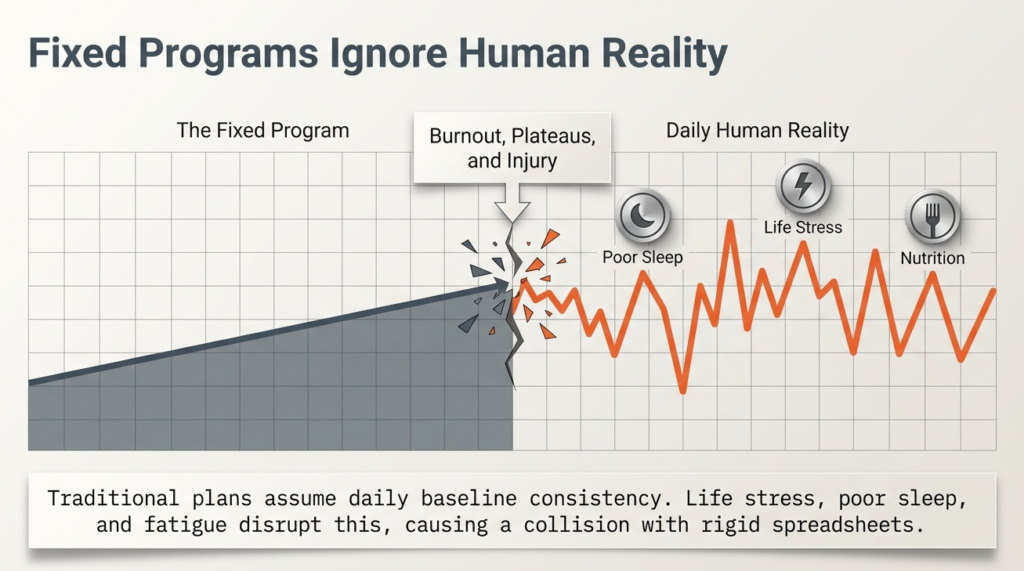
Why Fixed Programs Fail: Real-Life Fatigue vs Training Plans
This image highlights the fundamental flaw of rigid training programs by comparing a steady progression line with real-world fluctuations. While traditional plans assume consistent performance, real life introduces variables like poor sleep, stress, and inconsistent nutrition. These factors disrupt recovery and performance, creating a mismatch between expectation and reality. When lifters try to force themselves to meet fixed targets despite these fluctuations, it often leads to burnout, plateaus, or injury. This visual reinforces why auto-regulation is superior—it adapts to daily human variability instead of ignoring it. Training success comes from adjusting to reality, not forcing your body to match a rigid spreadsheet.
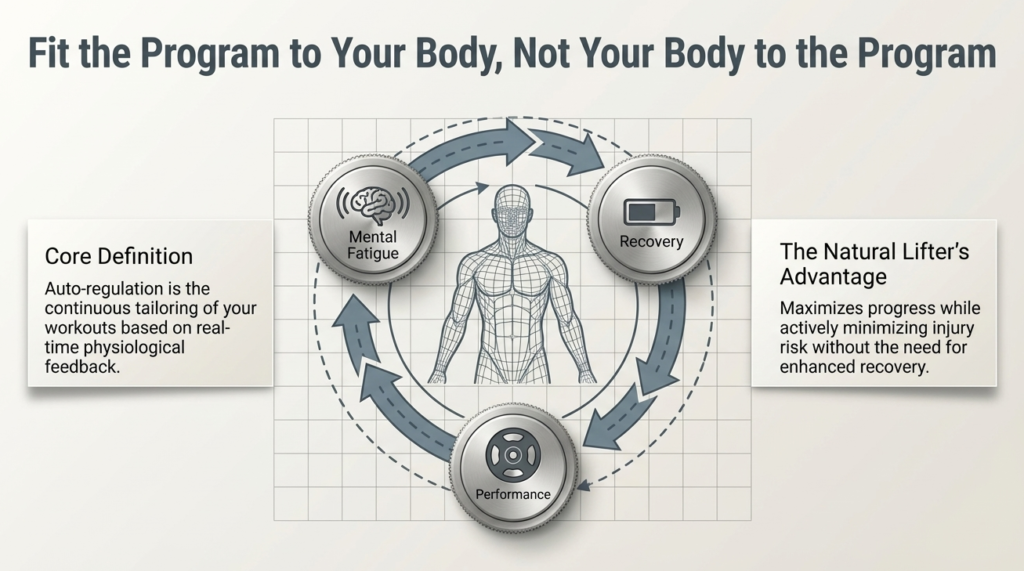
Fit the Program to Your Body: The Auto-Regulation Feedback Loop
This image demonstrates the core philosophy of auto-regulation—adapting your training to your body rather than forcing your body to adapt to a rigid plan. It shows a continuous loop between mental fatigue, recovery, and performance, emphasizing how these elements influence each other. When recovery is compromised, performance drops, and pushing harder only worsens fatigue. Auto-regulation breaks this cycle by allowing adjustments in real time. This ensures optimal performance while minimizing injury risk. For natural lifters especially, this approach provides a significant advantage by maximizing progress without relying on enhanced recovery. It transforms training into a dynamic system guided by feedback instead of fixed assumptions.
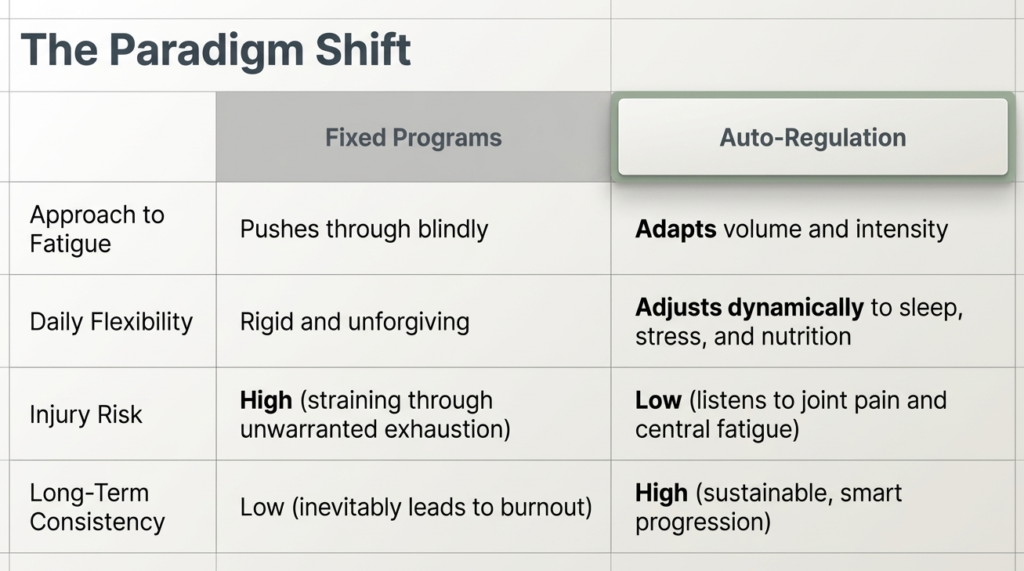
Auto-Regulation vs Fixed Programs: Key Differences Explained
This comparison table clearly outlines why auto-regulation is a more effective training approach than fixed programs. Traditional methods often push through fatigue blindly, while auto-regulation adapts both volume and intensity based on real-time feedback. It highlights how fixed programs lack flexibility, increasing injury risk and reducing long-term consistency. In contrast, auto-regulation listens to the body, adjusts dynamically, and promotes sustainable progress. This visual reinforces that smarter training is not about doing more but doing what your body can recover from. By aligning training with recovery and readiness, lifters can maintain high performance over time without burning out or getting injured.
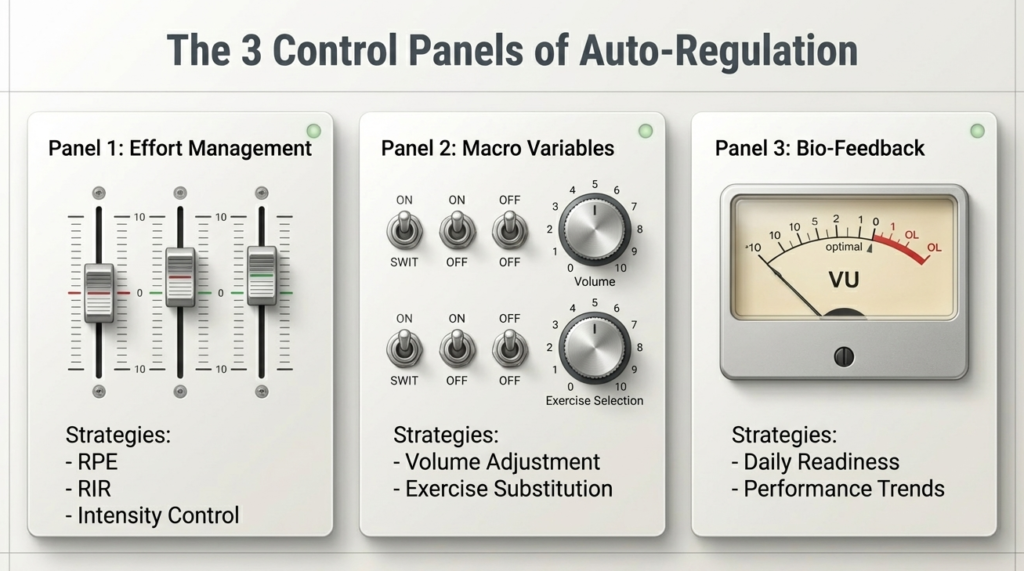
The 3 Control Panels of Auto-Regulation
This image breaks down auto-regulation into three key control panels: effort management, macro variables, and bio-feedback. Effort management includes tools like RPE and RIR to regulate intensity. Macro variables focus on adjusting training volume and exercise selection based on performance and fatigue. Bio-feedback involves monitoring daily readiness signals such as sleep, mood, and energy levels. Together, these panels create a comprehensive system that allows lifters to adapt their training intelligently. Instead of guessing or following rigid plans, this structured approach provides clear decision-making tools. It ensures that every workout is optimized for performance, recovery, and long-term progress.
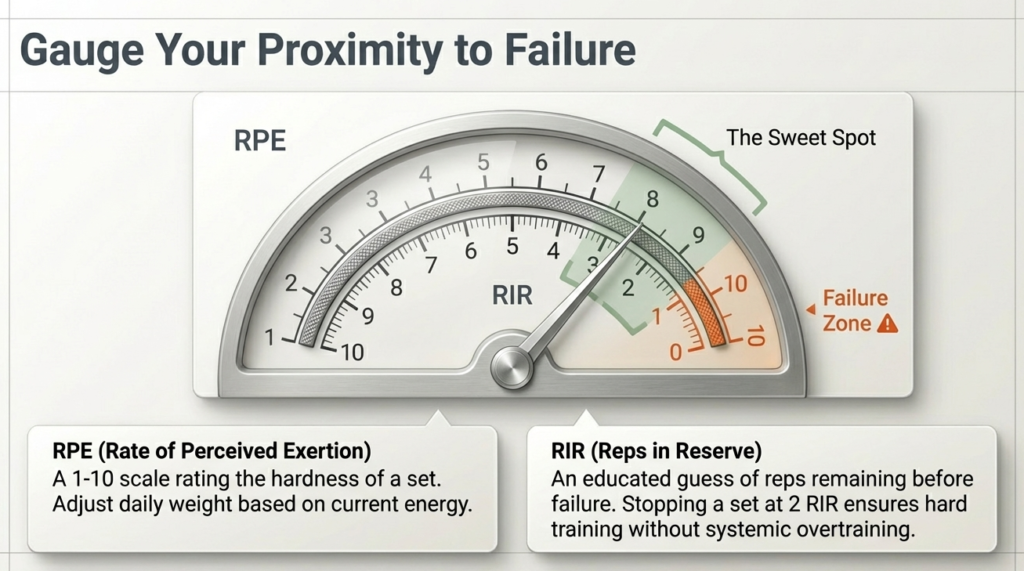
Understanding RPE and RIR: Proximity to Failure Explained
This image explains how RPE (Rate of Perceived Exertion) and RIR (Reps in Reserve) work together to measure training intensity. The gauge highlights the “sweet spot” where most effective training occurs—just short of failure. Training in this zone allows you to stimulate muscle growth and strength while preserving recovery. Constantly pushing into the failure zone increases fatigue and reduces performance over time. By using RPE and RIR, lifters can objectively adjust their effort based on daily readiness. This makes training more consistent and sustainable. Mastering these tools is essential for anyone looking to apply auto-regulation effectively in their routine.
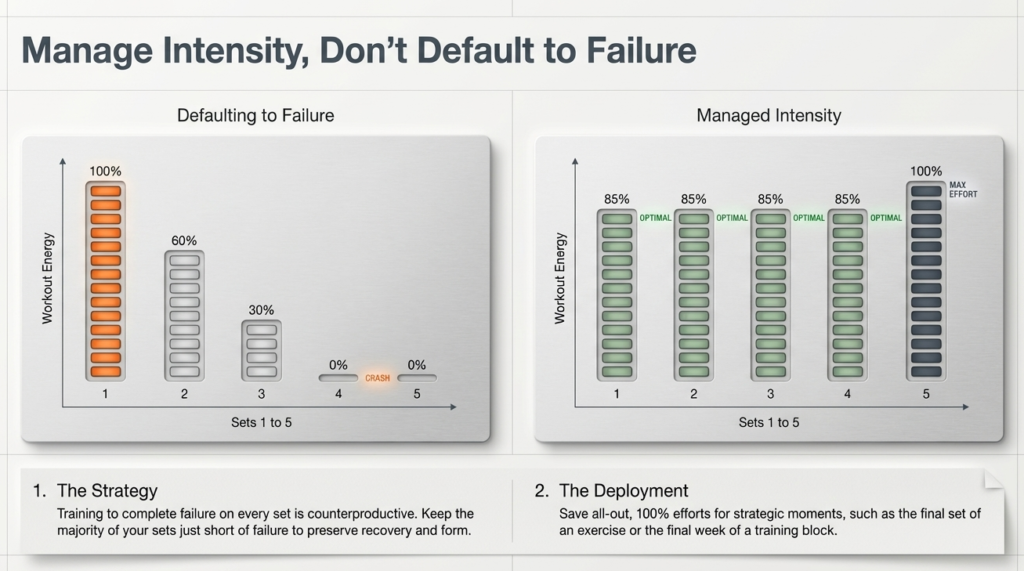
Manage Intensity: Why Not Every Set Should Go to Failure
This image compares two training approaches: constantly pushing to failure versus managing intensity strategically. The left side shows how training to failure quickly drains energy, leading to performance crashes in later sets. The right side demonstrates how controlled intensity maintains consistent energy output across all sets. This allows for higher-quality training and better overall volume. Auto-regulation emphasizes staying just short of failure for most sets while reserving maximum effort for specific moments. This approach improves recovery, reduces injury risk, and enhances long-term progress. It reinforces the idea that smarter training—not harder training—produces the best results.
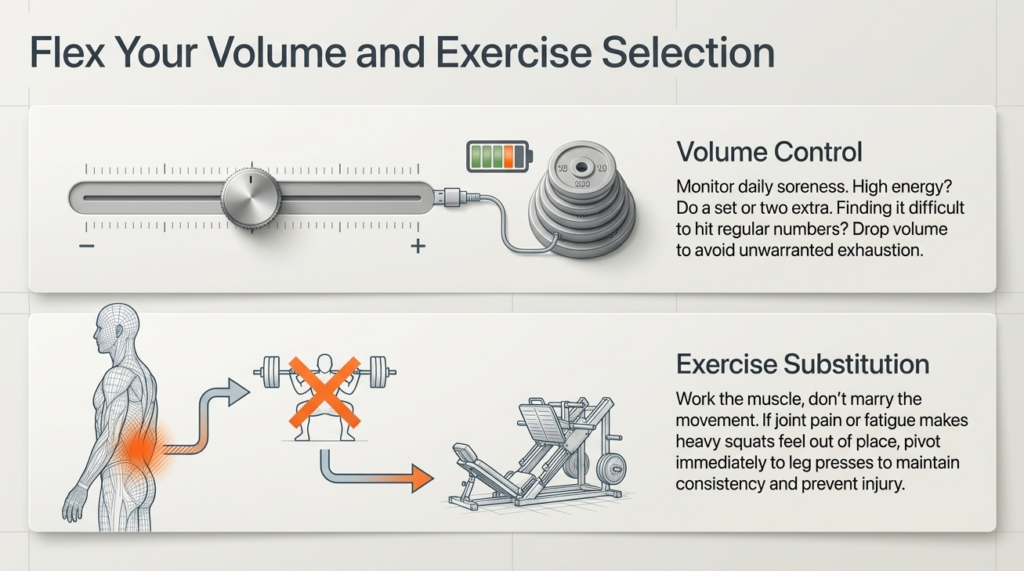
Flex Your Training: Volume Adjustment and Exercise Substitution
This image highlights two key auto-regulation strategies: adjusting training volume and modifying exercise selection. It shows how volume can be increased or decreased based on daily energy and recovery levels. On high-energy days, adding extra sets can boost progress, while reducing volume on low-energy days prevents overtraining. The image also demonstrates exercise substitution, where movements are changed to avoid joint pain or fatigue. For example, replacing heavy squats with leg presses can maintain training quality without unnecessary strain. This flexibility ensures consistent progress while minimizing injury risk, making your training more adaptable and sustainable over time.
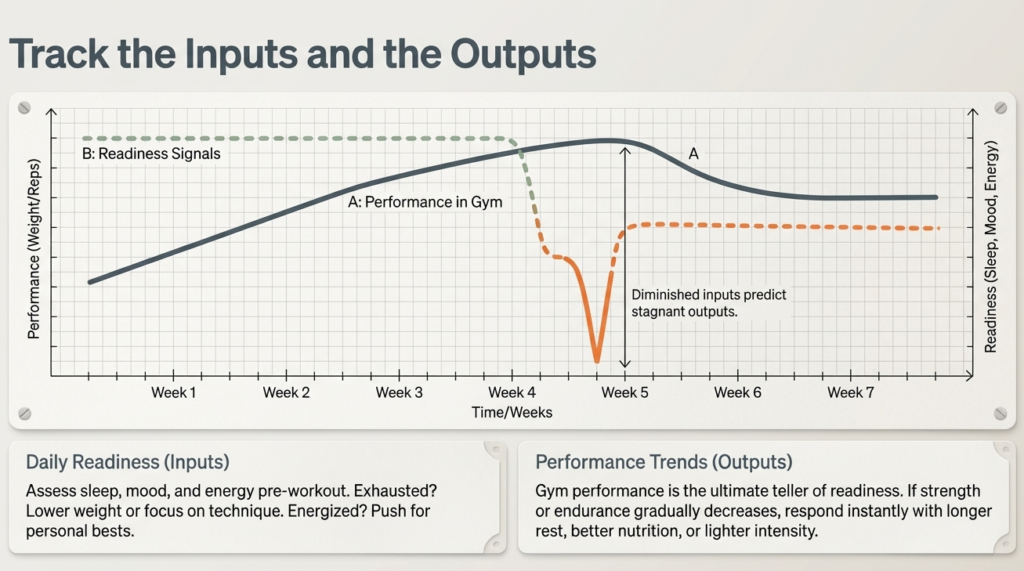
Track Inputs and Outputs: Readiness vs Performance Trends
This image illustrates the relationship between daily readiness signals and long-term performance trends. Readiness factors such as sleep, mood, and energy directly influence gym performance. When these inputs decline, performance typically follows. By tracking both inputs and outputs, lifters can identify patterns and make informed adjustments. Instead of reacting emotionally to a bad workout, they can recognize whether it’s part of a larger trend. This data-driven approach is a key component of auto-regulation. It allows you to respond intelligently with changes in intensity, volume, or recovery strategies, ensuring continuous progress without unnecessary setbacks.
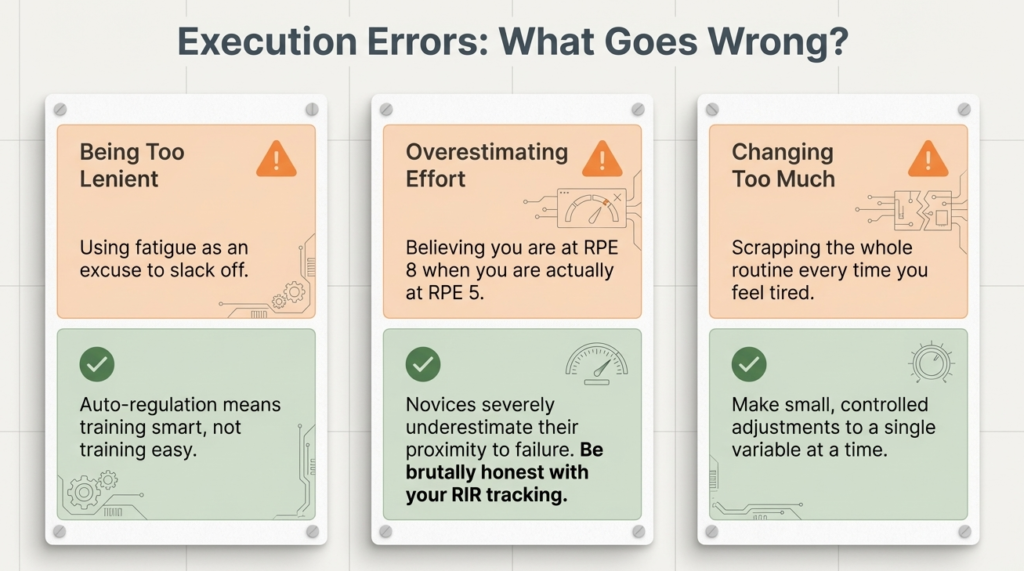
Common Auto-Regulation Mistakes and How to Fix Them
This image highlights the most common mistakes people make when applying auto-regulation. Being too lenient can lead to undertraining, while overestimating effort can result in ineffective workouts. Another major mistake is changing too many variables at once, which makes it difficult to track progress. The solutions emphasize training smart, being honest about effort levels, and making small, controlled adjustments. Auto-regulation is not about avoiding hard work but about applying effort intelligently. By avoiding these pitfalls, lifters can fully benefit from this approach and achieve consistent, long-term results without confusion or stagnation.
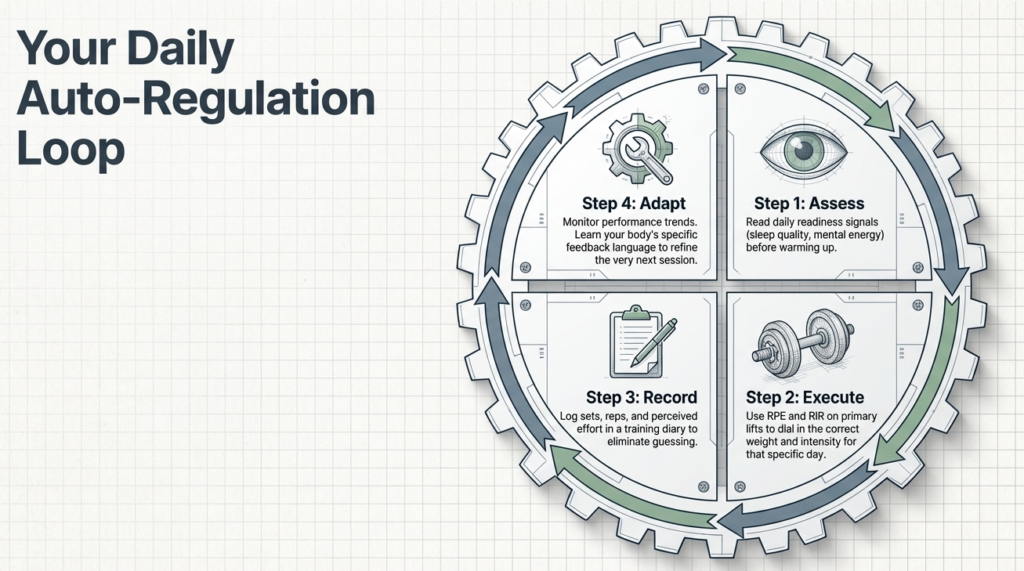
The Daily Auto-Regulation Loop: Assess, Execute, Record, Adapt
This image outlines a practical four-step system for applying auto-regulation in daily training. It begins with assessing readiness through sleep, energy, and mental state. Next comes execution, where RPE and RIR guide training intensity. The third step involves recording performance data to track progress accurately. Finally, adaptation uses this feedback to refine future sessions. This loop creates a continuous improvement cycle, ensuring that training evolves based on real-world performance. By following this system consistently, lifters can eliminate guesswork and make smarter decisions. Over time, this structured approach leads to better results, fewer injuries, and greater training efficiency.
Auto-Regulation Mindset: Take Control of Your Training
This image emphasizes that auto-regulation is more than just a training method—it is a mindset. It encourages lifters to take an active role in their development by valuing recovery, listening to their body, and using performance as a guide. Instead of blindly following a program, you become responsible for adjusting your training based on real feedback. This approach fosters long-term consistency and reduces the risk of burnout or injury. By shifting your mindset from rigid execution to intelligent adaptation, you unlock better results. Ultimately, success in training comes from understanding your body and making decisions that support sustainable progress.

Gearless Physique
Physique Without Gear
Your transformation starts now. Who's with me?