Table of Contents
Toggle6-Pack Abs In A Bulking: Is It Myth or Reality
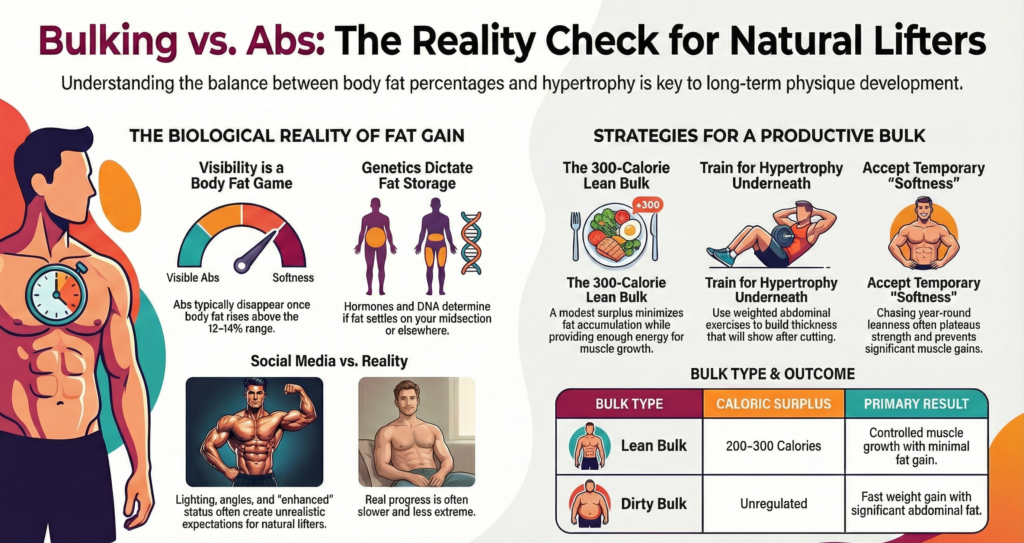
For natural lifters, maintaining visible abs during a bulking phase is more challenging than social media suggests. As calorie intake increases to support muscle growth, body fat inevitably rises, which often blurs abdominal definition. Typically, abs remain visible around 8–12% body fat, but productive bulking usually pushes this range higher. Genetics also play a major role, determining where fat is stored and how quickly abs disappear. A lean bulk, with a controlled calorie surplus, helps minimize fat gain while supporting hypertrophy. In contrast, dirty bulking leads to rapid fat accumulation and loss of definition. Understanding this balance allows lifters to build muscle effectively without unrealistic expectations.
Is It Myth or Reality: Abs In A Bulking
The concept of having visible abs when in a bulking stage is now one of the most controversial concepts in the contemporary fitness industry. Social media is full of athletes who declare that they are bulking with abs, which is confusing those who are natural trainees. Numerous lifters reckon that, with the appropriate program, supplements, or genes shredded abs can be accompanied by calorie surplus. But there is a more subtle story that is told by physiology. To determine whether abs in a bulking phase are a myth or reality, then we shall need to know about body fat, muscle gain, hormones and realistic expectations.
What is the Real Meaning of Bulking
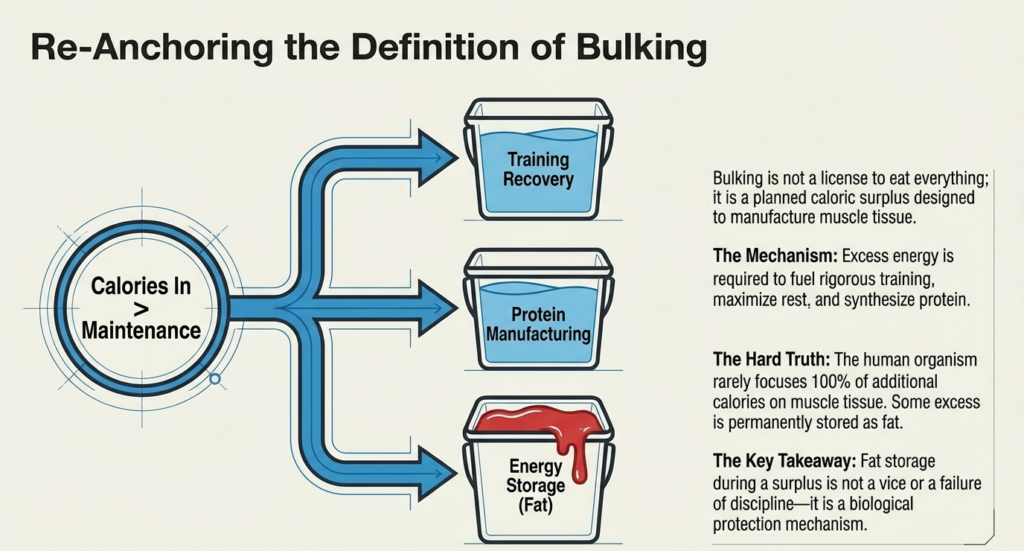
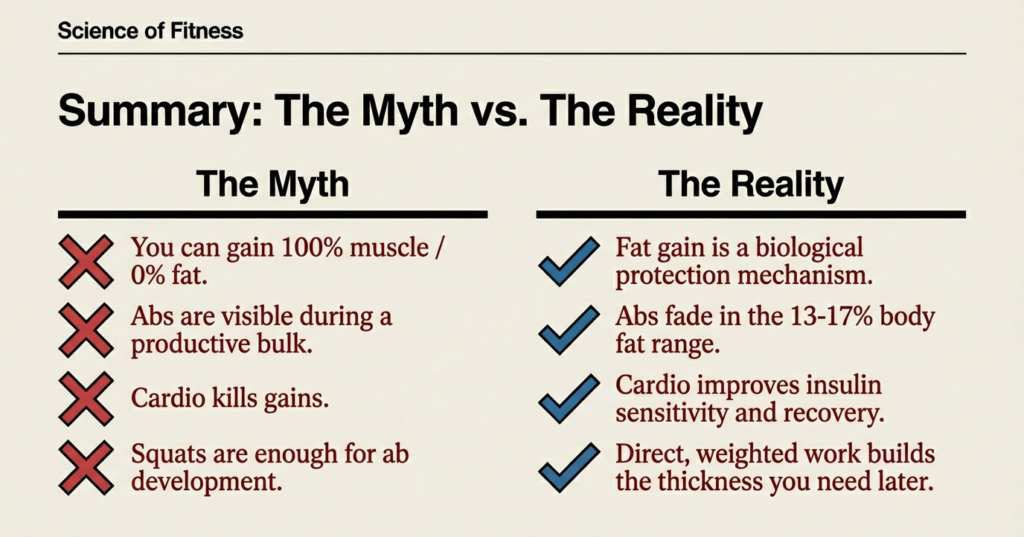
Bulking is a planned stage where the calories consumed are greater than the maintenance levels to help build the muscles. Excess energy is used to improve the rigorous training, rest, and protein manufacturing. Nevertheless, the human organism hardly ever focuses all additional calories on muscle tissue. Some of the excess is permanently stored in form of fat. This is not a vice, this is a biological protection. The assumption that one should gain zero fat when bulking does not understand the mechanisms of metabolism and energy storage.
Why are the Abdominal Muscles the First to Go?
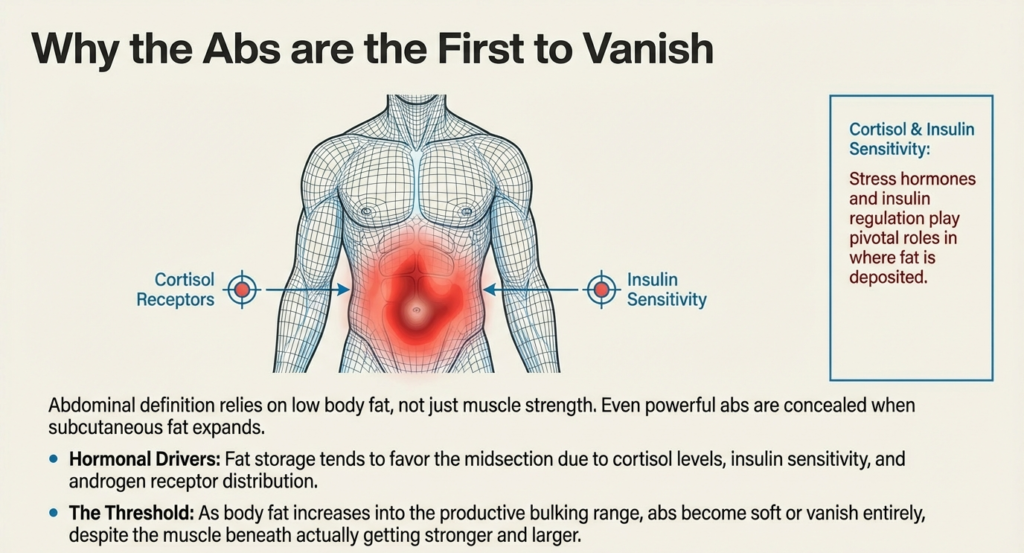
The ab definition does not rely much on the ab strength but low body fat. Even very strong abs are concealed when the subcutaneous fat becomes larger. In the process of bulking, the fat storage may tend to favor the midsection because of the hormones and genes. This pattern is affected by cortisol, insulin sensitivity and androgen receptor distribution. As body fat increases, such as 10 percent to 14 percent, abs tend to become soft or to be gone, despite the possibility of the abdominal muscles expanding beneath.
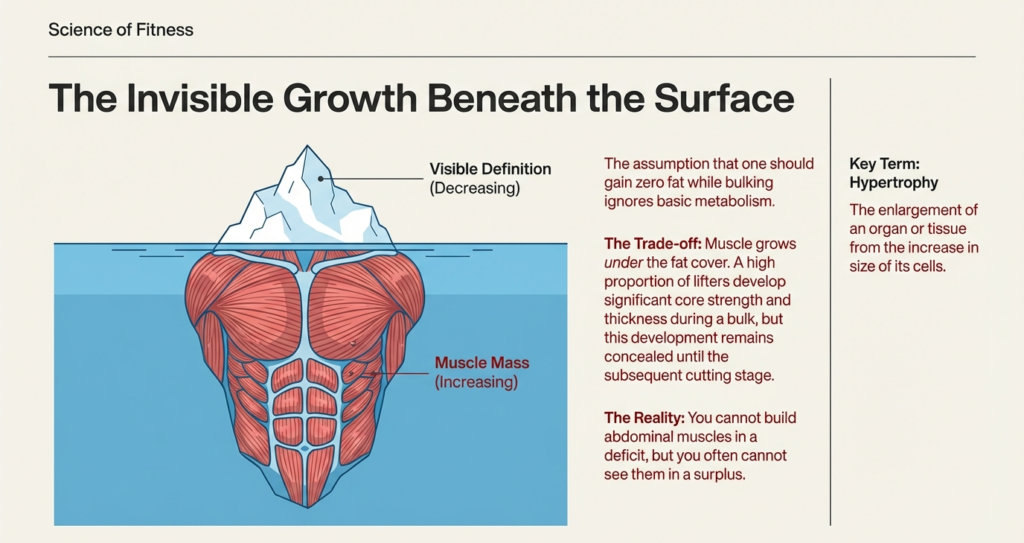
The invisible growth beneath the surface
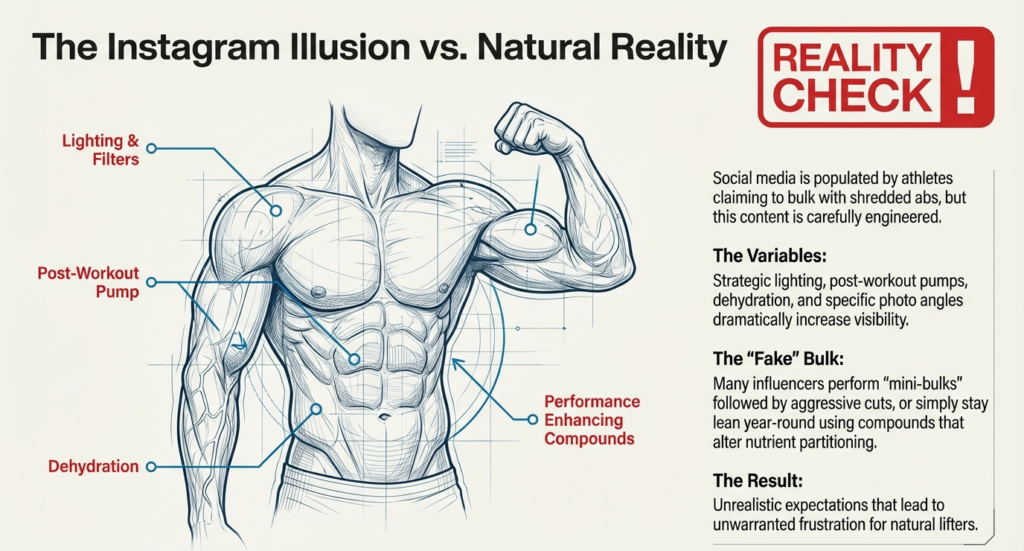
Much of the abs while bulking content is propagated with the use of carefully edited content. Ab visibility can be increased dramatically through the use of strategic lighting, post-workout pumps, dehydration, and photo angles. Mini-bulks in the short term that are followed by aggressive cuts are commonly termed as long bulks. In other instances, the enhanced athletes use the compounds which are known to change the nutrient partitioning which enables them to remain lean in excess. A comparison with these images results in unrealistic expectations and unwarranted frustration.
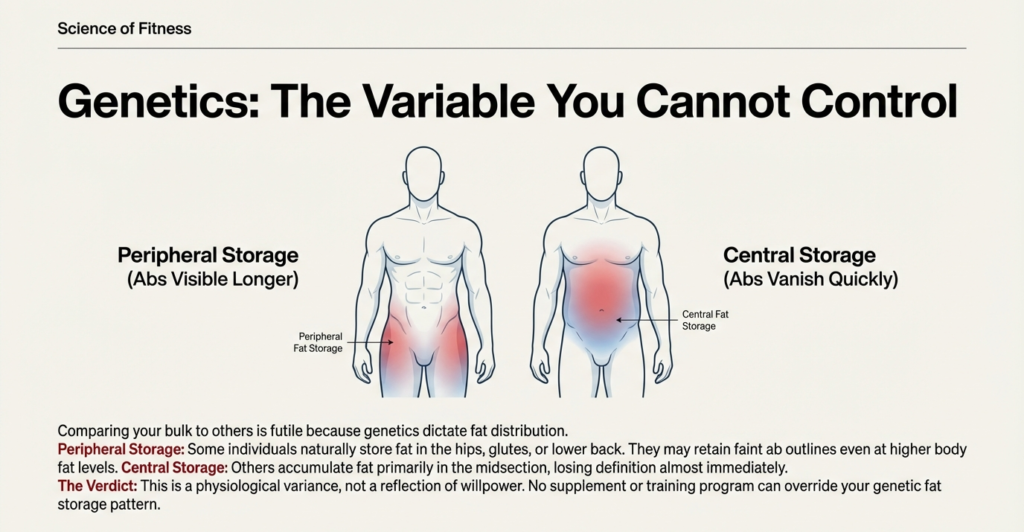
Genetics: The Big Variable
The genes greatly influence distribution and visibility of fats. There are those whose natural fat storage position is on the hips, glutes or lower back preceding the abdomen. Such individuals can persist in having faint ab outlines even at slightly increased fat levels on the body. Other ones accumulate fat in the middle, losing abs easily. This does not imply that this is a measure of the discipline in an individual. It is nothing but a manifestation of variations in physiology that no will power and supplements can overcome.
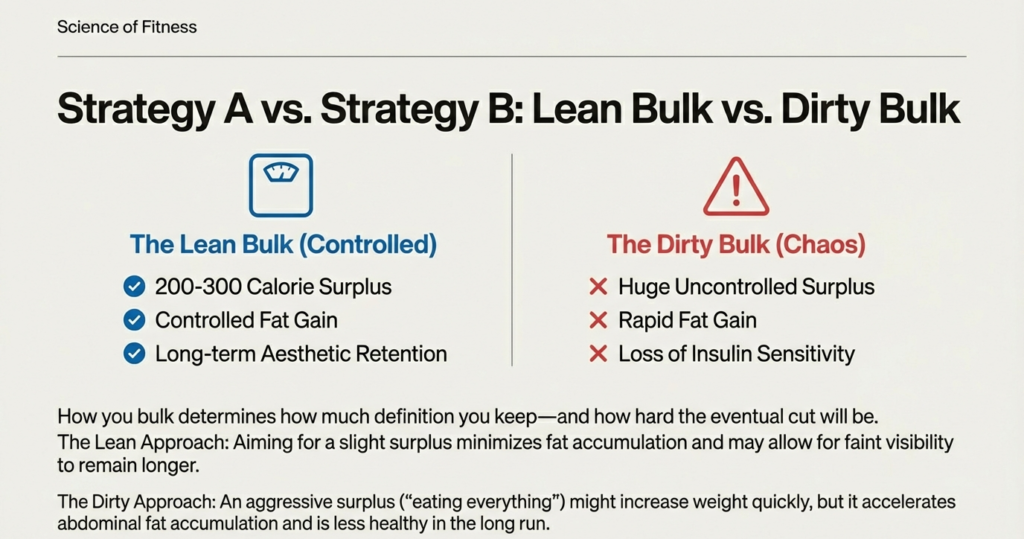
Lean Bulk vs Dirty Bulk
A lean bulk strives to achieve a low amount of calorie surplus typically 200-300 calories over maintenance. This strategy reduces the accumulation of fat and could give the opportunity to show some ab in the long term. The dirty bulk on the other hand is a huge excess with little control of food quality. Although fast, it also causes fat gain and abdominal fat loss, which is why it is not as aesthetics and health-loving in the long run as lean bulking.
Is It Real to Build Abs when Bulking?
No, though, abdominal muscles cannot be developed in a bulk as any other group of muscles. Ab thickness will be increased through progressive overload, weighted ab workouts, and adequate rest. Nonetheless, the abs are not visible regardless of how thick they are. The growth of muscles takes place under the fat cover. A high proportion of lifters are able to develop a very nice core strength at bulking stages, although what is observed is not definite until well into a cutting stage.
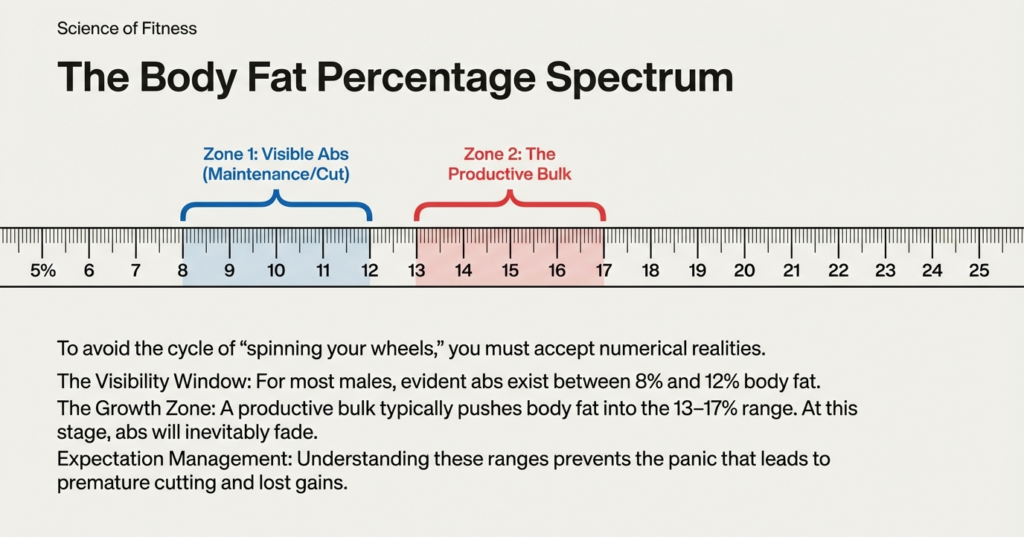
Percentage of body fat and Abs Visibility
In the majority of males, evident abs are shown between 8 and 12 percent fat. Body fat has a tendency to enter the 1317% zone in the process of a productive bulk. At this stage, abs can either be light or not, genetics dictate. This fact makes it impossible to expect the stage-ready abs when eating in a surplus. The knowledge of these ranges is useful in establishing realistic expectations and there is avoidance of cyclic cutting and rebuking.
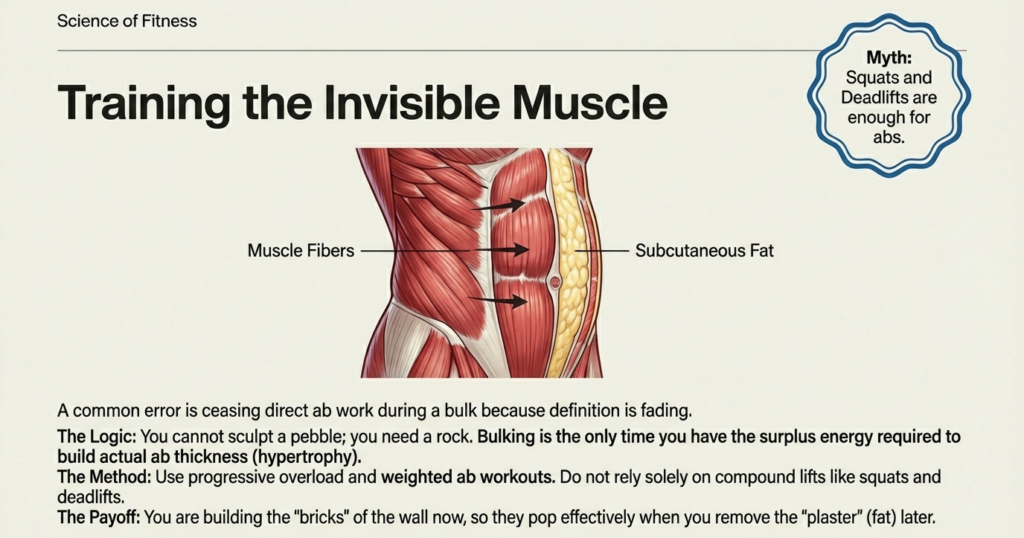
Training the invisible Muscle
A lot of the lifters cut back on ab training when they are bulking thinking that heavy compounds suffice. Although squats and deadlifts are core workouts, they do not give the optimum ab hypertrophy. The second error is that of consuming too much junk food that increases insulin resistance and hastens fat accumulation. Sleeplessness and stress combined with poor management increase cortisol, which promotes fat storage in the waist. All these cause absenteeism to fade away too quickly.
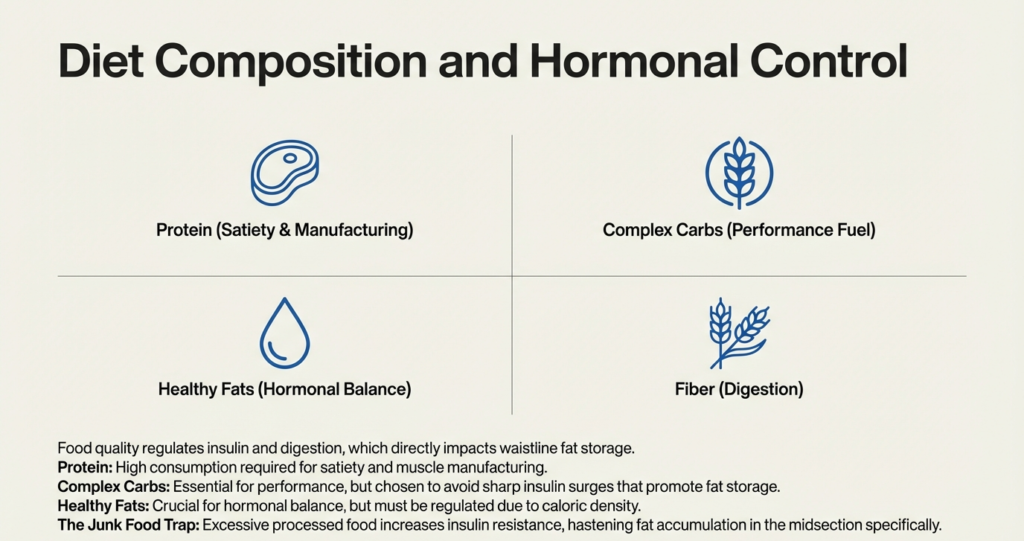
Dietary Plans to Keep Thinner.
Protein consumption must be high and it helps in muscle building and giving one a feeling of fullness. Complex carbohydrates enhance the training performance without sharp insulin surges. Healthy fats maintain hormonal balance but are to be regulated because of the high level of calories. Fibered foods enhance the digestive system and nutrient distribution. Food quality is also important even in a bulk. The regulated overconsumption of foods rich in nutrients would serve to reduce unwanted fat accumulation and contribute to further improvement over time.
Is There a Yes or No to Cardio During Bulking?
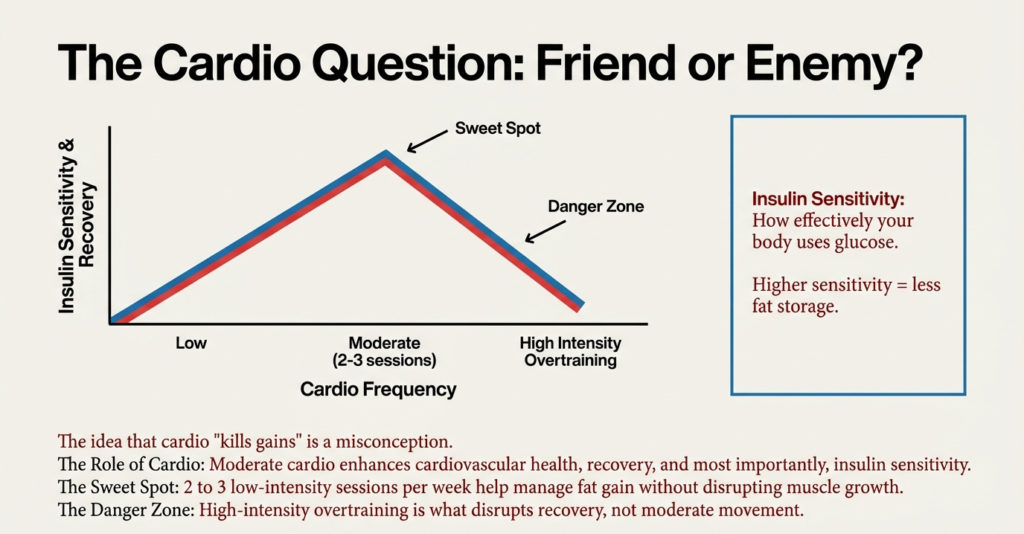
Cardio in bulking is misconceived. Moderate cardio enhances cardiovascular health, insulin sensitivity and recovery. Calories should be altered and need not necessarily result in the killing of gains. Two to three low intensity sessions per week will assist in controlling fat gain and maintaining conditioning high. However, overtraining of cardio in the form of high-intensity training can disrupt recovery when not done in an intelligent programmed.
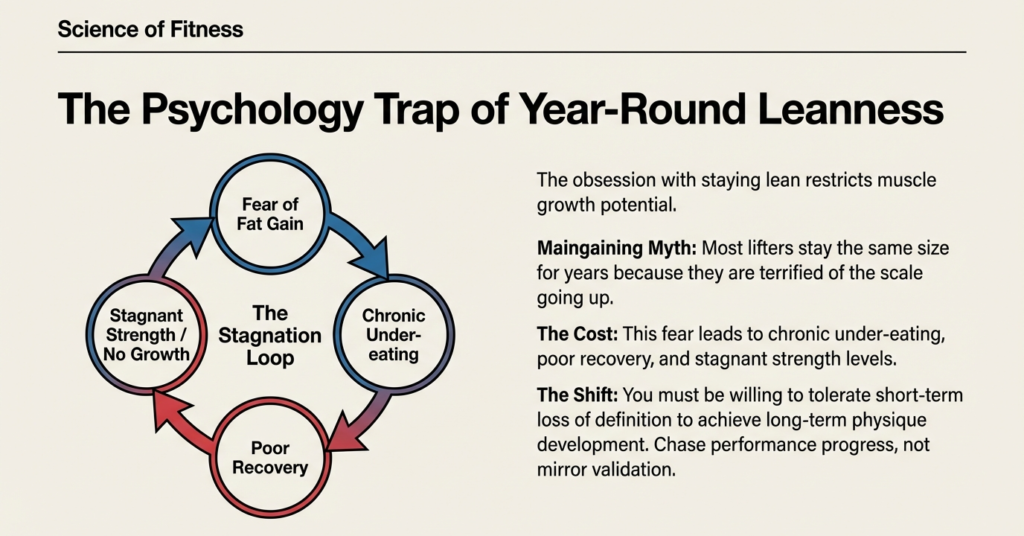
The Psychology Trap of Chasing Abs All Year Round.
Attempts to stay lean at all times may restrict muscle growth. Most lifters will be of the same size since they are afraid of gaining fat. This causes poor recovery, under-eating and stagnant strength. It is common to tolerate short-term loss of ab definition when long-term development of physique is concerned. Performance progress should bring about confidence rather than leanness at all times.
The existence of abs during a bulking period is not strictly a hoax, but it is hardly the case how social media presents it. There are those who can maintain the partial visibility because of genetics and lean bulking techniques. Achieving full-fledged abs with a lot of muscle mass is unrealistic to the majority of the natural lifters. The actual bulking objective is to build muscle, gain strength and enhance structure rather than attaining razor-sharpness.
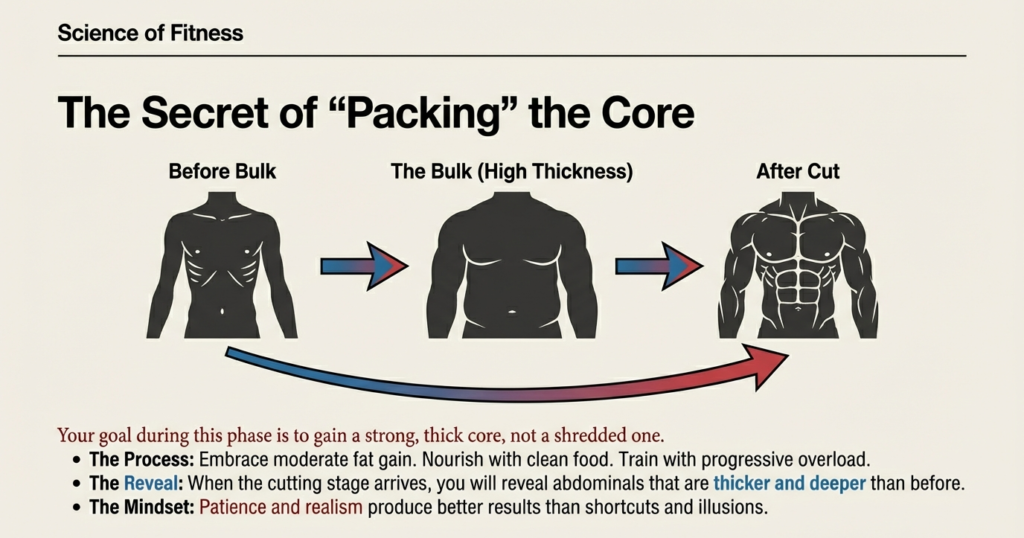
The Slimming Secret of Brat and Packing.
During your bulk the point of interest is to gain a strong, thick core. Embrace some gain of fat in the process. Nourish clean, excess moderate and training progressive. Once the cutting stage comes around, you will have fat on the abs that you trained and they will be better than ever. The patience and realism are in the long run better than the short-cuts and illusions.
Final Takeaway
Abs in a bulking period are more like a range as opposed to a yes-or-no idea. You can retain certain definition, but the dream of shredded abs and attempts to become bigger is self-defeating. Develop muscle initially, expose it definitely. Not only the most efficient, but also the most wholesome and long-term friendly regarding the physique, it is the most effective strategy.
Read more: https://www.muscleandstrength.com/workouts/12-week-ab-workout-for-ab-definition-and-core-strength

Gearless Physique
Physique Without Gear
Your transformation starts now. Who's with me?