Table of Contents
ToggleHow To Break Plateau: Progressive Overload Made Simple in 2026
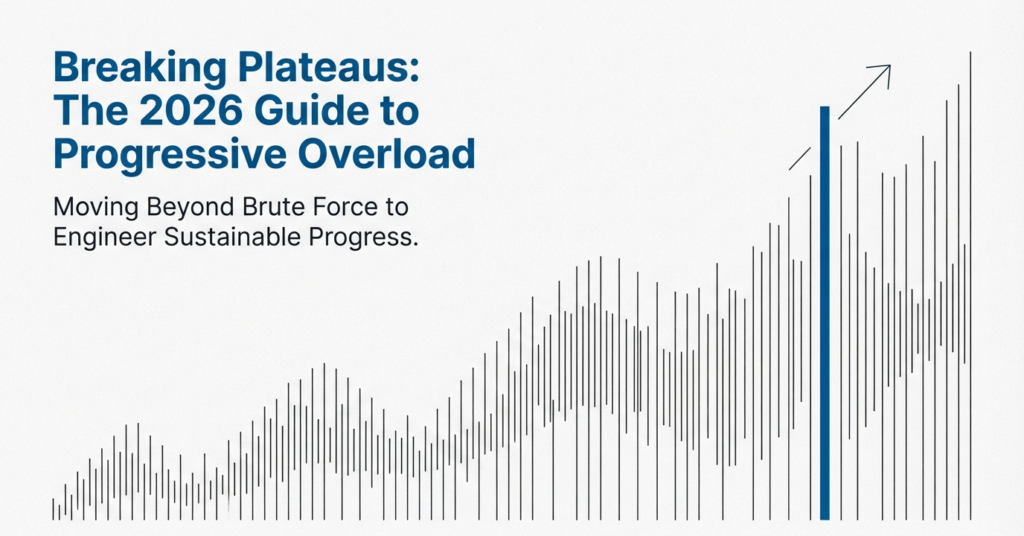
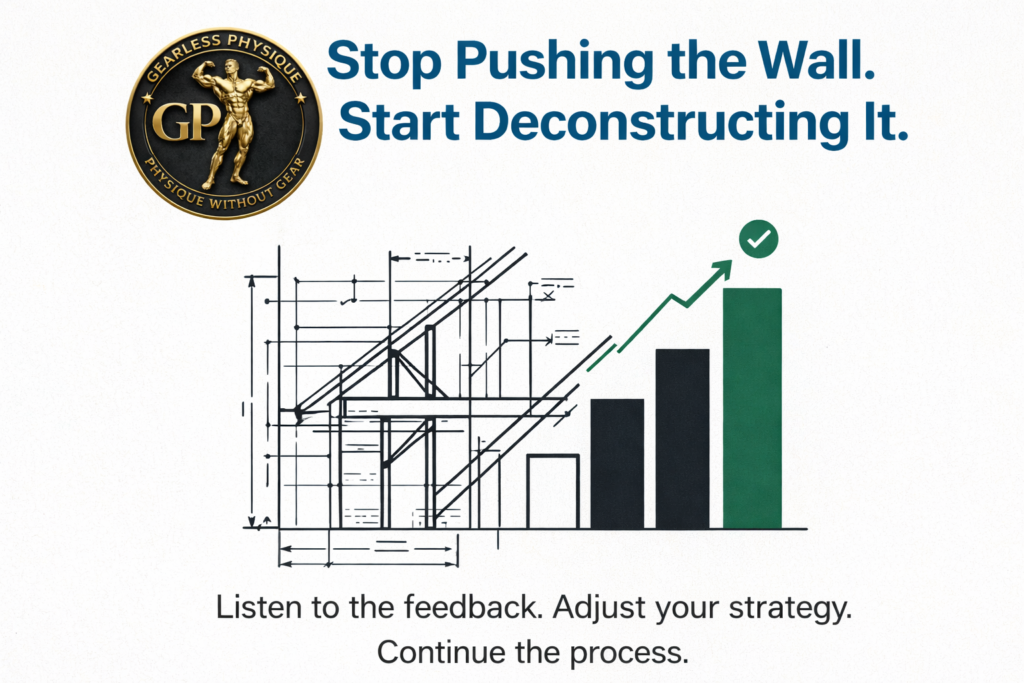
In 2026, breaking plateaus is no longer about pushing harder every session—it’s about applying progressive overload with precision and intent. The rising bar graph represents consistent, structured progress built over time through smart adjustments in training variables like volume, intensity, frequency, and recovery. Instead of chasing random intensity spikes, lifters focus on measurable improvements that accumulate week by week. This approach reduces burnout, improves performance consistency, and supports long-term muscle growth. Sustainable progress comes from small, intelligent increases that the body can adapt to. When overload is applied systematically, results become predictable, allowing you to move forward with confidence and control.
Introduction: The Science Behind Training Plateaus
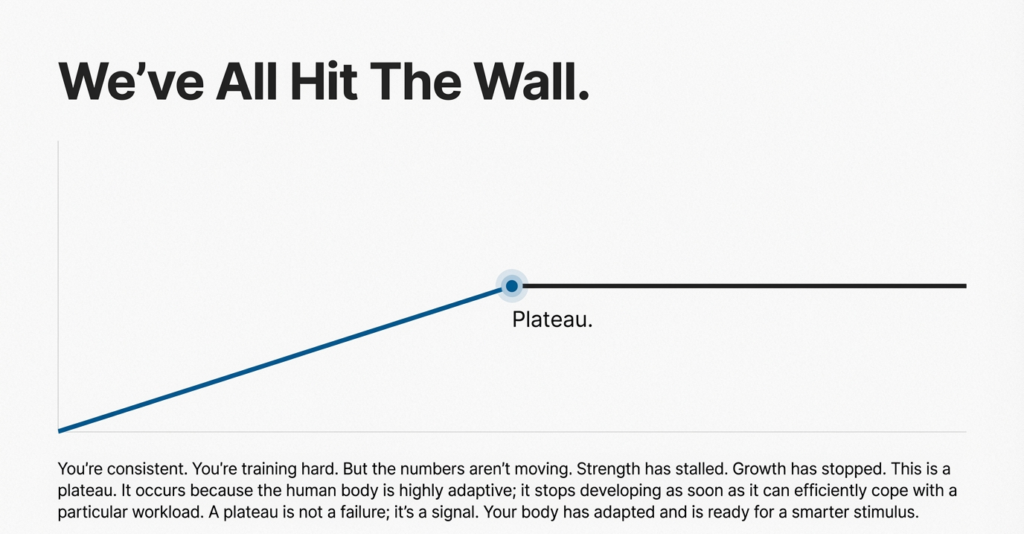
One of the most disappointing stages in fitness is a training plateau. You are dieting, attending every session, and training hard- but you are not gaining strength, building or losing any fat. Plateaus occur due to the fact that human body is very adaptive. It would stop developing as soon as it is efficient to cope with a particular workload. In 2026, smarter insights on training and improved recovery strategy means that you will break a plateau not by working harder, but by working smarter. The main concept of this is progressive overload – applied effectively and in a sustainable manner.
What is progressive overload, actually?
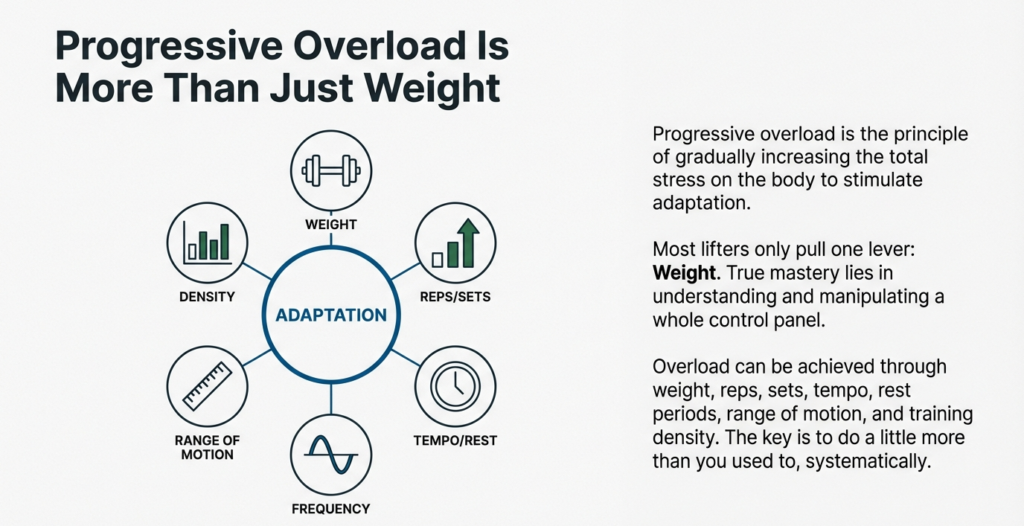
Progressive overload implies accumulation of stress on the body in a gradual manner in order to give it a motive to adapt. It is very simplified into people thinking that it is simply lifting heavier, and that is only one piece of the equation. The overload may be achieved by weight, reps, sets, tempo, rest, range of motion, or even training density. Simply stated, you will have to do a little more than you used to do in a systematic manner. When used wisely, gradual overload triggers muscle development, strength, and performance.
The reason why most people fail at progressive overload.
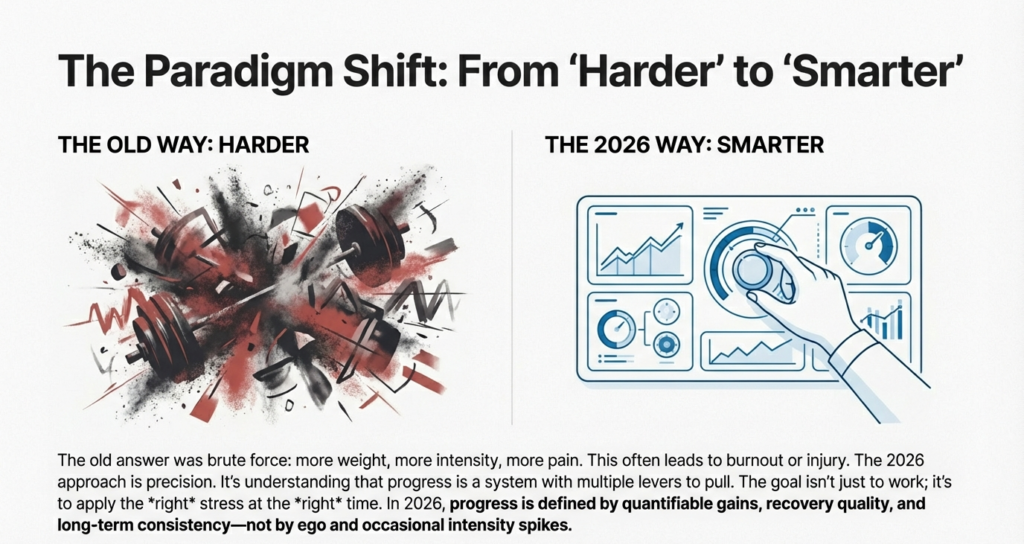
The most serious error is overloading too intensively. The addition of weight per session, lack of attention to form or training to failure are always causes of burnout or injury. The other mistake is that many people fail to change their training regimen in months and stay at the same level of training. Other individuals are also misinformed about soreness and progress. Soreness of the muscles is not synonymous with growth. Strong training in 2026 will be based on quantifiable gains, the quality of recovery, and consistency over the long term- not ego boosting and occasional spikes in intensity.
3 main pillars: your strategic framework for breaking plateau
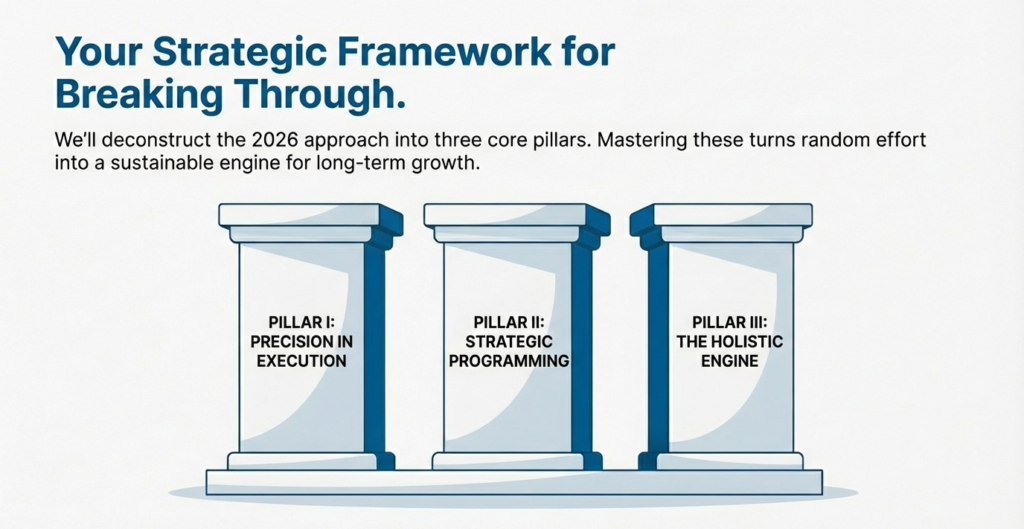
There are 3 main core pillars for breaking our plateau. Pillar 1 is precision in execution, pillar 2 is strategic programming, and 3rd and last pillar is the holistic engine. So these 3 pillars have core pillar for breaking plateau.
Pillar 1: precision in execution
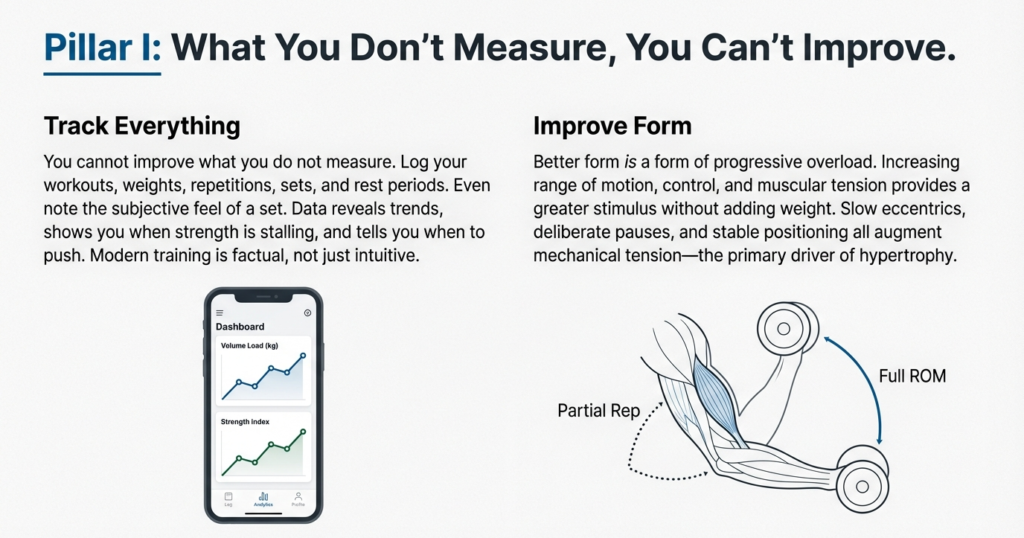
Something you do not measure you cannot improve. To escape plateaus, there is no alternative to tracking workouts. Record your workouts, weights, repetitions, sets, and your rest period, and even the experience of the set. Trends are established over time. You will be able to know when strength stops, when the amount is excessive, or when it is not recovering adequately. Contemporary training is not intuitive, it is factual. A simple notebook or notes application can be influential when used on a regular basis as well.
Select the Right Overload Variable
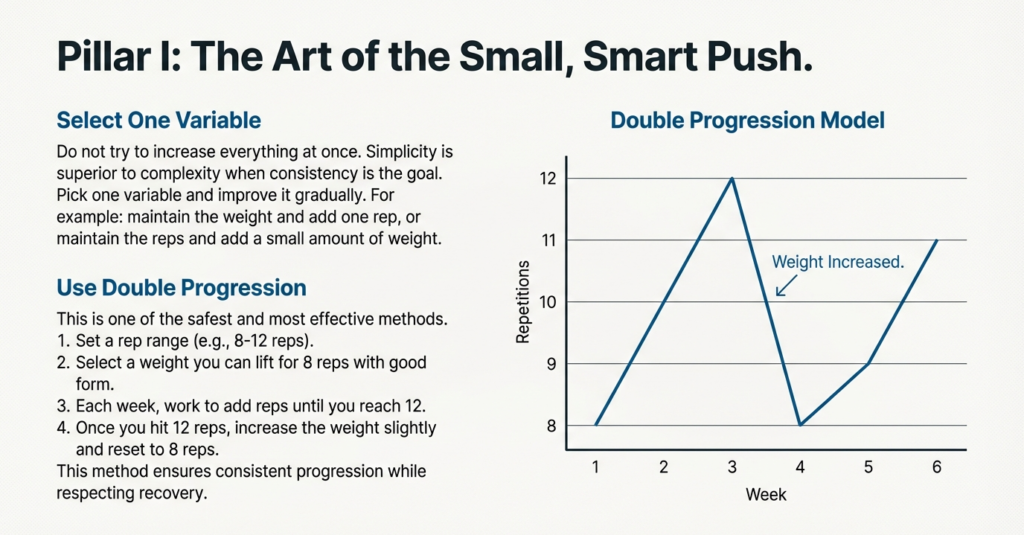
Progressive overload does not involve adding everything simultaneously. Take one variable and develop it gradually. E.g. maintain the weight, and increase by 1 rep/week. Or maintain reps constant and increase 12 kg after every two weeks. The additional set can also be added to increase total volume. Tempo control or shorter periods of rest are commonly applied by advanced lifters to develop overload without adding additional stress to the joints. Complexity is inferior to simplicity in cases where uniformity is the desired outcome.
pillar 1A: Use Double Progression
One of the most effective and safest ways to overcome plateaus is the doubling of the progress. Begin with a range of reps, say, 8–12 reps. Take a weight that you can handle 8 reps. Increase reps in each week until you reach 12 reps without poor form. After you have made it to the top of the range, add a bit of weight and go back to 8 reps. This will respect the recovery, guard joints, and remain a consistent progression without pushing the strength gains too quickly.
pillar 2: STRATEGIC programming
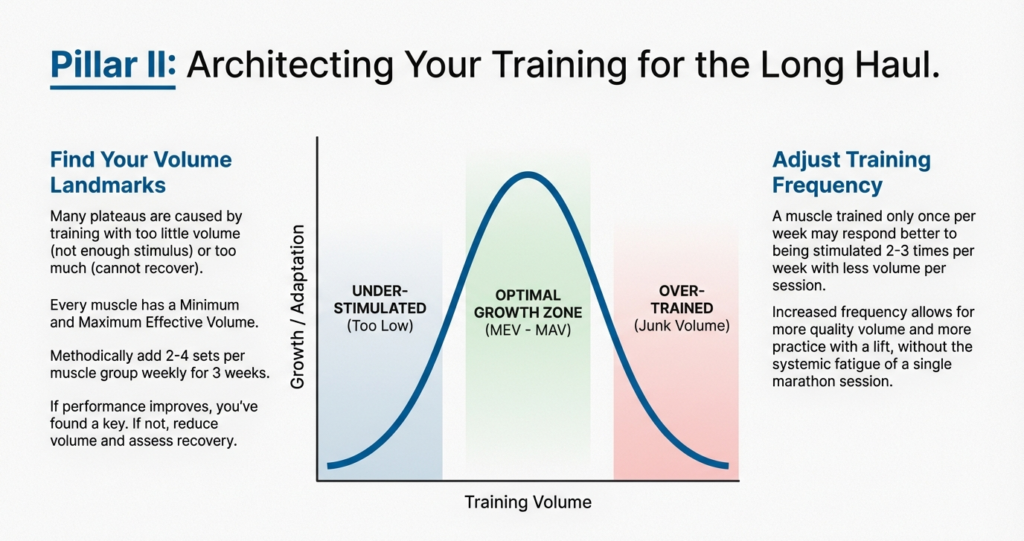
There are a lot of plateaus due to the lack of volume to grow or too much to restore. There is a minimum and maximum effective volume of each muscle. When you are under-training then you will not make progress. When you are over-training, exhaustion disguises improvement. In 2026 there are smart lifters who modify the volume and attribute the blame to genetics. Attempt adding 2-4 more sets to the weekly workout of every muscle in 3 weeks. In case there is improvement in performance, then you have discovered the lost link. Otherwise, minimize volume and re-examine recovery.
Deloads are not optional.
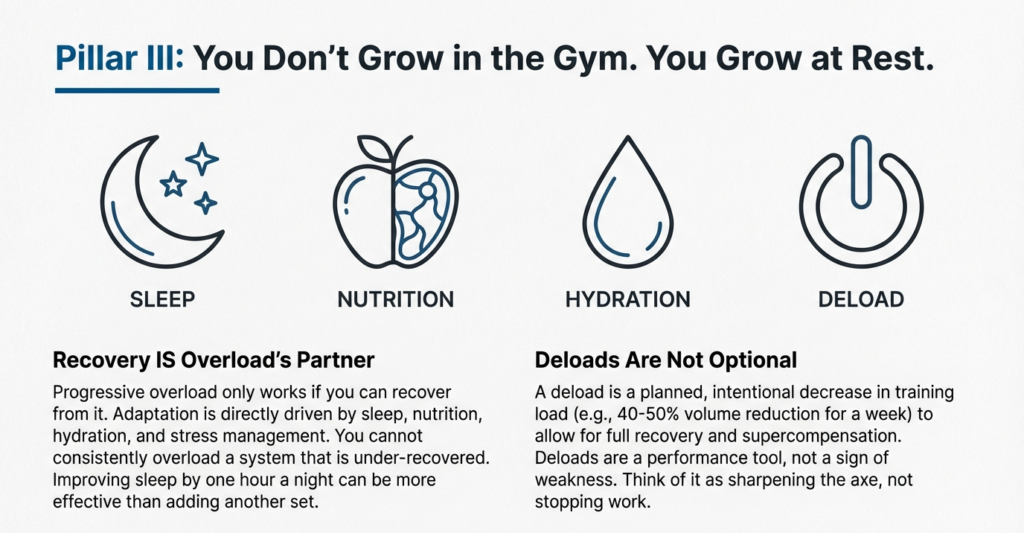
Deloading is an intended decrease in training load to enable recovery and supercompensation. Plateaus will come fast when deloads are ignored. Deload could be a reduction of volume of 40-50, decrease in intensity, or both in a week. It usually takes strength a good kick after a good deload. Imagine that it is sharpening the blade and not swinging a dull one. Deloads are a performance tool and not weakness, especially in long-term training.
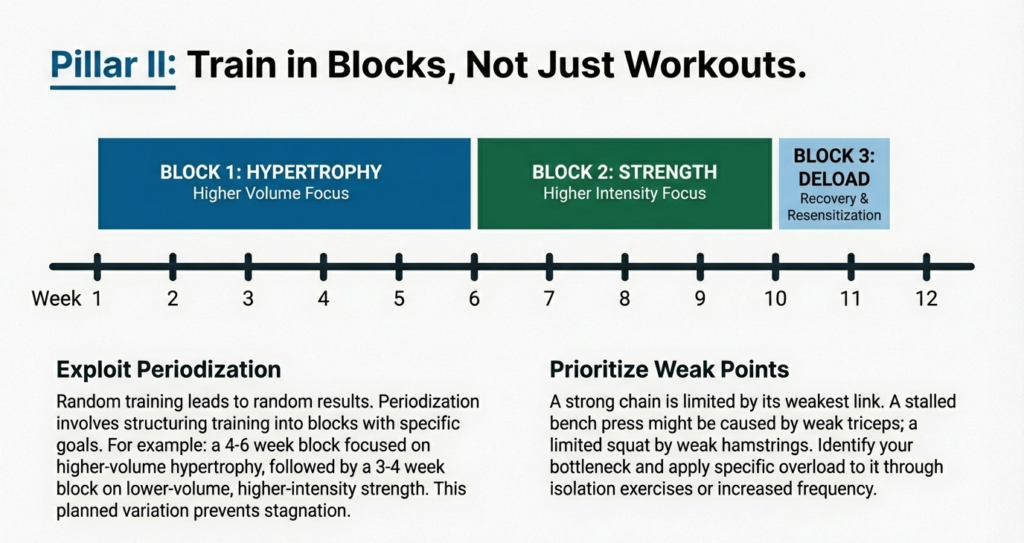
pillar 2a: train in blocks, not just workouts
Better form is a form of progressive overload. Ameliorating range of motion, control and muscular involvement enhance stimulus without increasing weight. Most of the lifters cheat as they fail to realize that they are shortening the number of reps or using momentum. Quality reps are now more important than ever in 2026. Slow eccentrics, deliberate pauses and stable position augment mechanical tension-the primary cause of hypertrophy. Ask yourself whether the muscle is really working before putting in the load.
pillar 3: Recovery Is a Component of Overload.
Progressive overload can only work with the aid of recovery. Adaptation is directly influenced by sleep, nutrition, hydration and stress management. It is impossible to overload a system that is not recovered. The improvement of sleep by an hour of sleep per night or a regular protein consumption turns many plateaus into a disappearance. Recovery does not happen in some passive form but is a part of progress. Work out, but rest even harder.
pillar 3a: Mental Plateaus Dot the Landscape.
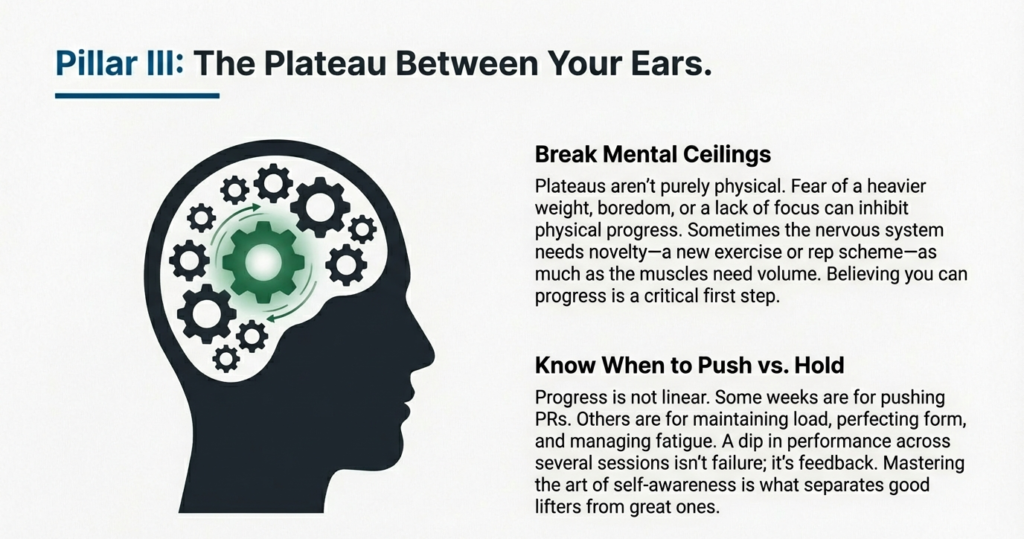
Plateaus are not exclusively physical. Progress may be inhibited by fear of increased weight, lack of motivation or boredom of training. Variations in exercise, alteration of training environment or rep schemes can jolt a person back into attention. Occasionally the nervous system requires novelty over and above the muscles. It is also about confidence- having the belief that you can move you forward more than most think. Shatter the glass ceiling and the tangible one may fall.
When to Push and When to Hold.
Linear progressive overload does not extend indefinitely. Weeks of pushing, weeks of holding. Knowing how to keep the course is an art. When performance decreases in several sessions, it is not an indication of failure. Grasp the load, clean-up form, make progress to recovery and push again. Success is not achieved by ceaseless escalation but by patience and self-awareness which ultimately leads to success in the long run.
Prioritize Weak Points
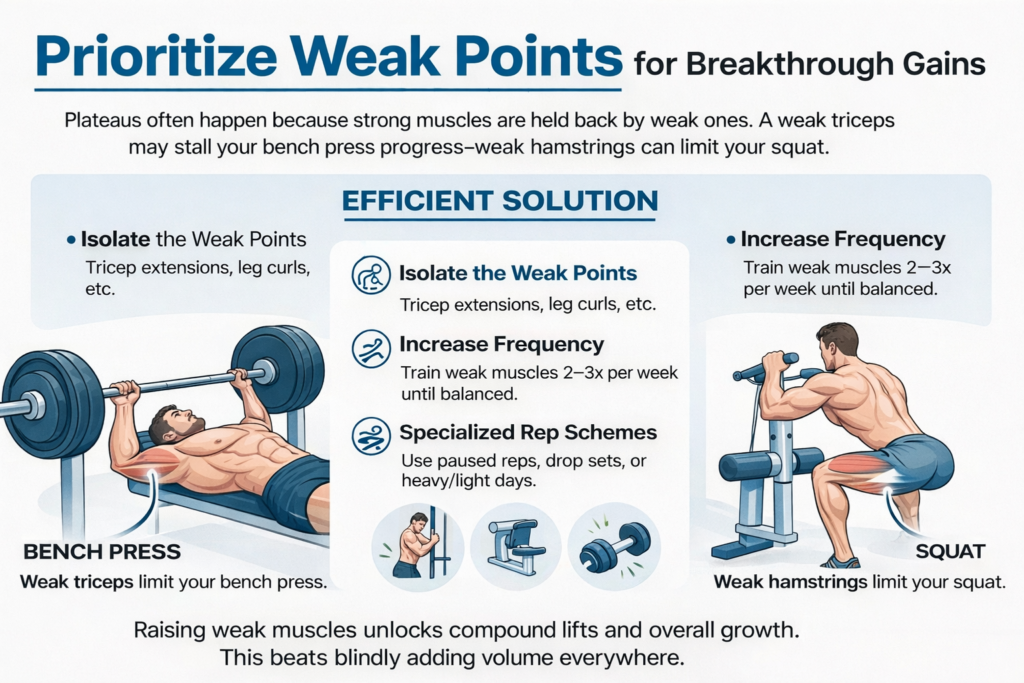
The plateaus are also frequent due to restraint of powerful muscles by weak ones. As an example, a weak triceps may halt progress in bench presses whereas a weak hamstring will limit squats. Determine the bottleneck and impose specific overload on the bottleneck. Include isolation exercises, more frequency or special rep routines. Raising the weak points opens up lifts of the compounds and general development. This is a much more efficient strategic method than a blind addition of volume in all places.
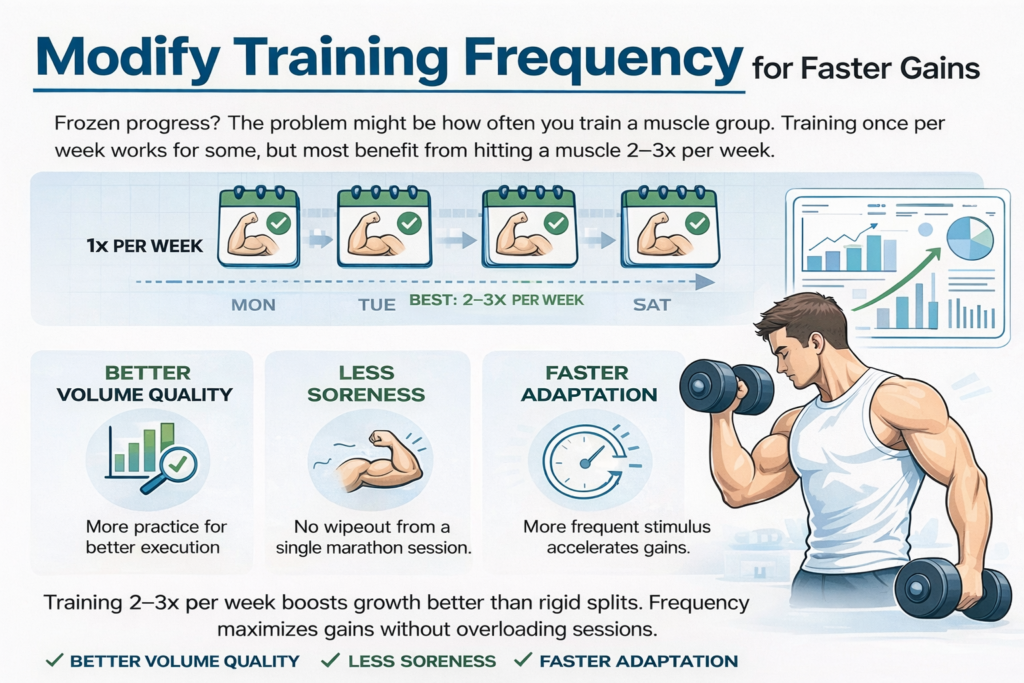
Modify Training Frequency.
In case one of the muscle groups is frozen, the problem can be the frequency. One time per week is effective in training a muscle, however, most people are more effective when exposed to it twice or even thrice a week. An increased frequency permits more quality volume and practice without overloading one session. Preferably, flexible frequency with respect to recovery capacity is utilized in 2026 rather than rigid splits. The objective is not destruction during a single exercise session, but prolific high-quality stimulation.
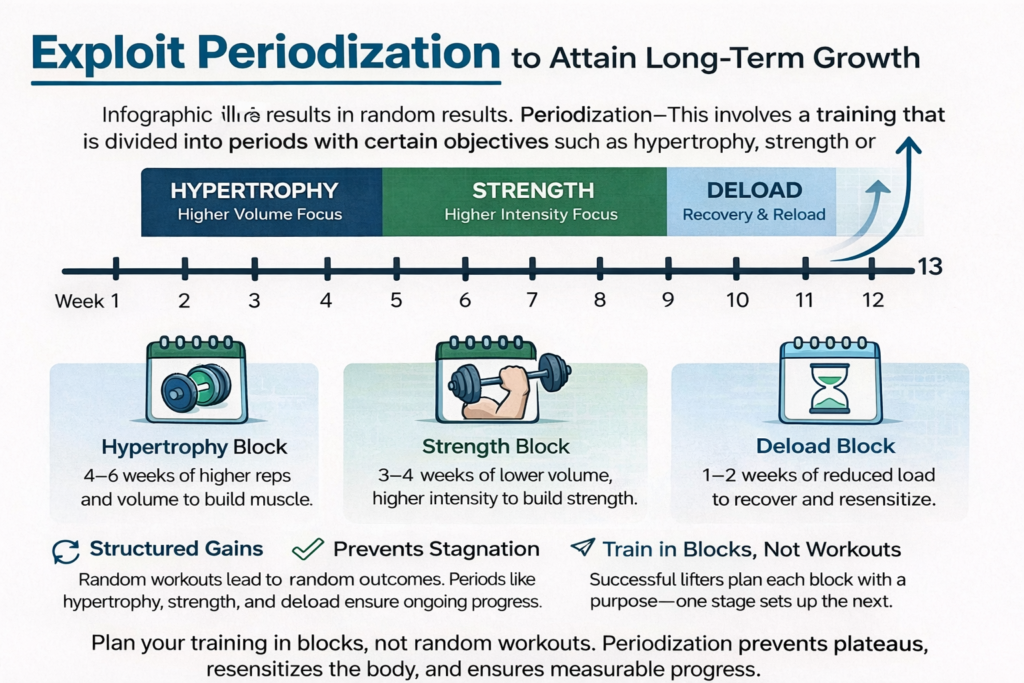
Exploit Periodization to Attain Long Term Growth.
Random training results in random results. Periodization- This involves a training that is divided into periods with certain objectives such as hypertrophy, strength or resensitization. An example of this is the use of 4-6 weeks of volume-based training 3-4 weeks of intensity based training. This organized change avoids the stagnation and keeps the body flexible. Successful lifters do not train workouts, but training blocks. Each stage leads to the next one.
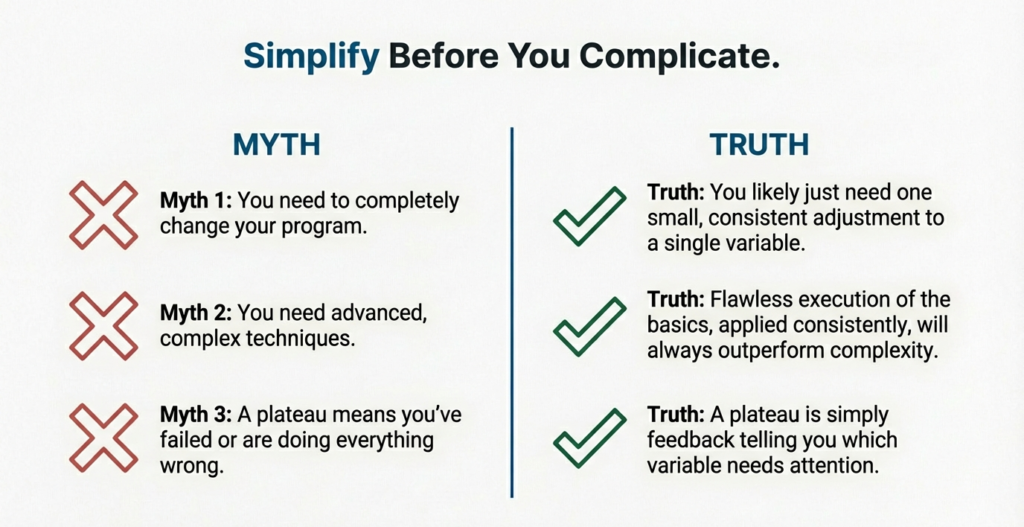
Popular Facts about Breaking Plateaus.
One of the myths is that you need to switch your complete program in case you find the progress slow. Sometimes it requires little changes. The other myth is that there is a need to have advanced techniques. The truth of the matter is that simple things implemented always outdo complicated ones. Plateaus do not indicate that you are doing everything wrong, they normally imply that there is a variable that requires attention. Make things simple first before making things complicated.
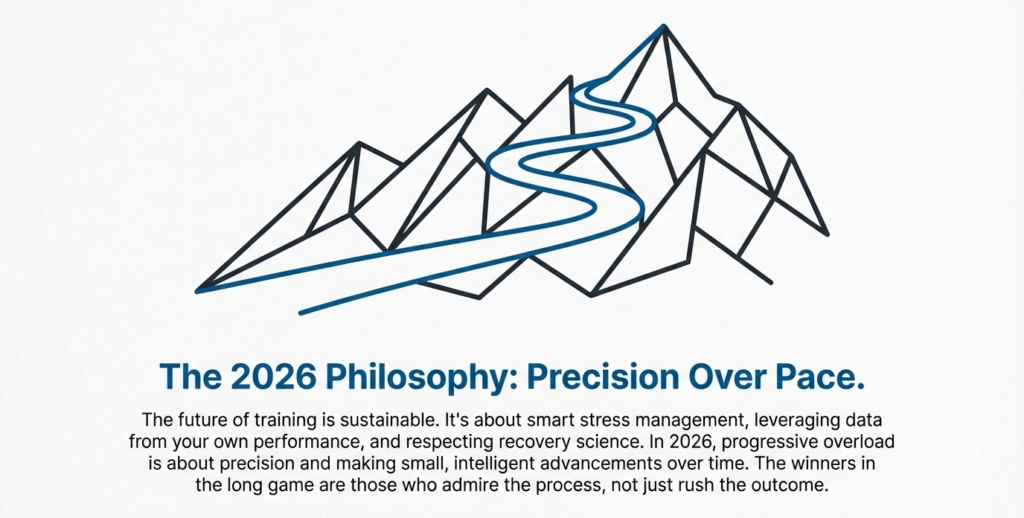
Progressive Overload in 2026: Not Harder, Smarter.
Sustainability has been given prominence in modern training. The smart stress management has demonstrated that wearable information, quality coaching training, and recovery science form a progress. In the year 2026, progressive overload is relating to precision, minor advancements in time. Winners of the long-term lifters are those who admire the process rather than expedite it.
Final Thoughts
The breaking of plateaus has nothing to do with pushing ahead, it is the conditions that create the possibility of pushing ahead. Gradual overload when simplified and taken slowly is effective with both novices and advanced lifters. Monitor your training, select the appropriate variable, value recovery, and think in blocks. Plateaus do not include roadblocks; they include feedback. Hear the call, change the strategy, and continue the process.
Read more: https://www.healthline.com/nutrition/weight-loss-plateau

Gearless Physique
Physique Without Gear
Your transformation starts now. Who's with me?