6-Day Workout Plan for Hard Gainers to Gain Mass
This complete infographic provides a visual summary of the 6-day workout plan for hard gainers, combining training, nutrition, and recovery strategies into one system. The Push-Pull-Legs split ensures optimal training frequency, while progressive overload drives continuous improvement. Nutrition plays a key role, emphasizing adequate protein intake and calorie surplus to support muscle growth. Recovery, including proper sleep and rest, ensures that muscles rebuild stronger after each session.
Supplements like creatine and whey protein can further enhance performance and recovery. Together, these elements create a comprehensive blueprint that enables hard gainers to achieve consistent and sustainable muscle gains.
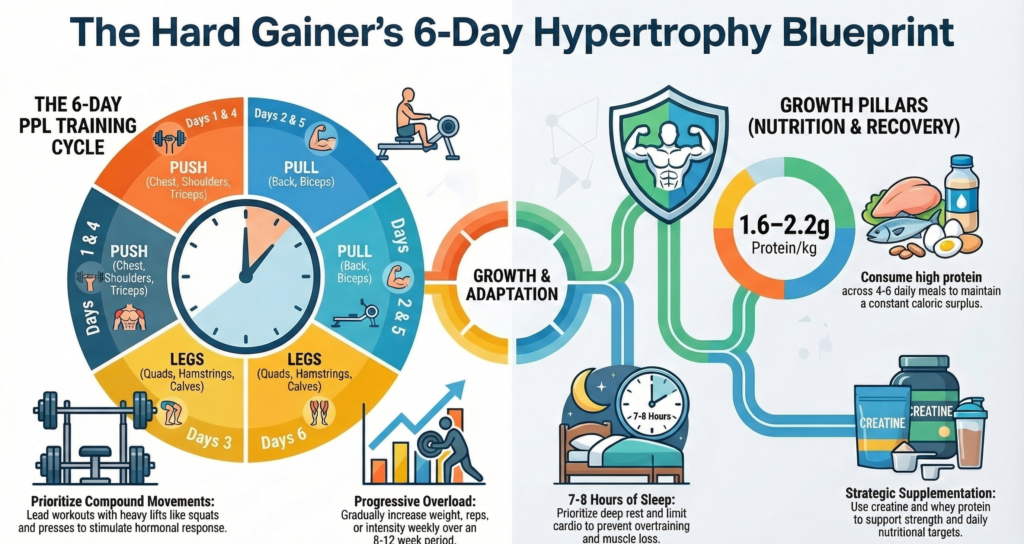
Hard Gainer Hypertrophy Blueprint – 6-Day PPL Workout Plan
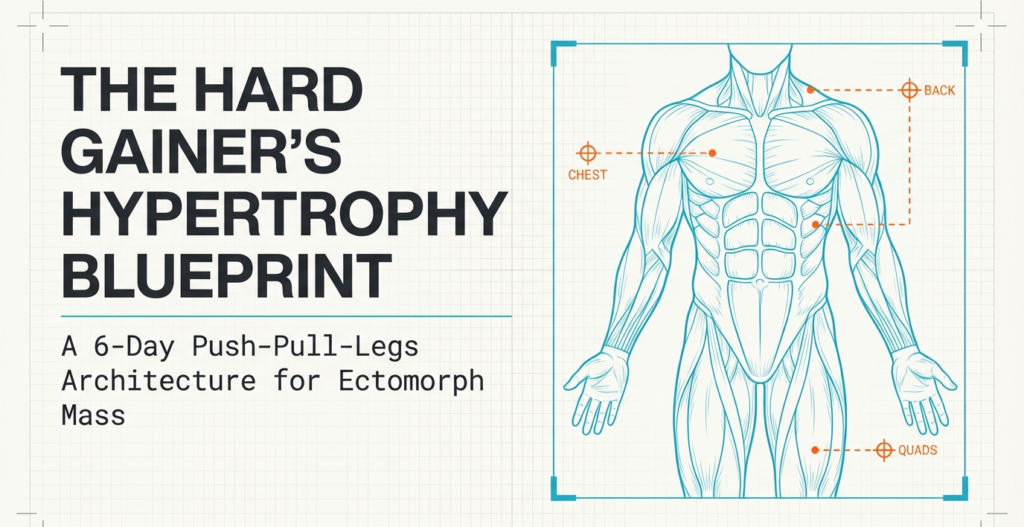
This blueprint introduces a structured 6-day Push-Pull-Legs training system designed specifically for hard gainers who struggle to build muscle mass. The plan focuses on training each muscle group twice per week to maximize hypertrophy while maintaining recovery balance. By combining compound lifts with strategic isolation work, it ensures complete muscle stimulation. Hard gainers benefit from this approach because it avoids excessive volume while still creating enough intensity for growth.
When followed consistently, this blueprint builds a strong foundation for long-term muscle development and helps transform a lean physique into a more muscular and defined body over time.
Ectomorph Body Type and High Metabolism Explained
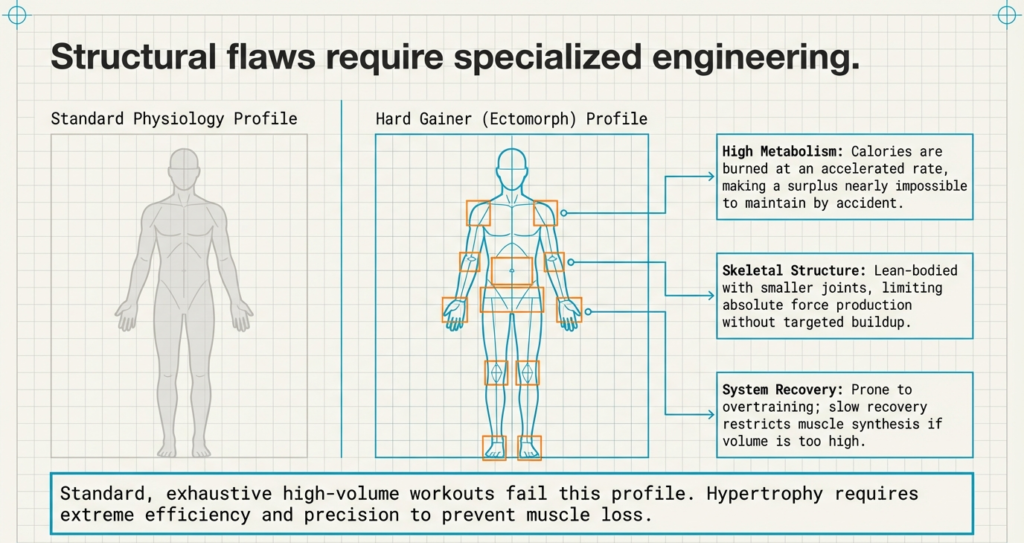
Hard gainers, often classified as ectomorphs, face unique physiological challenges that limit muscle growth. Their fast metabolism burns calories rapidly, making it difficult to maintain a caloric surplus necessary for hypertrophy. Additionally, their lighter skeletal structure and smaller joints reduce their ability to generate high force output initially. Recovery is also slower, meaning excessive training can lead to muscle breakdown rather than growth. Because of these limitations, hard gainers require a precise and efficient training strategy.
Instead of high-volume workouts, they must focus on targeted resistance training, proper nutrition, and adequate rest to create an environment where muscle growth becomes possible and sustainable.
3 Key Muscle Growth Principles for Mass Gain
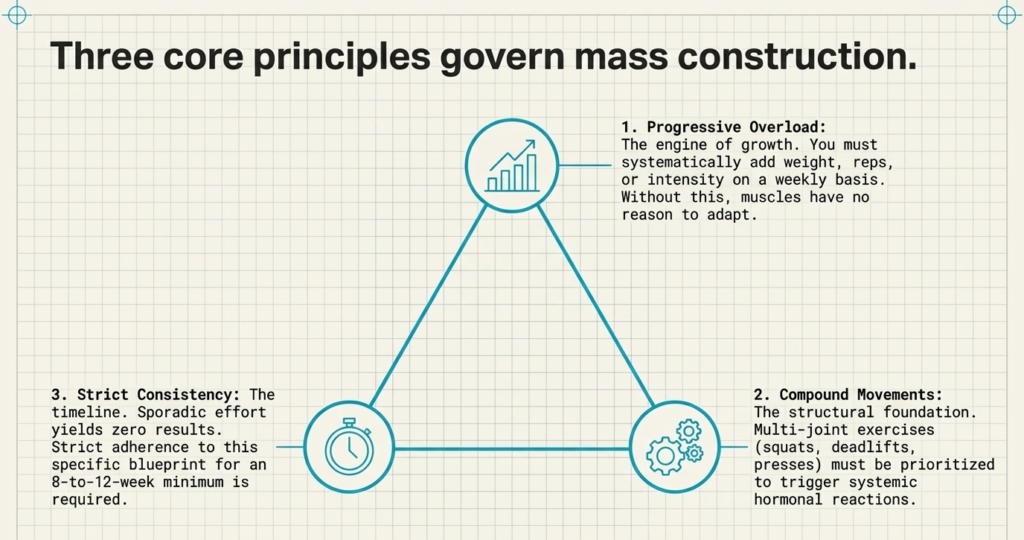
Muscle growth for hard gainers is governed by three fundamental principles: progressive overload, compound movements, and strict consistency. Progressive overload ensures that muscles are continuously challenged by gradually increasing weight, repetitions, or intensity. Compound movements such as squats, deadlifts, and presses activate multiple muscle groups, triggering a stronger hormonal response that supports growth.
Consistency ties everything together, as muscle building requires weeks of disciplined training and proper nutrition. Without adherence to a structured plan, results remain minimal. These principles form the backbone of any successful mass-gaining program and must be applied consistently over time to achieve noticeable transformation.
6-Day Push Pull Legs Workout Split Explained
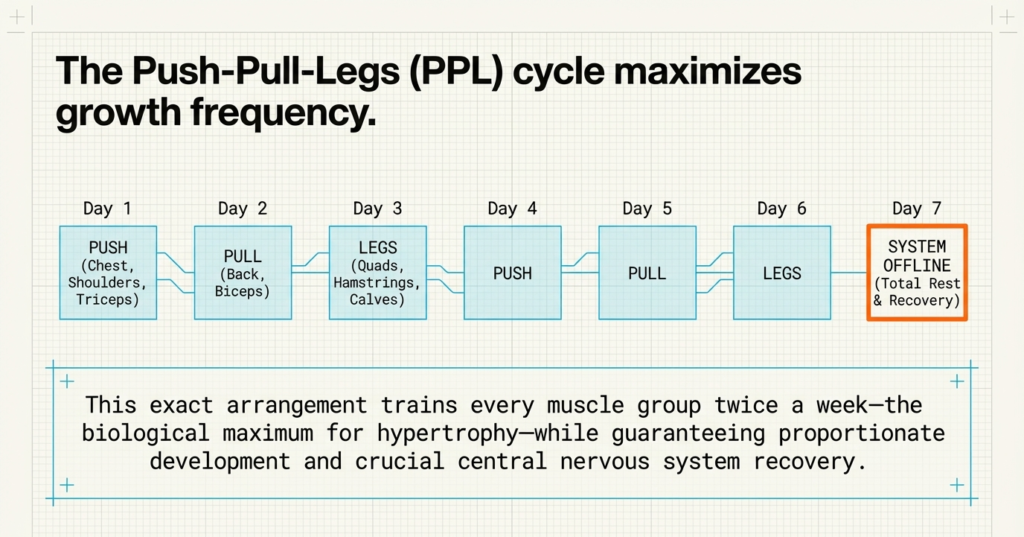
The Push-Pull-Legs (PPL) training split is one of the most effective systems for maximizing muscle growth frequency. By dividing workouts into push, pull, and leg days, this structure ensures balanced muscle development while allowing sufficient recovery between sessions. Each muscle group is trained twice per week, which is considered optimal for hypertrophy. This frequency increases protein synthesis cycles, leading to faster muscle growth.
Additionally, the split prevents overtraining by organizing workload efficiently across the week. For hard gainers, this structured approach eliminates guesswork and provides a clear roadmap for consistent progress and improved overall physique development.
Strength vs Hypertrophy Microcycle Training Plan
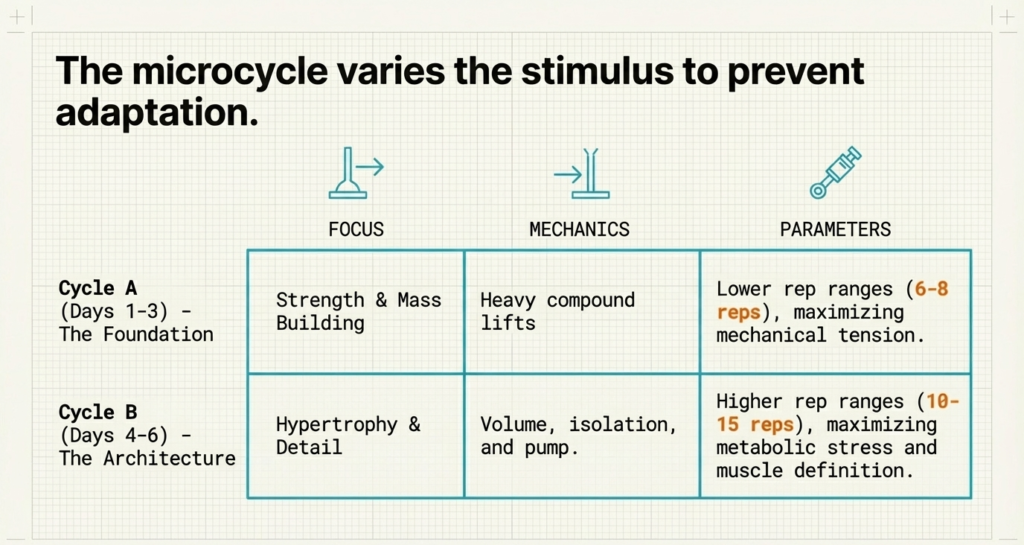
A well-designed microcycle is essential to prevent training plateaus and promote continuous muscle growth. This plan alternates between strength-focused sessions and hypertrophy-focused sessions throughout the week. Lower rep ranges with heavier weights increase mechanical tension, which is critical for building strength and dense muscle mass. Higher rep ranges, on the other hand, enhance metabolic stress and improve muscle definition. By varying intensity and volume, the body is constantly challenged, reducing the risk of adaptation.
This strategic variation is especially important for hard gainers, as it ensures steady progress without overwhelming recovery capacity.
Push Workout Plan – Chest Shoulders and Triceps
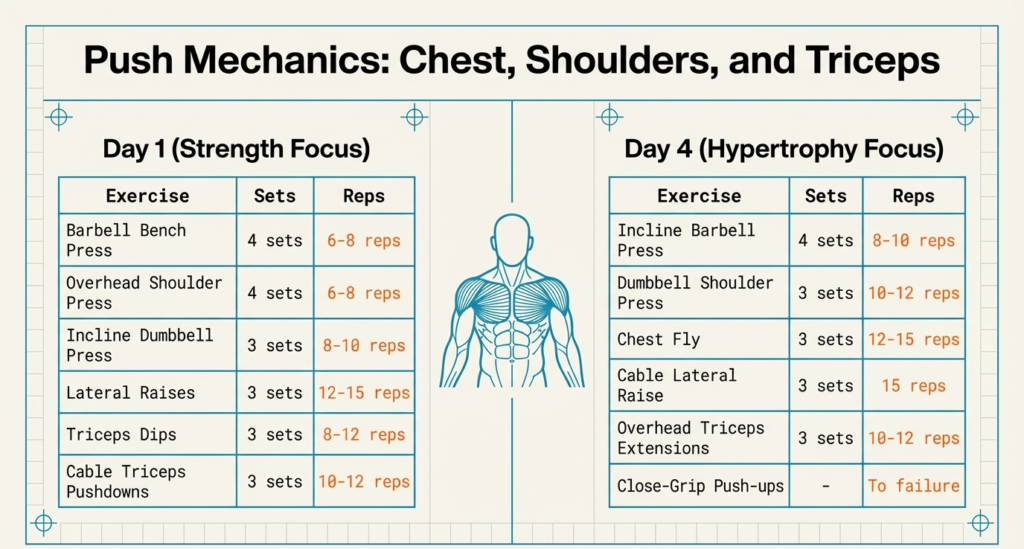
Push workouts target the chest, shoulders, and triceps, forming the foundation of upper body strength and size. The first push day focuses on heavy compound lifts such as bench press and overhead press to build raw strength. The second push session emphasizes hypertrophy through moderate weights and higher repetitions to enhance muscle volume. Isolation exercises like lateral raises and triceps extensions improve muscle detail and symmetry. This combination of strength and hypertrophy training ensures complete development of pushing muscles.
For hard gainers, this balanced approach helps maximize muscle growth while avoiding excessive fatigue.
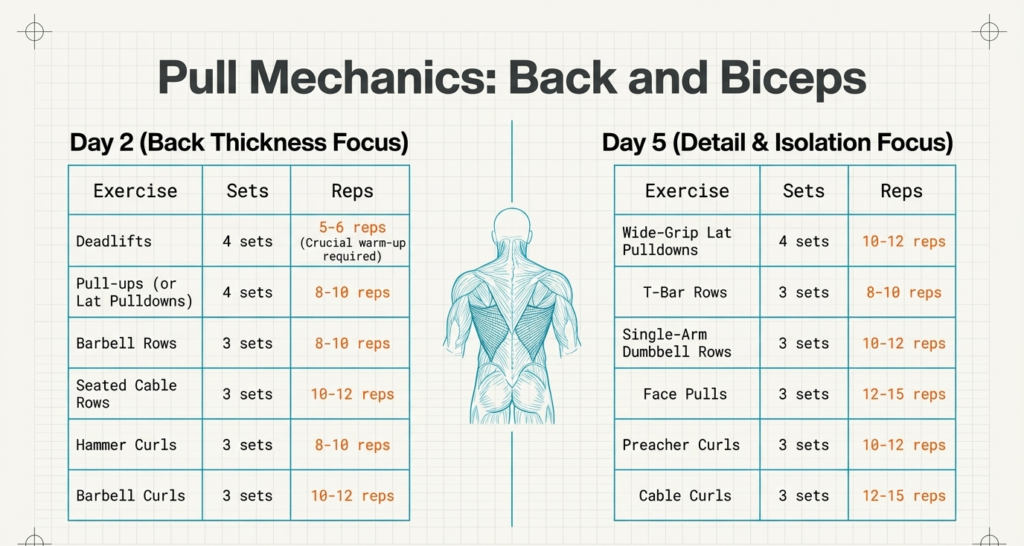
Pull Workout Plan – Back and Biceps Development
Pull workouts are designed to build a strong and well-developed back along with powerful biceps. The first session prioritizes heavy lifts such as deadlifts and barbell rows to increase back thickness and overall strength. The second session focuses on isolation and controlled movements to enhance muscle detail and improve mind-muscle connection. Exercises like lat pulldowns, face pulls, and curls contribute to both width and definition.
A strong back not only improves aesthetics but also supports overall lifting performance. This structured pull routine ensures balanced upper body development, which is crucial for hard gainers aiming for a complete physique.
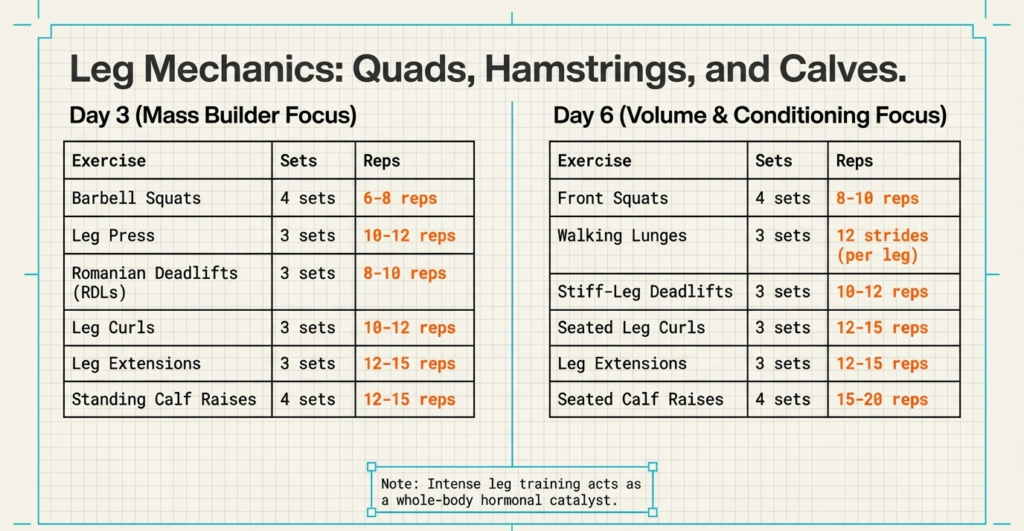
Leg Workout Plan for Mass – Quads Hamstrings Calves
Leg training plays a critical role in overall muscle development, especially for hard gainers. Compound movements like squats and leg presses stimulate large muscle groups, leading to increased hormone production that supports full-body growth. The first leg session focuses on heavy lifting to build mass and strength, while the second session emphasizes volume and conditioning for improved endurance and muscle definition. Exercises targeting quads, hamstrings, and calves ensure balanced lower body development.
Strong legs not only enhance physical appearance but also improve performance in other lifts, making leg training essential for achieving a well-rounded physique.
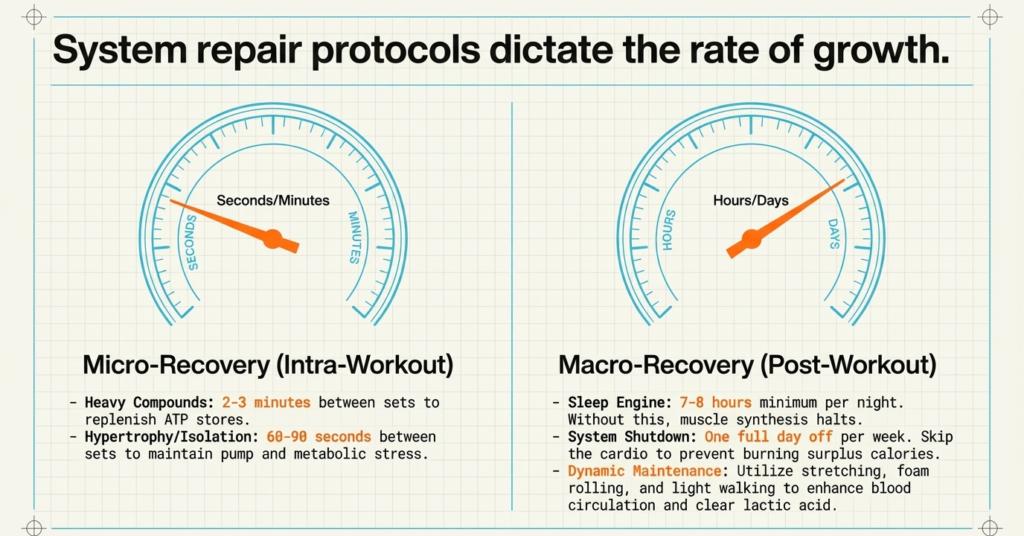
Muscle Recovery System – Sleep and Rest Explained
Recovery is one of the most overlooked yet crucial aspects of muscle growth for hard gainers. During training, muscles are broken down, but actual growth occurs during rest. Proper sleep, ideally 7–8 hours per night, allows the body to repair and rebuild muscle tissue effectively. Rest intervals between sets also play a vital role, with longer breaks for heavy lifts and shorter ones for hypertrophy work.
Incorporating active recovery methods like stretching and light activity improves circulation and reduces soreness. Without proper recovery, even the best training program will fail to produce results.
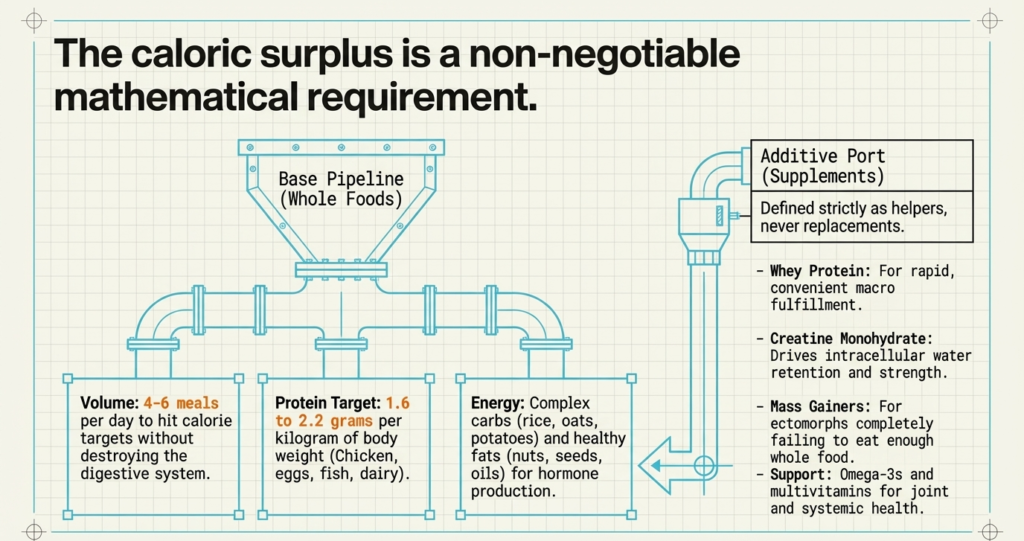
Calorie Surplus Diet Plan for Hard Gainers
A caloric surplus is essential for building muscle, especially for individuals with a fast metabolism. Hard gainers must consume more calories than they burn to support muscle growth. This includes a balanced intake of protein, carbohydrates, and healthy fats. Protein intake should be sufficient to support muscle repair, while carbohydrates provide energy for intense workouts. Healthy fats contribute to hormone production, which is vital for growth.
Consuming multiple meals throughout the day helps maintain a steady supply of nutrients. Without proper nutrition, even the most intense training program will not lead to significant muscle gains.
Common Muscle Gain Mistakes and Fixes
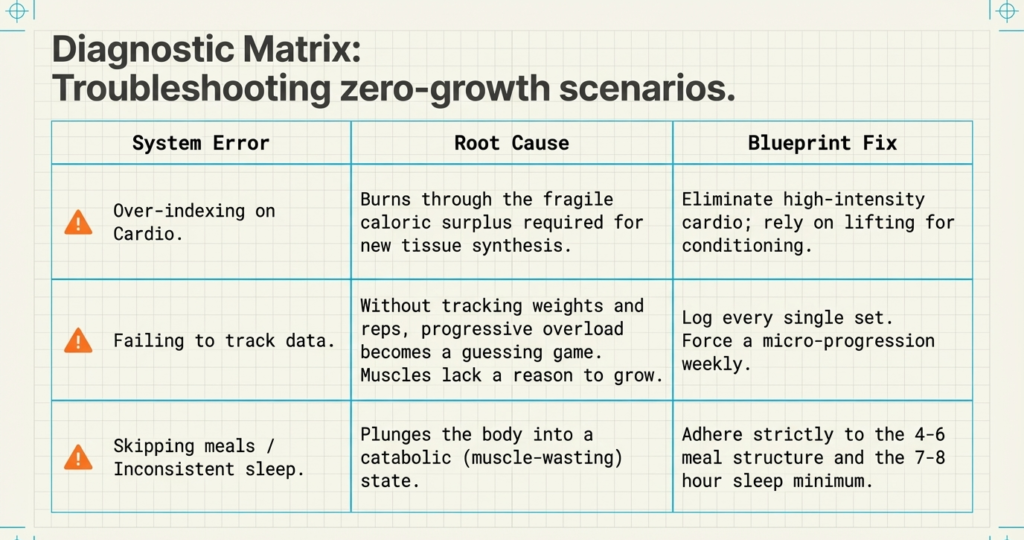
Many hard gainers struggle to see progress due to common mistakes that hinder muscle growth. Excessive cardio can burn the calories needed for building muscle, while lack of progress tracking prevents proper application of progressive overload. Skipping meals or inconsistent eating habits further limits the ability to maintain a caloric surplus. Poor sleep and recovery also negatively impact muscle repair and performance.
Identifying and correcting these mistakes is essential for achieving consistent results. By focusing on proper training, nutrition, and recovery, hard gainers can overcome these obstacles and maximize their muscle-building potential.
12-Week Muscle Growth Transformation Graph
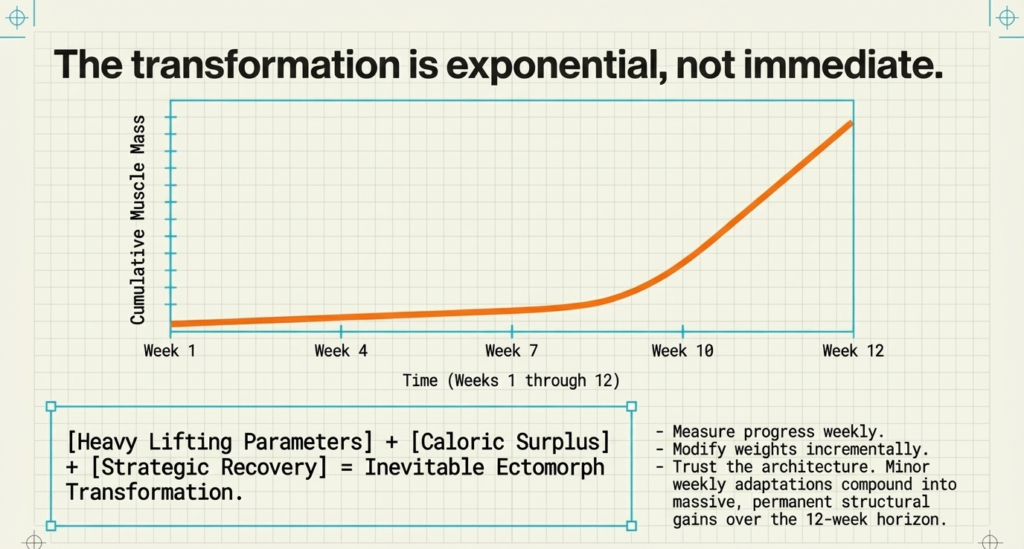
The 12-week transformation curve demonstrates how muscle growth accelerates when proper training and nutrition are consistently applied. Early weeks focus on building strength and adapting the body to resistance training. As the program progresses, muscle growth becomes more visible due to increased training intensity and improved recovery. The combination of progressive overload, caloric surplus, and adequate rest creates an ideal environment for hypertrophy.
This progression emphasizes the importance of patience and consistency, showing that sustainable muscle growth is achieved through disciplined effort over time rather than quick, unrealistic shortcuts.
Read more: https://www.muscleandstrength.com/workouts/4-day-maximum-mass-workout

Gearless Physique
Physique Without Gear
Your transformation starts now. Who's with me?