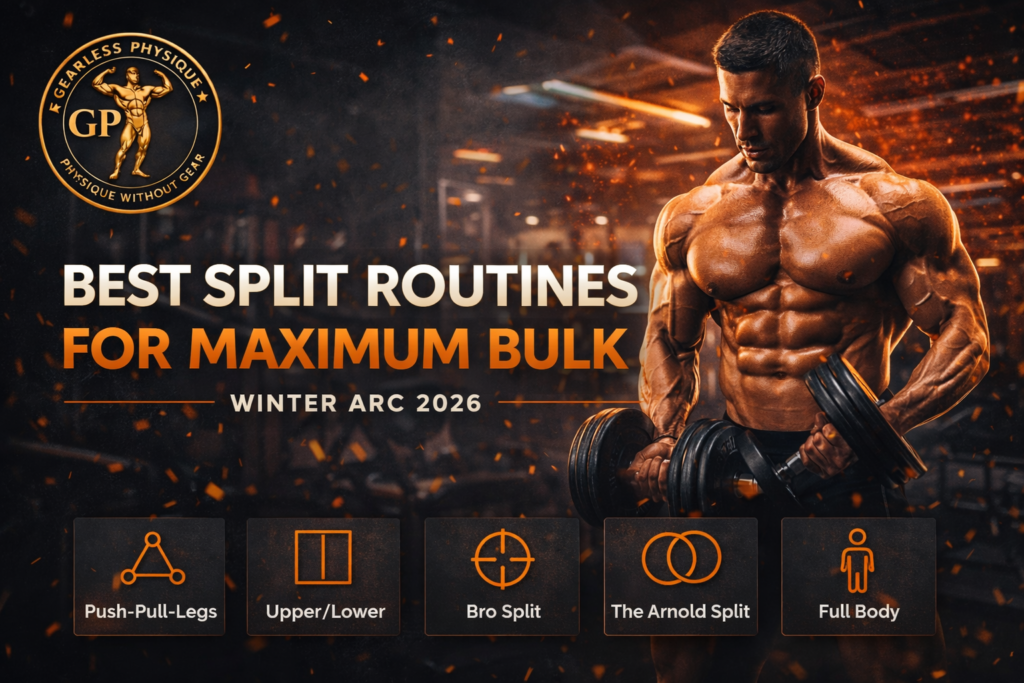
The Ultimate Training Split for Faster Muscle Growth (2026 Guide)
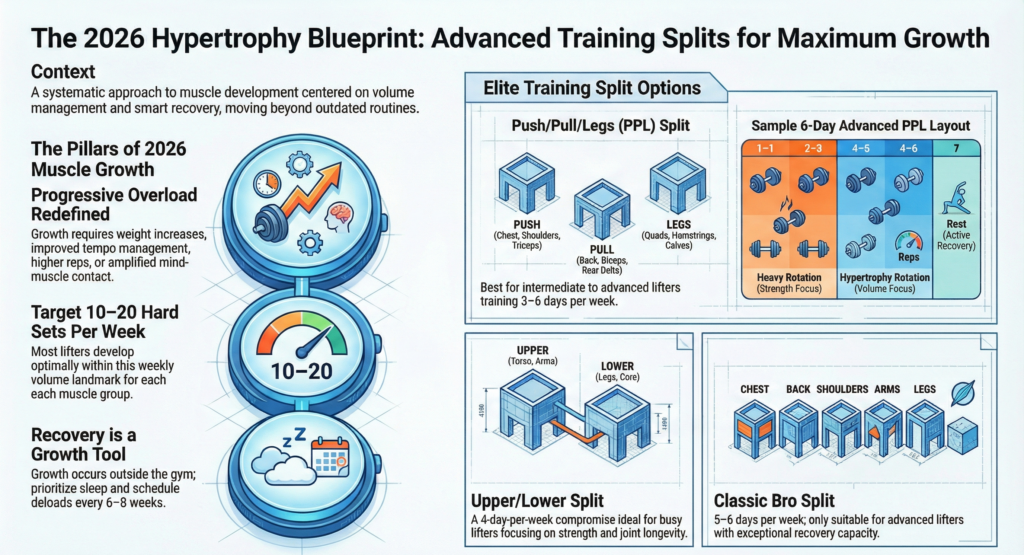
The 2026 Hypertrophy Blueprint represents a smarter, more structured approach to muscle growth, combining science-backed training splits with practical execution. This infographic highlights the most effective systems—Push Pull Legs, Upper/Lower, and the Classic Bro Split—each tailored to different experience levels and recovery capacity. It emphasizes progressive overload beyond just adding weight, incorporating better tempo, control, and intensity. The guideline of 10–20 hard sets per muscle per week ensures optimal stimulus without overtraining. Most importantly, it reinforces that recovery is a critical growth factor. By aligning volume, intensity, and rest, this blueprint helps lifters build muscle efficiently and sustainably in today’s training environment.
The 2026 Hypertrophy Guide
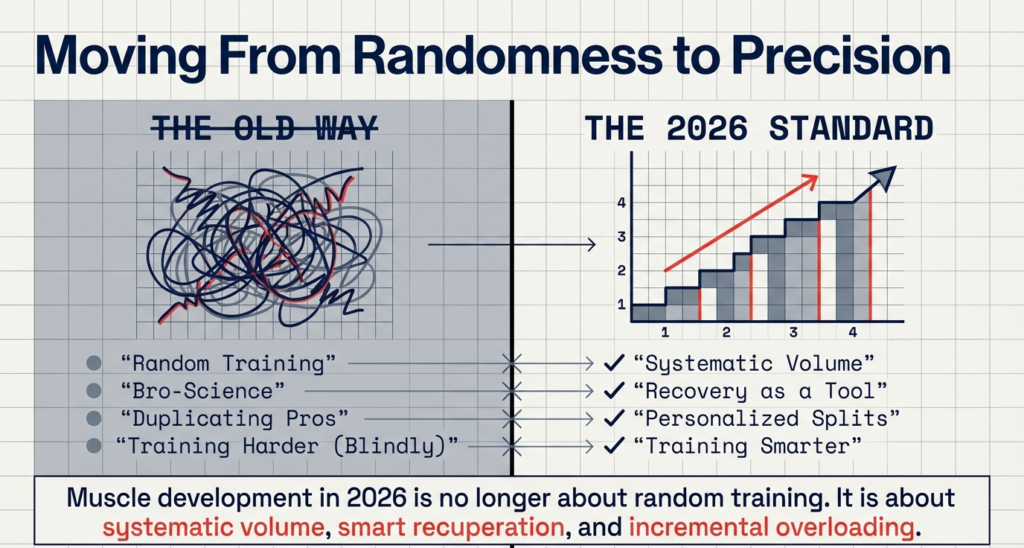
The development of muscles in 2026 no longer revolves around some random training or duplicating the split of a person. It is regarding systematic amount, smart recuperation and incremental overloading. The type of training split determines the way that you break up of the muscle groups throughout the week, and the appropriate training split can be the difference between mediocre gains and professional level progress.
Moving From Randomness to precision
This guide not only divides modern bodybuilding splits but also explains the right one to use depending on your objective and contains workouts of advanced lifters that are geared towards serious hypertrophy. Whether you train 3 days or 6 days a week, this article will make you train smarter and not harder.
The Three Pillars of Systematic Growth
The bodybuilding training split is the arrangement of groups of the muscles in training days. You do not train your entire body during each session but instead the particular muscles with the aim of getting more intensity, volume, and rest.
To continue with the best splits in 2026 are not fixed rules. They are age-related adaptive systems, which depend on the training age, recovery, stress related to lifestyle, and diet. Novices require frequency and proficiency training whereas advanced lifters require volume regulation and recovery enhancement.
The following are some of the important principles to apply when growing muscles in 2026:
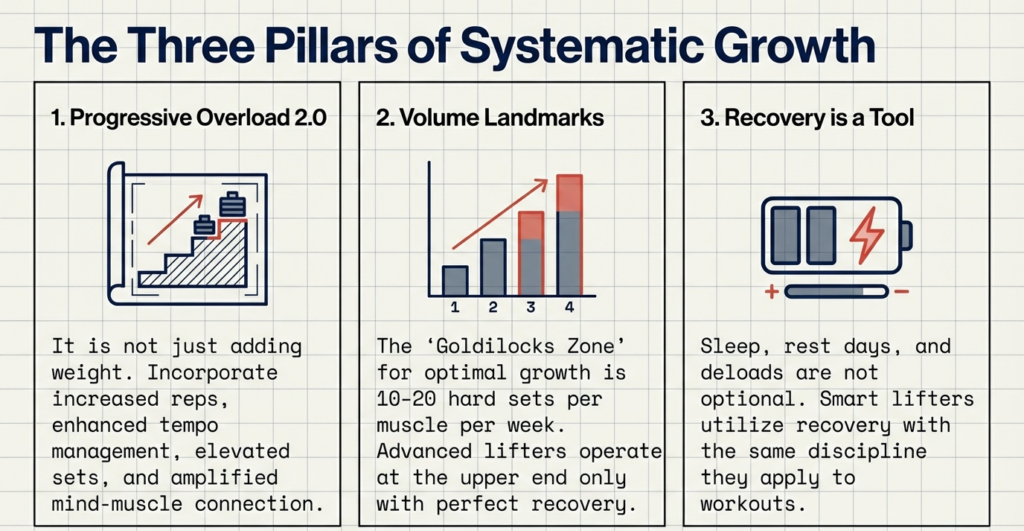
1. Progressive overload Still Reigns
The muscles only develop through being pushed to respond. Progressive overload does not only imply the addition of weight. It incorporates increased reps, enhanced tempo management, elevated sets or amplified mind-muscle contact.
2. Volume Landmarks Matter
Majority of lifters develop optimally with 1020 hard sets on each muscle per week. Only in the case of proper management of recovery, advanced lifters tend to remain at the end of the upper range.
3. Recovery Is a Growth Tool
Sleep, rest days and deloads are not optional. Much smarter lifters will use recovery the same way they use workouts.
Finding the Right Split to Your Level
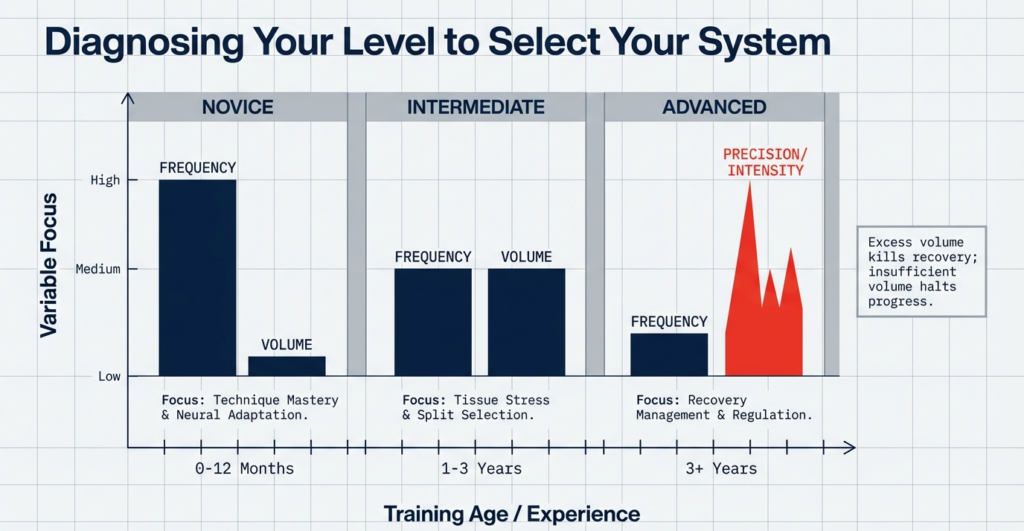
Novice Lifters (0-1 Month Training)
Novices should have an increased frequency and reduced volume per session. This enhances technique, neural adaptation and consistency.
Intermediate Lifters (1 -3 Years Training)
To provide muscle rest, increased volume and a slight reduction in frequency are required by the intermediates. This is where split selection is more significant.
Advanced Lifters (3+ Years of Trainee)
Strong growth demands accuracy among advanced lifters. Excess in volume kills recovery and insufficient volume halts progress. The methods of exercise choice, sequencing, and intensity are the most important.
The 2026 Split Menu
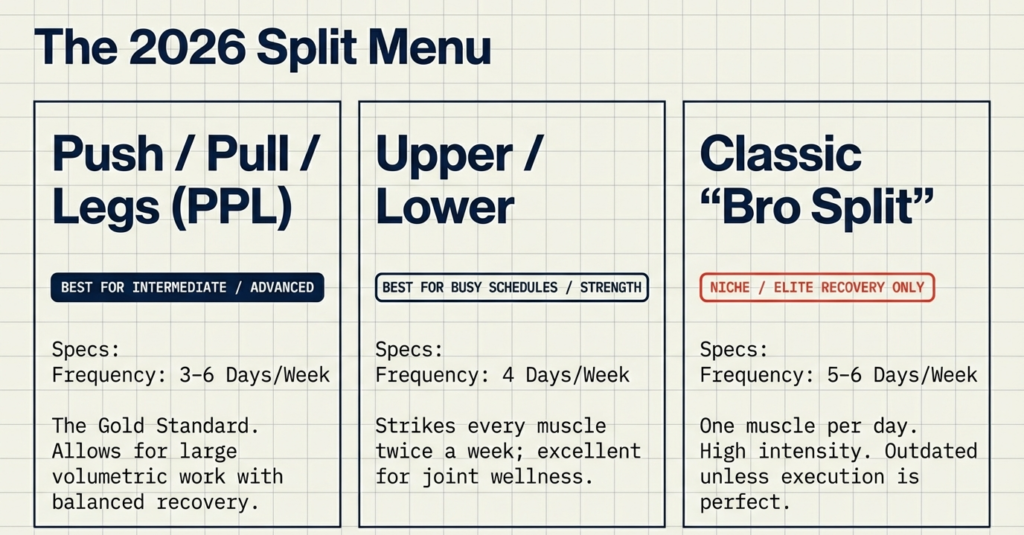
1. Push/Pull/Legs (PPL Split)
Best use: Intermediate lifters and advanced lifters.
Frequency: 3–6 days per week.
Push: Triceps, shoulders, chest.
Pull: Back, biceps, rear delts.
Legs: Quads, ham, glutes, calves.
This division permits a large volumetric business recovery. PPL is commonly administered twice a week in 2026 with one hypertrophy and one rotation of heavy rotation.
2. Upper/Lower Split
Best use: Busy bodybuilders and those who are strength oriented.
Frequency: 4 days per week.
The splits between upper and lower are a good compromise between strength and hypertrophy. You strike every muscle twice a week and stay in condition of joint wellness and rest. This has become one of the most viable long term divisions.
3. Classic Bro Split (Advanced Usage Only)
Best use: Advanced lifters and those with awesome recovery.
Frequency: 5–6 days per week.
Each muscle gets its own day. Exhibiting an outdated split is however too intensive and just perfect execution by advanced lifters.
The Gold Standard: Push/pull/legs
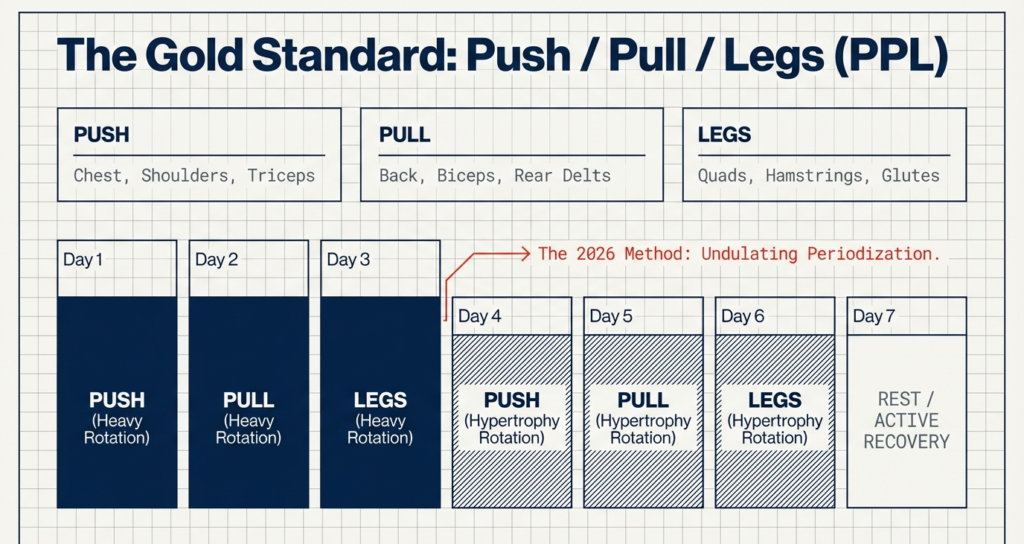
Push/Pull/Legs (PPL Split)
Best use: Intermediate lifters and advanced lifters.
Frequency: 3–6 days per week.
- Push: Triceps, shoulders, chest.
- Pull: Back, biceps, rear delts
- Legs: Quads, ham, glutes, calves.
This division permits a large volumetric business recovery. PPL is commonly administered twice a week in 2026 with one hypertrophy and one rotation of heavy rotation.
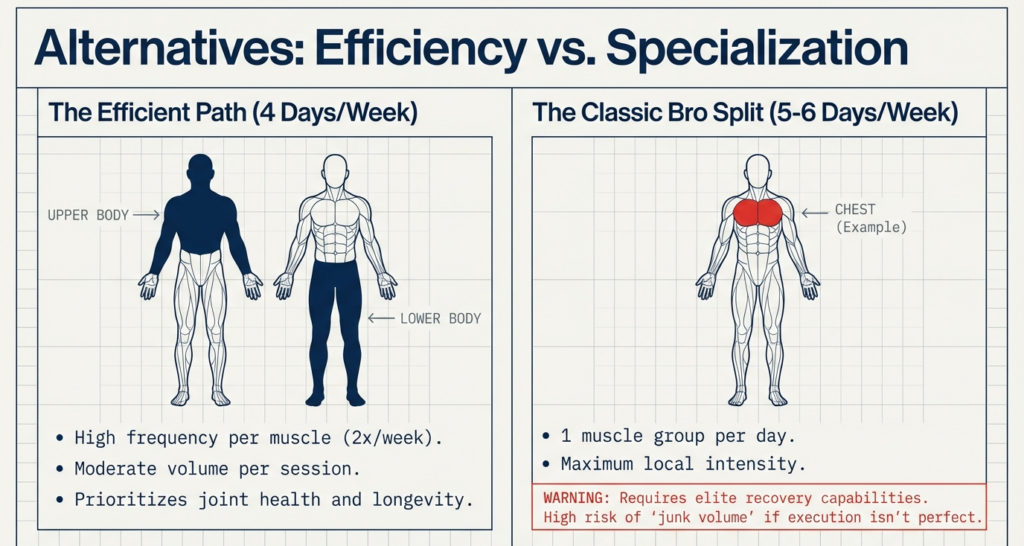
Alternatives: Efficiency vs Specialization
Upper/Lower Split
Best use: Busy bodybuilders and those who are strength oriented.
Frequency: 4 days per week.
The splits between upper and lower are a good compromise between strength and hypertrophy. You strike every muscle twice a week and stay in condition of joint wellness and rest. This has become one of the most viable long term divisions.
Read more: https://www.muscleandstrength.com/sites/default/files/workouts/upper_lower4day.pdf
Classic Bro Split (Advanced Usage Only)
Best use: Advanced lifters and those with awesome recovery.
Frequency: 5–6 days per week.
Read more: https://www.muscleandstrength.com/workouts/the-ultimate-bro-split
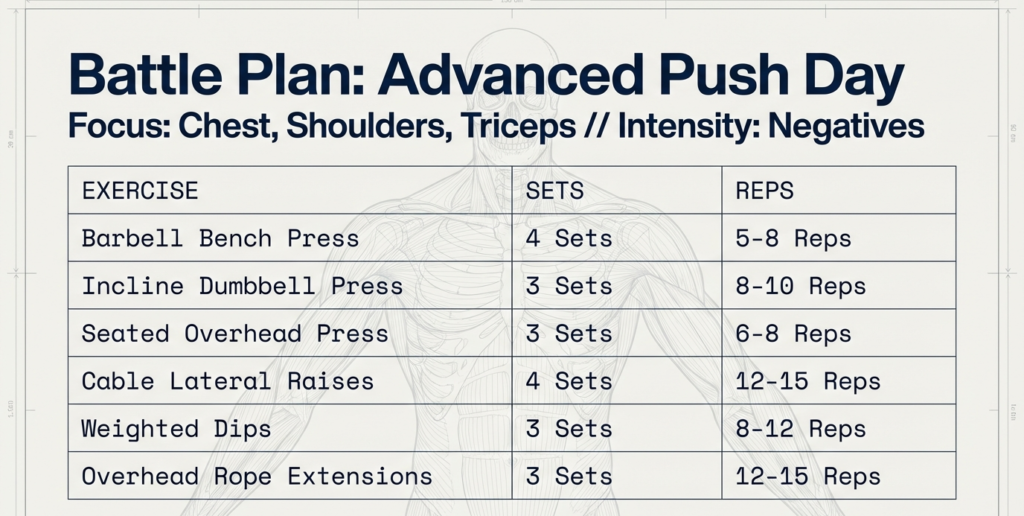
Advanced push day
Advanced Push Day (Shoulders, Triceps, Chest)
- Barbell Bench Press -4 sets 5-8 reps.
- Incline Dumbbell Press 3 sets 8-10reps.
- Seated Overhead Press- 3 sets 6-8 reps.
- Cable Lateral Raises – 4 sets 12 -15 reps.
- Weighted Dips – 3 sets × 8–12 reps.
- Overhead Rope Extensions 3 sets x 12-15 reps.
Target: Intensity techniques centered on negatives and the last set.
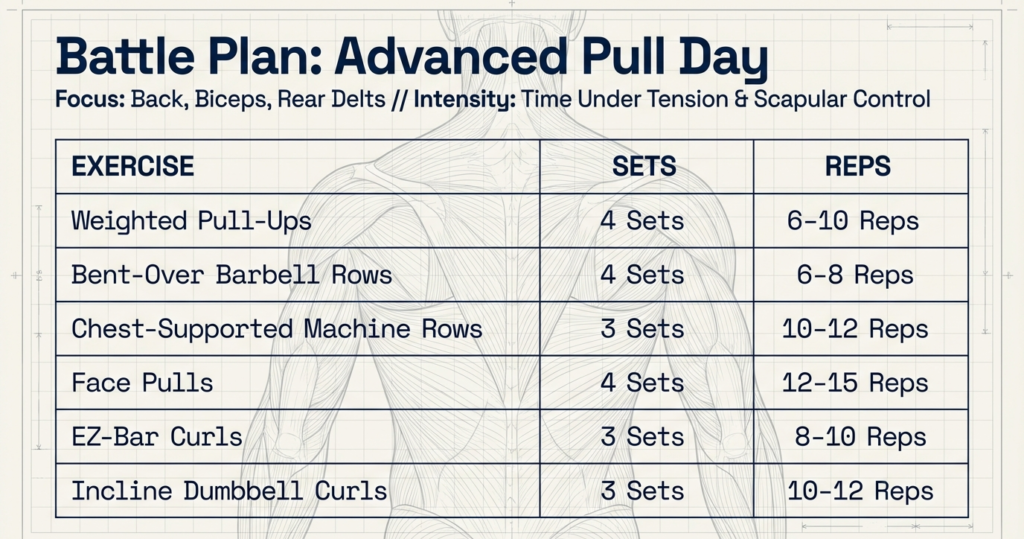
advanced pull day
Pull Day (Back, Biceps, Rear Delts)
- Weighted Pull-Ups – 4 sets × 6–10 reps.
- Bent-Over Barbell Rows -4 sets x 6-8 reps.
- Chest-Supported Machine Rows- 3 sets x 10-12 reps.
- Face Pulls – 4 sets × 12–15 reps.
- EZ-Bar Curls – 3 sets × 8–10 reps.
- Incline Dumbbell Curls –3 sets x 10-12 reps.
Focus: Under strain and complete scapular control.
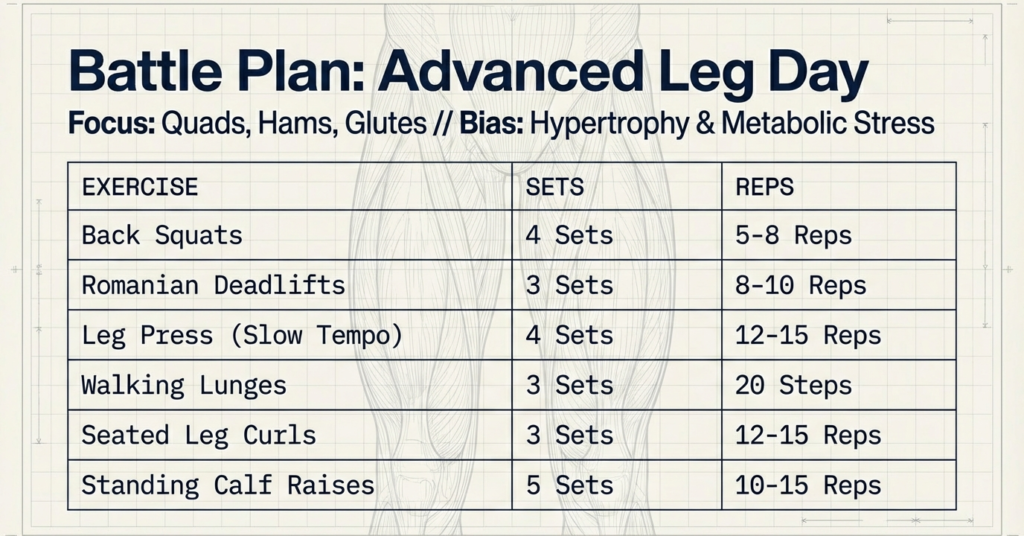
advanced leg day
Leg Day
- Back Squats – 4 sets × 5–8 reps.
- Romanian Deadlifts- 3 sets × 8-10 reps.
- Leg Press (Slow Tempo) -4 sets x 12-15 reps.
- Walking Lunges – 3 sets × 20 steps.
- Seated Leg Curls – 3 sets × 12–15 reps.
- Standing Calf Raises – 5 sets × 10-15 reps.
Attention: Stress and maximum motion time.
advanced intensity techniques
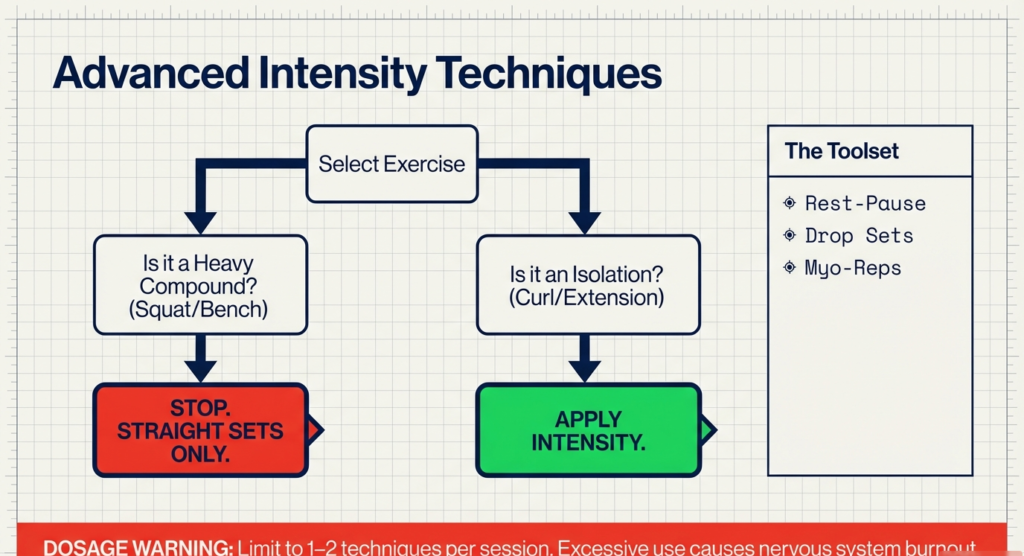
Intensity techniques are strategically applied by advanced lifters in 2026 and not randomly. Such methods as rest-pause, drop sets and myo-reps should be used only on isolation exercises, not heavy compounds. It is sufficient to have one or two intensity techniques in a session. Excessive use causes fatigue and retarded development of the nervous system.
The silent anabolic: recovery & nutrition
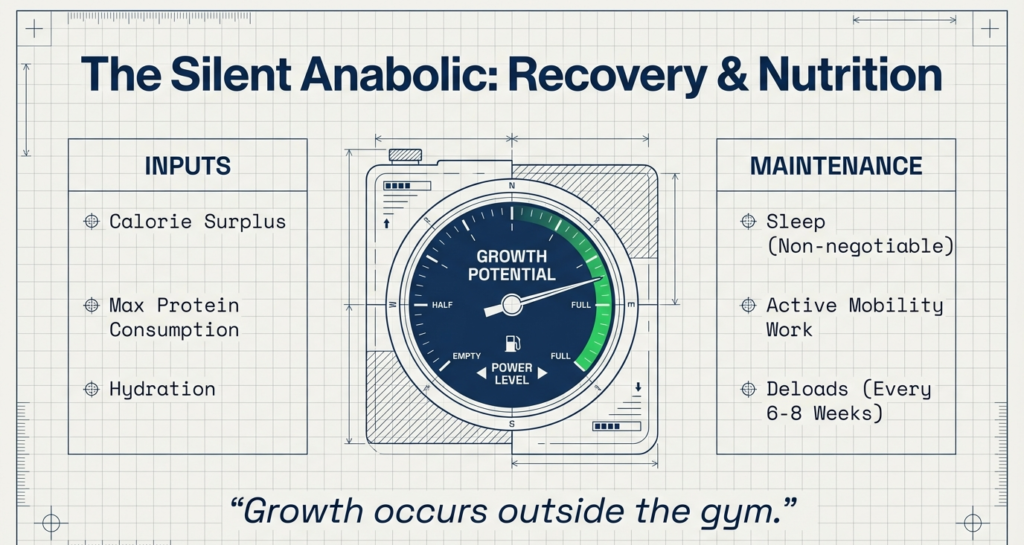
Training split can only be effective when there is recovery behind the training split. The goals of advanced lifters should be the calorie excess, the maximum levels of protein consumption, and regular sleep. It is necessary to hydrate, work at mobility, and do deload weeks every 6 to 8 weeks. The growth occurs outside the gym when recovery is observed.
the growth killers
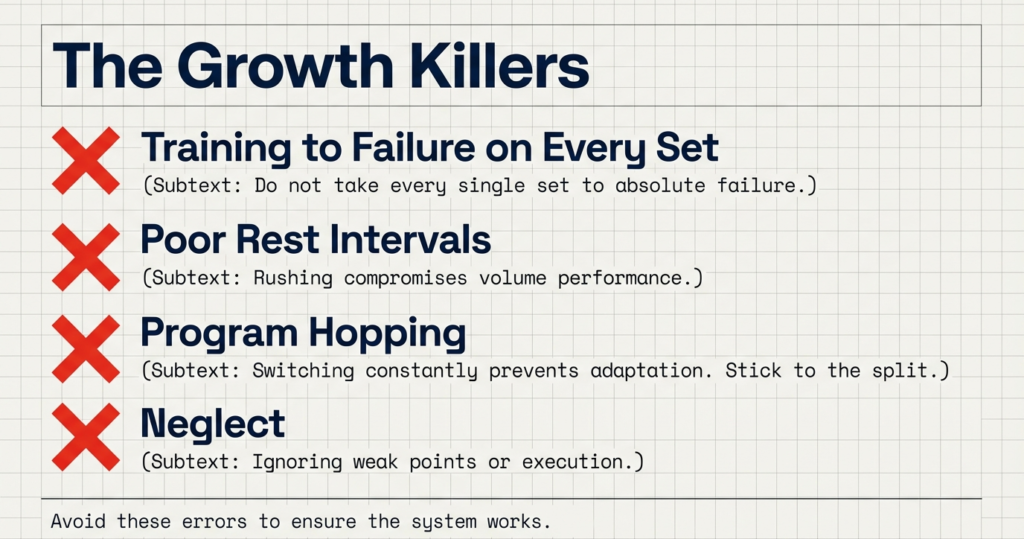
Top Training Errors that Destroy Muscle Building:
- Training all sets to failure.
- Inadequate rest between sets too numerous.
- Switching discontinuously.
- Ignoring weak muscle groups.
- Poor exercise execution.
It is uniform to a well-designed split as opposed to hopping between programs.
final directive
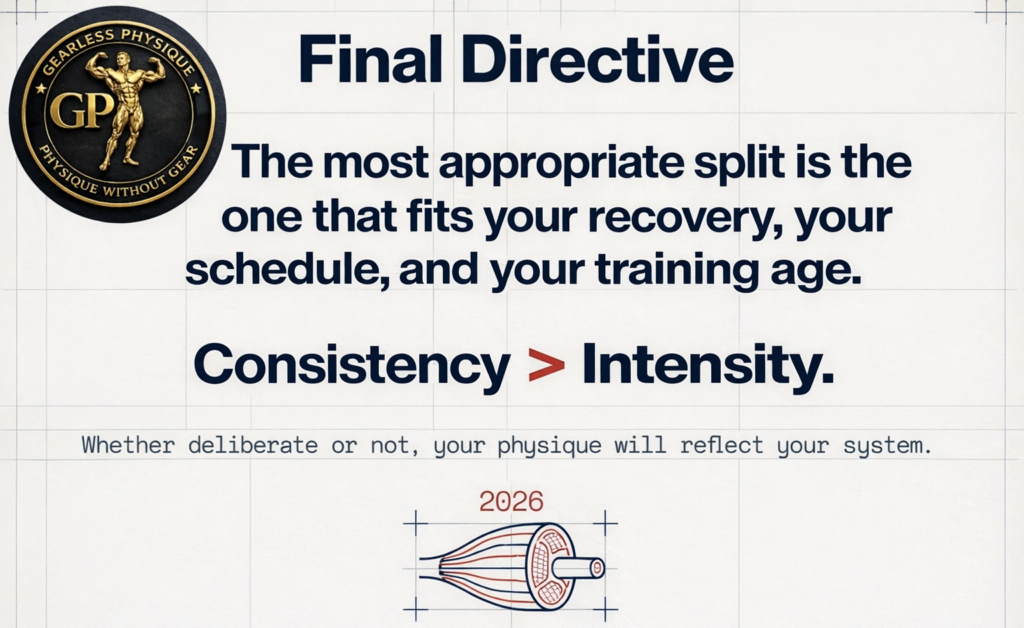
The most appropriate bodybuilding training split to build the most muscles in the year 2026 is the training split that fits your recovery, schedule and training age. Push/Pull/Legs and Upper/Lower are the most prevalent since they acknowledge the physiology and recovery. Developed lifters must train on performance, development, and rest- not heavier lifts. Gain muscle either deliberately or not and your physique will show it.

Gearless Physique
Physique Without Gear
Your transformation starts now. Who's with me?