The Ultimate Shoulder Boulder Workout (2026 Edition)
Advanced Shoulder Boulder Training With Supersets for Maximum Size & Density
The Ultimate Shoulder Boulder Workout (2026 Edition) Protocol is a strategic, science-driven approach designed to build wide, dense, and capped shoulders through intelligent superset training. This infographic highlights precise exercise pairings that target all three deltoid heads—anterior, lateral, and posterior—ensuring balanced development and maximum visual impact. It outlines optimal rep ranges, total training volume, and structured progression to drive hypertrophy without compromising joint health. A key feature is the mechanical drop set finisher, pushing muscles beyond failure for deeper fiber recruitment. Combined with controlled tempo and smart recovery, this protocol delivers consistent strength gains and aesthetic shoulder growth for serious lifters aiming to elevate their physique.
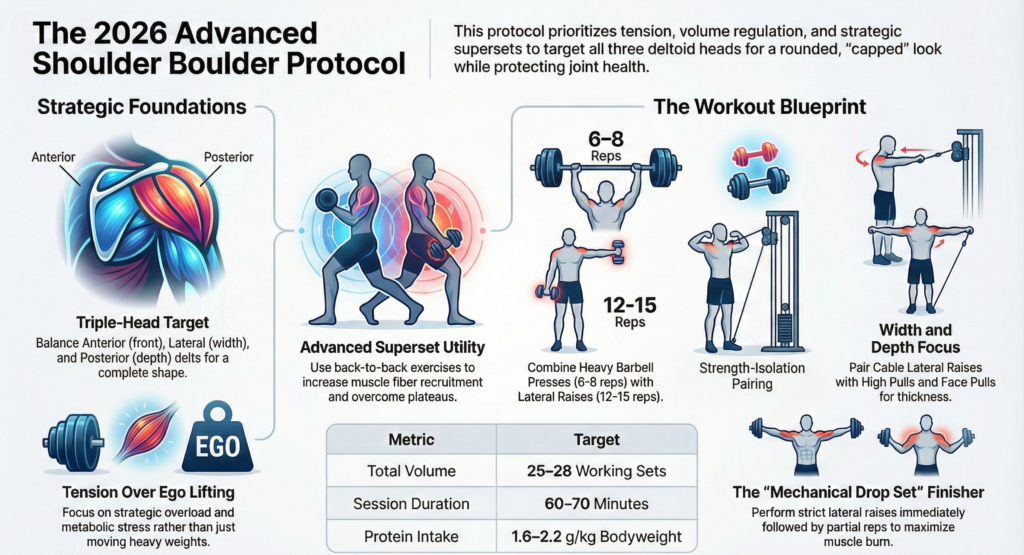
The 2026 shoulder boulder protocol
The image symbolizes The 2026 Shoulder Boulder Protocol, a contemporary scheme of constructing broad, thick, and completely capped shoulders by means of clever training. It also gives a visual indication of superior hypertrophy architecture with a focus on lateral delt peak density, lateral anterior growth and stabilization at the back.
The structured overlays represent accuracy – indicating that there is strategic overload that propels shoulder growth in 2026 as opposed to prone heavy lifting. The protocol encourages the greatest amount of muscle activity, and also preserves the health of the joints, because it emphasizes size, density, and regulated progression. It is an indication of movement to science-based volume control, tension management, and long-term performance, aimed at competitive lifters that want to build elite shoulders.

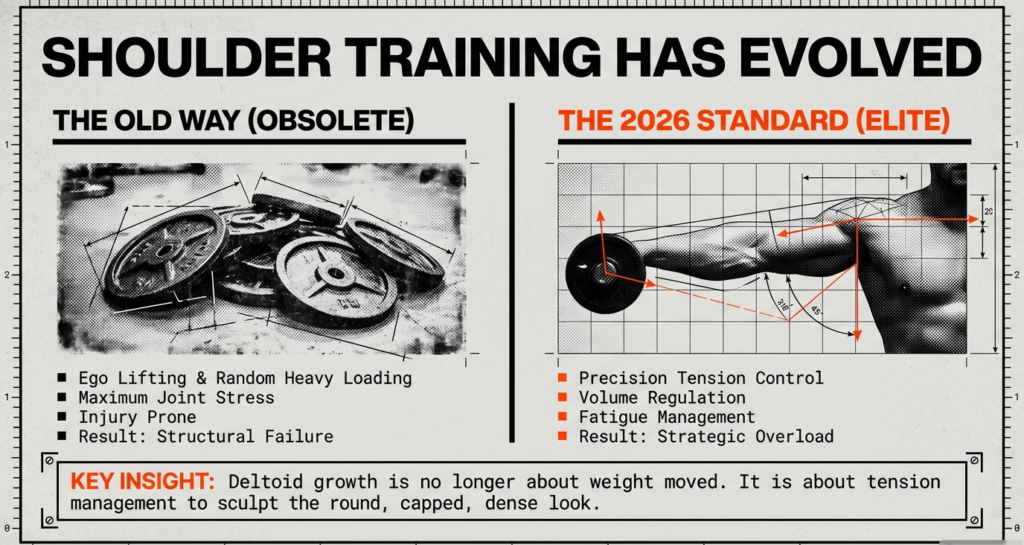
Shoulder training has evolved
Shoulder training in 2026 is no longer training that entails throwing heavy weights about randomly. The elite athletes now realize that the deltoid growth is determined by the tension, the volume regulation, and the smart management of fatigue. It is the effect of strategic overload rather than ego lifting that has given the shoulder its boulder look; round, capped and dense.
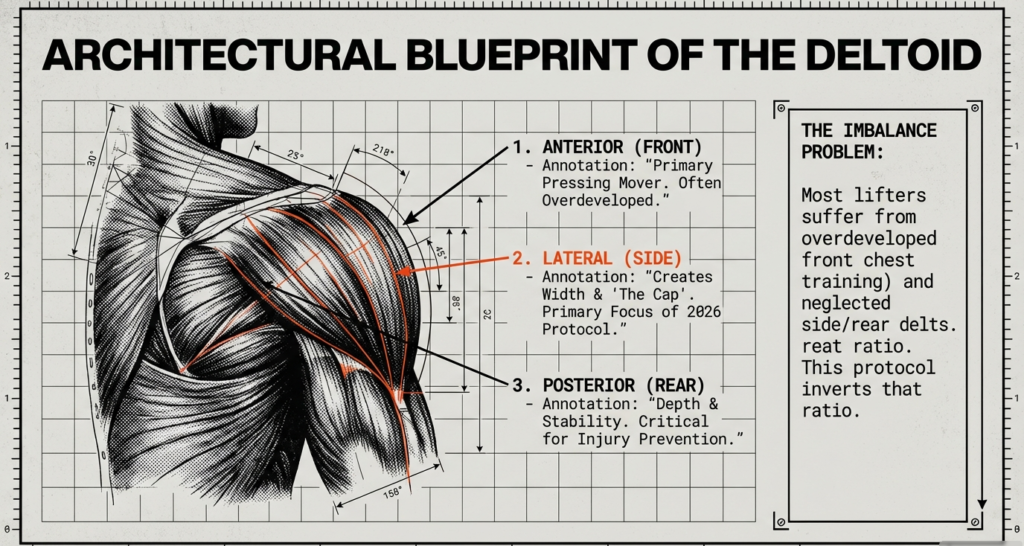
Architectural blueprint of the deltoid
To develop really huge Shoulders Boulder, you need to know the way the delts perform.
The shoulder is composed of three major heads:
- Anterior (Front Delts) – these are the pressing and forward movements.
- Lateral (Side Delts) – width, roundness and cap.
- Posterior (Rear Delts) – depth, balance and injury avoidance.
Majority of lifters overtrain front delts with the aid of chest, and undertrain lateral and rear delts. The focus of this workout is side and rear delts with a sufficient stimulus of front delts to grow without overuse injury.
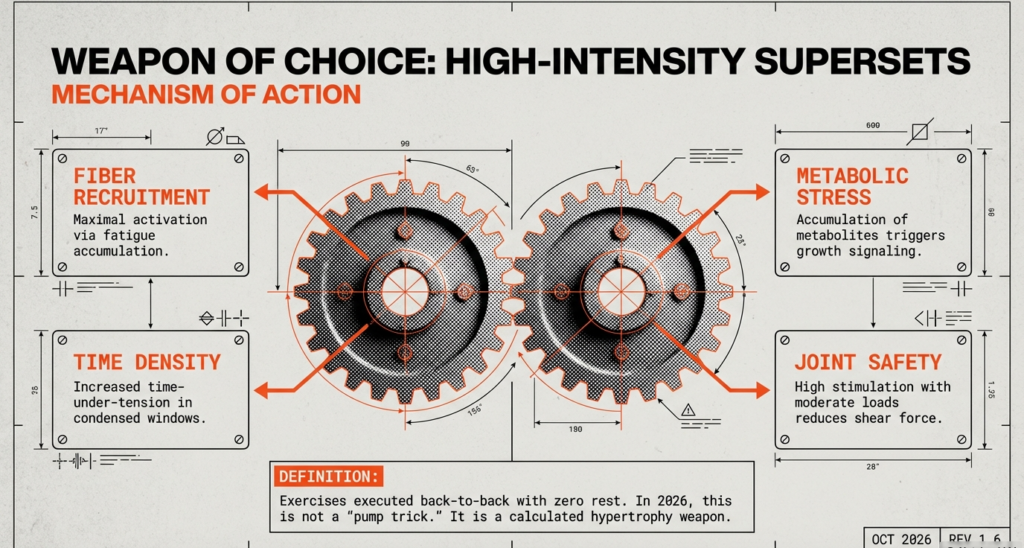
High-Intensity supersets
Supersets have become one of the best tools of advanced shoulder boulder development. They are more time under tension, enhance mind-muscle connection, and can be as stimulated as possible without overstressing the joints. This plan divides a full advanced shoulder boulder session, which is suitable to those who already have a good background of strength. Supersets are exercises that are done directly one back to the other with minimal or no rest. As of the year 2026, supersets will no longer be considered as a pump trick, but a weapon of hypertrophy used properly.
Advantages of shoulder supersets:
- Increased muscle fiber recruitment
- Massive metabolic stress.
- Improved joint safety in the presence of moderate loads.
- Better shoulder outline and dissection.
In the case of experienced athletes, supersets can get through plateaus without raising the risk of injury.
Who Should Use This Workout?
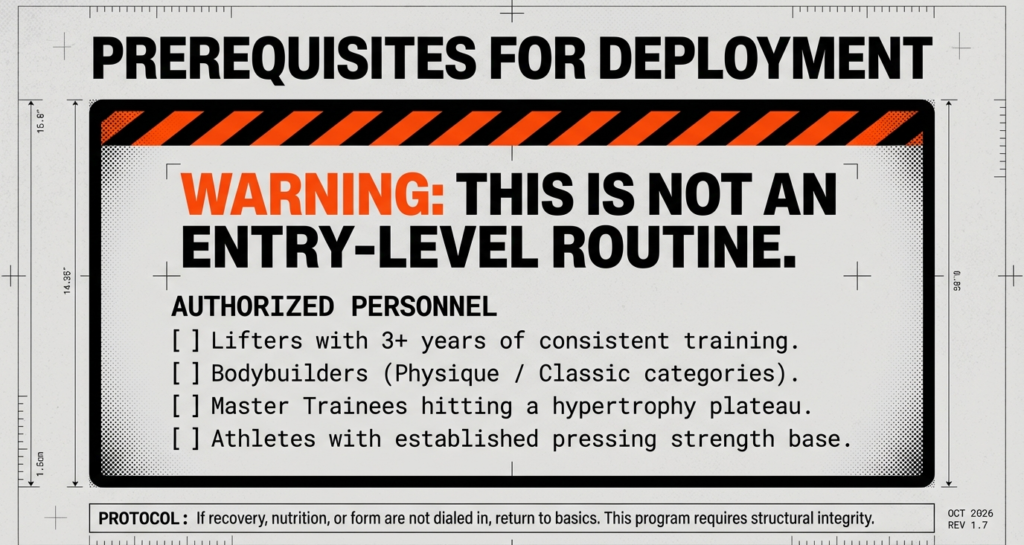
This image serves as a clear warning and filter for the 2026 Shoulder Boulder Protocol, emphasizing that it is not designed for beginners. It outlines strict prerequisites, targeting experienced lifters with at least three years of consistent training, bodybuilders in physique or classic categories, and advanced trainees facing hypertrophy plateaus. The industrial, caution-style design reinforces the seriousness of the program and the importance of readiness. It highlights that proper recovery, nutrition, and technical execution are non-negotiable. Overall, the image communicates discipline, structural integrity, and responsibility, ensuring that only qualified athletes deploy this high-intensity shoulder training system safely and effectively.
This workout on shoulders is suitable to:
- Lifters who have been exercising regularly 3-years or older.
- Bodybuilders who are training to compete in physique or classic.
- Master trainees in a shoulder development stalemate.
- Athletes that already possess strong pressing strength.
When your shape, recovery, and nutrition are not working, go back to the basics.
Warm-Up Protocol (Do NOT Pass Over This)
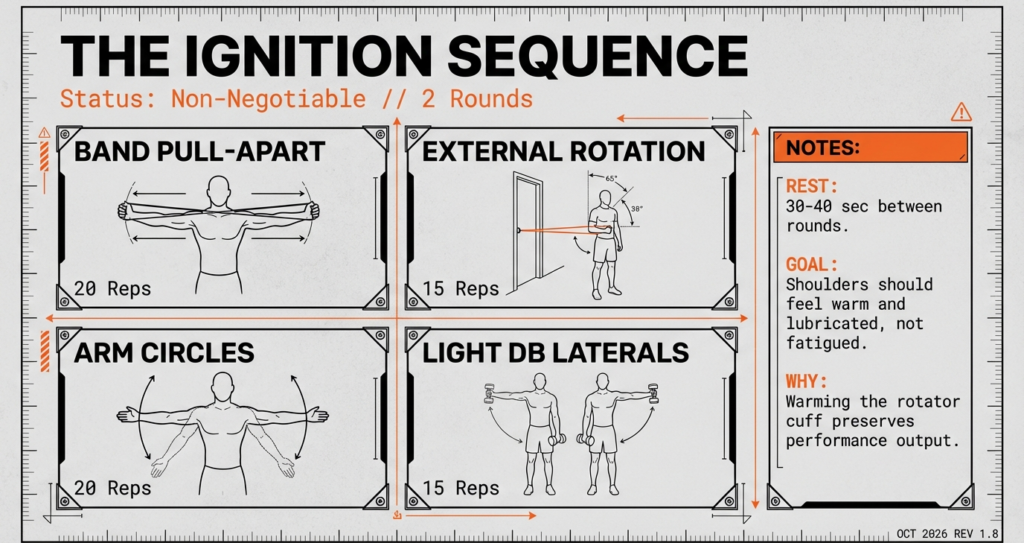
This image illustrates the warm-up protocol used in the 2026 Shoulder Boulder Program, designed to prepare the shoulders without causing early fatigue. The ignition sequence combines band pull-aparts, external rotations, arm circles, and light dumbbell lateral raises to activate the rotator cuff and surrounding stabilizers. The focus is on increasing blood flow, improving joint lubrication, and enhancing mobility before heavy training begins. Short rest intervals maintain readiness while preserving energy. This warm-up ensures the shoulders feel warm, stable, and responsive, reducing injury risk and improving performance output during intense shoulder workouts that follow. Proper warming up saves the rotator cuff and increases the performance.
Warm-Up Circuit (2 rounds):
- Band Pull-Apart × 20.
- External Rotation (Cable or Band) × 15.
- Arm Circles × 20.
- Light Dumbbell Lat Lateral raises × 15.
Take a break after every 30-40 seconds. Shoulders should not feel tired, but warm.
The Ultimate Shoulder Boulder Workout Plan
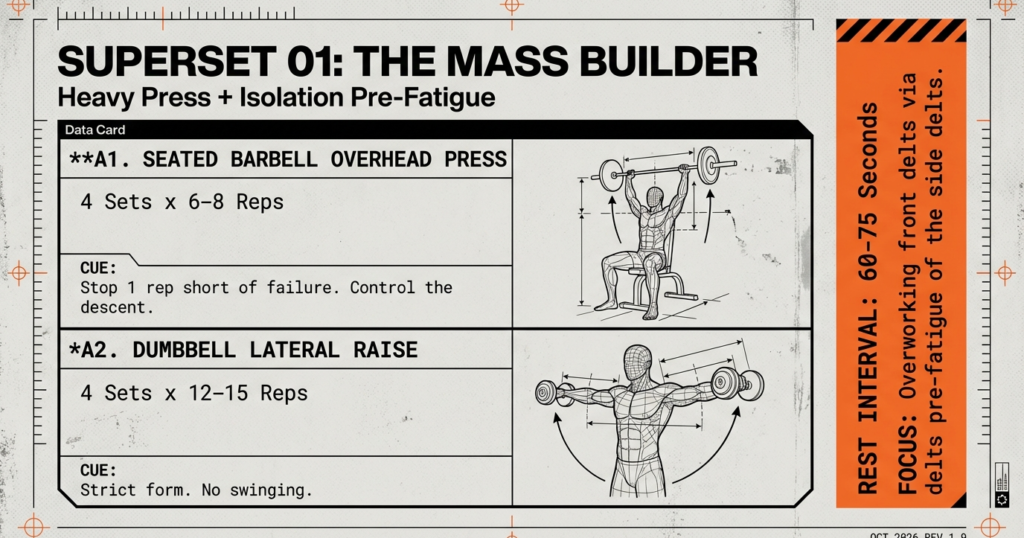
Superset 1: Heavy Press + Isolation Pre-Fatigue.
A1. Sitting Barbell Overhead Press- 4 sets × 6–8 reps.
A2. Dumbbell Lateral Raise- 4 sets × 12–15 reps.
Break after every superset 60-75 sec.
This combination overworks the front delts by pre-fatiguing the side delts. Strict form and cease 1 rep of press short of failure.
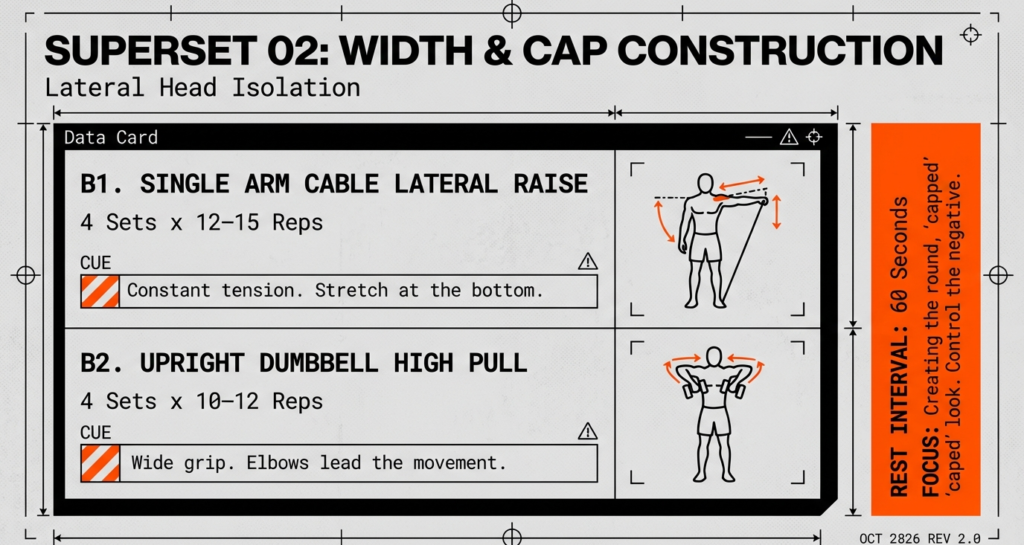
Superset 2: Width & Cap Builder (Lateral Focus)
B1. Single Arm Cable Lateral Raise – 4 sets × 12–15 reps.
B2. Upright Dumbbell High Pull (Wide Grip) – 4 sets × 10–12 reps.
Rest 60 seconds.
This superset goes to the delt head, which is the head most responsible in creating the round capped look. Take the negative under control on both exercises.
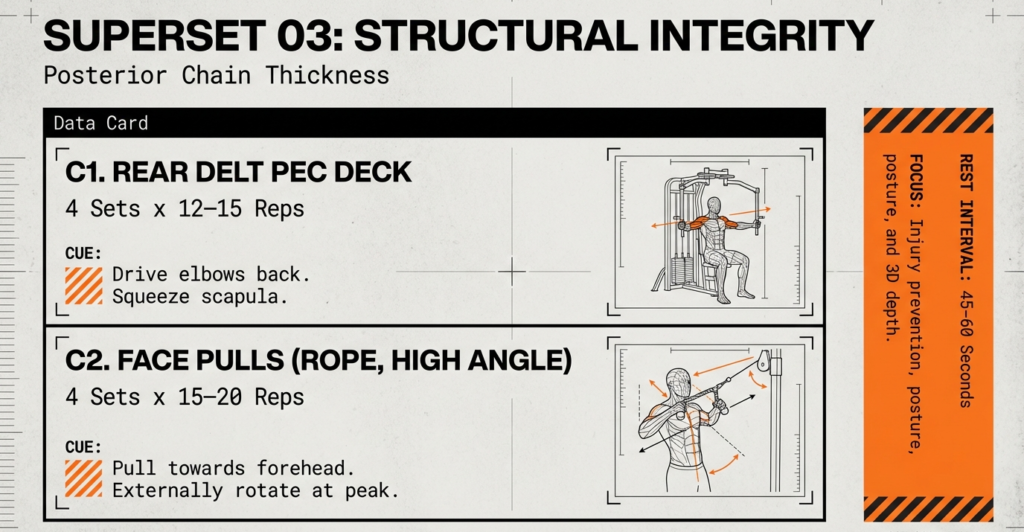
Superset 3: Delt Thickness and Stability in the Intrarectal Position
C1. Rear Delt Pec Deck – 4 sets × 12–15 reps.
C2. Face Pulls (Rope, High Angle) – 4 sets × 15–20 reps.
Rest 45–60 seconds.
It is important that rear delts prevent injuries and shoulder balance. Such combination creates depth and stability of the scapula.
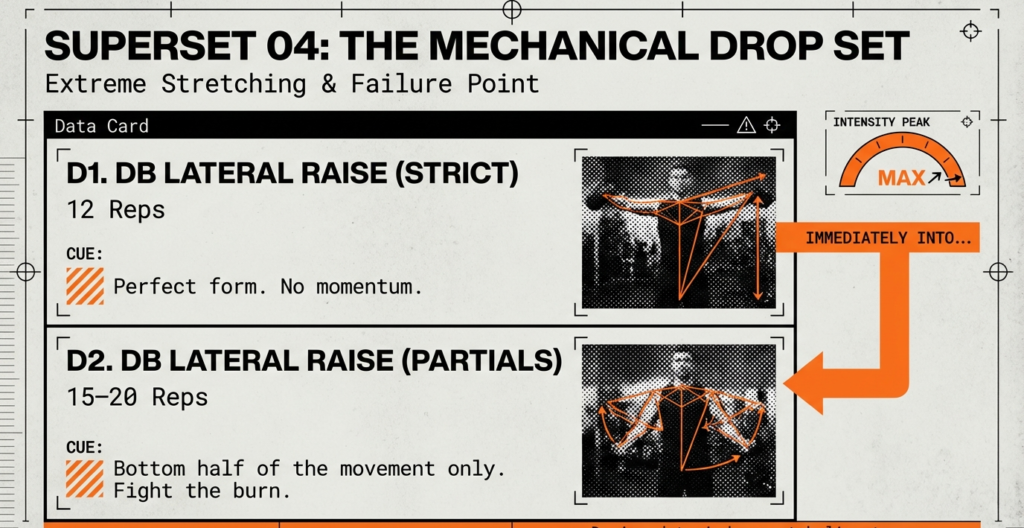
Superset 4: Side Delts Mechanical Drop Set
D1. Lateral Raise (Strict) using Dumbbells – 3 rounds × 12 strict + 15–20 Partials Reps.
D2. Lateral Raise (Partial Reps) Dumbbell – 3 rounds × 12 strict + 15–20 Partials Reps.
Rest 60 seconds.
This is an extreme stretcher that strands the lateral delts further than what would otherwise naturally induce fatigue and generates unbelievable muscle burn and muscle growth stimulus.
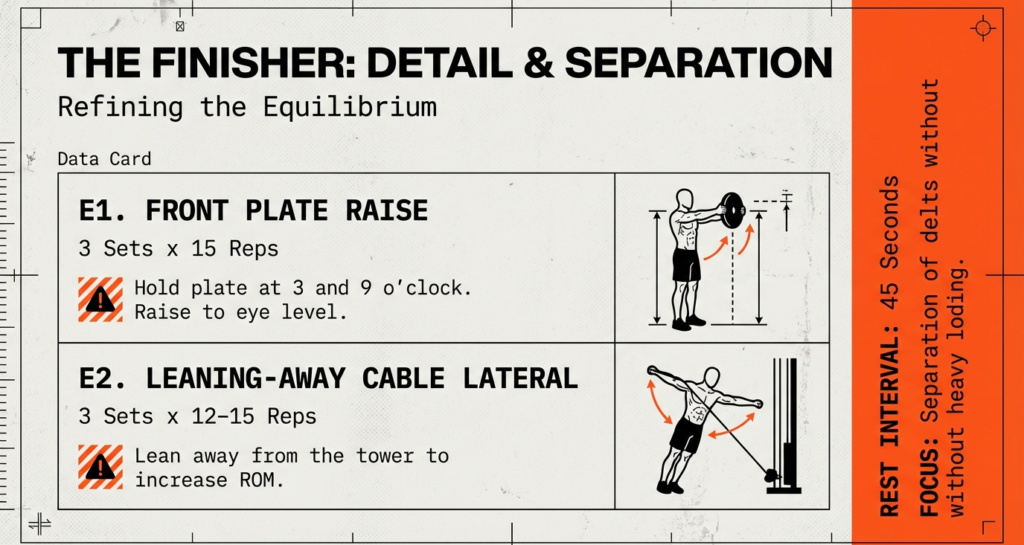
Superset 5: The Finisher
E1. Front Plate Raise- 3 sets × 15 reps.
E2. Leaning-Away Cable Lateral Raise- 3 sets × 12–15 reps.
Rest 45 seconds.
Such end superset enhances the separation of delts and front to side equilibrium without heavy loading.
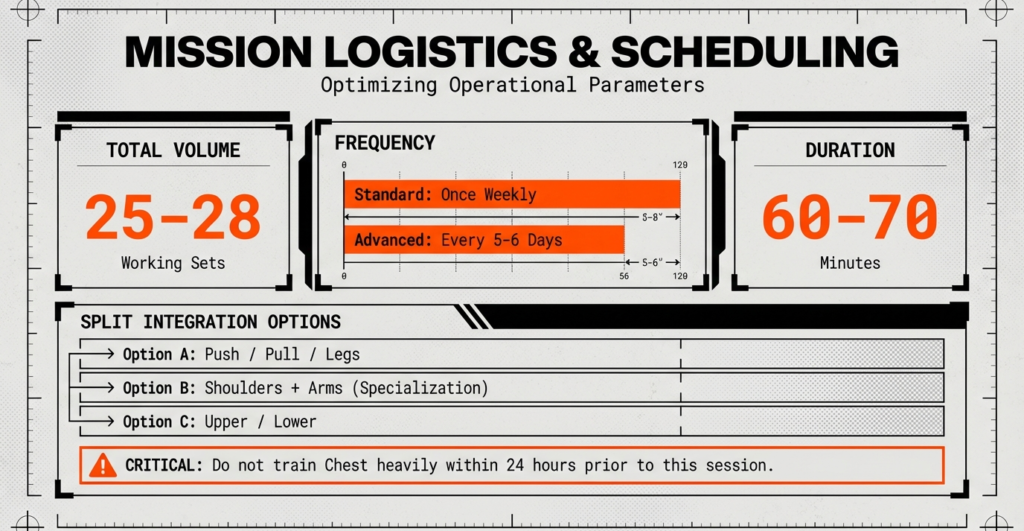
Total Volume Breakdown
Total Sets: 25–28 working sets
- Time: 60–70 minutes.
- Intensity: High.
- Frequency: Weekly (advanced) or after every 5- 6 days.
Split Workout:
- Option A: Push/Pull/Legs.
- Option B: Shoulders & Arms.
- Option C: Upper Body/Lower Body.
Do not over train the chest 24 hours before this session. Rest is essential, do not do this exercise too often.
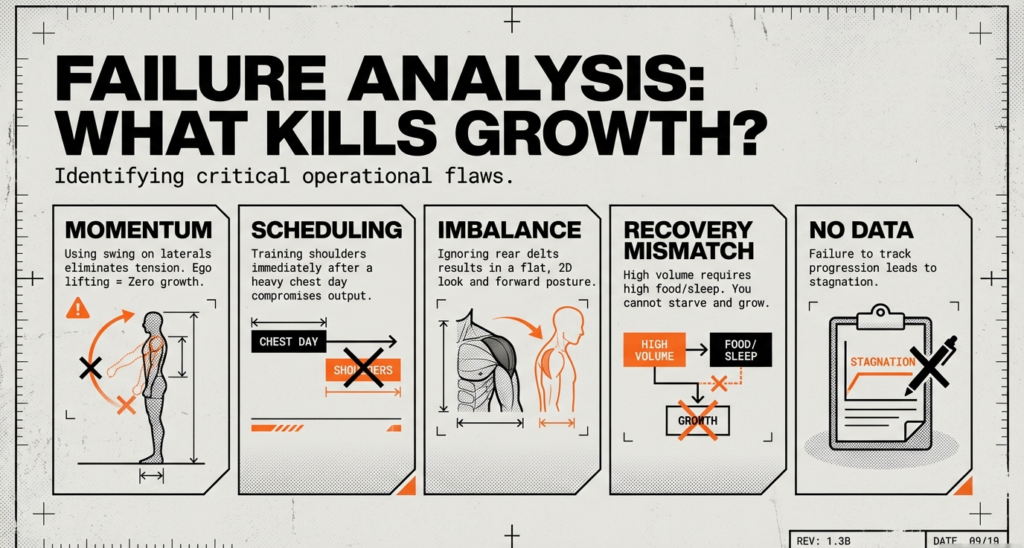
What kills shoulder growth
This image breaks down a failure analysis of what truly kills muscle growth by highlighting five critical mistakes.
- Momentum shows how swinging weights removes tension and stops hypertrophy.
- Scheduling explains why training shoulders right after a heavy chest day compromises performance.
- Imbalance warns that ignoring rear delts leads to flat, forward posture and poor aesthetics.
- Recovery Mismatch emphasizes that high training volume demands adequate food and sleep to grow. Finally,
- No Data reveals how failing to track progress causes stagnation.
Together, these headings reinforce that intelligent execution, balance, recovery, and monitoring are essential for consistent shoulder boulder growth.
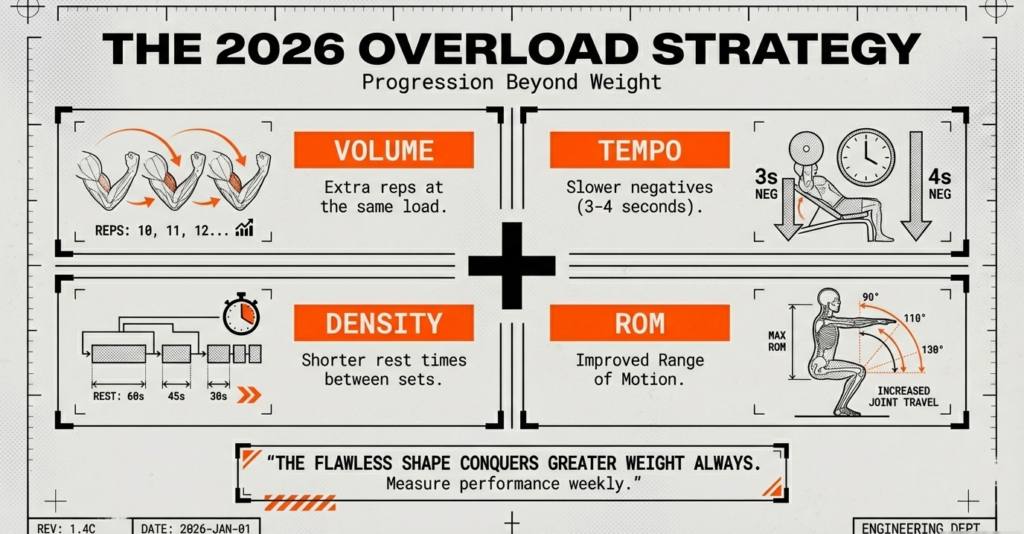
the 2026 overload strategy
- Volume focuses on achieving extra reps at the same load to extend muscle stimulus. Extra reps at the same load.
- Tempo emphasizes slower negatives, controlling the eccentric phase for greater tension. Slower negatives (3–4 seconds).
- Density highlights shorter rest periods to increase work output in less time. Shorter rest times.
- ROM (Range of Motion) prioritizes improved joint travel and movement quality for fuller muscle activation.
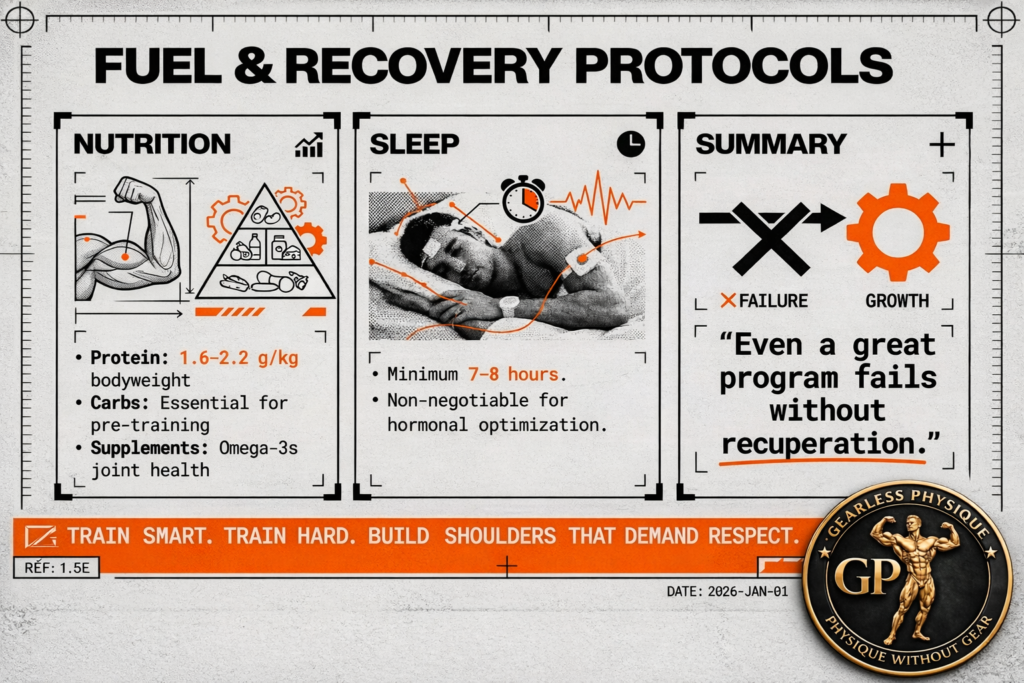
Fuel & Recovery Protocols
essential for maximizing shoulder growth in 2026. It emphasizes nutrition as the foundation, highlighting adequate protein intake, strategic carbohydrates for training performance, and supplements to support joint health. Sleep is presented as non-negotiable, with 7–8 hours required for hormonal balance, recovery, and muscle repair. The summary Boulder shoulders are made purposefully, forcefully, and smartly. The shoulder exercise program is an old-fashioned workout of modern hypertrophy. When you perform it correctly, in terms of form, recovery, and nutrition, your delts will become Shoulder Boulder.
Train smart. Train hard. And the talking of the shoulders. 🏔️🔥.

Gearless Physique
Physique Without Gear
Your transformation starts now. Who's with me?