10 Science-Based Protein Guidelines for Muscle Growth
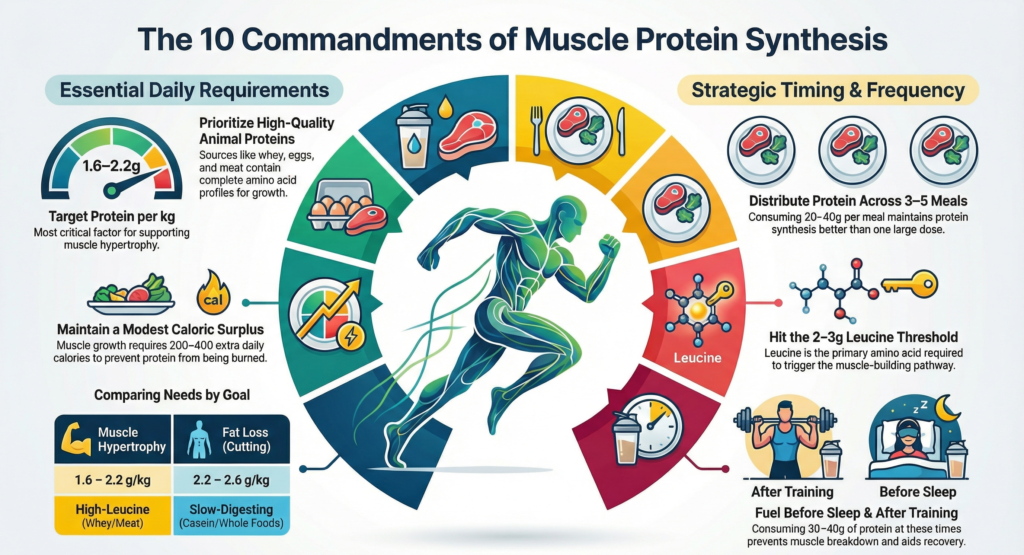
The Hypertrophy Blueprint
Muscle development is based on protein. You can be adding lean mass, gaining strength or even maintaining muscle in the process of losing fat, but the manner of your protein intake is as important to your success as is the intensity of your training. However, with all the myths and supplement marketing, science provides certain, simple, rules to follow in order to optimize protein food.
This guide dissection culminates in 10 scientifically-founded protein principles which in fact favor muscle hypertrophy. The principles are supported by the studies of the exercise physiology, nutrition science and actual results of athletics. Adhering to them, you will maximize muscle protein synthesis, recovery, and long-term progress, of course, naturally and sustainably.
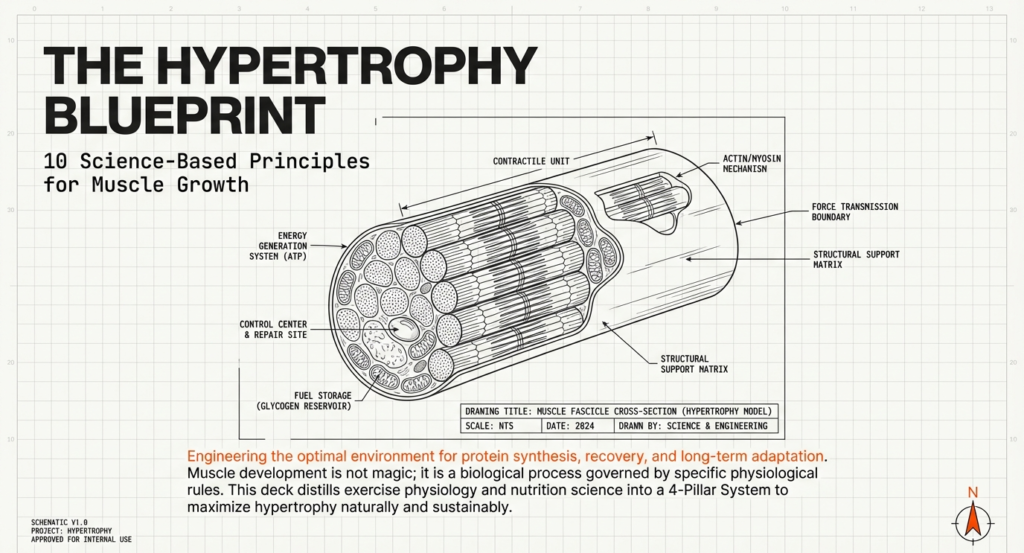
Muscle growth: Marketing vs. Reality
The development of muscle is not a magic. Hypertrophy is guided by very specific physiological principles in spite of flashy marketing assertions of anabolic formulas being instant and secret. The mTOR signal serves as a major growth controller, which is triggered when an adequate amount of amino acids, in particular, leucine is present. Having positive nitrogen balance will keep your body in an anabolic state as opposed to tearing down the tissue.
The muscular protein synthesis (MPS) increases with sufficient and balanced protein intake whereas general amino acid availability defines the efficacy of tissue repair. The only way to make real progress is to continue training hard and eating regularly and consistently, backed by science, not hype, short cuts, and over-the-top supplement claims.
Rule 01: Establish the baseline
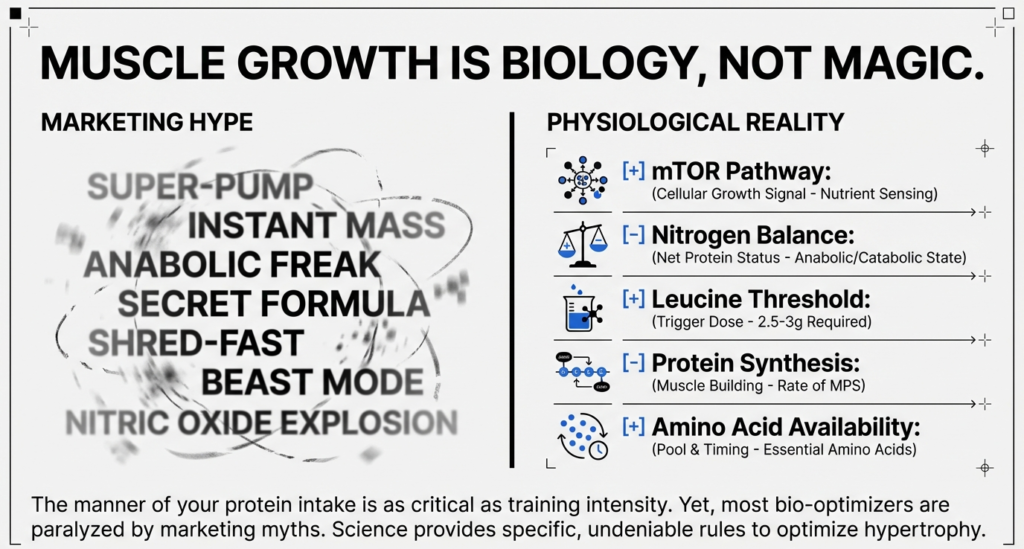
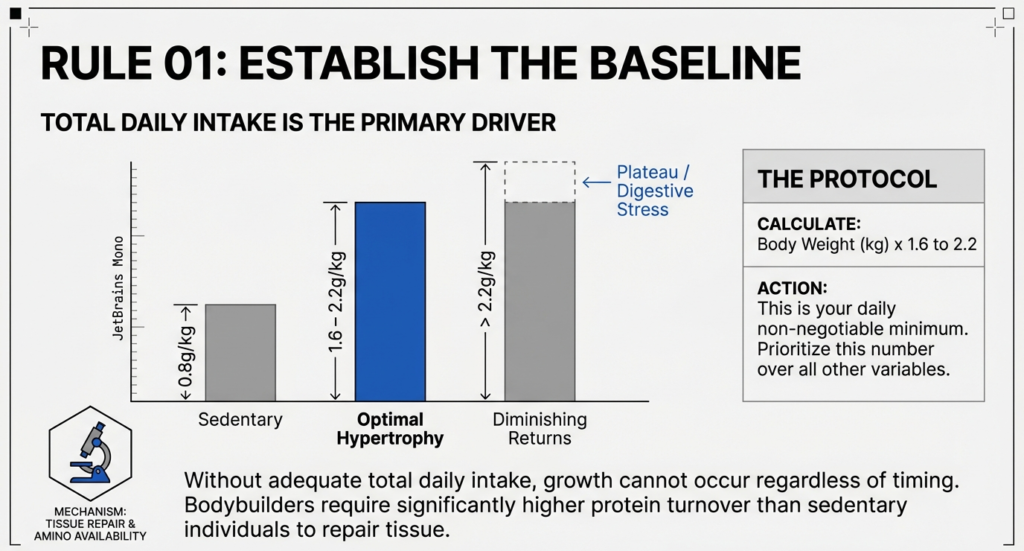
Without adequate total daily intake of protein, muscle growth cannot take place. Findings have always indicated that bodybuilders require high amounts of protein compared to sedentary individuals. To achieve maximum hypertrophy, one should take between 1.6-2.2 grams of protein per kilogram of body weight each day.
The optimal muscle protein synthesis is below this range. Most people experience plateau level benefits above it. This variety allows repair, growth and recovery of muscles without any extra demand on the digestive system and budget. The amount of protein to be taken daily is more important than time in cases where the protein is inadequate.
Rule 02: Distribution Strategy
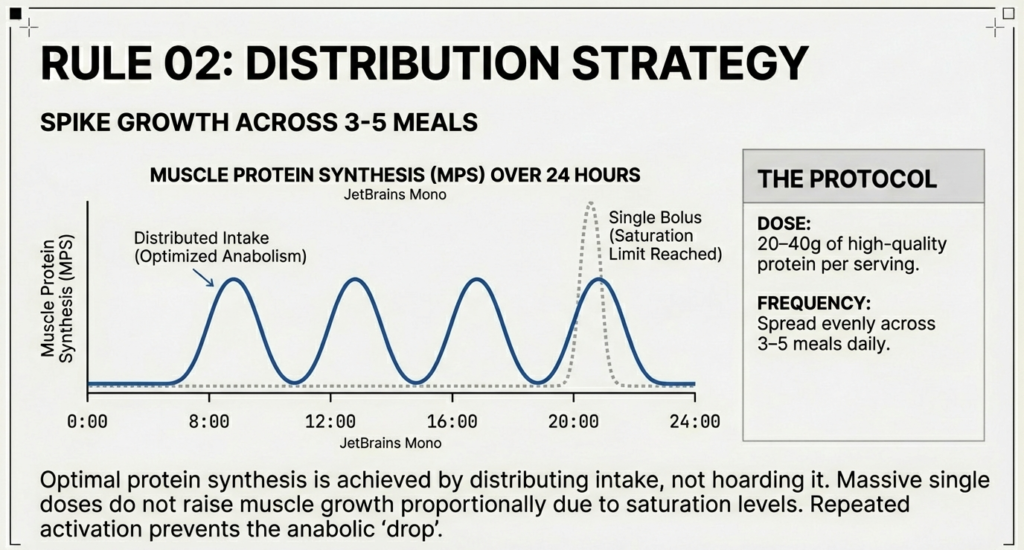
The optimal protein synthesis of muscles is achieved in the event that the protein is distributed all over the day as opposed to taking it in a single or two huge meals. Research indicates that high quality protein of 20-40gms daily divided into 3-5 meals yields superior anabolic responses.
This method is repeated to activate muscle protein synthesis rather than activating it once and allowing it to drop. Massive amounts of single doses do not raise muscle growth proportionally since synthesis reaches a saturation level. Continuity between meals maintains growth preparedness of your muscles throughout the day.
Rule 03: Source Selection
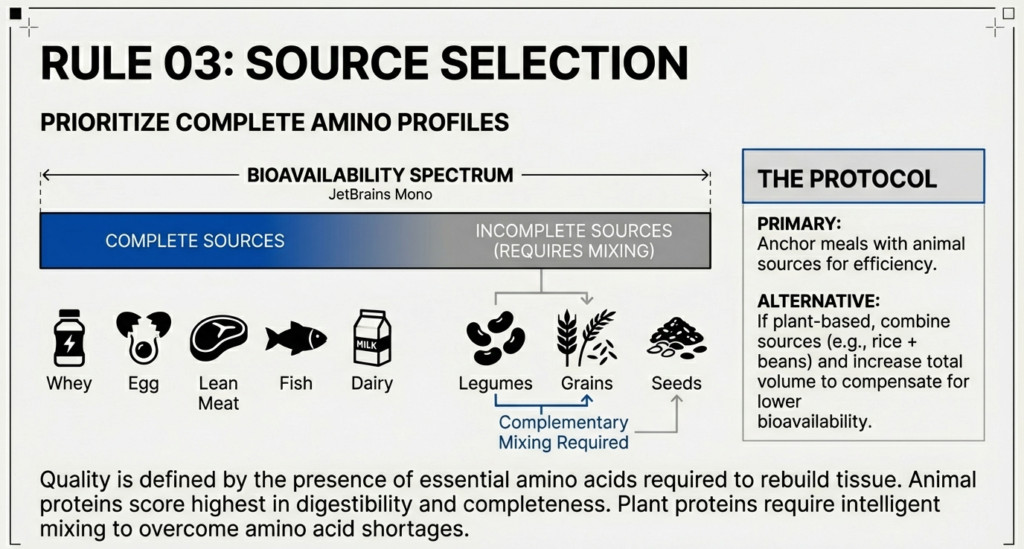
Proteins are not all equal with muscle growth. The high quality proteins include all the necessary amino acids and enough leucine which is the major initiator of the muscle protein synthesis. Animal proteins such as eggs, chicken, fish, dairy, and whey have the highest score in the amino acid completeness and digestibility.
Plant proteins may also be able to help build muscle, but it usually needs larger overall consumption or intelligent mixes. Combination of sources such as legumes, grains, soy, and seeds is useful in overcoming amino acid shortages. Quality is important in the sense that the muscle tissue needs certain amino acids in order to be rebuilt.
Rule 04: The ignition switch
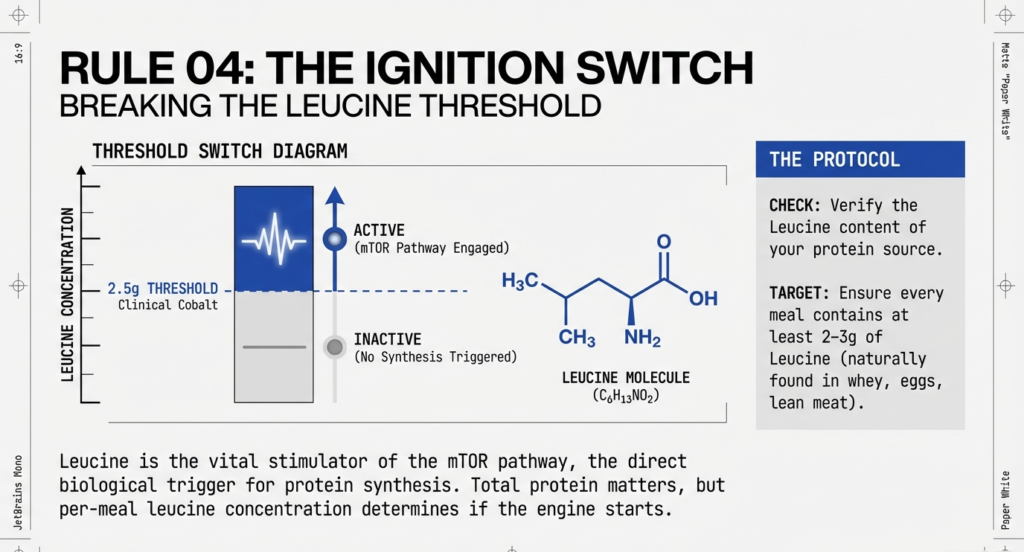
Leucine is of vital nature in the stimulation of the mTOR pathway which directly triggers the synthesis of the muscle proteins. According to research evidence, in order to optimally release this process, there must be a leucine threshold of about 2 to 3 grams per meal.
The protein sources that have high quality such as whey, eggs, chicken, and lean meat have this threshold naturally. Should your diet be based on plant proteins, you might have to eat a bit more. It may be that only by raising total protein food intake but not meeting the leucine requirement per meal will reduce the benefits of hypertrophy.
Rule 05: Take Protein following resistance training
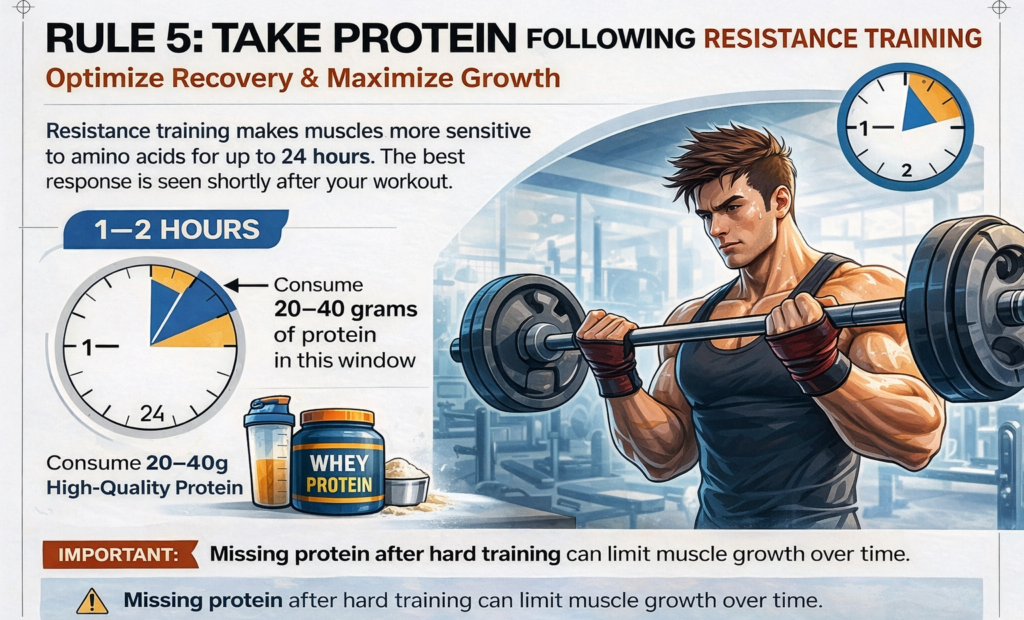
Protein consumption after exercising improves healing and aids in muscle development. Under conditions of resistance training, muscle sensitivity to amino acids is enhanced, up to 24 hours, and the most feasible effects are observed shortly after the training.
Proteins of 20-40 grams and 1-2 hours after the workout are effective in providing the body with amino acids at the time when the body muscles are ready to utilize the nutrients. Although the anabolic window is not a slim margin, missing protein after exercise may lessen growth potential in the long-term, particularly if one is receiving hard-training.
Read more: https://www.hopkinsmedicine.org/-/media/bariatrics/nutrition_protein_content_common_foods.pdf
Rule 06: The Caloric Context
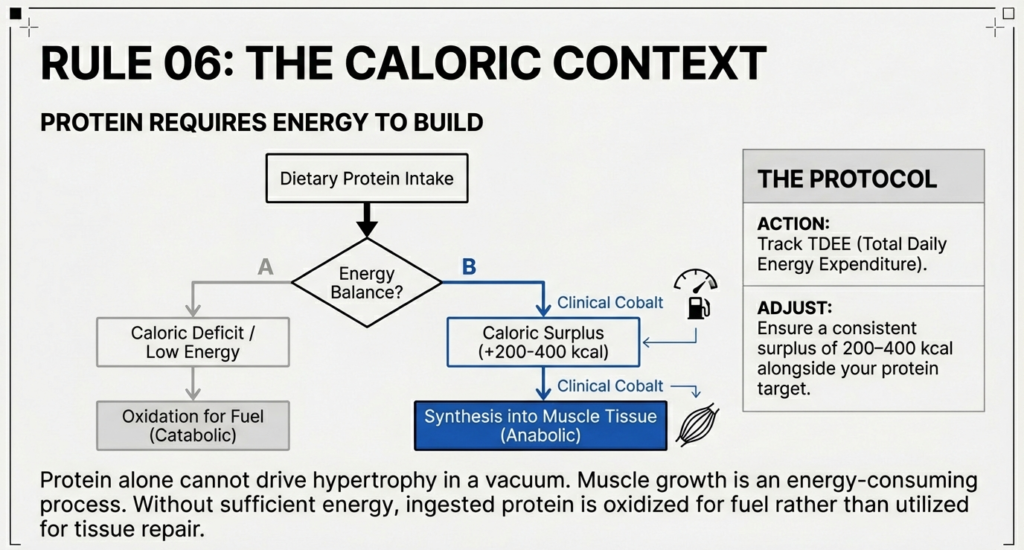
Protein in itself cannot develop muscle in case of overall low calorie consumption. Hypertrophy of muscle is an energy consuming process which needs caloric excess even a modest one. In case of inadequate calories, protein is usually channeled to meet the demand of energy instead of repairing the muscles.
There is an optimal level of 200-400 calories per day surplus coupled with enough protein that makes the body grow perfectly well. High protein intake does not maximally stimulate muscle gains without adequate energy. Calories and protein should be able to go hand in hand.
Rule 07: the deficit adjustment
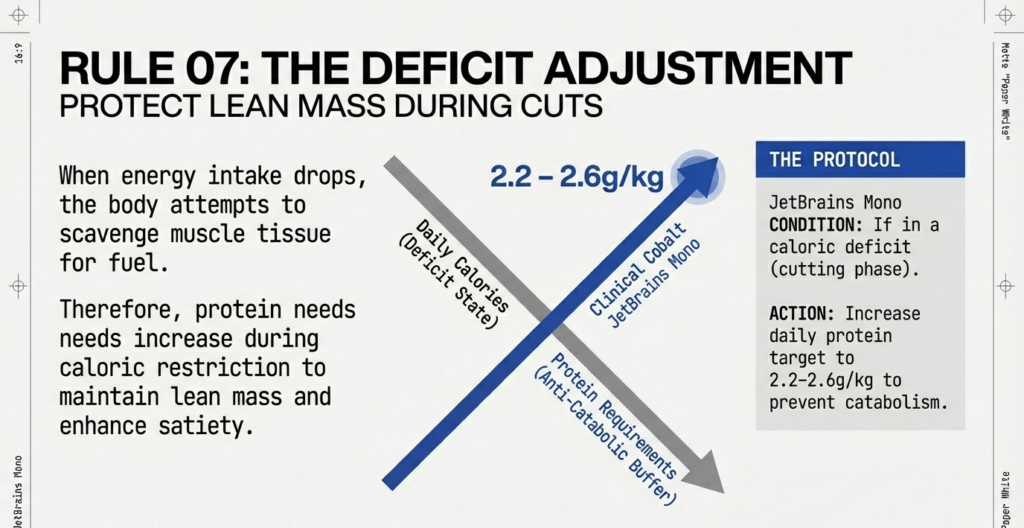
Protein needs are raised in times of a calorie restriction. When the energy consumed reduces, there is an increased possibility that the body will use up muscle tissue. The studies are in favor of adding protein to 2.2-2.6 g/kg when losing fat.
Increase in protein maintains the lean mass, enhances the satiety and training performance. This becomes particularly significant to the sportspeople and body-conscious people. In many cases, the loss of calories without additions to protein levels results in the loss of muscle, slower metabolism, and unfavorable results of body composition.
Rule 08: Elevate Easily Digestible Proteins Prefilter Training
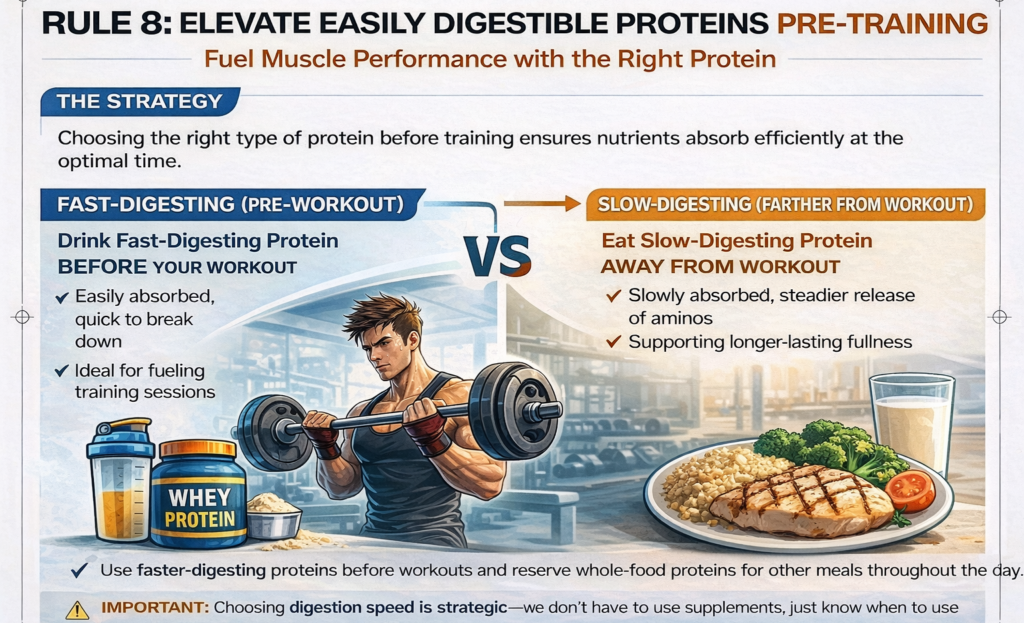
The digestibility influences the rate at which amino acids enter muscle tissues. Quickly digested proteins such as whey would be best around working out since they quickly increase the amount of amino acids in the blood.
Whole foods are slower to digest, and are more appropriate to include in a meal more distant to training. The suitable type is selected at the appropriate time when it contributes to enhanced delivery of nutrients without being associated with digestive distress. This does not imply that we are required to use supplements, but it is simply that the rate of digestion can be utilized strategically in terms of performance and recovery.
Rule 09: The overnight bridge
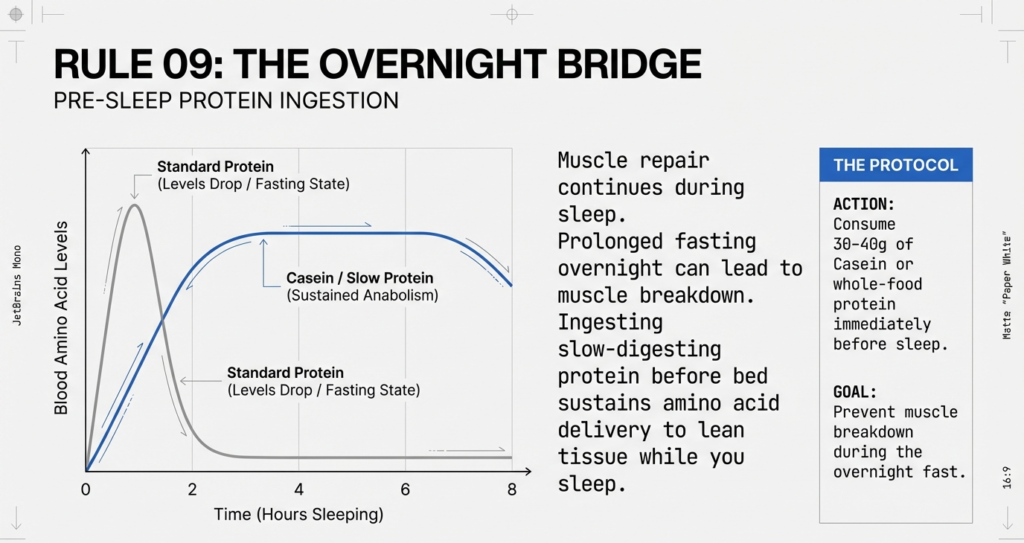
The process of muscle repair is going on in the process of sleep, and this is why the protein intake during the night is highly helpful. Research indicates that protein intake of 30-40 grams of slow digesting proteins like casein or whole-food proteins, taken before sleep enhances protein synthesis in lean body tissue overnight.
This lowers the breakage of muscle during prolonged fasting and aids in recovery. Although maximum daily intake remains the most important, ante bedtime protein ingestion is an efficient method of optimizing growth, particularly in individuals who train hard or have the day with relatively low frequency of meals.
Rule 10: the variable of success
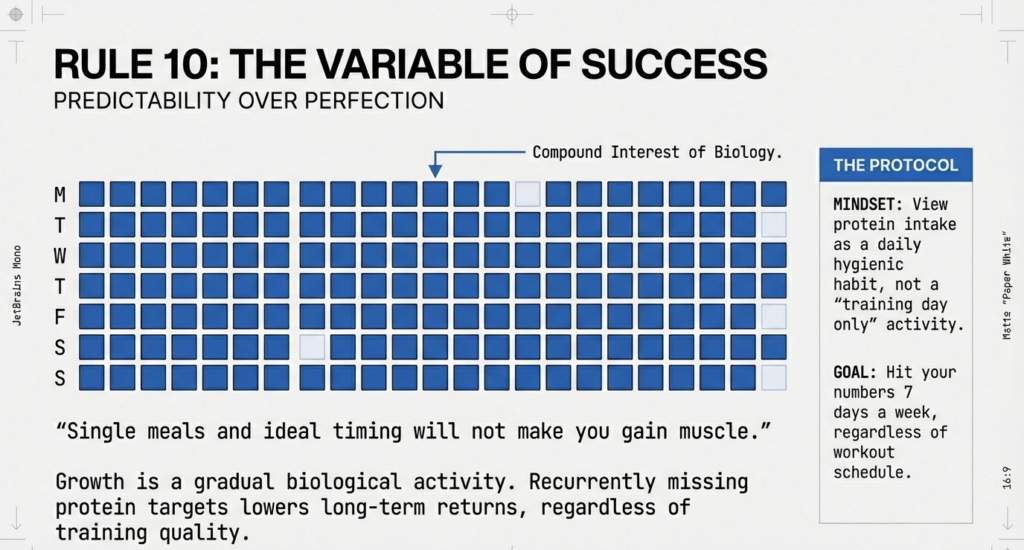
Single meals and ideal timing will not make you gain muscle, but rather, habitual practices will. Protein consumption should be sufficient on a daily basis and not only on training days. Recurrently missing protein targets lowers the returns in the long-term irrespective of the quality of training.
Studies have also indicated that consistency is always better than short-term optimization. Long term commitment, realistic eating habits and sustainable practices are more important than focusing on the small details. Growth in muscles is a gradual biological activity that in the long run pays off in discipline.
The Hypertrophy cheat sheet
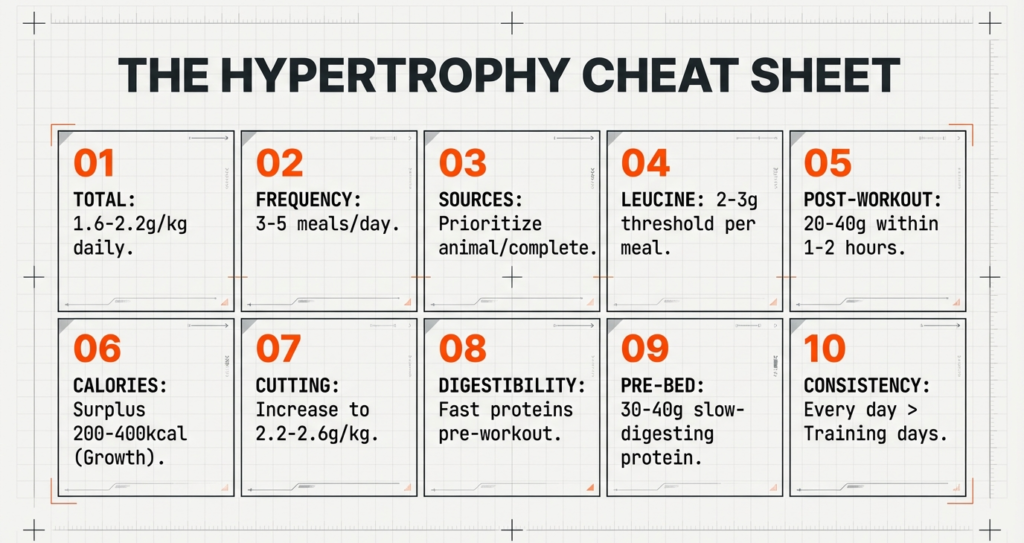
The hypertrophy cheat sheet helps to reduce muscle growth to ten useful, science-based concepts. The basis is total protein intake of 1.6 to 2.2 g/kg per day divided into 3-5 meals so as to initiate muscle protein synthesis time and again. Complete protein foods should be prioritized and each meal should reach the 2-3g leucine threshold to induce growth pathways. Eat 20-40g after a workout to aid in recovery, keep it at a moderate 200-400 calories to gain, and more protein during the cutting phases to retain lean weight. Consume rapid digesting proteins in strategies around the training and the slow ones just before going to bed. Most importantly, it is the consistency every day as opposed to perfect timing.
Final Thoughts
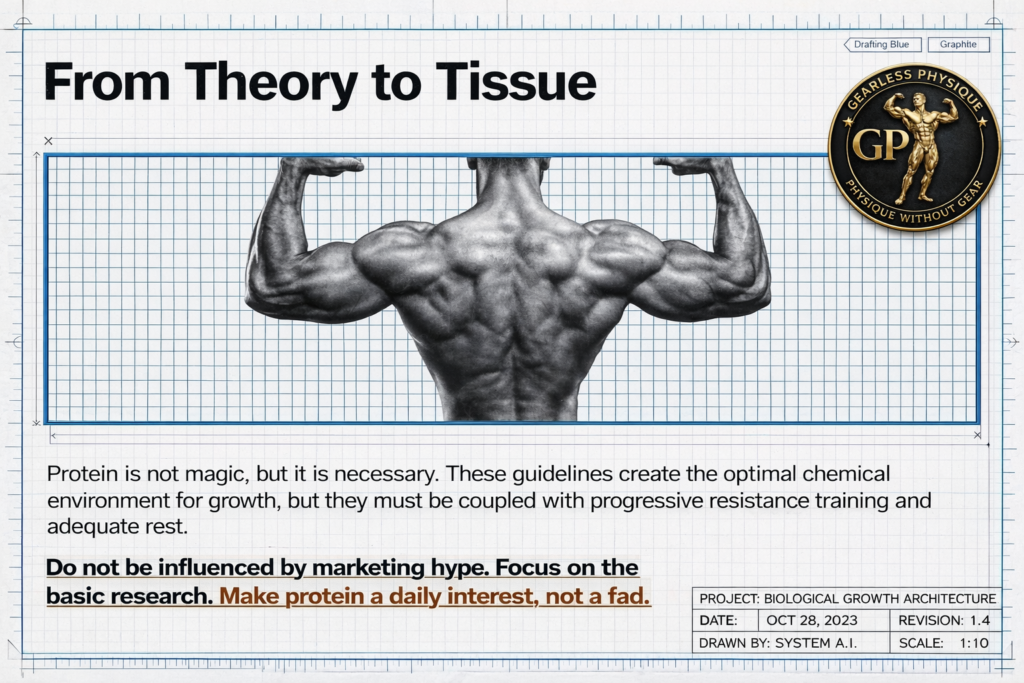
Protein is not wizardry, however, it is necessary. These science-based protein guidelines coupled together with progressive resistance training, adequate calories, and adequate rest provide the optimal environment in which to build muscle. Keep to the point, do not be influenced by the marketing hype, but pay attention to the basic research.
In case you want to become strong, big, and healthy in the long term, make protein a daily interest, not a fad. A consistent application of these principles will make your body react.

Gearless Physique
Physique Without Gear
Your transformation starts now. Who's with me?