Mastering the Bench Press: 12 mistake Stalling Your Progress
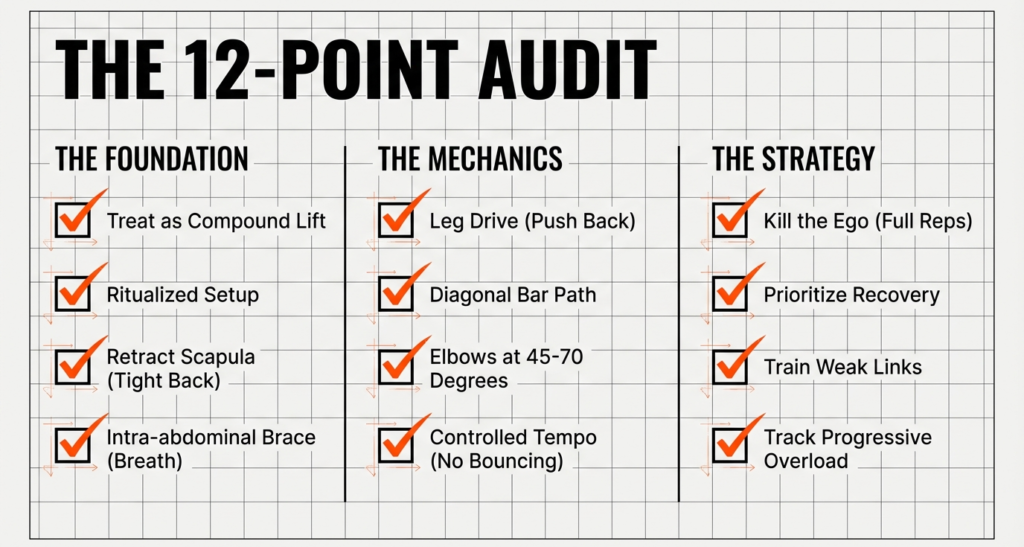
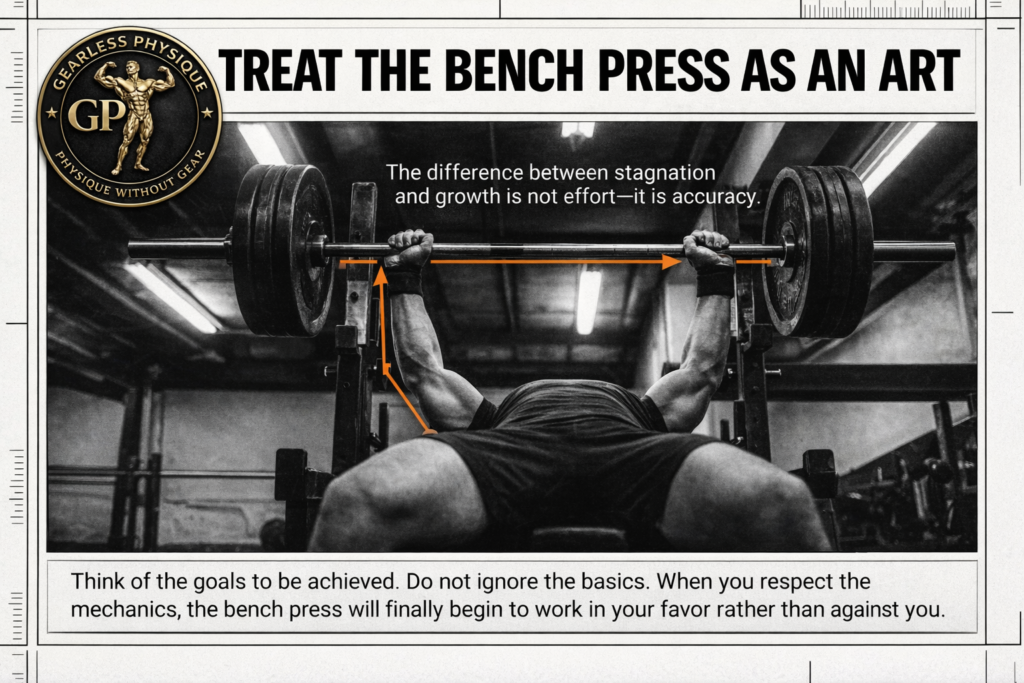
Mastering the bench press requires more than pushing heavier weights—it demands precision in mechanics and intelligent training. This visual highlights the key factors that break plateaus: a consistent setup, proper bar path, and strong scapular retraction to create a stable base. Full-body engagement, including leg drive and core bracing, ensures efficient force transfer throughout the lift. Controlled tempo and smart programming further enhance performance while reducing injury risk. Just as important, recovery and accessory work support long-term progress. When technique and strategy align, the bench press evolves from a frustrating plateau into a reliable tool for building strength, muscle, and consistent performance over time.
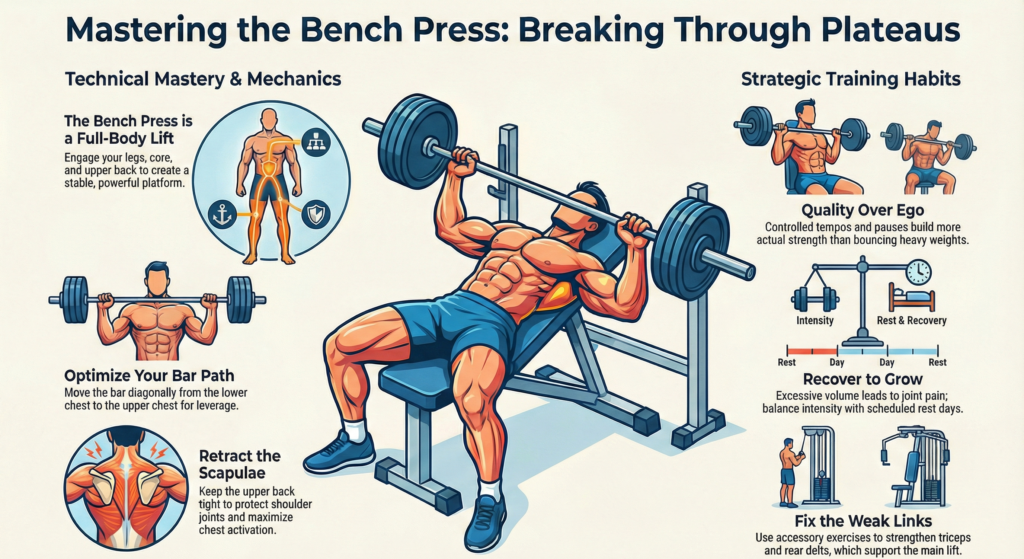
Introduction: When Chest Day Stops Delivering.
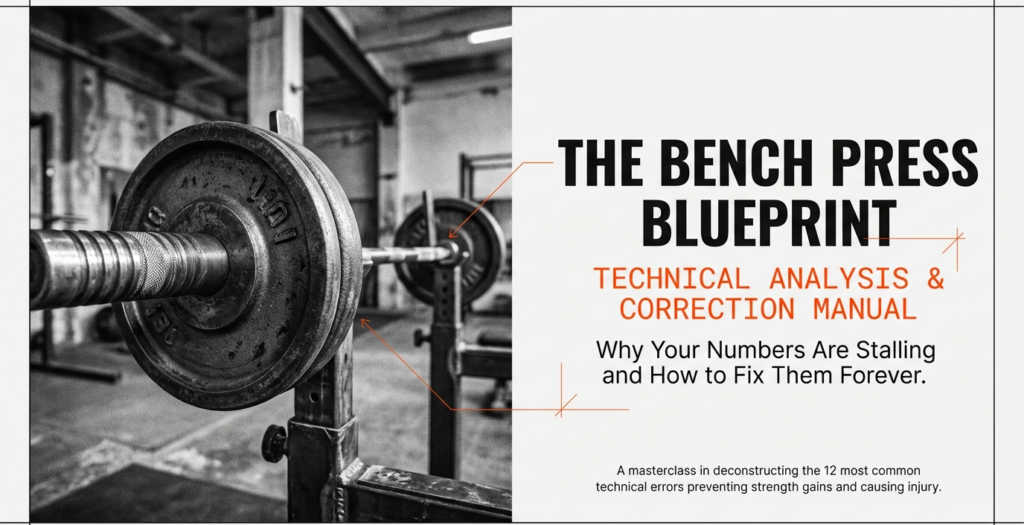
The day of the week that is typically eagerly looked forward to is the chest day, and it is the place that the progress is the slowest. You come to the gym motivated, rack the bar, push it really hard, and your bench press is not going to improve. The level of the strength reaches the plateau and the growth of the chest slows and shoulder pain begins to creep in. It hardly has anything to do with genetic composition or hard work. Rather, little errors slowly undermine your bench press. These are the pitfalls that you should be able to notice immediately and this will make your chest day much better and your body easier to build.
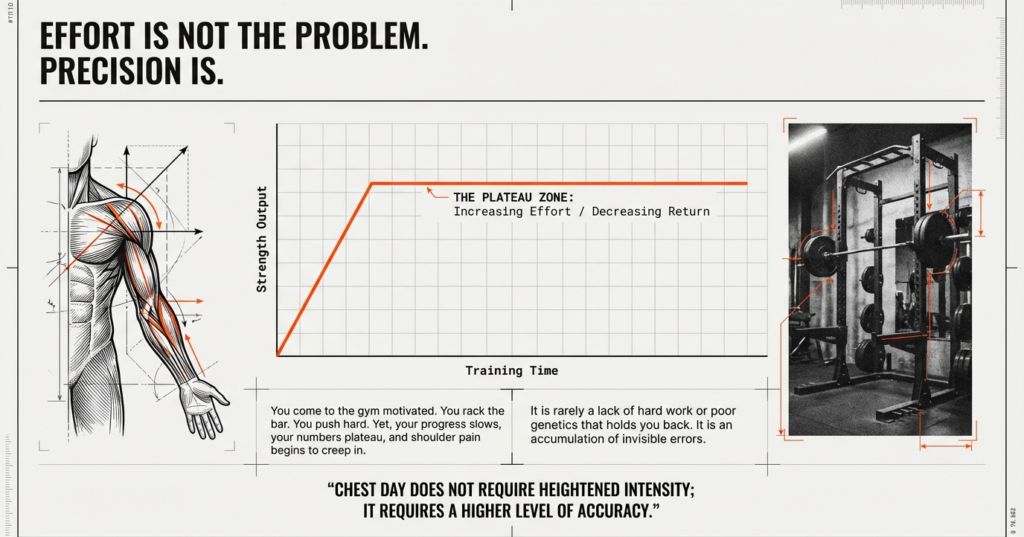
Effort Isn’t the Problem — Precision Is
This shot gives the true explanation of why most lifters enter a plateau during chest day. It is not the lack of effort, but gradually diminishing accuracy that causes progress to come to a standstill. With longer training time, the strength output levels off at some point in the time as small technical errors build up as: bad bar path, bad set-up, bad bracing and disregard of recovery. The curve emphasizes the decreasing marginal result: the harder one works, the less he/she gets.
The image of gyms and the anatomy drawing contribute to the message that working out is not an emotional experience but a mechanical one. Training the chest does not involve rashness and intensity but requires precision, consistency, and adherence to principles. Resolve the invisible errors and move on forward without the need to add on more weight and volume.
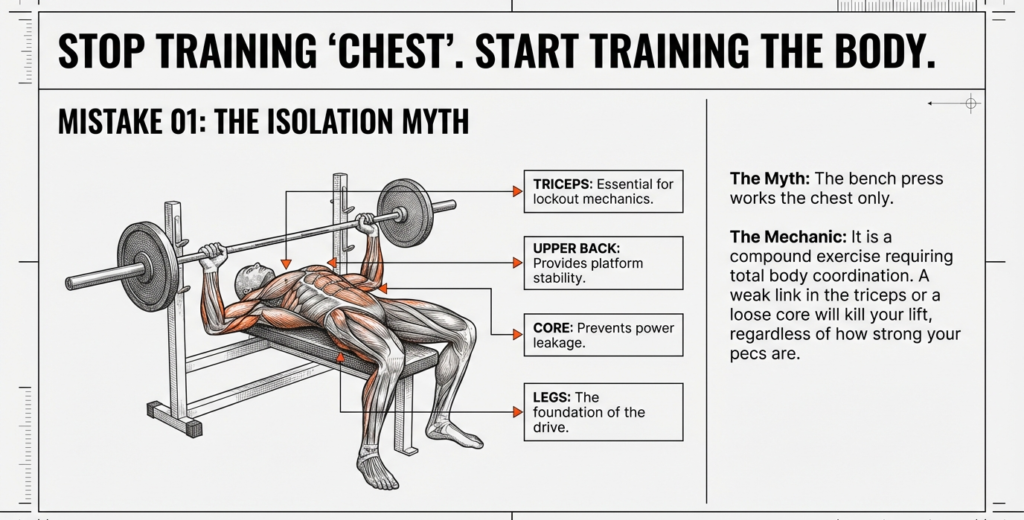
Mistake 1: Bench Press as a Chest-Only Lift
The most widespread myth is that bench press works on the chest only. It is actually a compound exercise, which uses the shoulders, triceps, upper back, core, and even the lower bottom, in the process. These are very important auxiliary muscles that lifters overlook when it is done like a chest-only workout. A weak triceps restricts the lock-out, upper back instability with a weak back causes instability to the bar and a loose core is a power-wasting core. A good bench press necessitates the whole body coordination, not only the activation of pecs.
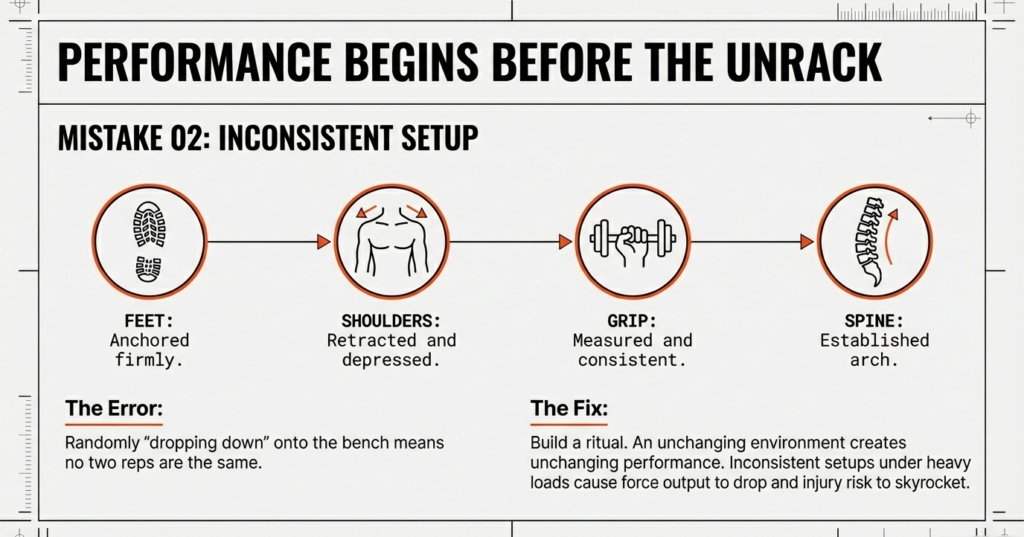
mistake 2: Bad Installation and Lack of Uniform Ceremony
Numerous lifters drop, put the bar down, and lose track of a proper set up. The performance of bench press begins earlier than the movement of the bar. It depends on the position of the feet, shoulders, the width of grips and the spinal position. It will take inconsistency in the setup ritual so that no two reps are the same and no one can determine how strong they will be. Setups under heavy loads cause small errors to accumulate, increase the risk of injuries, and decrease the output of the force. An unchanging environment creates an unchanging performance.
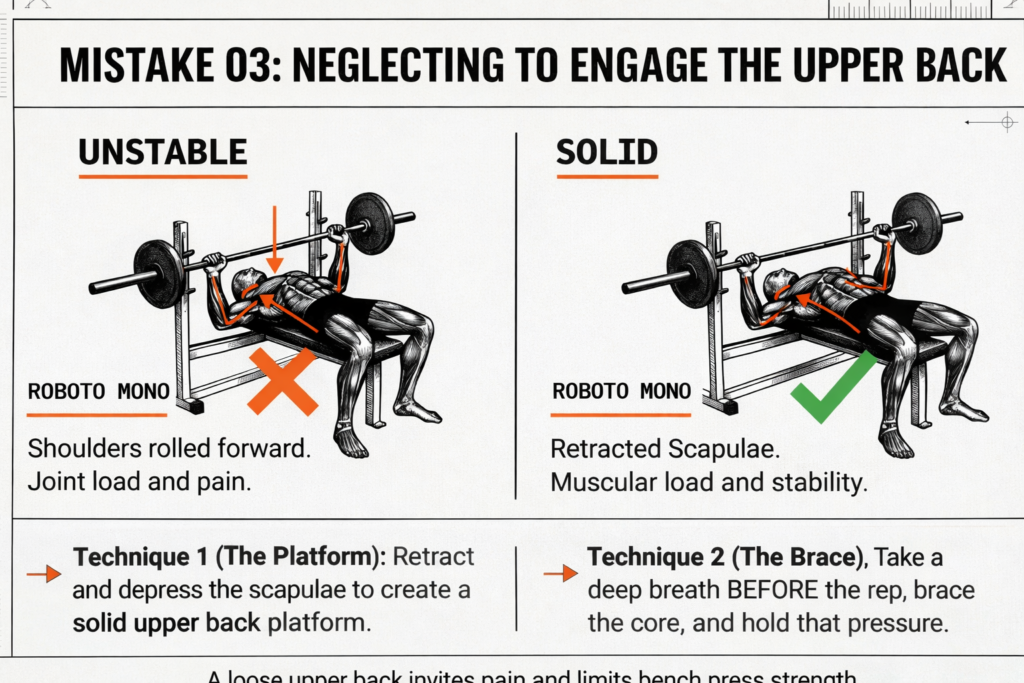
Mistake 3: Neglecting to engage the Upper Back
Bench press is killed by a relaxed upper back. When you fail to retract and to depress the scapulae the shoulders roll forward and the load shifts off the chest and on to the shoulder joints. This inhibits the chest activity and welcomes pain. A stiff upper back produces a stable base, reduces the range of movement a bit, and is able to transfer its forces more efficiently. Consider pressing off solid rather than pressing when unstable.
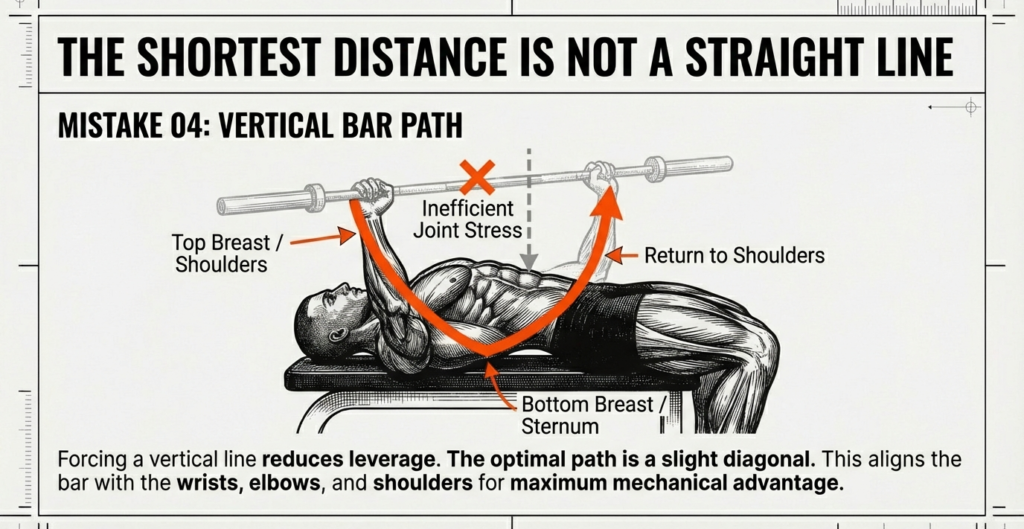
Mistake 4: Wrong Bar Path
The bar must not swing pure up and down. Forced vertical movement puts more stress on the shoulders and less leverage. A correct bench press is in a slight diagonal: bottom breast to top breast. This is aligned to hold the bar in wrists, elbows and shoulders; providing optimal mechanical advantage. Incorrect bar paths are a waste of power and reductions in stall strength, despite the potential of muscles to lift heavier.
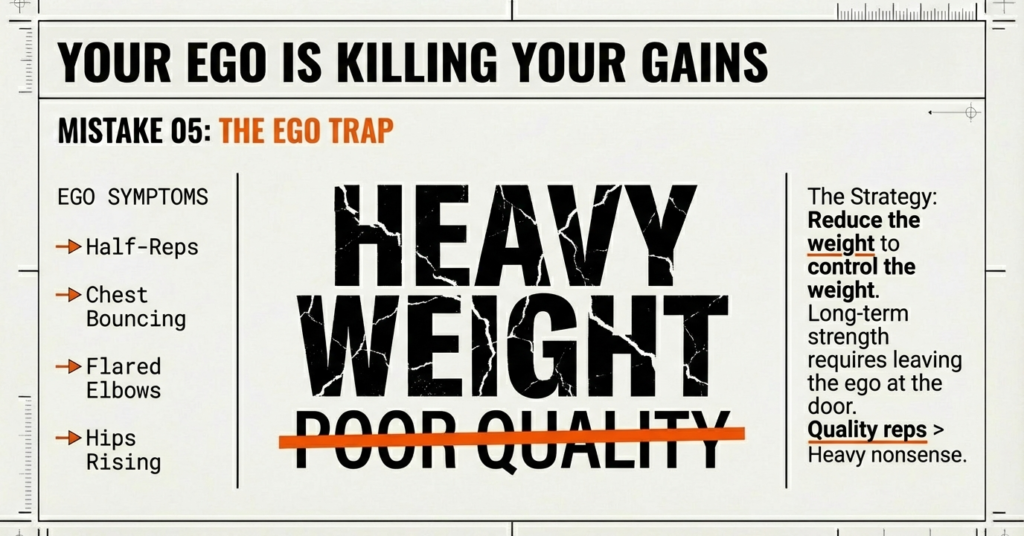
mistake 5: Overloading the Ego.
Progress in any weight-lifting is murdered by lifting weight beyond your control. Ego lifts are comprised of a half rep, chest bounces, flared elbows and bad tension. They reduce tension chest time and promote poor motor pattern. Quality reps are an asset. Reduction to achieve weight control is frequently associated with quicker long-term growth in strength and size.
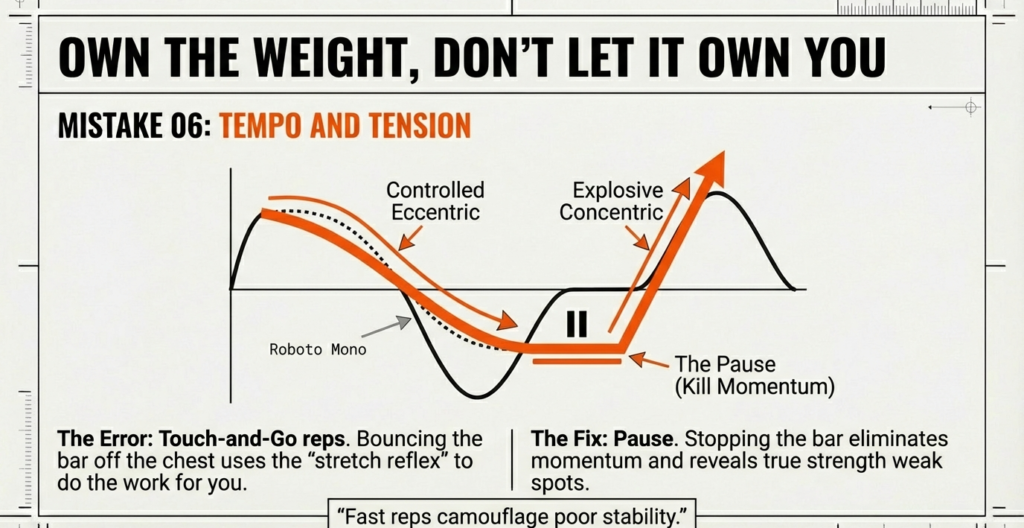
Mistake 6: No Pauses and Control of Tempo.
Weaknesses can be concealed by touch-and-go reps. Arguably, poor control and stability are camouflaged by the stretch reflex that does most of the work at the bottom with no pauses. Bench presses that are held back give weak spots, tighten, and increase actual strength. Going too fast with the bar takes away the eccentric control which is crucial to growth. A gradual fall and a progressive break enhances hypertrophy and strength transfer.
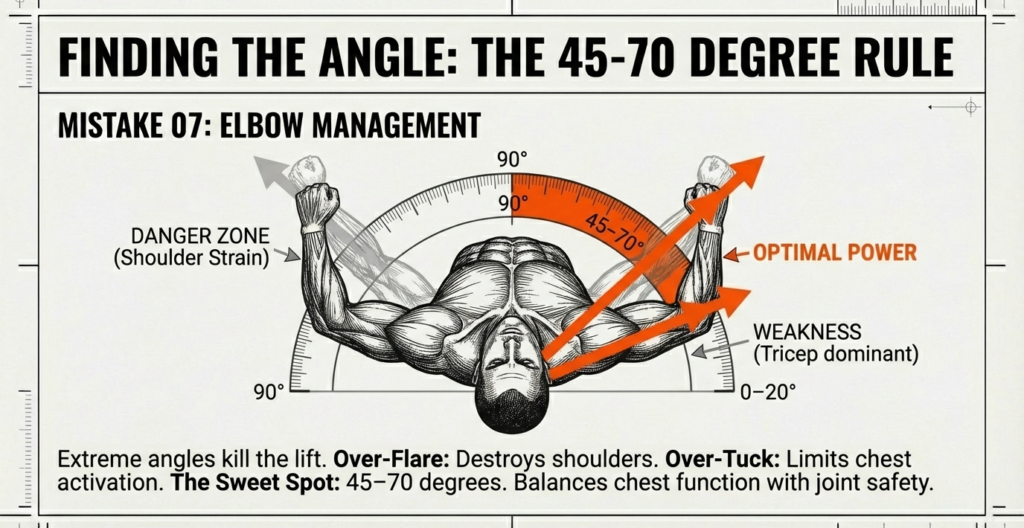
Mistake 7: Over-Flaring or over-tucking Elbows.
The positioning of the elbow is in comprehended. Over flaring will strain shoulders and slow down triceps effort. An over-tuck lifts the bench to a triceps-dominant lift, and restricts chest. The best angle is usually 45-70 degrees perpendicular to the torso depending on anatomy. The optimal elbow angle increases the efficiency of pressing, decreases the stress on the joint, and allows the chest to function effectively.
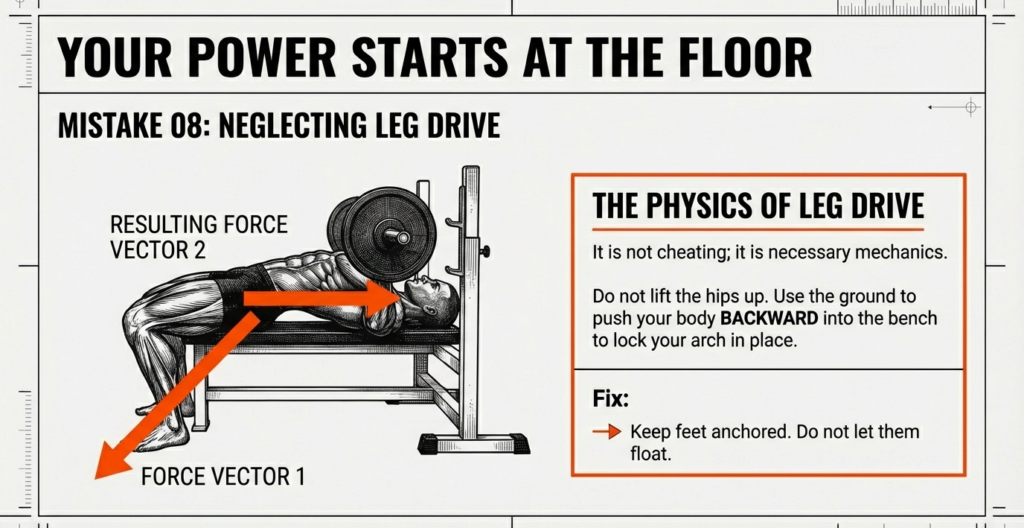
Mistake 8: Failure to drive the legs.
There is no cheating in leg drive, it is necessary. The vast majority of lifters allow their feet to float and rest in the press as they lose one of their most significant sources of stability and power. Leg drive is a proper use of force to push the body on the bar with the aid of the ground. This fixes the torso and aids along with the sticking point. Good leg drive does not consist of lifting hips, it is a matter of restrained strains that push the body against the bench backward.
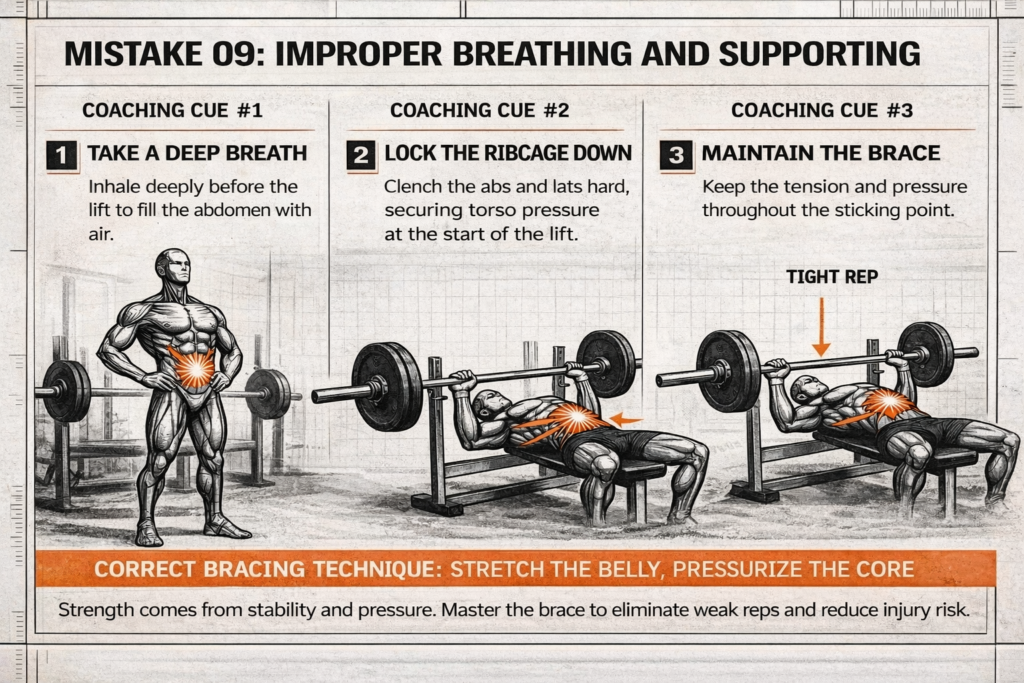
Mistake 9: Improper Breathing and Supporting.
Poor inhalation decreases muscle force and exposes them to injuries. Loss in intra-abdominal pressure occurs as a result of exhaling during the press or random breathing. The right bracing is to take deep breath before the rep, stand up straight and squeeze until the bar has got through the tightest part. This forms a stiff torso which carries heavier loads safely. Stability rather than muscle power is a major contributor to bench press strength.
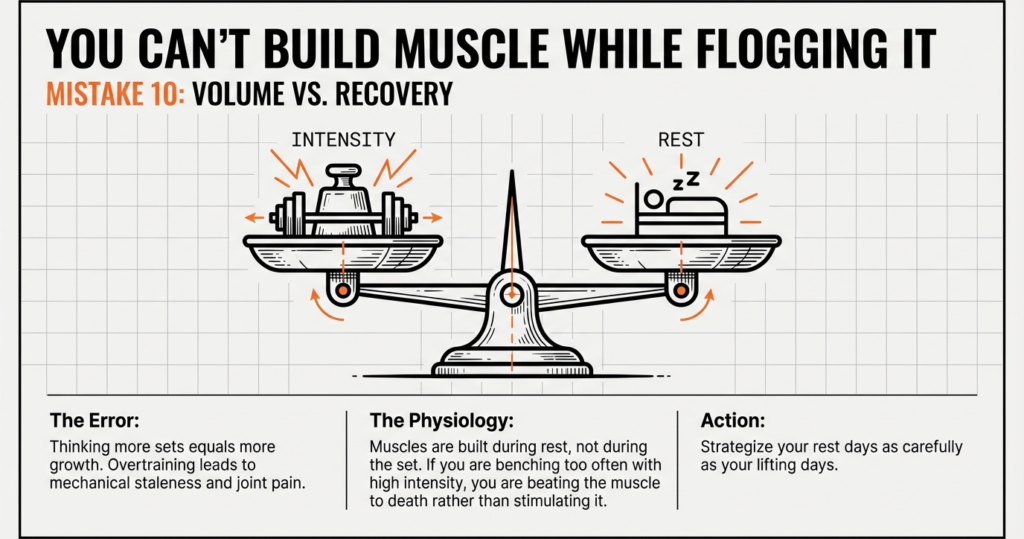
mistake 10: Too many volume, too little recovery.
Increased sets do not necessarily increase growth. Overtraining of chest volume without proper rest results in mechanical staleness, pains in the joints, and exhaustion. Poor intensity is observed in many lifters as they bench too often. Chest muscles are not built when they are flogged to death all the time. It is essential to balance between volume, intensity, and rest days. Endless chest days beat over and over again through strategic programming.
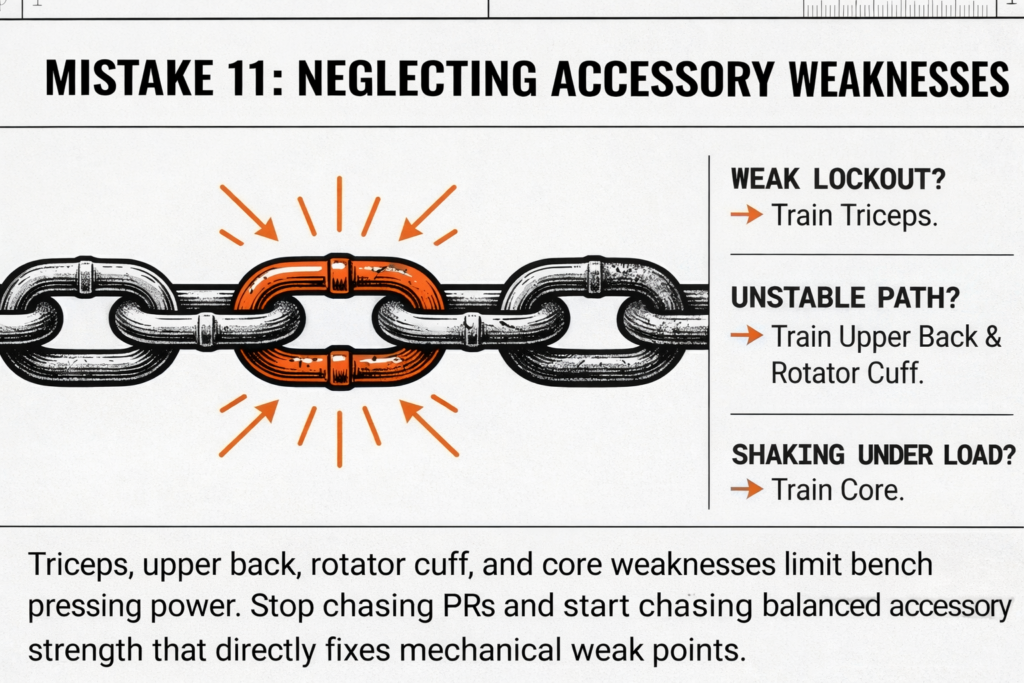
mistake 11: Neglecting Accessory Weaknesses.
When you find your bench stalling, then it might not be the bench. Limiting factors to pressing power are weak triceps, poorly developed rear delts, lack of rotator cuff strength, or a weak core. Disregard of accessories results in plateaus. Smart lifters are applied to assist the bench press and not to substitute it. Accessories must not only pursue pump fatigue or pump weariness but also those weak links.
Mistake 12: Prioritizing Pump Over Progressive Overload
The chest day usually becomes a pump training with random exercises and reps. Although pump is a rewarding process, it does not ensure progression. Strength does not improve without measuring load, reps and quality of execution. Progressive overload, which is applied intelligently, is necessary to improve bench press. It consists of organized rep schemes, scheduled increases, and every now-and-then reloads. Development is not gained randomly, but purposefully.
How to Fix your chest forever.
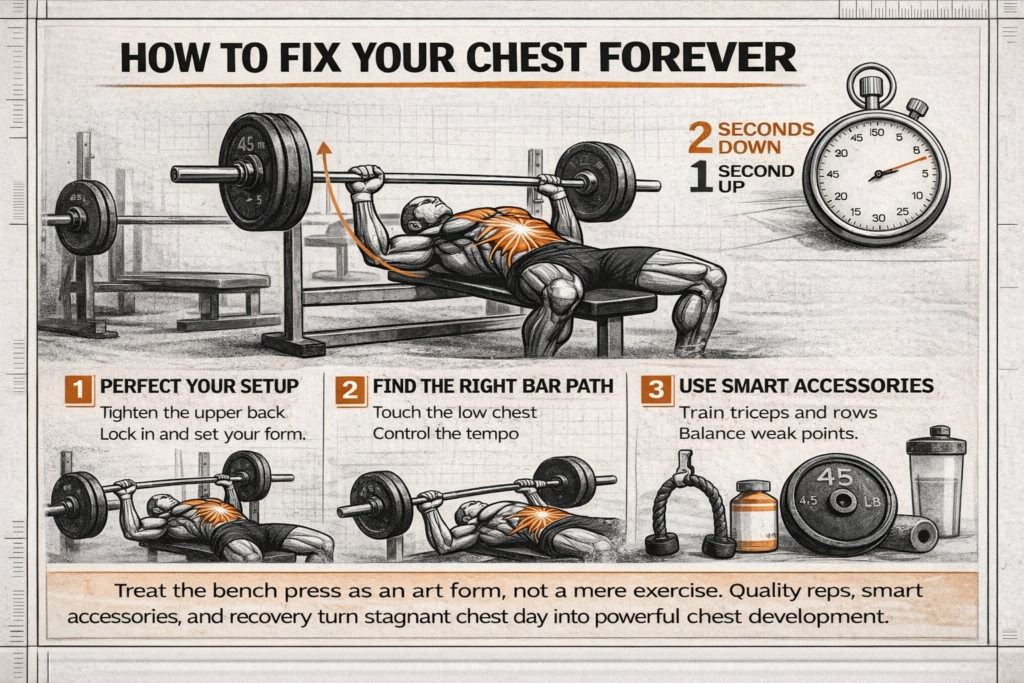
Begin with admiring the bench press as an art rather than an exercise. Make your set-up, tighten upper back, and learn bar path and tempo. Less ego loading and then on repeatable and high-quality reps. Have the smartest accessories on your bench and the same recognition upon recovery as on the training. The bench press can be an effective muscle-builder rather than an exasperating stagnation when chest day is organized, training and conditioned.
Read more:https://www.muscleandstrength.com/workouts/boost-your-bench-press
Final Thoughts
A bench press that fails can hardly be due to insufficient effort. It tends to be concerning the mistakes that are covered up and that occur week after week. The correction of any one of these mistakes can open the door to direct enhancement of strength, chest ascendancy, and health of the joint. Chest day does not require heightened intensity, it requires a higher level of accuracy. Training: Think of goals to be achieved, do not ignore basics and your bench press will eventually begin to work in your favor rather than working against you.

Gearless Physique
Physique Without Gear
Your transformation starts now. Who's with me?