Exact Sets Per Muscle For Maximum Muscle Growth (2026)
When volume, frequency, intensity, and recovery are aligned properly, you unlock a complete hypertrophy system that actually delivers results. This isn’t about guessing or copying random workouts—it’s about following a structured blueprint that your body can adapt to consistently. The right number of sets ensures enough stimulus, frequency improves performance, intensity drives progression, and recovery allows growth to happen. Miss one piece, and progress slows down. Nail all four, and muscle building becomes predictable.
This is the difference between training hard and training smart. Stay disciplined with these principles, track your progress, and over time, your physique will clearly reflect the effort and precision you put in.
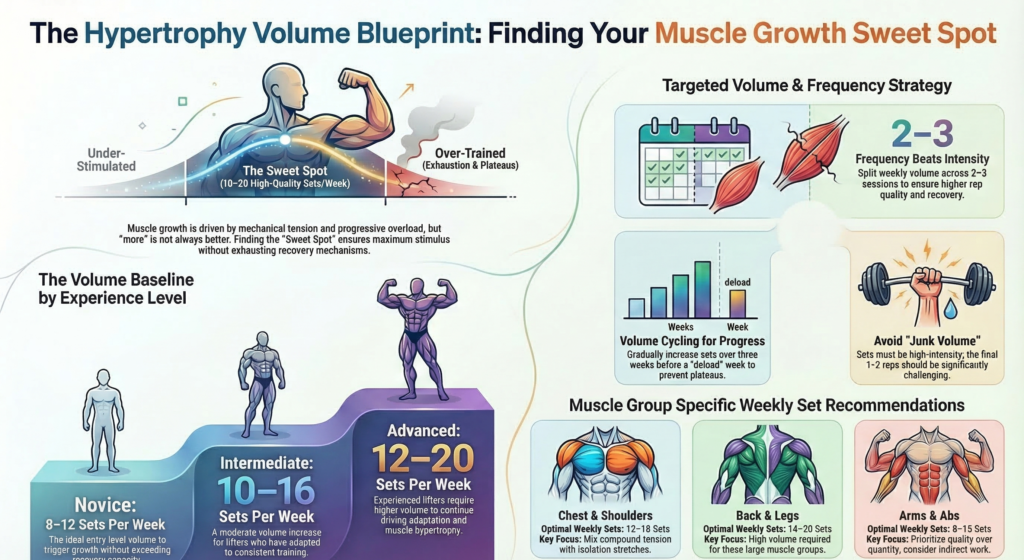
The 2026 Hypertrophy Blueprint for Maximum Muscle Growth
The 2026 hypertrophy blueprint is simple but powerful—muscle growth isn’t about doing more, it’s about doing the right amount. Most lifters waste years chasing volume instead of optimizing it. The real transformation begins when you understand that hypertrophy depends on balancing training volume, progressive overload, and recovery. Once you dial in this equation, your results stop being random and start becoming predictable.
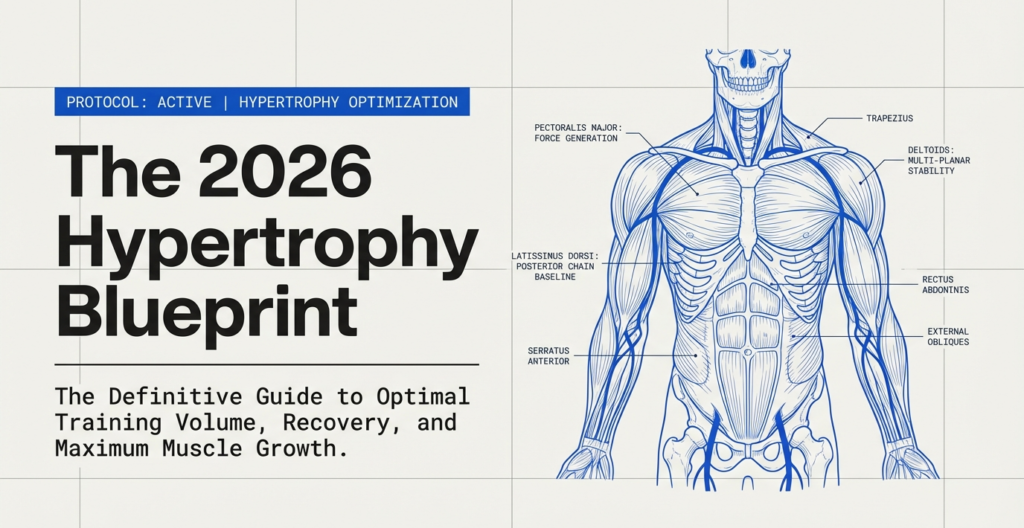
Optimal Training Volume Curve for Maximum Hypertrophy
Muscle growth follows a clear curve—too little volume leads to under-stimulation, while too much destroys recovery. The sweet spot lies in the middle, where your body receives enough stimulus to grow without overwhelming recovery capacity. This is where most gains happen. Understanding this curve is the difference between spinning your wheels and building consistent muscle.
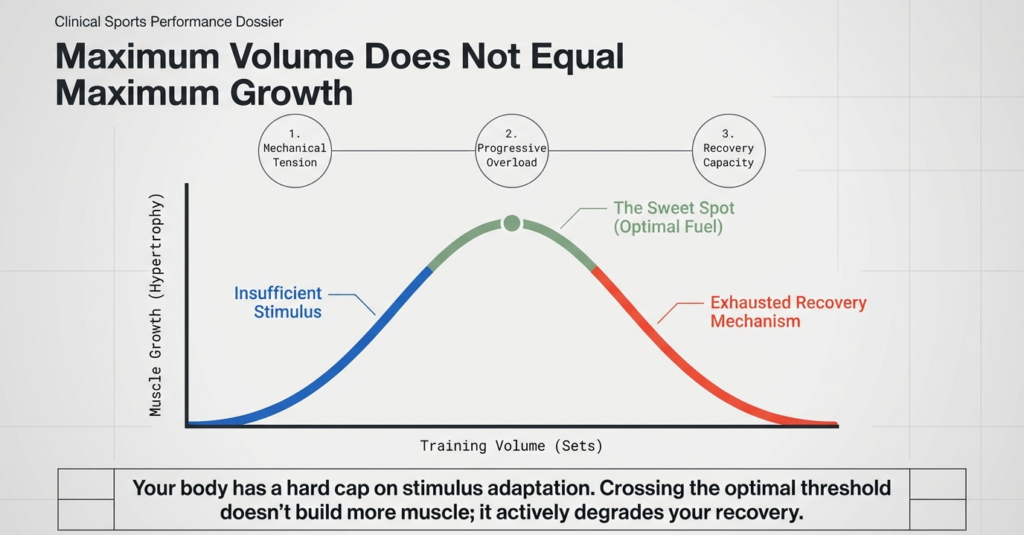
Weekly Sets Per Muscle Based on Experience Level
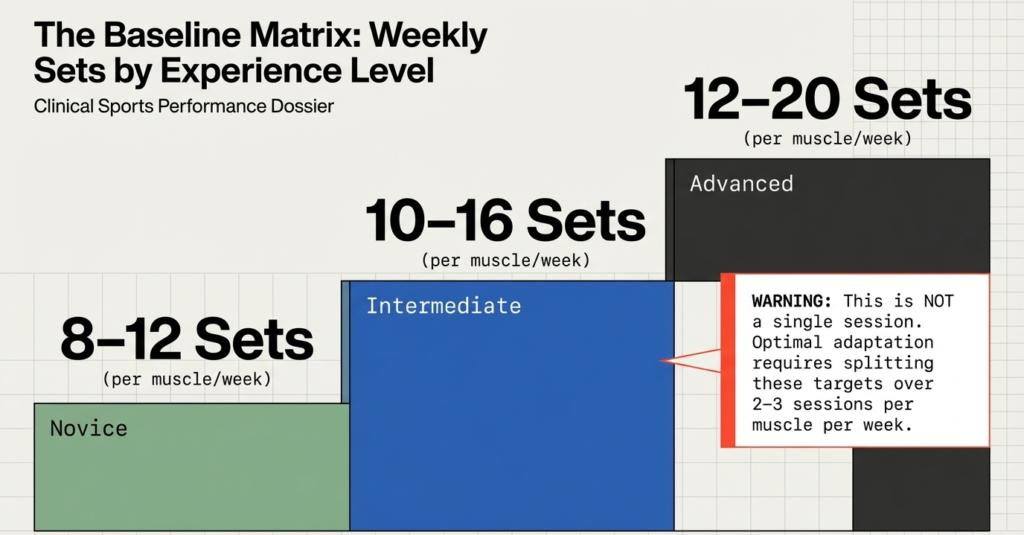
Your ideal training volume depends heavily on your experience level. Beginners grow with less volume because their bodies are highly responsive, while advanced lifters need more stimulus to continue progressing. This is why following generic routines often fails—your volume must match your training level for optimal hypertrophy.
According to the existing hypertrophy science, as well as the experience of bodybuilders, the following is the best possible number of sets per muscle group per week:
Novices: 8-12 sets of each muscle per week.
Intermediate: 10-16 sets per muscle per week.
Advanced: 12-20 muscle sets per week.
This does not mean one session per week. The best results are obtained by splitting this over 2-3 sessions per muscle.
Why Training Frequency Improves Muscle Growth
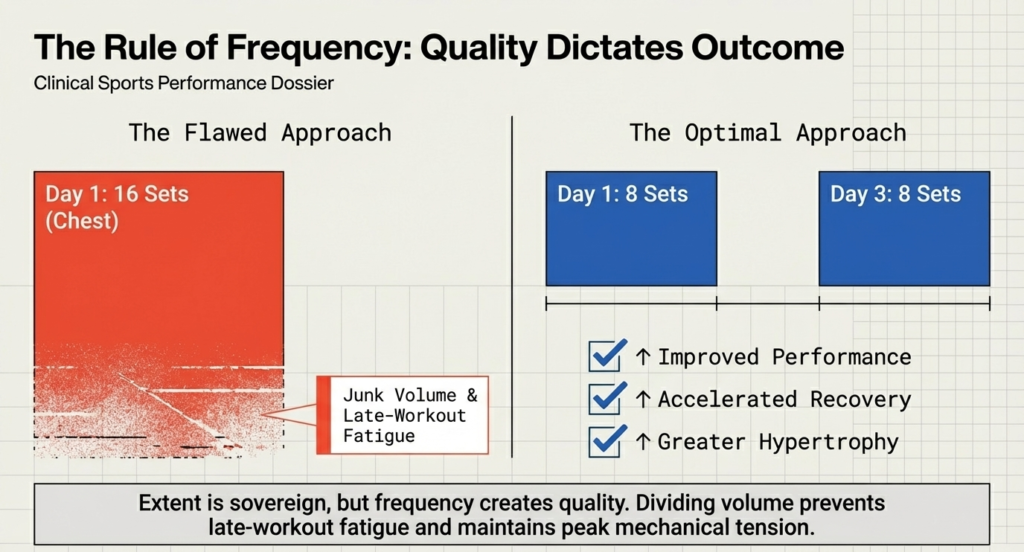
Training frequency plays a crucial role in muscle growth quality. Instead of cramming all your sets into one brutal session, spreading them across the week improves performance, reduces fatigue, and enhances recovery. This approach allows you to maintain high-quality sets, which ultimately leads to better hypertrophy.
The Flawed Approach:
Day 1: 16 Sets (Chest).
It’s a bad workout approach.
The Optimal Approach:
Day 1: 8 Sets (Chest).
Day 3: 8 Sets (chest).
It’s improved performance, accelerated recovery, and greater hypertrophy.
Chest, Back and Abs Weekly Training Volume Guide
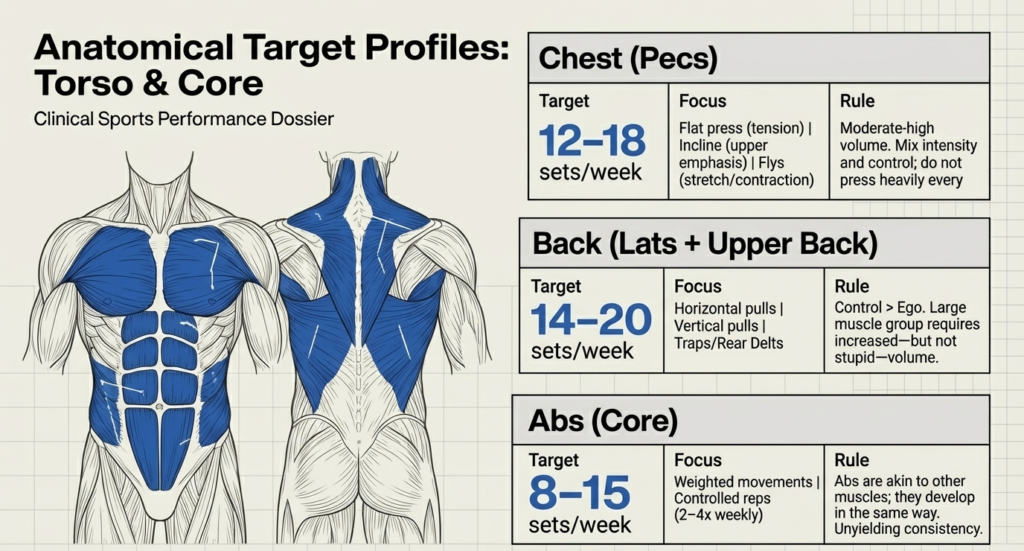
Different muscle groups respond differently to training volume. Chest benefits from controlled pressing and stretch-focused movements, while back requires a mix of vertical and horizontal pulling for complete development. Abs, like any other muscle, grow best with progressive overload and consistency—not endless high-rep burnout sets.
Chest (Pecs):
You have a good reaction to moderate-high volume in your chest, particularly when doing a combination of angles.
Optimal sets: 12–18 sets per week.
Focus on:
- Flat press (compound tension).
- Incline press (emphasis on the upper chest).
- Movements of the fly (stretch + contraction).
Do not press heavily on a regular basis. Mix intensity and control.
Back (Lats + Upper Back):
Back is large muscle group and thus it requires increased volume but not stupid volume.
Optimal sets: 14–20 sets per week.
Divide into:
- Horizontal pulls (rows).
- Vertical pulls (pull-ups/lat pulldowns).
Rear delts + traps:
The problem is that back training is usually constrained by a lack of strength, but not a lack of mind-muscle connection. Control is better than ego raising.
Abs (Core):
The absence of abs is akin to cows, they bounce back.
Optimal sets: 8–15 sets per week.
Train them 2–4 times weekly with:
- Weighted movements.
- Controlled reps.
Abs are just like any other muscle they develop in the same way.
Shoulders and Arms Training Volume Optimization
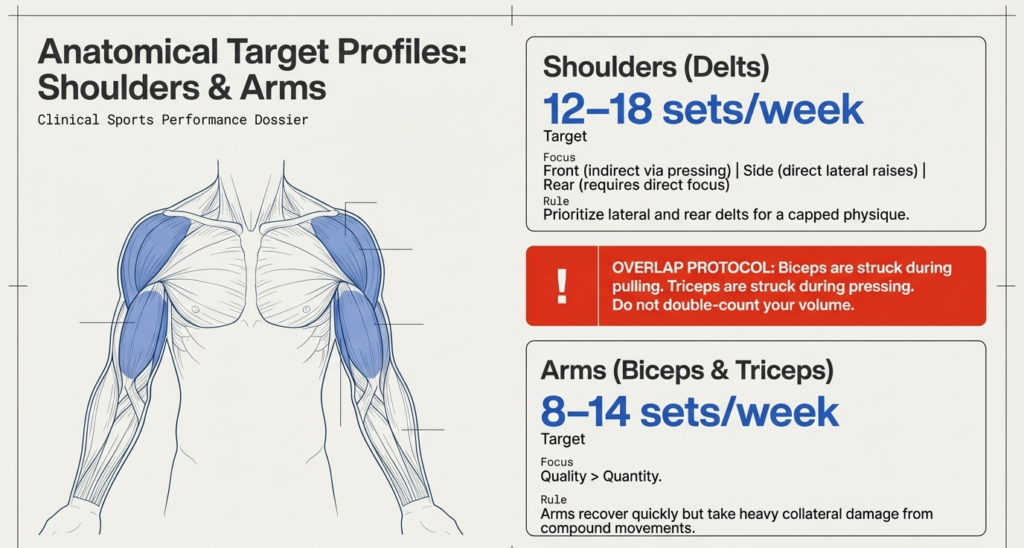
Shoulders and arms demand smarter programming rather than just more volume. Since they are already involved in compound movements, direct training should focus on quality and precision. Prioritizing lateral raises, rear delts, and controlled arm work ensures balanced development without overtraining.
Shoulders (Delts):
Shoulders are not easy as they possess three heads.
Optimal sets: 12–18 sets per week.
Break it into:
- Front delts (indirectly touched when pressing).
- Side delts (have to be direct).
- Rear delts (they are not trained very often).
Lateral raises and rear delt should take precedence in the event you desire that want of capped physique.
Arms (Biceps & Triceps):
Arms have quicker recovery and also receive indirect work.
Optimal sets: 8–14 sets per week.
Remember:
- During pulling, biceps are struck.
- On pressing triceps are struck.
So don’t double-count volume. Quality > quantity here.
Leg Day Volume Guide for Maximum Growth
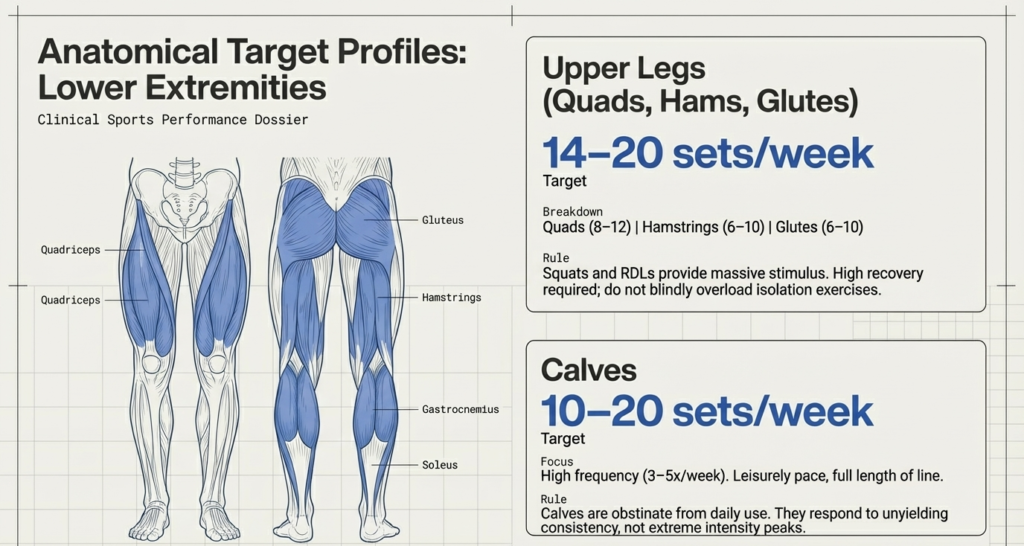
Leg training requires both high effort and intelligent recovery. Compound lifts like squats and RDLs deliver massive stimulus, making it unnecessary to overload isolation work. Calves, however, thrive on higher frequency and consistency, responding better to repeated stimulus rather than occasional intense sessions.
Legs (Quads, Hamstrings, Glutes):
High volume is possible- but high recovery is also needed by legs.
Optimal sets: 14–20 sets per week.
Split like this:
- Quads: 8–12 sets.
- Hamstrings: 6–10 sets.
- Glutes: 6–10 sets.
Massive stimulus is provided by lifts such as squats and RDLs, and the need to overload isolation should not be made.
Calves:
Calves are obstinate due to the daily usage.
Optimal sets: 10–20 sets per week.
Train them:
- With high frequency (3–5x/week).
- And leisurely pace, and length of line.
They are more responsive to consistency than peaks of intensity.
Push Pull Legs Split for Optimal Weekly Volume
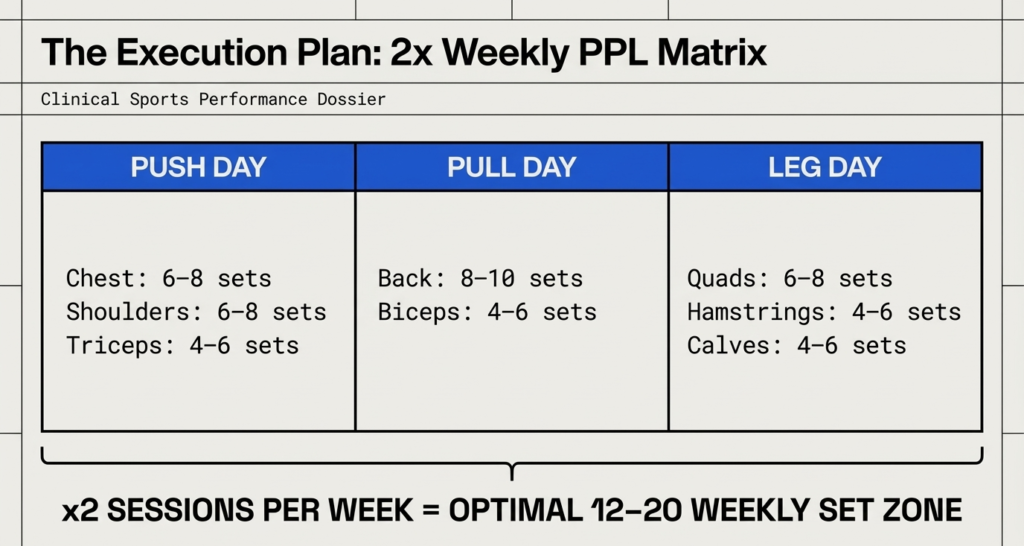
A well-structured push-pull-legs split is one of the most effective ways to distribute volume across the week. Training each muscle group twice weekly allows you to stay within the optimal set range while maintaining performance and recovery. This structure ensures every muscle gets enough attention without burnout.
Which is more important Frequency vs Volume?
Here’s the key insight:
Extent is sovereign,–it is frequency which makes quality.
Rather than 16 sets of chest in a day, divide it into:
- 8 sets (Day 1).
- 8 sets (Day 2).
This enables improved performance, improved recovery, as well as more growth.
The weekly plan is a basic one:
Push Day (Chest, Shoulders, Triceps):
- Chest: 6–8 sets.
- Shoulders: 6–8 sets.
- Triceps: 4–6 sets.
- Pull Day (Back, Biceps):
- Back: 8–10 sets.
- Biceps: 4–6 sets.
Leg Day:
- Quads: 6–8 sets.
- Hamstrings: 4–6 sets.
- Calves: 4–6 sets.
The ideal frequency is two times a week.
Volume Cycling Strategy for Continuous Muscle Growth
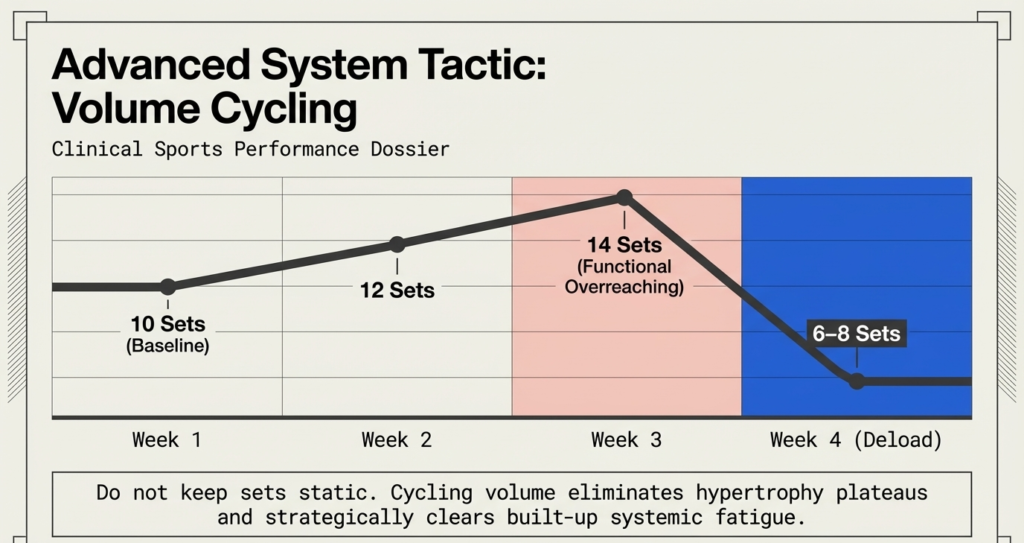
Keeping your training volume constant for too long leads to plateaus. Volume cycling solves this by gradually increasing workload before strategically reducing it through a deload. This approach prevents fatigue buildup and keeps your body adapting, making it essential for long-term muscle growth.
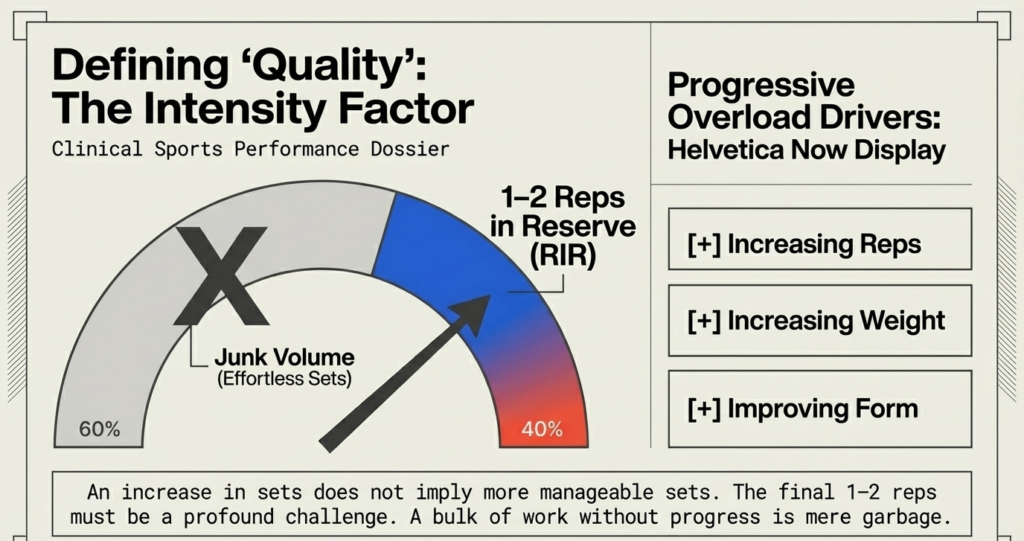
Gradual Increase Continues to Reign. You will never grow unless you are improving even with the perfect set numbers.
Focus on:
- Increasing reps.
- Increasing weight.
- Improving form.
A bulk of work without progress is mere garbage.
High-tech Strategy: Volume Cycling.
Here is where it becomes interesting.
Cycle sets instead of maintaining sets constant:
- Week 1: 10 sets.
- Week 2: 12 sets.
- Week 3: 14 sets.
- Week 4: Deload (6–8 sets).
This eliminates plateaus and regulates fatigue.
Progressive Overload and Intensity for Hypertrophy
Volume alone doesn’t build muscle—intensity determines whether your sets are effective. Training close to failure ensures that each set contributes to growth. Progressive overload, whether through more reps, weight, or better form, is what turns effort into results. Without it, even high volume becomes useless.
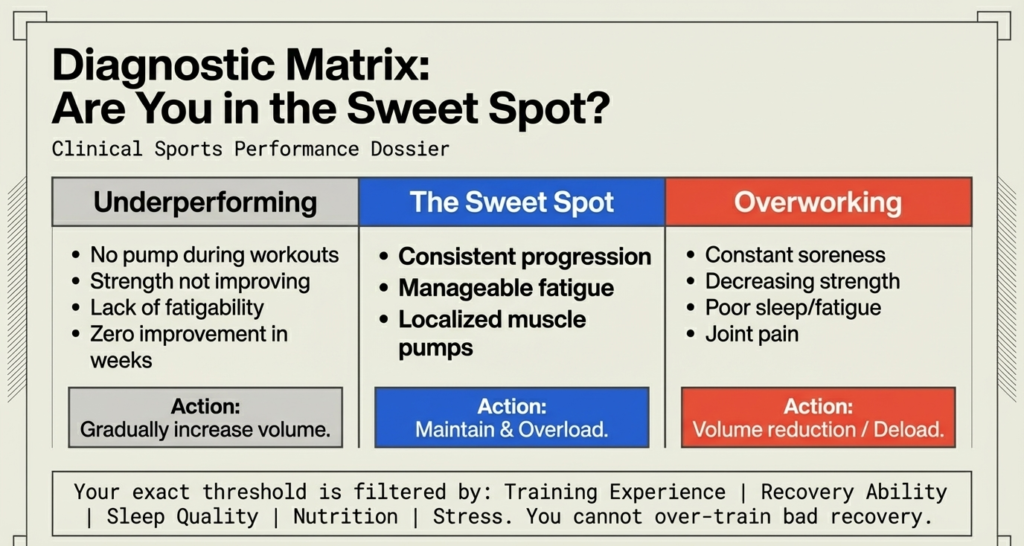
Hypertrophy Diagnostic Matrix: Find Your Training Sweet Spot
Most lifters fall into one of two traps—doing too little or doing too much. The key is identifying where you stand. If you’re not progressing, you may need more volume. If you’re constantly fatigued, you likely need less. Staying in the sweet spot is what separates consistent progress from frustration.
The 2026 Hypertrophy Formula for Maximum Muscle Growth
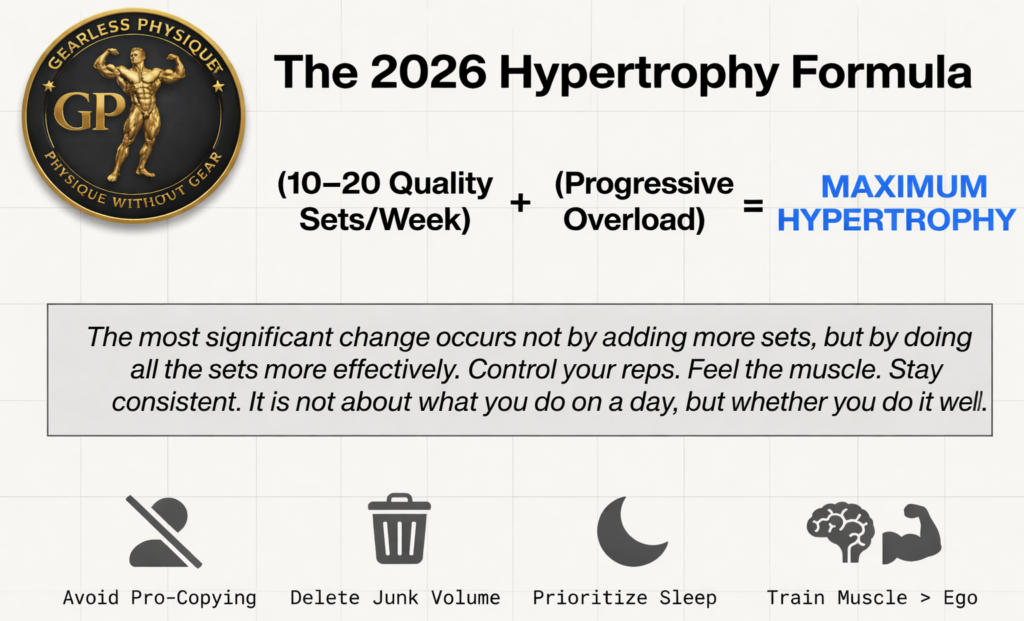
The hypertrophy formula is straightforward—combine optimal volume with progressive overload and proper recovery. Miss any one of these, and your results suffer. Master all three, and muscle growth becomes inevitable. This is the foundation every successful training program is built on.
Final Takeaway, And there was one thing that I would have you remember:
- 10-20 quality sets of each muscle per week is your zone of growth.
- Keep in that zone, work hard, rest and overtrain.
That’s the real formula.
Pro Tip (As a Coach):
Having years of experience in the field of coaching, the most significant change can occur not by adding more sets but by doing all the sets more effectively. Control your reps. Feel the muscle. Stay consistent.
Since on the top of it all, it is not about what you do on a day but whether you do it well.
Read more: https://www.muscleandstrength.com/articles/how-frequently-should-you-exercise-to-see-muscle-growth

Gearless Physique
Physique Without Gear
Your transformation starts now. Who's with me?