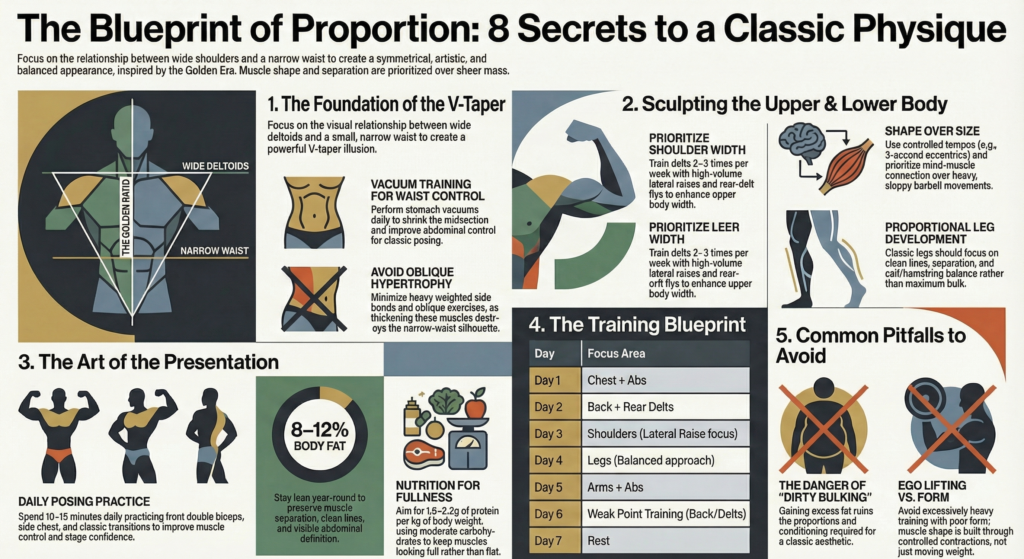
8 Classic Physique Secrets for Perfect Proportions
This infographic summarizes the complete blueprint for building a Classic Physique by combining training, nutrition, conditioning, and presentation. It highlights the importance of the V-taper, controlled training techniques, structured workout splits, and maintaining optimal body fat levels. Additionally, it emphasizes posing practice and avoiding common mistakes like dirty bulking and ego lifting. By following these principles, you create a balanced and aesthetic physique that stands out.
This visual serves as a quick reference guide, making it easier to understand and apply the core concepts of Classic Physique training. Consistency in these fundamentals leads to long-term, sustainable, and impressive results.
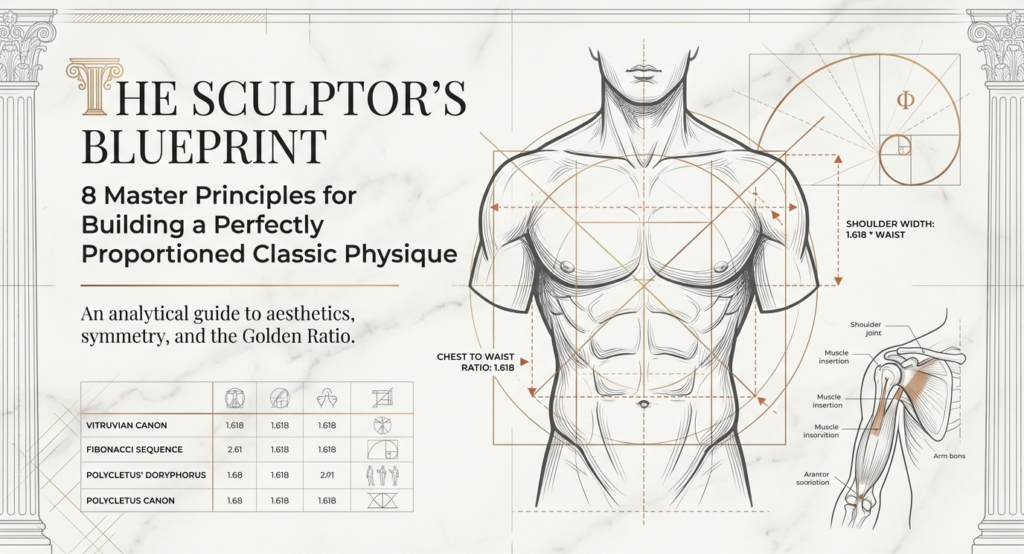
Classic Physique Golden Ratio Blueprint Guide
This visual blueprint represents the foundation of a Classic Physique—proportion guided by the golden ratio. Instead of chasing sheer muscle size, the focus is on achieving harmony between shoulders, chest, and waist. The ideal ratio creates a naturally aesthetic look that appears powerful without being excessive. Wide shoulders combined with a narrow waist form the iconic V-taper that defines elite physiques.
This principle has been followed by legends of the golden era and remains the core of modern Classic Physique standards. When you train with proportion in mind, every muscle contributes to a balanced, symmetrical appearance that stands out both on stage and in everyday fitness aesthetics.
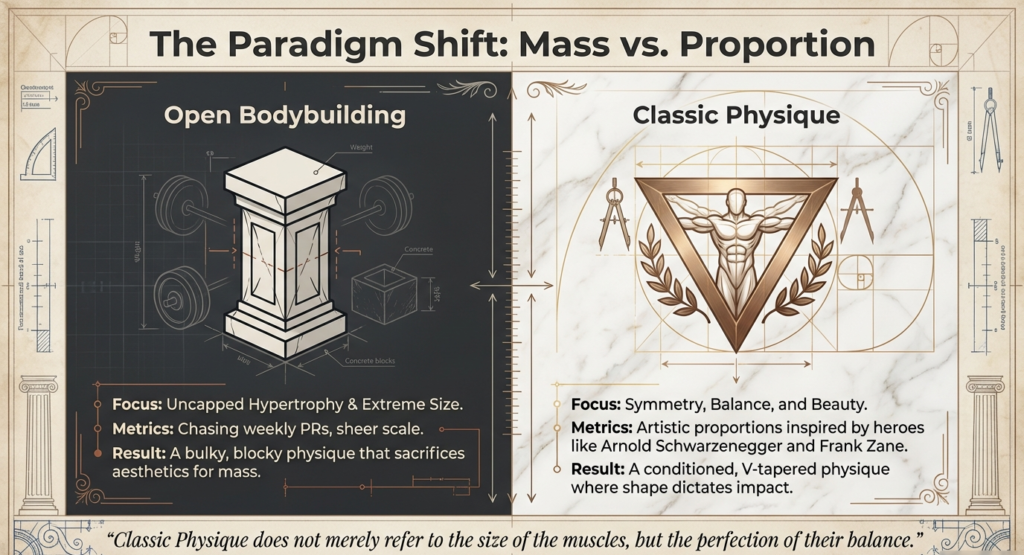
Open Bodybuilding vs Classic Physique Comparison
This comparison highlights the fundamental difference between Open Bodybuilding and Classic Physique. Open bodybuilding focuses on maximum size, extreme muscle mass, and heavy lifting, often sacrificing symmetry and aesthetics. In contrast, Classic Physique emphasizes balance, proportion, and artistic presentation. Instead of chasing scale weight or personal records, the goal is to build a visually pleasing structure where each muscle complements the other. This shift in mindset is crucial for achieving a timeless physique.
Classic Physique athletes aim to look powerful yet elegant, combining muscularity with symmetry. Understanding this distinction helps you train smarter and focus on long-term aesthetic development rather than short-term size gains.
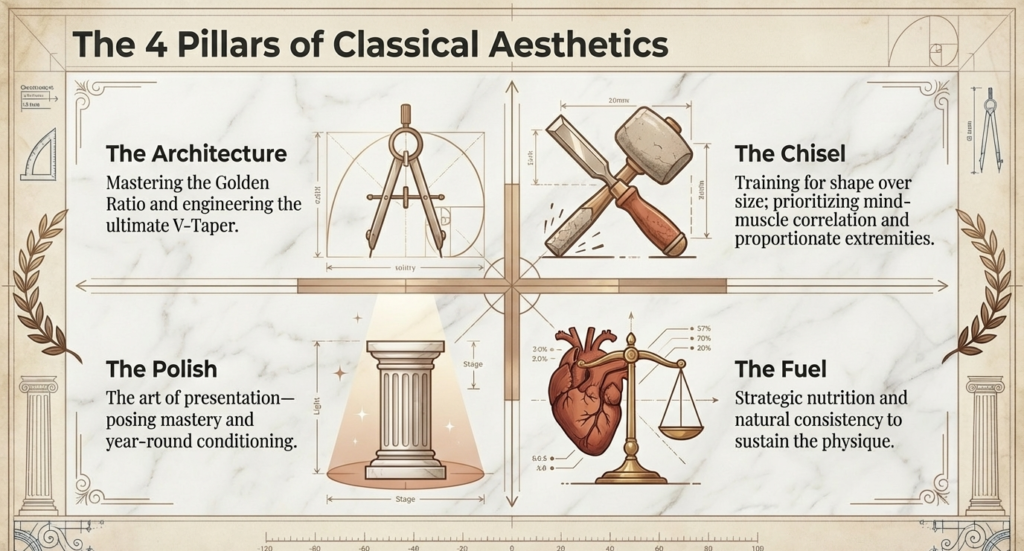
4 Pillars of Classic Physique Aesthetics
The four pillars of Classic Physique—a structure, chisel, polish, and fuel—represent a complete blueprint for building an aesthetic body. The architecture focuses on skeletal proportions and the golden ratio, while the chisel refers to training techniques that shape muscle rather than just increasing size. The polish represents posing, presentation, and conditioning, which bring the physique to life. Finally, fuel highlights the importance of nutrition and recovery. Ignoring any of these pillars creates imbalance and limits progress.
A truly classic physique is built by combining all four elements consistently. When these pillars work together, they create a physique that is not only muscular but also visually striking and well-balanced.
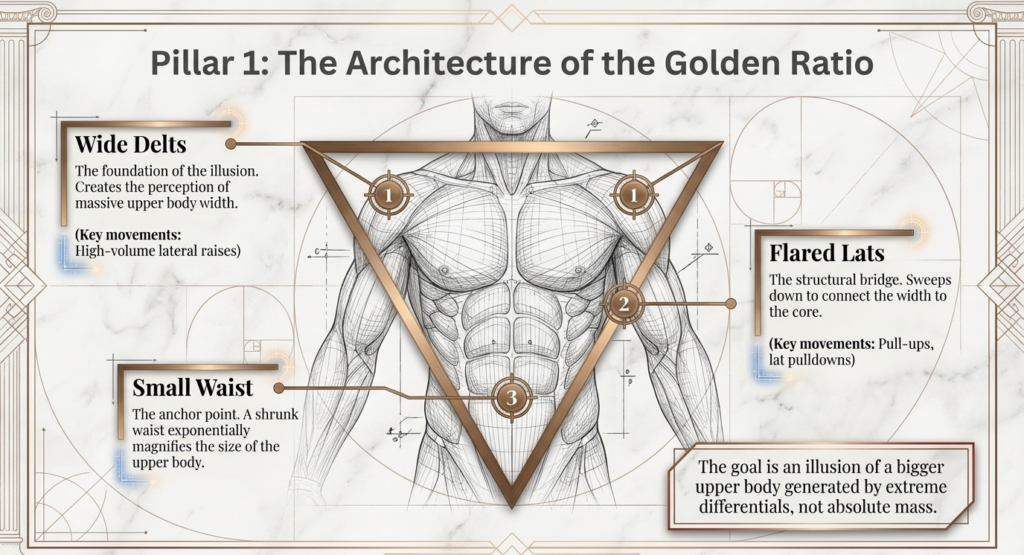
V-Taper Golden Ratio for Classic Physique
The V-taper is the most important visual element in Classic Physique, and this image illustrates how wide delts, flared lats, and a tight waist work together to create it. This triangular structure enhances the illusion of a larger upper body without excessive bulk. By prioritizing shoulder width and back development while maintaining a narrow waist, you can dramatically improve your proportions. Exercises like lateral raises and pull-ups play a key role in building this shape.
The goal is not absolute size but visual contrast between upper and lower body. Mastering the V-taper ensures your physique looks aesthetic, powerful, and stage-ready from every angle.
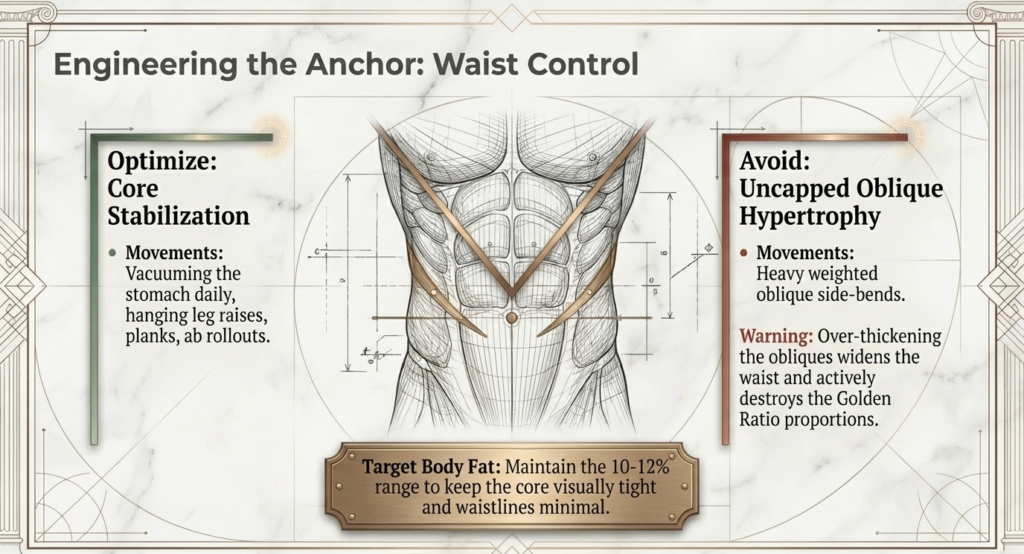
Waist Control and Core Stability Guide
A tight and controlled waist is essential for achieving a Classic Physique, and this visual emphasizes the importance of core stability. Exercises like stomach vacuums, hanging leg raises, and planks help strengthen the core without increasing waist size. Avoiding heavy oblique training is equally important, as it can thicken the waist and ruin proportions. Maintaining a body fat range of around 10–12% further enhances definition and keeps the midsection tight. A smaller waist amplifies the appearance of upper body width, making your physique look more impressive.
Consistent core training combined with smart exercise selection ensures your waist remains an asset, not a limitation.
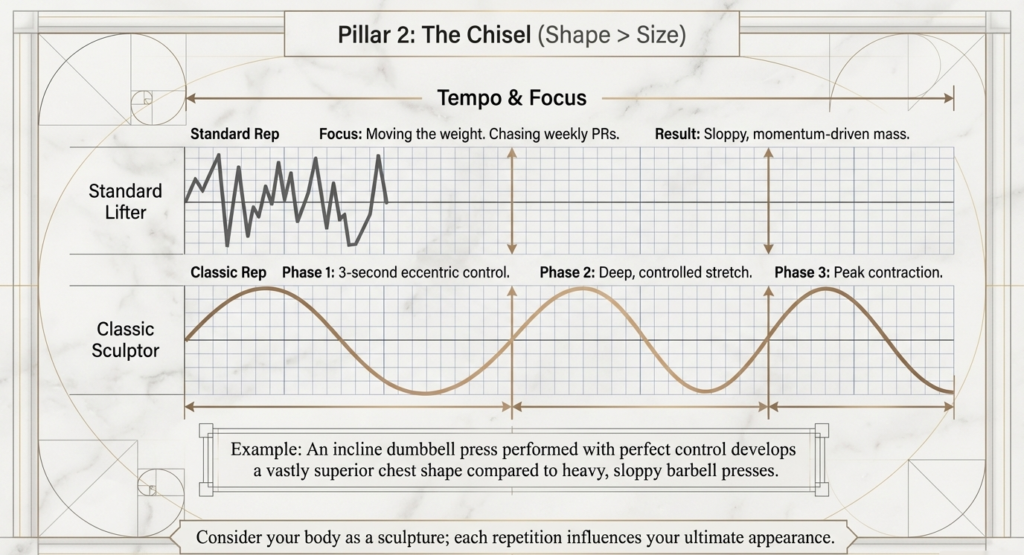
Tempo Training for Better Muscle Shape
This image highlights the importance of tempo and control in training for muscle shape. Unlike traditional lifting, where the focus is on moving heavy weights, Classic Physique training emphasizes controlled repetitions and mind-muscle connection. Slowing down the eccentric phase and focusing on peak contraction improves muscle detail and symmetry. This approach reduces injury risk and ensures each rep contributes to aesthetic development.
For example, a controlled incline dumbbell press builds a better chest shape than heavy, uncontrolled barbell lifts. Training with intention transforms your body into a sculpture, where every movement refines your physique and enhances overall proportions over time.
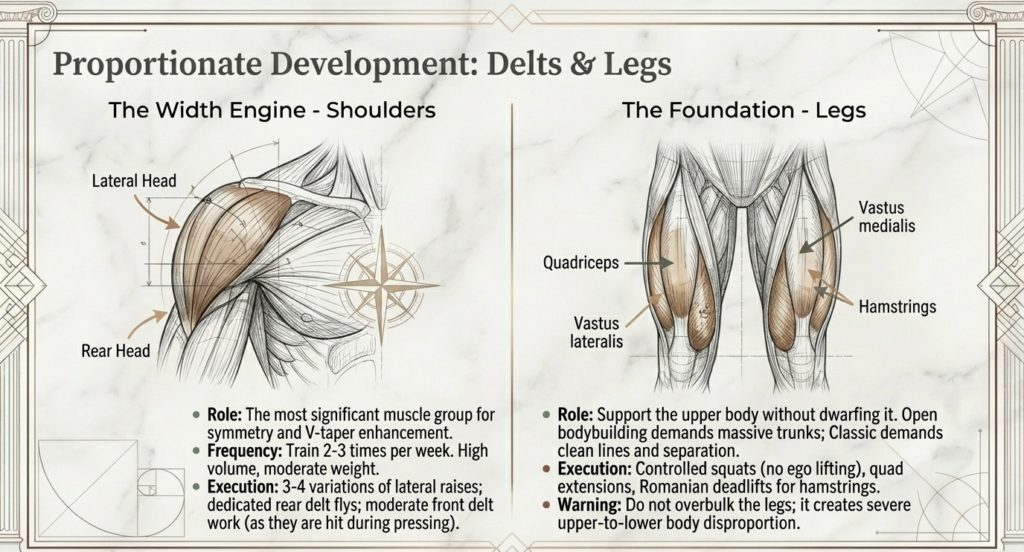
Shoulder and Leg Proportion Training Guide
Balanced development of shoulders and legs is crucial for maintaining proper proportions in a Classic Physique. Shoulders act as the width engine, creating the illusion of a broader upper body, while legs provide the foundation without overpowering the physique. Training shoulders with high volume and moderate weight enhances roundness and symmetry. At the same time, legs should be trained with control and focus on clean lines rather than excessive size. Exercises like squats, leg extensions, and Romanian deadlifts help achieve this balance.
When both upper and lower body are developed proportionately, the result is a harmonious and aesthetically pleasing physique.
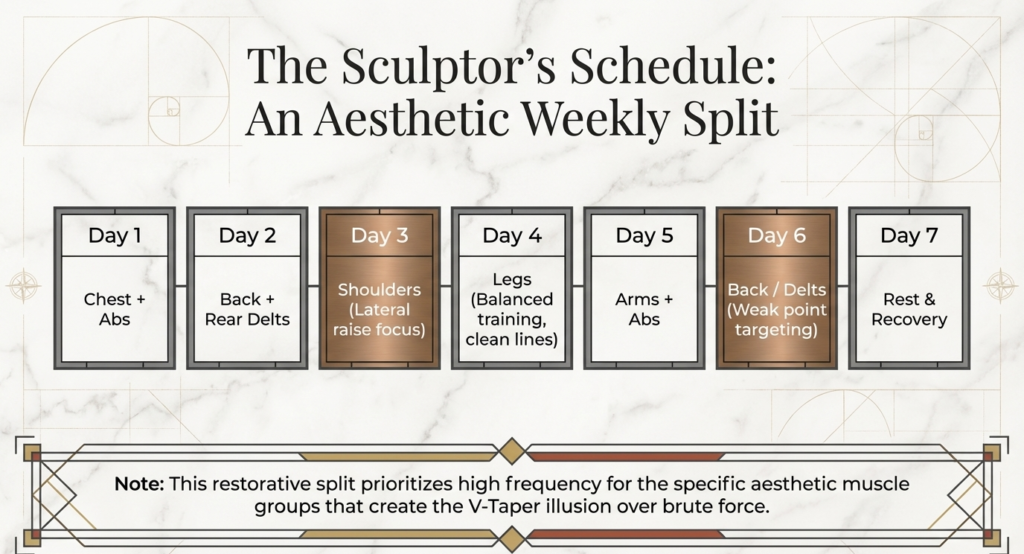
Classic Physique Weekly Workout Split
A structured weekly training split is essential for building a Classic Physique efficiently. This plan prioritizes high-frequency training for key muscle groups like shoulders and back, which contribute most to aesthetics. Each day is dedicated to specific muscle groups, allowing for proper recovery while maintaining consistent stimulation. Including a weak-point training day helps address imbalances and refine proportions. Rest and recovery are equally important, ensuring muscles grow and adapt effectively.
This balanced approach prevents overtraining and supports long-term progress. Following a well-designed split helps you stay consistent, organized, and focused on developing a symmetrical and visually appealing physique.
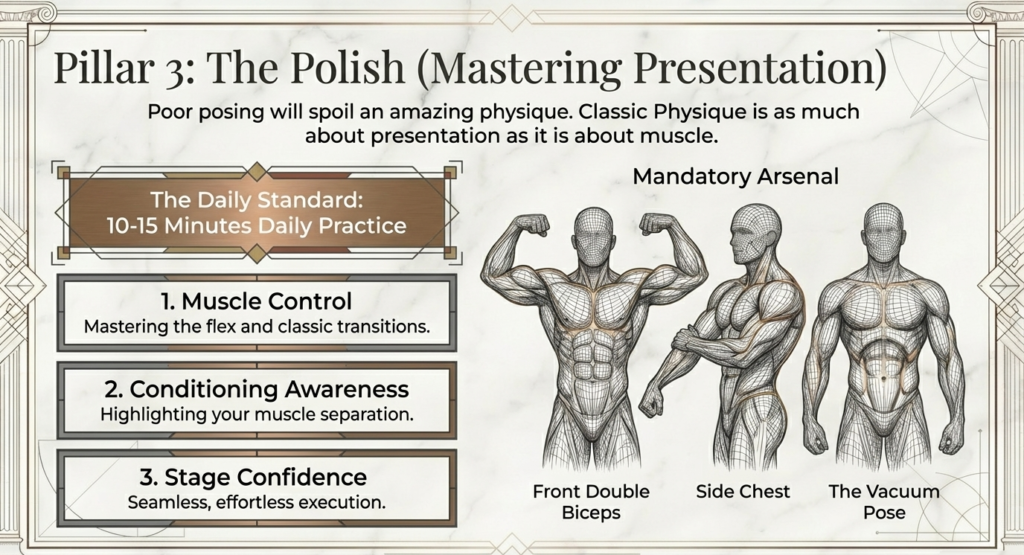
Classic Physique Posing Practice Guide
Posing is a critical yet often overlooked aspect of Classic Physique training. This image highlights the importance of mastering key poses like the front double biceps, side chest, and vacuum pose. Practicing posing daily for 10–15 minutes improves muscle control, enhances mind-muscle connection, and builds stage confidence. It also helps you understand your physique better, allowing you to highlight strengths and hide weaknesses. Even the best physique can look average without proper presentation.
By incorporating posing into your routine, you refine your overall appearance and ensure your hard-earned muscle is displayed in the most aesthetic and impactful way possible.
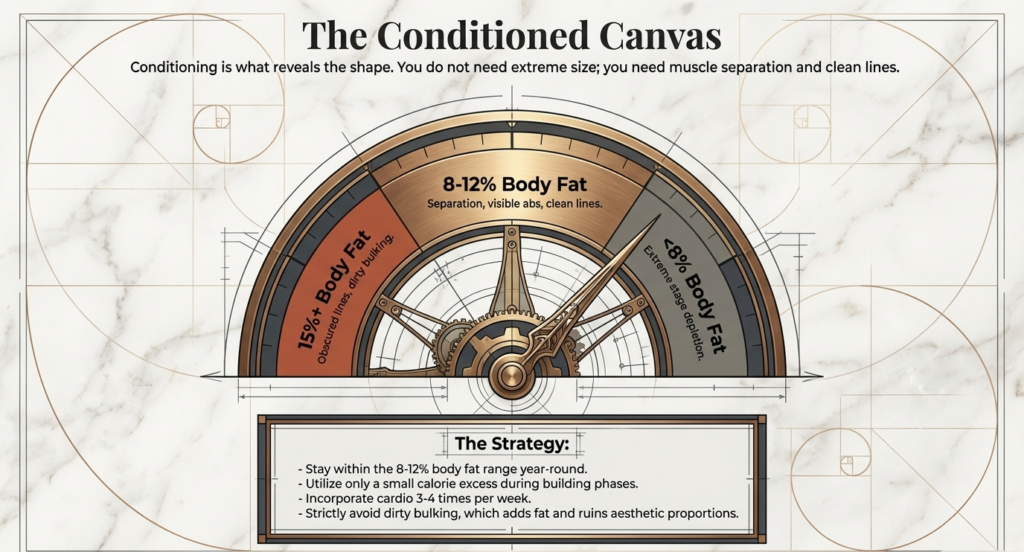
Ideal Body Fat Range for Classic Physique
Conditioning is what truly reveals the quality of your physique, and this visual emphasizes maintaining an ideal body fat range of 8–12%. Staying within this range ensures visible abs, muscle separation, and clean lines. Excess body fat can hide definition, while extremely low levels are difficult to maintain and may impact performance.
A balanced approach to conditioning includes controlled calorie intake, regular cardio, and consistent training. Avoiding dirty bulking is essential to preserve proportions and aesthetics. When your conditioning is on point, your physique appears sharper, more defined, and stage-ready, making all your training efforts visible and impactful.
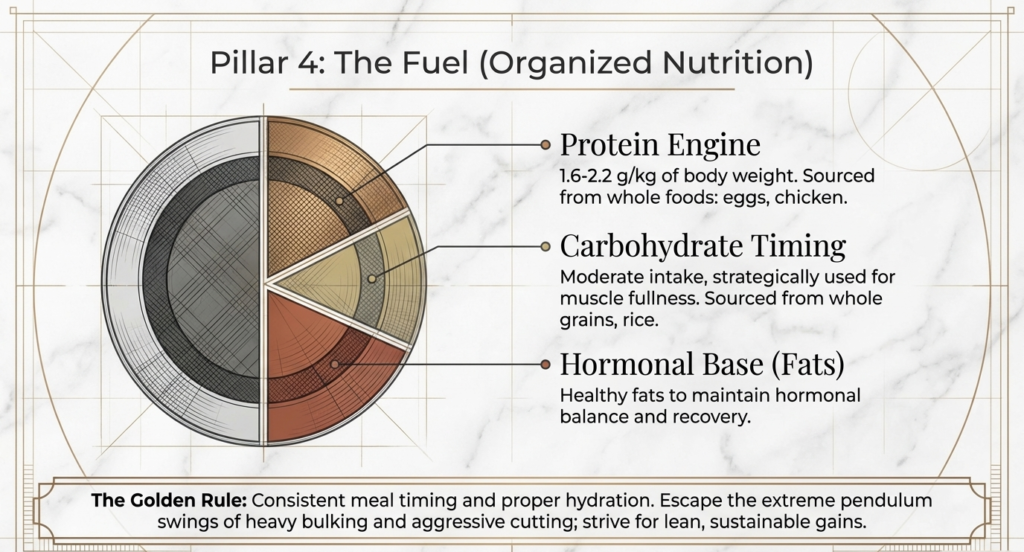
Classic Physique Nutrition and Macros Guide
Nutrition plays a vital role in shaping a Classic Physique, and this image breaks down the key components of an effective diet. Protein intake between 1.6–2.2 grams per kilogram supports muscle growth and recovery. Carbohydrates provide energy and fullness, while healthy fats maintain hormonal balance. Consistency in meal timing and hydration is equally important for optimal performance. Focusing on whole foods like eggs, chicken, rice, and vegetables ensures quality nutrition.
Avoiding extreme bulking or cutting phases helps maintain proportions. A well-structured diet not only fuels your workouts but also enhances muscle definition and overall physique aesthetics over time.
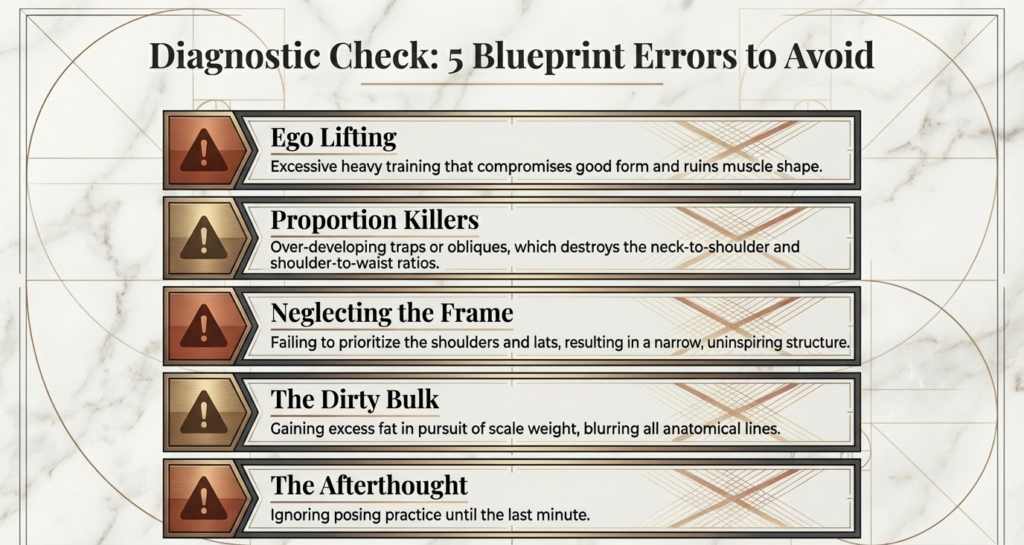
Common Mistakes in Classic Physique Training
Avoiding common mistakes is essential for achieving a Classic Physique, and this image highlights key pitfalls. Ego lifting often leads to poor form and reduces muscle effectiveness. Overdeveloping certain muscles, like traps or obliques, can disrupt symmetry and proportions. Dirty bulking adds unnecessary fat, hiding muscle definition and ruining aesthetics. Neglecting posing practice limits your ability to present your physique effectively.
Additionally, ignoring key muscle groups like shoulders and lats can result in an unbalanced look. By recognizing and correcting these mistakes early, you can stay on the right path and build a physique that reflects true balance, control, and aesthetic excellence.
Read More: https://www.muscleandstrength.com/workouts/12-week-off-season-classic-bodybuilding-workout
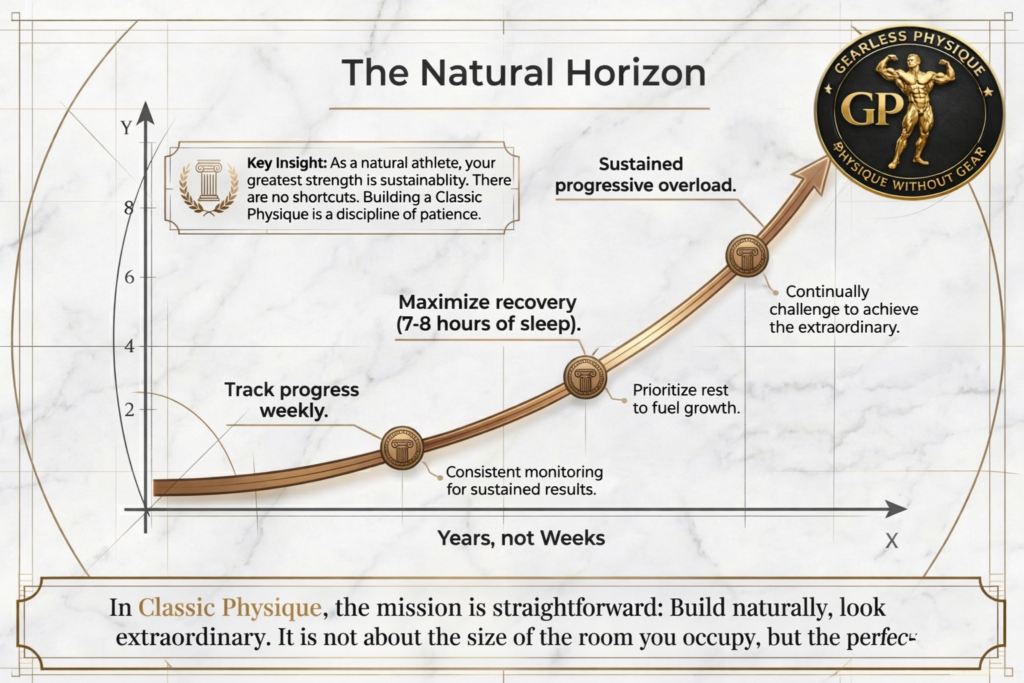
Natural Bodybuilding Progress Over Time
Building a Classic Physique naturally is a long-term process, as shown in this progress curve. Real transformation takes years of consistent training, proper nutrition, and adequate recovery. There are no shortcuts—only disciplined effort and patience. Tracking progress weekly helps you stay accountable and make necessary adjustments. Prioritizing sleep and recovery ensures your body can grow and adapt effectively.
Progressive overload remains the key to continuous improvement. This steady upward journey reflects sustainable growth rather than rapid, temporary results. When you commit to the process, you develop not only a better physique but also a stronger mindset and long-lasting fitness lifestyle.
Gearless Physique
Physique Without Gear
Your transformation starts now. Who's with me?