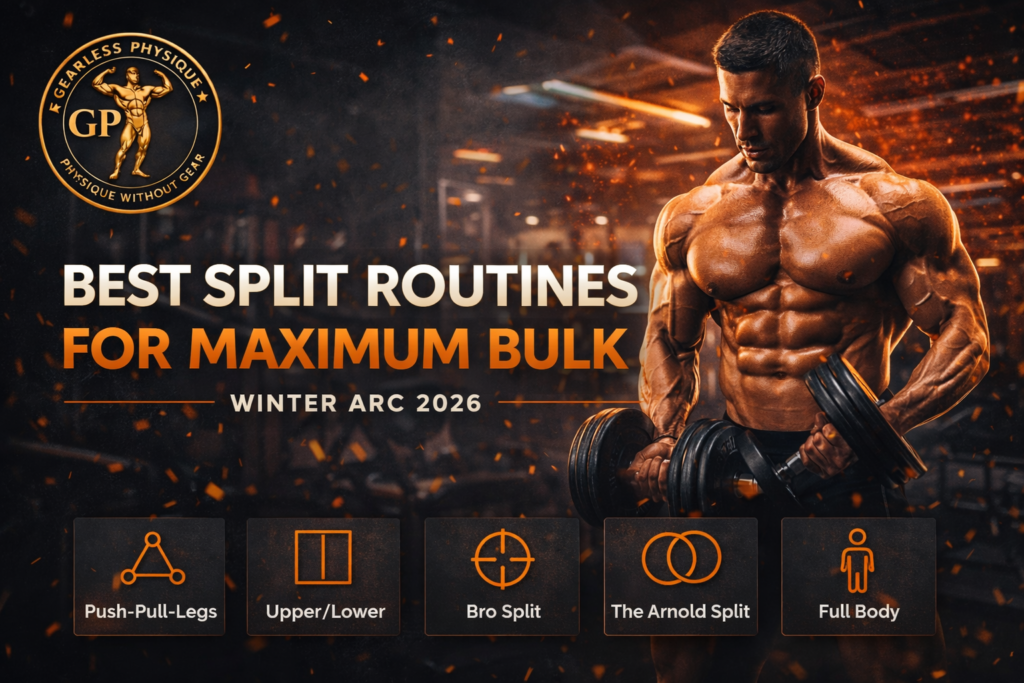
7 Steps to a Perfect Powerlifting Peaking Program Explained
This infographic summarizes the entire peaking process, combining key elements such as intensity, volume reduction, recovery, and attempt selection. It provides a visual roadmap for lifters to follow, making complex concepts easier to understand. By integrating all aspects of peaking into one cohesive system, it highlights how each component works together to maximize performance. This comprehensive approach ensures that nothing is overlooked. For both beginners and advanced lifters, this visual serves as a complete guide to mastering the peaking phase and achieving optimal results on competition day.
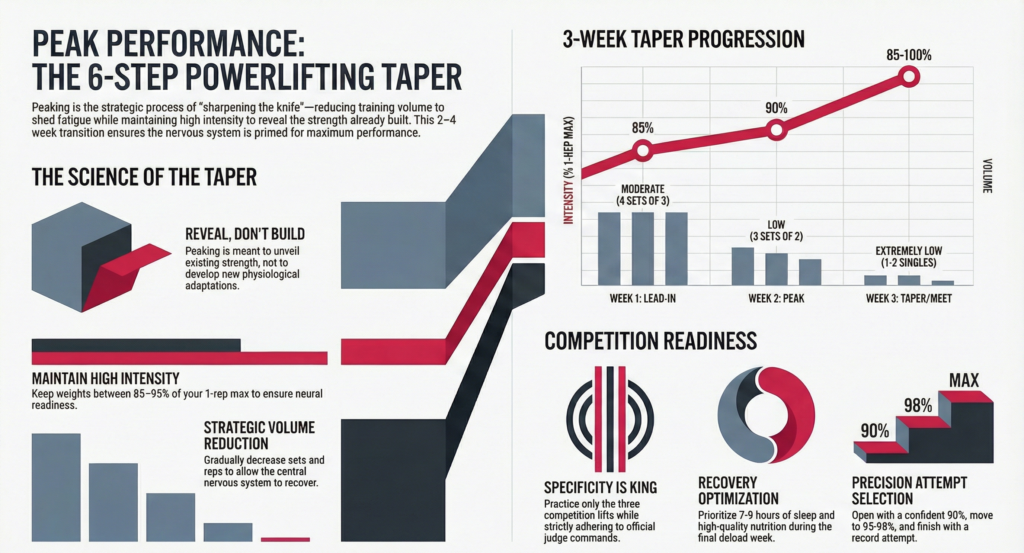
Architecting the Perfect Powerlifting Peak
This image represents the blueprint behind a perfect powerlifting peaking program, where every detail matters just like engineering precision. The barbell design symbolizes structure, balance, and calculated progression. In powerlifting, success is not random; it is built through strategic planning of volume, intensity, and recovery. Just like a mechanical system, your body must be fine-tuned to perform at peak efficiency. The goal is to create a system that allows strength to be expressed at the right time. This visual highlights that peaking is not guesswork but a structured process designed to maximize performance on competition day.
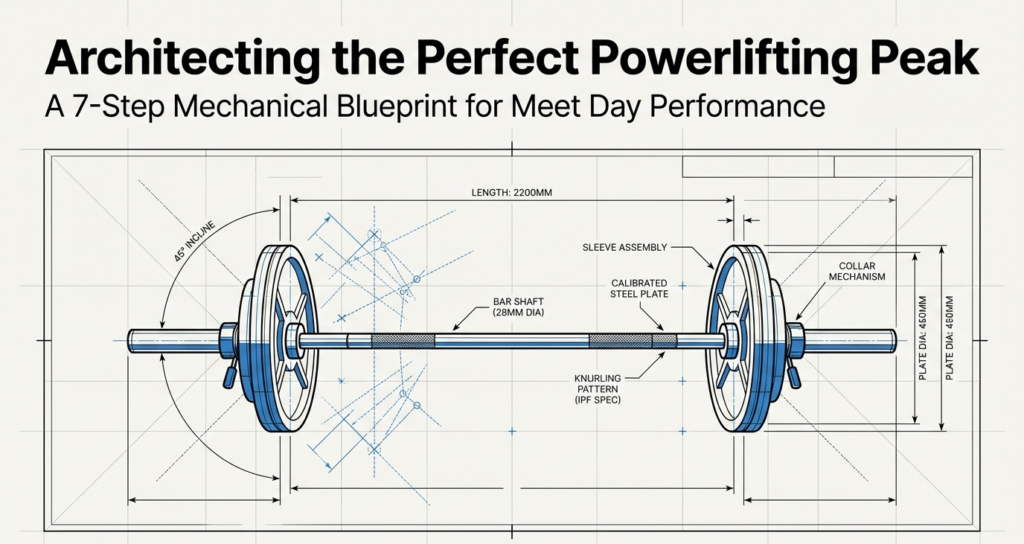
Peaking vs Off-Season Training Explained
This visual clearly explains the difference between off-season training and the peaking phase. During the off-season, the focus is on building muscle mass and pushing limits to create new strength adaptations. In contrast, the peaking phase is about reducing fatigue and sharpening performance. Instead of adding more stress, you remove excess workload to reveal your true strength. Many lifters make the mistake of continuing to push hard close to competition, which leads to burnout. This comparison reinforces a key principle: peaking is about revealing strength, not creating it, and understanding this shift is essential for optimal results.
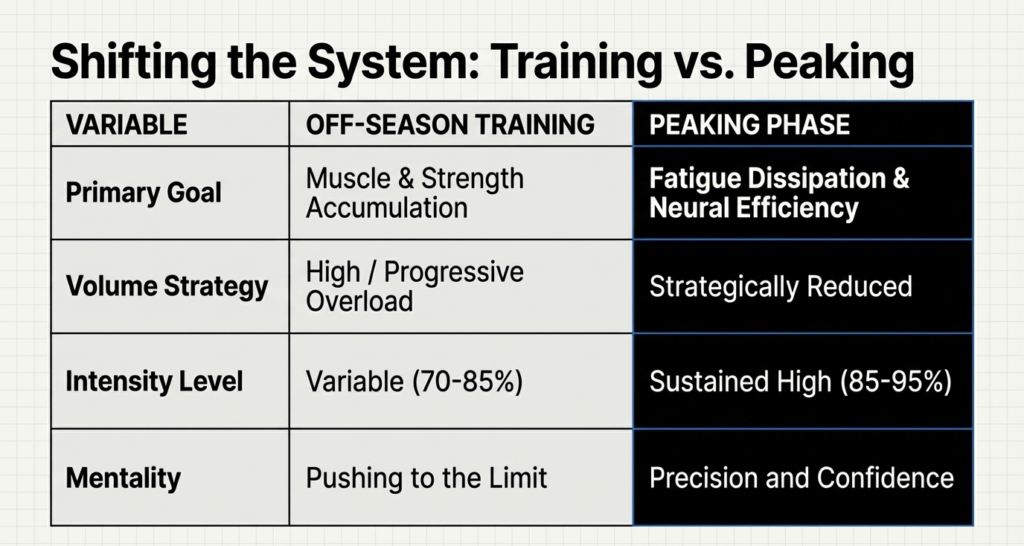
Training vs Peaking Phase Comparison
This comparison chart highlights the critical differences between training and peaking phases. In off-season training, volume is high and intensity varies to build strength progressively. However, during the peaking phase, volume is strategically reduced while intensity remains high. The goal shifts from pushing limits to refining performance and improving neural efficiency. Mentality also changes from aggressive overload to precision and confidence. This structured shift ensures that fatigue decreases while strength expression improves.
Understanding these variables allows lifters to plan smarter and avoid common mistakes, ensuring they arrive at competition fully prepared and ready to perform at their best.
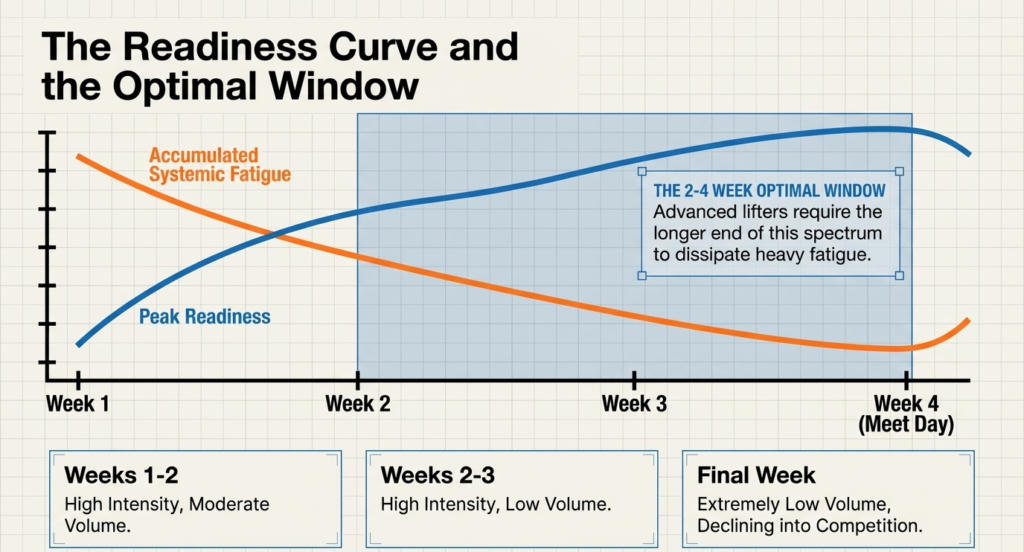
Readiness Curve for Peak Performance
This graph illustrates how fatigue decreases while peak readiness increases as competition approaches. In the early weeks, accumulated fatigue is high due to intense training. As volume is reduced, the body begins to recover, allowing performance potential to rise. The highlighted 2–4 week window is where optimal peaking occurs. This is the phase where lifters feel strongest, most explosive, and mentally prepared. If timed correctly, this curve ensures maximum performance on meet day. Mismanaging this phase can lead to either underperformance or burnout. Understanding this readiness curve helps lifters plan their taper and achieve perfect timing.
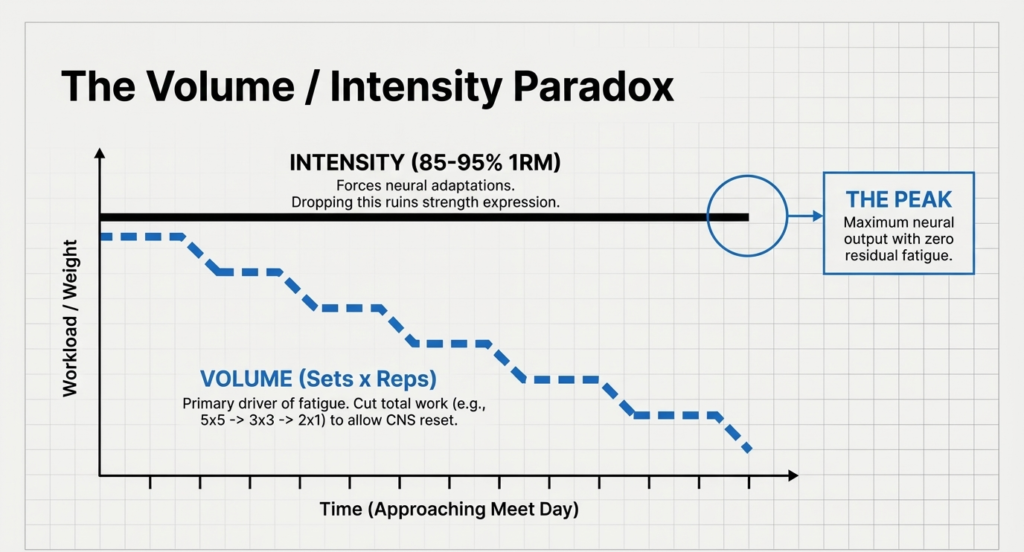
Volume vs Intensity in Peaking
This image explains the critical balance between volume and intensity during the peaking phase. Volume, which includes sets and reps, is the primary driver of fatigue and must be reduced gradually. At the same time, intensity must remain high to maintain strength and neural readiness. Dropping intensity instead of volume can lead to poor performance and lack of confidence under heavy weights. The goal is to reach peak condition where fatigue is minimal but strength output is maximal. This concept is essential for successful peaking, as it ensures that lifters feel strong, fresh, and ready to perform at their highest level.
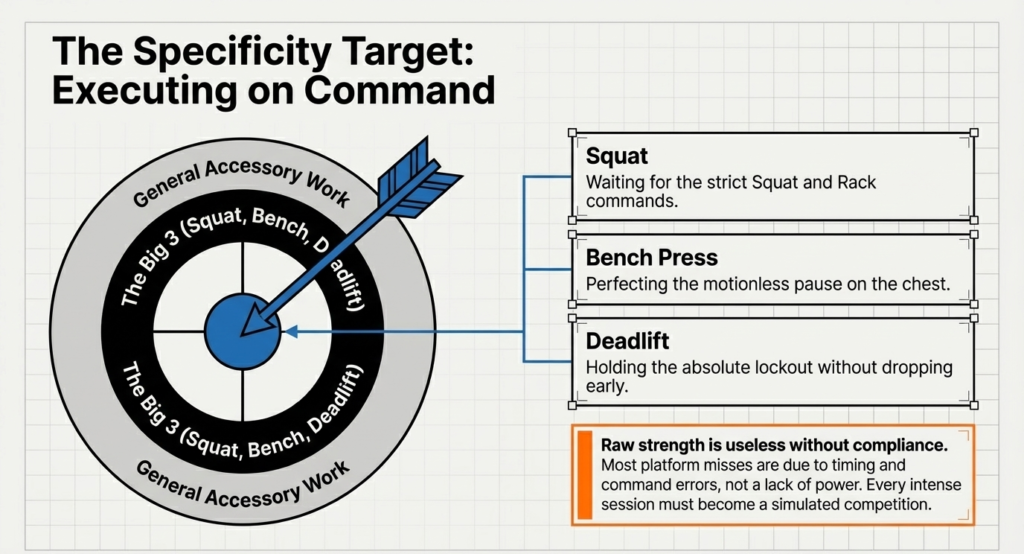
Specificity in Powerlifting Training
This visual emphasizes the importance of specificity in a peaking program. As competition approaches, training should focus almost entirely on the three main lifts: squat, bench press, and deadlift. Practicing these lifts with proper competition commands builds confidence and reduces the chance of errors. Many lifters fail not due to lack of strength but because of poor execution or unfamiliarity with commands. This phase is about refining technique and making every movement automatic. By simulating competition conditions in training, lifters can improve performance and reduce anxiety, ensuring they are fully prepared for meet day execution.
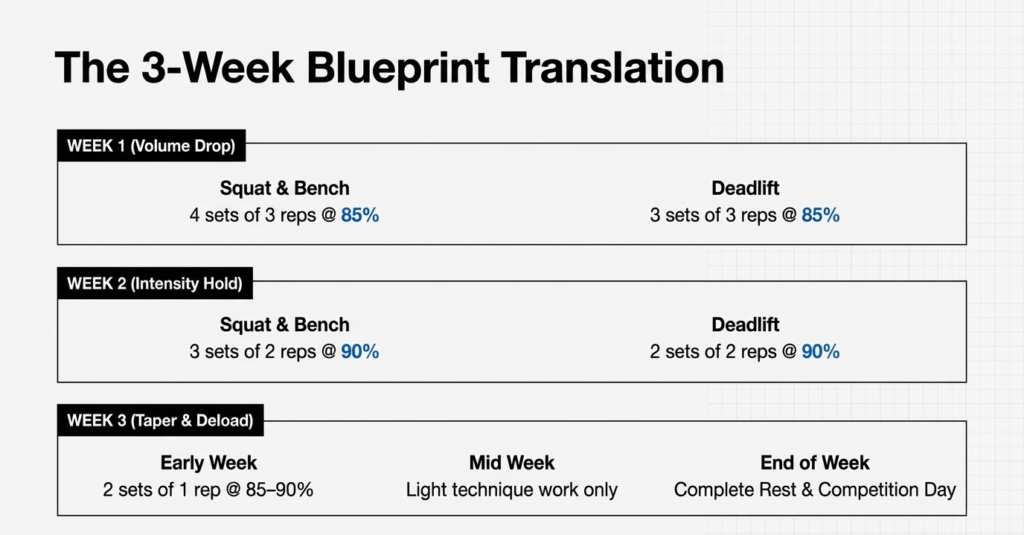
3-Week Powerlifting Peaking Program
This structured plan provides a clear example of how to implement a peaking program over three weeks. In the first week, volume begins to decrease while intensity remains moderate. The second week focuses on higher intensity with lower volume, preparing the body for heavy loads. The final week acts as a taper, where volume is minimal and recovery is prioritized. This progression allows fatigue to dissipate while maintaining strength.
By following this structured approach, lifters can stay sharp and avoid overtraining. It ensures that by competition day, the body is fully recovered, strong, and ready to perform at peak capacity.
Read more: https://www.maxinutrition.com/blogs/training/powerlifting-training-plan
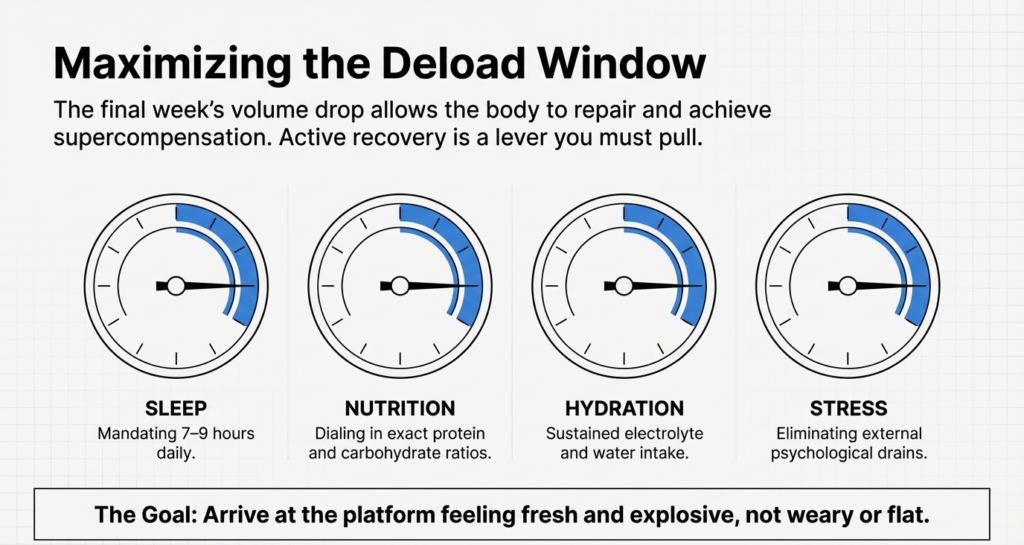
Maximizing the Deload Week
This image highlights the importance of recovery during the final phase of a peaking program. The deload week allows the body to repair and achieve supercompensation, leading to improved performance. Key factors such as sleep, nutrition, hydration, and stress management play a crucial role in this process. Without proper recovery, even the best training program can fail. This phase is not about doing more but about allowing the body to fully recover and prepare for competition. Arriving at the platform feeling fresh, explosive, and mentally ready is the ultimate goal of an effective deload strategy.
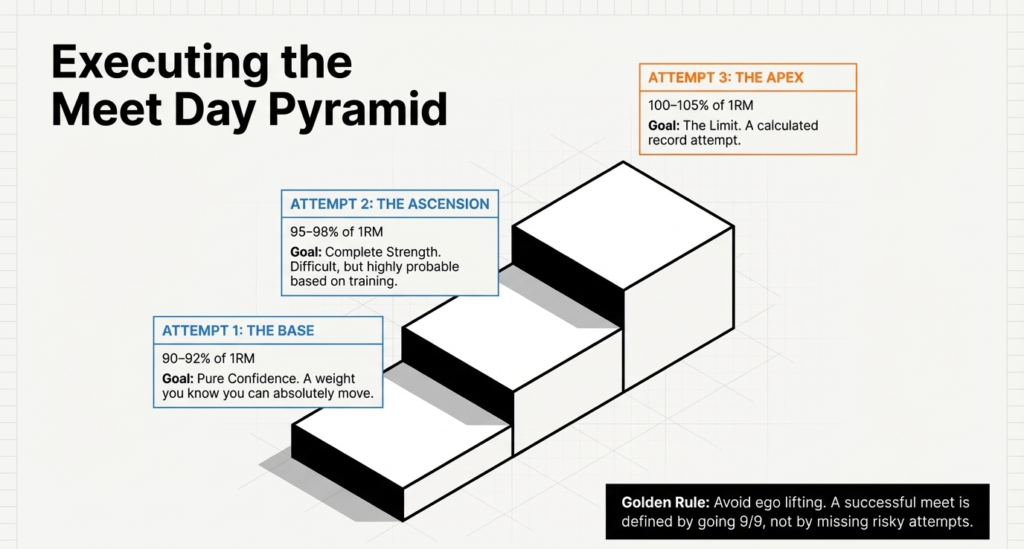
Meet Day Attempt Selection Strategy
This pyramid illustrates the correct strategy for selecting attempts on meet day. The first attempt should be a confident lift that ensures success and builds momentum. The second attempt is more challenging but achievable, helping secure a strong total. The third attempt is where lifters push for a personal record. Proper attempt selection is crucial, as poor choices can ruin an otherwise successful meet. The goal is to go 9/9 rather than risk missing lifts due to ego. This structured approach ensures confidence, consistency, and maximum performance on competition day.
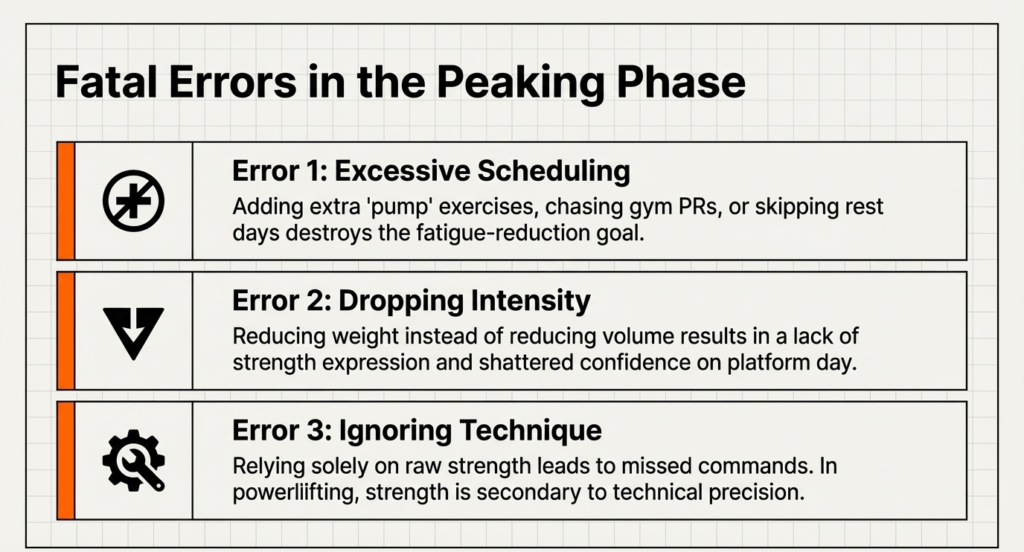
Common Mistakes in Peaking Phase
This image highlights the most common mistakes lifters make during the peaking phase. Overtraining, adding unnecessary exercises, or chasing new PRs can increase fatigue and ruin performance. Another major error is reducing intensity instead of volume, which leads to decreased strength expression. Ignoring technique is also a critical mistake, as powerlifting requires precision. These errors can prevent lifters from reaching their full potential on meet day. Avoiding these pitfalls is essential for a successful peak, ensuring that all training efforts translate into maximum performance when it matters most.
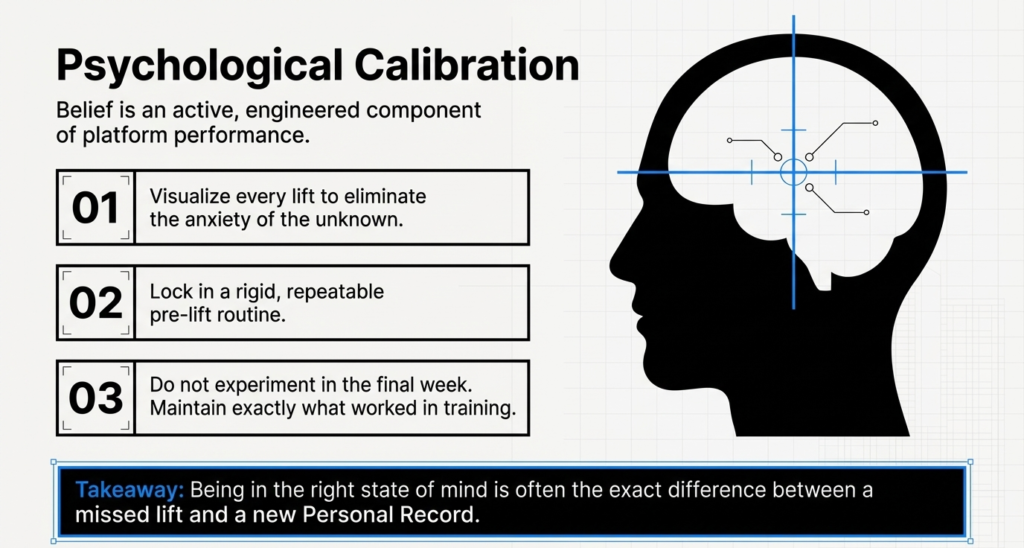
Psychological Preparation for Powerlifting
This visual focuses on the mental aspect of peaking, which is often overlooked. Confidence, visualization, and routine play a major role in performance. By mentally rehearsing lifts and creating consistent pre-lift habits, lifters can reduce anxiety and improve execution. The final week is not the time to experiment but to reinforce what has already worked. A strong mindset allows lifters to stay calm under pressure and perform at their best. In many cases, the difference between success and failure is mental, making psychological preparation a key component of a perfect peaking program.
Demonstrating Strength on Command
This image represents the ultimate goal of powerlifting: executing strength perfectly on demand. It is not enough to be strong in the gym; success depends on performing under competition conditions. Timing, technique, and confidence all come together on meet day. The peaking process ensures that fatigue is minimized while strength is maximized. This allows lifters to deliver their best performance when it matters most. The image reinforces the idea that powerlifting is not just about lifting heavy weights but about demonstrating strength with precision and control during competition.

Gearless Physique
Physique Without Gear
Your transformation starts now. Who's with me?