Table of Contents
Toggle7 Signs You Need a Deload Week in Bodybuilding (Before Overtraining Ruins Your Progress)
Written by Aashish Rawat | Certified Fitness Coach | 14+ Years Experience
Last Reviewed: May 2026
You’re training hard, lifting heavier, and pushing every workout to failure—but suddenly your strength drops, your joints hurt, and motivation disappears. Sound familiar? These are 7 Signs You Need a Deload Week in Bodybuilding (Before Overtraining Ruins Your Progress).
Many lifters think the answer is to train harder. In reality, your body may be begging for recovery. That’s where a deload week becomes one of the most powerful tools in natural bodybuilding.
A proper deload week helps your muscles, joints, nervous system, and mind recover so you can come back stronger, leaner, and more motivated. Ignoring recovery is one of the biggest reasons lifters hit plateaus or suffer injuries.
In this guide, you’ll learn the 7 major signs you need a deload week in bodybuilding, how to structure one correctly, and why science-backed recovery is essential for long-term muscle growth.
Want Personal Coaching?
Struggling to build muscle or lose fat naturally? Get a customized workout plan, diet plan, and direct guidance from Aashish Rawat (14+ Years Experience).
✅ Muscle Gain Coaching
✅ Fat Loss Coaching
✅ Natural Bodybuilding Plans
✅ Online Support
What Is a Deload Week in Bodybuilding?
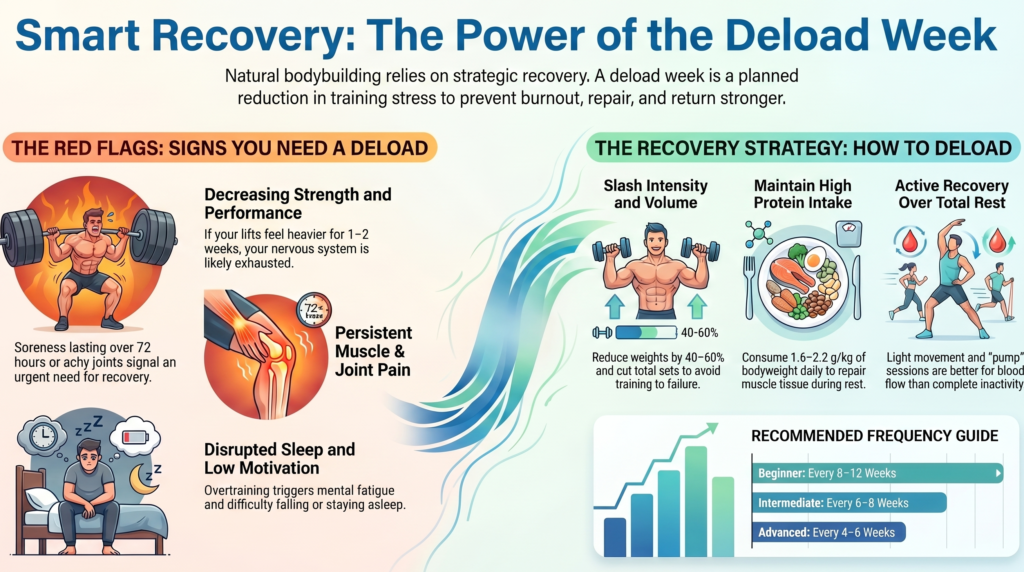
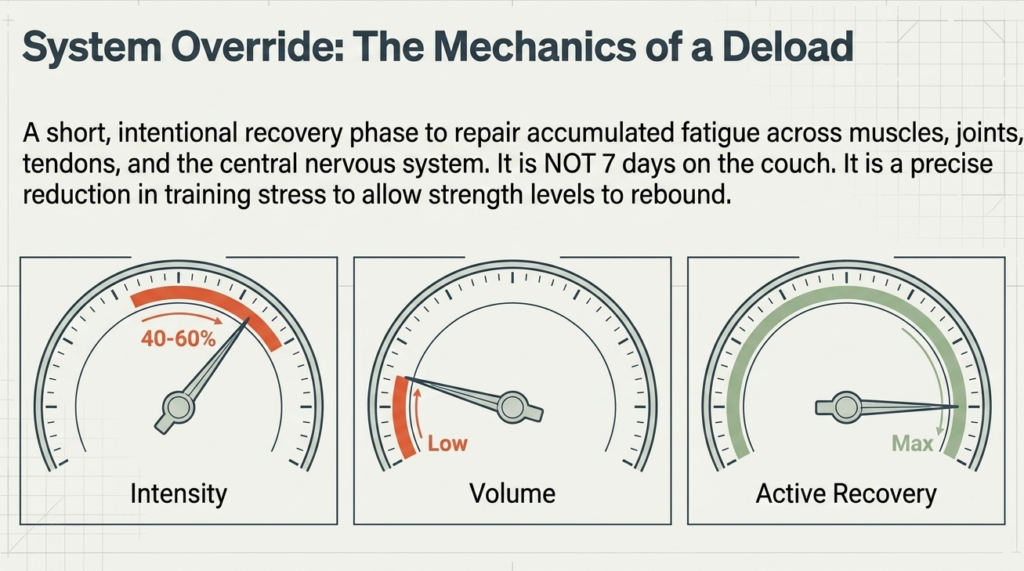
A deload week is a short recovery phase where you intentionally reduce workout intensity, training volume, or both. Instead of pushing your body to the limit, you allow it to repair accumulated fatigue. This doesn’t mean sitting on the couch for 7 days.
Signs you need a deload week. A smart deload keeps you active while reducing stress on:
- Muscles
- Joints
- Tendons
- Central nervous system
- Mental focus
Natural bodybuilding depends heavily on recovery because you don’t have enhanced recovery support. That’s why deloading is one of the most effective long-term muscle-building strategies. You can try 2-Week Deload Workout Program.
Quick Summary
- A deload week reduces training stress to improve recovery
- Constant fatigue is a major sign of overtraining
- Strength loss often means your nervous system is exhausted
- Joint pain and poor sleep are recovery red flags
- Natural bodybuilders especially benefit from strategic deloads
- Most lifters need a deload every 6–10 weeks
- Deloading helps improve long-term muscle growth and performance
Why Deload Weeks Work
Recovery Improves Muscle Growth
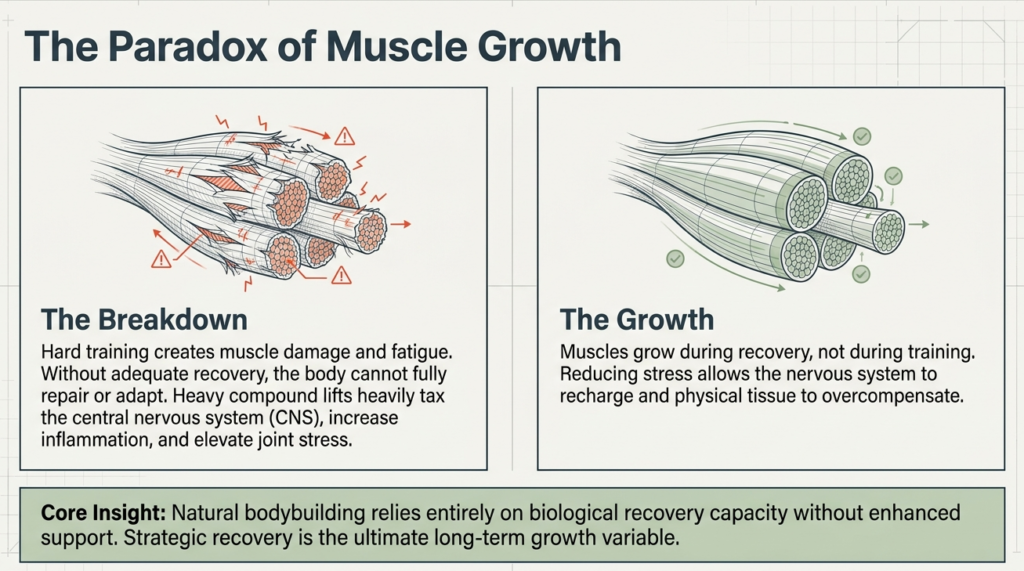
Muscles grow during recovery—not during training.
Hard training creates muscle damage and fatigue. Without enough recovery, your body cannot fully repair and adapt.
Prevents Nervous System Burnout
Heavy compound exercises like squats, deadlifts, and bench presses heavily tax the central nervous system.
A deload allows your nervous system to recharge so strength levels can rebound.
Reduces Injury Risk
Constant heavy lifting increases inflammation and joint stress.
Deload weeks help reduce:
- Elbow pain
- Shoulder irritation
- Knee discomfort
- Lower back fatigue
Improves Long-Term Progress
Many lifters plateau because they never recover fully.
Strategic deloads improve:
- Strength progression
- Workout quality
- Motivation
- Hormonal balance
- Muscle recovery
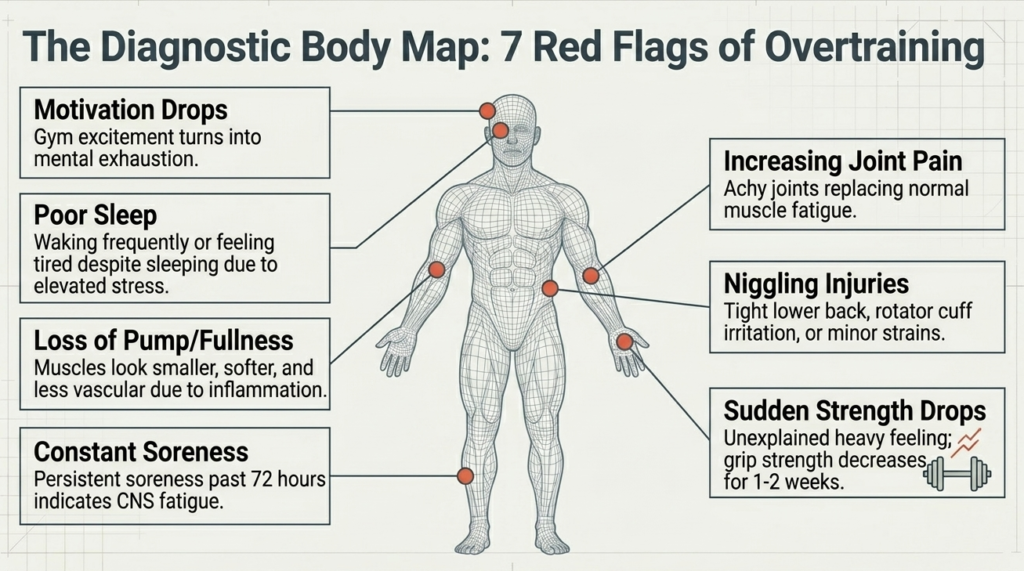
7 Signs You Need a Deload Week in Bodybuilding
These are the 7 sign overtraining warning signs.
1. Your Strength Suddenly Drops
One bad workout is normal. But if your lifts are decreasing for 1–2 weeks despite good nutrition and sleep, your body may be overreached.
Signs include:
- Bench press feels unusually heavy
- Squats feel slow
- Grip strength decreases
- Reduced workout performance
This is one of the clearest signs you need a deload week.
2. Constant Muscle Soreness
Normal soreness should disappear within 24–72 hours. If soreness lasts almost all week, your recovery capacity may be overloaded.
Persistent soreness often means:
- Excessive training volume
- Poor recovery
- Nervous system fatigue
- Lack of recovery adaptation
Natural bodybuilders especially need recovery balance to maximize hypertrophy.
3. Joint Pain Keeps Increasing
Muscle fatigue is manageable. Joint pain is different.
If you constantly feel:
- Achy elbows
- Shoulder pain
- Knee discomfort
- Wrist irritation
It’s time to reduce stress before small issues become serious injuries. A proper deload can dramatically reduce inflammation.
4. Your Motivation to Train Disappears
Mental fatigue is a real sign of overtraining.
If you suddenly:
- Hate going to the gym
- Feel mentally exhausted
- Lose training excitement
- Feel emotionally drained
Your nervous system may need recovery. Sometimes the best thing for progress is stepping back temporarily.
5. Poor Sleep Quality
Overtraining can disrupt sleep even if you feel exhausted.
Common signs:
- Waking up frequently
- Difficulty falling asleep
- Feeling tired despite sleeping
- Elevated stress levels
Poor sleep slows muscle recovery and hormone regulation.
6. Pumps and Muscle Fullness Disappear
Flat muscles can indicate accumulated fatigue and recovery issues.
If your muscles suddenly look:
- Smaller
- Softer
- Less vascular
- Less pumped
It may not be muscle loss. It’s often a recovery issue linked to nervous system stress and inflammation.
7. Small Injuries Keep Appearing
Minor strains and nagging injuries are warning signs.
Examples:
- Tight lower back
- Rotator cuff irritation
- Tendon pain
- Muscle strains
Your body may be telling you recovery is overdue. Ignoring these signs often leads to forced time off later.
Need Help Optimizing Recovery?
Many lifters struggle with overtraining, poor recovery, and stalled progress.
My 1-on-1 Online Coaching helps you:
- Build muscle naturally
- Recover faster
- Avoid plateaus
- Follow a personalized training plan
What Is a Deload Week in Bodybuilding?
A deload week is a planned recovery phase designed to reduce accumulated fatigue from intense training. Instead of pushing heavy weights and high volume, you intentionally lower training intensity by about 40–60% and perform fewer total sets. This allows your muscles, joints, tendons, and central nervous system to recover without completely stopping exercise. Active recovery, such as light workouts, walking, mobility training, or stretching, helps improve blood flow and speeds up tissue repair. A properly executed deload week can restore strength, reduce injury risk, improve motivation, and prepare your body for future progress. For natural bodybuilders, deloading is a powerful strategy for long-term muscle growth and performance.
The Biological Case For Stepping Back
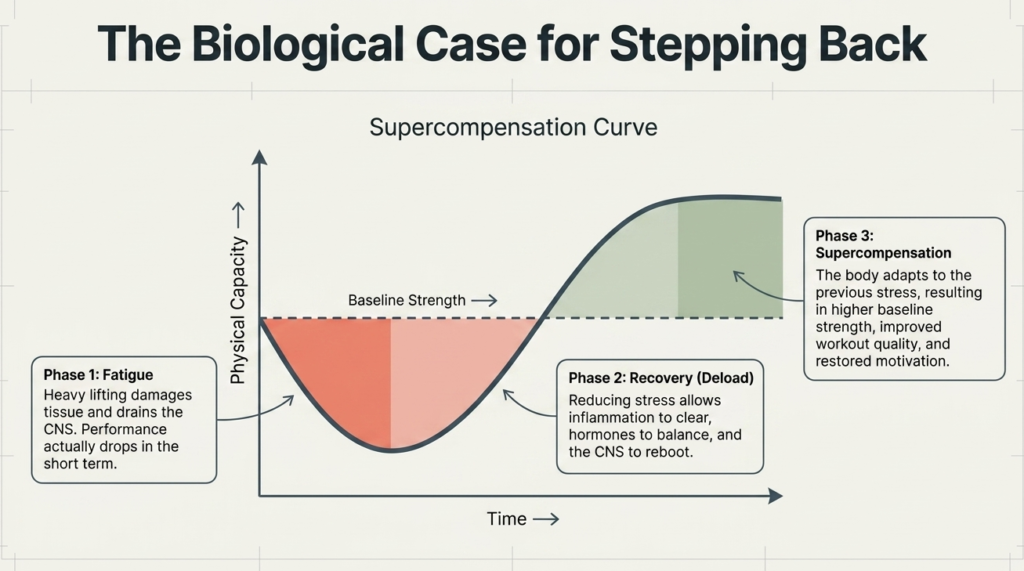
The supercompensation curve explains why recovery is essential for long-term muscle growth and strength gains. During hard training, your body enters a fatigue phase where muscle damage, inflammation, and nervous system stress temporarily reduce performance. If you continue pushing without adequate recovery, progress can stall or even decline. A deload week creates the recovery phase, allowing damaged muscle tissue to repair, inflammation to decrease, and the central nervous system to recharge. Once recovery is complete, the body adapts to the previous training stress and enters the supercompensation phase, where strength, performance, and work capacity rise above baseline levels. This is where real progress and sustainable muscle growth occur.
Deload Training Structure
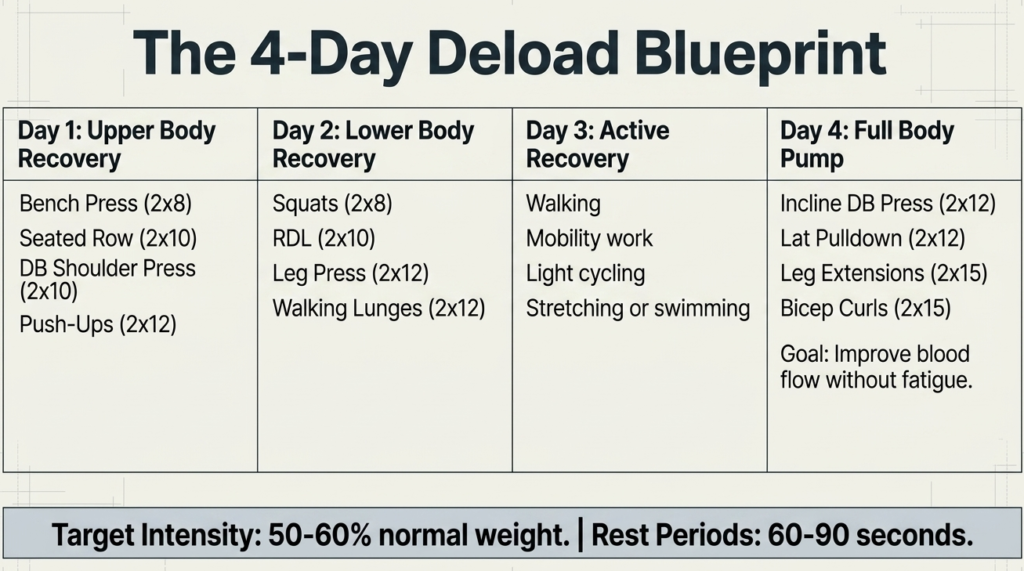
Here’s a simple and effective deload week for natural bodybuilding.
Day 1 – Upper Body Recovery Session
| Exercise | Sets | Reps |
|---|---|---|
| Bench Press | 2 | 8 |
| Seated Row | 2 | 10 |
| Dumbbell Shoulder Press | 2 | 10 |
| Push-Ups | 2 | 12 |
Day 2 – Lower Body Recovery Session
| Exercise | Sets | Reps |
|---|---|---|
| Squats | 2 | 8 |
| Romanian Deadlift | 2 | 10 |
| Leg Press | 2 | 12 |
| Walking Lunges | 2 | 12 |
Day 3 – Active Recovery
| Walking |
|---|
| Mobility work |
| Light cycling |
| Stretching |
| Swimming |
Day 4 – Full Body Pump Workout
| Exercise | Sets | Reps |
|---|---|---|
| Incline Dumbbell Press | 2 | 12 |
| Lat Pulldown | 2 | 12 |
| Leg Extensions | 2 | 15 |
| Bicep Curls | 2 | 15 |
These are the 7 signs you need a deload week in bodybuilding
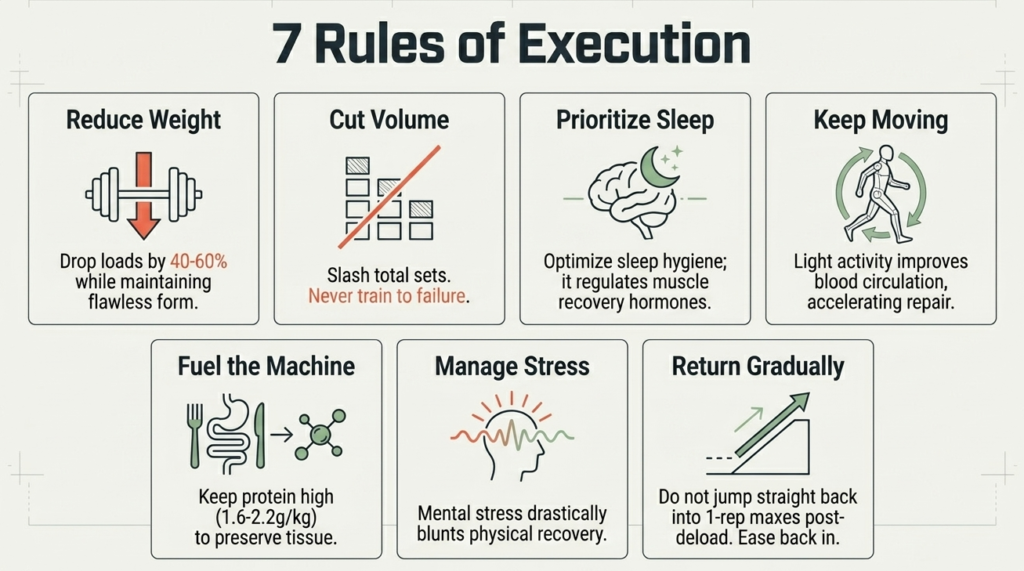
1. Reduce Weight by 40–60%
- Train lighter while maintaining good form and movement quality.
2. Cut Training Volume
- Reduce total sets and avoid training to failure.
3. Focus on Recovery
Prioritize:
- Sleep
- Hydration
- Mobility work
- Stress management
4. Keep Moving
- Light activity improves circulation and recovery.
- Avoid complete inactivity unless injured.
5. Eat Enough Protein
- Recovery still requires nutrition.
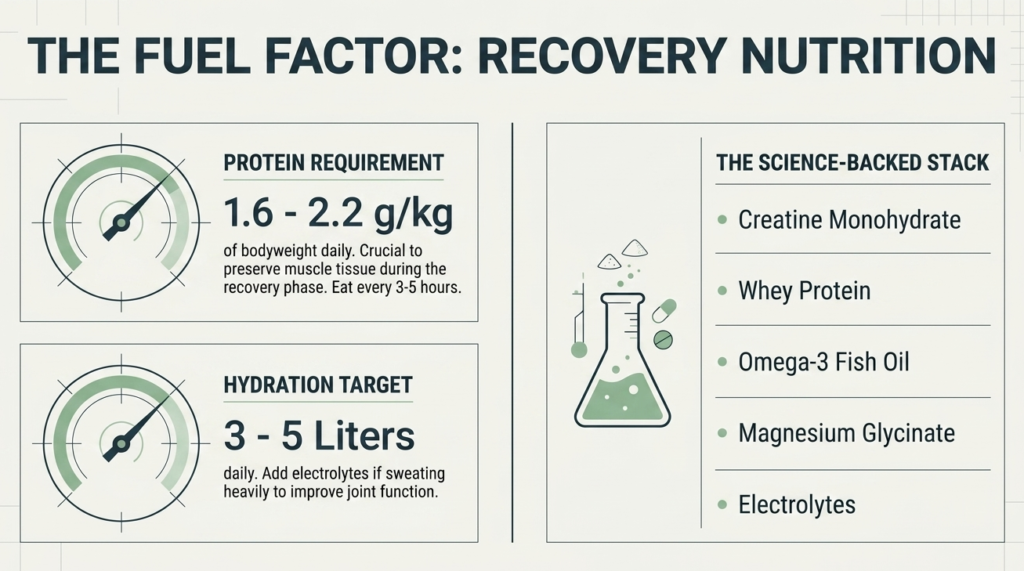
- Aim for: daily protein intake- 1.6−2.2 g/kg of bodyweight.
6. Manage Stress Levels
Mental stress impacts physical recovery more than most lifters realize.
7. Come Back Gradually
- Don’t jump immediately into maximum intensity after a deload.
- Ease back into heavy training.
This is a clear recovery signal” or “your body is telling you it needs rest.
Diet & Nutrition Guide During a Deload
Protein Recommendations
Aim for:
- Lean chicken
- Eggs
- Fish
- Greek yogurt
- Whey protein
- Paneer or tofu for vegetarians
Protein helps preserve muscle tissue during recovery.
Hydration
Drink:
- 3–5 liters of water daily
- Electrolytes if sweating heavily
Hydration improves recovery and joint function.
Meal Timing
Eat protein-rich meals every 3–5 hours.
Good pre-workout foods:
- Oats
- Banana
- Rice
- Potatoes
Natural Supplement Suggestions
Science-backed recovery supplements:
- Creatine monohydrate
- Whey protein
- Omega-3 fish oil
- Magnesium glycinate
- Electrolytes
USA-Style Practical Eating Tips
Easy recovery meals:
- Chicken rice bowls
- Greek yogurt parfaits
- Egg sandwiches
- Protein smoothies
- Steak with potatoes
Keep meals simple and sustainable. Know more about nutrition read this blog 10 Post-Workout Nutrition Tips for Muscle Growth.
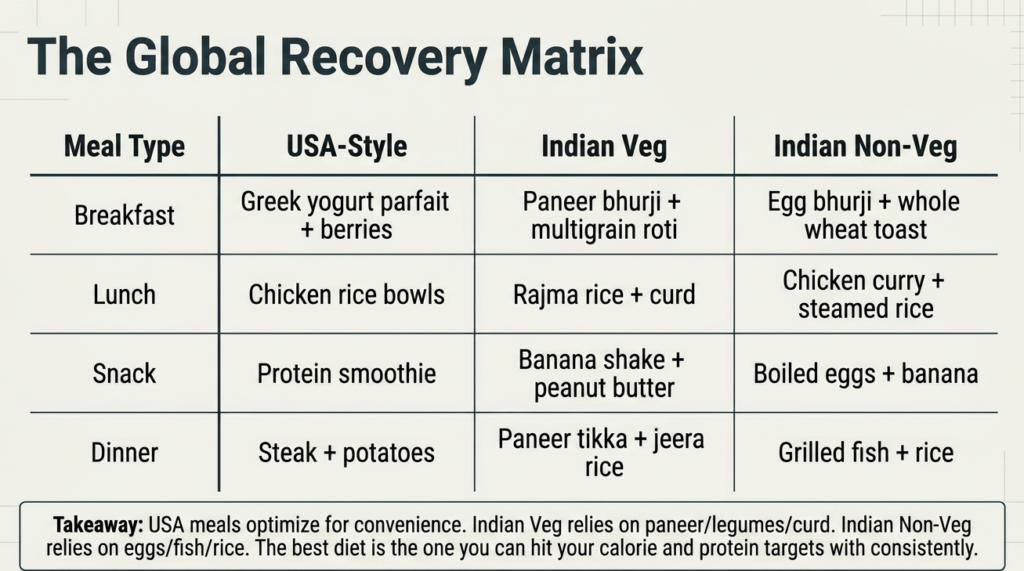
USA vs Indian Recovery Meals for Bodybuilding
| Goal | USA-Style Practical Eating Tips | Indian Veg Recovery Meals | Indian Non-Veg Recovery Meals |
|---|---|---|---|
| High-Protein Breakfast | Greek yogurt parfait with berries | Paneer bhurji + multigrain roti | Egg bhurji + whole wheat toast |
| Fast Recovery Lunch | Chicken rice bowls | Rajma rice + curd | Chicken curry + steamed rice |
| Easy Snack | Protein smoothie | Banana shake with peanut butter | Boiled eggs + banana |
| Muscle-Building Dinner | Steak with potatoes | Paneer tikka + jeera rice | Grilled fish + rice |
| Quick Evening Meal | Egg sandwiches | Sprouts chaat | Chicken sandwich |
| Post-Workout Meal | Whey protein + oats | Whey protein + banana + oats | Whey protein + banana + oats |
| Healthy Carb Source | Potatoes, rice, oats | Rice, roti, poha, oats | Rice, roti, sweet potato |
| Healthy Fat Source | Peanut butter, avocado | Almonds, peanuts, ghee | Eggs, fish oil, nuts |
| Easy Meal Prep Option | Meal-prep chicken bowls | Khichdi + curd | Chicken pulao |
| Budget-Friendly Option | Tuna sandwich | Soya chunks curry | Egg curry + rice |
Key Takeaway
- USA-style meals focus on convenience, quick prep, and high-protein packaged foods.
- Indian vegetarian meals rely more on paneer, lentils, curd, soy, and legumes for protein.
- Indian non-veg meals offer excellent recovery through eggs, chicken, fish, and rice-based meals.
For natural bodybuilding, the best diet is the one you can follow consistently while hitting your:
- Protein goals
- Calorie targets
- Recovery needs
- Lifestyle preferences
Common Deload Mistakes to Avoid
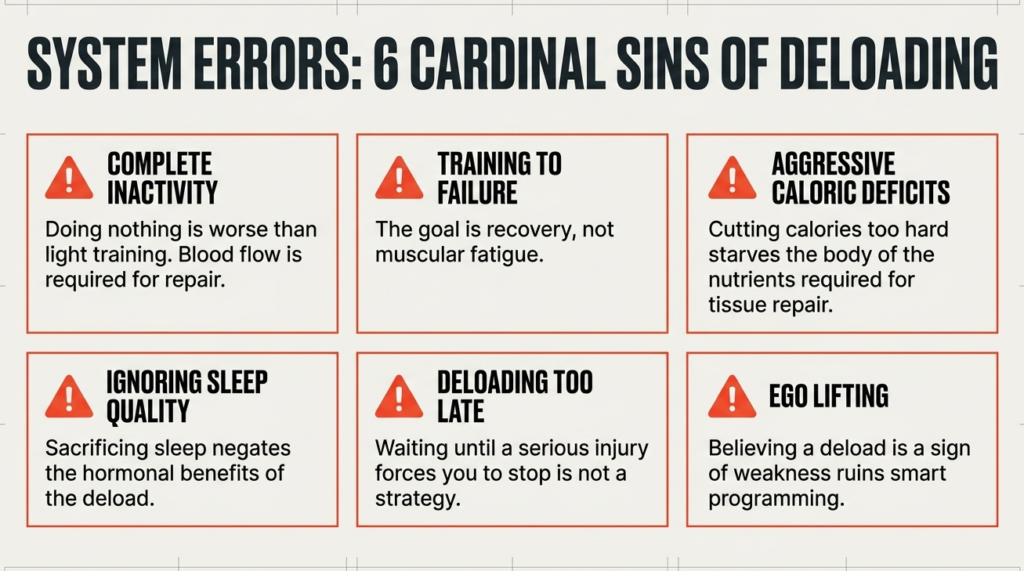
1. Taking Complete Time Off
Light training is usually better than doing nothing.
2. Training to Failure
Your goal is recovery—not fatigue.
3. Cutting Calories Too Hard
Recovery needs nutrients.
4. Ignoring Sleep
Sleep quality is critical during deload weeks.
5. Deloading Too Late
Don’t wait until injury forces recovery.
6. Keeping Ego Lifting
A deload is not weakness—it’s smart programming.
Who Should Use a Deload Week?
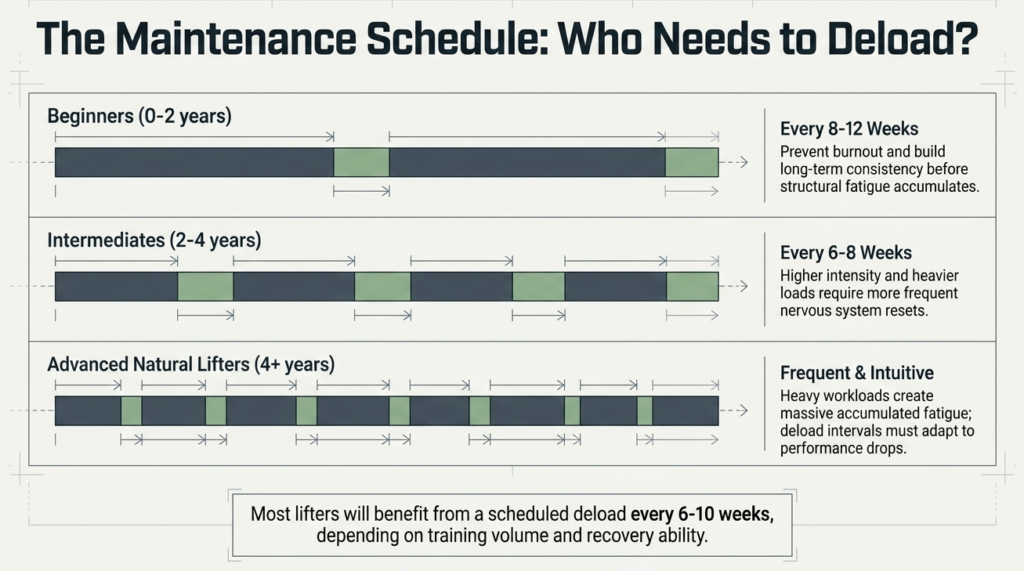
Most lifters benefit from planned deload weeks, but the ideal frequency depends on training experience, workout intensity, and recovery capacity. Beginners typically require a deload every 8–12 weeks because they use lighter loads and accumulate fatigue more slowly. Intermediate lifters often benefit from deloading every 6–8 weeks as training volume and intensity increase. Advanced natural bodybuilders usually need more frequent or intuitive deloads because heavy workloads create significant stress on the muscles, joints, and nervous system. Rather than following a rigid schedule, experienced lifters should also monitor performance, soreness, sleep quality, and motivation. In general, most bodybuilders perform best with a deload every 6–10 weeks.
Beginners
Most beginners need deloads every 8–12 weeks.
Intermediate Lifters
Intermediate lifters often benefit every 6–8 weeks due to higher intensity training.
Advanced Bodybuilders
Advanced natural bodybuilders may need more frequent recovery due to heavier workloads and accumulated fatigue.
FAQ Section
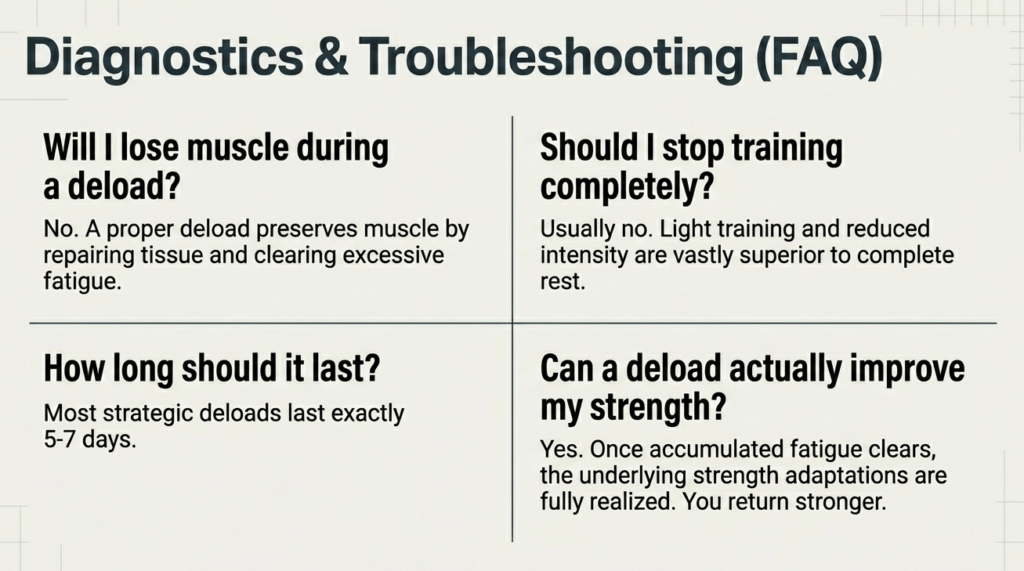
How often should you take a deload week?
- Most lifters benefit from a deload every 6–10 weeks depending on intensity, recovery ability, and training volume.
Will I lose muscle during a deload?
- No. A proper deload actually helps preserve muscle by improving recovery and reducing excessive fatigue.
Should I stop training completely during a deload?
- Usually no. Light training and reduced intensity are often more effective than complete rest.
Can beginners benefit from deload weeks?
- Yes. Beginners can prevent burnout and improve long-term consistency with planned recovery.
How long should a deload week last?
- Most deloads last 5–7 days.
Should I reduce weight or volume during a deload?
- Ideally both. Reduce intensity and total workload.
Is a deload week necessary for natural bodybuilding?
- Absolutely. Recovery is critical for natural lifters because muscle growth depends heavily on proper recovery capacity.
Can a deload improve strength?
- Yes. Many lifters return stronger after reducing accumulated fatigue.
Recovery
Recovery is often misunderstood as a break from progress, but in reality, it is one of the most important drivers of long-term muscle growth. Every hard workout creates fatigue, muscle damage, and stress on the joints and nervous system. Without adequate recovery, these stresses accumulate and eventually lead to stalled progress, poor performance, or injury. A well-timed deload week allows the body to repair damaged tissues, restore energy levels, and rebalance recovery systems. This process helps lifters return stronger, more motivated, and better prepared for future training. In natural bodybuilding, smart recovery is not a sign of weakness—it is a strategic tool for building strength, muscle, and consistency over time.
Conclusion
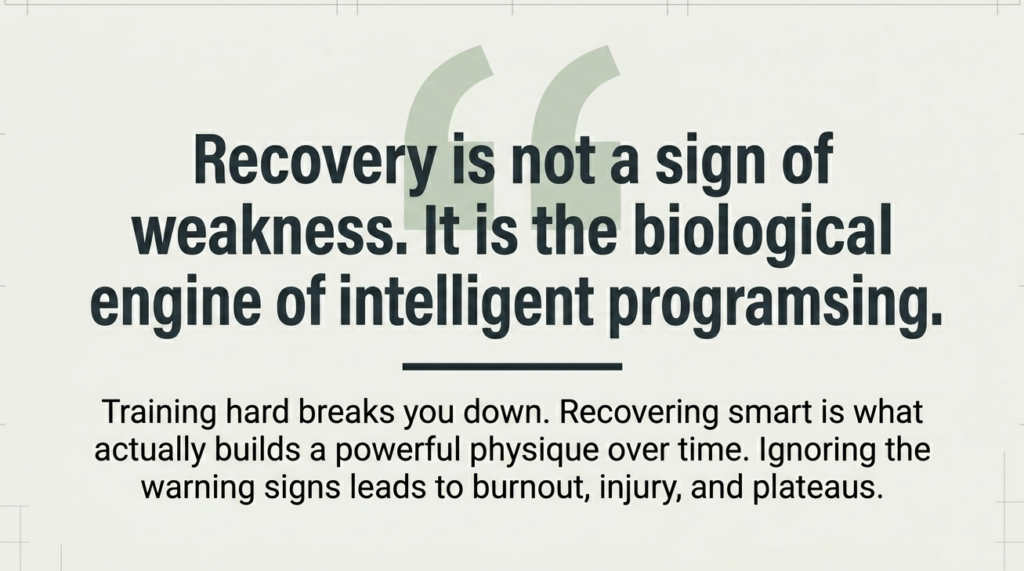
Training hard is important—but recovering smart is what builds a powerful physique over time.
Many lifters ignore the warning signs until burnout, injuries, or plateaus stop progress completely. Knowing when to schedule a recovery week is what separates smart lifters from injured ones
Remember: recovery is not weakness. It’s part of intelligent bodybuilding.
Stay consistent, train smart, and keep building your best physique naturally with Gearless Physique.
About the Author
Aashish Rawat
Certified Fitness Coach | Nutrition Expert | Founder of GearlessPhysique.com
With 14+ years of experience in natural bodybuilding, Aashish shares practical, science-backed fitness advice to help people build muscle, gain strength, and transform their physiques naturally.
Need Personal Guidance?
Work directly with Aashish Rawat through Gearless Physique Online Coaching for customized workout and nutrition plans.


Gearless Physique
Physique Without Gear
Your transformation starts now. Who's with me?