Table of Contents
Toggle7 Best Rep Ranges to Build Muscle Faster (Science-Based Guide)
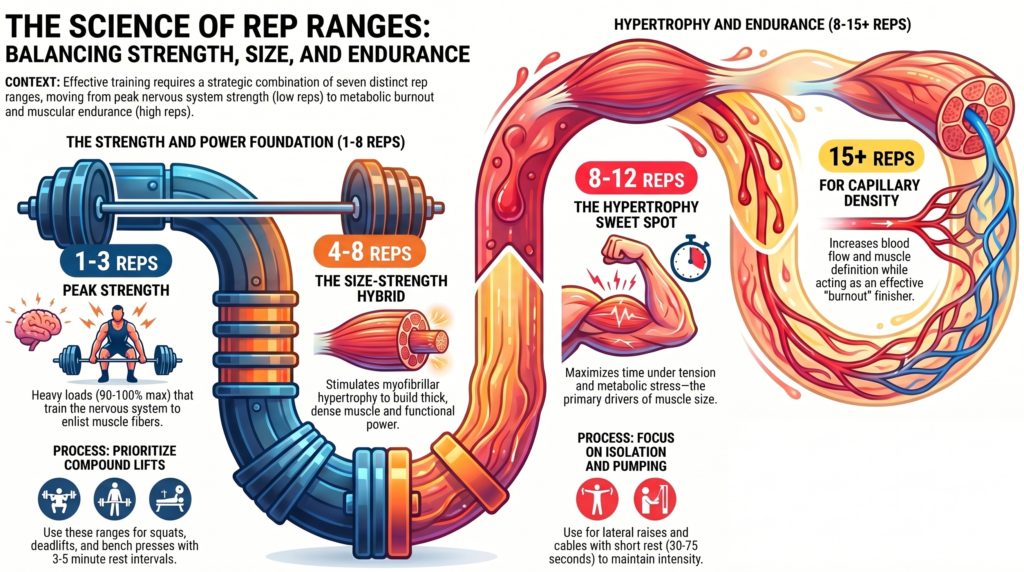
This infographic explains the science behind rep ranges and how they influence muscle growth, strength, and endurance. It visually connects different rep zones with their physiological effects, making it easier to understand training principles. By following this scientific approach, you can design more effective workout plans. It reinforces the importance of combining multiple rep ranges to achieve a balanced and athletic physique.
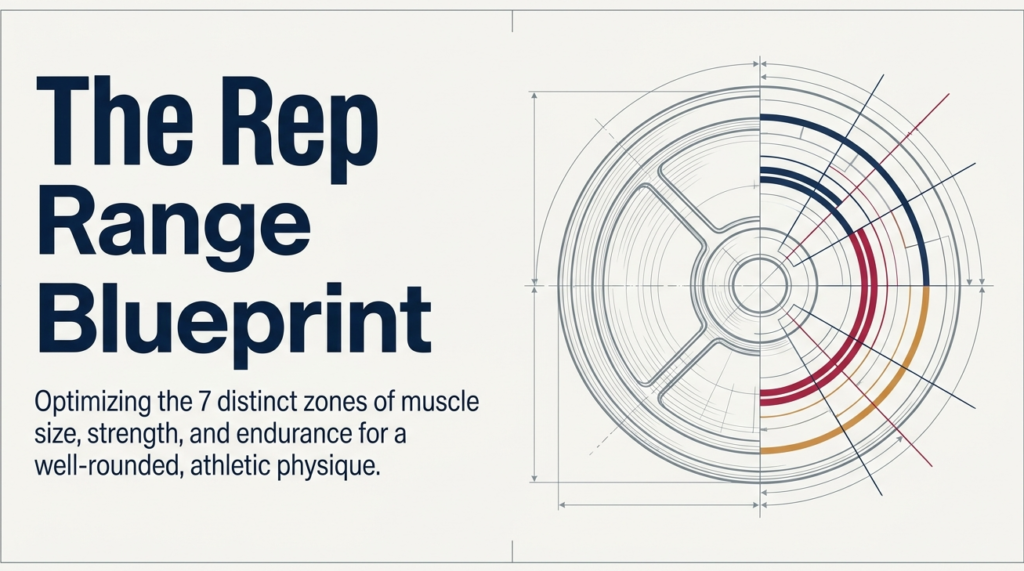
The Rep Range Blueprint for Muscle Size and Strength
Many people spend years in the gym without seeing real muscle growth or strength gains. The biggest reason? They stick to one rep range and ignore how the body actually adapts to different training stimuli. Muscle size and strength are built through a combination of mechanical tension, metabolic stress, and progressive overload—each influenced by how many reps you perform.
If you always train in the same rep range, your progress will eventually stall. That’s why understanding rep ranges is essential for anyone serious about transforming their physique. In this blog, you’ll learn the 7 best rep ranges for building both muscle size and strength, how each range works, and how to use them effectively in your weekly training routine.
👉 What is the best rep range for muscle growth?
The best rep range for muscle growth is 6–12 reps, as it balances strength and hypertrophy. However, combining multiple rep ranges gives the best results.
👉 How many reps should I do to build muscle and strength?
To build both muscle and strength, use a mix of rep ranges: 1–5 reps for strength, 6–12 reps for muscle growth, and 12–15+ reps for endurance and conditioning.
Quick Summary
- Different rep ranges target strength, size, and endurance differently
- Heavy reps (1–5) build strength and neural efficiency
- Moderate reps (6–12) are best for muscle hypertrophy
- Higher reps (12–15+) improve endurance and muscle pump
- Combining rep ranges gives the best long-term results
Rep Range Myth vs Reality Explained
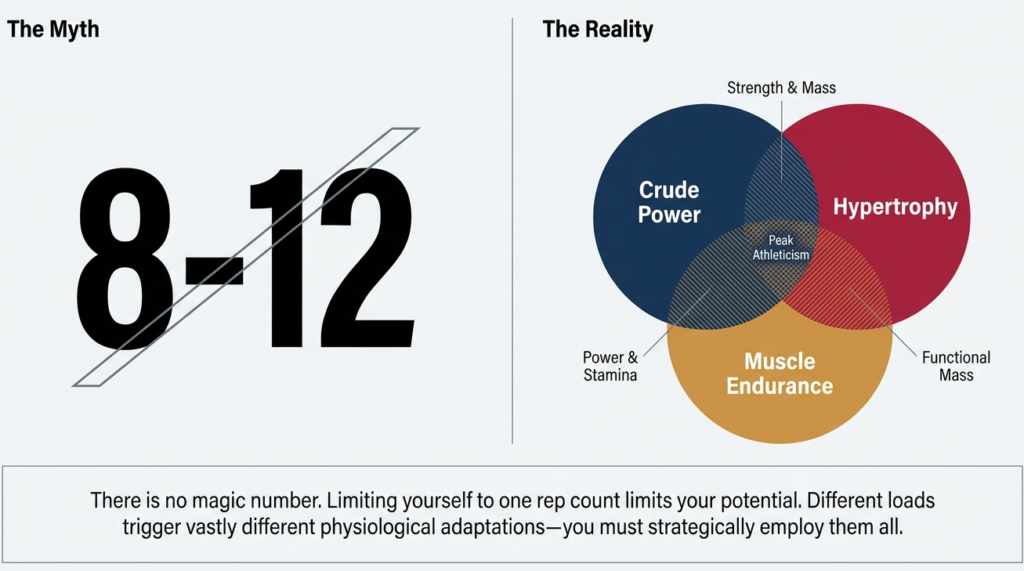
This image breaks down one of the biggest myths in fitness—the belief that 8–12 reps is the only effective range for muscle growth. In reality, different rep ranges target different adaptations such as strength, hypertrophy, and endurance. Limiting yourself to one zone restricts your full potential. A balanced training approach includes heavy lifting for power, moderate reps for muscle size, and higher reps for endurance. Understanding this concept helps you design smarter workout programs that deliver long-term results.
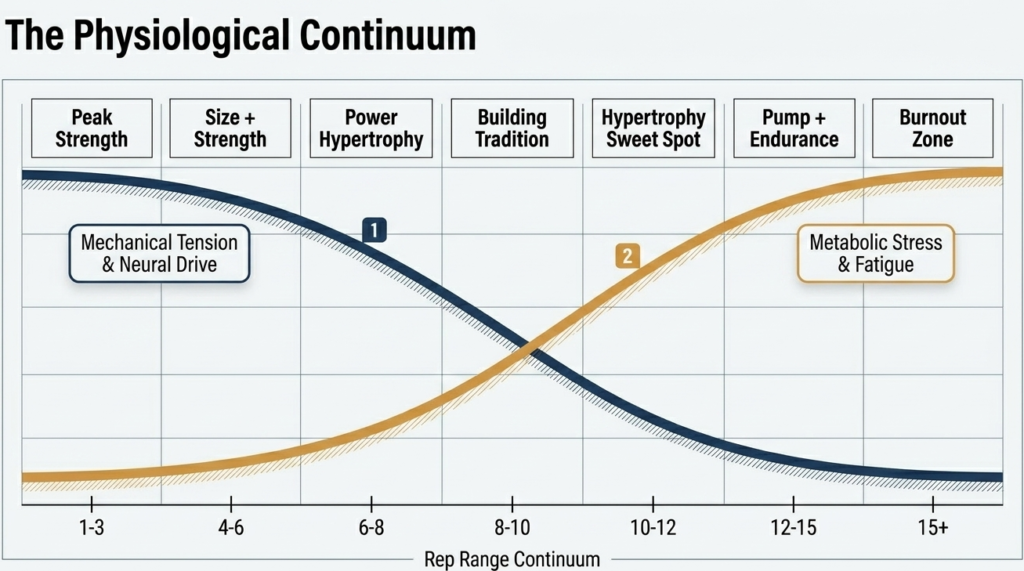
Physiological Continuum of Rep Ranges
This graph explains the physiological continuum of rep ranges, highlighting how training effects change as reps increase. Lower reps focus on mechanical tension and neural drive, which build strength. As reps increase, the emphasis shifts toward metabolic stress and fatigue, which support hypertrophy and endurance. Understanding this continuum allows you to train with purpose rather than randomly selecting weights and reps. By targeting different zones intentionally, you can stimulate all muscle fibers and achieve balanced development.
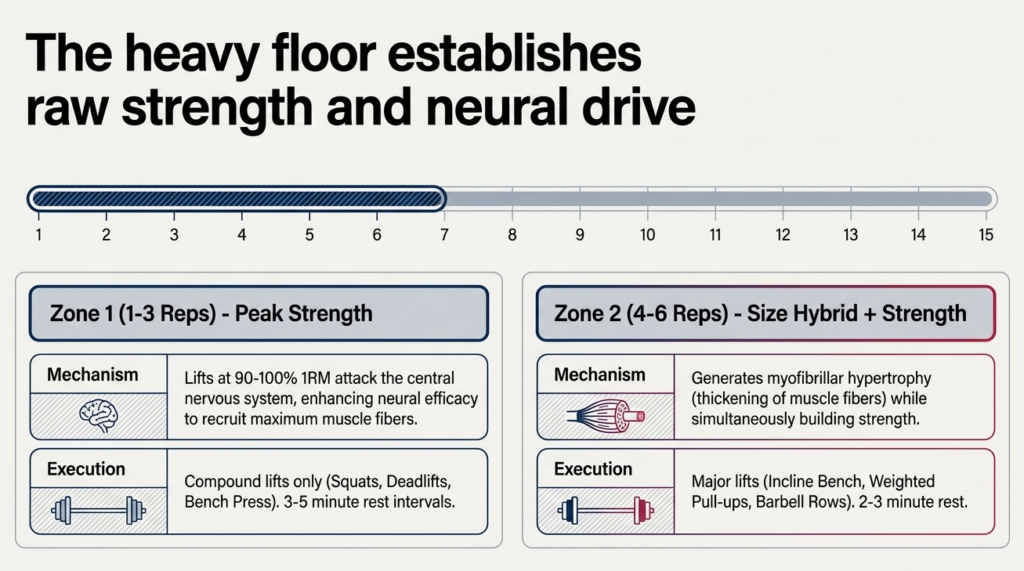
Low Rep Strength Zone (1–6 Reps)
The low-rep zone focuses on building maximum strength through heavy compound lifts. Training in this range activates the central nervous system and improves muscle fiber recruitment. While it may not produce immediate muscle size, it creates a strong foundation for future growth. Exercises like squats, deadlifts, and bench press are ideal here. Longer rest periods ensure recovery between sets, allowing you to lift maximum weight safely and effectively.
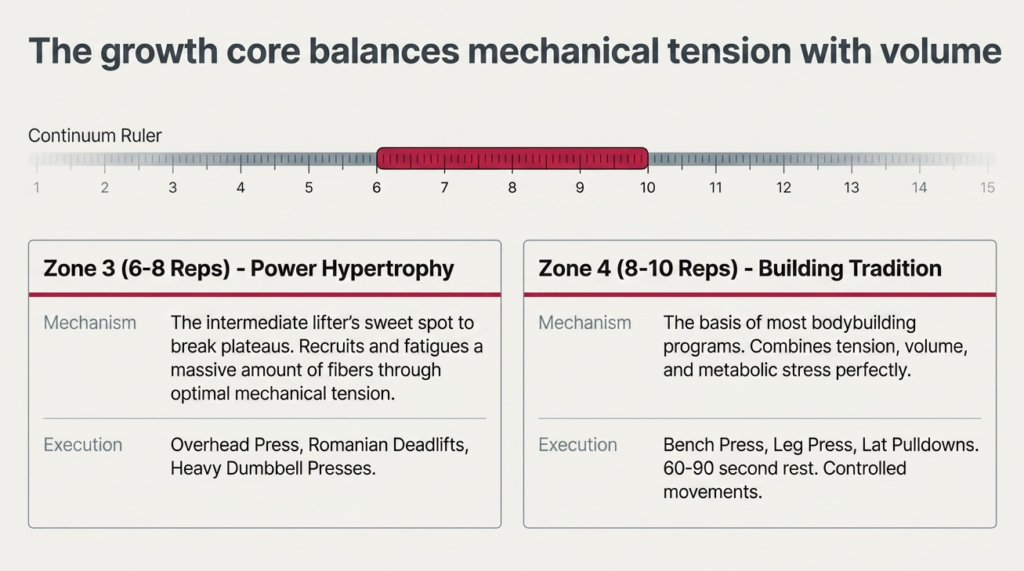
Growth Zone: 6–10 Rep Hypertrophy Range
This image highlights the core hypertrophy range where most muscle growth occurs. The 6–10 rep zone balances mechanical tension and training volume, making it highly effective for building muscle size. This range allows you to lift heavy enough for strength while accumulating enough reps for hypertrophy. It’s especially useful for intermediate lifters aiming to break plateaus. Incorporating this range into your workouts ensures steady progress in both strength and muscle development.
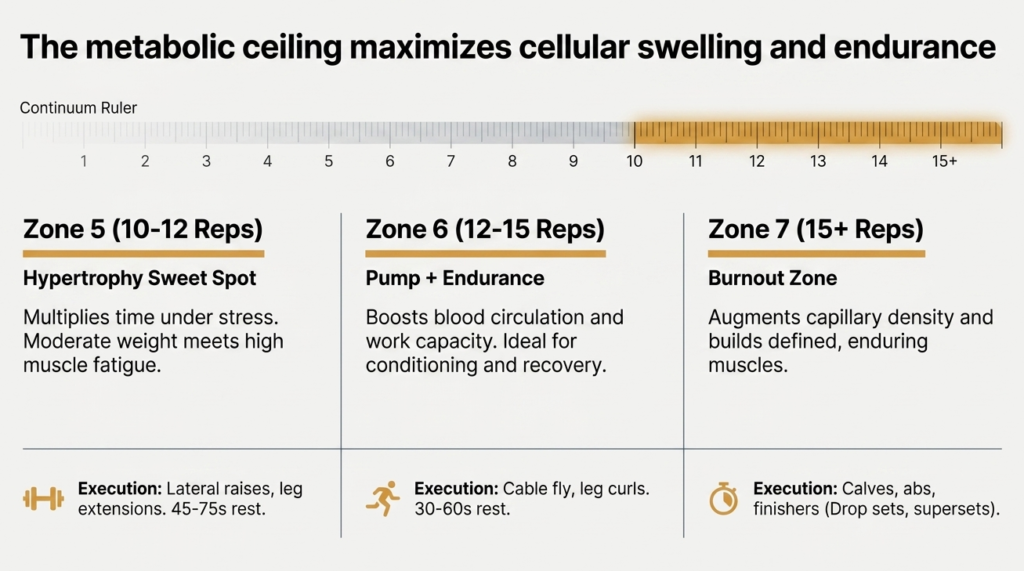
High Rep Burnout and Endurance Zone
The high-rep zone focuses on endurance, metabolic stress, and muscle conditioning. Training with lighter weights for 12–15+ reps increases time under tension and improves blood flow to the muscles. This creates a strong muscle pump and enhances recovery. It’s ideal for isolation exercises and finishing sets. While it doesn’t build maximum strength, it plays a crucial role in overall muscle development and definition.
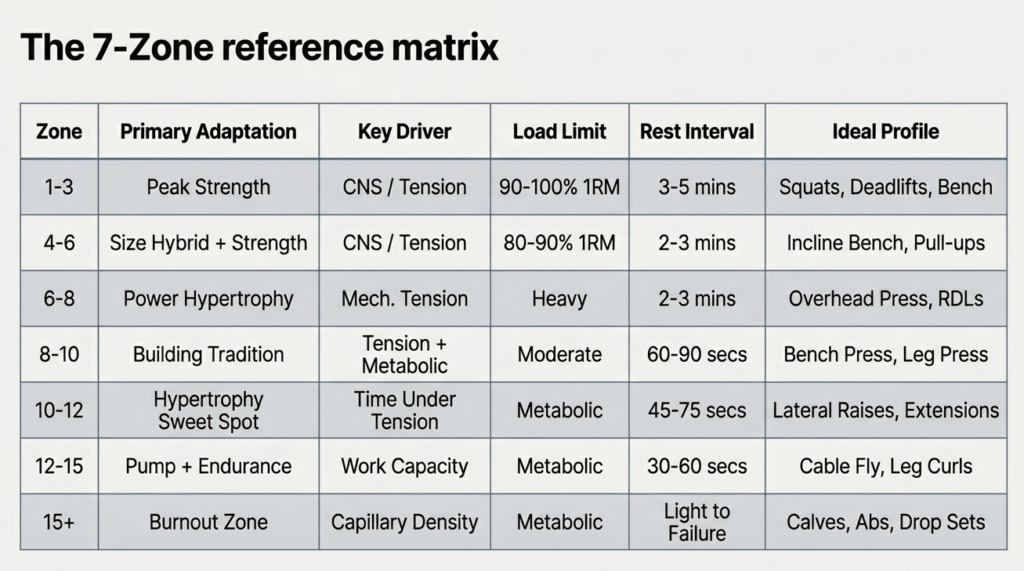
7 Rep Range Matrix for Training Optimization
This matrix provides a complete overview of all seven rep ranges, including their primary benefits, load intensity, and rest intervals. It serves as a quick guide for structuring workouts based on your goals. Whether you want strength, muscle size, or endurance, this chart helps you choose the right rep range. Using this structured approach ensures balanced training and prevents stagnation over time.
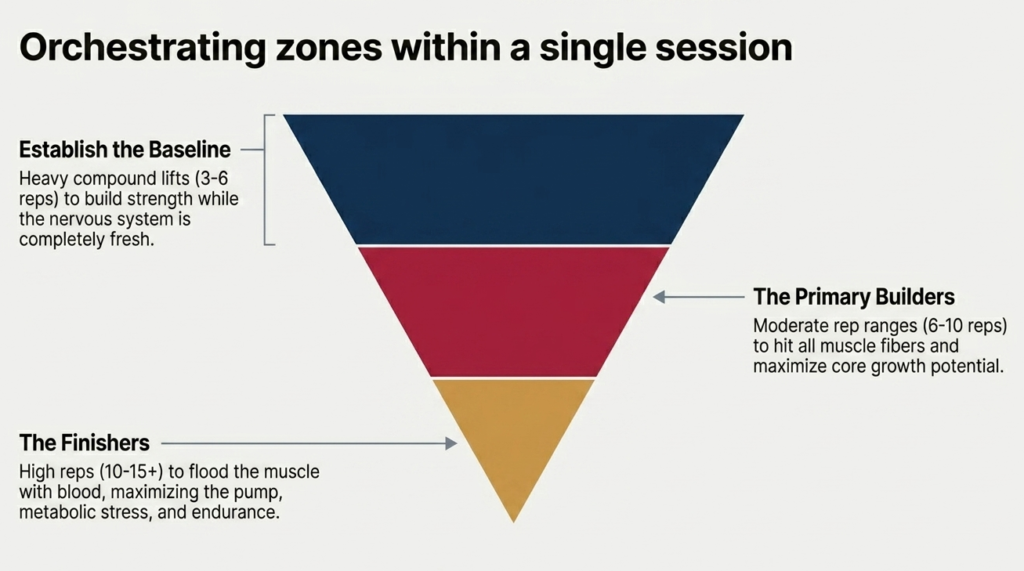
Structuring Rep Ranges in One Workout
This image demonstrates how to organize different rep ranges within a single workout session. Begin with heavy compound lifts to build strength, move to moderate reps for hypertrophy, and finish with high reps for endurance and pump. This structured approach ensures that all muscle fibers are activated during training. It also improves efficiency and prevents overtraining while maximizing results.
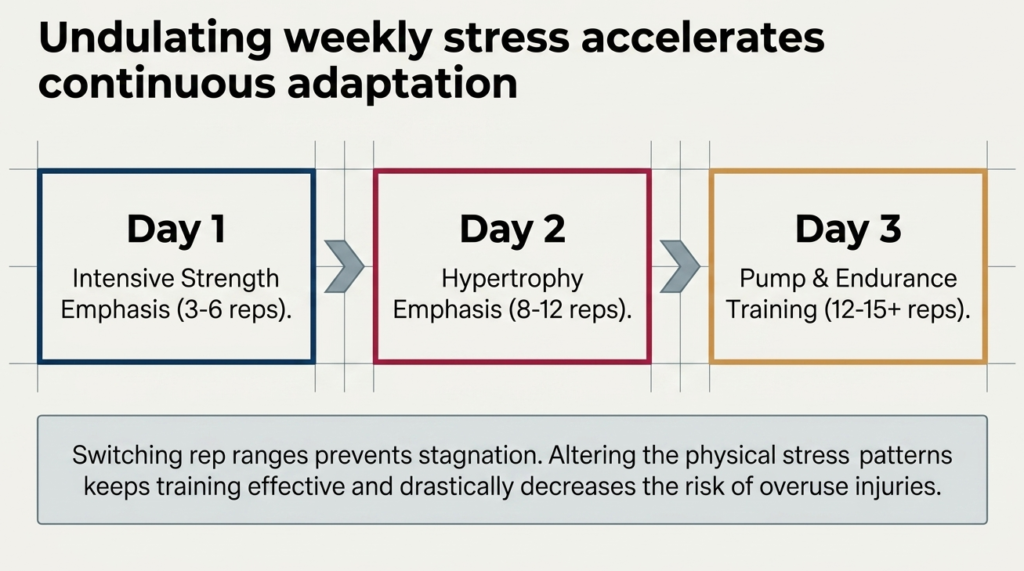
Weekly Rep Range Periodization Strategy
This image explains how to use weekly periodization to improve results. By rotating between strength, hypertrophy, and endurance days, you can continuously challenge your muscles. This prevents adaptation and keeps your workouts effective. It also reduces the risk of injuries by varying stress levels. A well-planned weekly structure is key to long-term muscle growth and strength development.
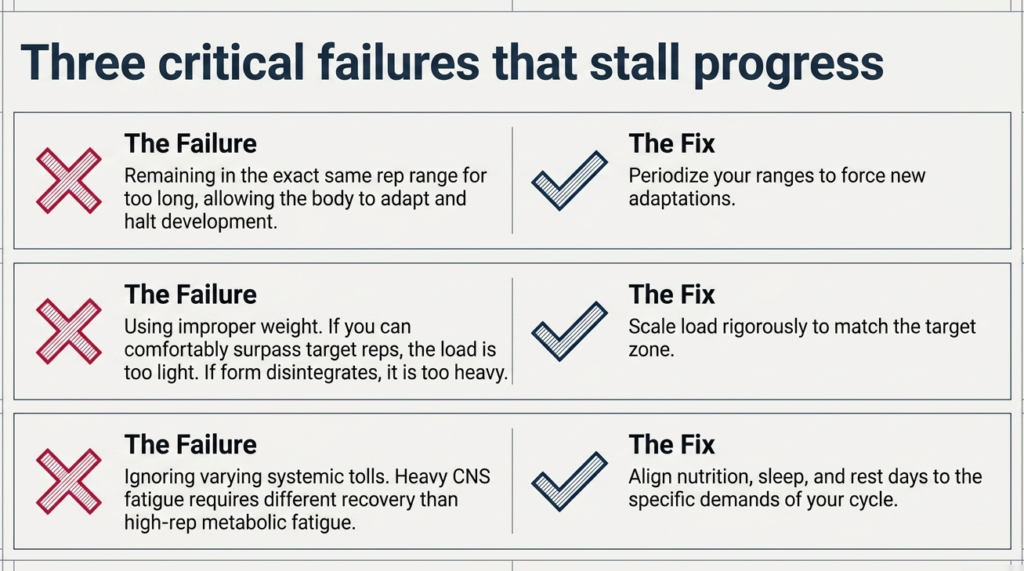
Common Rep Range Mistakes and Fixes
This image highlights common mistakes people make when using rep ranges, such as sticking to one range, using incorrect weights, and ignoring recovery. It also provides simple fixes to improve results. Understanding these mistakes helps you train smarter and avoid plateaus. By correcting these errors, you can ensure consistent progress and better performance in the gym.
Common Mistakes:
- Sticking to only one rep range for all exercises
- Using weights that are too light or too heavy
- Ignoring proper form and technique
- Not resting enough between heavy sets
- Skipping progressive overload
FAQ
1. Which rep range is best for muscle growth?
The 8–12 rep range is considered the best for hypertrophy, but combining ranges gives better results.
2. Can I build strength with high reps?
Yes, but it’s less effective. Strength is best developed in the 1–6 rep range.
3. Should beginners use heavy weights?
Beginners should start with moderate reps (8–12) to learn form before going heavy.
4. How often should I change rep ranges?
You can rotate them weekly or include multiple ranges in one workout.
5. Are high reps useless?
No, they improve endurance, recovery, and muscle conditioning.
Related Guides to Improve Muscle Growth and Strength
If you want to get faster and better results from your training, these guides from Gearless Physique will help you go deeper:
- Want to understand the real difference between training goals? Read our The Ultimate Shredded Abs In Just 8-Weeks to learn how to train smarter based on your objective.
- If your goal is fat loss while maintaining muscle, check out the 7 Best Training Styles for Cutting Phase for a complete step-by-step system.
- Looking for a fully personalized plan? Explore our Online Coaching Program, where you get customized workout, diet, and expert guidance based on your body type and goals.
👉 Combining the right rep ranges with the right strategy from these guides will significantly improve your muscle growth, strength, and overall transformation.
Conclusion: 3 Rules for Effective Rep Range Training
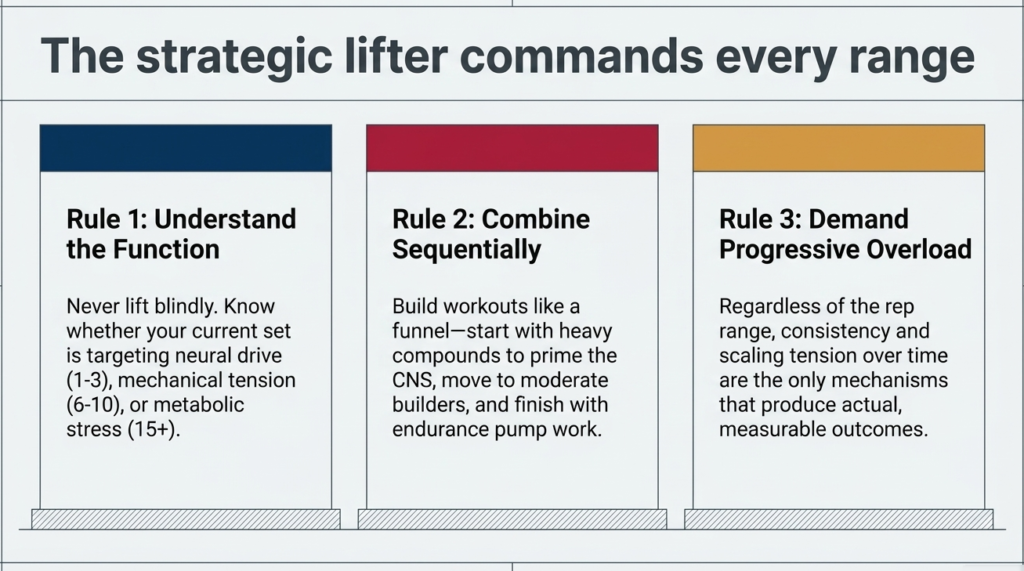
This image explains three essential rules for successful rep range training: understanding each range, combining them effectively, and applying progressive overload. These principles ensure that your workouts are structured and goal-oriented. Without these rules, training becomes random and less effective. Following them will help you build strength, muscle size, and endurance efficiently.
Building muscle size and strength is not about following a single rep range. It’s about understanding how each range works and using them strategically in your training. Low reps build strength, moderate reps increase muscle size, and higher reps improve endurance and conditioning. When combined properly, these rep ranges create a complete and balanced physique. Stay consistent, focus on progressive overload, and always prioritize good form. Over time, you’ll see significant improvements in both strength and muscle development. Train smart, stay disciplined, and trust the process to achieve long-term results.
About the Author
Written by Aashish Rawat (Ashu), Certified Fitness Coach & Nutrition Expert, Founder of Gearless Physique. Expert with over 14 years of experience in bodybuilding, muscle gain, and fat loss transformation. He helps individuals build strong, aesthetic physiques through natural and sustainable training methods.
His approach combines real-world experience with proven fitness science, focusing on progressive overload, smart nutrition, and long-term consistency. Over the years, he has guided hundreds of clients in achieving their fitness goals without shortcuts or harmful methods.
👉 If you want a personalized workout and diet plan based on your body type and goals, you can join his coaching program and start your transformation journey today.

Gearless Physique
Physique Without Gear
Your transformation starts now. Who's with me?