Table of Contents
Toggle10 Pre-Workout Foods to Boost Strength and Performance
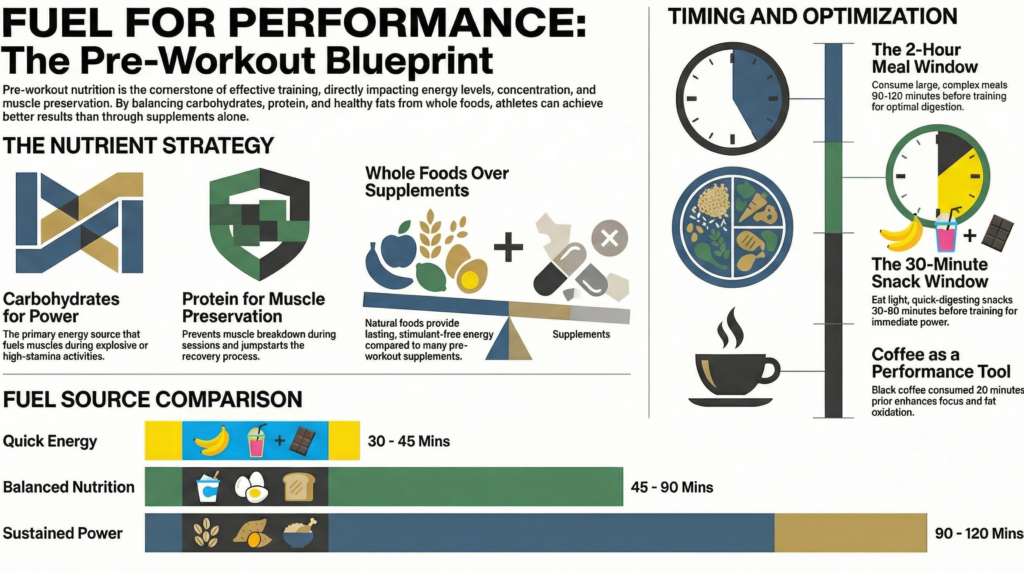
This infographic presents a complete blueprint for optimizing pre-workout nutrition to enhance strength, energy, and overall performance. It highlights the importance of balancing macronutrients, where carbohydrates fuel muscle activity, protein supports muscle preservation, and fats provide sustained energy. The visual also emphasizes choosing whole foods over supplements for consistent, crash-free energy. Timing plays a critical role, with larger meals consumed 90–120 minutes before training and lighter snacks 30–45 minutes prior. Additionally, natural stimulants like coffee can improve focus and endurance. By combining proper nutrient selection with strategic timing, this approach helps athletes maximize workout output, reduce fatigue, and achieve better long-term fitness results.
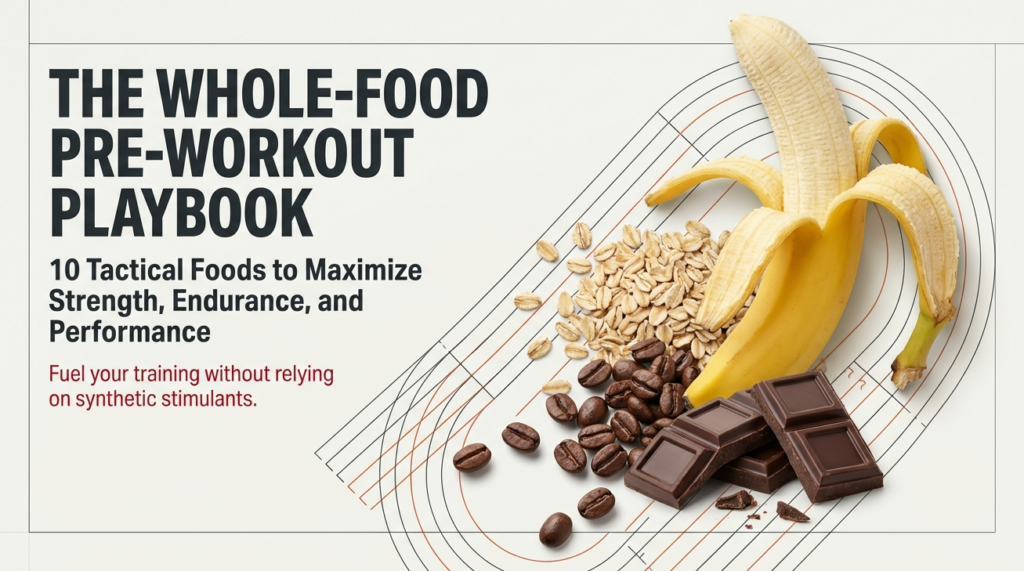
The Whole-Food Pre-Workout Playbook
This visual introduces the concept of whole-food pre-workout nutrition, emphasizing natural fuel sources over artificial supplements. Foods like bananas, oats, coffee, and dark chocolate provide a powerful combination of carbohydrates, antioxidants, and natural stimulants that support energy, endurance, and mental focus. Unlike synthetic pre-workouts, whole foods deliver steady energy without crashes or jitters. This approach aligns with sustainable fitness practices, especially for natural lifters aiming for long-term performance. By prioritizing nutrient-dense ingredients, athletes can improve training output, recovery, and overall health. The playbook highlights that real food is not just fuel, but a strategic advantage in maximizing strength and gym performance.
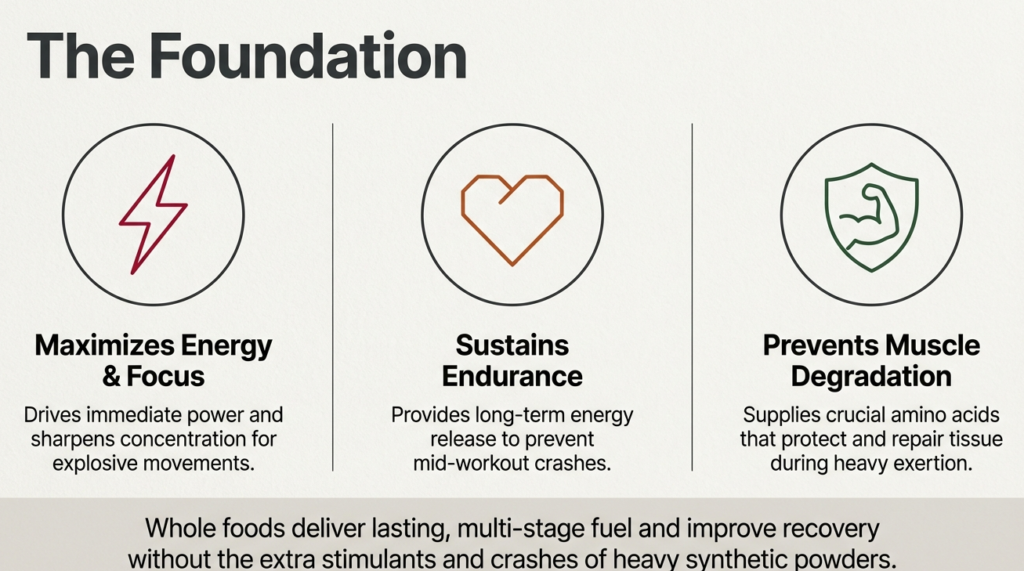
The Foundation of Pre-Workout Nutrition
This image highlights the three core pillars of effective pre-workout nutrition: energy, endurance, and muscle protection. Proper fueling enhances immediate performance by increasing focus and power output during workouts. It also ensures sustained endurance, helping athletes maintain intensity without mid-session fatigue. Most importantly, consuming protein and essential nutrients before training prevents muscle breakdown and supports recovery. These foundational benefits demonstrate why pre-workout nutrition is critical for both beginners and advanced lifters. Instead of relying on stimulants, whole foods can provide long-lasting fuel and better physiological support. Understanding these basics allows individuals to train harder, recover faster, and build a stronger, more resilient physique over time.
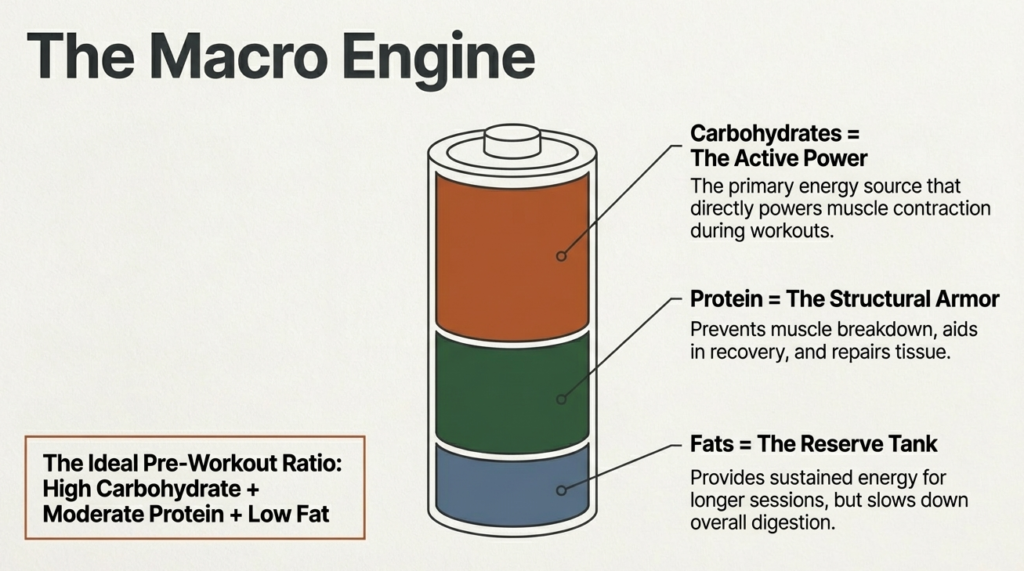
The Pre-Workout Macro Engine
This visual explains the macronutrient breakdown required for an effective pre-workout meal. Carbohydrates act as the primary energy source, directly fueling muscle contractions and high-intensity performance. Protein plays a crucial role in preserving muscle tissue and aiding recovery during and after workouts. Fats, while slower to digest, provide sustained energy for longer sessions. The ideal balance includes high carbohydrates, moderate protein, and low fat to ensure quick digestion and optimal energy availability. Understanding this macro engine helps athletes design meals that match their training intensity. When properly balanced, these nutrients work synergistically to maximize strength, endurance, and overall workout efficiency.
The Golden Rule of Pre-Workout Timing
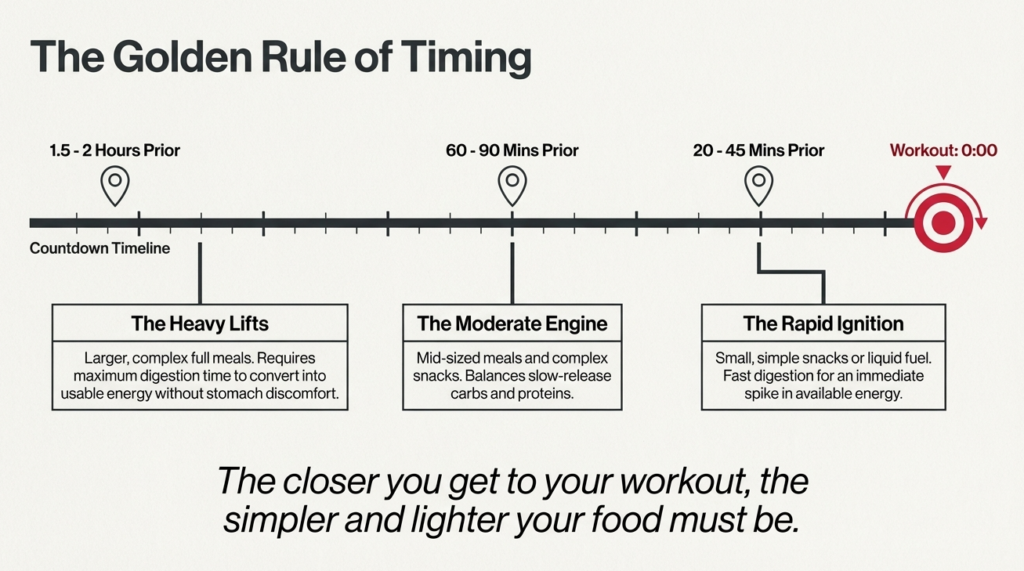
Timing your pre-workout meal is just as important as choosing the right foods. This infographic explains how meal size and composition should change as your workout approaches. Larger meals should be consumed 1.5 to 2 hours before training to allow proper digestion and energy release. Medium meals work best 60–90 minutes prior, balancing carbs and protein. Quick snacks or liquids are ideal 20–45 minutes before workouts for rapid energy. This strategy prevents discomfort, bloating, and energy crashes. By aligning meal timing with digestion speed, athletes can ensure optimal fuel availability. Proper timing ultimately enhances performance, focus, and endurance during training sessions.
The Master Fuel Matrix
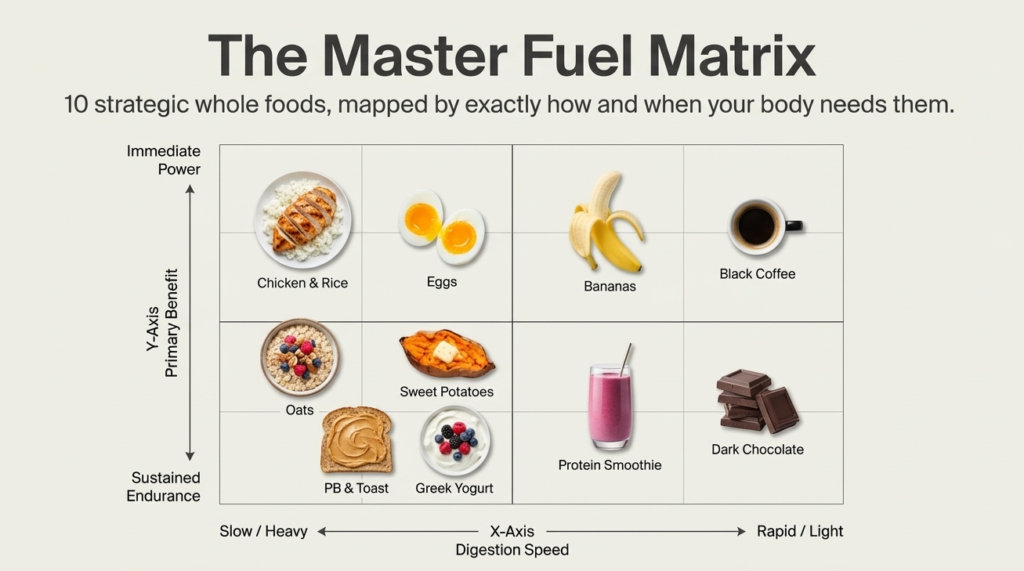
The Master Fuel Matrix categorizes pre-workout foods based on digestion speed and energy output. Foods like chicken and rice provide heavy, sustained energy, while bananas and coffee deliver quick, immediate fuel. This structured approach helps athletes choose the right foods depending on workout intensity and timing. Slow-digesting foods are ideal for long sessions, while fast-digesting options suit short, explosive workouts. The matrix simplifies decision-making by visually mapping foods to performance needs. Understanding this concept allows individuals to personalize their nutrition strategy effectively. It ensures that the body receives the right type of energy at the right time for optimal performance.
Endurance Engine Foods
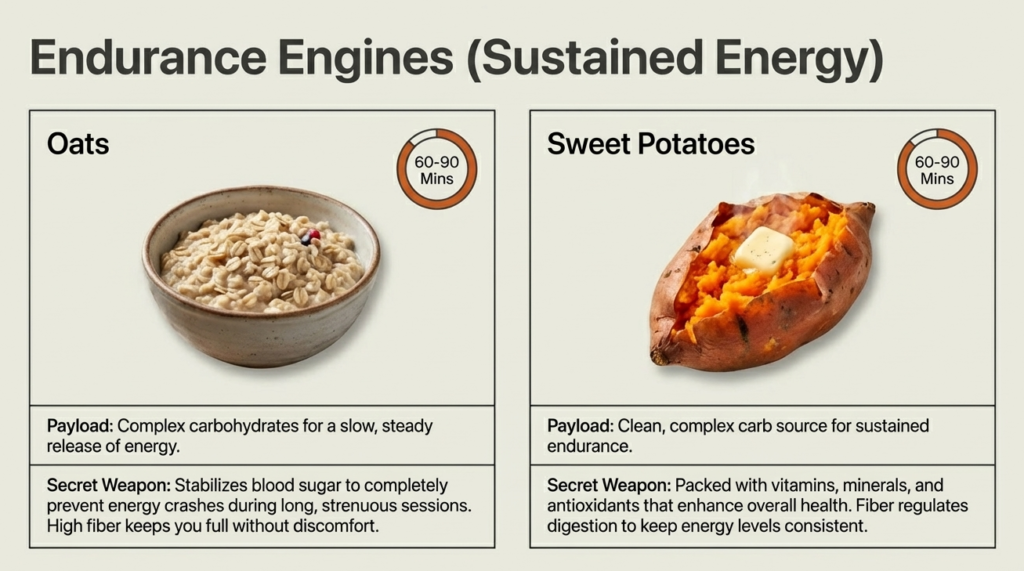
Endurance-focused workouts require sustained energy, and foods like oats and sweet potatoes are ideal for this purpose. These complex carbohydrates release energy slowly, preventing blood sugar spikes and crashes. They are rich in fiber, vitamins, and minerals, supporting both performance and overall health. Consuming them 60–90 minutes before training ensures a steady fuel supply throughout the workout. These foods are especially beneficial for long sessions like cardio, hypertrophy training, or sports performance. Their ability to maintain consistent energy levels helps athletes avoid fatigue and maintain intensity. Incorporating such foods into pre-workout meals enhances endurance, stamina, and overall training efficiency.
Muscle Protector Foods
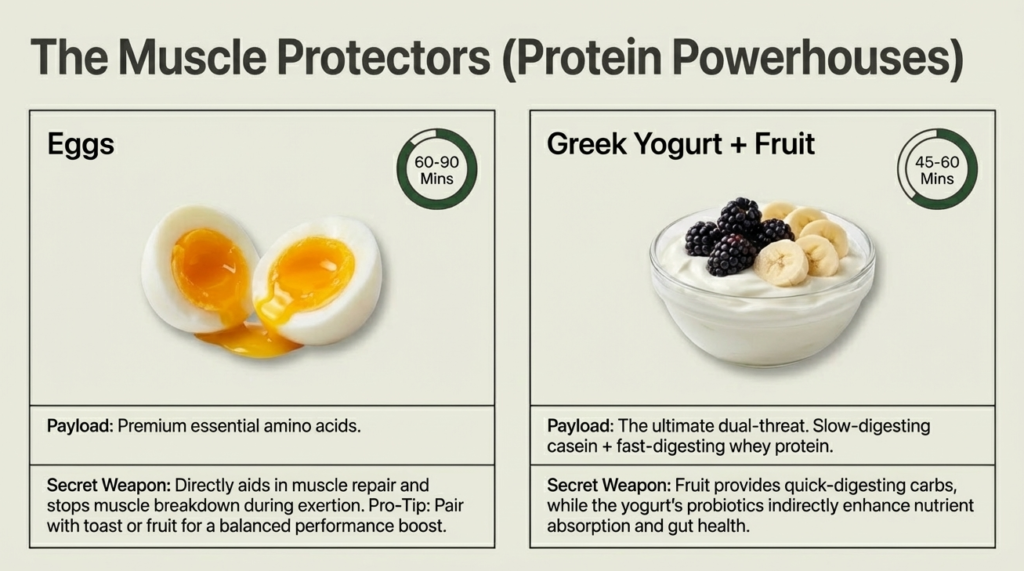
Protein plays a crucial role in protecting muscles during workouts, and foods like eggs and Greek yogurt are excellent sources. Eggs provide essential amino acids that support muscle repair and prevent breakdown. Greek yogurt offers a combination of slow-digesting casein and fast-digesting whey protein, making it highly effective for pre-workout nutrition. When combined with fruits, it also delivers quick carbohydrates for energy. These foods are best consumed 45–90 minutes before training for optimal digestion. Including protein in pre-workout meals ensures muscle preservation, improved recovery, and better performance. This is especially important for strength training and hypertrophy-focused routines.
Heavy Lifting Pre-Workout Meals
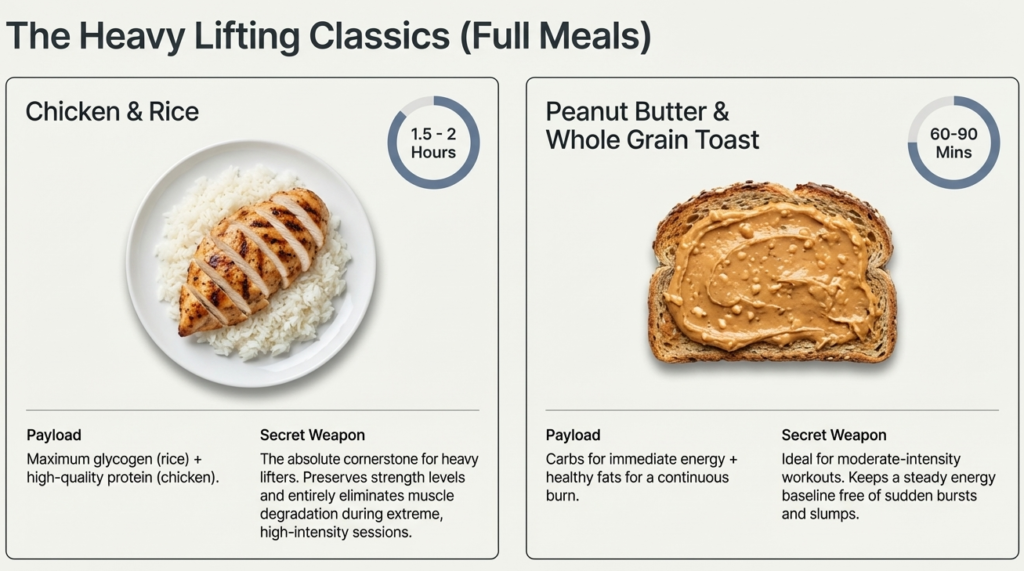
Heavy lifting sessions demand substantial energy and muscle support, making meals like chicken with rice and peanut butter toast ideal choices. Chicken and rice provide a perfect balance of protein and carbohydrates, fueling strength and preventing muscle breakdown. Peanut butter toast adds healthy fats for sustained energy during moderate-intensity workouts. These meals should be consumed 60–120 minutes before training to allow proper digestion. They are particularly effective for powerlifting and bodybuilding sessions where intensity is high. Including such meals in your routine ensures consistent strength output, better endurance, and improved recovery. Proper fueling is key to maximizing heavy training performance.
Natural Pre-Workout Enhancers
Natural stimulants such as black coffee and dark chocolate offer a clean and effective way to enhance workout performance. Coffee contains caffeine, which increases alertness, focus, and endurance while reducing perceived fatigue. Dark chocolate provides antioxidants and compounds that improve blood flow and oxygen delivery to muscles. These foods are best consumed 20–45 minutes before training for optimal results. Unlike synthetic pre-workouts, they provide a smoother energy boost without crashes. Incorporating natural stimulants into your routine can improve mental clarity and physical performance. They are especially useful for early morning or high-intensity training sessions.
The Pre-Workout Pairing Protocol
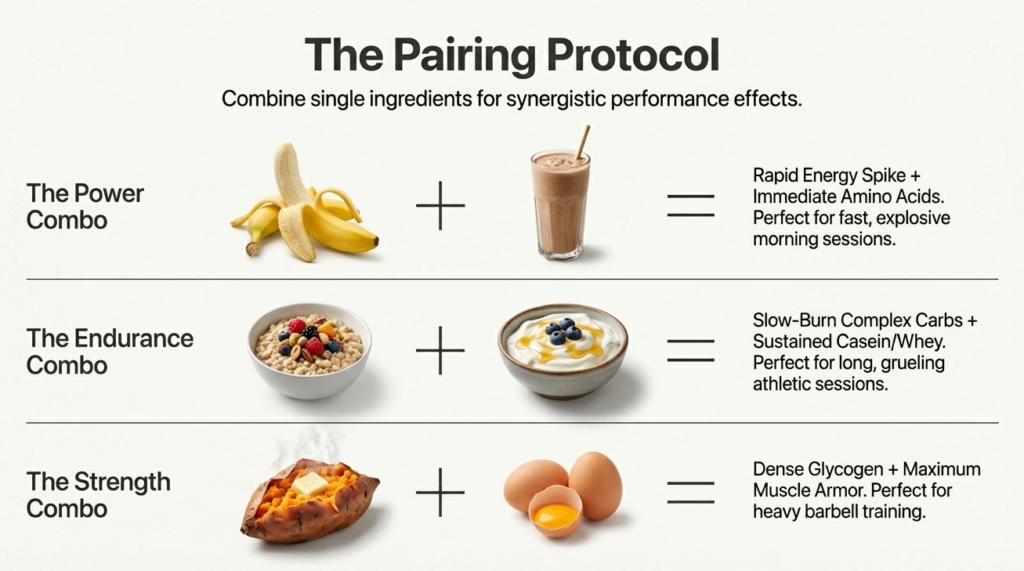
Combining the right foods can significantly enhance pre-workout performance. This image highlights strategic pairings like banana with protein shakes for quick energy and amino acids, oats with yogurt for sustained endurance, and sweet potatoes with eggs for strength-focused sessions. These combinations ensure a balanced intake of carbohydrates and protein, optimizing energy release and muscle protection. Pairing foods also improves digestion efficiency and nutrient absorption. This approach allows athletes to customize meals based on their workout type and timing. By using smart combinations, individuals can maximize performance, reduce fatigue, and improve recovery, making their training sessions more effective and productive.
Pre-Workout Mistakes and Fixes
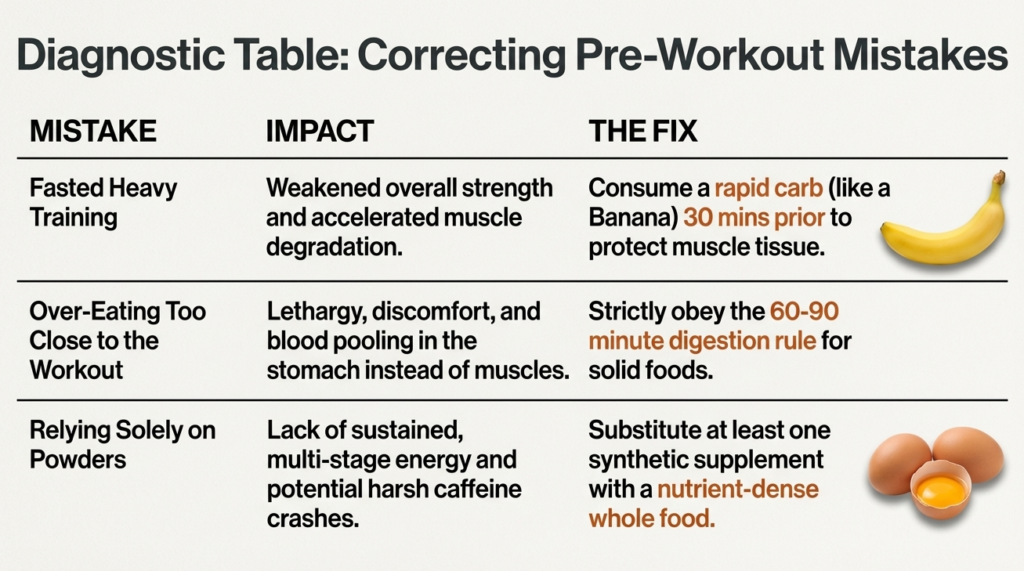
This infographic highlights common pre-workout mistakes and how to fix them. Training on an empty stomach can reduce strength and increase muscle breakdown, while overeating too close to workouts causes discomfort and sluggishness. Relying only on supplements often leads to energy crashes and poor nutrition. The solutions include consuming quick carbs before training, following proper meal timing, and prioritizing whole foods over synthetic options. Addressing these mistakes can dramatically improve workout performance and recovery. Understanding what not to do is just as important as knowing what to eat. Correcting these habits ensures consistent energy, better strength output, and long-term fitness progress.
Personalized Pre-Workout Nutrition
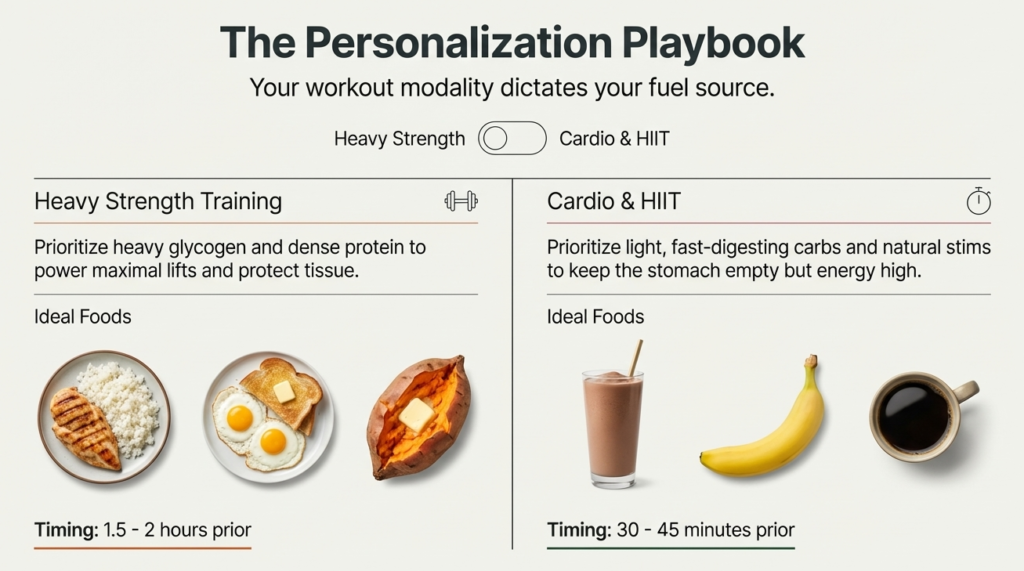
Pre-workout nutrition should be tailored to your training style. Strength training requires heavier meals with carbohydrates and protein to support power and muscle protection. In contrast, cardio and HIIT workouts benefit from lighter, fast-digesting foods that provide quick energy without discomfort. This personalized approach ensures optimal performance for different workout demands. Timing also varies, with heavier meals consumed earlier and lighter snacks closer to training. Understanding your body and workout goals allows you to choose the most effective foods. Personalization is key to maximizing results, as no single approach works for everyone in fitness and performance.
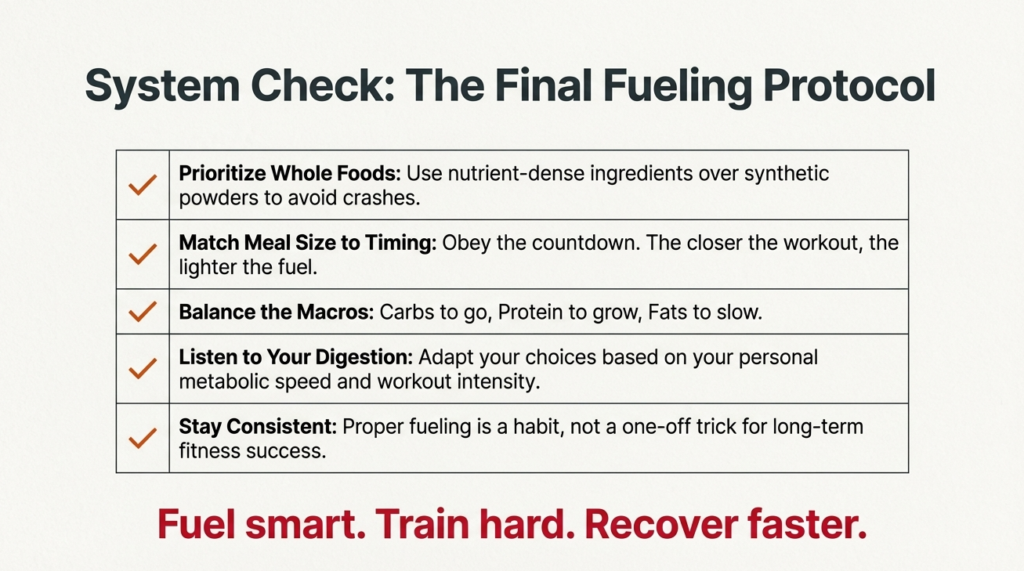
Final Pre-Workout Fueling Protocol
This final checklist summarizes the key principles of effective pre-workout nutrition. Prioritizing whole foods ensures sustained energy and avoids crashes caused by synthetic supplements. Matching meal size with timing helps optimize digestion and energy availability. Balancing macronutrients—carbs for energy, protein for muscle, and fats for sustained fuel—enhances overall performance. Listening to your body allows for adjustments based on digestion and workout intensity. Consistency is the most important factor, as proper fueling habits lead to long-term results. Following this protocol ensures better strength, endurance, and recovery. It serves as a complete guide to building an effective pre-workout nutrition strategy.

Gearless Physique
Physique Without Gear
Your transformation starts now. Who's with me?