Table of Contents
Toggle5 Antagonist Superset Combinations That Actually Work
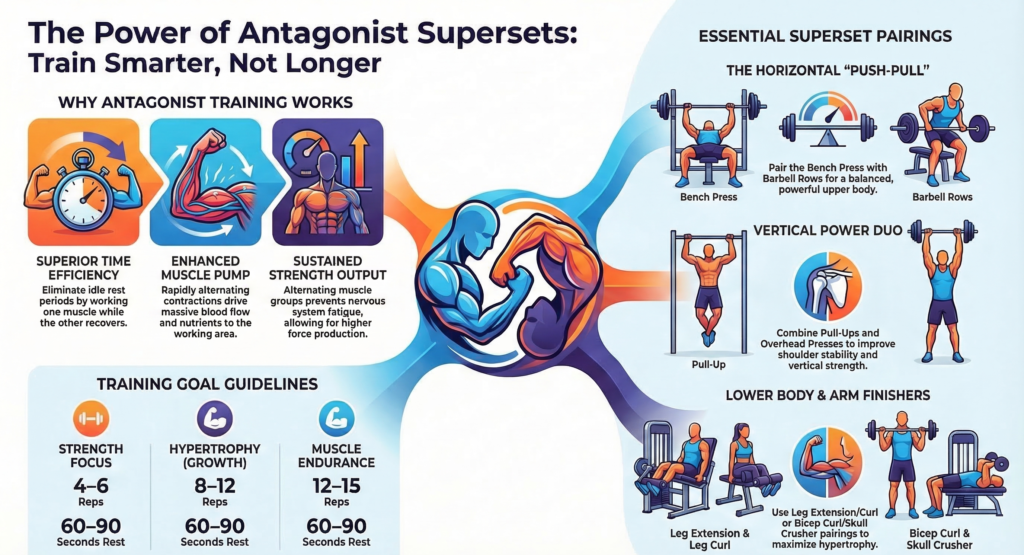
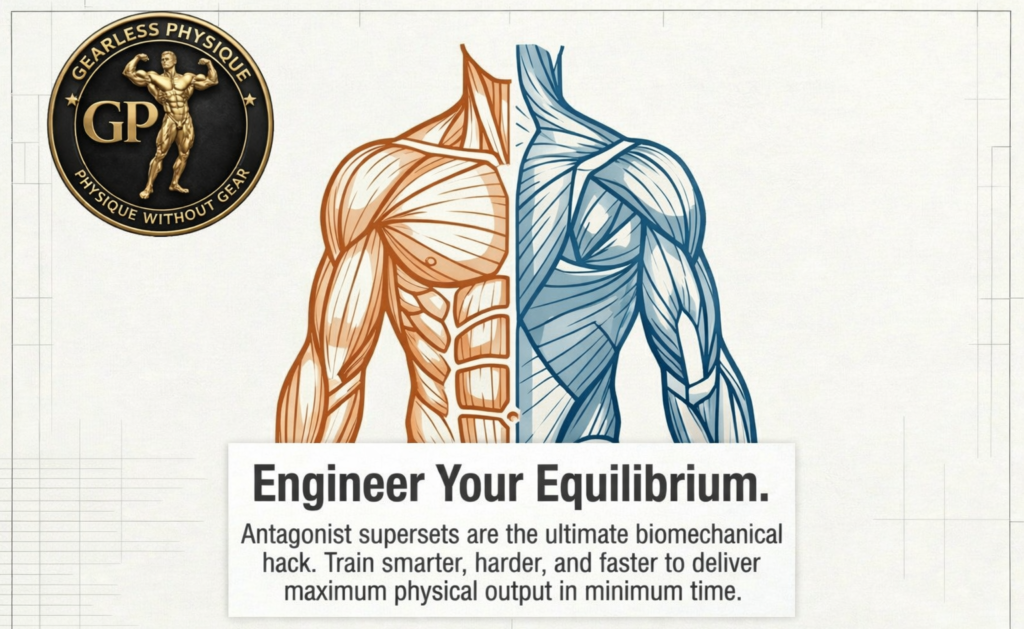
Antagonist supersets are a highly efficient training method that pairs opposing muscle groups, such as push and pull movements, to maximize performance and save time. By alternating exercises like bench press and rows or pull-ups and overhead presses, one muscle group works while the other recovers. This approach enhances muscle pump, improves strength output, and reduces overall workout duration. It also promotes better muscular balance, helping prevent injuries and posture issues.
Depending on your goal, you can adjust rep ranges for strength, hypertrophy, or endurance. When structured properly, antagonist supersets deliver powerful results in both muscle growth and functional performance.
The Low of Opposites: Engineering the Antagonist Superset
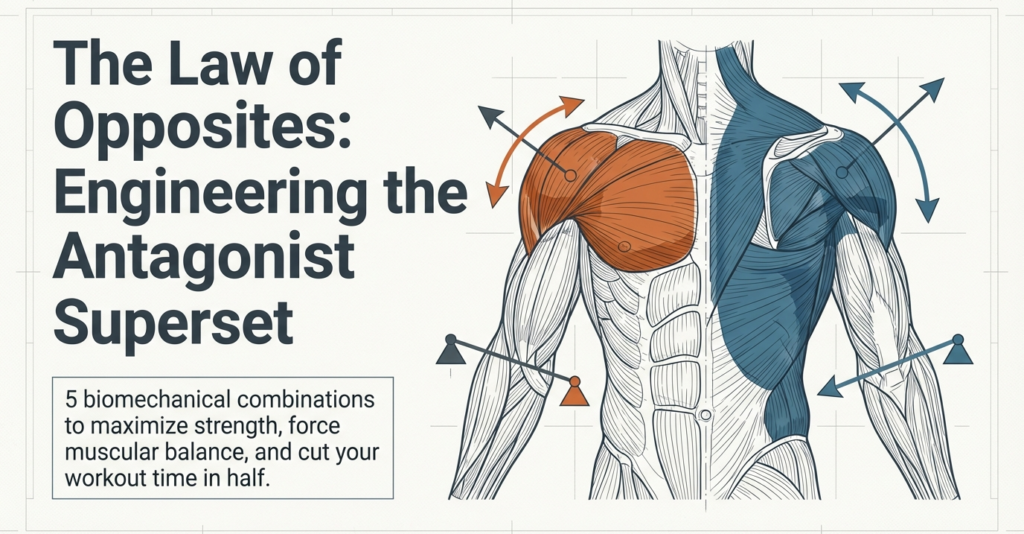
One of the most effective modes of training to gain muscle, increase strength, as well as to save time in a gym is the antagonist supersets. In place of resting between sets, you do two exercises one behind the other, which involve the training of opposing muscle groups. E.g. chest and back/ biceps and triceps. This form of training makes the exercise very tough and it also enables one body part to rest whilst the other is working. The effect is an improvement in the blood flow, increased muscle activity and more effective training.
Antagonist supersets have the potential to be an effective means of overtraining without overtraining either natural athletes or advanced lifters to break plateaus and enhance training density. This guide we shall discuss five actual antagonist superset combinations which do work and how to do them well and why they can achieve amazing results.
What Are the Antagonist Supersets?
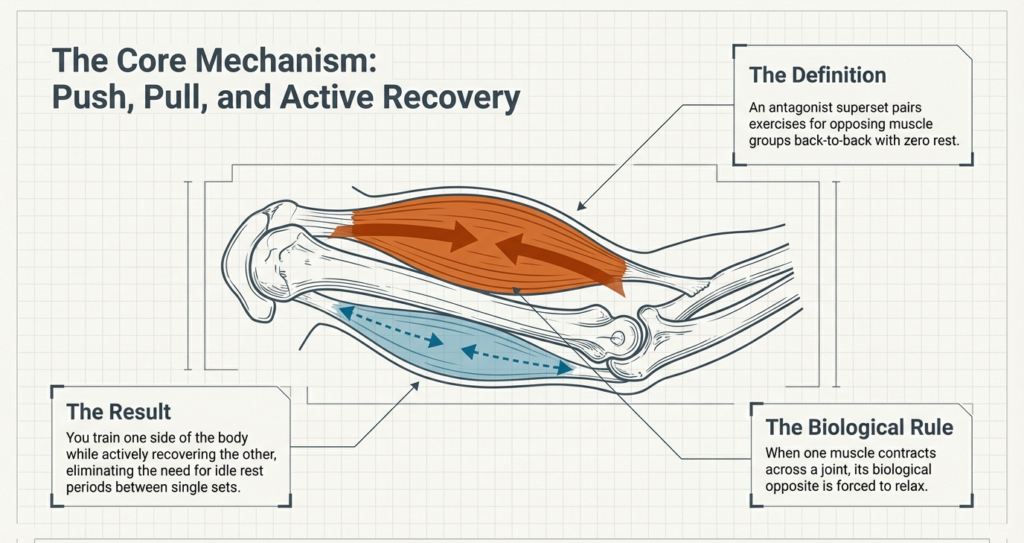
An antagonist superset is provided that exercises the opposing muscle groups. These are opposite muscles that act about a joint.
For example:
- Biceps bend the elbow.
- Triceps extend the elbow.
This is achieved by training them in tandem. Muscles used opposite each other relax when one of them contracts.
Such an approach has a number of benefits:
- Reduced workout time.
- Increased muscle pump.
- Improved muscular balance.
- Greater training intensity.
You are able to sustain performance without having excessive rest durations due to the fact that you have one group of muscles resting and the other working.
This method among bodybuilders and strength athletes is the most popular since it is the most efficient and yet enables trainers to train in high quality.
4 Benefits of Antagonist Superset Training
Before entering into the combinations, it is necessary to get the idea as to why antagonist supersets will be so effective.
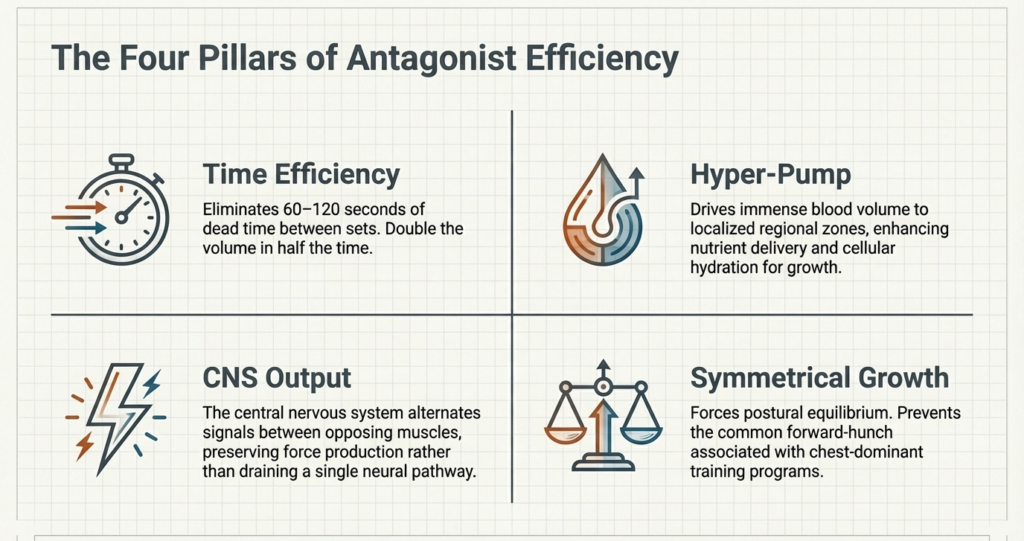
1. Better Training Effectiveness
Conventional exercises include a 60 -120 seconds inter set rest period. That idle time is eliminated with supersets to a large extent.
You must exercise the other group of muscles instead of waiting. This will enable you to work out a large volume of exercises in significantly shorter measures of time.
This can be of great origin to busy lifters or people who are working on many muscle groups at a particular time.
2. Increased Muscle Pump
This occurs through the repetition of contraction and relaxation of opposite muscle parts to produce a large amount of blood in the working sites.
To take an example, when you over-load chest and back exercises the blood is always pumped into the area of upper body.
This causes a strong muscle pump, this will enhance the delivery of nutrients and the hydration of the muscle cells.
In the long run, this environment promotes growth of the muscles and better training output.
3. Better Strength Output
Lots of lifters observe that they manage to remain strong surprisingly enough when antagonist supersets are concerned.
The reason behind this is that the nervous system switches between sets of muscles and does not wear out one.
This can actually enhance production of force and coordination in case it is done correctly.
That is why this method is frequently applied to the athletic strength programs.
4. Symmetrical Muscle Growth
Balancing the opposing muscles during a single session is beneficial in maintaining muscular balance.
Indicatively, heavy lifters training chest but not giving much attention to back tend to end up with posture and shoulder related problems.
Balanced development is encouraged by nature, in antagonist supersets.
This may in the long run enhance posture, minimize risk of injuries and produce a more aesthetic body shape.
5 Effective Antagonist Superset Pairings
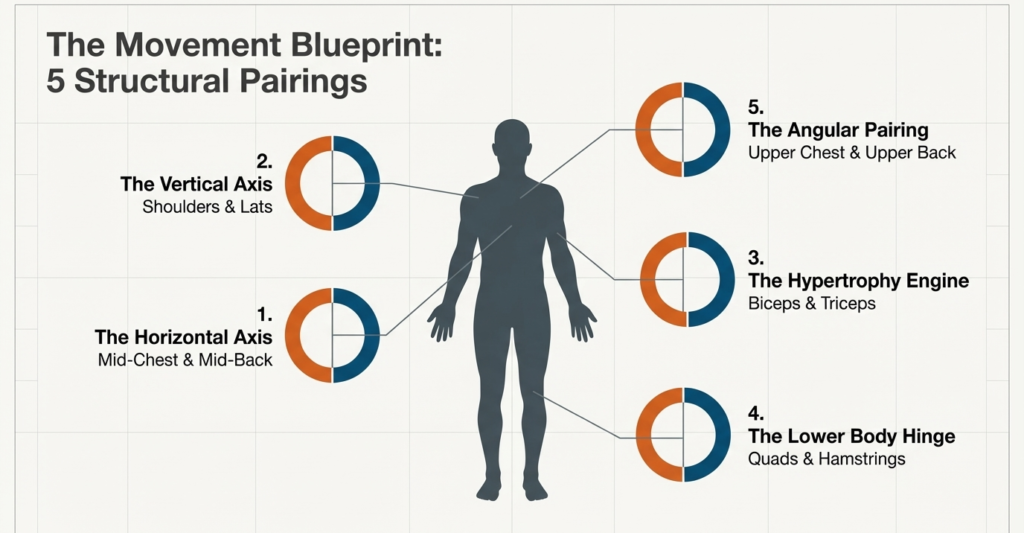
Antagonist supersets are one of the most efficient training strategies for building strength and muscle simultaneously. By pairing opposing muscle groups, lifters can maintain training intensity while allowing one muscle group to recover as the other works.
The five most effective pairings include chest and back, shoulders and lats, biceps and triceps, quadriceps and hamstrings, and upper chest with upper back. These combinations improve muscular balance, increase blood flow, and enhance workout efficiency. Alternating push and pull movements also reduces fatigue in a single muscle group, helping maintain performance throughout the session. When programmed correctly, antagonist supersets can significantly improve hypertrophy, strength output, and overall training productivity.
Combo 1: The Horizontal Power Axis
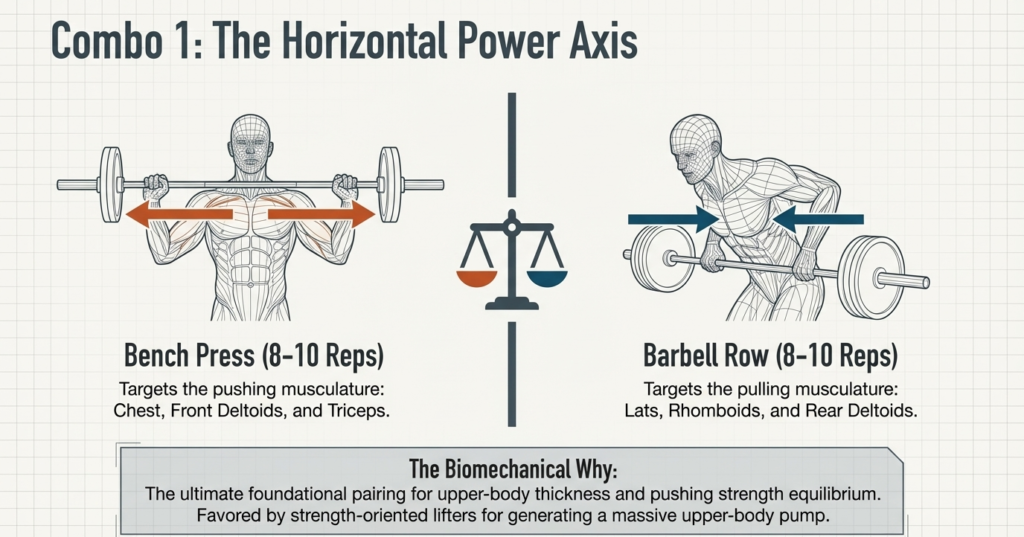
It is a superset of bench press and barbell row that is one of the most effective upper body. It opposes the pushing muscles of the chest, shoulders and triceps with the pulling muscles of the back and biceps.
How to Perform:
- Perform 8–10 reps of bench press.
- Go directly to 810 barbell row reps.
- Rest for 60–90 seconds.
- Repeat for 4 sets.
Why It Works:
- This push and pull are in equilibrium in this superset.
- The chest and front delts are worked in bench presses whereas the lats, rhomboids and rear delts are worked with the barbell rows.
- Their combination will create a good and balanced upper body.
- It is also a combination that produces an amazing pump on the upper body.
It is one of the most excellent antagonist combinations in the case of strength-oriented lifters.
Combo 2: The Vertical Power Axis
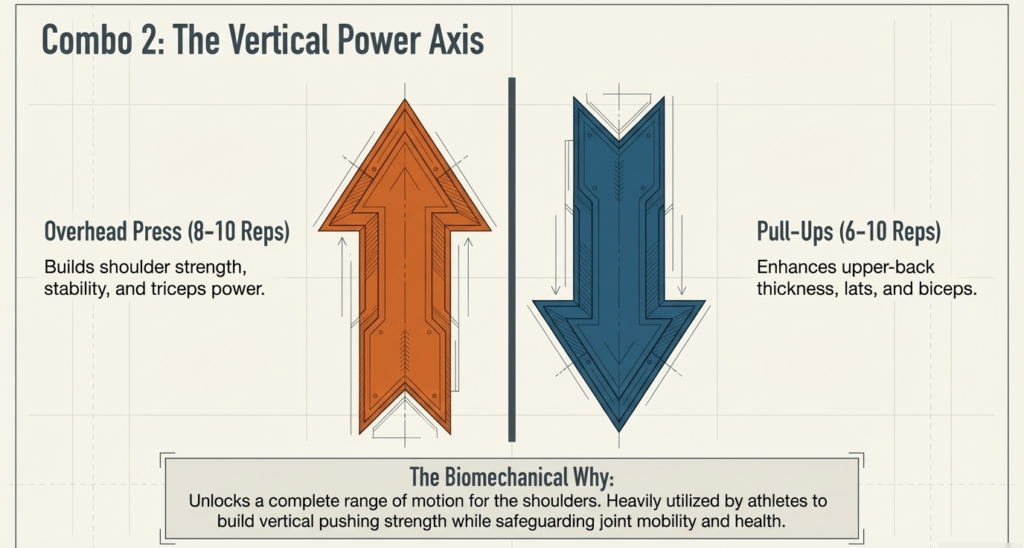
This superset is a combination of vertical pulling and pushing. The lats, upper back, and biceps will be trained mostly through pull-ups, whereas the shoulders and triceps will be trained mostly through the overhead press.
How to Perform:
- Perform 6–10 pull-ups.
- Now do 8 – 10 overhead presses.
- Rest 90 seconds.
- Complete 3–4 rounds.
Why It Works:
- The shoulders are trained in a complete extent of motion when they are subjected to the vertical push and pull movement.
- Pull-ups enhance the thickness of the upper-back and enhance the lats.
- Shoulder strength and stability are gained with the help of overhead presses.
- They become strong, athletic in the upper body and have better shoulder mobility.
This is a combination that is commonly used by athletics to enhance the strength of presses and safeguard the health of the shoulders.
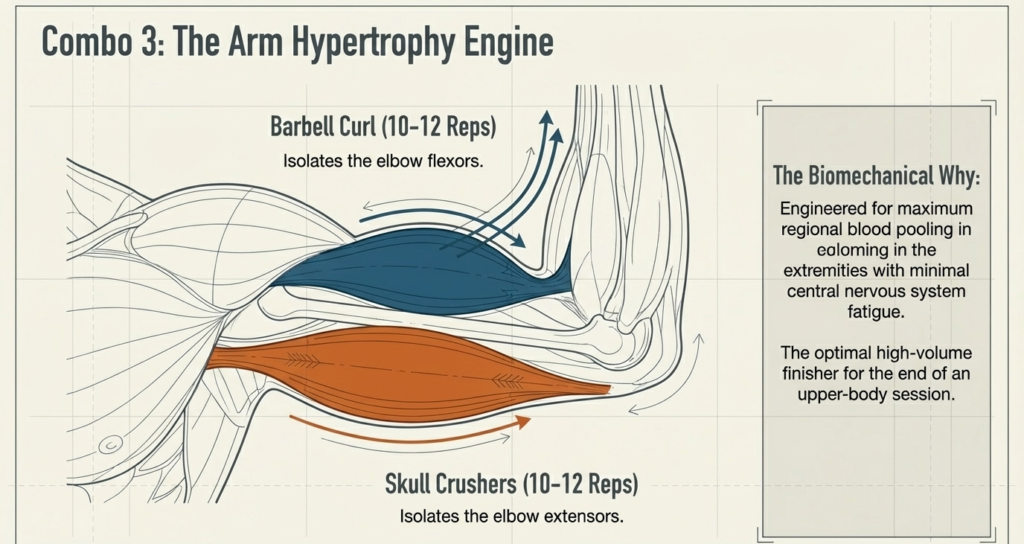
Combo 3: The Arm Hypertrophy Engine
This is an elbow flexor/extensor arm super set. Biceps curls will help to train biceps brachii, and skull crushers will focus on the long head of triceps.
How to Perform:
- Perform 10–12 barbell curls.
- Take 10 – 12 skull crushers immediately.
- Rest 60 seconds.
- Repeat for 3–4 rounds.
Why It Works:
- This superset generates an arduous arm pump.
- The flexion and the extension will enable the muscles groups to rest partially.
- This implies that both exercises can be maintained in strong contractions.
- The bodybuilders are known to utilize this technique to maximize growth of their arms without the need to train a lot.
It is effective too as a finisher at the conclusion of an upper-body workout.
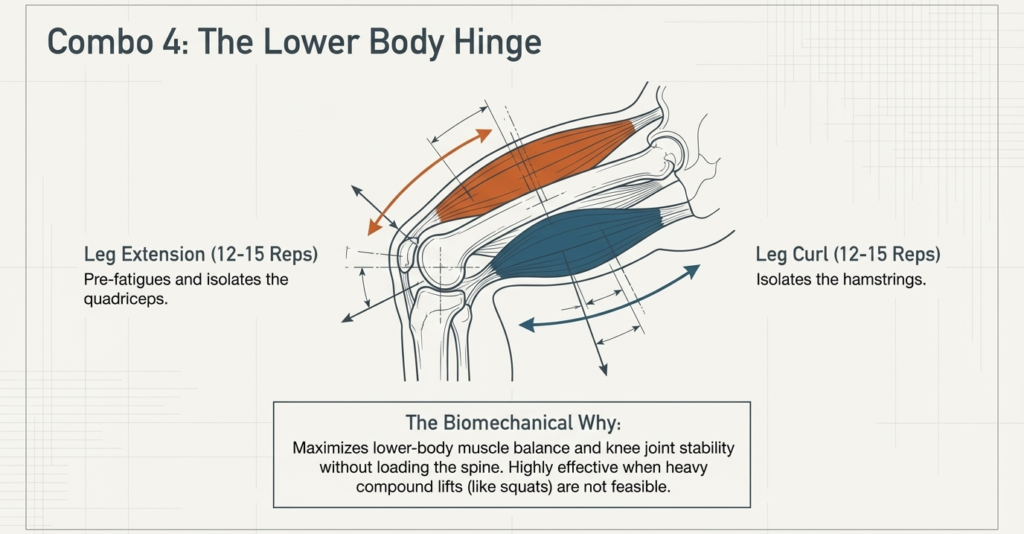
Combo 4: The Lower Body Hinge
Antagonist supersets may be very effective lower-body. The hamstrings flex and the quadriceps extend the knee. Leg extensions and leg curls are the optimal combination of exercises to form a knee-joint antagonist superset.
How to Perform:
- Perform 12–15 leg extensions.
- Instantly conduct 12-15 leg curls.
- Rest 60–90 seconds.
- Complete 3–4 rounds.
Why It Works:
- This superset separates the back and front of the thighs.
- Leg extensions are used to pre-fatigue the quads, whereas the hamstring are used with leg curls.
- They are beneficial in enhancing muscular balance and knee stability.
- In the case of bodybuilders, it is a good quad and hamstring pump in this combination too.
It comes in particularly handy when the weight involved in lifting off heavy compounds such as squats is not so heavy.
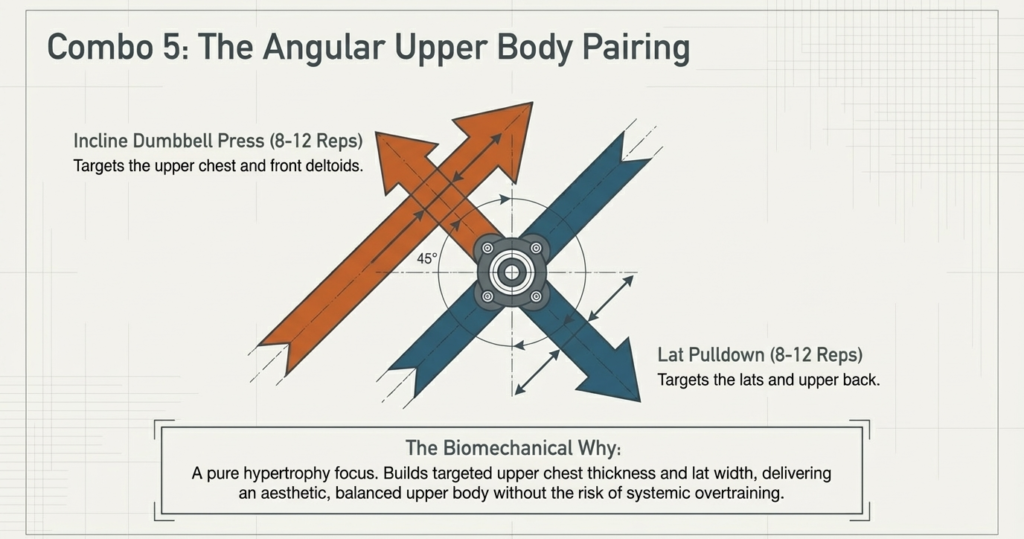
Combo 5: The Angular Upper Body Pairing
Another great pairing of antagonists of the chest and back. Incline presses work the upper chest and shoulders whereas lat pulldowns work the lats and upper back.
How to Perform:
- Do 8-12 incline dumbbell presses.
- Immediately carry out 8-12 lat pulldowns.
- Rest 60–90 seconds.
- Repeat for 4 rounds.
Why It Works:
- This superset is a balanced workout of the back and front of the upper body.
- The incline press builds the thickness of the upper chest.
- Lat pulldown enhances the stability of the shoulders and lat.
This type of mix is superior when it comes to hypertrophy-based exercises. It enables one to train high without the problem of overtraining.
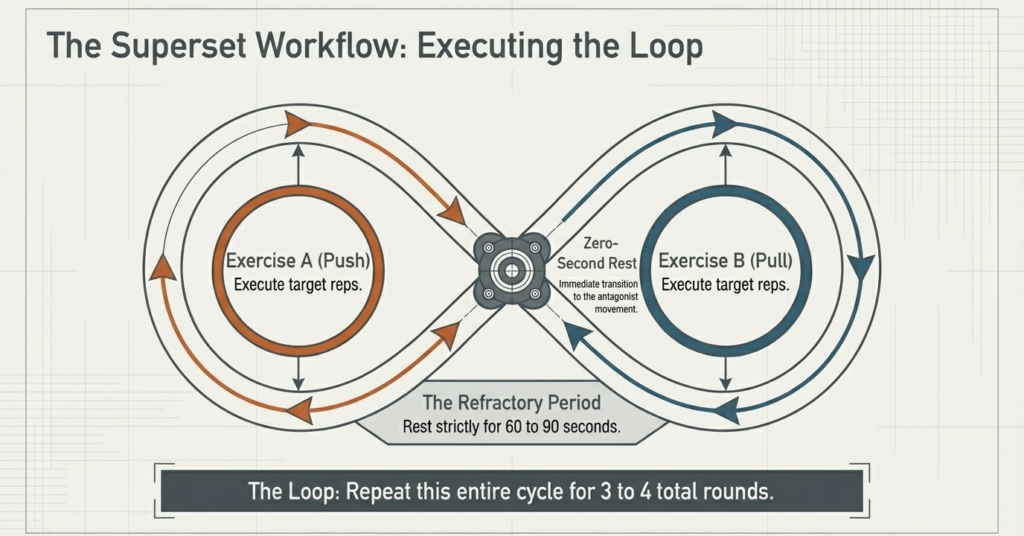
The Superset Workflow: Executing the loop
An antagonist training requires a well-organized workout to achieve the most desirable results.
A simple format works well:
- Exercise A (Push)
- Exercise B (Pull)
- Do them one on the other, and then take a rest.
- Repeat for 3–4 rounds.
This format is efficient to retain the strength output but at the same time, makes the workout efficient.
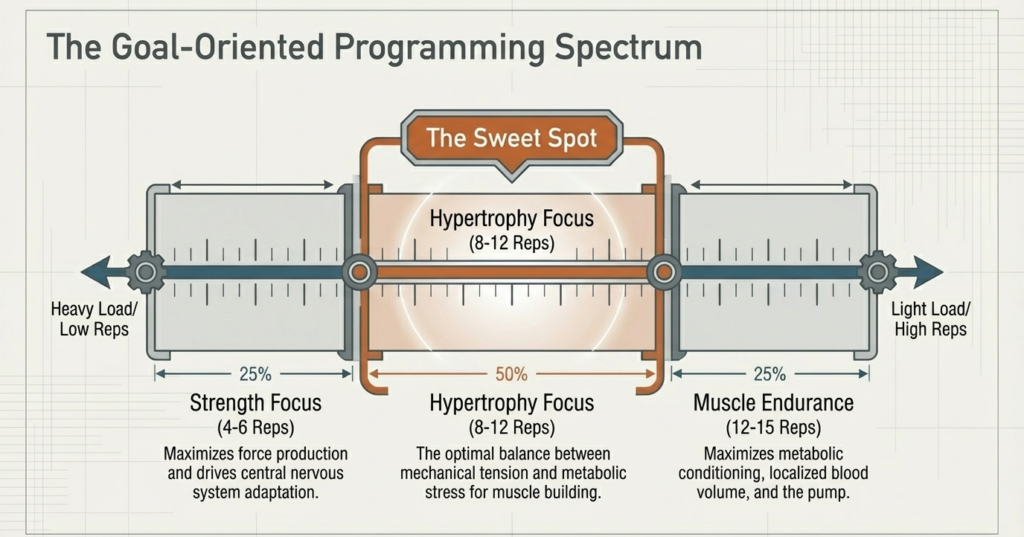
The Goal-Oriented Programming Spectrum
There are various rep ranges depending on different goals.
Recommended Rep Range:
Strength Focus:
- 4–6 reps per exercise.
Hypertrophy Focus:
- 8–12 reps per exercise.
Muscle Endurance:
- 12–15 reps per exercise.
The 8-12 rep range will be beneficial to most lifters as it is a balance between strength and muscle building.
Common Mistakes to Avoid
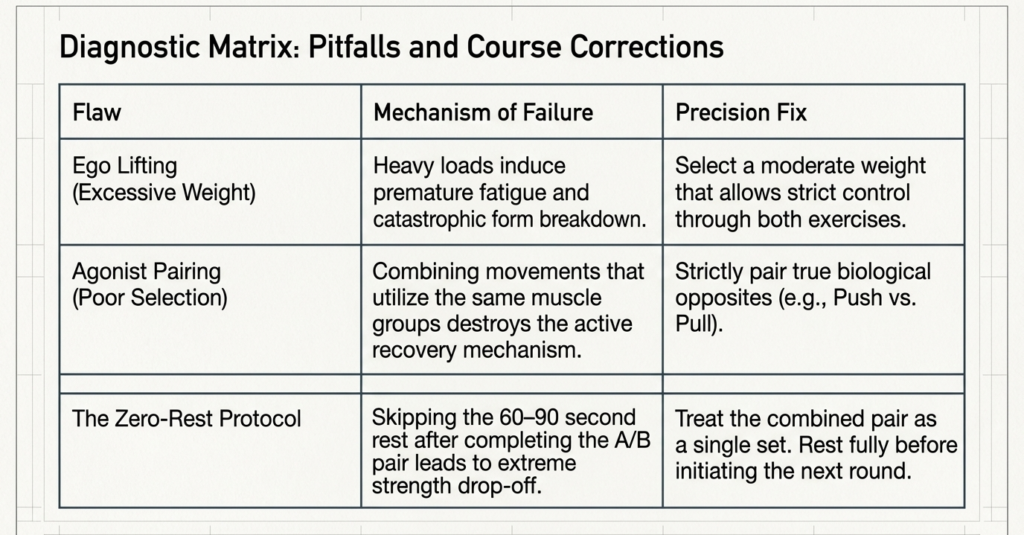
Although the concept of supersets is good, ineffective implementation may undermine its advantages.
Using Too Much Weight:
- Form can be affected when fatigue occurs because the loads are heavy.
- Select a weight that enables the repetition of both exercises to be controlled.
Poor Exercise Pairing:
- All exercises do not do well in a superset.
- Performance is hampered by everything that combines movements that utilize the same muscles.
- Pay attention to real antagonists like push vs pull.
No Rest at All:
- A decrease in rest time can be achieved by supersets, however, complete rest can lead to a decrease in strength.
- After these two exercises take 60-90 seconds before the second round.
- This enables one to recover partly and still retain intensity.
Who are the antagonist Supersets to be used by?
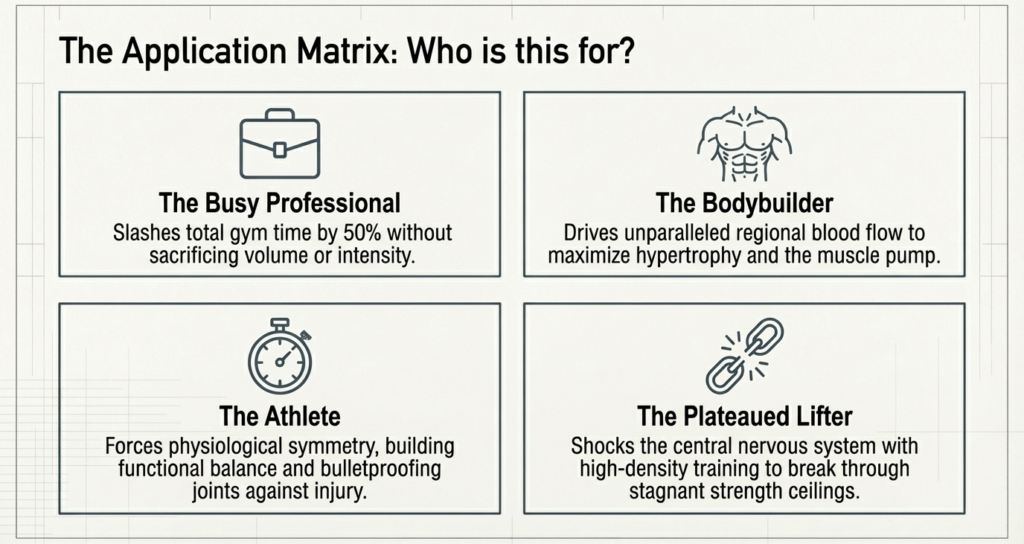
Antagonist supersets legitimize a very broad group of lifters.
They come in particularly handy in:
- Beginner and advanced lifters.
- Proactive people who have limited time to train.
- Sportsmen who require physical fitness.
- Bodybuilders that want an enhanced pump.
Novices are also able to use it but they must master the technique of exercise before applying the high-powered training programs.
Antagonist Superset Workout Execution Cheat Sheet
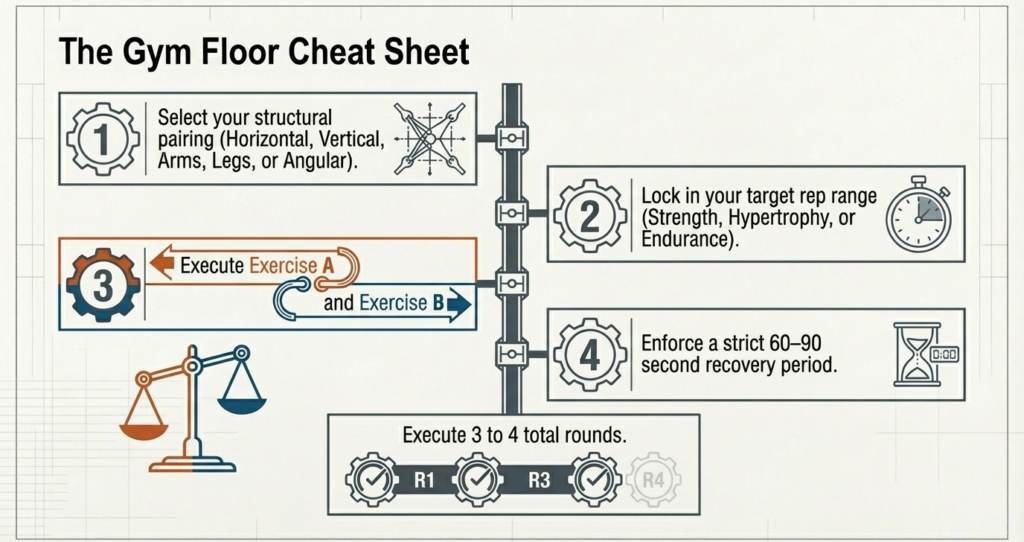
Executing antagonist supersets correctly requires a simple but structured approach. Start by selecting two exercises that target opposing muscle groups, such as a push movement and a pull movement. Next, choose an appropriate rep range based on your goal—lower reps for strength, moderate reps for hypertrophy, or higher reps for endurance.
Perform the first exercise and immediately transition to the second without resting. After completing both movements, treat them as one combined set and rest for about 60–90 seconds. Repeat this sequence for 3-4 rounds while maintaining strict form and controlled tempo. This method maximizes workout efficiency, enhances muscle balance, and keeps training intensity high.
Final Thoughts
One of the cleverest methods of training is the antagonist supersets. They enable you to gain strength, increase muscle balance as well as cut down on the time spent in any workout without compromising the outcome. The opposing muscle groups get paired up which helps you sustain performance as well as elevates training intensity.
The five combinations made in this guide bench press with rows, pull-ups with overhead press, curls with skull crushers, leg extensions with leg curls, and incline press with lat pulldowns are established combinations that have always provided good results. Antagonist supersets can be used in the most effective way and they can assist you to train more, smarter and harder.
It could be that you have ensured that your workouts are sound, but then again, you find them repetitive or time consuming, that is where the supersets could be the answer to your exercise regimen.
Read more: https://www.menshealth.com/uk/workouts/a46864272/antagonist-paired-supersets/

Gearless Physique
Physique Without Gear
Your transformation starts now. Who's with me?