8 Proven Rest-Pause Strategies for Explosive Muscle Growth
The rest-pause blueprint
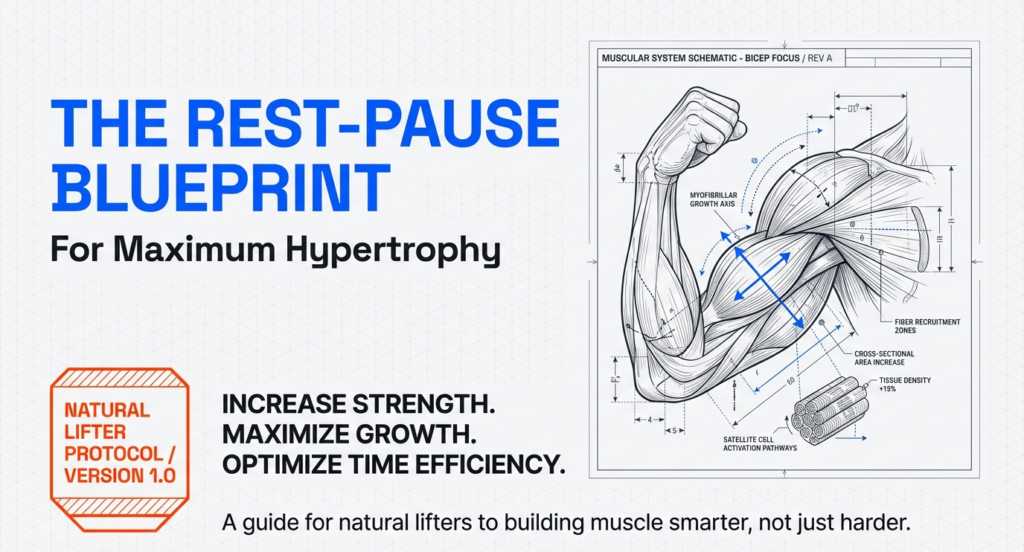
Rest-pause training is one of the strongest fitness aids that you can have in case you want to gain as much muscle as possible without necessarily increasing your gym time. It is a combination of intense weight and brief pauses between to enable you to go outside the usual failure and engage additional muscle fibers. The result? Increased hypertrophy, increased strength, and increased time efficiency.
It is important to train not longer but smarter as a natural lifter. Rest-pause exercise assists you in building up the growth whilst maintaining the volume at check. This guide will show you 8 effective methods of applying rest-pause training to larger muscles and provide you with the real-life examples that you can use right now.
The Natural Lifter's Dilemma
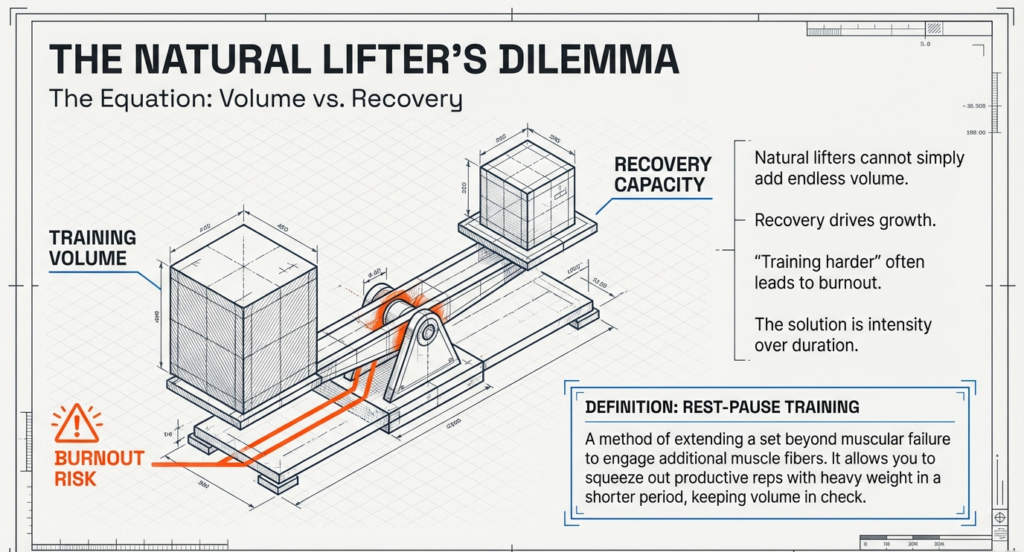
The natural lifters are always in a dilemma on how to train more without going beyond the recovery ability. They do not have unlimited sets to induce growth as the enhanced athletes do. Once the volume exceeds the amount that the body can restore, the progress halts and burnout potential increases. Recovery is what initiates true muscle development and not effort. Longer and harder training ends up backfiring and results in fatigue and poor performance. The wiser thing to do is to focus more on intensity than time.
Such methods as rest-pause are used to enable lifters to get more productive reps without necessarily increasing the overall volume of these effects, which is to optimize muscle fiber recruitment without overwhelming the nervous system or negating long-term gains.
What Is Rest-Pause Training?
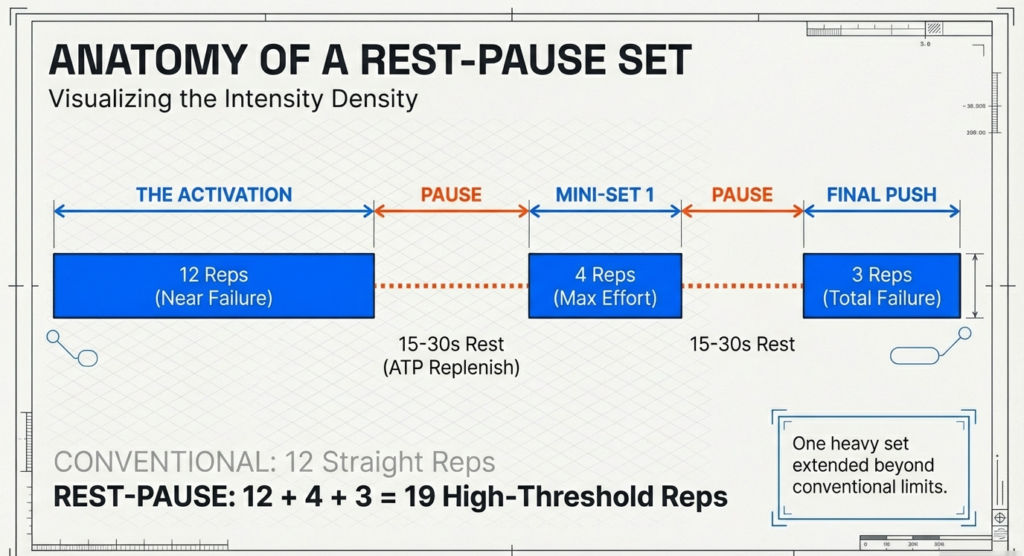
Then there is the rest-pause training which involves doing a set until you almost fail, take a short break (usually 10-30 seconds), and repeat the same set using more mini-sets. This is one of the cycles you will go through until, you reach some target rep or finish a given amount of mini-sets.
You can, as an example, do: 12 straight reps, rather than doing 12 straight reps.
- 8 reps.
Rest 15 seconds. - 3 reps.
Rest 15 seconds. - 2 reps.
This will enable you to stretch one heavy set to beyond conventional limit without going out of shape.
The science of growth
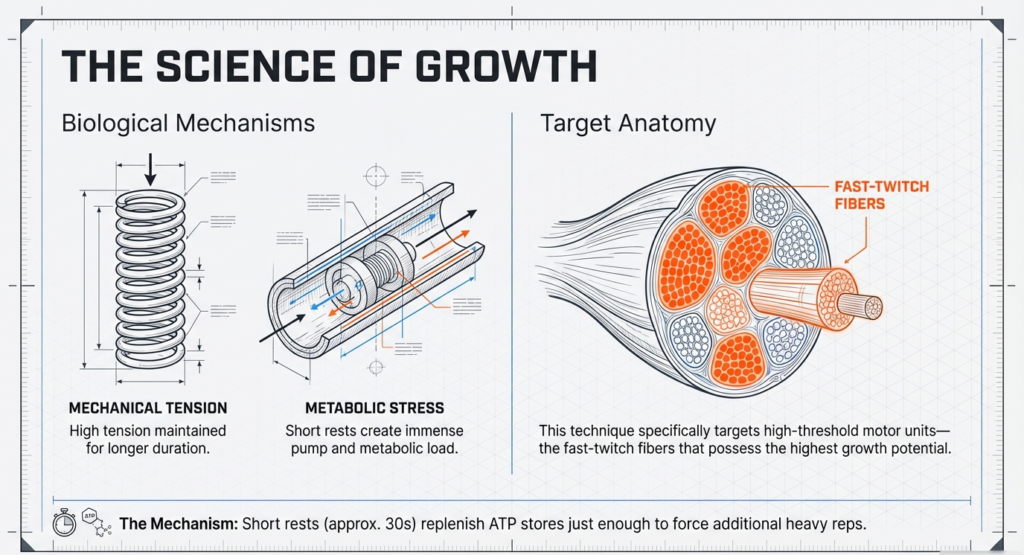
The rest-pause training provides an increment in the mechanical tension and metabolic strain which are key hypertrophic stimuli. Going half a minute to rest helps in replenishing the ATP store, and enables you to squeeze out additional reps with heavy weight.
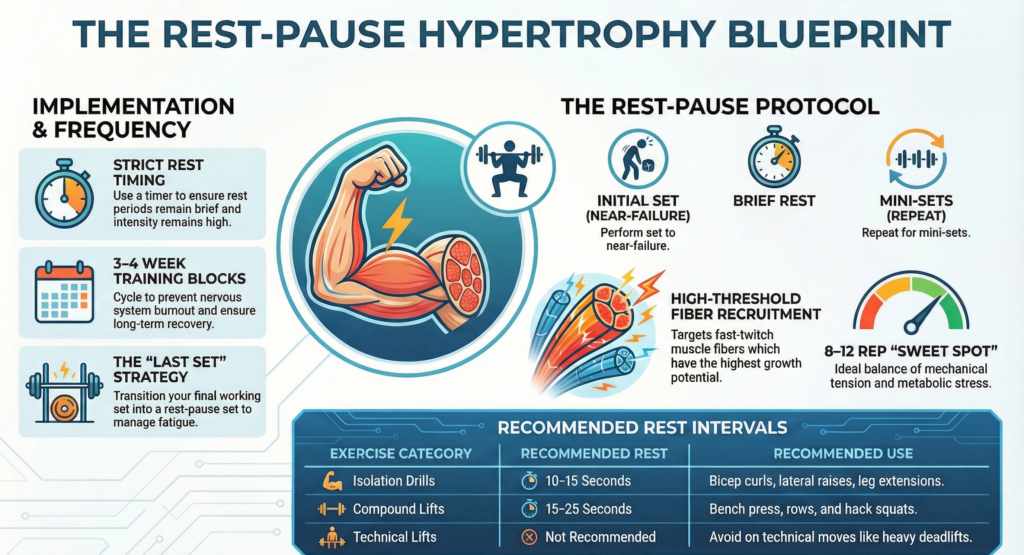
The technique also attracts high threshold motor units particularly the fast-twitch muscle fibers that possess highest growth potential. Due to the constantly repeated near failure, the muscle will get a vigorous anabolic signal without necessarily having to take too many total sets.
We are now going to dissect the 8 most effective ways of using it.
1. The Finisher protocol
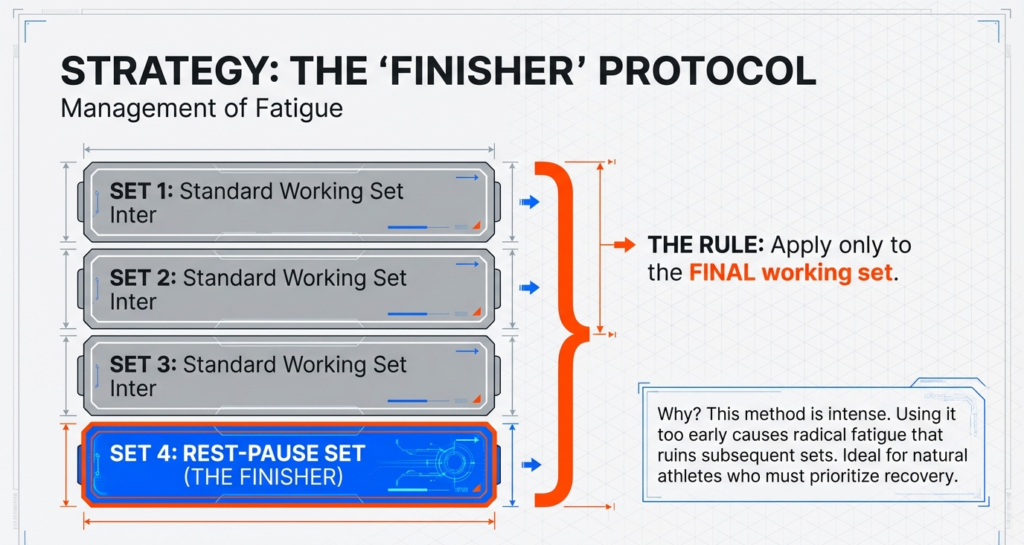
The best place to start is with the last sets of a given exercise being subjected to rest-pause. Do your usual working sets, and convert the last of them into a rest-pause set.
Example for chest:
- Bench Press- 3 normal sets
- 4th set = rest-pause
This plan is more intense and does not cause fatigue radically. It is ideal to athletes who are natural and have to take care of the recovery.
2. Strategy To Compound Movements (Strategically)
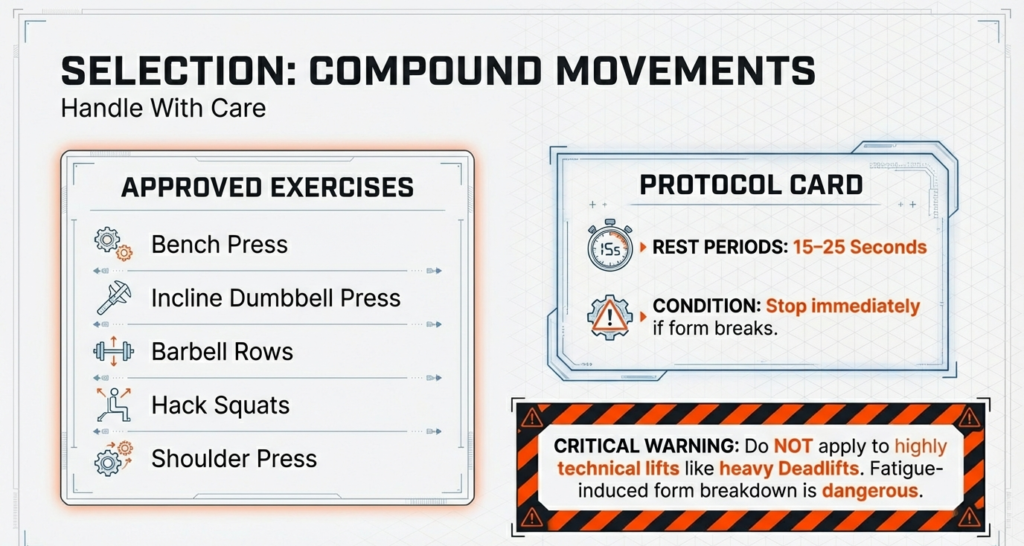
Rest-pause may be effective with heavy lifts such as squats, Bench Press or rows – but it should be used wisely. Make the rest periods short (15-20 seconds) and not to perform ugly reps. Stop if form breaks down.
Most optimal rest-pause lifts:
- Bench Press.
- Incline Dumbbell Press.
- Barbell Rows.
- Hack Squats.
- Shoulder Press.
It is not to be applied on lifts that are very technical such as heavy deadlifts.
3. Optimize Isolation Drills
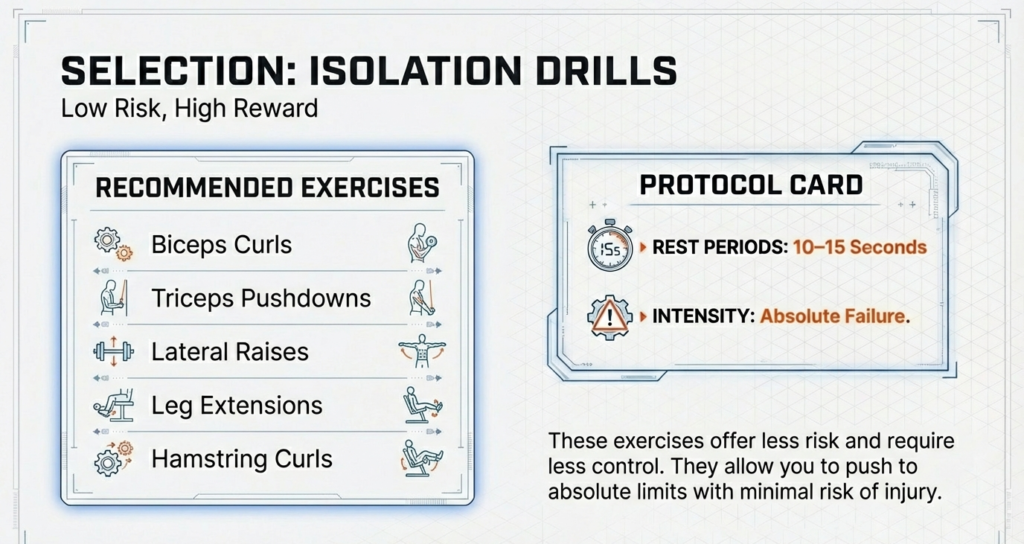
The best ones are isolation exercises, as they are less risky and have less control.
Great choices include:
- Biceps curls.
- Triceps pushdowns.
- Lateral raises.
- Leg extensions.
- Hamstring curls.
These motions enable you to go near failure without much harm to yourself. The additional metabolic load produces a huge pump, which aids in the growth of the muscles.
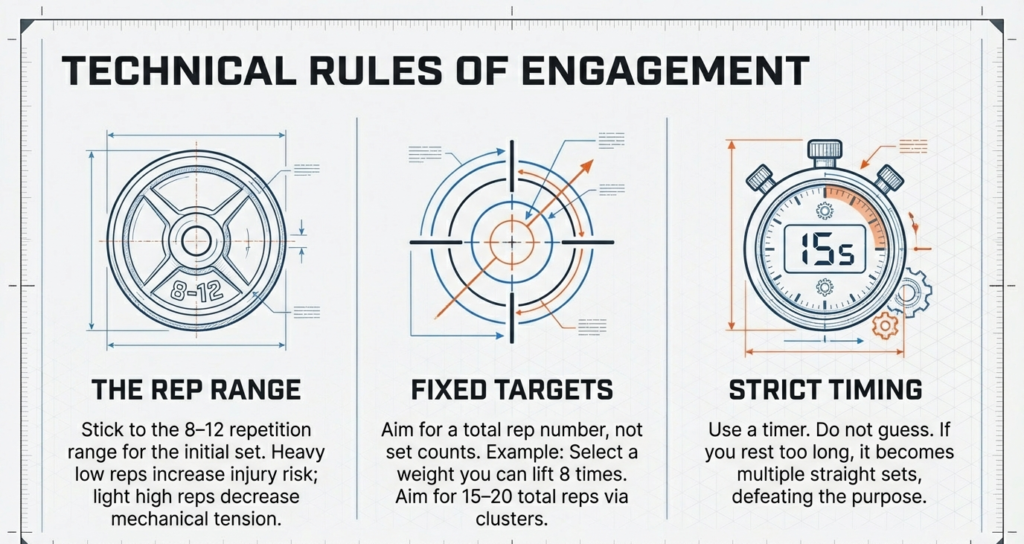
4. Technical rules of engagement
Rather than having a mini-set target, have a total rep target.
For example:
Select a weight which you are able to do 8 repetitions with. You are aiming at 15-20 total reps with rest-pause.
You might complete:
- 8 reps.
Rest 15 sec. - 4 reps.
Rest 15 sec. - 3 reps.
You can consider the set accomplished when you have reached the target. This approach guarantees the gradual increase of work with the management of volume.
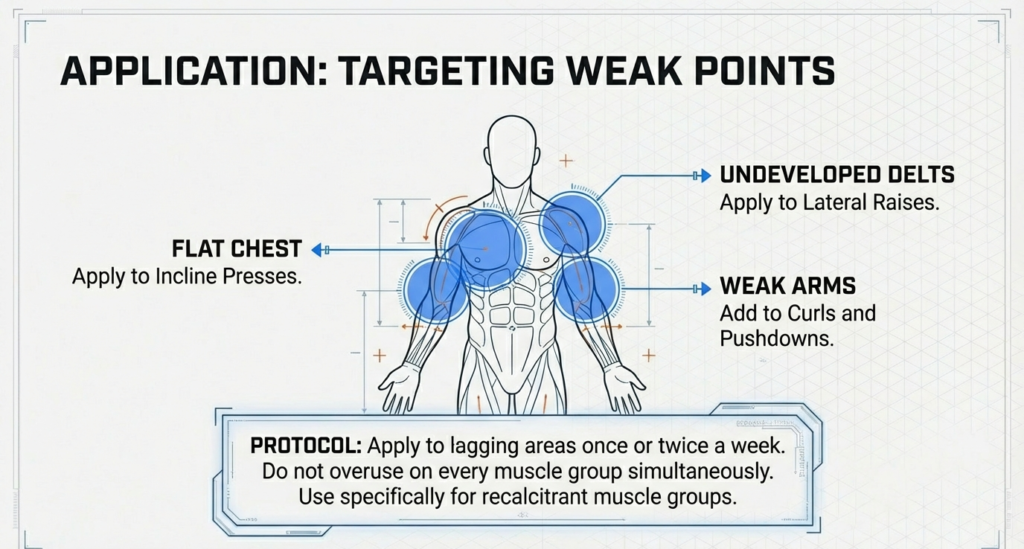
5. Targeting weak points
In case one of the muscle groupings are recalcitrant, rest-pause has the potential to offer the additional stimulus required to grow.
For example:
- Weak arms → include a rest-pause in curls and pushdowns.
- Flat chest→ rest-pause incline presses.
- Un-developed delts → use it in lateral raises.
Apply it on lagging areas once or twice a week. Do not apply it too much on each muscle group.
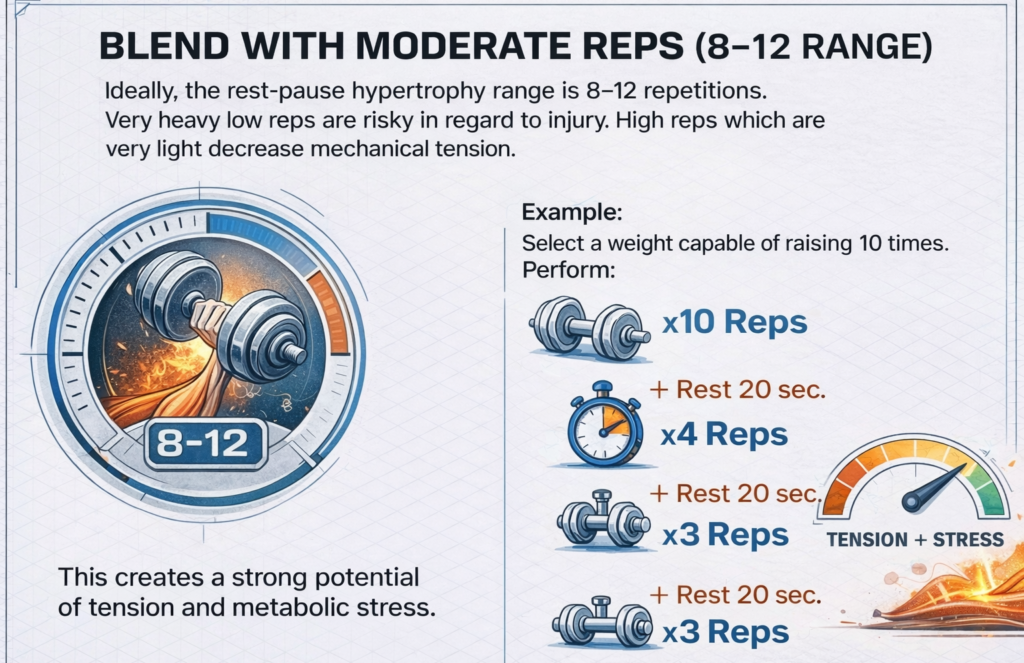
6. Blend with Moderate Reps (8-12 Range)
Ideally, the rest-pause hypertrophy range is 8-12 repetitions.
Very heavy low reps are risky in regard to injury. High reps which are very light decrease mechanical tension.
Example:
Select a weight that is capable of raising 10 times.
Perform:
- 10 reps.
Rest 20 sec. - 4 reps.
Rest 20 sec. - 3 reps.
This is a strong potential of tension and metabolic stress.
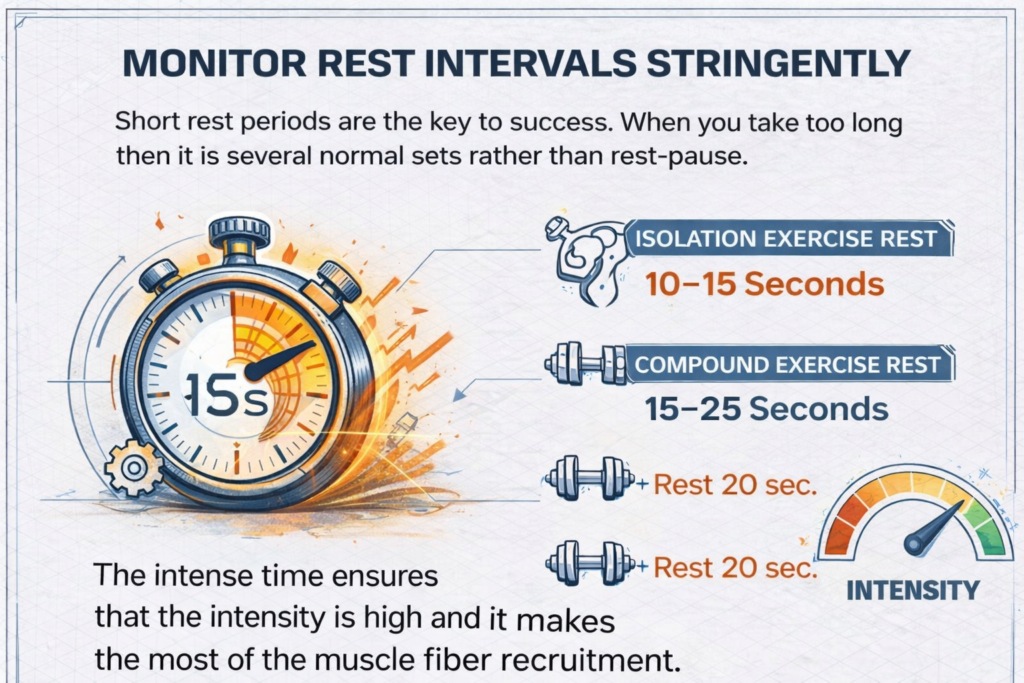
7. Monitor Strengths Stringently.
Short rest periods are the key to success. When you take too long then it is several normal sets rather than rest-pause.
Recommended rest:
- 10–15 seconds for isolation.
- 15–25 seconds for compound lifts.
- Use a timer.
- Don’t guess.
The intense time ensures that the intensity is high and it makes the most of the muscle fiber recruitment.
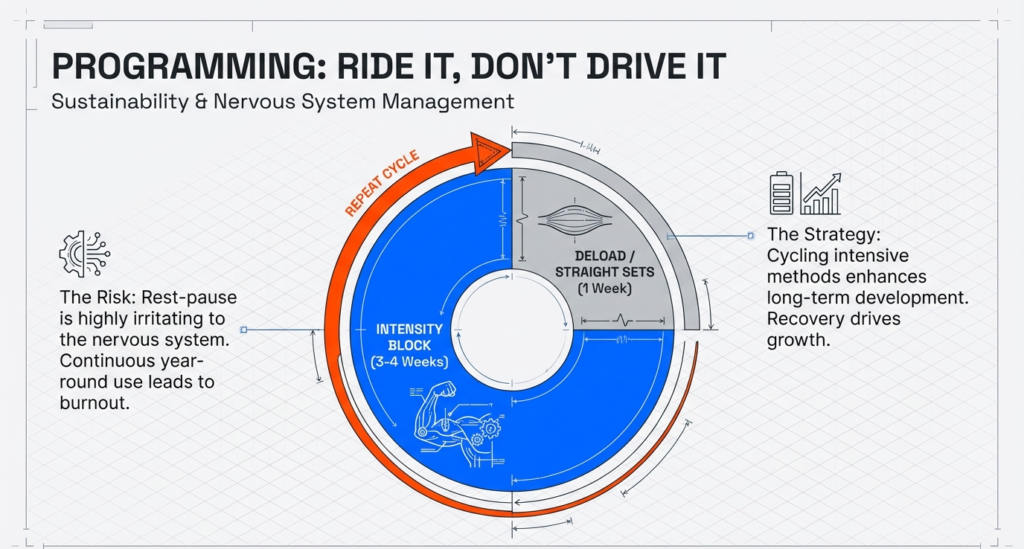
8. Ride It instead of Driving Year-Round
Rest-pause is very irritating on the nervous system. Its constant use may result in burnout.
- A smart strategy:
- Use it for 3–4 weeks.
- And now go to regular straight sets.
- Reproduction in the next training block.
Cycling intensive methods enhance long time developments and rest.
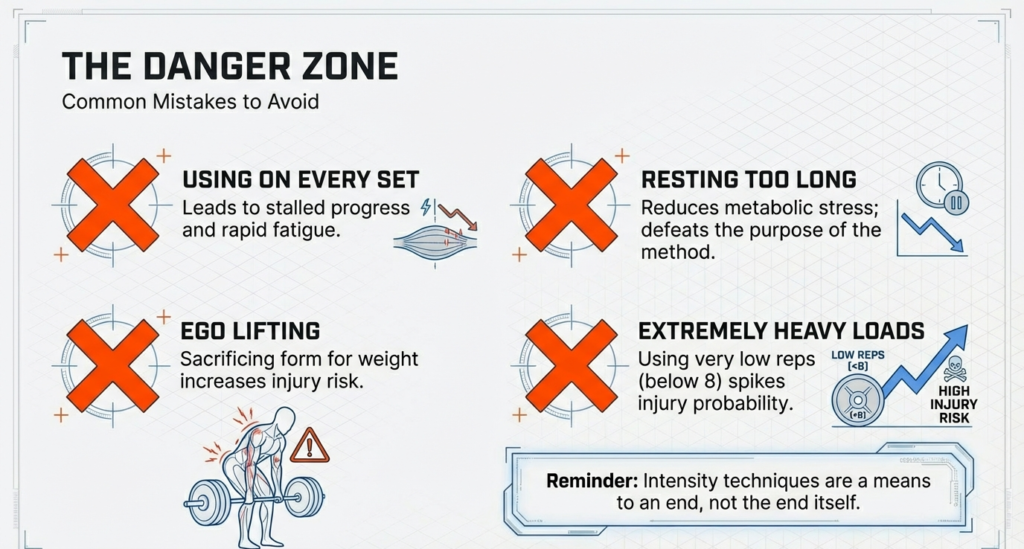
Common Mistakes to Avoid
There is a high proportion of misuse of rest- pause and stall progress among the lifters.
Avoid these errors:
- Using it on every set.
- Resting too long.
- Sacrificing form.
Very heavy weights were used. - It should be used on each exercise.
Intensity techniques are means, not the end of this program, remember.
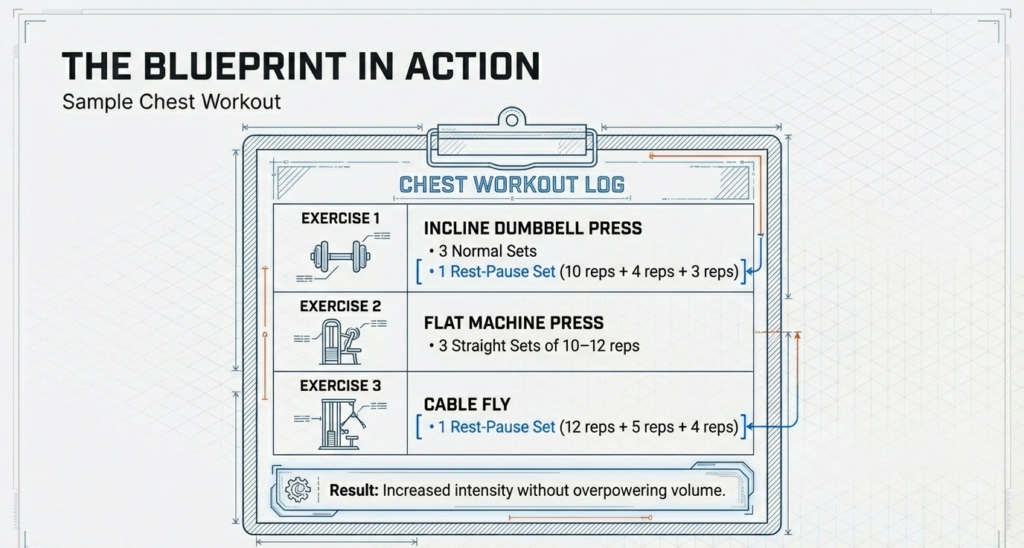
Chest Workout Blueprint
Rest-Pause Chest Workout.
It can be organized in the following way:
- Incline Dumbbell Press- 3 normal sets.
- 1 rest-pause set (10 + 4 + 3).
- Flat Machine Press – 3 sets of (10–12) reps
- Cable Fly – 1 rest-pause set (12 + 5 + 4).
This is a method of raising intensity without overpowering the volume.
Read more: https://www.muscleandstrength.com/articles/the-rest-pause-technique-and-its-variations.html
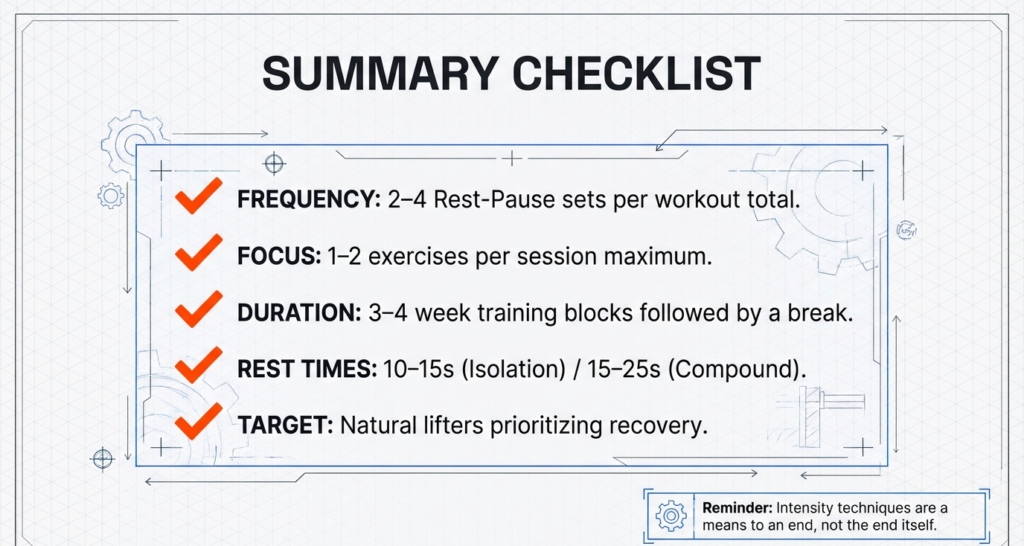
Summary Checklist
For most lifters:
- 2–4 rest-pause sets per workout.
- 1–2 exercises per session.
- 3–4 week training blocks.
- Rest Time: 10-15s(Isolation)/15-25s(Compound).
- Prioritizing recovery.
More is not better. Recovery drives growth.
Final Thoughts
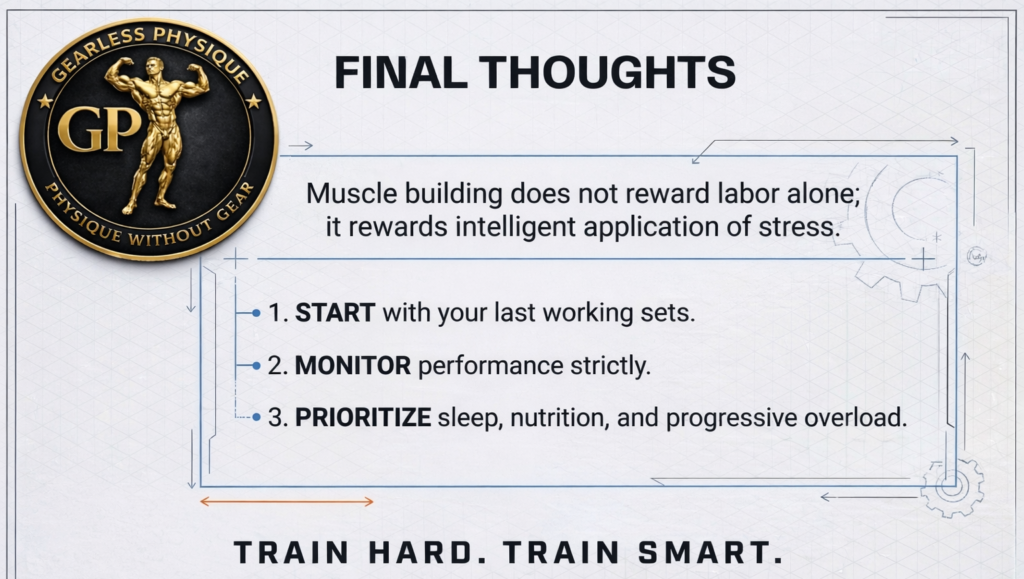
One of the most effective hypertrophy tools is the rest-pause training. It intensifies, conserves time, and activates muscle fibers of high threshold.
In case you are training naturally and you are interested in growing bigger muscles without endless sets, then you should begin with using rest-pause on your last working sets. Monitor performance, keep rest periods very strict and intelligently cycle the technique.
Train hard. Train smart. And keep in mind- muscle building does not reward only labor.
Gearless Physique
Physique Without Gear
Your transformation starts now. Who's with me?