Table of Contents
Toggle7 Reasons Most Fat Loss Diets Fail (And How to Fix Them)
This infographic, titled “7 Reasons Most Fat Loss Diets Fail (And How to Fix Them),” clearly explains why crash diets often lead to short-term results and long-term frustration. It highlights common mistakes like extreme calorie deficits, lack of protein, poor recovery, and unsustainable restrictions. The visual emphasizes a smarter approach through strategic nutrition, including adequate protein intake, balanced food choices, and flexibility instead of elimination. It also stresses the importance of strength training, quality sleep, and maintaining muscle during fat loss. By introducing the concept of an “exit strategy,” it reinforces sustainable habits. Overall, this image promotes a science-based, realistic approach to achieving lasting fat loss success.
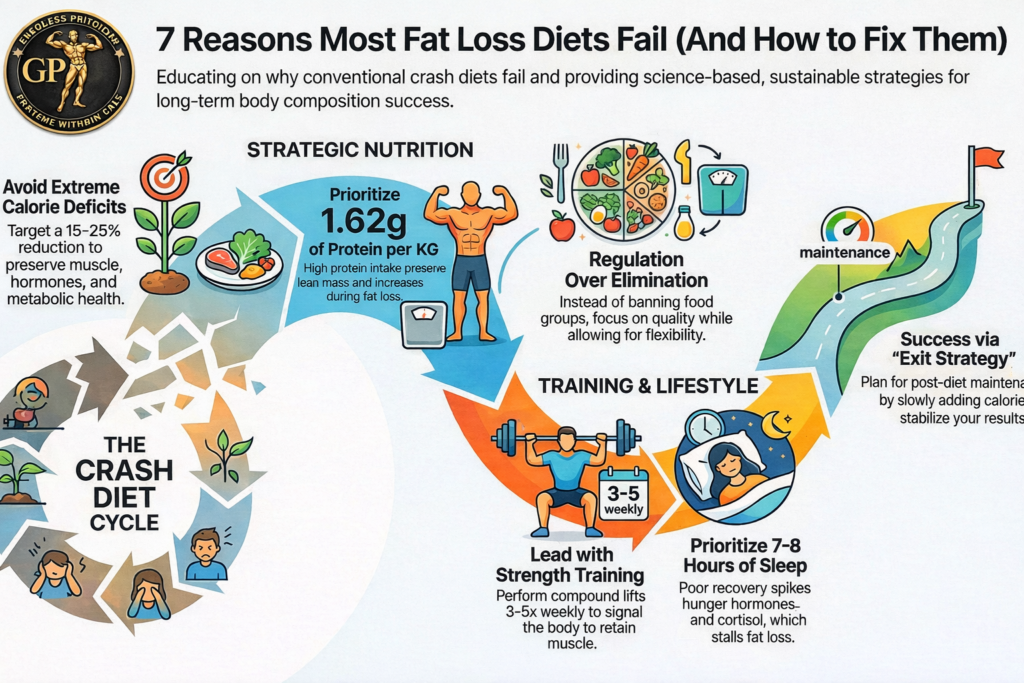
Why Fat loss diets fail
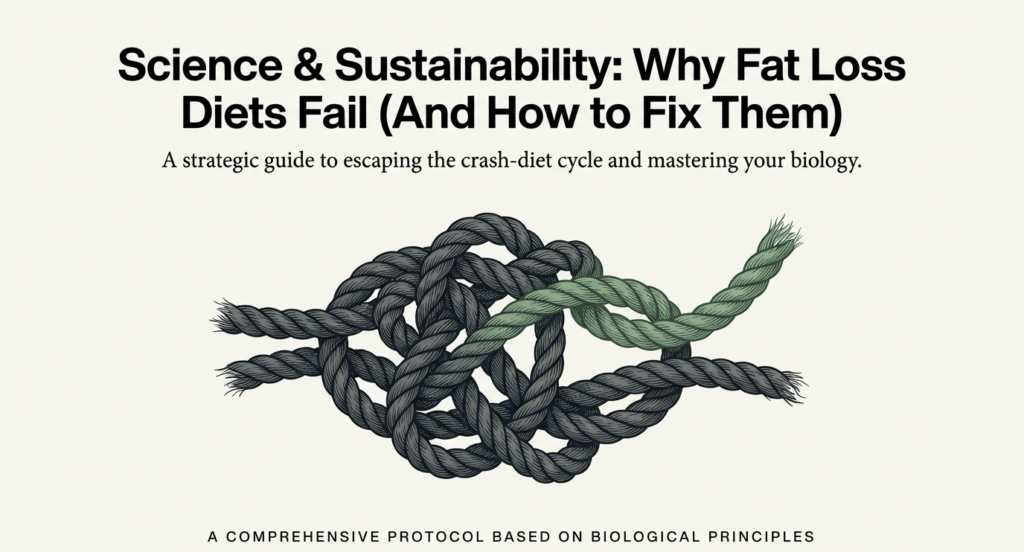
This picture is the essence of the truth of sustainable fat loss, success is not the struggle but the science. Furthermore, the majority of fat loss diets fail because they assume extreme restriction, willpower and short term thinking which are antagonistic to human biology rather than friendly to it. The messy ropes are a symbol of the crash-diet cycle, which consists of confusion, frustration, and repeated failure, whereas the clear one is a symbol of a smarter and sustainable way.
The fat loss can be predicted and controlled by knowing about energy balance, protein consumption, training, recovery and long-term maintenance. When punishment is substituted with strategy, outcomes are longer lasting, habits are less difficult to keep and body is receptive in the long run.
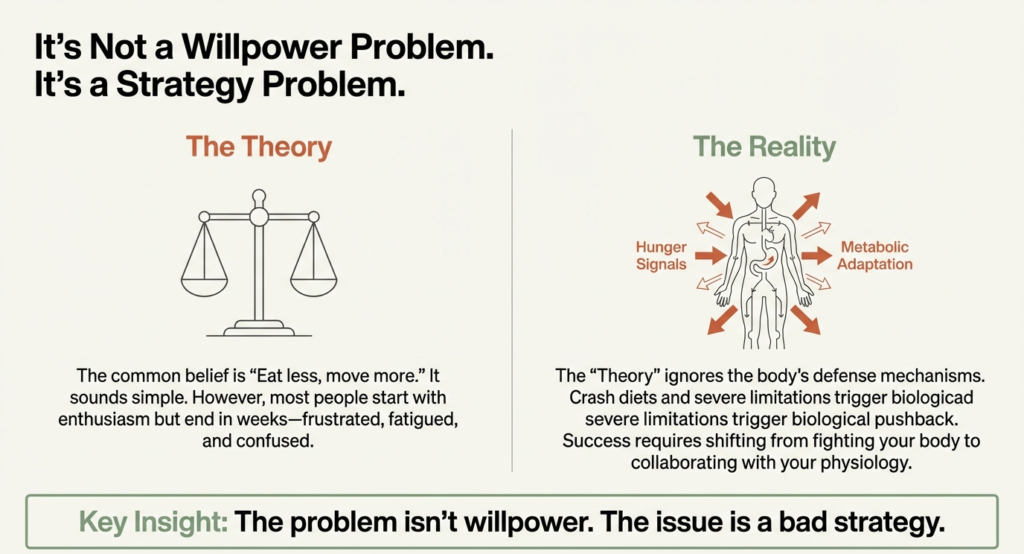
The Theory & The reality
The process of fat loss seems to be easy in theory: less to eat, more to move, lose weight. However, in the real life, the majority of people begin diet with a lot of enthusiasm and end it in a couple of weeks- frustrated, fatigued, and confused. The problem isn’t willpower. The issue is a bad strategy. Majority of fat loss diets fail due to the fact that they do not consider biology, psychology and sustainability. Crash diets, severe limitations, and hype on social-media precondition failures even before the start.
In this blog, we shall deconstruct 7 common reasons people fail most fat loss diets and more importantly how you can correct each of them with real life science-based techniques that are effective in the long term.
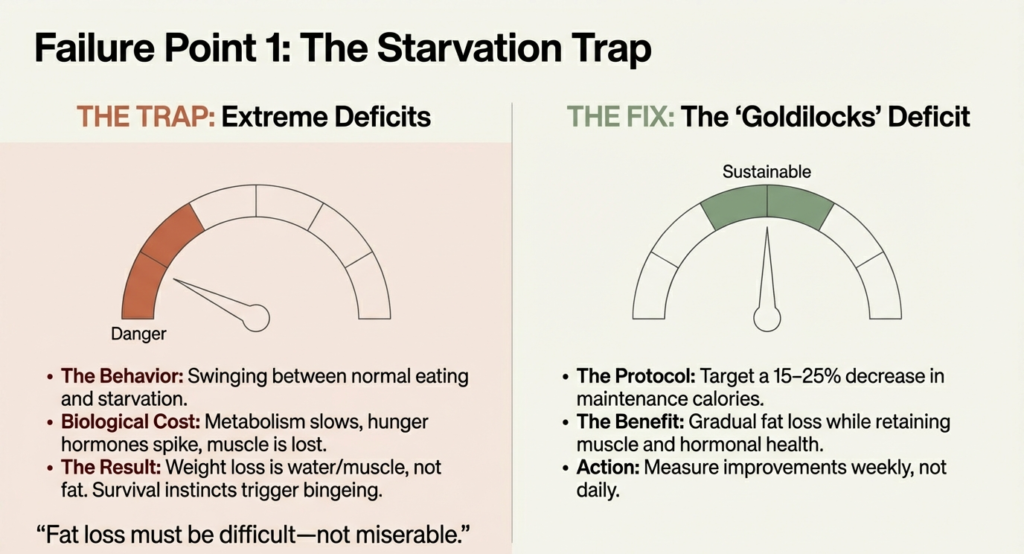
Reason 1: The starvation trap
Excessive reduction of calories is one of the gravest errors individuals make. They swing between regular consumption and starving diets, in hope that they will burn more fat. Although the scale might be dropping initially most of the weight is water and muscle- not fat. Severe deficits slow down metabolism, elevate hunger hormones, decrease the level of energy, and cause workouts to suffer. At some point, the desire breaks out and binge eating ensues. It is nothing more than an attempt at survival.
Fat loss must be difficult -not miserable. When your diet is intolerable then it is dead.
How to Fix It
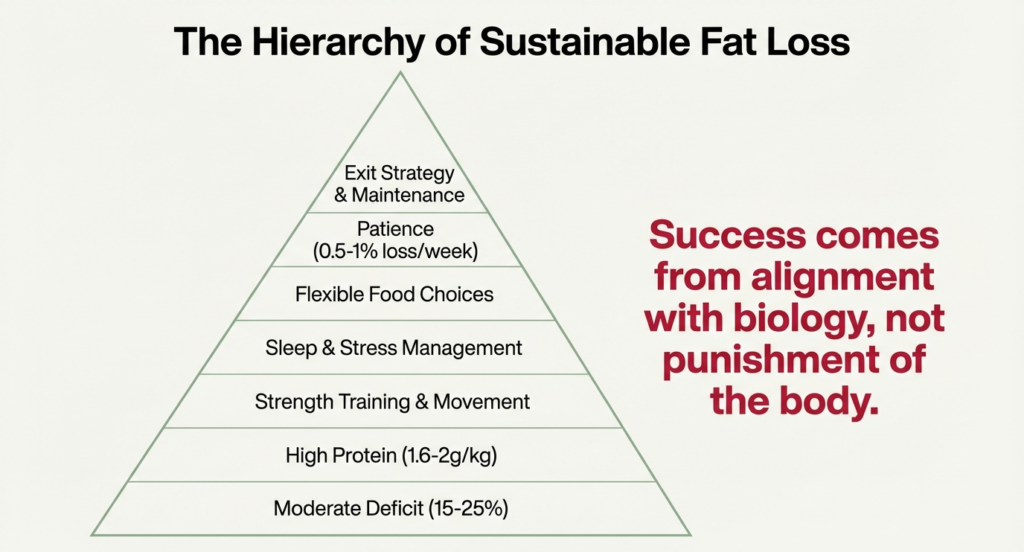
Do not produce an extreme deficit in calories. Target 15 -25% decrease in maintenance calories. This enables gradual fat reduction and retaining muscle, strength and the hormones. Measure improvements on a weekly basis, not daily. The rate of slow and steady fat loss is always better than the fast weight loss that backfires. The actual secret weapon is sustainability.
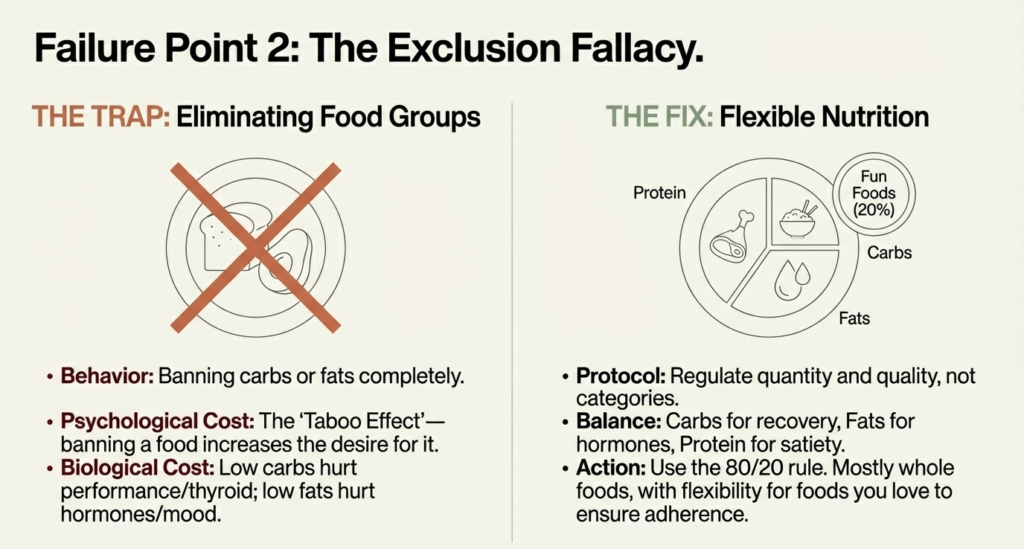
Reason 2: The Exclusion fallacy
A lot of diets prohibit carbs, fats or even fruits. Although a food free diet can make decision-making easier, it can also cause nutritional deficiencies and psychological burnout. The fact that a food is tabooed raises the need to consume it. Low-carbs might be an effective short term solution, however carbs are essential in training performance, thyroid and recovery. On the same note, excessive reduction in fats may interfere with hormones and mood. Limitations cause obsession- and obsession causes relapse.
How to Fix It
Do not remove food categories, regulate amounts and quality. Should contain carbs, fats and proteins in equal measures. Eat predominantly un-soda foods with a high percentage of flexibility. In case you like rice, roti or fruit, serve them in your agenda. The lifestyle-appropriate diet is much more effective than the so-called perfect diet that you cannot stick to.
Reason 3: The protein gap
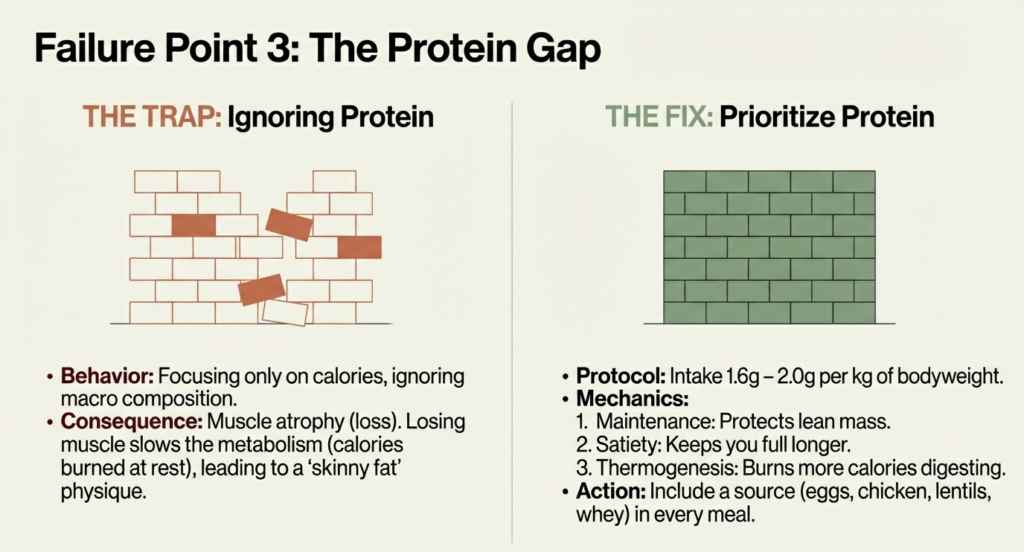
Numerous fat loss diets are just concerned with calories and forget protein. A minimal quantity of protein consumption results in muscle atrophy, insufficient satiety, decreased metabolism, and weak exercise. One of the quickest methods to undermine the long-term performance is to lose muscle in the process of fat burning. The reduction in muscular mass slows down the number of calories burned by your body during rest. That complicates the process of fat loss in the future and makes weight regain easier. It is not about losing weight but lean mass preservation.
How to Fix It
Increase the protein intake to 1.62 gm per kg of bodyweight. Protein helps in muscle maintenance, enhances satiety, maintains blood sugar, and enhances thermogenesis. Always add protein to the meal, eggs, chicken, fish, paneer, dal, whey, or curd. As soon as protein is a priority, the fat loss process becomes much easier and manageable.
Reason 4: The cardio trap
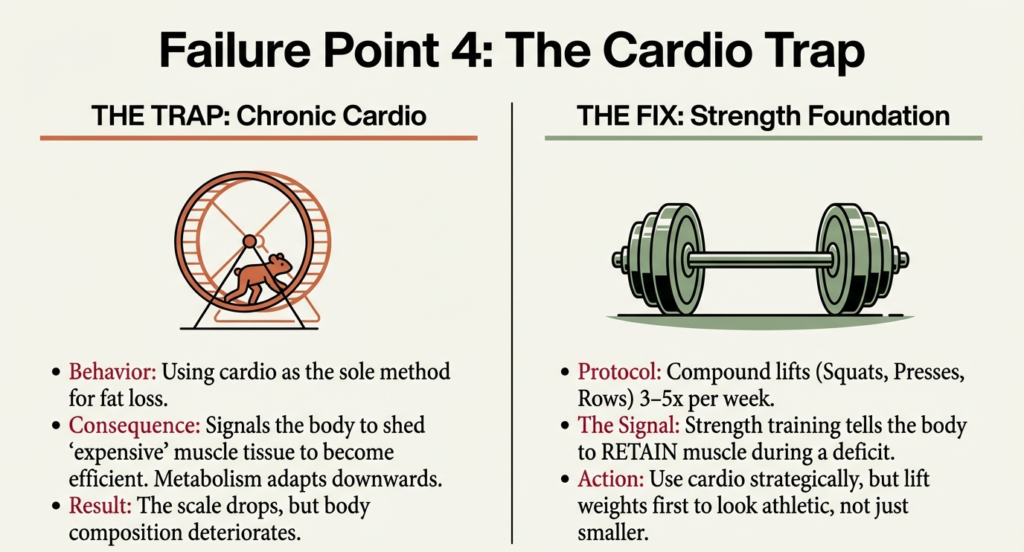
The majority of individuals use cardio as the only means of fat loss. Although cardio is burning, it is observed that excessive cardio devoid of resistance exercises tends to lose the muscles and induce slowness in the metabolism. The scale can shift, and body make up deteriorates. Strength training gives an instruction to the body to retain muscle whenever there is a calorie deficit. In its absence, muscle is just dead weight. Losing fat is not to get weaker and thinner.
How to Fix It
Build on strength training as the basis of fat loss. Workout 350 to 500 with compound exercises such as squats, presses, rows, and deadlifts every 3 to 5 days per week. The addition of cardio may be a strategical one, but weights must be introduced first. Maintaining muscle makes metabolism more active and gives it a lean athletic appearance rather than skinny-fat appearance.
Reason 5: The recovery deficit
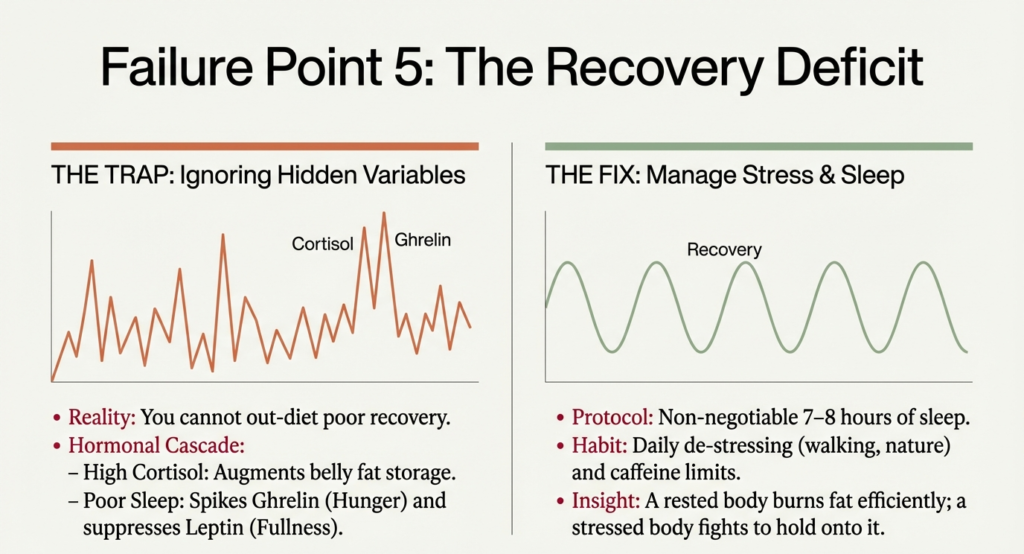
The process of losing fat does not only involve what we eat and what we do. Even in a calorie deficit, poor sleep, high stress and hormonal imbalance can entirely inhibit fat loss. High cortisol levels augment the fat storage particularly around the belly. Sleep deprivation raises the levels of hunger hormones such as ghrelin and decreases the level of satiety hormones such as leptin. This complicates dieting ten times as it should be. You can’t out-diet poor recovery.
How to Fix It
Set the goal of 7-8 hours of sleep each night. De-stress by walking, breathing, being out in the sun or meditating. Limit the consumption of caffeine. A relaxed and rested body burns fat more efficiently than a stressed and weary body. Taking a break is not a choice, it is a process of fat loss.
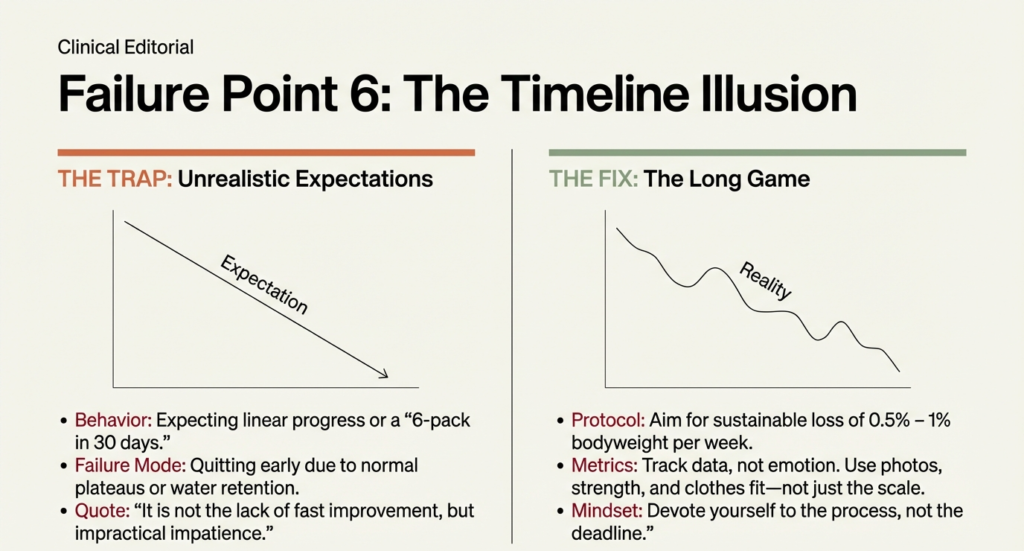
Reason 6: The timeline illusion
The fat loss expectations have been distorted through social media. Individuals demand six-packing within 30 days and get panicked when things do not improve. In cases where things are not going as planned, inspiration falls and selection becomes absent. Fat loss is rarely linear. It is normal when there are plateaus, retention of water and fluctuation of hormones. One of the most prevalent reasons why diets fail is that they are quitted too early. It is not the lack of fast improvement, but impractical forbearance.
How to Fix It
Establish achievable fat loss objectives: 0.5-1 percent bodyweight/ week. Track improvement based on photos, level of strength, waist measurement and fit of clothes, not scale weight. Devote oneself to the process and not to a deadline. Congruency happens to be painless when the expectations are met.
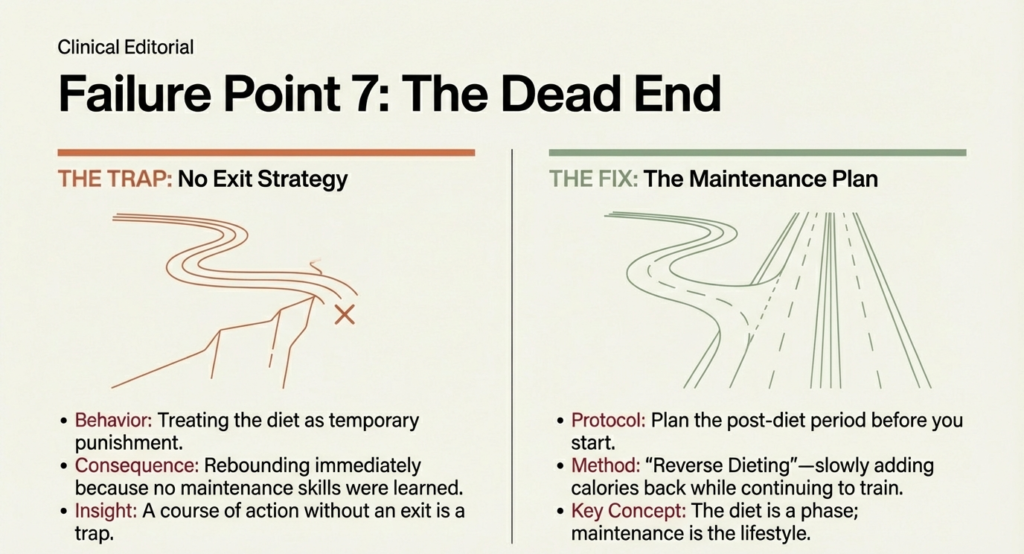
Reason 7: The Dead end
The majority of the diets are considered as a form of temporary punishment. Individuals starve themselves to death, become slim and relapse to previous bad lifestyle. In the absence of a maintenance strategy, the regain of the weight is nearly assured. The goal of losing fat is not at all the maintenance. Unless you learn how to eat following the diet, the diet is a failure. A course of action which does not have an exit is a trap.
How to Fix It
Make a plan of your post-diet period in advance. Slowly add calories, continue training and stabilize bodyweight. Get to know how to control portions rather than stick to rules. Achieving fat loss success is determined by the ability to maintain the results and not the speed at which you lose it.
The hierarchy of sustainable fat loss
The failure of most fat loss diet is due to the fact that they struggle against the body rather than acting in alliance with it. Low recovery, extreme restriction, poor protein and unrealistic expectations are the causes of a vicious circle of failure and frustration. The answer is not hard, but easy: work out, eat well, sleep, train, manage stress, be consistent. There is nothing sexy about sustainable fat loss, but it never fails.
When you correct these seven errors, then losing weight will no longer seem like a fight and it will become more of a life habit, not only to be accompanied in a few weeks but over many years
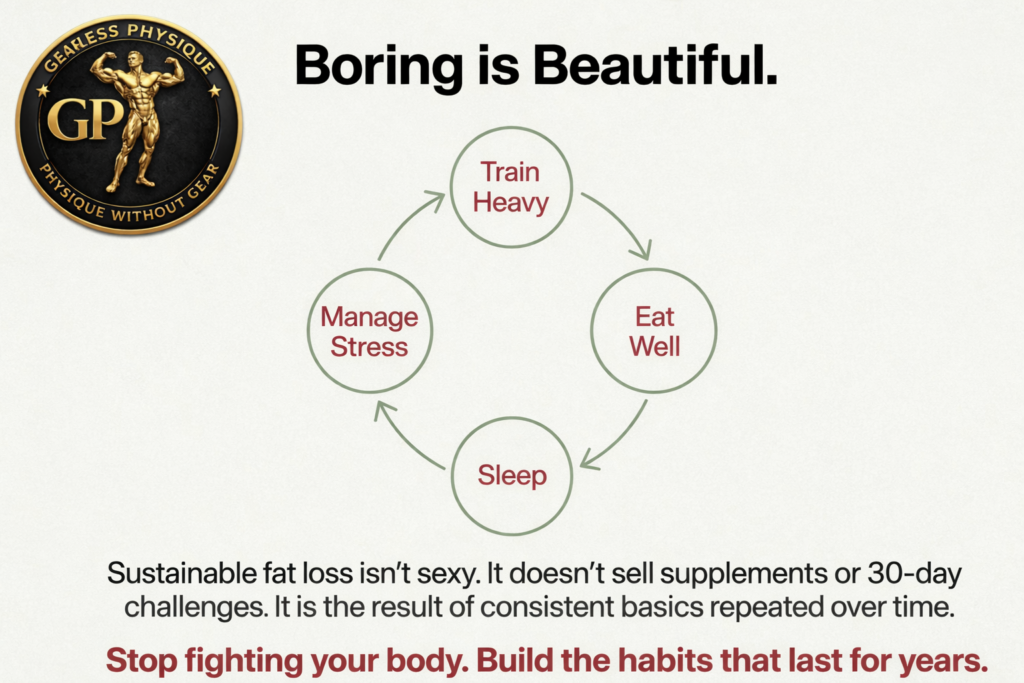
Build Habits That Last, Not Diets That Break
A sustainable fat loss is not about limitations, quick fixes and struggle. It is founded on the foundation of simple habits that will be done regularly- training hard, eating well, sleeping enough and dealing with stress. These fundamentals can appear to be boring, however, they are potent since they take into account the functioning of a human body as it is.
Once you no longer battle with your biology and begin to cooperate with it, fat loss is easy to predict, to maintain and to stress free. It is not fast transformation that is being sought but long term transformation. It is not plans that can be survived by weeks, but rather systems of buildings that can be repeated over a decade. Boring done always goes full circle in the long run.
Read more: https://www.crunch.com/thehub/the-best-gym-routine-for-weight-loss-a-practical-guide-for-all-levels/

Gearless Physique
Physique Without Gear
Your transformation starts now. Who's with me?