Table of Contents
Toggle7 Proven Ways to Increase Squat, Bench & Deadlift
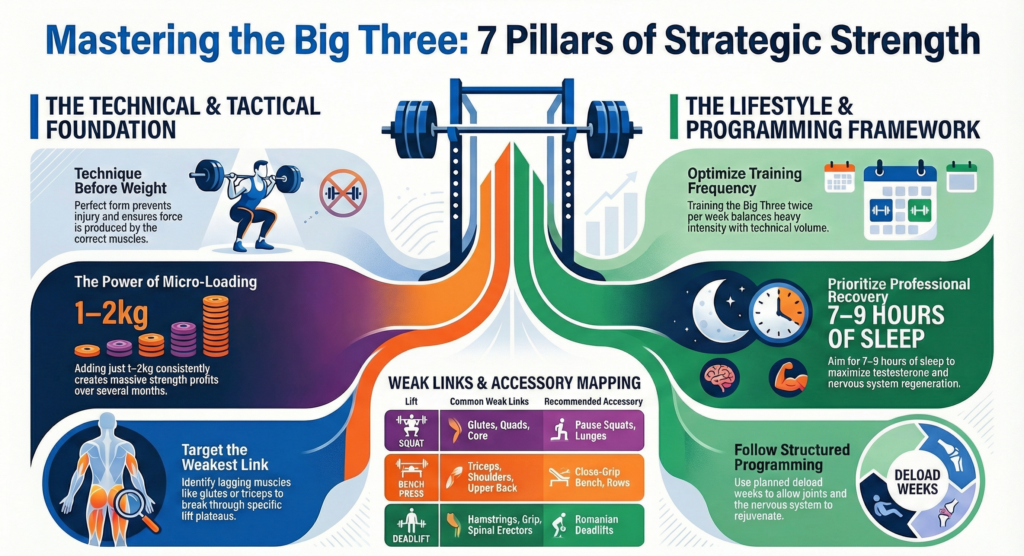
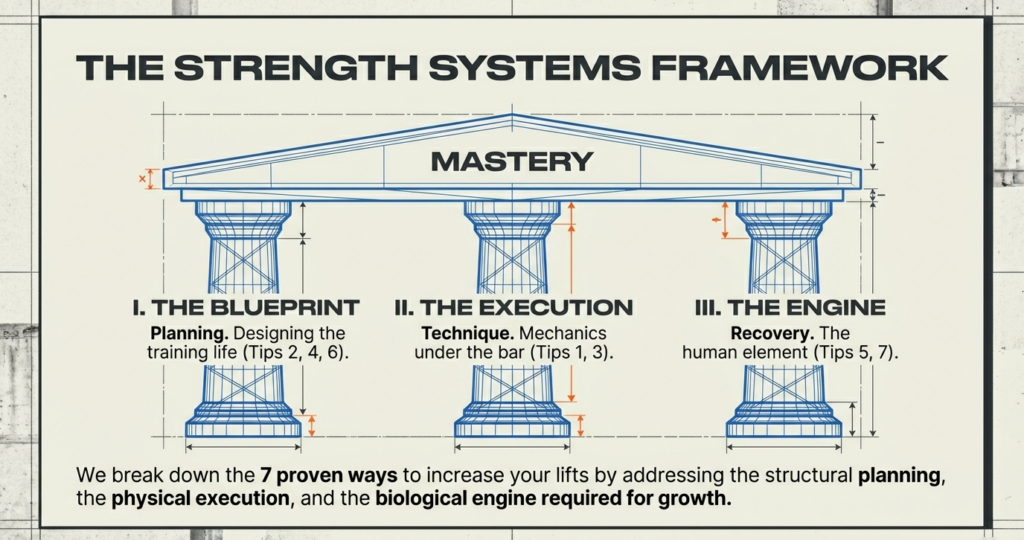
This infographic, titled “Mastering the Big Three: 7 Pillars of Strategic Strength,” delivers a comprehensive framework for improving squat, bench press, and deadlift performance. It emphasizes the importance of mastering technique before adding weight, ensuring safety and optimal muscle activation. The concept of micro-loading highlights how small, consistent increases lead to long-term strength gains. It also focuses on identifying weak links and using accessory exercises to overcome plateaus. On the lifestyle side, the image underscores training frequency, structured programming, and quality sleep for recovery.
Overall, this visual reinforces that true strength development comes from a balanced approach combining smart training, recovery, and long-term consistency.
Master Technique Pre Addition of weight
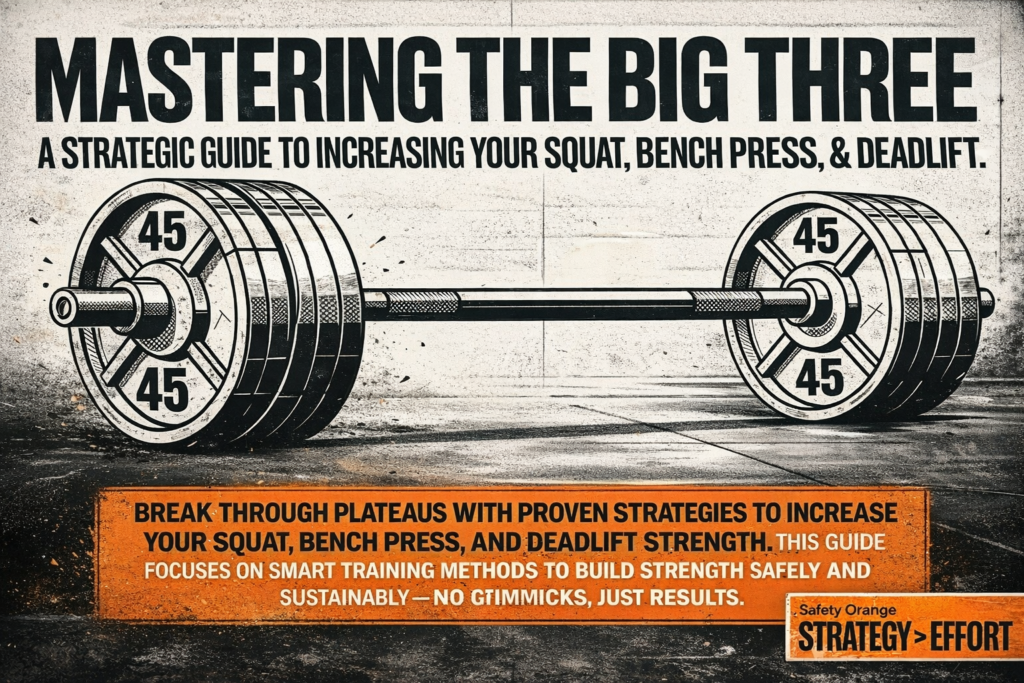
The Big Three, squat, bench press, and deadlift, do not come easy, and one will have to apply a smart plan rather than sheer force to master them. These lifts are the basis of strength training and the improvements are made through perfecting technique, using progressive overload gradually and maintaining respect towards recovery. Minor changes in shape, weight, and size add up to significant power increment as time progresses.
Shortcuts and overworking the credit card too frequently only result in plateaus and injuries. Rather, lifters that emphasize structure, discipline, and long-term consistency develop long-term strength. When recovery is factored in, training is executed and kept accurate, recovery will be a great tool in long-term strength and physique building.
The Plateau paradox
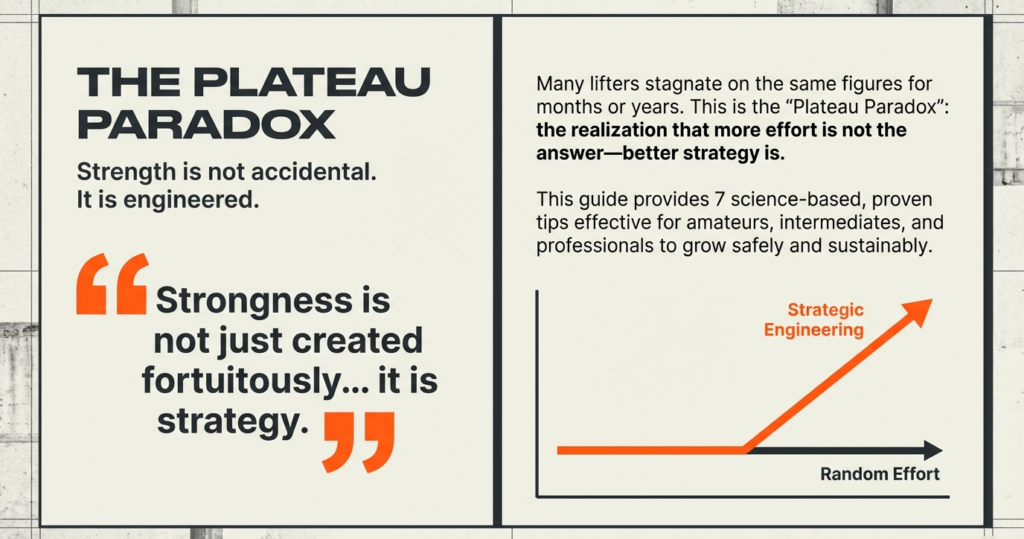
Some lifters will stagnate on the same figures months or even years. It is not always about effort it is about strategy. Strongness is not just created fortuitously but is created through intelligent program, rest, form, and persistence.
The strength systems framework
The strength training is based on the squat, bench press, and deadlift or the so-called Big Three. You are trying to build more muscles and become stronger or you like the classic body shape, no matter what your overall performance will change when you are becoming better at your lifts.
This guide is where you will discover 7 effective and proven science-based tips to grow your squat, bench and deadlift in a safe and sustainable manner. These theories are effective with amateur lifters, intermediate lifters, and professional lifters.
1: Adhere to Structured Strength Programming
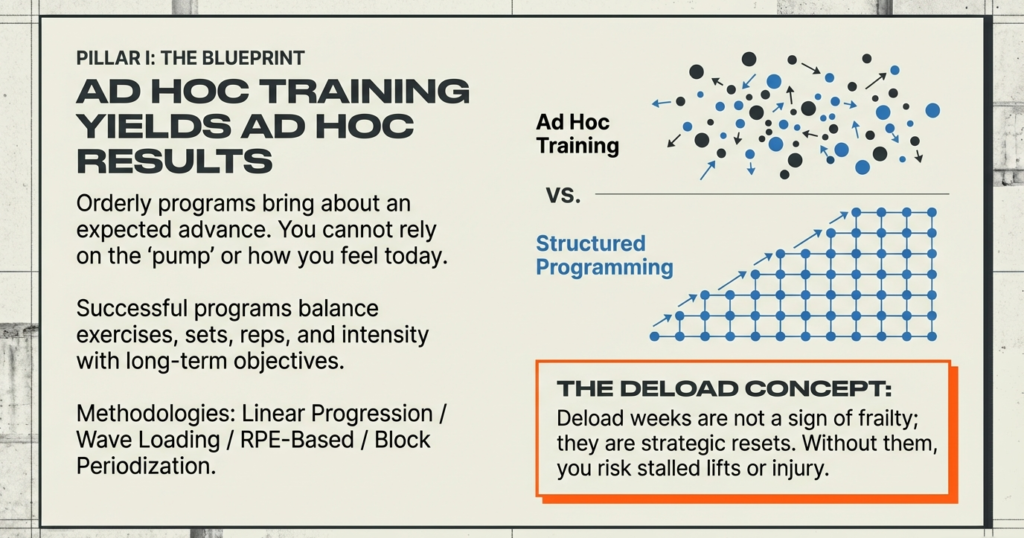
Ad hoc exercising gives ad hoc outcomes. Orderly programs bring about an expected advance. Good strength programs incorporate strategic progression, deloads, and change. The continuous gains are possible without burnout when such methods as linear progression, wave loading, RPE-based training, or block periodization are used.
Deload weeks are not frailty, they are strategic re-sets that enable your nervous system and joints to rejuvenate. Deloads are usually followed by stalled lifts or injuries.
A good program balances exercises, sets, reps and intensity with your long-term objective- not that of today with the pump.
2: Employ Correct Volume and Frequency
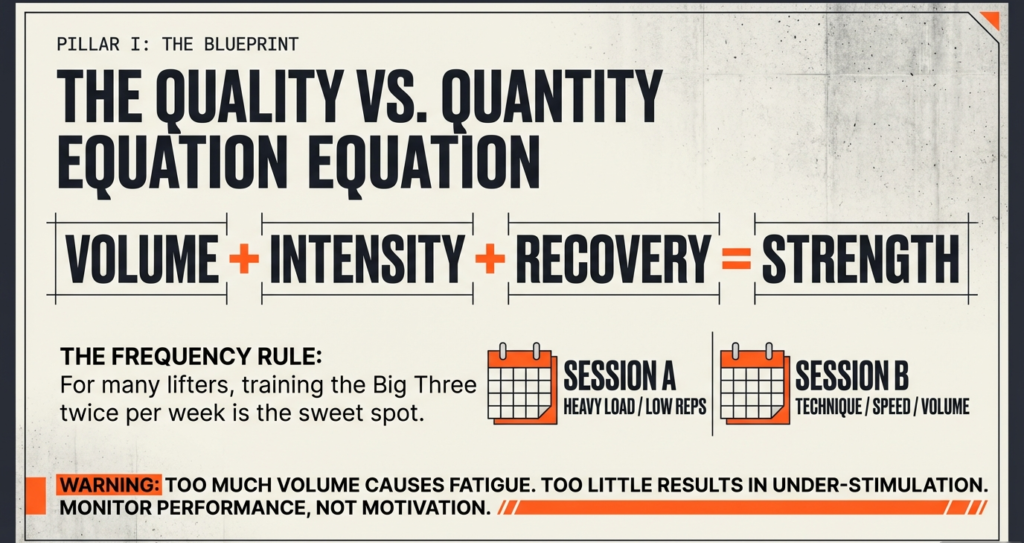
Further training is not the same as quality training because quality training is superior. The gains in strength are determined by a balance between volume, intensity and recovery. To a large proportion of lifters, training Big Three twice per week is incredibly successful. A session can be spent on heavier and fewer reps, whereas the other session may be spent on technique, speed, or volume.
Too much will cause fatigue, lack of quality recovery, and stalled development. Lack of volume results in under-stimulation. Monitor your working sets, performance and modify adjusting to recovery, not motivation.
3: Training with progressive overload (The Right Way)
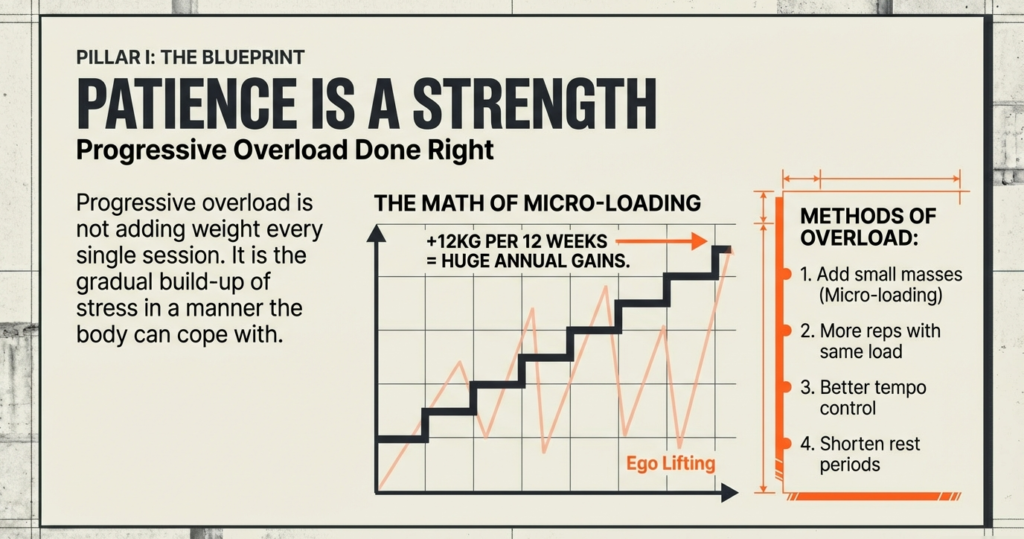
Progressive overload is not the addition of weight on a session to session basis. It is a gradual build up of stress in a manner that your body can cope.
Three possible ways of overloading are to add small masses, to perform more reps with the same load, to better control tempo, or to shorten the rest period. Even superior technique with the same weight is a step in the right direction.
Micro-loading is very effective with the Big Three. The addition of 12 kg per 12 weeks plus 2kg per 12 weeks, multiplies into huge profits in few months. Patience is a strength and not ego elevation.
4: Master Technique Pre Addition of weight
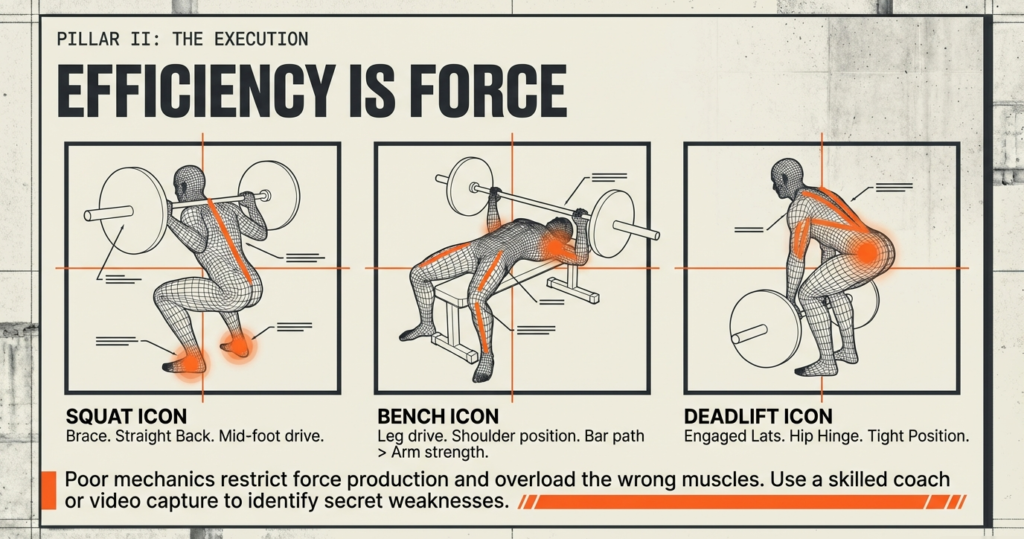
The quickest method of adding strength and not risking injury is perfect technique. When a mechanic is poor then they restrict production of force and overload the wrong muscles to an even greater degree during a compound lift. When in the squat, the center of interest is to brace, keep a straight back and push off with the mid-foot. Time should be uniform and regulated. The drive on the legs in the bench press, shoulder drawing and the course of the bar is more relevant than the sheer strength of the arms. With deadlifts, tight position, engaged lats and correct hip hinge are of paramount importance.
Capturing your lifts or a skilled coach can immediately correct the secret weaknesses that are stagnating your figures.
5: Training Strategically Important Weak Muscle Groups
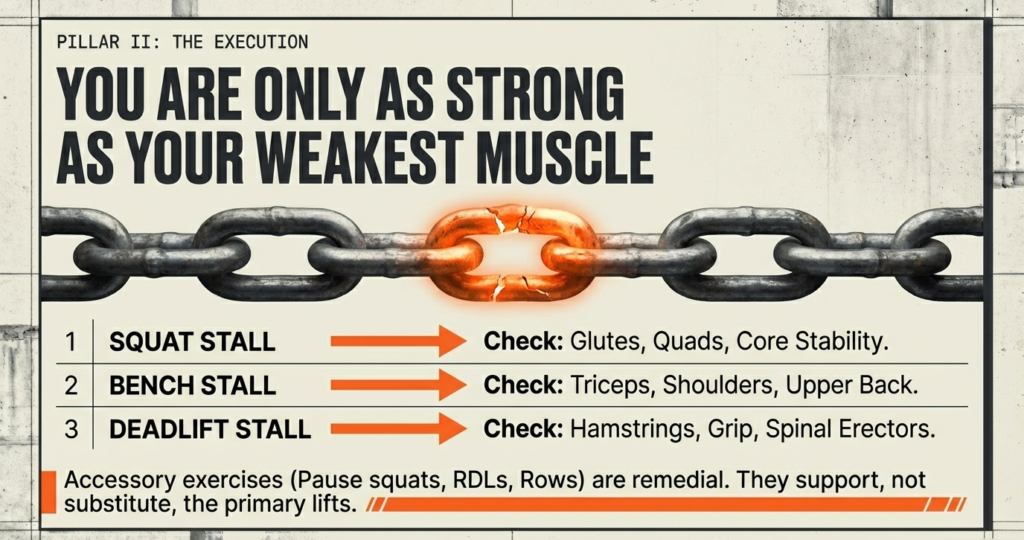
Only as strong as weakest links are you main lifts. The plateaus are also to be broken by locating and engaging the lagging muscles.
It could be that your squat stalls, weak glutes, quads or core stability. The bench press tends not to move, which may indicate the presence of weak triceps, shoulders, or upper back. The dead lift issues are either due to weak hamstring, grip or weaker spinal erector.
The primary lifts should be supported, but not substituted by the accessory exercises such as: pause squats, Romanian deadlifts, rows, lunges, and close-grip bench presses. Weaknesses in trains are not accidentally made, but deliberately.
Extra Hints to Speedy Improvement
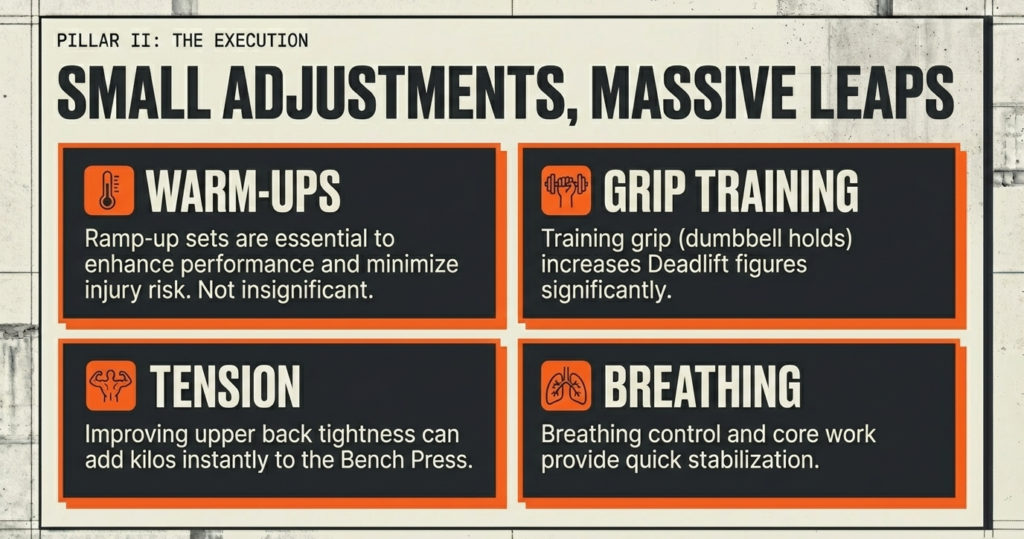
Warm-ups are not as insignificant as it might seem. Ramp-up sets are essential to enhance the performance and minimize the risk of injuries. Some methods of bracing such as breathing control and core work can provide quick stabilization and strength. Training the grip increases deadlift figures significantly. Even such a basic exercise as dumbbell holding can help. In case of bench press, tightness of upper back can be improved to add kilos instantly to lift. Even simple things, applied consistently, produce large leaping points of strength.
6: Make Recovery a Professional Priority
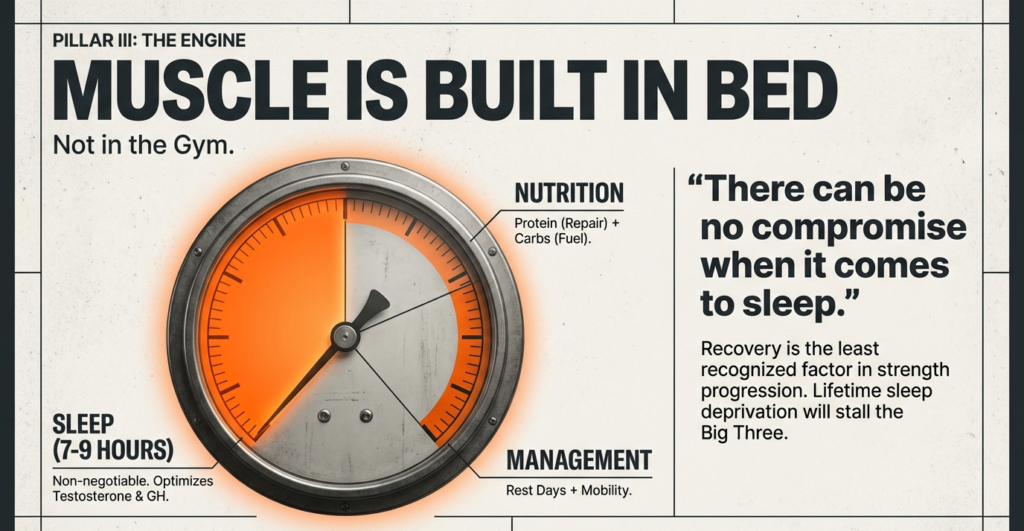
The building of muscle and strength occurs outside of the gym and not in the workout. The least recognized factor in the process of strength progression is recovery.
There can be no compromise when it comes to sleep. Get between 7 and 9 hours of sleep, and maximize testosterone, growth hormone, and nervous system regeneration. Lifetime sleep deprivation will stall any three lifts.
The issue of nutrition is equally important. Proper protein helps in muscle repair, whereas sufficient carbohydrates promote the hard training regime. The recovery equation is complete with rest days, mobility work and stress management.
7: Enhance Your Willpower and Perseverance
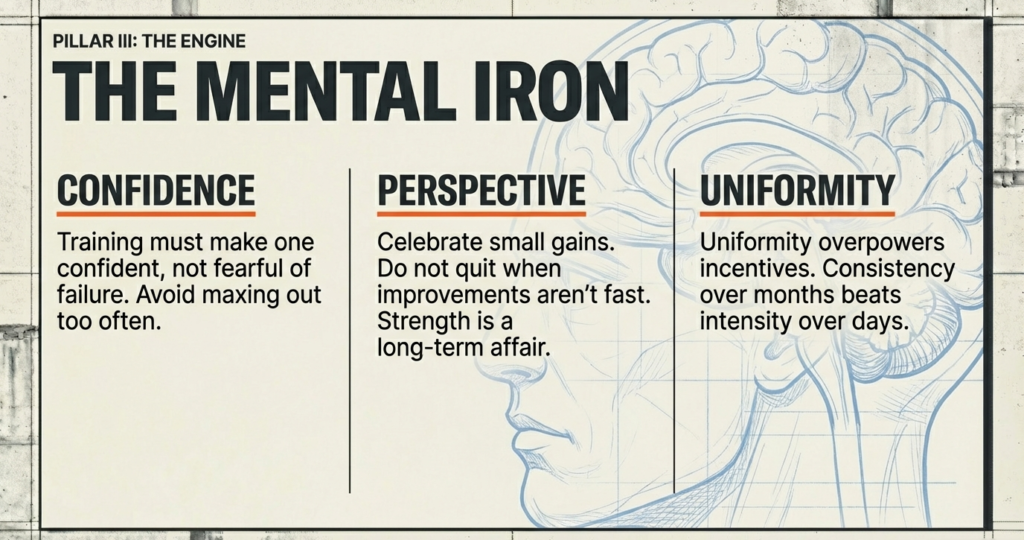
Mental power has a direct influence on physical power. Long-term success is motivated by confidence under the bar, concentration on heavy sets, and consistency over months. Avoid maxing out too often. Only wishful one-rep max attempts should be done during scheduled testing periods. The training must make one confident rather than fearful of failure.
Record your lifts, celebrate even little gains, and not to quit even when you feel that no improvements are made. Strength is a long term affair and the victors are those who do not give up when things are not becoming fast.
The pitfalls and traps that paralyze three
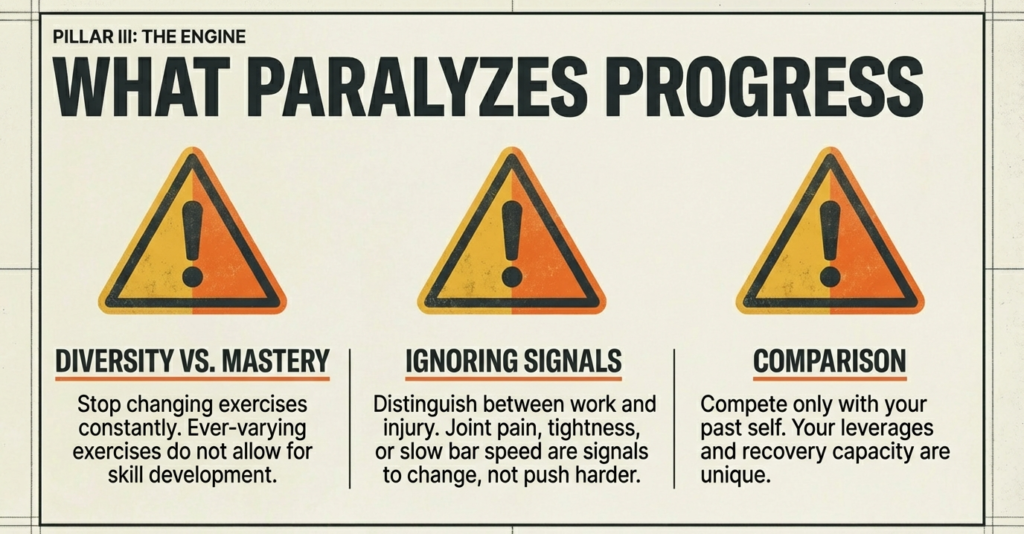
Most lifters do not move forward since they pursue diversity rather than mastery. The ever-varying exercises do not allow skill development in squat, bench and deadlifts. When you disregard the signs of pain, it is another flaw. Signs to change training, not to train harder blindly are joint pain, tightness or slow bar speed. Finally, it is counterproductive to be the same as others. You have your leverages, recovery capacity and training age that are unique. It is recommended that you should only compete with yourself.
Increasing Squat, Bench and Deadlift: How Long Does It Take?
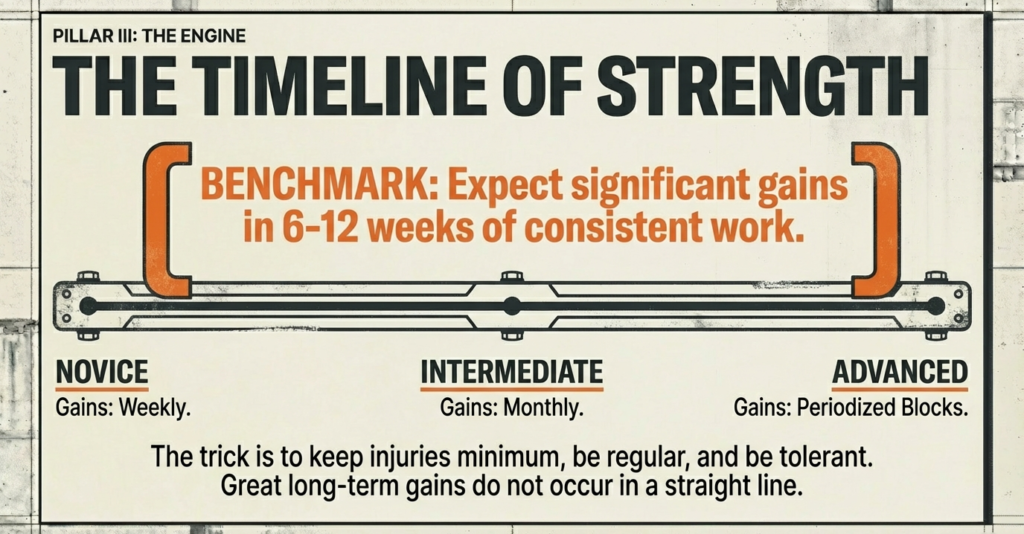
The development of strength does not always go in a straight line. Novices can be allowed to gain weight every week, whereas intermediate trainees need to gain weight after every one month. Advanced lifters normally quantify improvements within periods of training.
Most lifters are likely to see significant gains in 6-12 weeks with appropriate programming and restoration. Great long term gains occur not just on a weekly basis.
The trick is to keep the injuries to a minimum, be regular, and tolerant.
The strategic strength manifesto
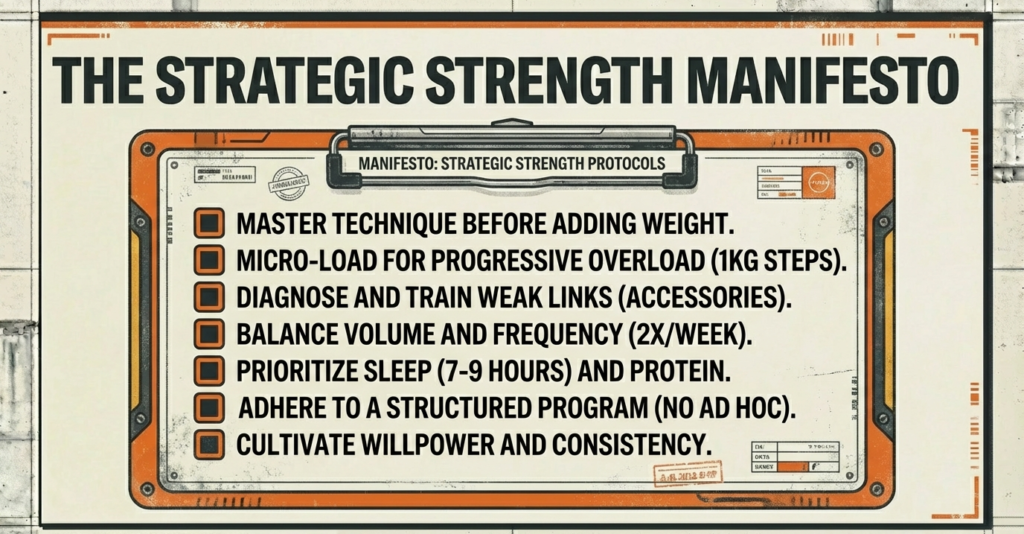
The Strategic Strength Manifesto is a caution that discipline, the structure and patience are the keys to real progress in strength training rather than chance. It focuses on learning technique and then adding weight, micro-loading as a means of progressive change, and smart accessory work as a means of identifying where progress is stalled.
Training volume plus training frequency help to avoid burnout, whereas sleep and proper nutrition make sure that recovery is not lagging behind the efforts. Formal programming substitutes emotional, local exercises with quantifiable improvement, and consistency is the actual competitive advantage. When long term adherence to the principles gains them strength, the gains become predictable, sustainable and resilient and makes training a process and not a lottery.
Trust the process
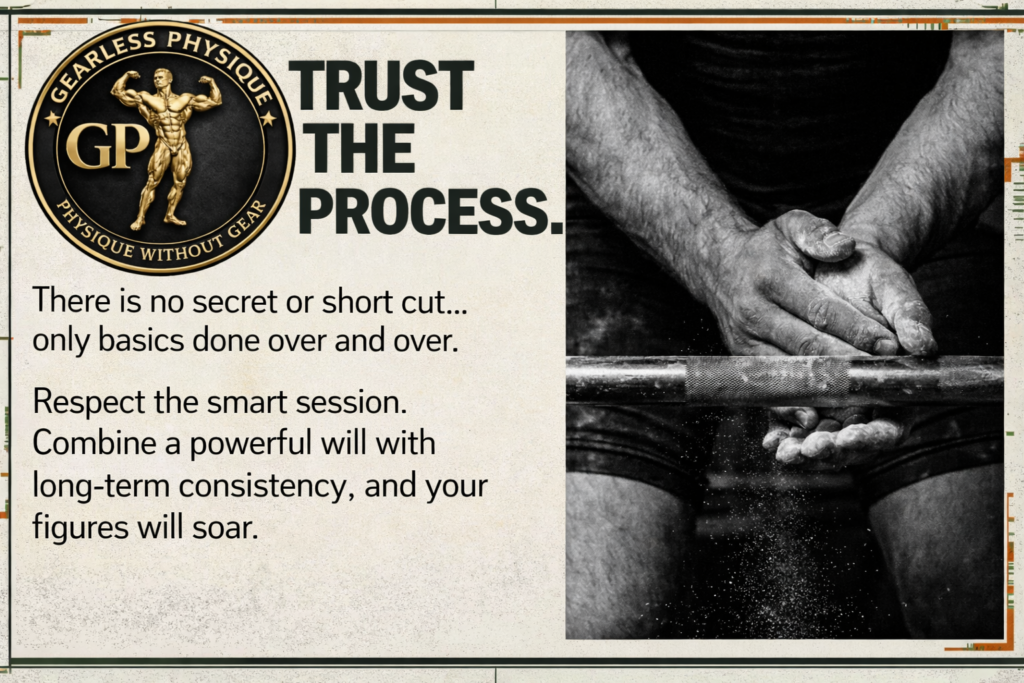
There is no secret or short cut to adding more squat, bench press and dead lift but rather doing the basics over and over. Perfect master technique, overload progressively, train weak point, recover correctly and structured programming. Add these to a powerful will and consistency in the long-term and your figures will soar- assured.
The strength is made on the basis of a smart session. It is best that you respect the process, and the results will come.
Read more: https://www.menshealth.com/uk/building-muscle/a28034011/start-powerlifting/

Gearless Physique
Physique Without Gear
Your transformation starts now. Who's with me?