Table of Contents
Toggle10 Superset Training Rules for Muscle Growth
The 10 commandments of hypertrophy supersets
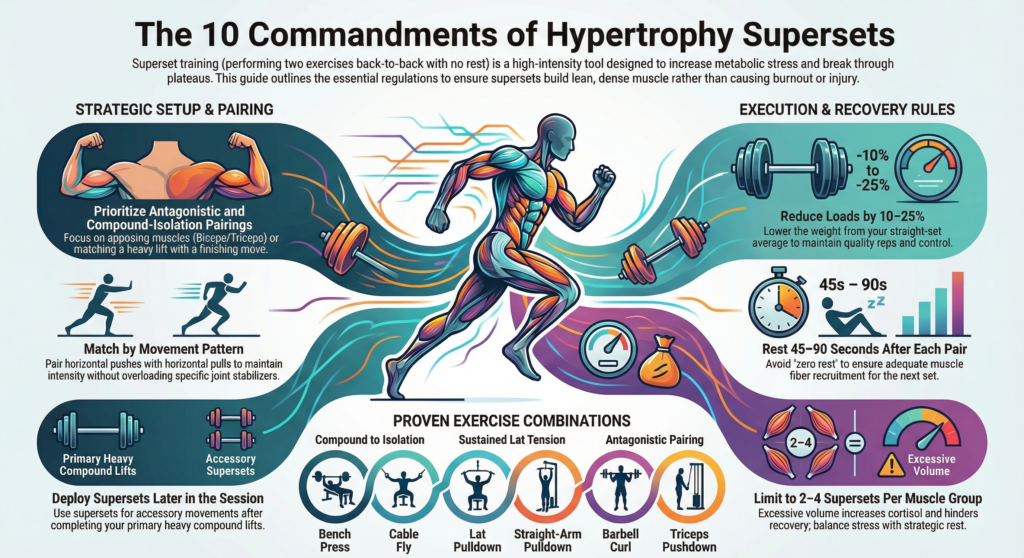
Superset training is quite effective in terms of increasing the intensity of muscles to create density in a workout and breaking plateaus. Supersets used in accordance can significantly enhance muscle fiber recruitment and metabolic stress, and save time.
There are several things that supersets can do though when performed poorly, they can destroy strength, form and hinder hypertrophy. The majority of gym-goers apply supersets randomly without knowing the regulations that render them to be effective in building up muscles.
In this guide, the 10 successful rules of superset training will be decomposed and you will need to stick to them to achieve your desired results of lean, dense, and aesthetic muscles.
What Is Superset Training?
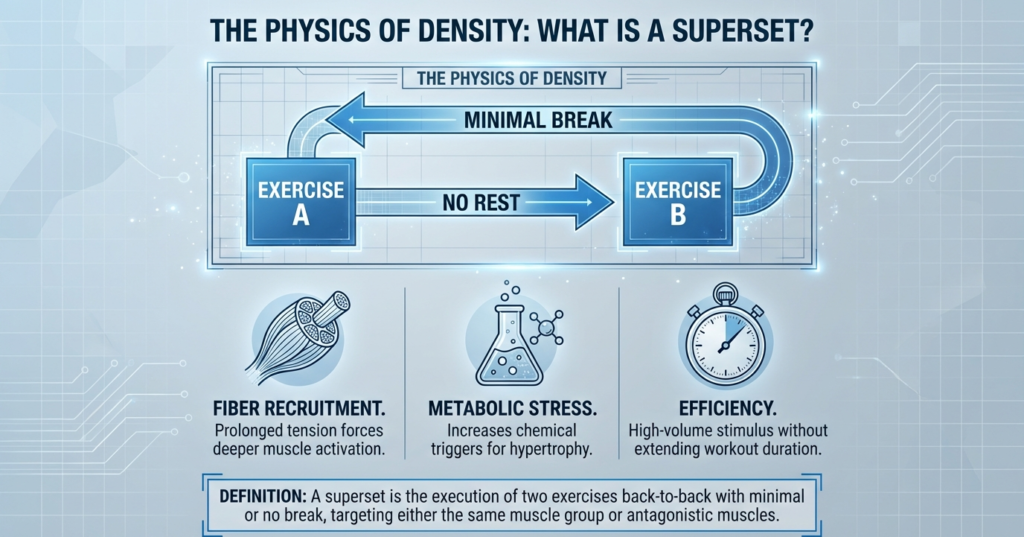
A superset is an exercise where one exercise is done followed by another with minimal or no breaks between them. These exercises may be exercising the same muscle or the opposite side of muscles.
The supersets enhance the intensity of training because of prolonged tension and an increase in metabolic stress which are the principal stimulators of muscle hypertrophy. They are particularly useful with experienced lifters that require more stimulus without the need to add to the workout time.
Supersets when intelligently programmed can give you the ability to build muscle much faster as well as increase muscular endurance and efficiency of workouts.
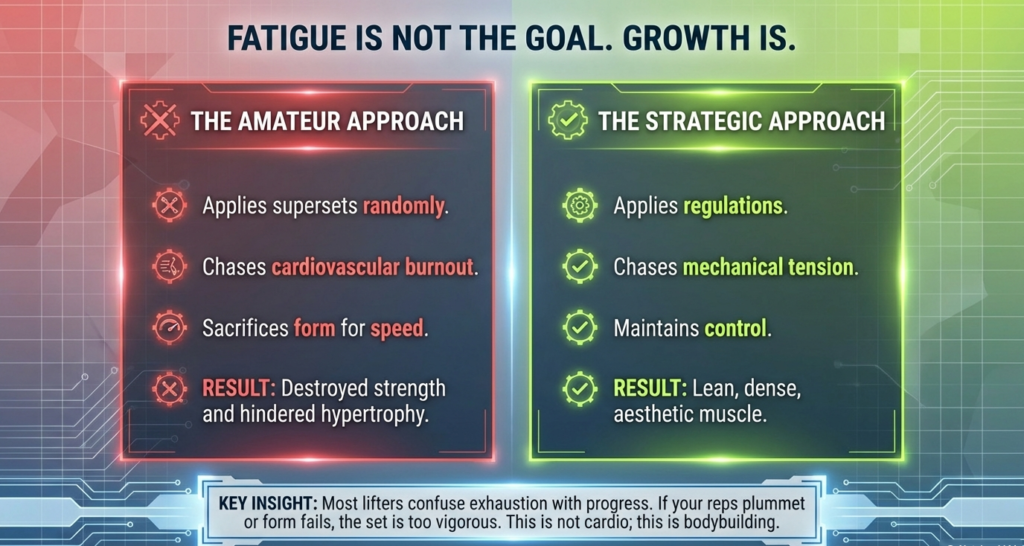
fatigue IS NOT THE GOAL
This image brings out the distinction between training fatigue and training growth very clearly. The amateur method is based on chance super sets, zero rest and over speed which causes burnout of the cardiovascular system, poor form and stalled hypertrophy. Conversely, the strategic approach enforces explicit rules, namely; mechanical tension, execution of the operation being controlled, and intelligent regulation of volume and rest. Quality reps, proper loading and consistency increase muscle growth and not exhaustion.
The main point is dramatic: the collapse of reps or the formation of a break has come, and the intensity has surpassed utility. This is not a cardio workout using weights, this is organized bodybuilding aiming at long term gains and thick, beautiful development of the muscles.
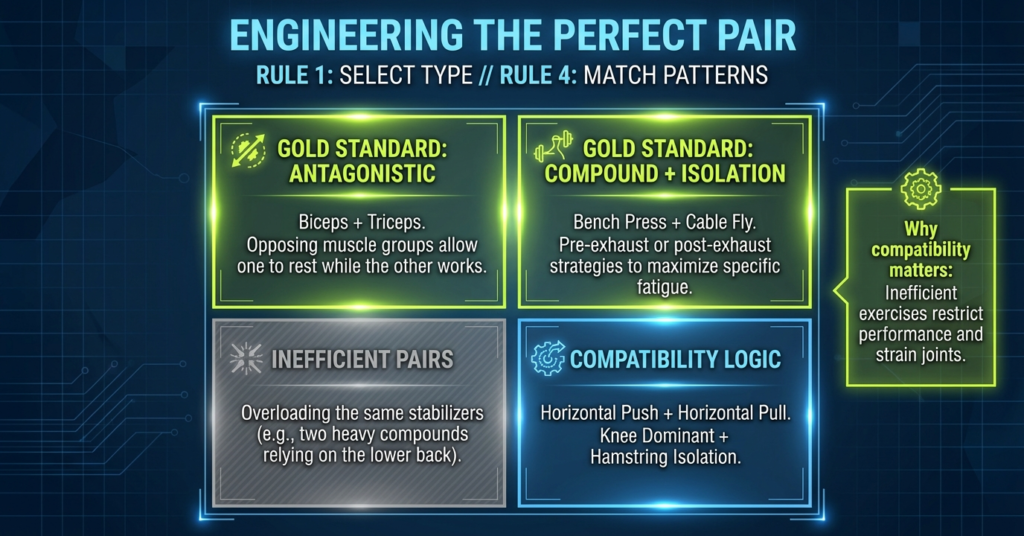
Engineering The perfect pair
Rule 1: Select type
There is no such thing as equal supersets. It is essential to choose the right type to grow the muscles.
There are three main types:
- Antagonistic supersets (biceps + triceps).
- Combination of Agonist (chest + chest).
- Compound, isolation supersets (bench press + cable fly).
Compound-isolation and antagonistic supersets are the best in hypertrophy. They enable you to be strong and make the greatest amount of your muscle fatigued. Exercises should not be randomized without a plan because this decreases their effectiveness and increases their risk of injury.
Rule 4: Exercises by Movement Pattern Matching
he successful supersets are based on compatibility. Inefficient exercises restrict performance and strain the joints.
Good pairings include:
- Horizontal push/ horizontal pull.
- Knee dominant + hamstring isolation.
- Chest press + chest fly
There should be no overloading of the same stabilizers in exercises. Smart matching enables one muscle group to be in action and the other one to rest whilst maintaining high intensity without interfering with the form.
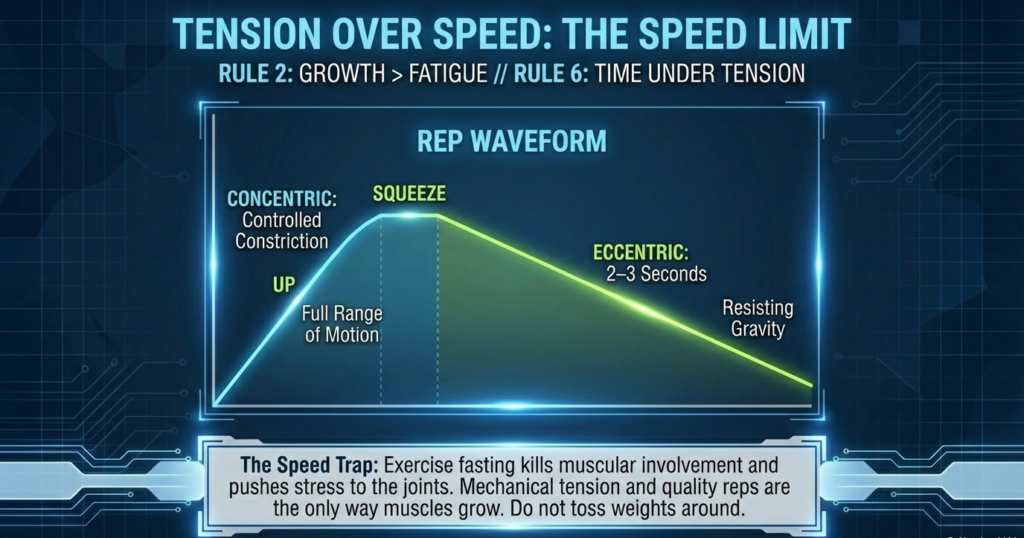
Tension Over Speed: The Speed Limit
Rule 2: You should put more emphasis on growing muscles rather than being fatigued
The use of supersets is also expected to increase muscle stimulation not to kill your performance. Most lifters purse after excessive fatigue confusing exhaustion with progress.
Gradual overload is meant to have progressive intensity and not cardiovascular burnout. When your reps plummet or your form fails, your superset is too vigorous.
Select weights so that you can be in tension and control in both exercises. Mechanical tension and quality reps are the only way muscles grow and not sweat.
Rule 6: Time Under Tension and Control Tempo
Speed is a greater consideration in case of superset training. Exercise fasting kills the muscular involvement and pushes stress to joints.
Focus on:
- 2–3 seconds eccentric
- Concentric constriction which is under control.
- Full range of motion
Supersets are effective natural time under tension. They result in the optimum hypertrophy environment when coupled with a slow, controlled reps. The growth of the muscles occurs when they are subject to constant mechanical load, but not when weights are tossed about.
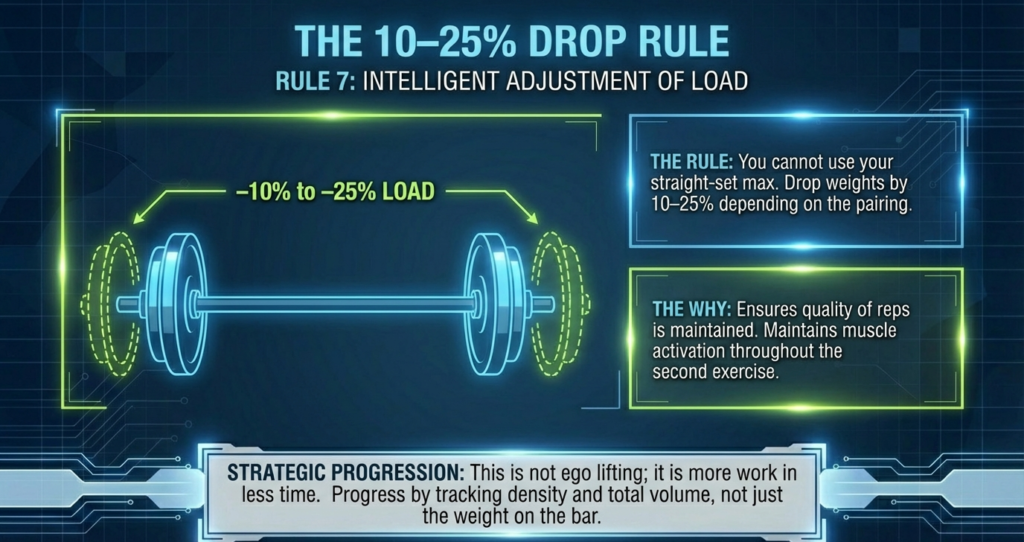
The 10-25 % Drop Rule
Rule 7: Intelligent Adjustment of the Load
It is not a good idea to use the same weight that you would when doing straight sets. Intelligent load modifications are required in supersets.
Loss of weights of between 10%- 25 % based on the exercise pairing. This will enable you to hold quality of the reps and muscle activation during the superset.
Progression still matters. Following heavier weights every session, then use track reps, total volume or density instead. Much of what is practiced under the superset is not ego lifting but more work in less time.
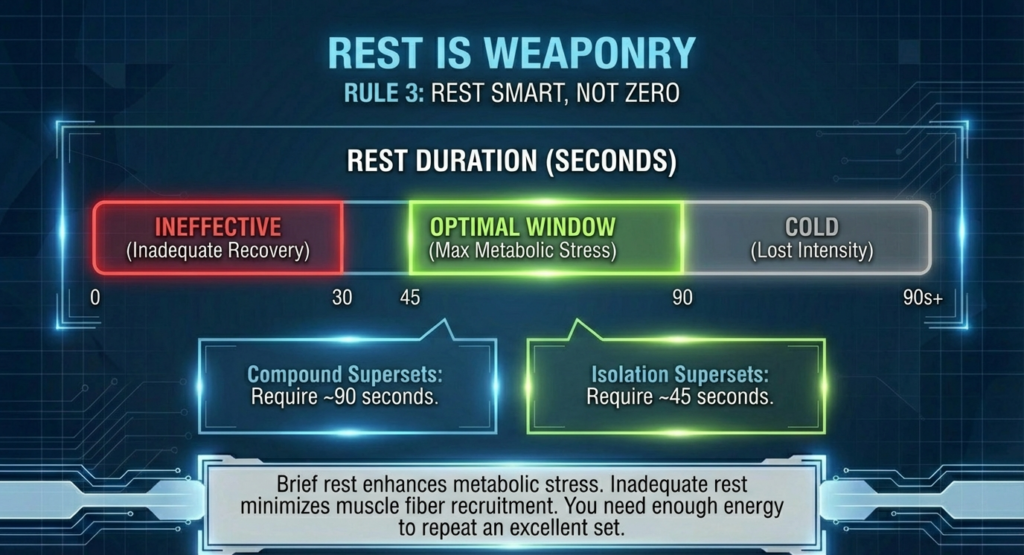
Rest is Weaponry
Rule 3: Rest Smart, Not Zero
Perpetual rest is not the meaning of supersets. This is a common mistake.
Once both exercises are finished in a superset, take a 45-90 seconds break depending on the movement and load. Compound supersets take a little bit of time to rest when compared to isolation superset.
Brief rest enhances metabolic stress whereas inadequate rest minimizes muscle fiber recruitment. You can repeat excellent sets with Smart rest, and it is critical to hypertrophy.
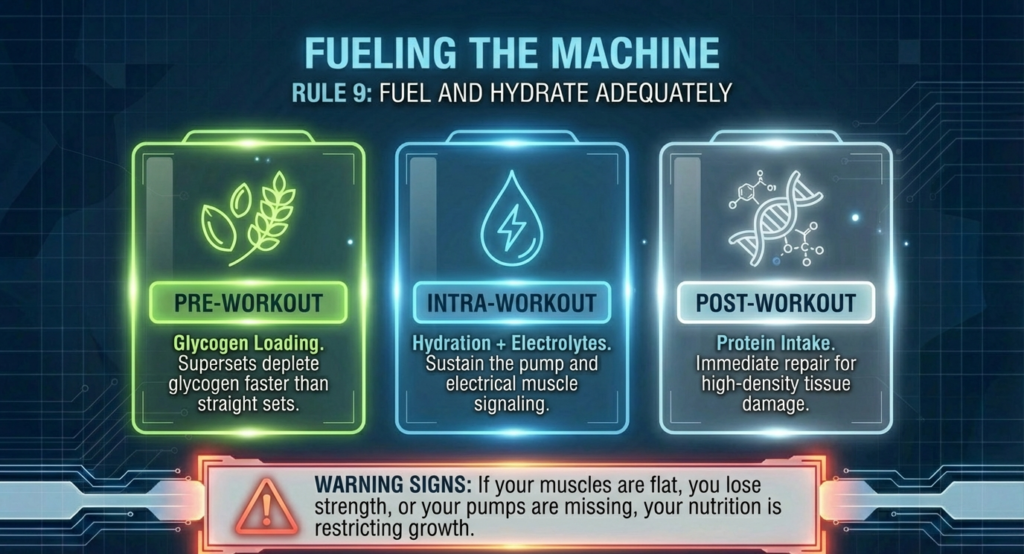
Fueling the machine
Rule 9: Fuel and Hydrate Adequately
Superset training is very demanding of energy. Performance and recovery is impaired without proper nutrition.
Ensure:
- Proper carbohydrates before work.
- Intra-workout hydration
- Post-workout protein intake
Super sets cause glycogen depletion at a higher rate. When your muscles are flat, you disappear, you lose strength, or your pumps are missing, then your nutrition is restricting your growth faster than your training.
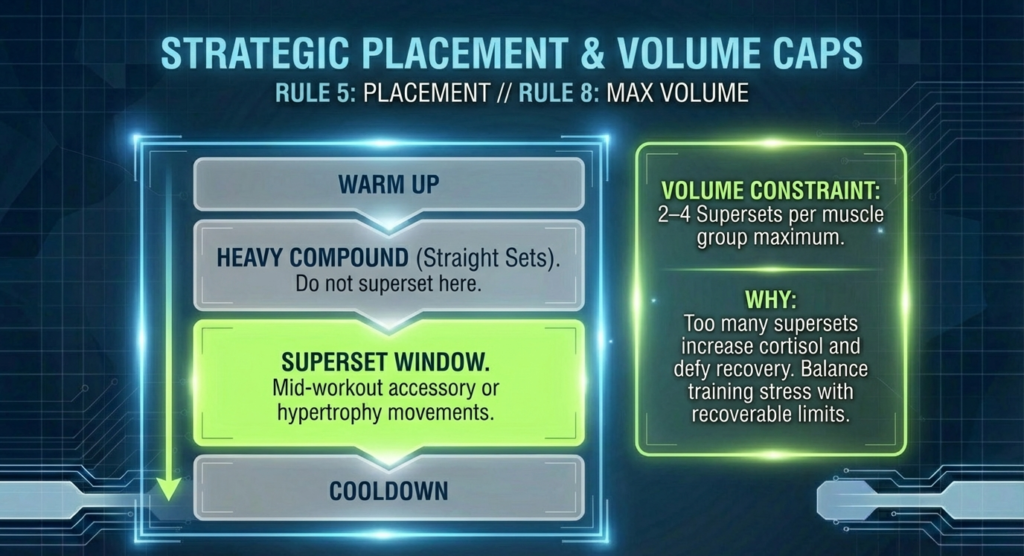
strategic placement & volume caps
Rule 5: deploy Supersets in the Workout
However, supersets are effective, and they cannot occupy your daily workout.
Supersets are required to develop muscles:
- When your chief compound gets you up.
- During the mid-exercise or conclusion of the exercise.
- In case of accessory or hypertrophy movements.
Heavy supersets at the beginning of a workout may decrease the strength output. Start with building a base, then move on to the use of supersets in order to work up on volume and intensity where it counts the most.
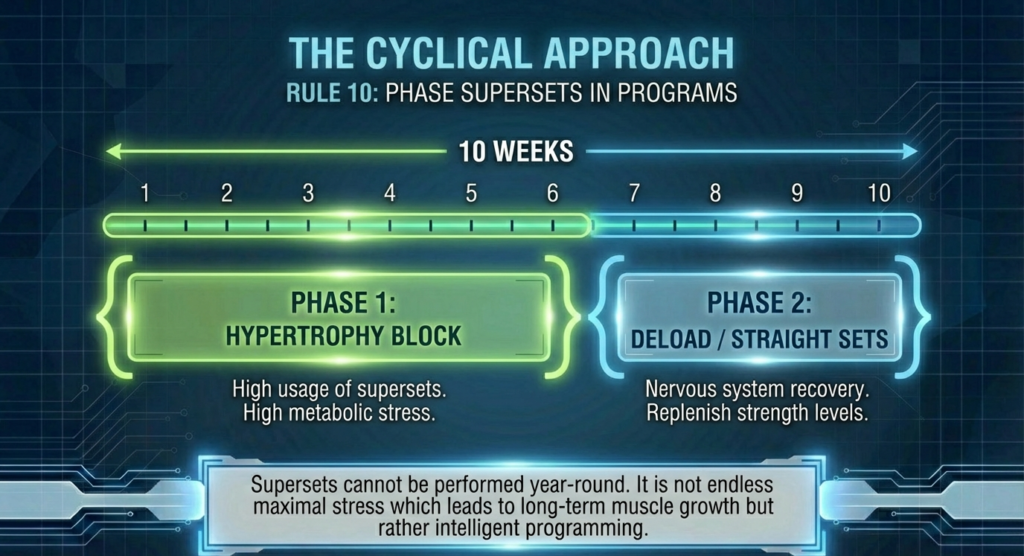
The cyclical approach
Rule 10: Phase Supersets in Programs
Superset training cannot be done all year round without being cycled.
Ideal usage:
- 4–6 week hypertrophy phases
- Periods of deload or straight-sets then.
This grants the nervous system a rest and replenishes the level of strength. Intermittent super set training will enable you to enjoy the gains of intensity without fatigue. It is not endless maximal stress which leads to long-term muscle growth but rather intelligent programming.
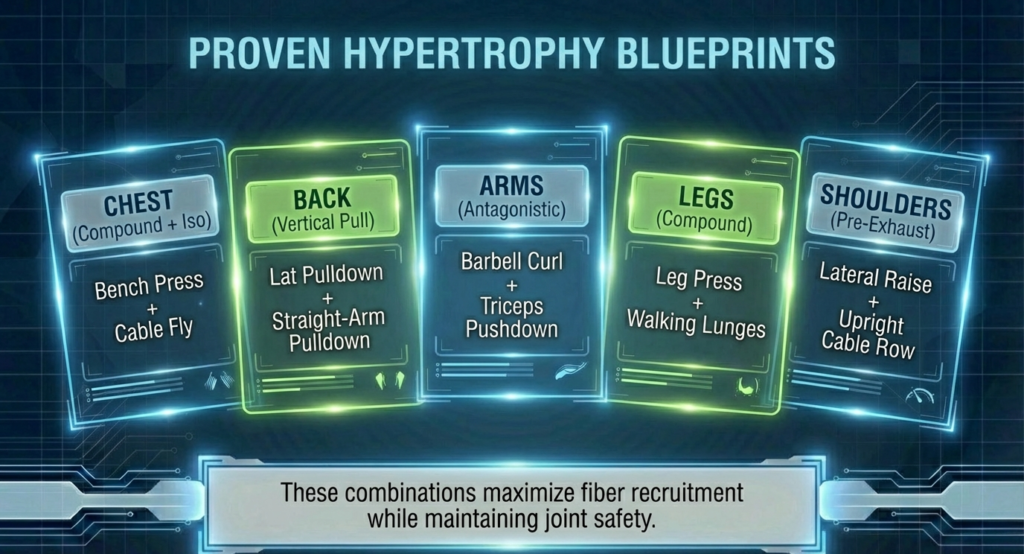
Proven hypertrophy blueprints
Since most people are muscle builders, I would advise them to use the best examples of superset in order to build their muscles.
The following are hypertrophy-based supersets which have been proven:
- Bench Press → Cable Fly.
- Lat Pulldown Straight-Arm Pulldown.
- Barbell Curl to Triceps Pushdown.
- Leg Press → Walking Lunges
- Lateral Raise Walk over to Upright Cable Row.
These combinations obtain as much muscle fiber recruitment as possible at the same time of keeping the joints safe and efficient during training.
Read more: https://www.muscleandstrength.com/workouts/fast-mass-program
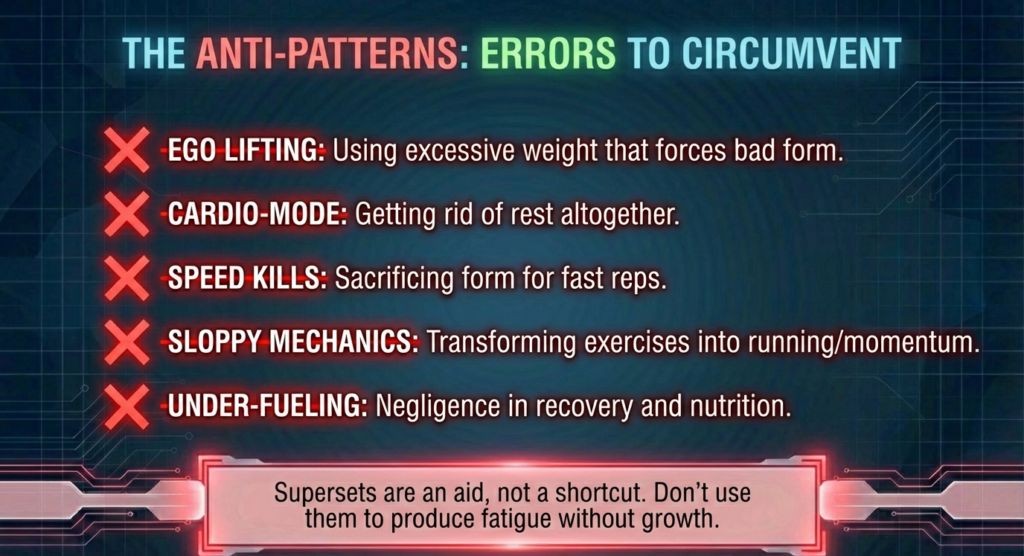
The Anti-patterns: errors to circumvent
Poor execution of supersets is a factor that sabotages gains of many lifters. Avoid these errors:
- Using excessive weight.
- Getting rid of rest altogether.
- Sacrificing form for speed.
- Transforming exercises into running.
- Negligence in recovery and nutrition.
Supersets are an aid, not a shorthorn. They are used in a harmful manner to produce fatigue and not growth.
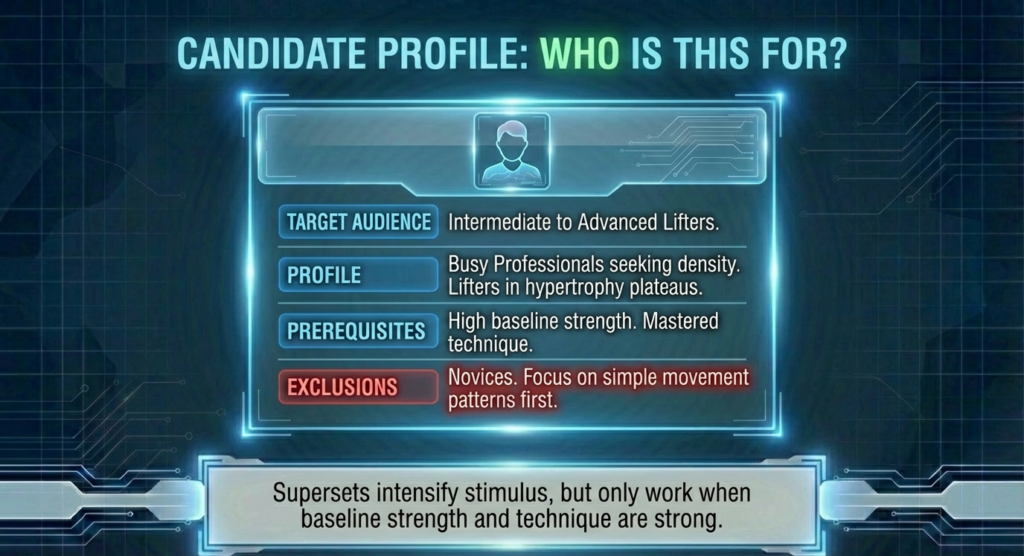
Who is This Superset Training Supposed to?
The best suited supersets are:
- Intermediate level lifters to advanced lifters.
- Professional people with minimal time in the gym.
- Lifters in hypertrophy plateaus.
The novices are to learn the simplest movement patterns. Supersets intensify stimulus, however, only when baseline strength and technique is strong.
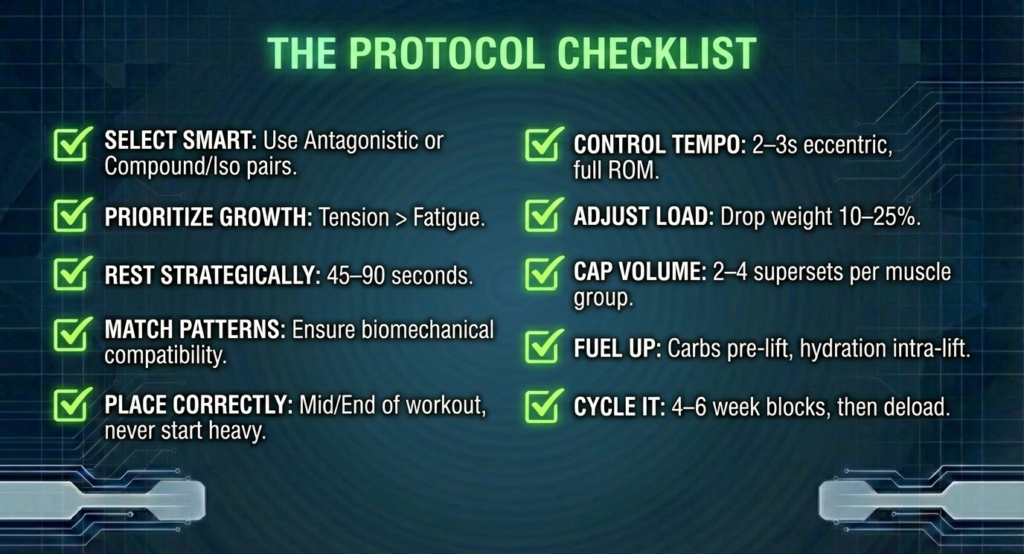
The protocol checklist
This picture includes an effective and practical superset training protocol checklist that will help to gain the most possible number of muscles with the lowest possible fatigue. It focuses on making intelligent exercise combinations, maximum emphasis on mechanical tension and not fatigue, and strategic rest intervals between sets. The reps are of high quality due to controlled tempo and full range of movement, and smart load reduction. Other volume limits, correct workout positioning, and the need to use carbohydrates and hydration are also brought to attention by the checklist.
Lastly, it strengthens cycling super sets with increasing blocks with scheduled deloads. Combined, these concepts make supersets more than random intensity methods, but instead a rigorous approach toward sustainable growth, enhanced recuperation and sustained performance development.
Final Thoughts
One of the most effective hypertrophy tools is the Superset training, when utilized properly. With these 10 superset training rules you would be able to gain muscle faster, more efficiently, and even overcome growth plateaus without getting fatigued unnecessarily.
Strategic thinking is the key to chaos. Work hard by design, manage the number of reps, nourish your body and value recovery. Consistency, intelligence and patience, rather than intensity is rewarded by muscle growth.
Train smart, grow steadily and get supersets to work, not to get you.


Gearless Physique
Physique Without Gear
Your transformation starts now. Who's with me?