Table of Contents
Toggle3 Proven Fat loos Pillars: Calories, Hormones & Consistency
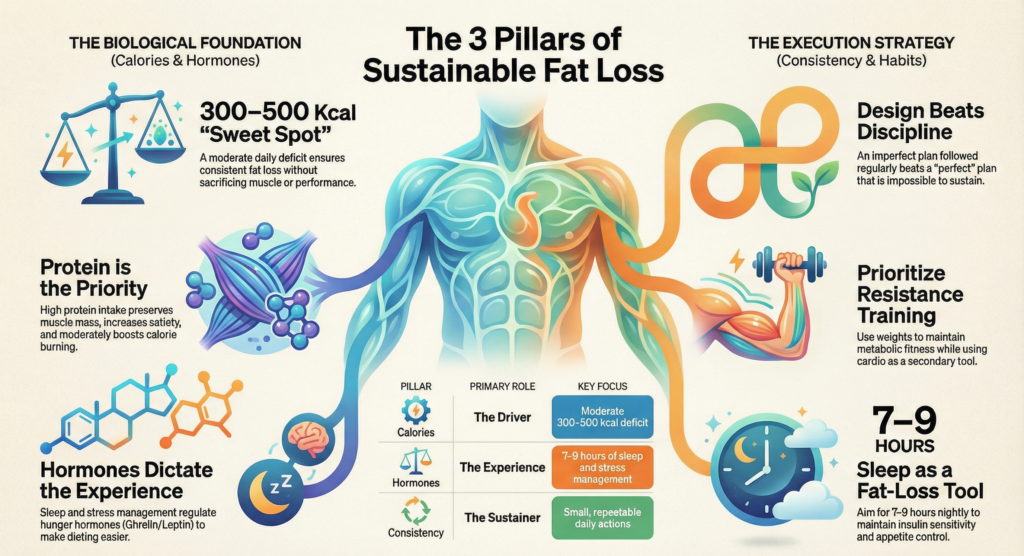
The “3 Pillars of Sustainable Fat Loss” infographic breaks down fat loss into a simple, science-based system. The first pillar, calories, represents the foundation—without a consistent calorie deficit, fat loss cannot occur. The second pillar, hormones, shapes how your body responds to that deficit, influencing hunger, energy, and fat-burning efficiency through factors like sleep, stress, and insulin sensitivity. The third pillar, consistency, is what turns short-term effort into long-term results by reinforcing daily habits and adherence. Supporting elements such as high protein intake, resistance training, and quality sleep enhance all three pillars, creating a balanced approach that is effective, realistic, and sustainable over time.
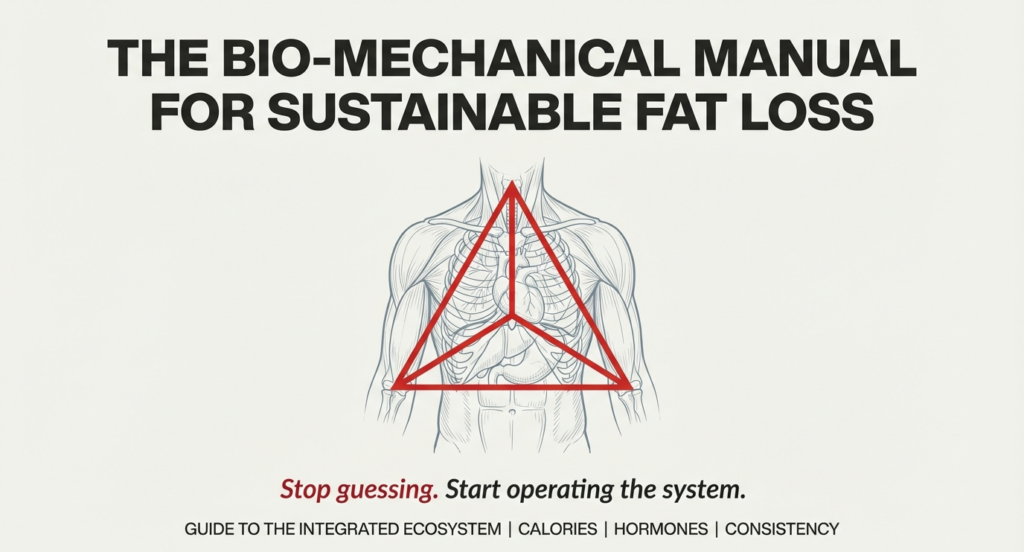
The Bio-Mechanical Manual For Sustainable fat loss
One of the most misconceived objectives of fitness is fat loss. Human beings switch between diets and detox, shortcuts and supplements but the outcome is only temporary. The reality is more basic and not harder. Sustainable fat loss is anchored on three indisputable pillars, which include calories, hormones, and consistency. Forget one, and you are retarded. Learn them all at once, and you are not going to lose weight and feel frustrated anymore. Each pillar in this article is disaggregated in an easy, no-frills manner and you no longer have to guess at anything, but take control of your outcomes.
Stop Guessing Fat Loss – Learn the System
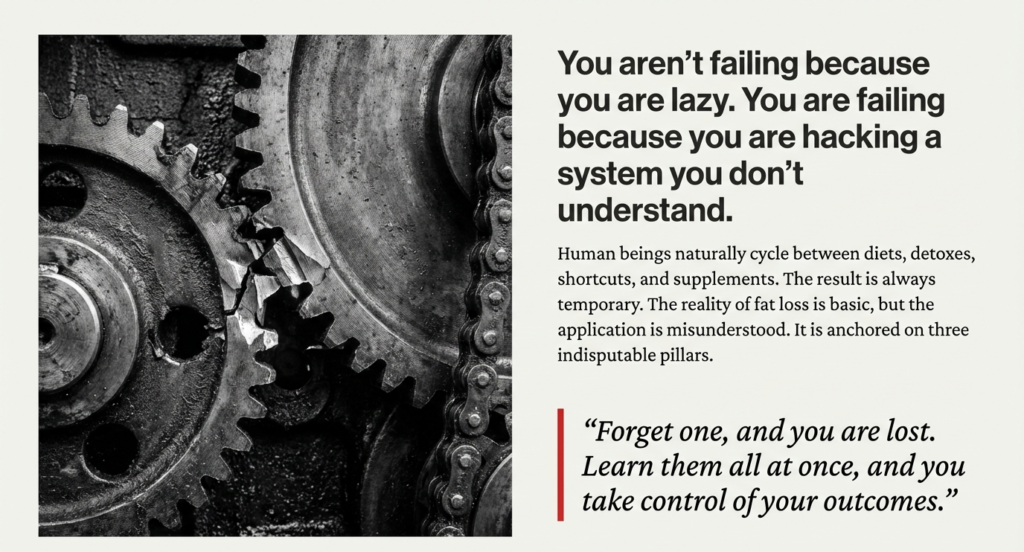
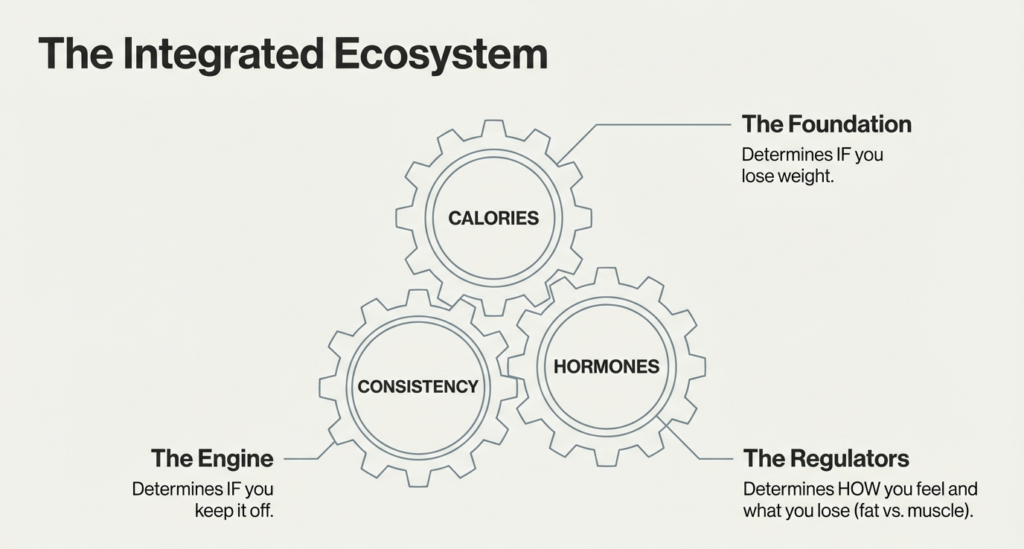
This picture reflects one of cruel realities of losing weight: failure is never about idleness but nearly always a case of not understanding the system. Similar to interlocking gears, calories, hormones and consistency have to coordinate in order to ensure that progress occurs. Switching between diets, detoxs and shortcuts generates movement without progress, only to deliver short-lived outcomes. The steps of one gear neglected demolish the whole mechanism. Sustainable fat loss does not concern itself with cutting up individual components, but rather understanding how the entire mechanism works. When you learn how to work, you can put effort into it and the advancement becomes calculable and the control over the result finally comes back.
The integrated ecosystem
Pillar 1: Calories -The Foundation of Fat Loss
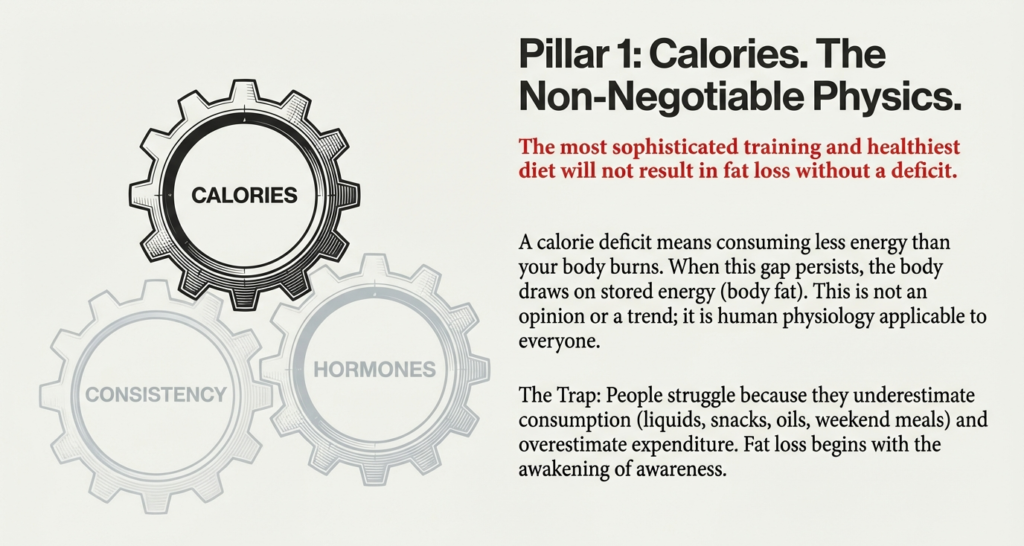
Fat loss is based on calories. The most sophisticated training and the most healthy diet will not result in fat loss without a calorie deficit. Calorie deficit refers to the fact that you are taking in less calories compared to the amount you are burning in the body. In cases where the gap persists, your body has to draw on the stored energy which comprises of body fat. This is not a trend, an opinion and it is just human physiology, and it is applicable to all people.
People find it hard to lose fat since they do not have a clear understanding of the amounts they consume and exaggerate the amounts they expend. Calories in liquid form, snacks, oils, and meals on weekends are easily accumulating. Loss of fat starts with awakening of awareness on its part. Calorie-counting, even in the short run, brings sanity. You do not require being perfect but instead you require honesty
What is the Calorie Deficit to be?
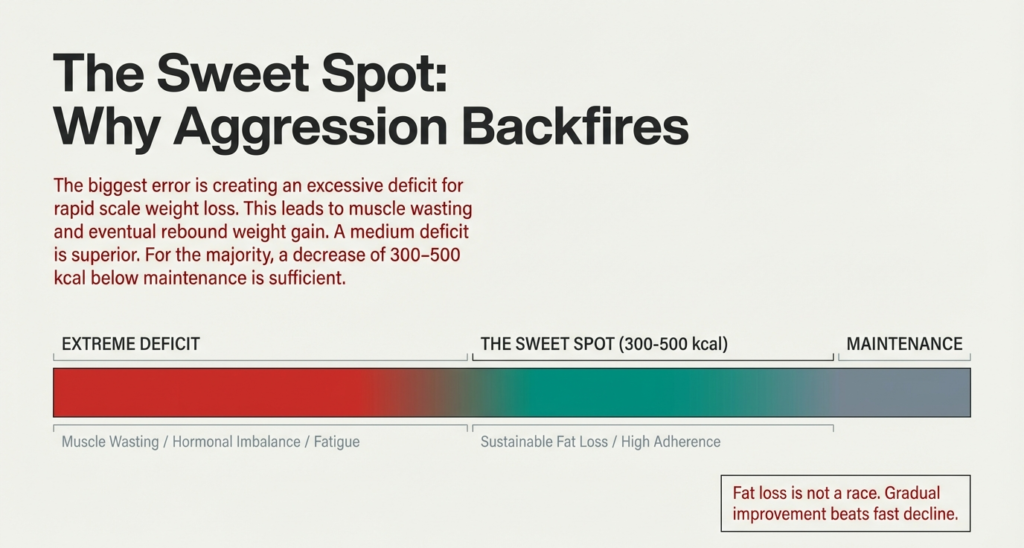
The biggest error that people commit is making an excessive calorie deficit hoping that they can achieve better results. This might result in rapid scale weight loss, but commonly it involves muscle wasting, hormonal imbalance, fatigue and subsequent weight gain. A medium deficit is much more effective in the long run. To the majority of individuals, a decrease in daily consumption of 300-500 kcal less than the maintenance level will be sufficient to achieve a consistent fat loss without muscle or performance loss.
Fat loss is not a race. Gradual improvement which you can sustain is better than fast decline which falls after a couple of weeks. A moderate deficit helps in high quality training, moderate mood and increased adherence. It is not only to lose weight, but to lose fat and maintain it.
Food Quality Still Matters
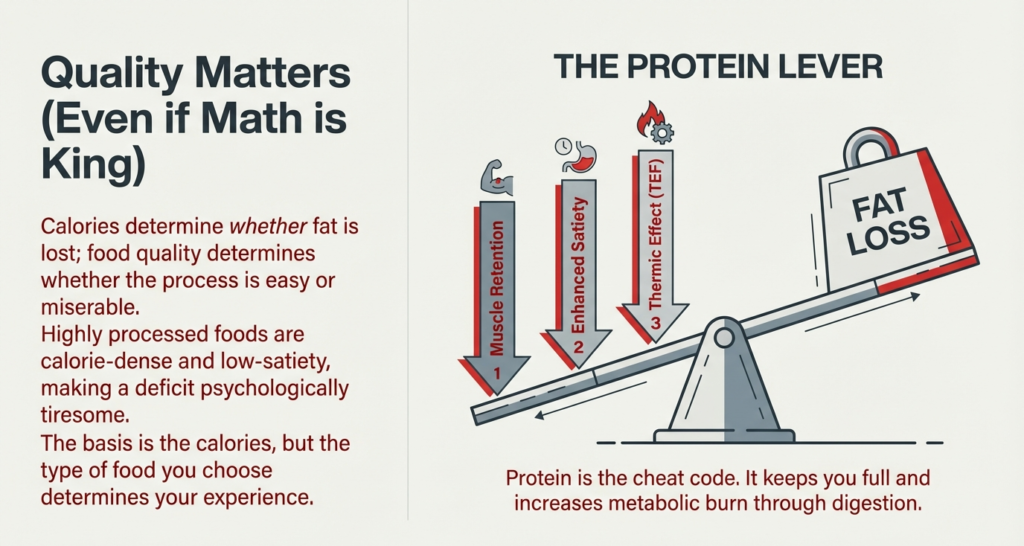
Although calories are the determinants of whether fat is lost or not, the quality of the food is what makes the process either easy or difficult. Highly processed food is also high in calories and does not keep one full hence it becomes harder to maintain a deficit. Entire foods such as lean proteins, vegetables, fruits, and complex carbohydrates give an ideal volume, fiber and micronutrients at a lower calorie content.
Particular attention should be paid to protein. Protein consumption is enough to maintain muscle bulk when slimming down, enhances satiety and moderately raises calorie burning by digesting food. This is because eating protein-centered meals makes it easier to regulate calories and not as psychologically tiresome. The basis is the calories, but the type of food you choose determines your experience in that context.
Pillar 2: Hormones -The Silent Shape
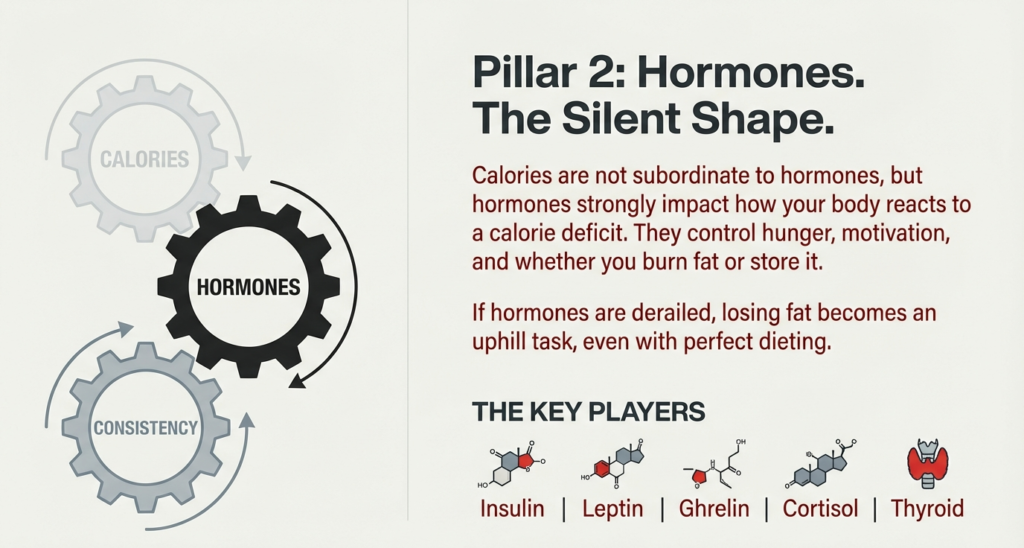
Calories are not subordinate to hormones; they have a strong impact on your body reaction towards them. The hormones control hunger, fat storage, muscle retention, fat storage and motivation. With the balance of hormones, it is easy to have a calorie deficit. Once they are derailed, losing fat will become an up hill task despite having the best dieting.
Relevant hormones in fat loss are insulin, leptin, ghrelin, cortisol and thyroid hormones. These neurotransmitters are sensitive to sleep, neuroses, the contents of the diet, and the amount of training. You will not be able to ignore hormones in order to achieve long-lasting outcomes without having to fry or ruin your health.
Insulin and Fat Loss
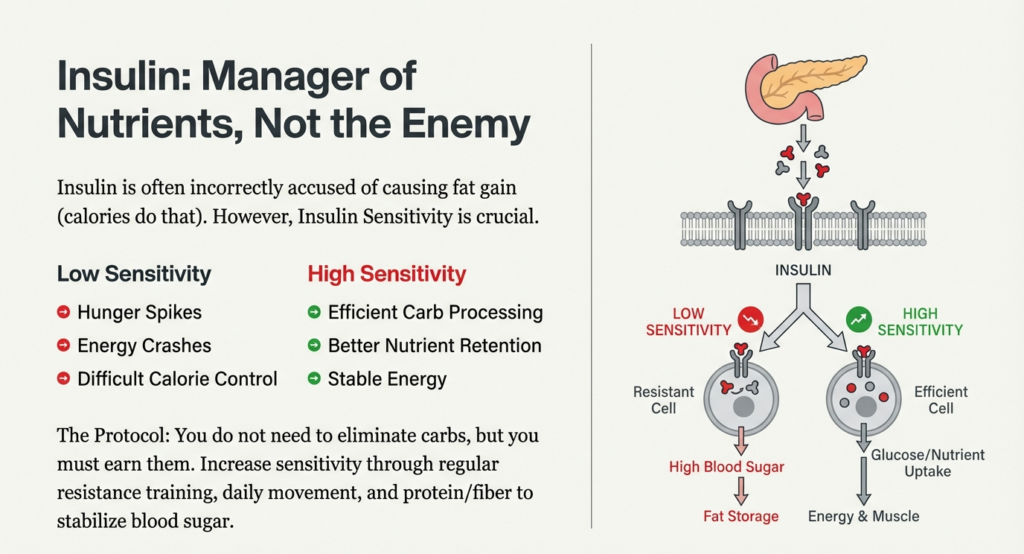
Insulin has a negative perception and is incorrectly accused of making people gain fat. The problem is that an excess of calories makes a person gain fat. Nevertheless, insulin sensitivity influences the effectiveness of the body in processing carbohydrates and retaining nutrients. In case of low insulin sensitivity, hunger and energy crashes are more common and it is more difficult to control calories.
The regular resistance training, daily movement, enough sleep, and balanced meals can help to increase the insulin sensitivity. Protein and fiber will slow down the digestion of carbohydrates and stabilize the blood sugar levels. You do not have to get rid of carbs to lose fat but you must get them smartly in your calorie goal.
Cortisol: Stress and Stubborn Fat
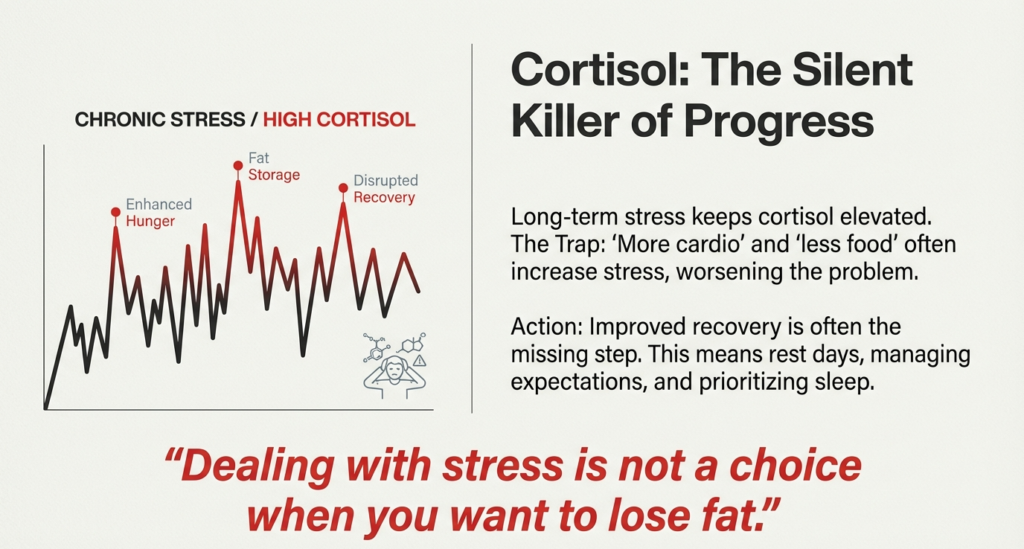
Long term stress is a silent killer of fat. Cortisol will be maintained when there is a high level of stress. Continuous cortisol elevation may enhance hunger, store fats and disrupt recovery. This can result in emotional eating, impaired sleep and training performance, which has developed a negative feedback loop.
Dealing with stress is not a choice when you want to lose fat. These are getting rest, rest days, too much cardio and not too many expectations. Better training and reduction of food do not necessarily help. In some cases, a needed step is improved recovery, which initiates improvement.
Sleep & Hormonal Balance
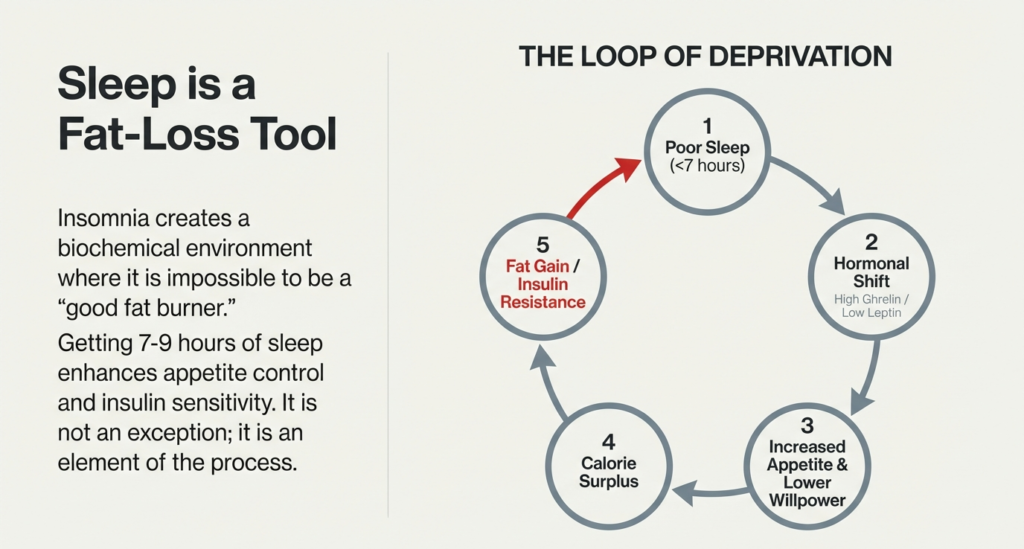
One of the least used fat-loss tools is sleep. Insomnia interferes with the hunger hormones by raising the levels of ghrelin and reducing leptin. This mix causes one to be more hungry and unsatisfied with the food eaten, and the chances of overeating are higher. Sleep deprivation also impairs insulin sensitivity and elevates the levels of cortisol.
Regularly getting 7-9 hours of sleep every night enhances the control of appetite, energy and quality of training. It is hard to be a good fat burner even under the best diet plan in the world and without sleep. Sleep is no exception; it is an element of the process.
Pillar 3: Consistency -The Real Game Changer
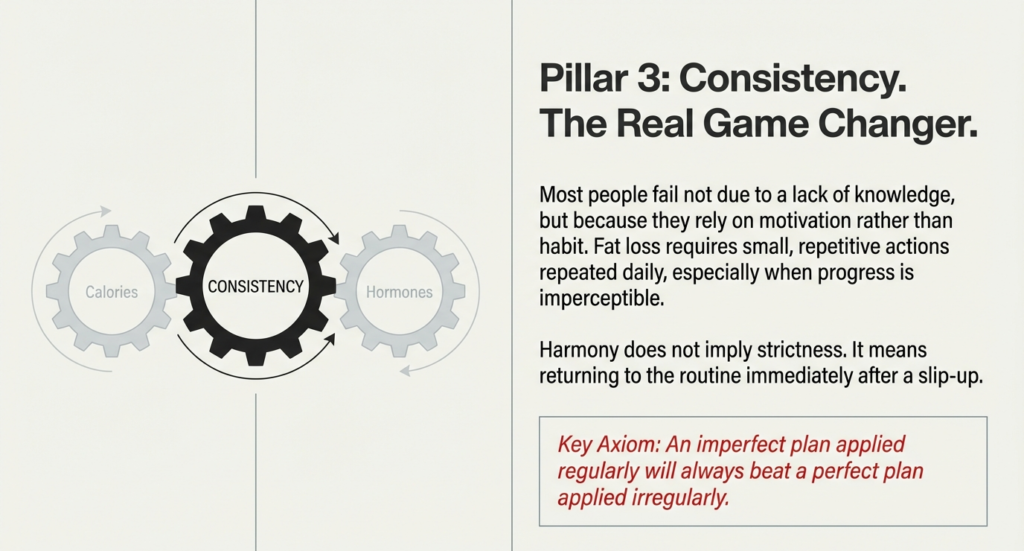
Most people fail in consistency, not due to lack of knowledge, but due to the fact that they want to be constantly motivated. The fat burning process takes small repetitive actions, which must continue to be repeated every day, even in times when progress seems slow or imperceptible. An imperfect plan applied irregularly will never beat a simple plan applied regularly.
Harmony does not imply strictness. It involves having most of the time sticking to your calorie target, exercising and bouncing back to your routine after you fail. Missed exercises, social meals and bad days are common. It is not the fall, but the speed at which you are able to climb back on.
Why Short-Term Diet Fail
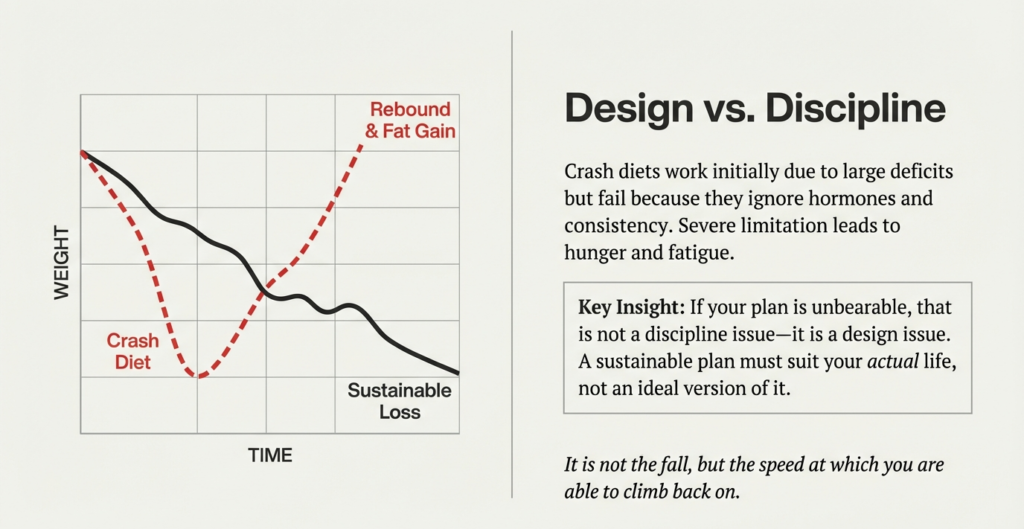
The reason why crash diets tend to work at the beginning is because it produces a significant calorie deficit. Nevertheless, they do not work because they do not pay attention to hormones and consistency. Severe limitation leads to hunger, stress, and fatigue, and it is impossible to comply with it over time. After the diet, the old habits come back and the weight is gained back and this time with additional fat.
A sustainable fat loss is one that is grounded on a habit that would last months rather than days. When your plan is unbearable, then that is not a discipline issue, it is a design issue. The fat-loss plan that suits your actual life is a better choice when compared to an ideal version of your life.
Training & Consistency
Training assists in shedding fat by burning higher calories, maintaining muscle and enhancing metabolic fitness. The basis should be resistance training and the addition of cardio, depending on the recovery and preference. The most effective training regime is the one that you will look forward to doing regularly. Less is better than none, as long as it is done on a regular basis is better than doing everything and quitting. Months of three to five good workouts will be better than intense workouts that are practiced quite often. The only way forward is through building up, not bursting intensely and then fainting.
The Interrelationship of the Three Pillars
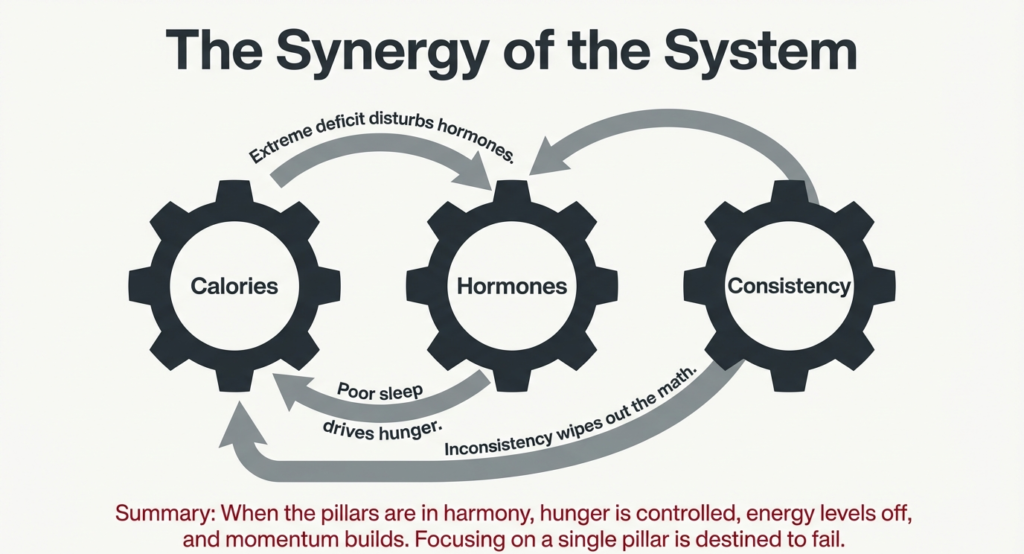
Calories are how much of the fat is lost, hormones are what makes your body and mentality react to the process and consistency is what keeps everything in motion. These pillars are linked together. Extreme shortage of calories is likely to disturb hormones and ruin the consistency. Low sleep levels may lead to more hunger whereby it becomes difficult to control calories. Any inconsistency will wipe weeks of hard work no matter the math of calories.
Once the three pillars are in harmony, the process of fat loss will not seem disorderly. Hunger is controlled, energy levels off, and gains momentum are foreseeable. This explains why prioritizing on a single pillar can hardly be effective in the long run.
The Process of creating a Sustainable Fat-Loss Strategy
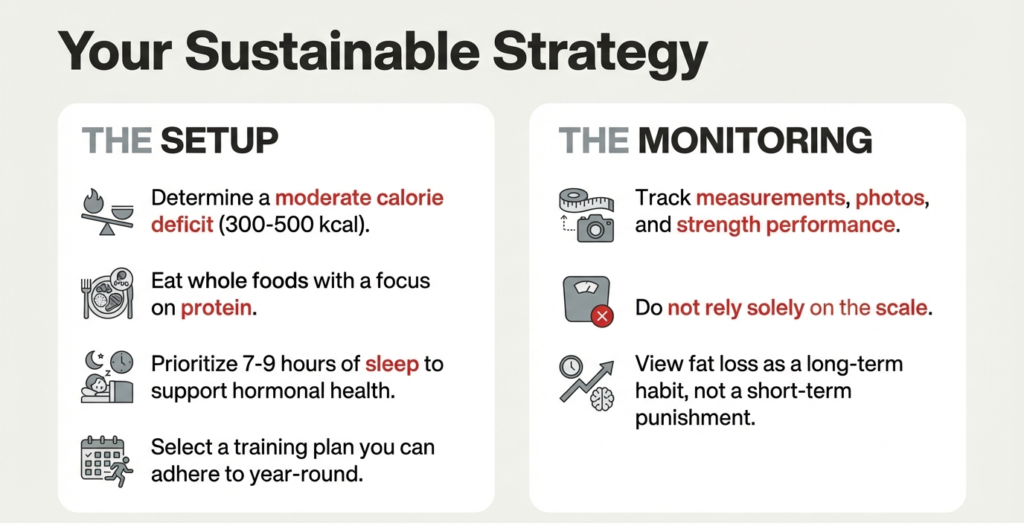
Begin by determining a good calorie goal depending on your lifestyle. Eat mainly whole foods, emphasize on protein and be flexible on social situations. Give hormonal health the best support by getting proper sleep and dealing with stress and recovering. Get a training plan which you will adhere to throughout the year, and not only at periods of high motivation.
Monitor the progress with the help of various indicators, such as body measurements, photographs, strength, and the way you feel. It is not just the scale that tells the whole story. Change slowly, not passionately. The fat loss process is not a short term punishment.
Final Thoughts
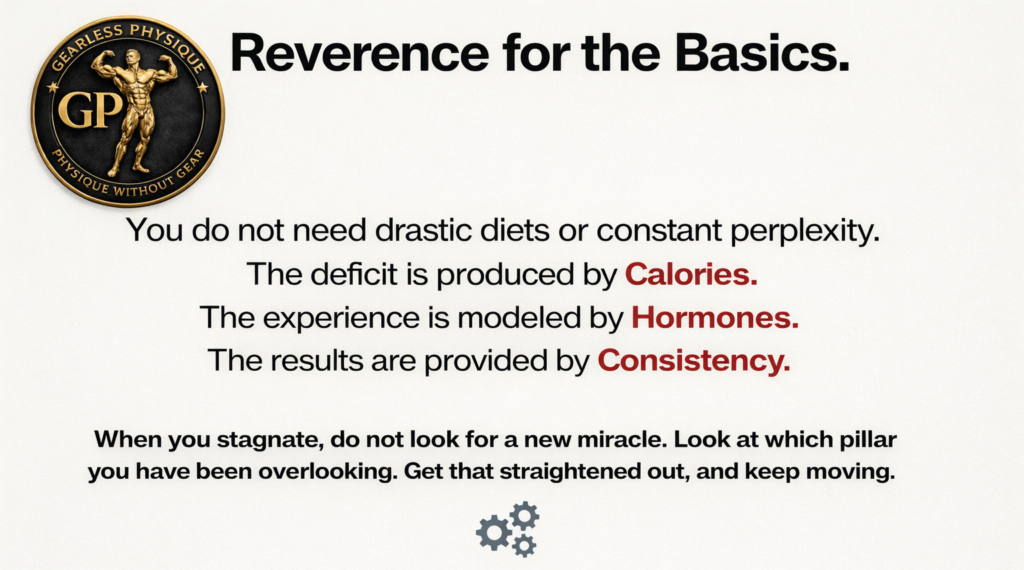
You do not need drastic diets, pain and constant perplexity to lose weight. It involves reverence towards the basics. The deficit is produced by calories, experience is modeled by hormones and results are provided by consistency. Once you quit the quest to find shortcuts and begin building on these three pillars, fat loss will become sustainable and reproducible. When you get stagnant, it is not time to find another miracle process. See what pillar you have been overlooking. Get that straightened out, and then get on. It is not the amount of time you spend on doing something, but it is the quality of the things you do, that lead to the fat loss.
Read more: https://www.reshapeapp.ai/blog/weight-loss-fundamentals-calories-hormones-and-habits

Gearless Physique
Physique Without Gear
Your transformation starts now. Who's with me?