Table of Contents
ToggleThe Science of Cutting: How to be Shredded but not Muscle-bound
One of the most misconstrued stages of bodybuilding and fitness is cutting. It is believed by many that all one needs to be shredded is to eat less and train more. Although energy and exercise have a role to play, intensive dieting usually results in muscle catabolism, hormonal disturbances and diminished performance. True cutting is a scientific exercise aimed at burning the body fat and retaining as much lean muscle as possible.
Cutting should be done effectively and this can be achieved by comprehending the effects of energy deficits, training stress, protein consumption and recovery on the body. An effective cutting phase will provide balance among nutrition, resistance, and rest in order to burn the fat and maintain the muscle and strength.
What is the difference between Fat Loss and Muscle Loss?
Loss of fat and muscle is carried out in various biological mechanisms. Fat is lost when the body is pressed into using the fat stored in the body as the source of energy and that of muscle loss is when the body breaks down muscle tissue as a source of energy or amino acids. The purpose of cutting is to inform the body of the need to burn fats, and at the same time maintain the metabolic value of the muscle tissue. Proper intake of protein, mechanical tension that comes about as a result of resistance training, and proper hormone support are some of the ways through which muscle is maintained.
In case the calories are diminished too severely, the protein consumption is diminished, or the stimulus of training is eliminated, the body adjusts to it by catabolic breakdown of muscle. This is the reason why crash dieting nearly always leads to the creation of a smaller and less muscular body.
Cardio: Tool, Not Punishment
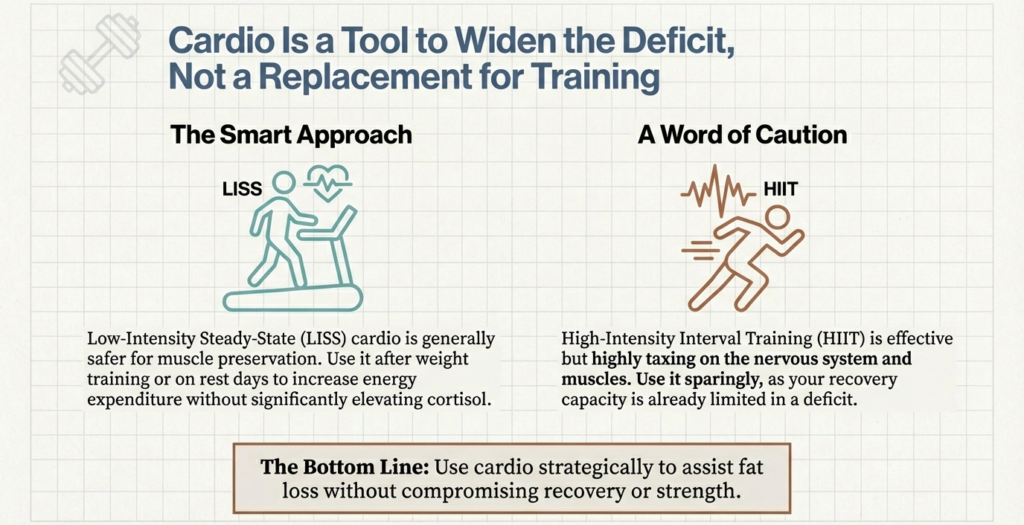
Cardio can boost fat burning, but excessive cardio may disrupt recovery and muscle maintenance. Prolonged strenuous cardio exercises will elevate cortisol and can lead to muscle degradation when not done in spite of it. Smart nutrition should not be substituted with cardio.
The low-intensity steady-state cardio is generally safer in muscle maintenance, particularly when the exercise follows the weight training or during the rest days. High-intensity interval training may be beneficial but should be applied in limited numbers where it induces extra demands on the nervous system and the muscles in a calorie limited period.
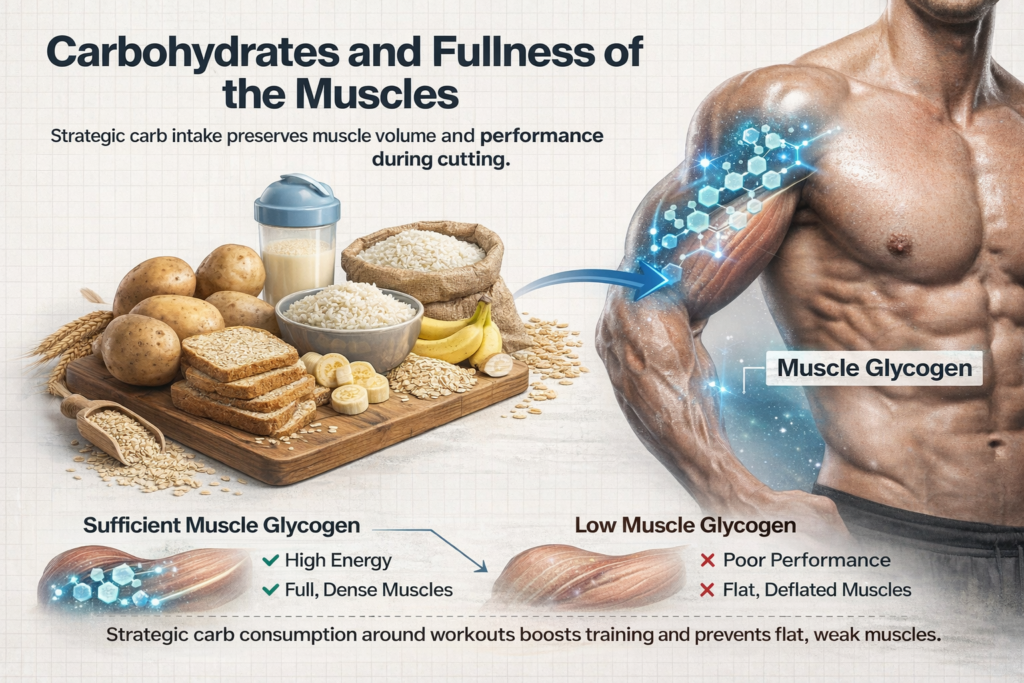
Carbohydrates: Fullness of the Muscles.
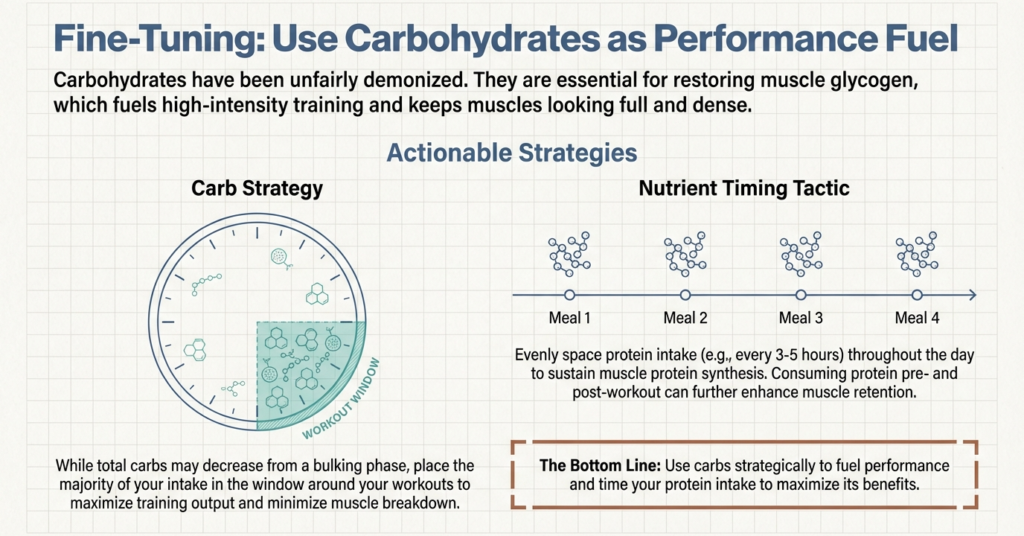
Carbohydrates have received a bad reputation when it comes to cutting yet it is essential in performance and in maintaining muscle. Carbs restore muscle glycogen that provides energy to intensive training and keeps muscles full. The low glycogen levels decrease strength and flatten the muscles.
Carbohydrates consumed strategically in relation to workouts enhance training output and minimise muscle breakdown. Although the total number of carbs might decrease, as compared to the bulking, a complete cut can cause workouts to be poorer, more fatigued and more muscle loss in the long term.
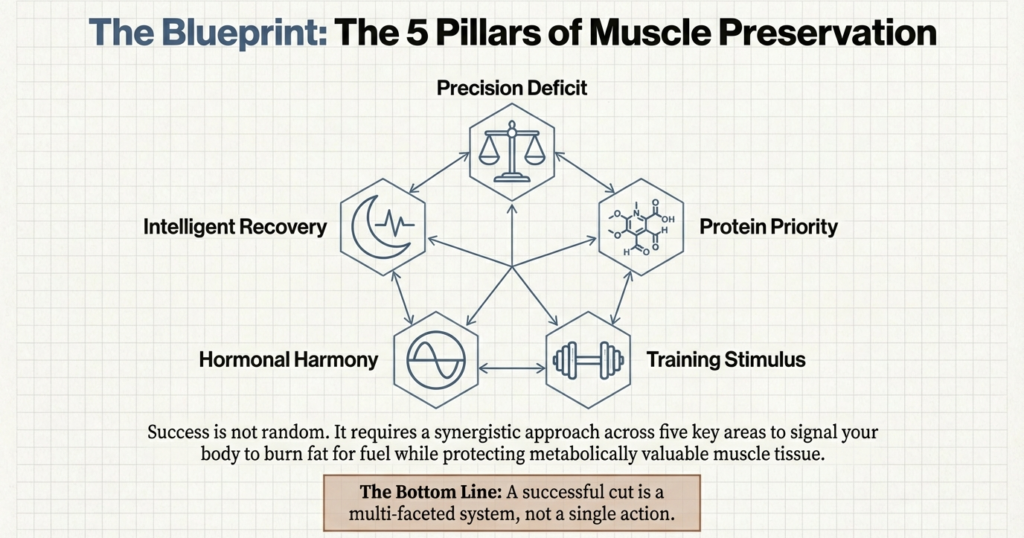
the blueprint: the 5 pillars of muscle preservation
The muscle preservation program to be followed when in a cutting period is a blueprint based on 5 interrelated pillars that collaborate to retain lean mass but remove body fat. These pillars encompass a strict calorie deficit, high consumption of proteins, regular resistance exercises, hormonal equilibrium and smart recovery.
The moderate deficit is a safe level of deficit that guarantees fat loss without causing muscle breakdown and adequate intake of protein and intense training can inform the body to store muscle tissue. Performance and recovery is facilitated by hormonal health and it is through quality sleep that adaptation is possible. With all these pillars in place, fat loss is permanent, strength does not decrease, and the quality of physique is not worsened.
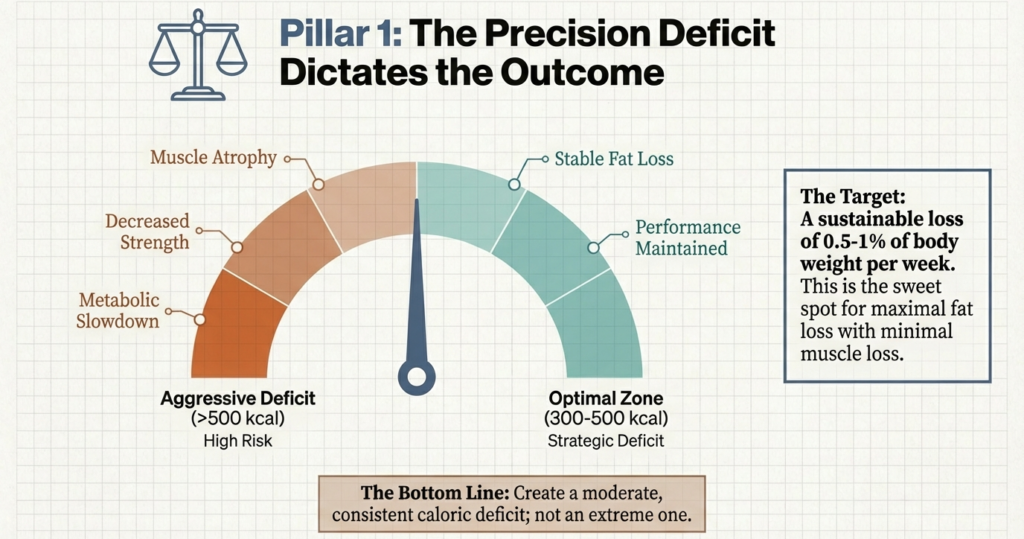
pillar 1: the precision deficit dictates the outcome
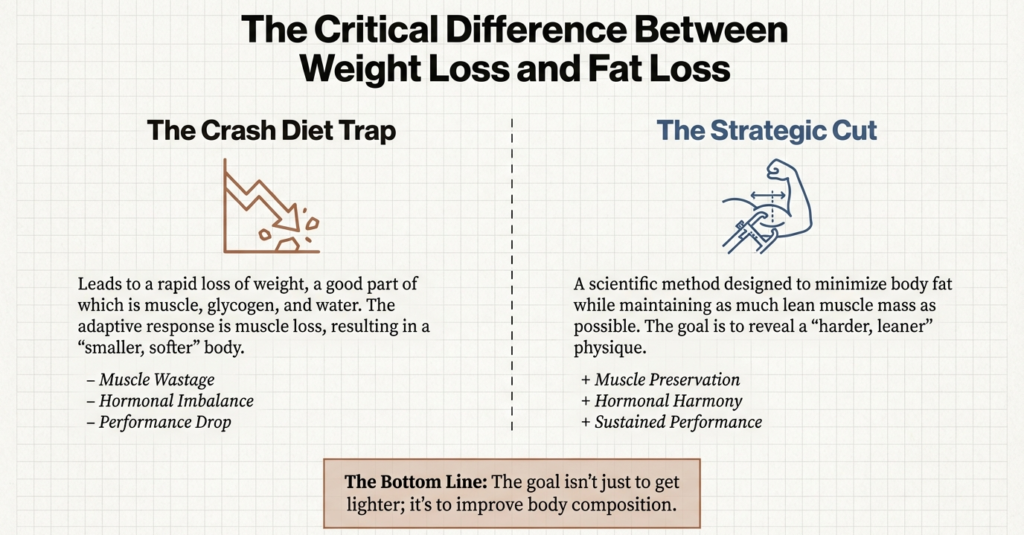
Caloric deficit is needed to fat-burn but the magnitude of the deficit will either maintain muscle or burn it. A moderate to small deficit stimulates a stable loss of fats and does not harm training performance. A severe deficiency results in a rapid loss of weight, a good part of which is muscular, glycogen and water.
In the majority of cases, 300 to 500 calories per day would be the appropriate deficit. This is the range that enables fat to be lost at an approximate of 0.5-1% of the body weight per week. Accelerated weight loss subjects one to the risks of muscle atrophy, decreased strength, and slowed metabolism, particularly in the protracted periods of cutting.
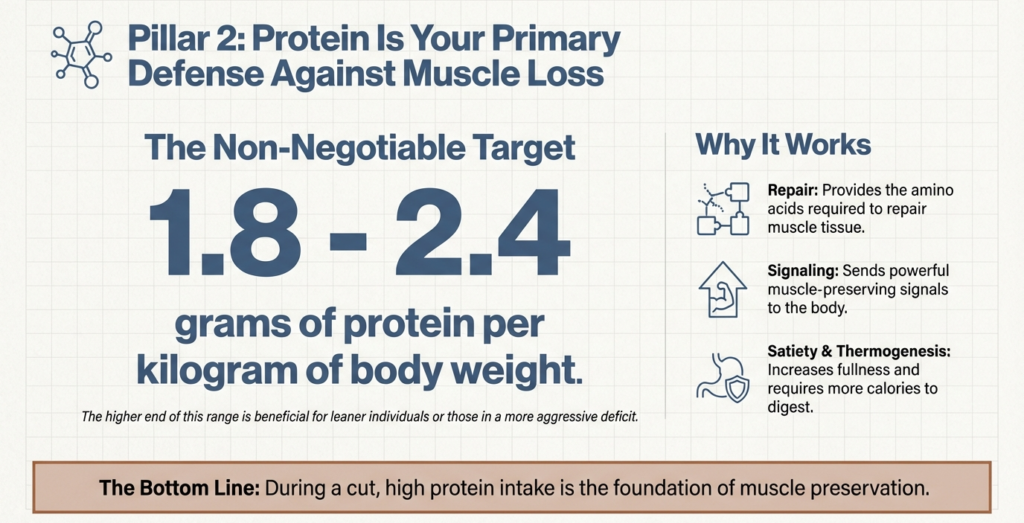
pillar 2: protein is your primary defense against muscle loss
The most essential macronutrient in a cut is protein. It supplies the amino acids required to repair the muscles and sends the information to the body that it needs some muscle tissues. Increased protein also brings out satiety and is also thermic, i.e., more calories are expended in digestion.
Protein demands are greater in the process of cutting compared to bulking. One of the general recommendations is 1.8 -2.4 grams of protein per kilogram of body weight. The higher end of this range is useful to leaner individuals or those who are aggressive in cutting down on body weight in order to gain as little muscle as possible.
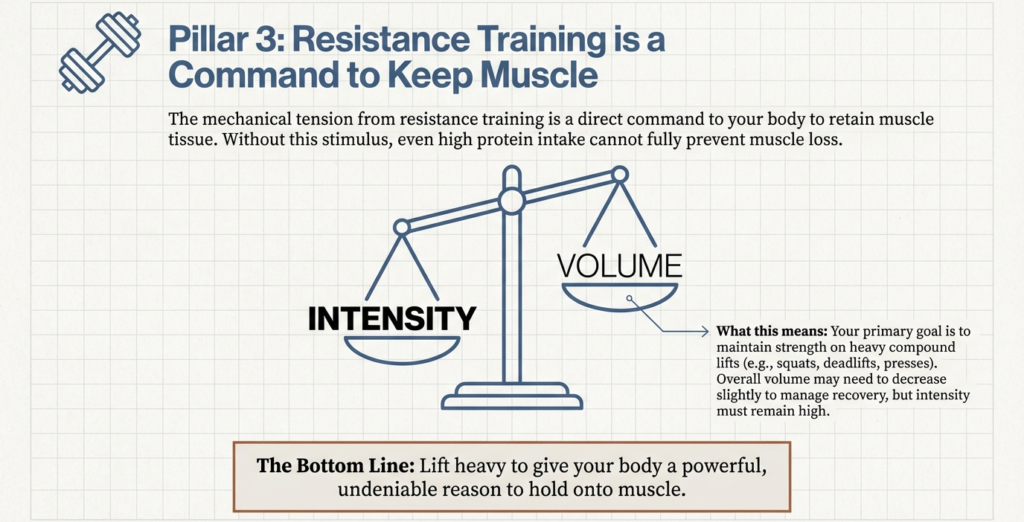
pillar 3: resistance training is a command to keep muscle
During a cut, weight training is a must. The mechanical tension that resistance training gives your body commands your body to retain muscle tissue. Even high protein intake does not work fully to prevent muscle loss without this stimulus. During cutting, training intensity is more important than the training volume.
You need to strive to be strong on your compound lifts as long as you can. Although volume could require a little decrease to control the recovery, the intensity should be high. Exercising moderate heavy weight is an indication to the body that it still needs muscle to survive and perform.
pillar 4: protect your hormonal harmony
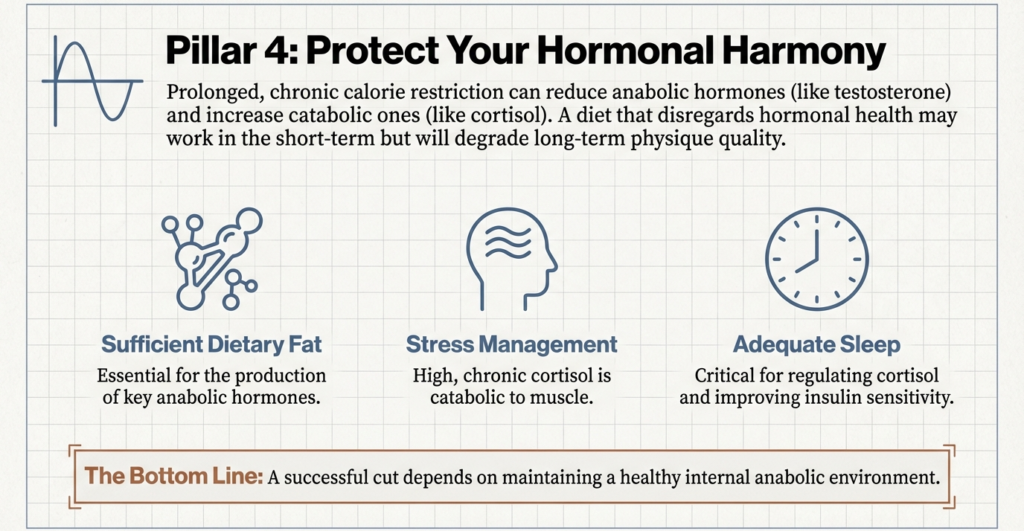
There is a huge role that hormones play in ensuring that weight is lost through fat or muscle. The body composition is affected by the testosterone, insulin, thyroid hormones and cortisol. When subjected to prolonged chronic calorie restriction, anabolic hormones are reduced and catabolic ones increased.
Eating sufficient dietary fats, stress control, and excessive volume of training contribute to the maintenance of hormonal balance. Of particular importance is sleep which makes cortisol more and insulin less sensitive. A diet that disregards hormonal health might work in short-run performance but in the long term physique quality.
pillar 5: intelligent recovery is not a luxury; it is a necessity
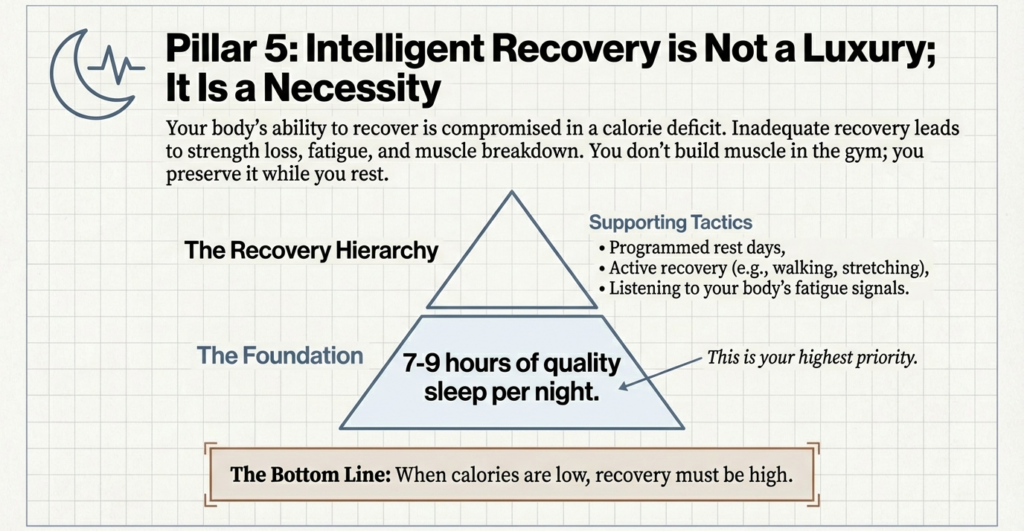
The recovery process is of higher importance in the course of cutting since your body lacks the capacity to restore itself. Exercising intensively and not eating enough leads to stress and rest is necessary. Incompetent recovery causes loss of strength, exhaustion and dismantling of muscles.
Diet and training should be given less priority as compared to sleep. Goal: 7- 9 hours of good sleep. Recovery days, stretching and active recovery days are useful to sustain the performance. It is not a question of how much one does, it is how well one recovers in doing something.
Timing of Nutrients and Timing of Meals.
Although macros and total calories are the most important, nutrient timing can give an advantage throughout the cutting. Evenly spaced protein throughout the day assists in sustaining the growth of muscle proteins. Protein intake before and after training is another way of enhancing muscle retention.
Pre-workout carbohydrates work to improve performance whereas post-workout meals aid in recovery. Protein foods consumed as late-night might aid in diminishing muscle wasting at night, like those rich in casein. Such plans are not a substitute of basics, however, they enhance outcomes when calories are restricted.
the mental game: discipline, patience, and consistency
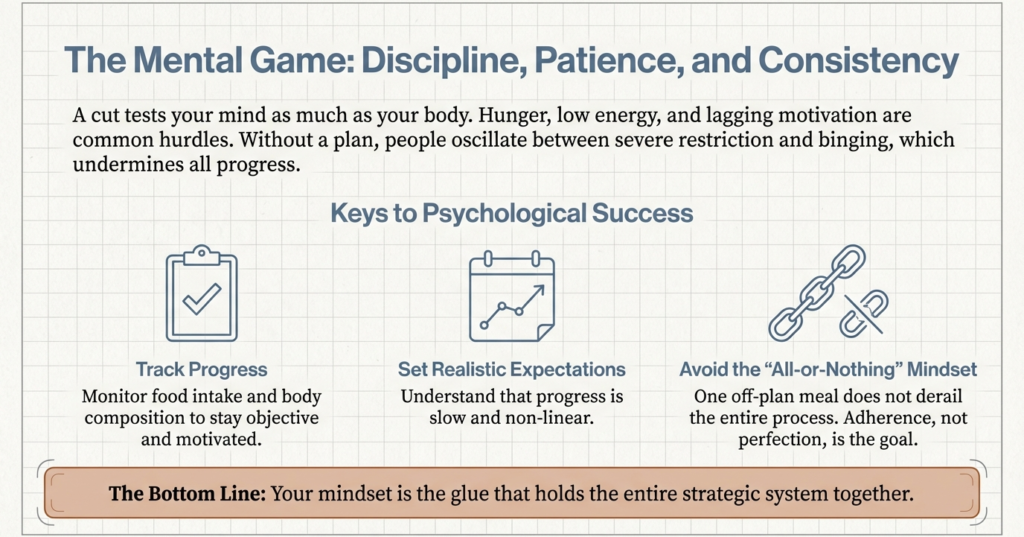
Cutting is more about the mind than the body. The frequent difficulties include hunger, low energy, and low motivation. Having no plan, people tend to oscillate between severe inhibition and binge, which undermines the progress.
At the same time, software to track the food consumed, body composition and realistic schedules can ensure consistency. Have patience that things will be slow. Training discipline and patience is a harder, leaner body with much improved muscle retention compared to the hurry cutting technique.
system failure: the 4 most common muscle-killing mistakes
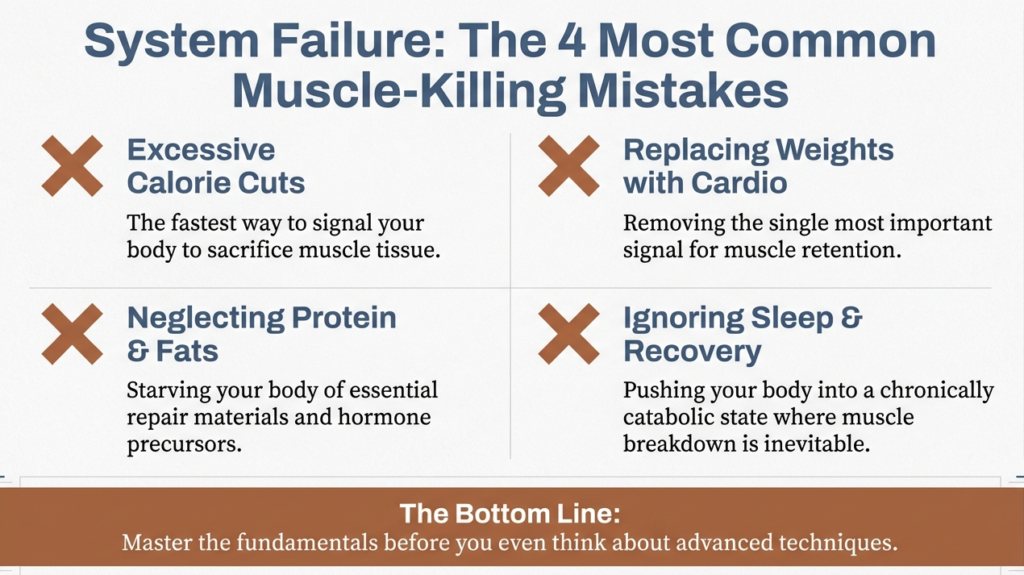
Excessive reduction in calories is one of the greatest errors. The other one is the substitution of weight training with too much cardio. Several individuals also do not overestimate the protein requirements or get rid of fats completely, which damages hormones.
The regular change of programs, irregular meal time and sleep deprivation also contribute to enhanced muscle loss. Furniture should not give you a complicated schedule but make your life easier. Learn the fundamentals first before pursuing the finer details or radical approaches.
Read more: https://cdn.muscleandstrength.com/sites/default/files/workouts/springshred.pdf
the strategic shred: your daily execution checklist
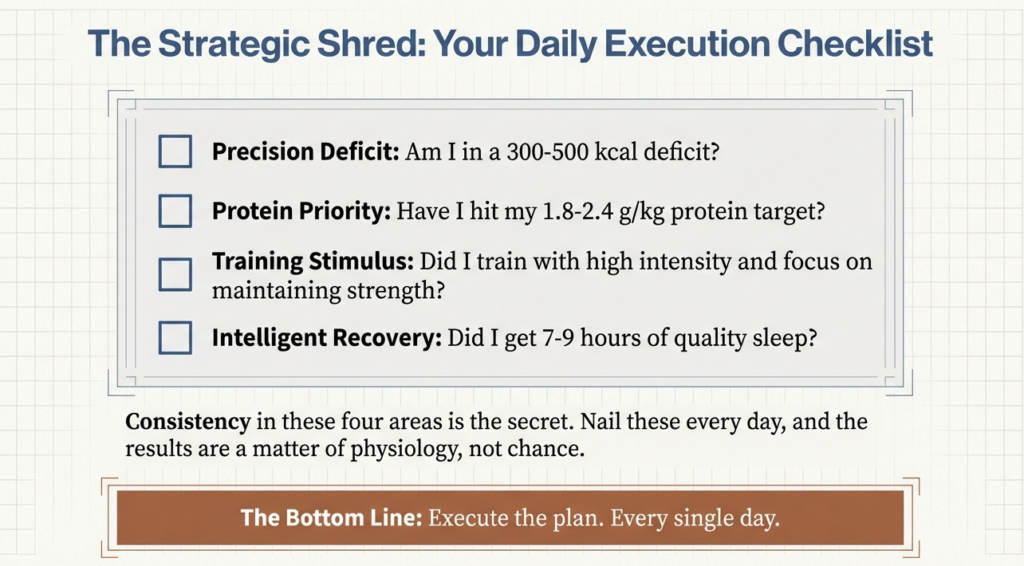
The strategic shred does not involve extremes, but winning small, repeatable habits that will help you lose fat without losing muscle. An overview of the execution on a daily basis is maintained by a checklist that makes the process easy and efficient. Avoid excessive calorie loss of 300-500 calories, consume maximum protein to spare lean tissue and exercise with sufficient intensity to remind the body that it should not lose strength.
Rest is also necessary – good rest and sleep give the body time to adjust and ensure that the muscles do not decompose. When these basics are used habitually, development becomes foreseeable. It is no longer a guesswork when it comes to fat loss, but it is a physiological reaction to structured daily activities
The Smart Way to Get Shredded
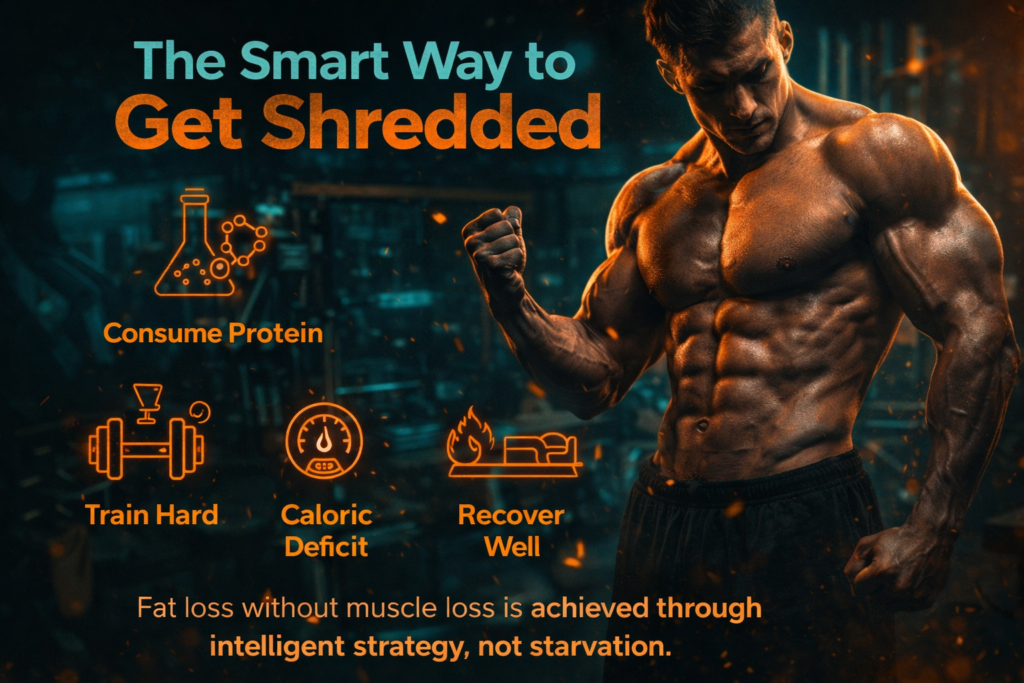
To be shredded and not to lose muscle is all about giving the right signals to your body. Consume sufficient protein to preserve muscle, train vigorus to retain power, establish a controlled calorie shortfall, and recuperate like your physique requires it- since it does.
The science of cutting rewards patience, physiological order and deference. When properly done cutting shows the muscle you developed but not the one which got killed. A scrawny body cannot be achieved through starvation, but through careful planning and hard training.

Gearless Physique
Physique Without Gear
Your transformation starts now. Who's with me?