Table of Contents
ToggleHow to Training Mastered Strength at 30s vs Training in your 20s
Strength evolves with age, experience, and intention. In your 30s and beyond, training is no longer about chasing numbers but mastering consistency, control, and recovery. The image reflects preparation—chalked hands symbolizing readiness, discipline, and focus before every lift. At this stage, every workout has purpose, and every movement is executed with precision. Recovery, mobility, and smart programming become as important as lifting itself. This strategic approach allows you to build lasting strength without unnecessary strain or injury. Training becomes a long-term investment, not a short-term pursuit. By aligning effort with wisdom, you create a body that performs today while staying resilient, strong, and capable for years to come.

Introduction: Same Goal, Different Strategy
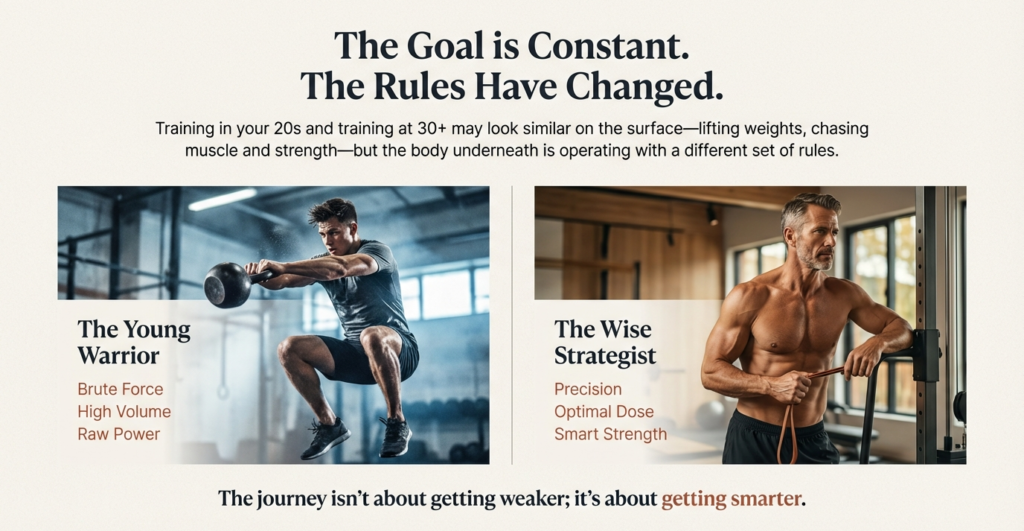
Training in your 20s and training at 30+ may look similar on the surface—lifting weights, doing cardio, chasing muscle and strength—but the body underneath those workouts is very different. In your 20s, recovery feels fast, injuries heal quickly, and you can often get away with poor programming. At 30 and beyond, smart training becomes more important than hard training. Progress is still very achievable, but it demands better planning, recovery, and self-awareness. Understanding these differences helps you build muscle, stay lean, and train pain-free for decades instead of burning out early.
Hormones and Recovery: The First Big Shift
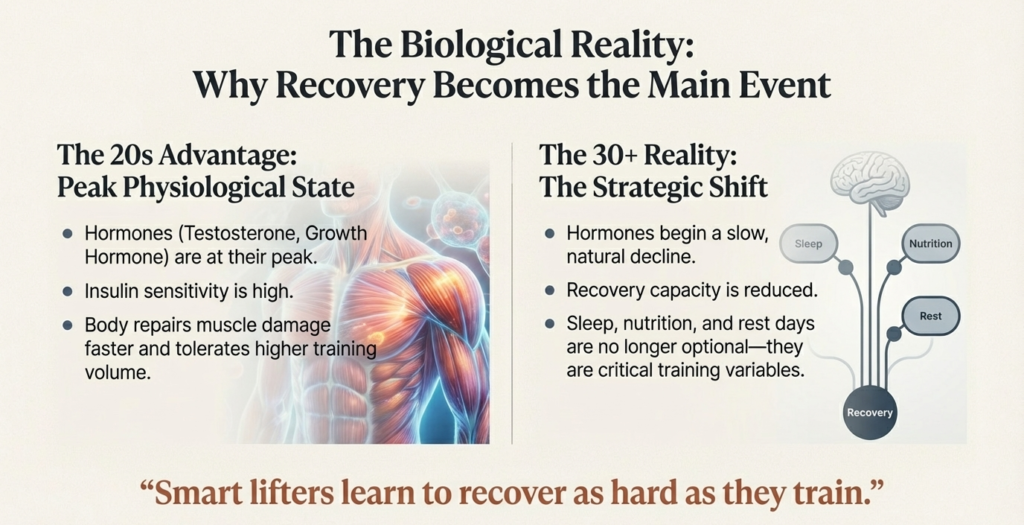
In your 20s, testosterone, growth hormone, and insulin sensitivity are generally at their peak. This means your body repairs muscle damage faster and tolerates higher training volumes. At 30+, these hormones slowly decline, and recovery capacity reduces. This does not mean progress stops—it means recovery must be respected. Sleep, nutrition, hydration, and rest days now play a major role. Skipping sleep or overtraining will show up faster as joint pain, fatigue, or stalled results. Smart lifters learn to recover as hard as they train.
Training Volume: More Isn’t Always Better
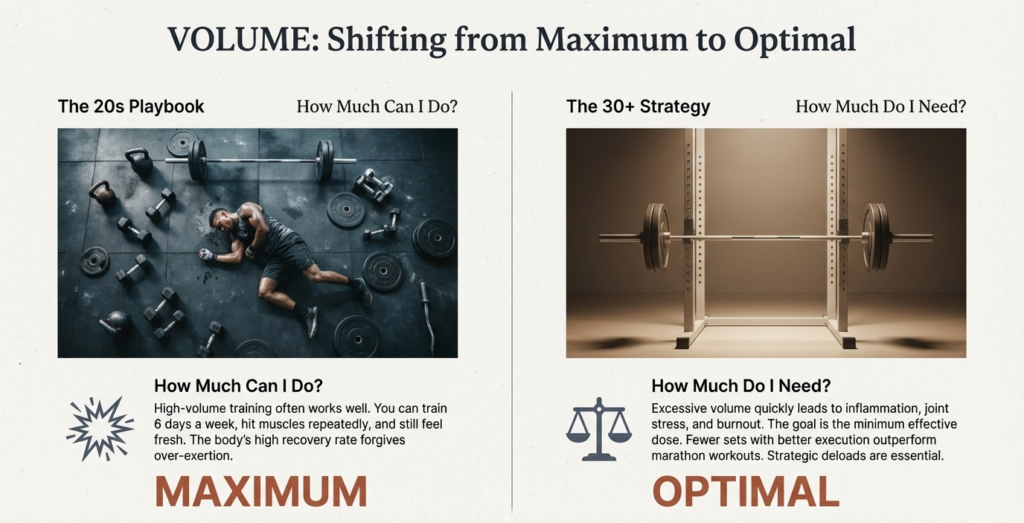
In your 20s, high-volume training often works well. You can train six days a week, hit multiple body parts repeatedly, and still feel fresh. At 30+, excessive volume can quickly lead to inflammation, joint stress, and burnout. The goal shifts from “how much can I do” to “how much do I need.” Fewer sets with better execution often outperform marathon workouts. Quality reps, proper rest between sets, and strategic deload weeks allow you to progress without breaking down your body over time.
Exercise Selection: Joint-Friendly Choices Matter
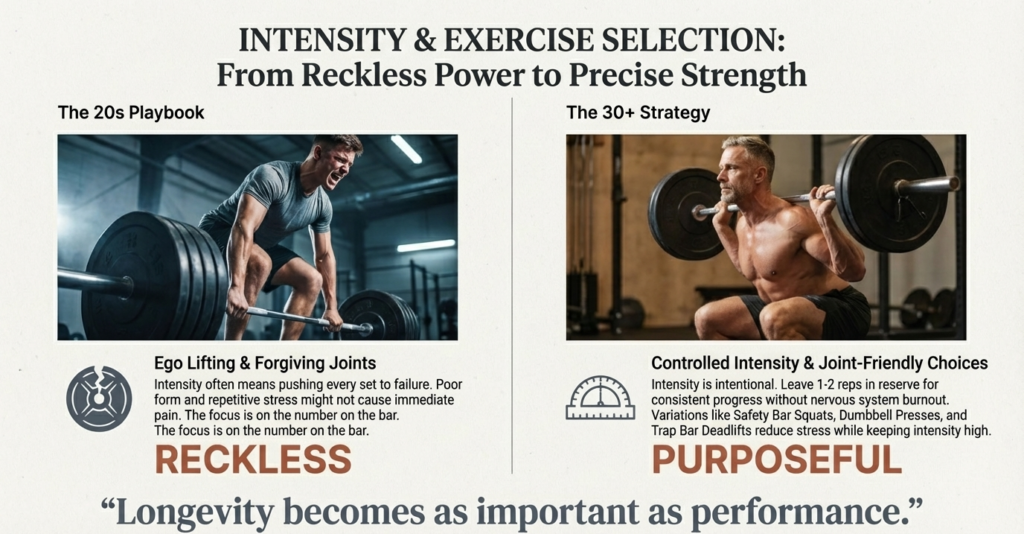
Your 20s are forgiving. Poor form, ego lifting, and repetitive stress may not hurt immediately. In your 30s, those habits catch up fast. Smart training now prioritizes joint health. You may still squat, bench, and deadlift, but variations matter. Safety bar squats, dumbbell presses, trap bar deadlifts, and controlled tempos reduce joint stress while keeping intensity high. Accessories like cable work and unilateral movements help build muscle without overloading tendons. Longevity becomes as important as performance.
Warm-Ups and Mobility: Non-Negotiable After 30
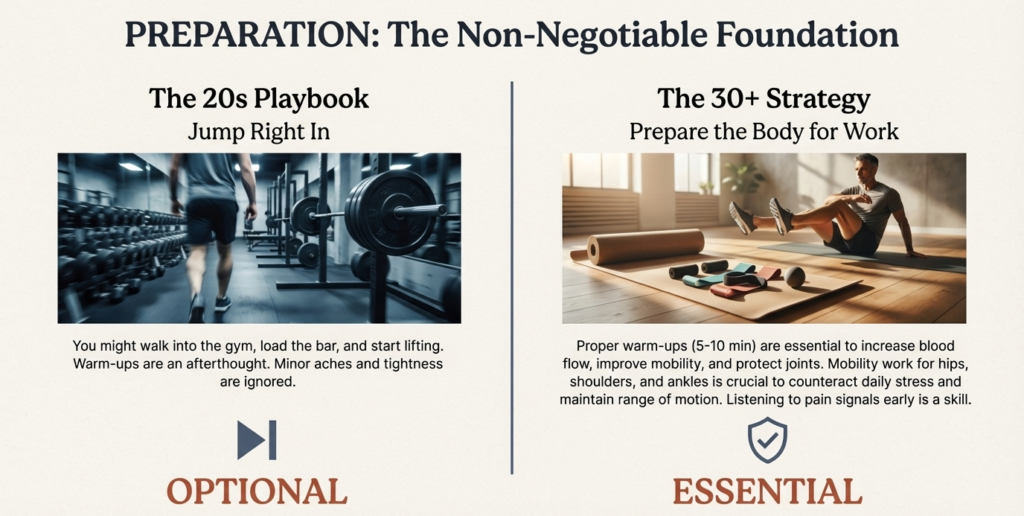
In your 20s, you might walk into the gym, load the bar, and start lifting. At 30+, that approach invites injury. Proper warm-ups increase blood flow, improve mobility, and protect joints. Five to ten minutes of dynamic movement, light cardio, and activation drills can dramatically improve performance. Mobility work for hips, shoulders, and ankles helps maintain range of motion lost from desk jobs and daily stress. Training smart means preparing the body before loading it heavily.
Intensity Management: Train Hard, Not Reckless
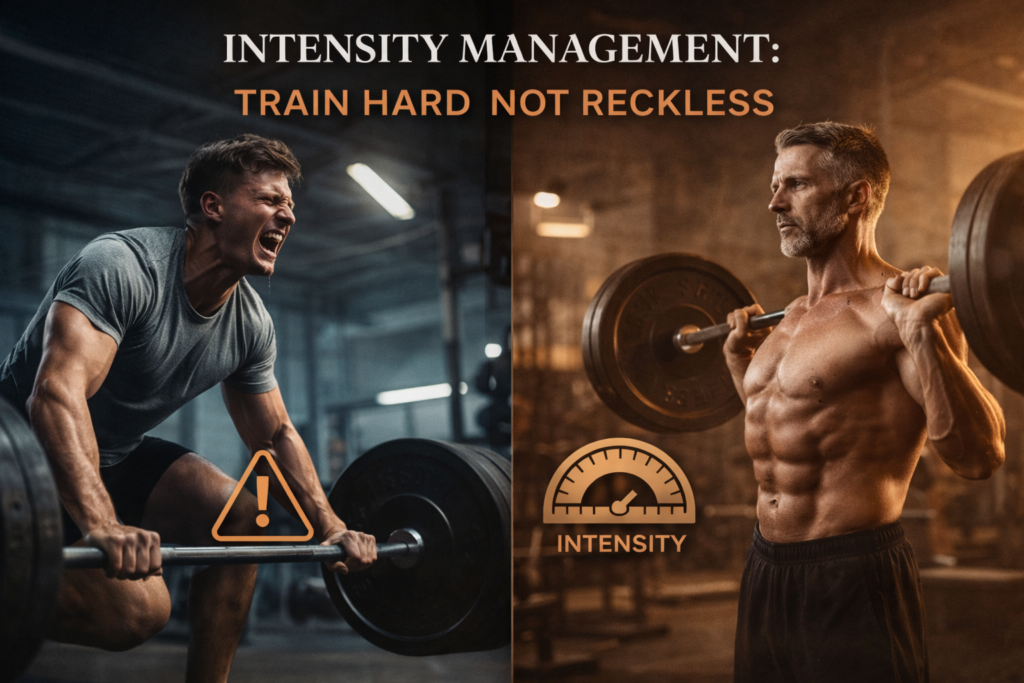
Intensity in your 20s often means pushing every set to failure. While this can build muscle, it also increases injury risk and recovery demands. At 30+, intensity should be controlled and intentional. Leaving one or two reps in reserve allows consistent progress without overstressing the nervous system. Heavy days are planned, not random. You still lift heavy—but you do it with purpose. Smart intensity management keeps strength climbing while preserving joints and connective tissue.
Nutrition: From Flexible to Strategic
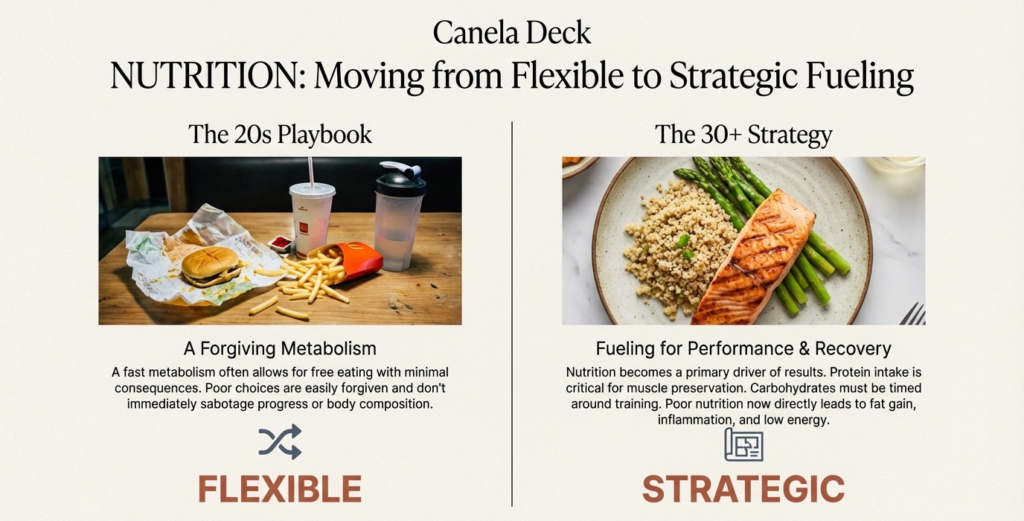
In your 20s, you can often eat freely and still stay lean. Metabolism feels fast, and mistakes are forgiven. At 30+, nutrition becomes more strategic. Protein intake becomes critical for muscle preservation and recovery. Carbohydrates must be timed around training, and overall calories need monitoring. Poor nutrition now leads to fat gain, inflammation, and low energy. Eating smart doesn’t mean extreme dieting—it means consistency, whole foods, and fueling
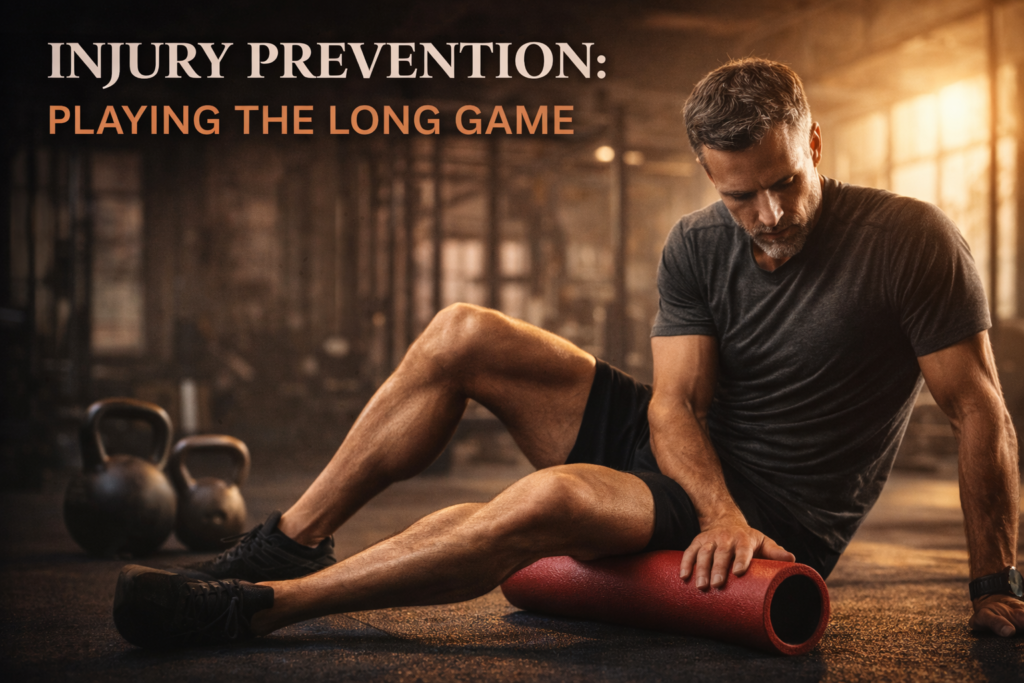
Injury Prevention: Playing the Long Game
Minor aches in your 20s are often ignored. In your 30s, ignoring them turns small issues into long layoffs. Smart training means listening to pain signals early. Address tight muscles, weak stabilizers, and movement imbalances before they worsen. Regular soft tissue work, stretching, and corrective exercises become tools, not optional extras. Training through pain is no longer a badge of honor—it’s a shortcut to regression. Longevity-focused athletes stay consistent because they stay healthy.
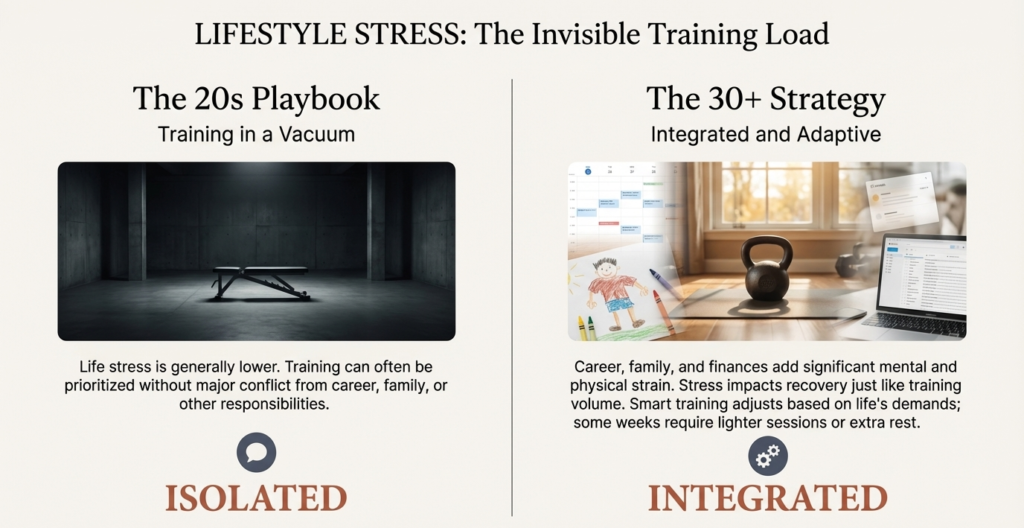
Lifestyle Stress: The Invisible Training Load
In your 20s, life stress is usually lower. At 30+, careers, family, and responsibilities add mental and physical strain. Stress impacts recovery just like training volume. Poor sleep, long work hours, and emotional stress reduce performance and increase injury risk. Smart training adjusts based on life demands. Some weeks require lighter sessions or extra rest. Understanding that training exists within your lifestyle—not separate from it—is key to long-term success.
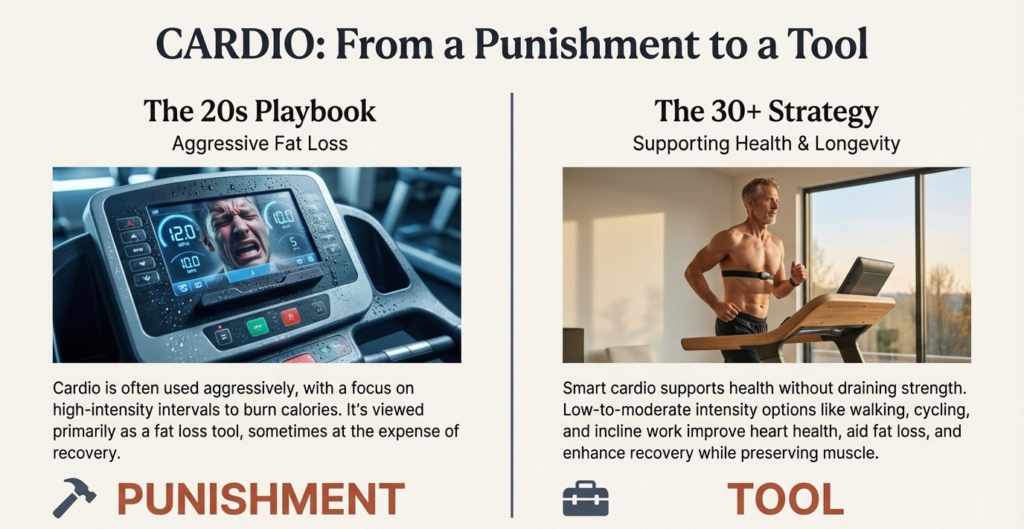
Cardio: From Punishment to Tool
Many people in their 20s use cardio aggressively for fat loss. At 30+, excessive high-intensity cardio can hurt recovery and muscle retention. Smart cardio supports health and conditioning without draining strength. Walking, cycling, incline treadmill work, and moderate intervals improve heart health and aid fat loss while preserving muscle. Cardio becomes a tool, not punishment. Done correctly, it enhances recovery, improves work capacity, and supports longevity.
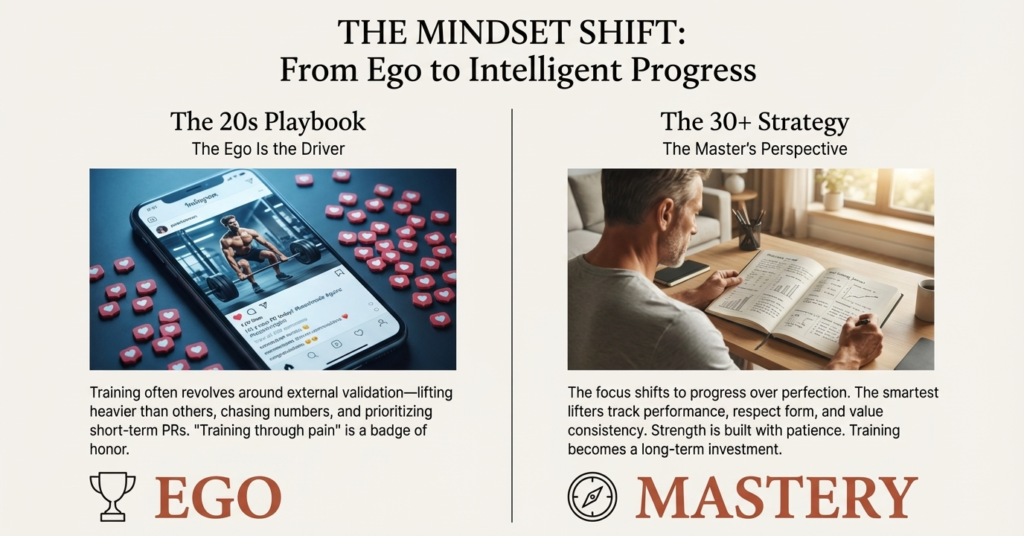
Mindset: Ego Lifting vs Intelligent Progress
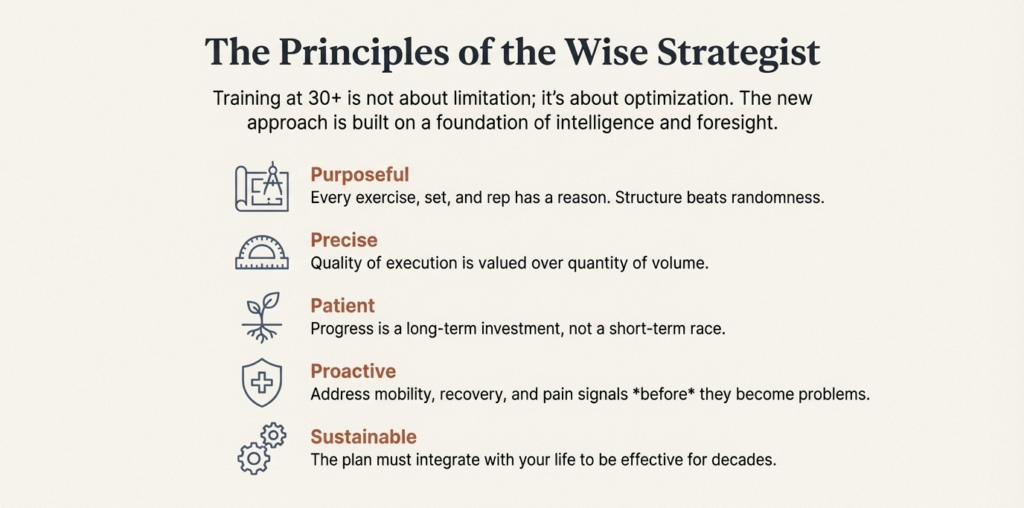
In your 20s, training often revolves around ego—lifting heavier than others and chasing numbers. At 30+, the smartest lifters shift focus to progress over perfection. They track performance, respect form, and value consistency over short-term PRs. Strength is still built, but with patience. Training becomes a long-term investment instead of a short-term challenge. This mindset shift is often the difference between lifelong fitness and repeated cycles of injury and frustration.
Programming: Structure Beats Randomness
Random exercises can work in your 20s because the body adapts and recovers quickly. However, the same randomness often leads to plateaus, fatigue, or injury after 30. This is where structured programming becomes essential. Planned progression helps build strength evenly, while balanced movement patterns protect joints and prevent imbalances. Smart programs manage training volume, rotate intensity, and include mobility work, warm-ups, and accessory exercises. Recovery weeks are no longer optional; they help reset the body and support long-term progress. Training smart at 30+ means knowing when to push hard, maintain momentum, and scale back for sustainable results.
Read more: https://www.endomondo.com/workouts/at-home-workouts
Conclusion: Stronger, Smarter, and Sustainable
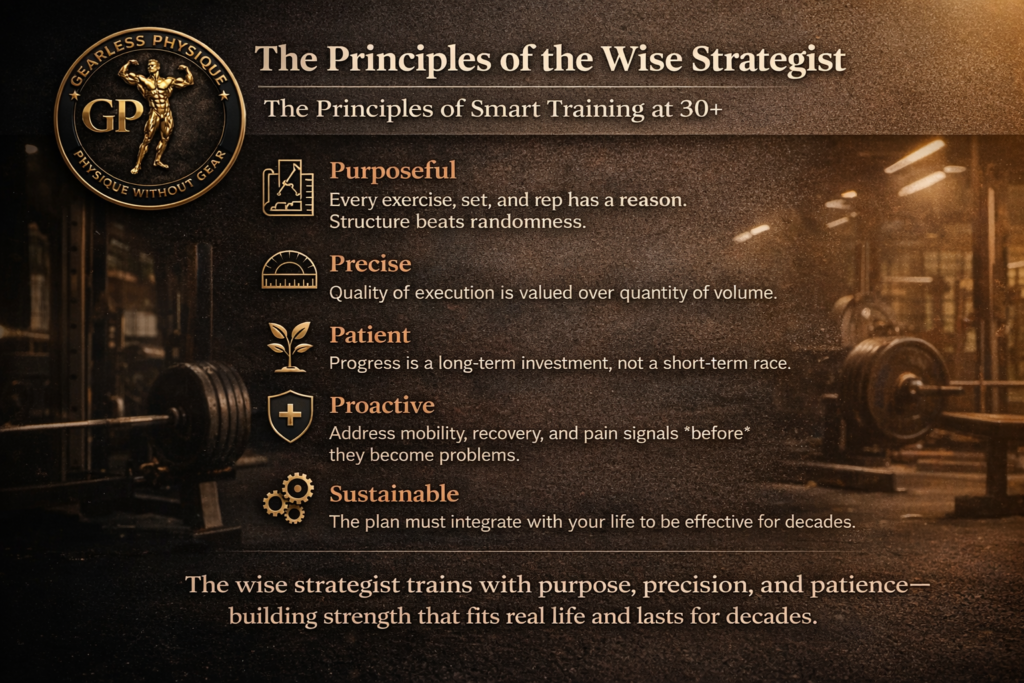
Training at 30+ is not diminished in any way; it is more advanced and sophisticated. Compared to your 20s, the body no longer tolerates careless choices and now demands proper recovery and high-quality execution in every workout. Strength, muscle, and athletic performance are achievable well beyond 30 when training aligns with physiology and lifestyle demands. By prioritizing recovery, protecting joints, managing daily stress, and following structured programming, you can build a body that performs today and stays healthy for decades. Progress comes from accuracy, not punishment. Smart training is not age-limited; it is age-adaptive, allowing you to train effectively, sustainably, and confidently at any stage of life with clarity intact.

Gearless Physique
Physique Without Gear
Your transformation starts now. Who's with me?