8 Intensity Techniques for Natural Lifters to Break Plateaus
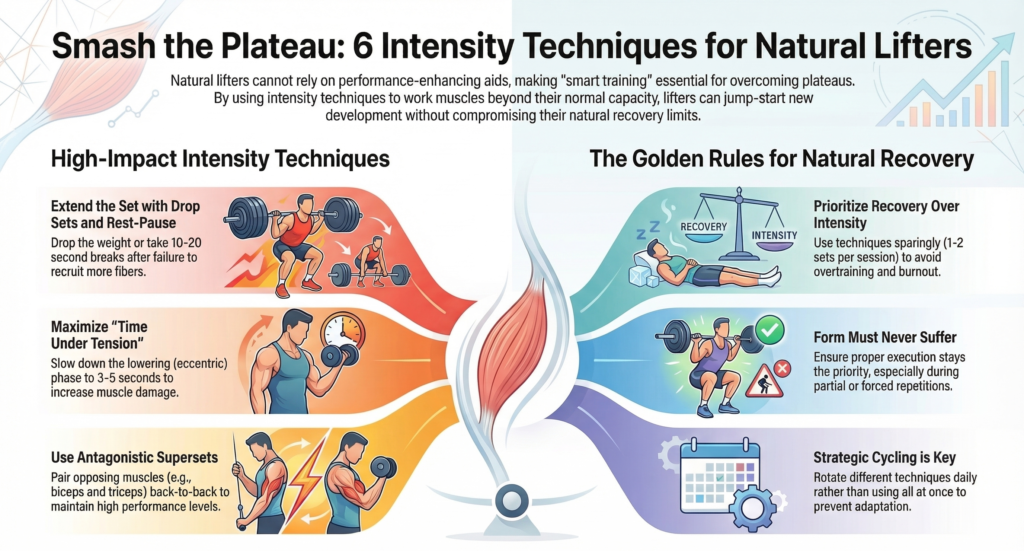
This infographic summarizes the most effective intensity techniques for natural lifters in a simple and practical format. It highlights key methods like drop sets, rest-pause, time under tension, and supersets, along with essential recovery principles. The goal is to provide a quick reference for applying these strategies correctly. Natural lifters must prioritize recovery, maintain proper form, and use intensity techniques strategically rather than excessively.
This balanced approach ensures consistent progress without burnout. By following these guidelines, lifters can break through plateaus, improve performance, and build muscle efficiently while staying within their natural limits.
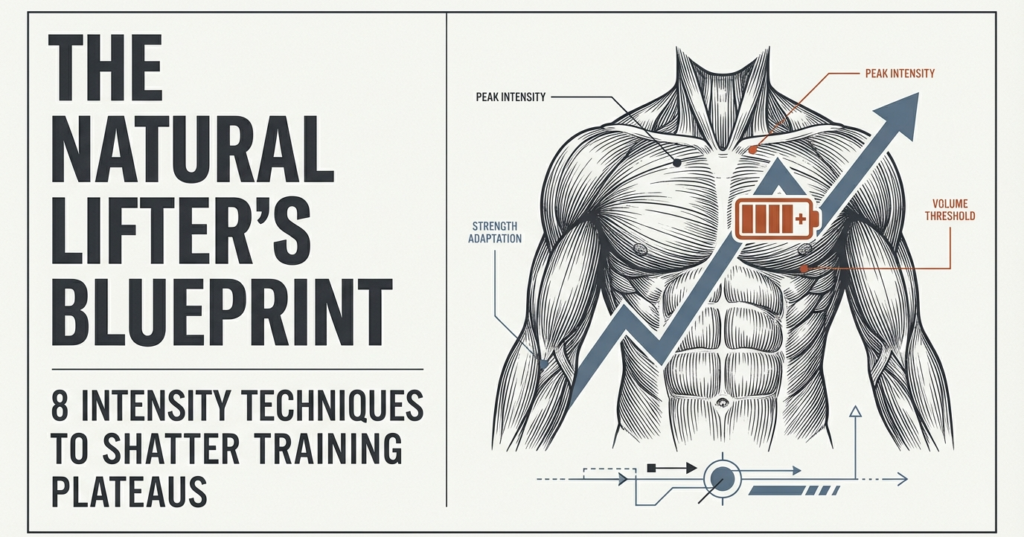
Natural Lifter’s Blueprint for Breaking Plateaus
Natural lifters often reach a point where progress slows despite consistent training, nutrition, and discipline. This blueprint represents the core strategy required to break through that plateau. Instead of relying on external aids, natural athletes must focus on intelligent programming, intensity techniques, and recovery balance. The upward arrow symbolizes progressive overload combined with smarter execution rather than just heavier weights. By understanding volume thresholds and peak intensity zones, lifters can stimulate new muscle growth without burning out.
This visual highlights that success in natural bodybuilding is not about doing more, but doing better. Applying structured intensity techniques ensures sustainable progress and long-term physique development without compromising recovery capacity.
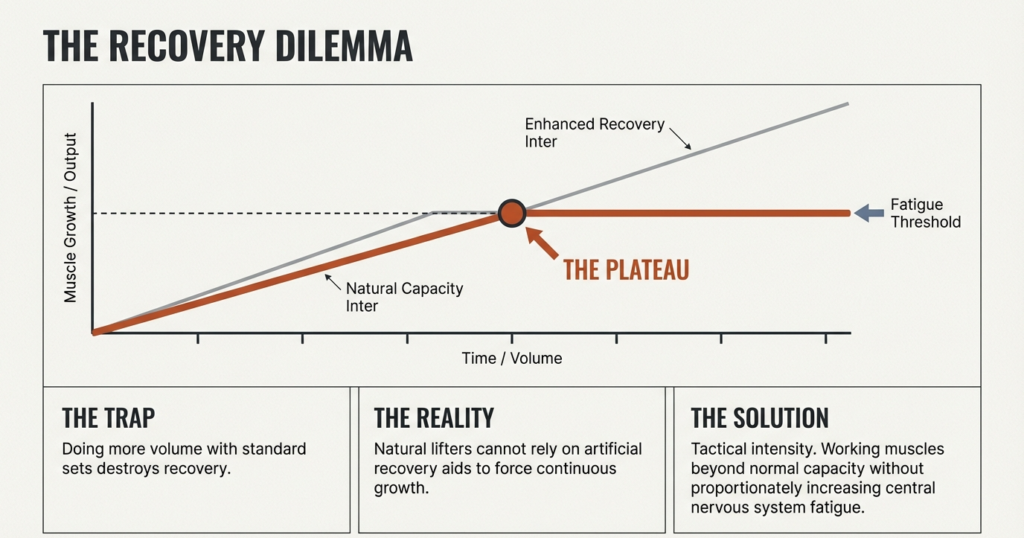
The Recovery Dilemma in Natural Bodybuilding
The recovery dilemma is one of the biggest challenges for natural lifters trying to break plateaus. As training volume increases, fatigue accumulates faster than recovery capacity, leading to stagnation. Unlike enhanced athletes, natural lifters cannot rely on artificial recovery aids, making strategic training essential. This graph shows how progress eventually flattens when fatigue surpasses recovery ability.
The solution is not simply adding more volume but applying tactical intensity. By working muscles beyond normal capacity without excessively taxing the nervous system, lifters can continue progressing. Understanding this balance between stimulus and recovery is key to avoiding burnout and maintaining steady muscle growth over time.
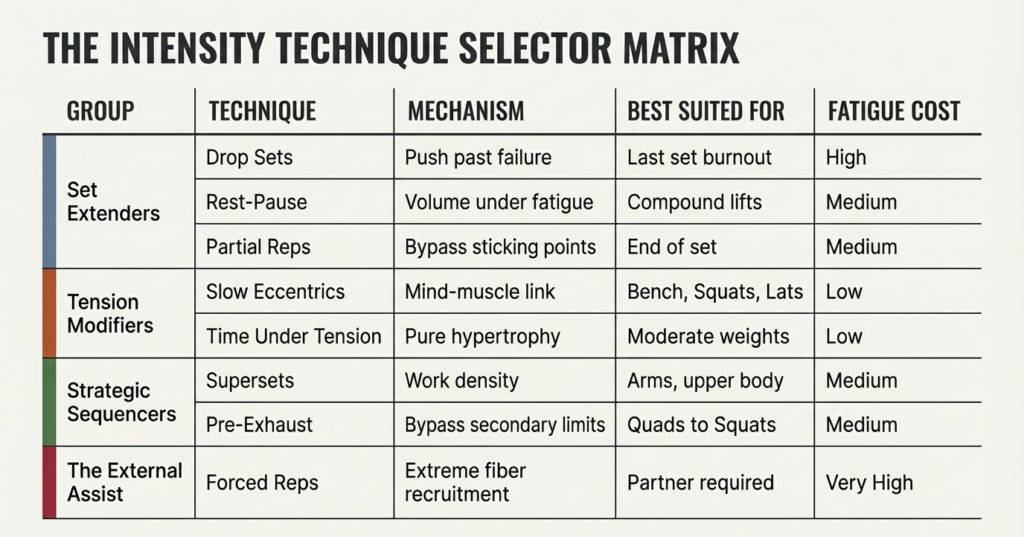
Intensity Technique Selector Matrix for Natural Lifters
Choosing the right intensity technique is crucial for maximizing results while minimizing fatigue. This matrix categorizes different methods based on their purpose, mechanism, and fatigue cost. Techniques like drop sets and forced reps are highly effective but come with greater fatigue, while slow eccentrics and time under tension offer lower fatigue with strong hypertrophy benefits. Natural lifters must be selective rather than using everything at once.
The key is matching the technique to the goal—whether it’s breaking a plateau, improving mind-muscle connection, or increasing training density. This structured approach ensures smarter programming, allowing consistent progress without overtraining or compromising recovery capacity.
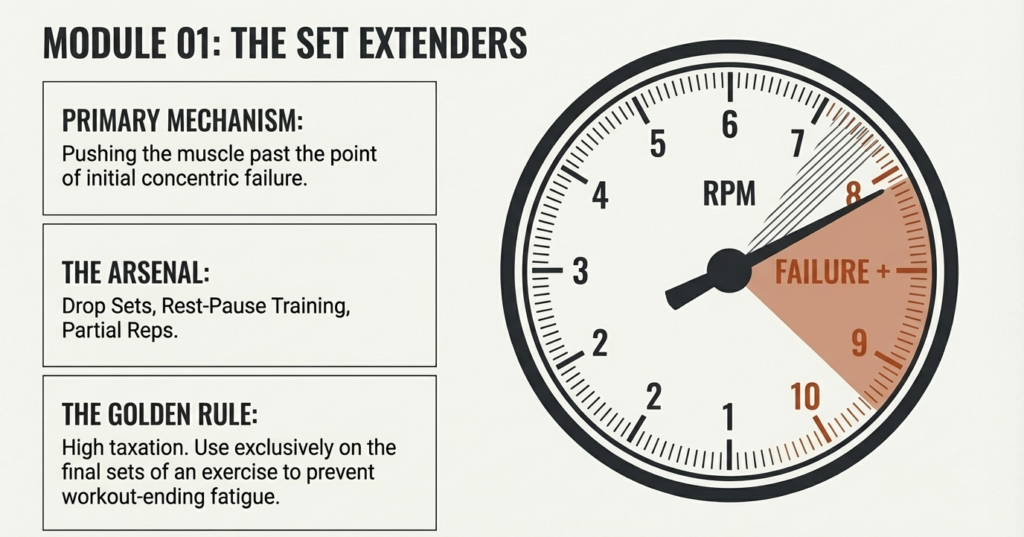
Set Extenders for Increasing Training Intensity
Set extenders are powerful tools designed to push muscles beyond initial failure. Techniques like drop sets, rest-pause, and partial reps allow lifters to continue working even when they would normally stop. This increases muscle fiber recruitment and extends time under tension, leading to greater growth stimulation. However, these methods come with a high fatigue cost, making them best suited for final sets only.
Natural lifters must use them strategically to avoid excessive exhaustion that can impact recovery. When applied correctly, set extenders can reignite stalled progress and help break through strength and hypertrophy plateaus effectively.
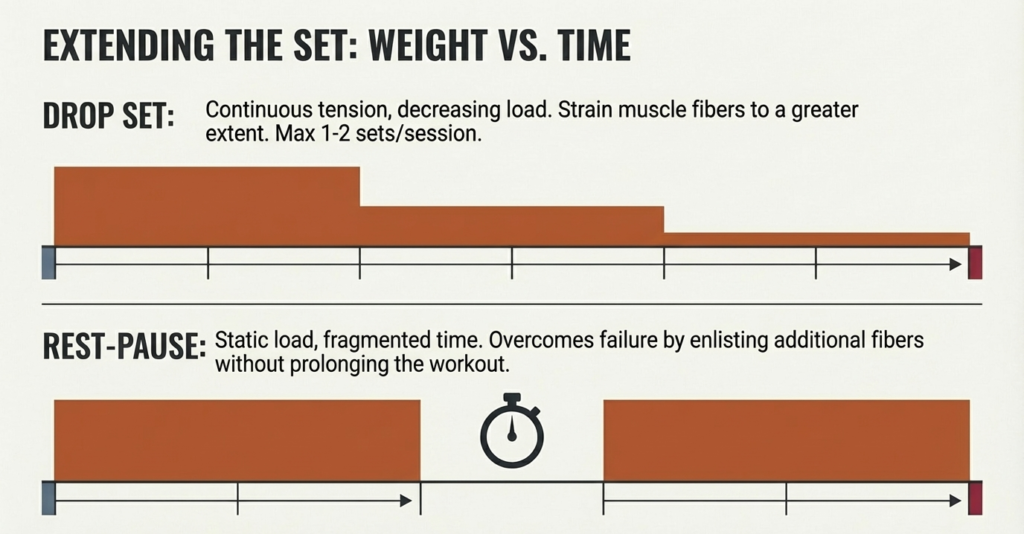
Drop Sets vs Rest-Pause Training Explained
Drop sets and rest-pause training are two of the most effective ways to extend a set and increase intensity. Drop sets focus on reducing weight continuously to maintain tension, while rest-pause uses short breaks to continue lifting heavier loads. Both techniques push muscles beyond failure but in different ways. Drop sets create continuous stress, whereas rest-pause allows brief recovery to recruit additional fibers. Natural lifters benefit from both methods when used in moderation.
Incorporating these techniques occasionally can increase volume and intensity without extending workout duration, making them efficient tools for breaking plateaus and stimulating new muscle growth.
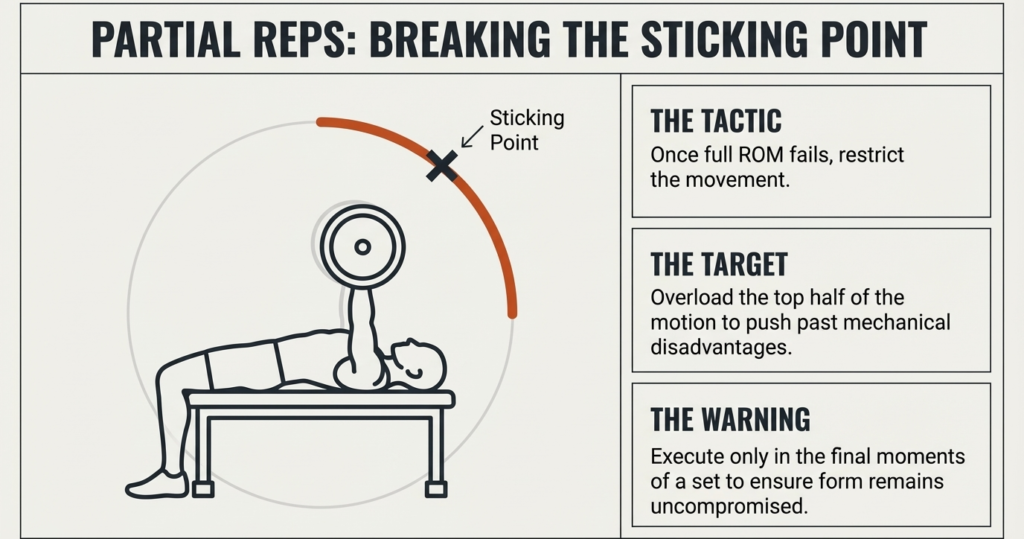
Partial Reps to Break Sticking Points
Partial reps are a strategic way to push past failure when full range of motion is no longer possible. Instead of ending the set, lifters continue with a shortened movement range to keep the muscle under tension. This is especially useful for overcoming sticking points in exercises like the bench press. By focusing on the strongest portion of the lift, additional muscle fibers can be recruited.
However, this technique must be used carefully and only at the end of a set to maintain proper form. When applied correctly, partial reps can help natural lifters push beyond limitations and unlock new strength gains.
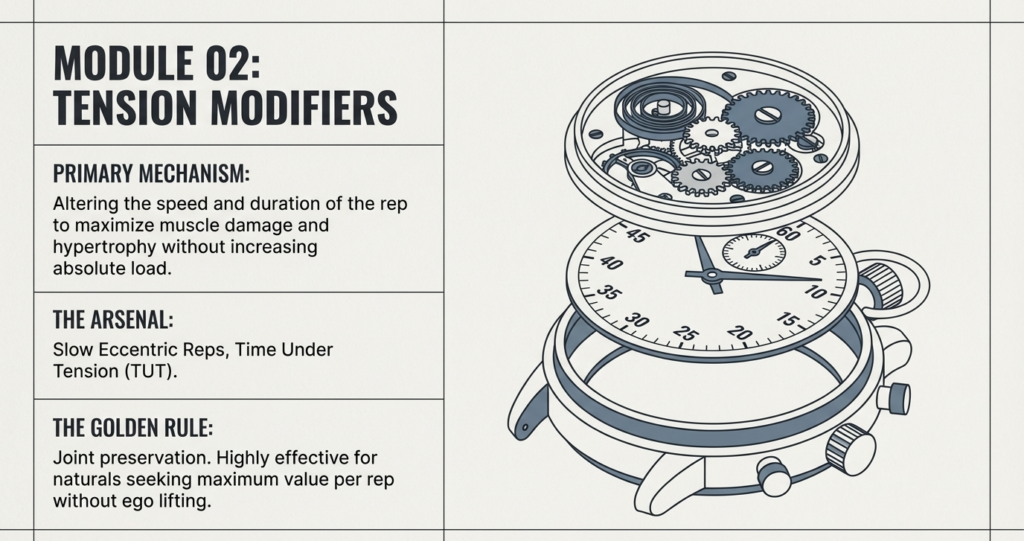
Tension Modifiers for Muscle Growth
Tension modifiers focus on altering rep speed and duration to maximize muscle stimulation without increasing weight. Techniques like slow eccentrics and time under tension enhance muscle damage and improve mind-muscle connection. For natural lifters, this approach is highly effective because it reduces joint stress while increasing training quality. Instead of chasing heavier loads, controlling the tempo creates a deeper stimulus for growth.
This method is ideal for those aiming to build muscle safely and efficiently. By prioritizing execution over ego lifting, tension modifiers help lifters achieve consistent progress while preserving long-term joint health and recovery capacity.
Eccentric Training and Time Under Tension Explained
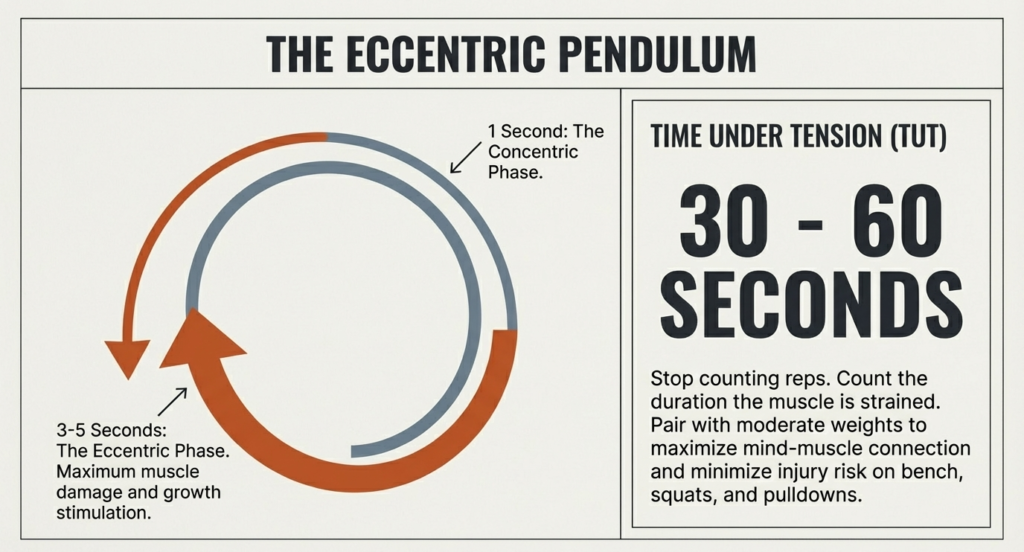
The eccentric phase of a lift plays a major role in muscle growth. Slowing down this phase to 3–5 seconds increases muscle damage and enhances hypertrophy. Time under tension (TUT) takes this concept further by focusing on how long the muscle is working rather than the number of reps. Natural lifters benefit greatly from this approach because it maximizes each set without requiring heavy weights. This reduces injury risk while improving control and technique.
Combining slow eccentrics with TUT creates a powerful stimulus that promotes muscle growth, better form, and stronger mind-muscle connection for long-term progress.
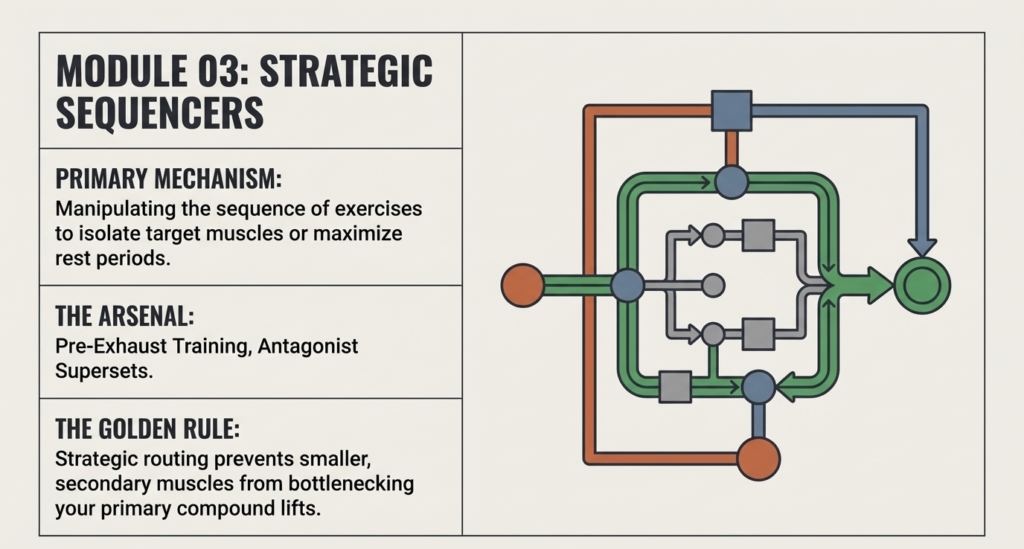
Strategic Exercise Sequencing for Maximum Gains
Strategic sequencing involves arranging exercises in a way that maximizes performance and muscle activation. Instead of random workouts, exercises are planned to ensure the target muscle is prioritized. Techniques like pre-exhaust and antagonist supersets fall into this category. This approach prevents smaller muscles from limiting performance during compound lifts.
Natural lifters benefit from this method because it allows more efficient use of energy and improves training quality. By controlling exercise order, lifters can target weak points, improve balance, and maintain intensity without increasing fatigue unnecessarily, leading to smarter and more effective workouts.
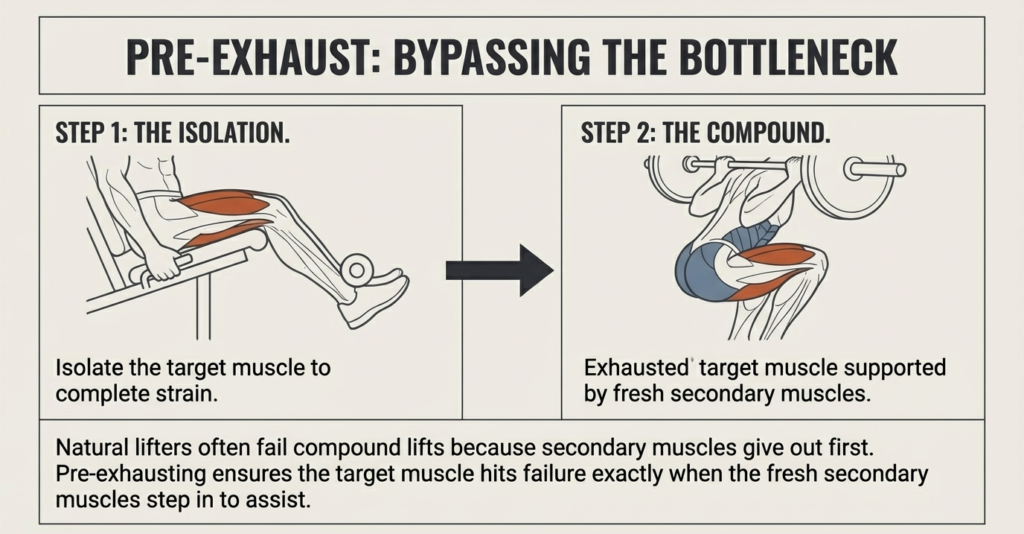
Pre-Exhaust Training Technique Explained
Pre-exhaust training is designed to fatigue a target muscle before performing a compound exercise. For example, doing leg extensions before squats ensures the quadriceps are already tired. This prevents secondary muscles from taking over and forces the target muscle to work harder. Natural lifters often struggle with weaker supporting muscles limiting performance, and pre-exhaust solves this issue.
It allows better muscle activation and improves overall training efficiency. However, the key is control—using moderate weight and proper form. When used correctly, pre-exhaust training can significantly enhance muscle engagement and help break stubborn plateaus.
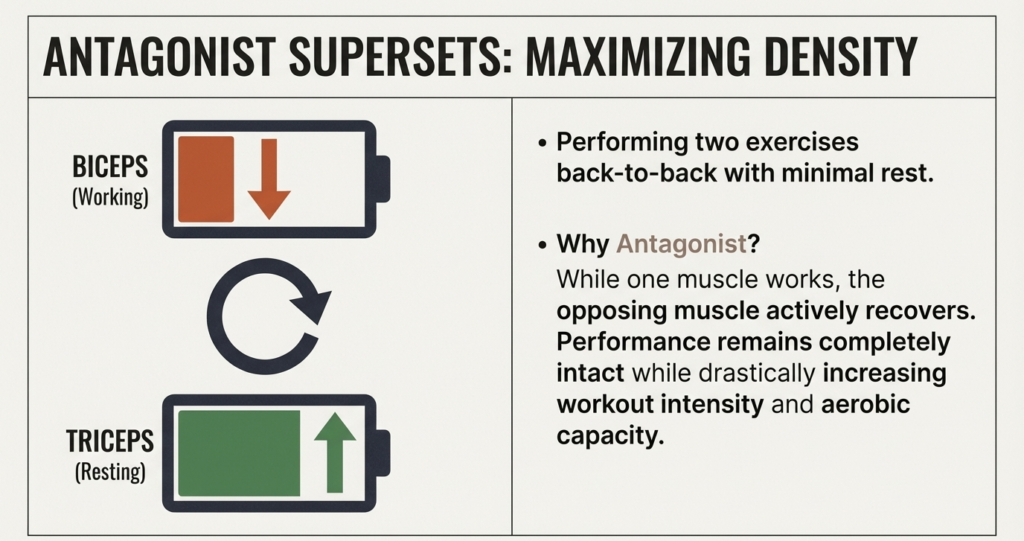
Antagonist Supersets for Workout Density
Antagonist supersets involve training opposing muscle groups back-to-back, such as biceps and triceps. While one muscle works, the other recovers, allowing for continuous performance with minimal rest. This increases workout density and intensity without excessive fatigue. For natural lifters, this is an efficient way to train harder without extending workout time. It also improves blood flow and enhances the muscle pump.
Additionally, antagonist supersets can improve muscular balance and coordination. When implemented correctly, this technique boosts both strength and endurance while maintaining recovery, making it a valuable tool for breaking plateaus.
Read more: https://www.menshealth.com/uk/workouts/a46864272/antagonist-paired-supersets/
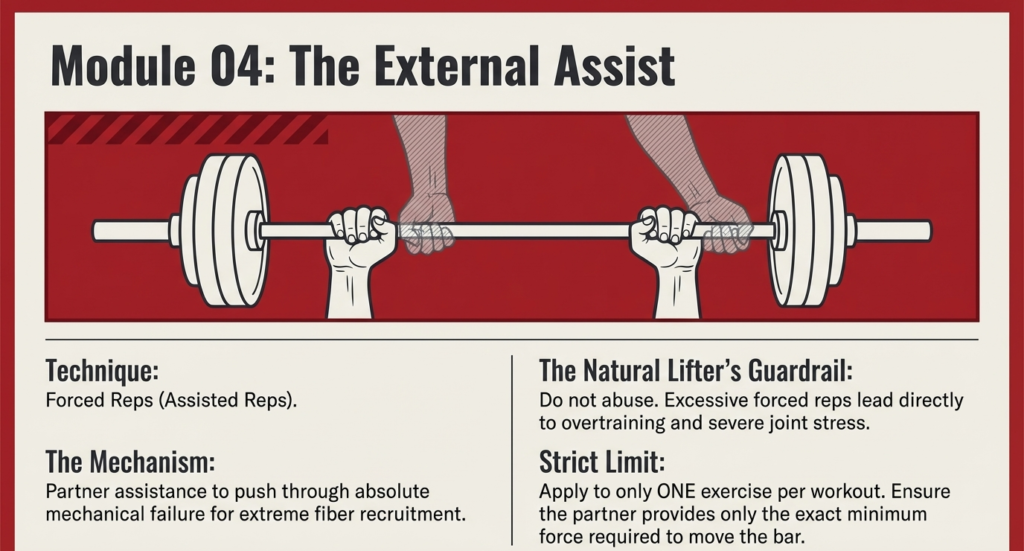
Forced Reps for Advanced Muscle Activation
Forced reps involve a training partner assisting you to complete additional repetitions after reaching failure. This allows muscles to be pushed beyond their normal limit, leading to maximum fiber recruitment. While highly effective, this technique comes with a high fatigue cost and should be used sparingly. Natural lifters must be cautious to avoid overtraining and joint stress. The assistance provided should be minimal, just enough to complete the rep.
When applied correctly, forced reps can provide a powerful stimulus for growth and help overcome stubborn strength plateaus without compromising long-term recovery.
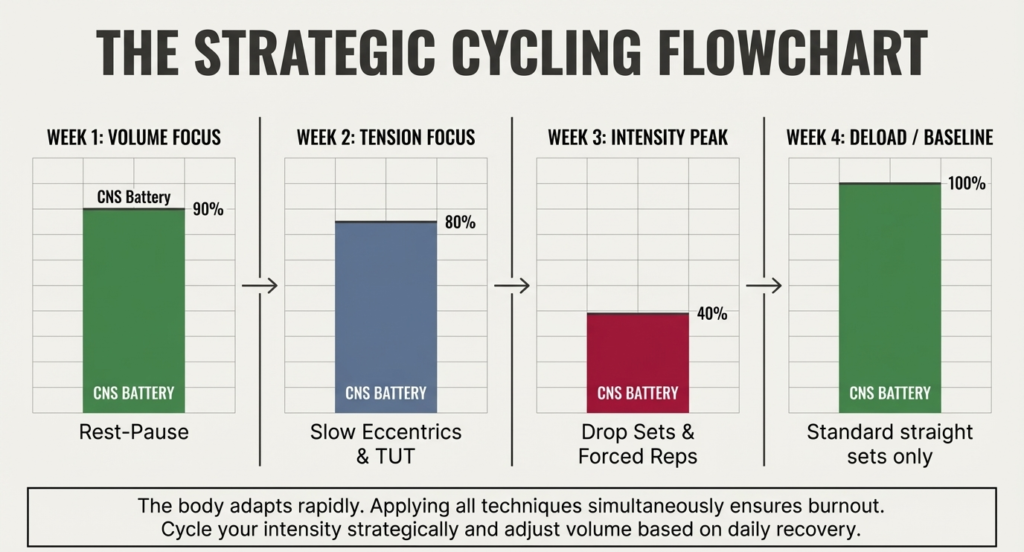
Strategic Intensity Cycling for Natural Lifters
Using all intensity techniques at once can quickly lead to burnout. That’s why strategic cycling is essential for natural lifters. This approach involves rotating different techniques across training weeks, such as focusing on volume one week and intensity the next. This prevents adaptation and allows proper recovery. By managing fatigue and stimulus, lifters can maintain consistent progress over time.
Intensity cycling ensures that the body is continuously challenged without being overwhelmed. It’s a smarter way to train, helping natural lifters break plateaus while preserving energy, performance, and long-term sustainability.
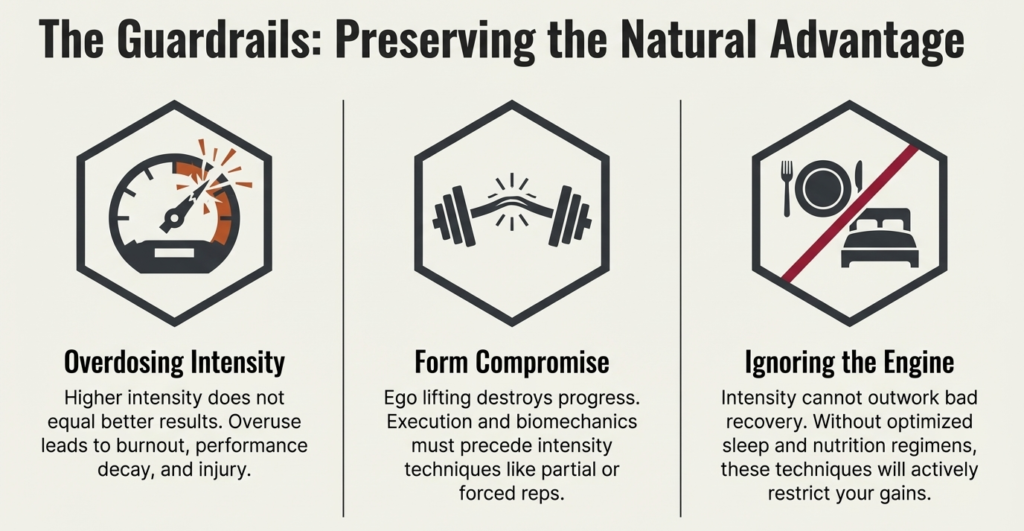
Guardrails for Natural Lifters Training Safely
Intensity techniques are powerful, but misuse can lead to serious setbacks. These guardrails highlight common mistakes like overtraining, poor form, and neglecting recovery. Many lifters believe more intensity equals better results, but this often leads to burnout and injury. Maintaining proper technique should always come first, especially when using advanced methods like partial or forced reps. Additionally, recovery through sleep and nutrition is essential for progress. Without it, even the best training strategies will fail.
These principles ensure that intensity is applied intelligently, helping natural lifters achieve sustainable growth without compromising health.
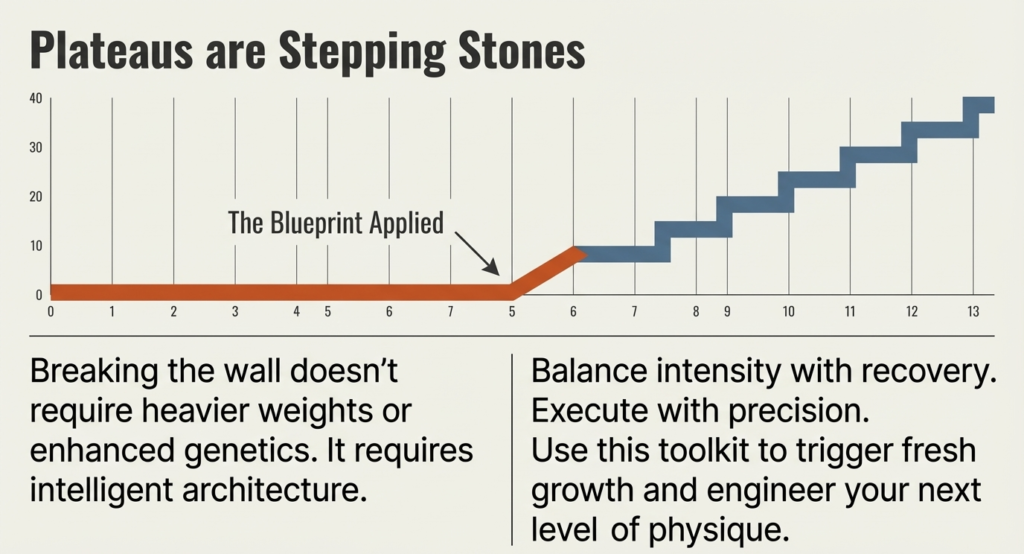
Plateaus Are Stepping Stones in Fitness Progress
Plateaus are not failures but signals that your body has adapted. This visual shows how progress can resume once smarter strategies are applied. Instead of increasing weight endlessly, natural lifters must refine their approach using intensity techniques and better programming. The shift from stagnation to growth represents the power of intelligent training. With proper execution, recovery, and consistency, plateaus become opportunities for improvement.
This mindset is essential for long-term success. By embracing challenges and adapting strategies, lifters can continue progressing and building a stronger, more defined physique over time.

Gearless Physique
Physique Without Gear
Your transformation starts now. Who's with me?