7 Differences Between Warm-Up and Activation Explained
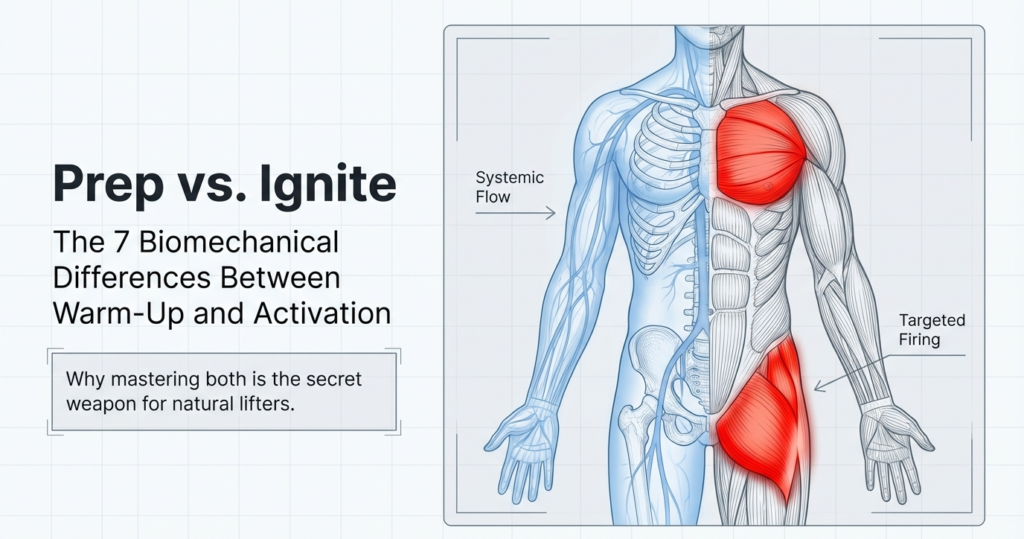
This infographic provides a complete overview of the differences between warm-up and activation in a simple and visually engaging format. It highlights how warm-ups focus on global preparation through dynamic movements, while activation emphasizes targeted muscle engagement using controlled exercises. The comparison also shows differences in intensity, purpose, and execution. This makes it easier for beginners and advanced lifters to understand how to structure their workouts. By following this guide, you can ensure that your body is properly prepared and your muscles are fully activated before training. This leads to better performance, improved muscle growth, and reduced risk of injury.
Warm-Up vs Activation Biomechanics Explained
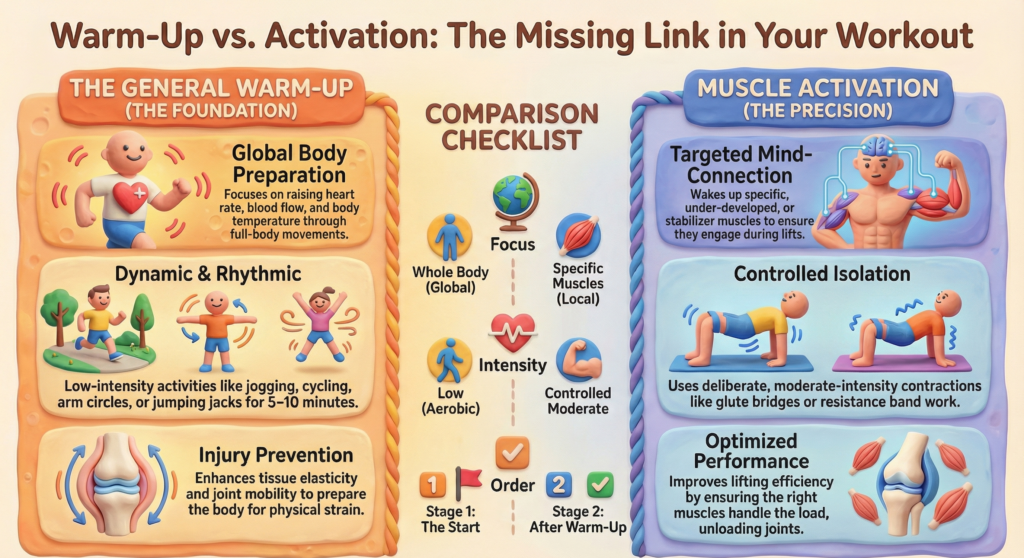
This visual clearly introduces the fundamental difference between warm-up and activation by contrasting systemic preparation with targeted muscle engagement. A warm-up focuses on increasing overall blood flow, heart rate, and body temperature, preparing the entire body for movement. In contrast, activation specifically targets individual muscles, ensuring they are properly engaged before heavy lifting begins. This distinction is crucial for improving workout efficiency and preventing injury. Many lifters overlook this step and rely only on general warm-ups, which can lead to poor muscle recruitment. By combining both strategies, you not only prepare your body but also optimize performance, ensuring that the right muscles are doing the work during training sessions.
The Pre-Workout Blind Spot Explained
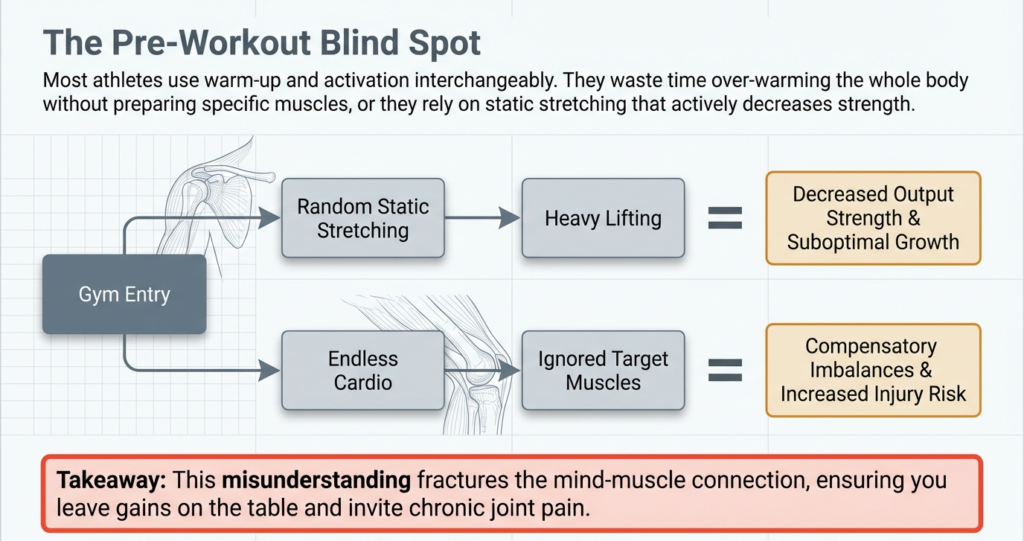
This image highlights one of the biggest mistakes in fitness—the misunderstanding between warm-up and activation. Many athletes either rely on random static stretching or spend excessive time on general cardio without activating target muscles. This leads to decreased strength output and inefficient muscle engagement. When muscles are not properly activated, secondary muscles compensate, increasing the risk of injury and limiting growth. This “blind spot” is why many people plateau despite consistent training. Understanding and correcting this mistake can dramatically improve results. Instead of rushing into heavy lifts, a structured approach that includes both warm-up and activation ensures better mind-muscle connection, improved strength, and safer workouts over time.
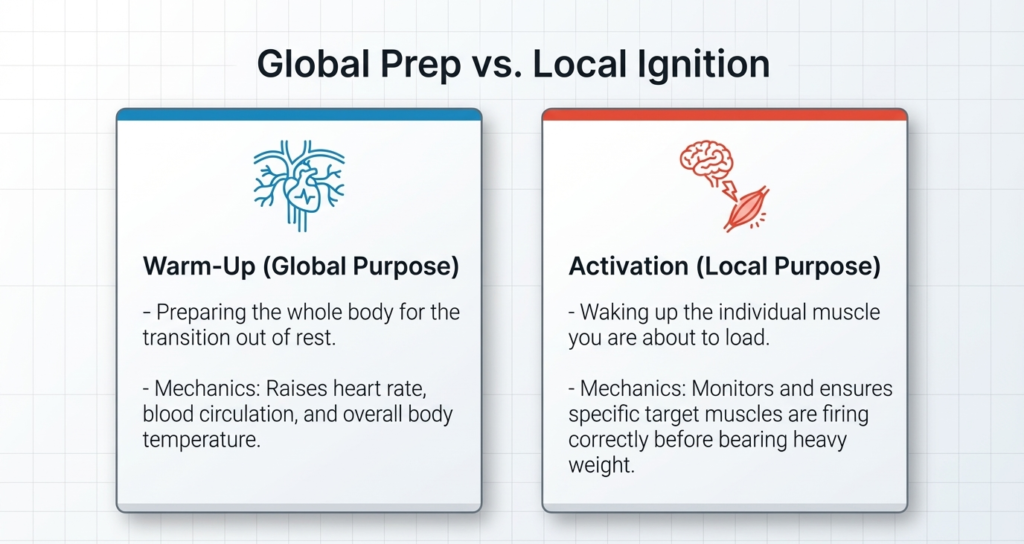
Global Warm-Up vs Local Muscle Activation
This comparison explains how warm-ups and activation serve completely different purposes. Warm-ups prepare the entire body by increasing circulation and loosening joints, making them essential for transitioning from rest to activity. Activation, however, focuses on specific muscles that will be used during the workout. This ensures those muscles are firing correctly and ready for load. Without activation, dominant muscles may take over, reducing effectiveness and causing imbalances. For example, during chest training, shoulders often dominate if the chest is not activated. Combining both methods creates a balanced approach, allowing you to train efficiently while maximizing muscle engagement and minimizing the risk of injury.
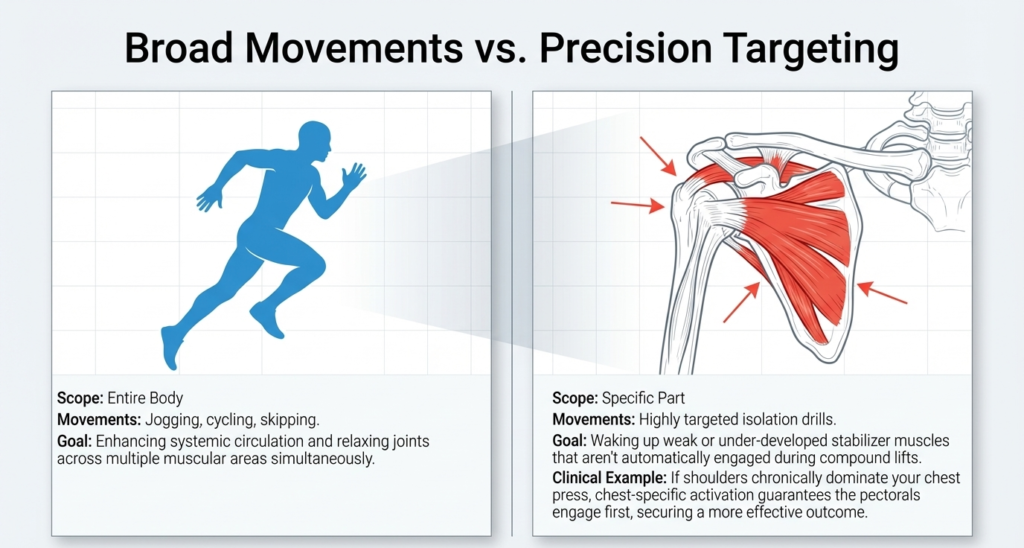
Broad Movements vs Precision Muscle Targeting
This image illustrates how warm-ups involve broad, full-body movements while activation focuses on precision targeting of specific muscles. Warm-up exercises like jogging or skipping improve circulation and prepare multiple muscle groups simultaneously. Activation drills, on the other hand, isolate individual muscles, especially stabilizers that are often underactive. These muscles play a critical role in proper movement patterns. Without activating them, larger muscles may compensate, leading to inefficiency and injury risk. Precision targeting ensures that the correct muscles are engaged before heavy lifting. This approach enhances performance and allows lifters to build better muscle control, which is essential for long-term strength and hypertrophy.
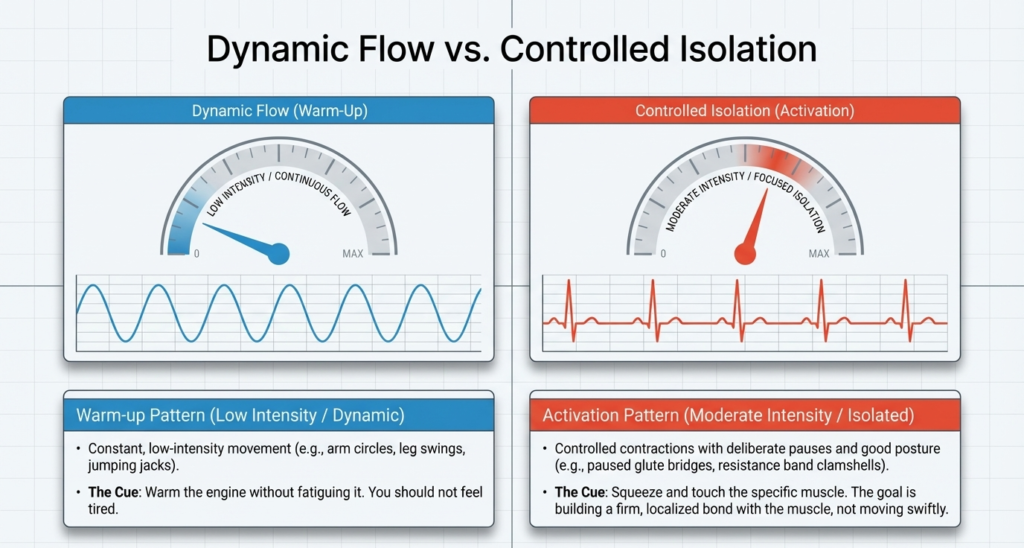
Dynamic Warm-Up vs Controlled Activation
This image emphasizes the difference between dynamic movement and controlled muscle contraction. Warm-ups are designed to be continuous and low intensity, helping the body gradually transition into exercise. These movements increase mobility and blood flow without causing fatigue. Activation, however, requires controlled and focused contractions to engage specific muscles. The goal is not speed but precision. Exercises like glute bridges or resistance band work require deliberate control and posture. This helps build a strong mind-muscle connection. When performed correctly, activation ensures that muscles are fully prepared for heavy lifts, improving performance while reducing strain on joints and supporting muscles.
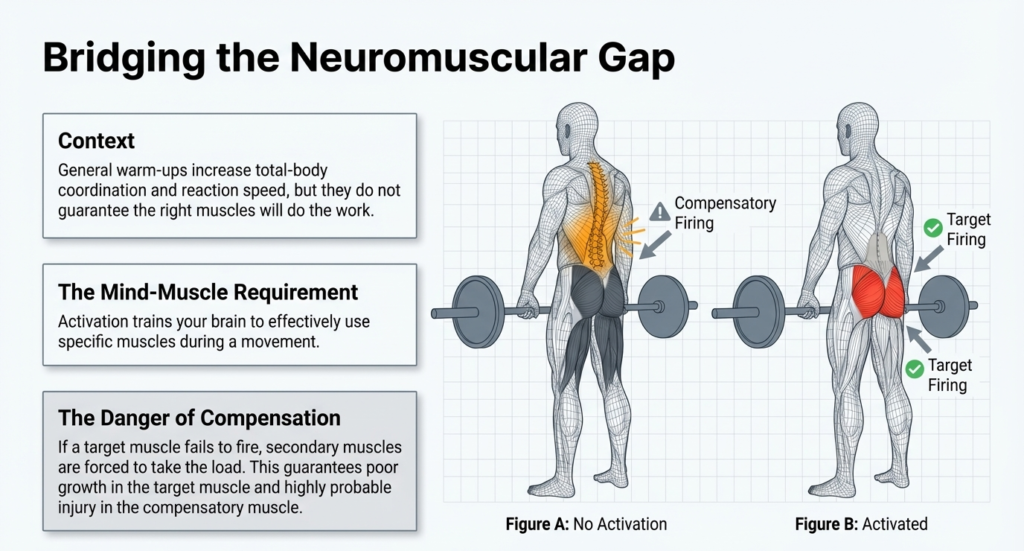
Bridging the Neuromuscular Gap
This visual demonstrates the importance of activation in developing a strong neuromuscular connection. Without activation, the body often relies on compensatory muscles, which can lead to poor movement patterns and increased injury risk. Activation trains the brain to recruit the correct muscles during an exercise. For example, during deadlifts, improper activation may cause the lower back to take over instead of the glutes. By activating the target muscles beforehand, you ensure efficient movement and better load distribution. This improves both performance and safety. Over time, this connection becomes stronger, leading to better muscle growth and reduced risk of chronic injuries.
Warm-Up and Activation for Performance
This image highlights how warm-up and activation work together to create optimal training conditions. Warm-ups act as a protective shield by improving joint mobility and tissue elasticity, reducing the risk of injury. Activation acts as a performance enhancer by ensuring that primary muscles handle the load efficiently. When combined, they create a powerful system that improves both safety and strength output. Skipping either step can compromise your workout. Without warm-up, the body is unprepared; without activation, the wrong muscles may take over. Together, they form the foundation of effective training, allowing you to lift heavier, move better, and stay injury-free.

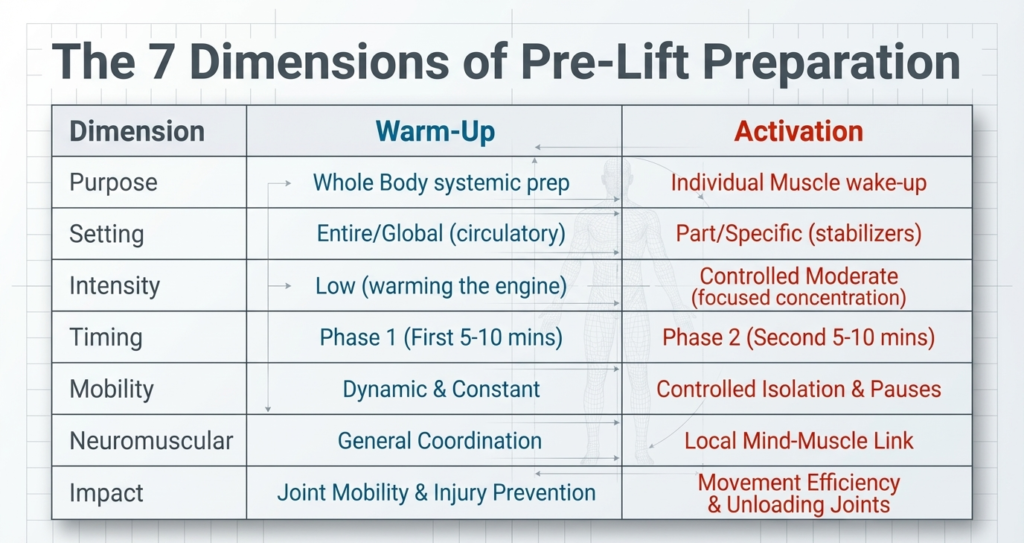
7 Dimensions of Warm-Up vs Activation
This table provides a structured comparison of warm-up and activation across key dimensions such as purpose, intensity, timing, and neuromuscular impact. Warm-ups focus on global preparation, using dynamic movements to increase circulation and mobility. Activation focuses on specific muscles, using controlled contractions to improve muscle engagement. Understanding these differences helps create a more effective training routine. Instead of treating them as the same, recognizing their unique roles allows for better programming. This clarity ensures that your body is not only ready to move but also optimized for performance. Applying these principles consistently leads to better strength gains, improved technique, and reduced injury risk.
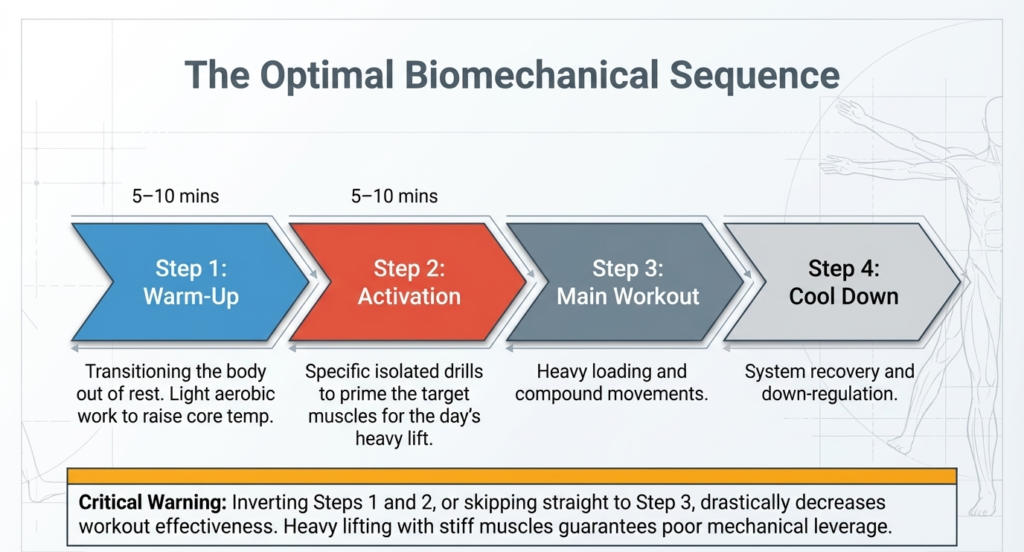
The Optimal Workout Sequence Explained
This image outlines the ideal sequence for any workout: warm-up, activation, main workout, and cool down. Starting with a warm-up prepares the body by increasing temperature and circulation. Activation follows to ensure the correct muscles are engaged before heavy lifting. Skipping or reversing this order can reduce performance and increase injury risk. Many lifters jump straight into heavy exercises without proper preparation, leading to poor mechanics. Following this structured sequence improves efficiency and safety. It ensures that your body is fully prepared for the demands of training, allowing you to perform better and recover more effectively after each session.
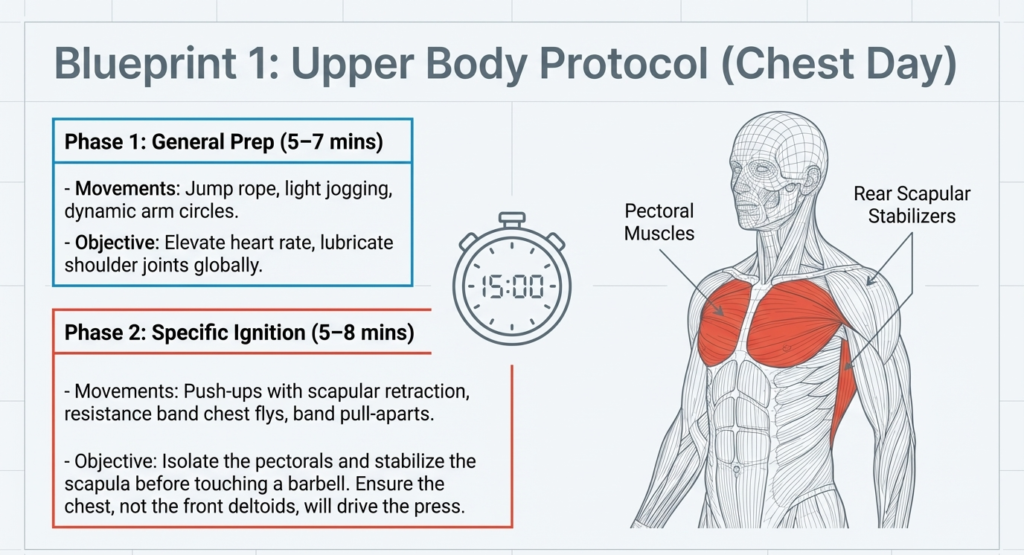
Upper Body Warm-Up and Activation Routine
This blueprint provides a practical example of combining warm-up and activation for upper body training. The warm-up phase includes light cardio and dynamic movements to increase circulation and prepare the joints. The activation phase focuses on specific muscles like the chest and stabilizers using controlled exercises. This ensures that the chest muscles are properly engaged before pressing movements. Without activation, shoulders often dominate chest exercises, reducing effectiveness. By following this structured approach, you improve muscle recruitment and performance. This leads to better strength gains and reduces the risk of injury, making your workouts more efficient and productive..
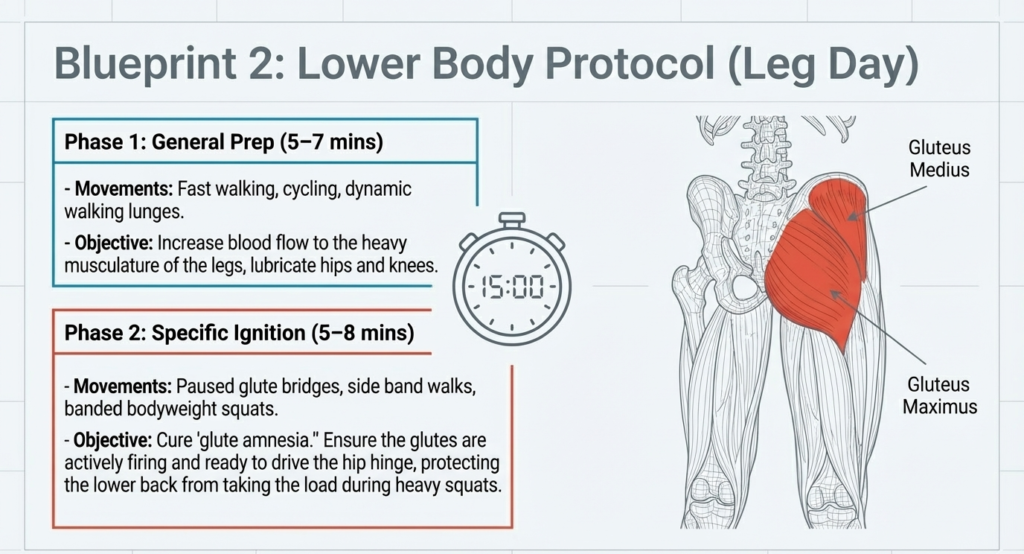
Lower Body Warm-Up and Activation Routine
This image demonstrates how to properly prepare for a lower body workout. The warm-up phase includes activities like walking and cycling to increase blood flow and loosen joints. The activation phase focuses on the glutes and stabilizing muscles using controlled exercises such as glute bridges and band walks. This helps prevent “glute amnesia,” where the glutes fail to engage properly. Without activation, the lower back and quads may take over, increasing injury risk. By activating the glutes before heavy lifts, you improve movement efficiency and protect your joints. This approach leads to stronger, safer, and more effective leg workouts.
Common Pre-Workout Mistakes to Avoid
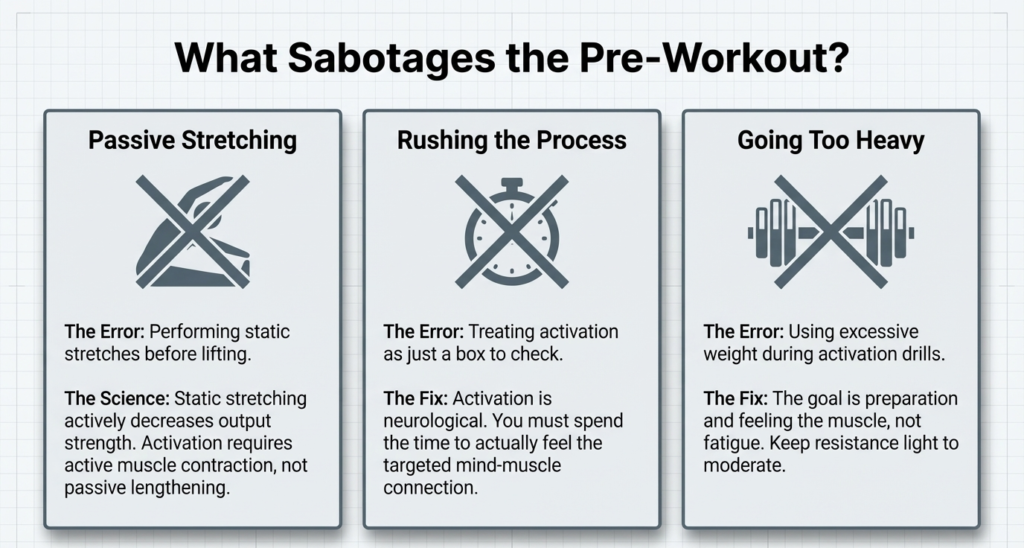
This image highlights three major mistakes that can ruin your workout before it even begins. Passive stretching before lifting can reduce strength output, making it less effective than dynamic warm-ups. Rushing through activation prevents proper muscle engagement, limiting performance. Using heavy weights during activation defeats its purpose, as it should focus on preparation, not fatigue. These mistakes are common but easily avoidable. By understanding the correct approach, you can significantly improve your training results. Taking a few extra minutes to warm up and activate properly ensures better muscle engagement, improved strength, and reduced risk of injury over time
The Natural Lifter’s Performance Advantage
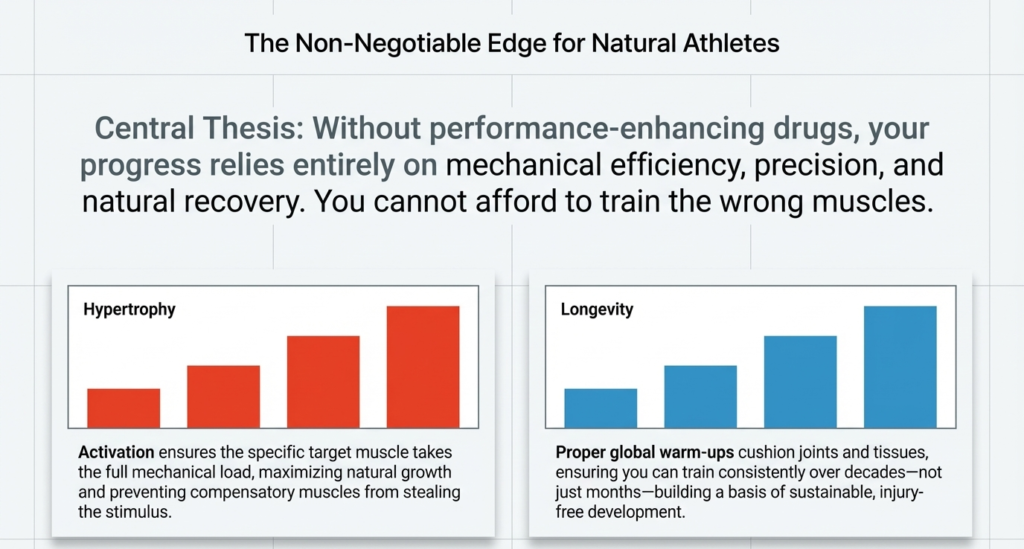
This image emphasizes the importance of proper preparation for natural lifters. Without performance-enhancing substances, progress depends entirely on training efficiency and recovery. Activation ensures that the correct muscles handle the load, maximizing hypertrophy and strength gains. Warm-ups protect joints and tissues, allowing for consistent long-term training. Together, they create a foundation for sustainable progress. Many lifters struggle with plateaus because they ignore these fundamentals. By focusing on precision and proper muscle engagement, natural athletes can achieve better results. This approach not only improves performance but also ensures longevity in training, helping you build a strong and balanced physique over time.
Prepare to Move, Ignite to Perform
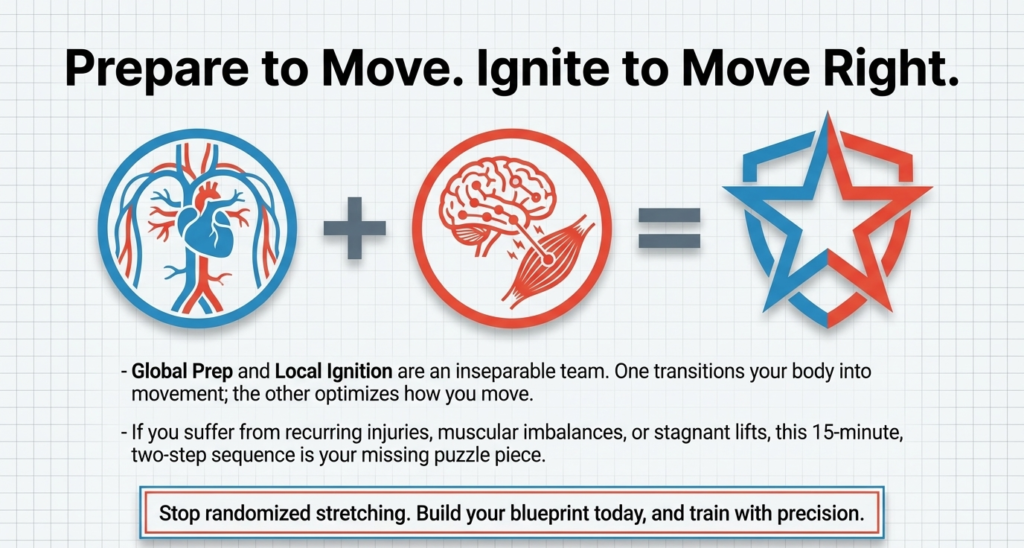
This final visual reinforces the idea that warm-up and activation are inseparable components of effective training. Warm-up prepares the body for movement, while activation ensures that movement is performed correctly. Together, they create a powerful system that enhances performance and reduces injury risk. Many lifters overlook this combination, leading to inefficient workouts and slow progress. By implementing both steps consistently, you can improve strength, technique, and muscle engagement. This simple yet powerful approach can transform your training routine. Stop relying on random preparation and start following a structured system to unlock your full potential in the gym.
Read more: https://www.nerdfitness.com/blog/warm-up/

Gearless Physique
Physique Without Gear
Your transformation starts now. Who's with me?