6 Workout Splits to Train Each Muscle Twice a Week
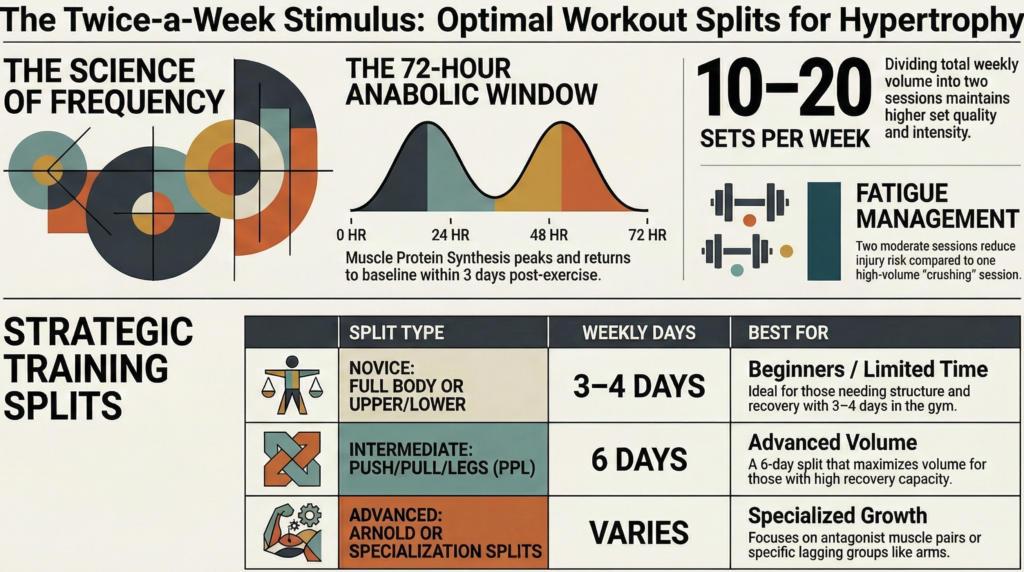
This infographic summarizes the science behind training each muscle twice per week. It highlights the importance of the 24–72 hour anabolic window, optimal weekly volume of 10–20 sets, and fatigue management strategies. By dividing volume into multiple sessions, you maintain higher training quality and reduce injury risk. The chart also emphasizes selecting the right split based on experience level and time availability. Whether you are a beginner or advanced lifter, the principle remains the same—consistent stimulation leads to better growth. Understanding these fundamentals allows you to train smarter, recover better, and achieve long-term muscle development.
The 2X Frequency Blueprint for Maximum Muscle Growth
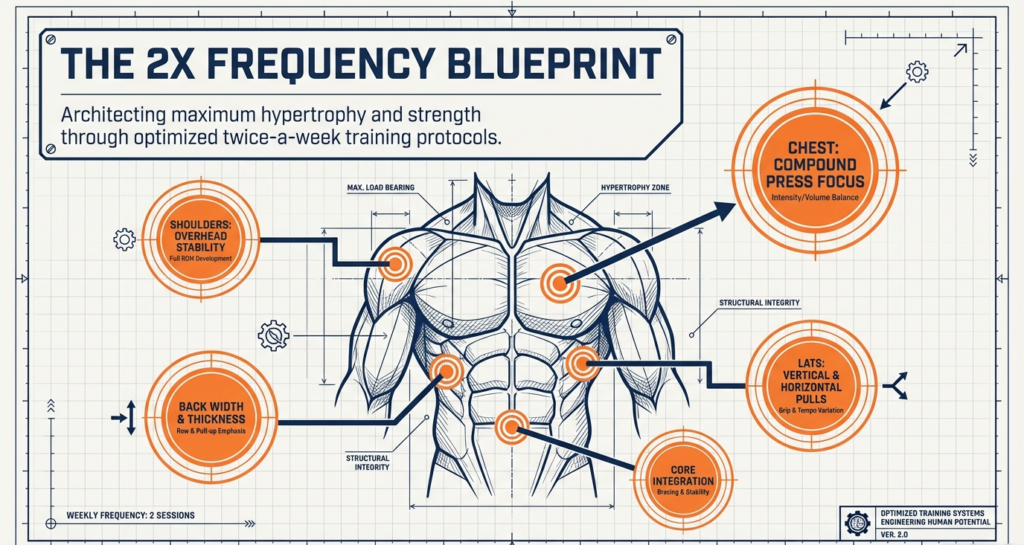
The 2X frequency blueprint represents the foundation of effective muscle building for natural lifters. Instead of relying on outdated once-a-week splits, this system focuses on stimulating each muscle group twice weekly to maximize growth potential. By targeting chest, back, shoulders, and core with structured volume distribution, you create a consistent anabolic environment. This approach improves strength progression, enhances muscle coordination, and reduces excessive fatigue from single-session overload. It also allows better exercise quality and performance in every workout. When combined with compound movements and proper recovery, this blueprint ensures long-term progress and balanced physique development without unnecessary strain or risk of overtraining.
Muscle Protein Synthesis and the 2X Training Advantage
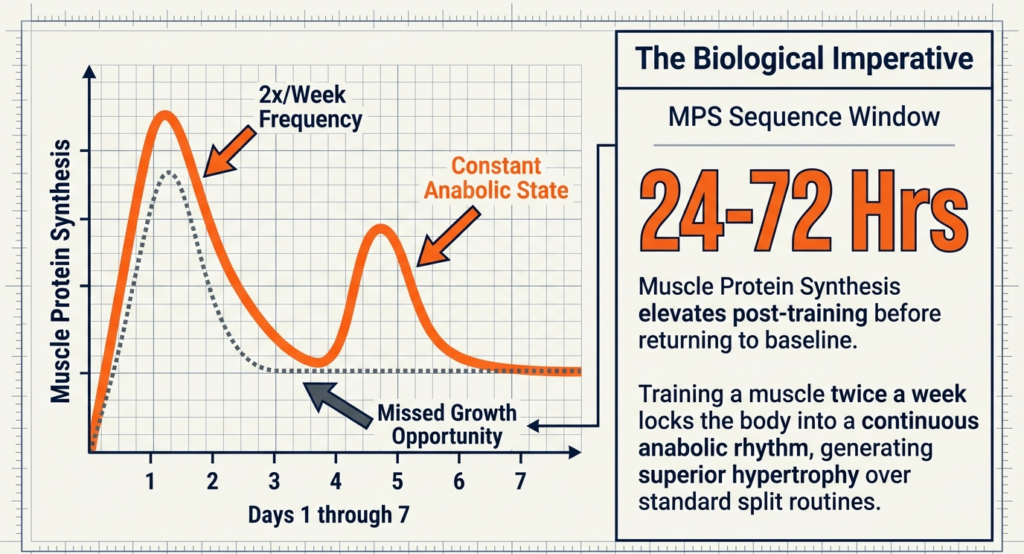
Muscle protein synthesis (MPS) is the key biological driver of muscle growth, and it typically remains elevated for 24 to 72 hours after training. This means that if you only train a muscle once a week, you spend several days without any growth stimulus. By training twice weekly, you reactivate MPS more frequently, keeping your body in a near-constant anabolic state. This leads to better hypertrophy, improved recovery cycles, and more efficient muscle building. Instead of experiencing peaks and long drops, your body maintains a steady rhythm of growth, making twice-a-week training one of the most scientifically supported strategies.
Smart Volume Distribution for Better Performance
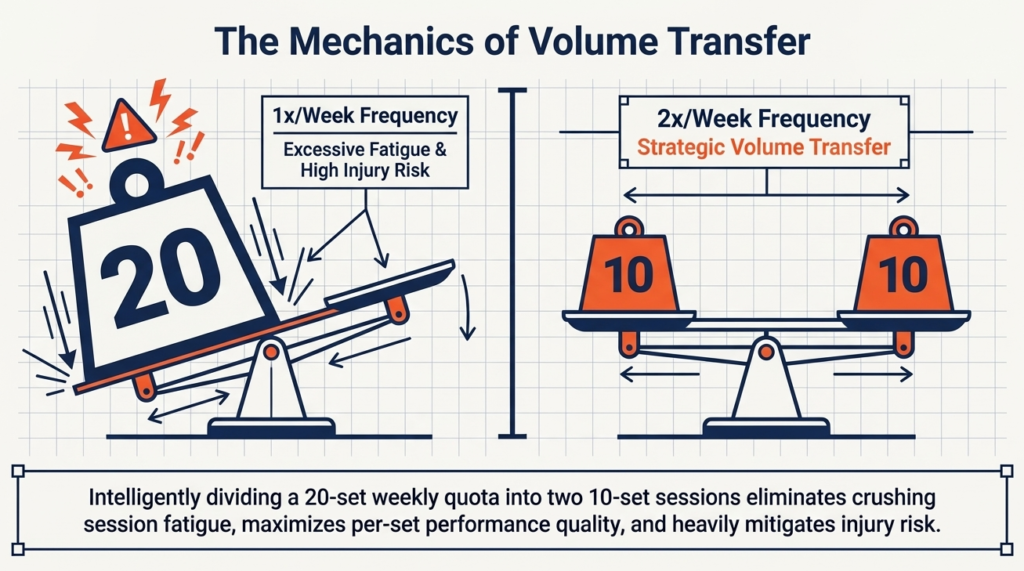
One of the biggest advantages of training twice per week is intelligent volume distribution. Instead of performing 20 exhausting sets in one session, dividing that workload into two sessions of 10 sets significantly improves performance quality. This approach reduces central fatigue, lowers injury risk, and allows better focus on each set. You can lift heavier, maintain better form, and achieve stronger mind-muscle connection. Over time, this leads to superior strength gains and muscle development. Rather than crushing a muscle in one workout, you stimulate it effectively across the week, ensuring consistent progress while maintaining optimal recovery and training efficiency.
Full Body Split: The Most Efficient Beginner Strategy
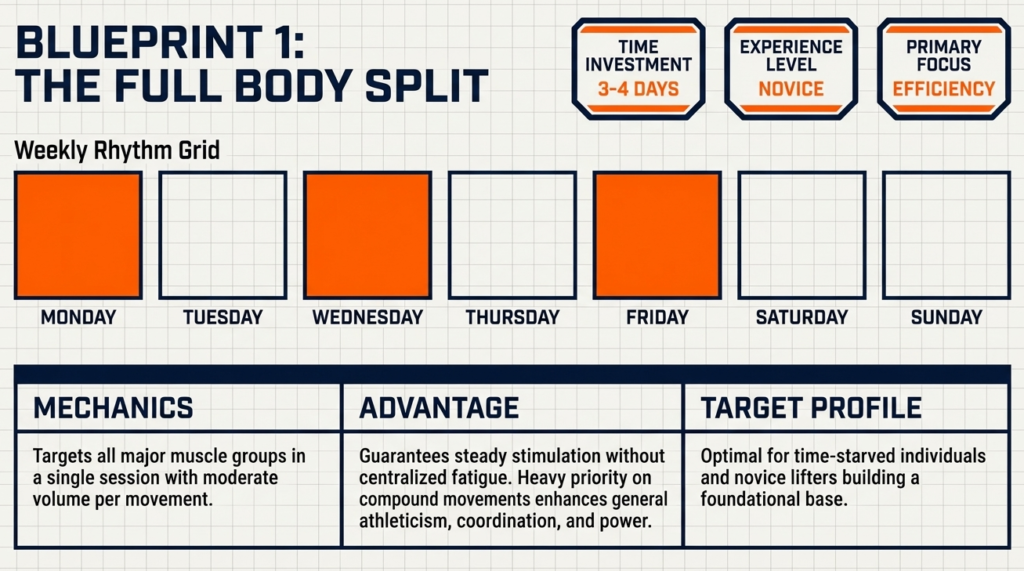
The full body split is one of the most efficient and beginner-friendly training methods. By working all major muscle groups in each session, it ensures consistent stimulation throughout the week. This approach is perfect for individuals with limited time, as it requires only three to four sessions weekly. It emphasizes compound movements like squats, presses, and rows, which improve overall strength, coordination, and athleticism. Because volume per session is moderate, recovery is easier, making it ideal for beginners. Over time, this split builds a strong foundation, enhances movement patterns, and prepares lifters for more advanced training structures while still delivering excellent muscle growth results.
Upper Lower Split: The Gold Standard for Progress
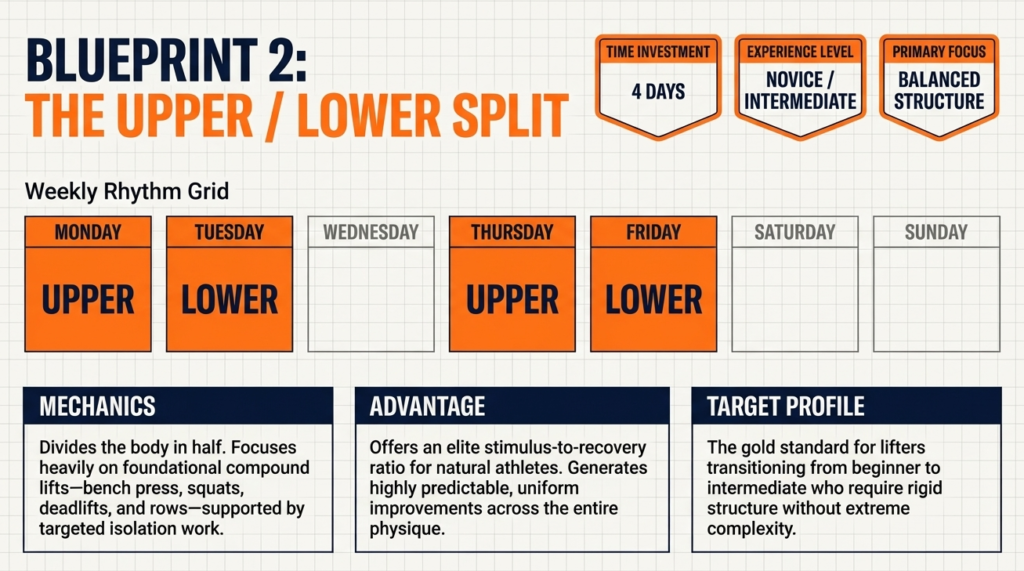
The upper/lower split is widely considered the gold standard for natural lifters transitioning from beginner to intermediate levels. By dividing training into upper body and lower body sessions, it allows for optimal recovery while maintaining a high training frequency. Each muscle group is trained twice weekly, ensuring consistent growth stimulation. This structure also supports progressive overload, as you can track performance improvements more effectively. With a strong focus on compound lifts and strategic isolation exercises, the upper/lower split delivers balanced muscle development, strength gains, and long-term sustainability. It is simple, effective, and adaptable to almost any fitness goal or schedule.
Push Pull Split: for Balanced Muscle Development
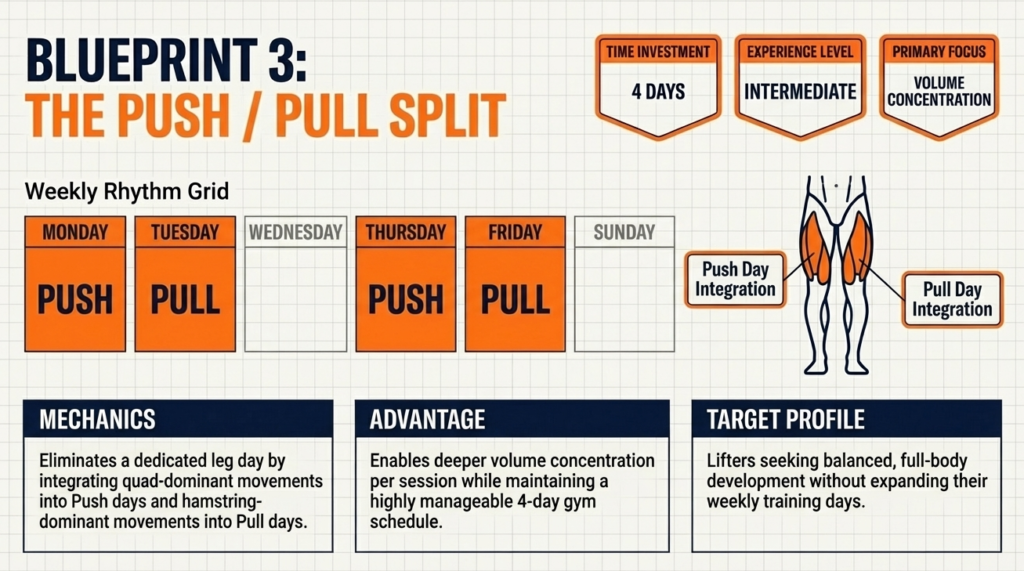
The push/pull split is a streamlined approach that organizes training based on movement patterns rather than muscle groups. Push days target chest, shoulders, triceps, and quads, while pull days focus on back, biceps, and hamstrings. This structure ensures that all muscles are trained twice weekly while keeping the schedule manageable. It allows for deeper focus within each session and better fatigue control compared to more complex splits. Ideal for intermediate lifters, this method balances efficiency and performance. By integrating legs into push and pull days, it eliminates the need for a separate leg day while still maintaining complete development.
High Low Split: with Arms Specialization
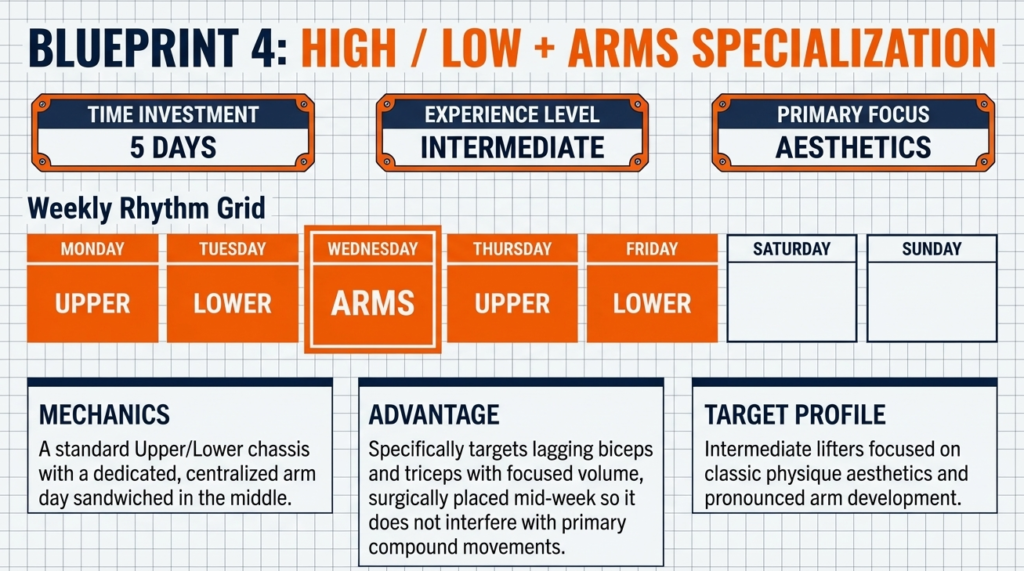
The high/low split with arms specialization is designed for lifters who want to bring up lagging arm development without sacrificing overall progress. By adding a dedicated arm day between upper and lower sessions, this split increases volume specifically for biceps and triceps. It allows focused training without interfering with compound lifts performed earlier in the week. This structure is particularly useful for classic physique athletes where arm aesthetics are crucial. While maintaining twice-a-week frequency for all muscles, it provides an extra stimulus for smaller muscle groups. This targeted approach ensures balanced development while enhancing overall symmetry and visual appeal.
Push Pull Legs Split: for Maximum Hypertrophy
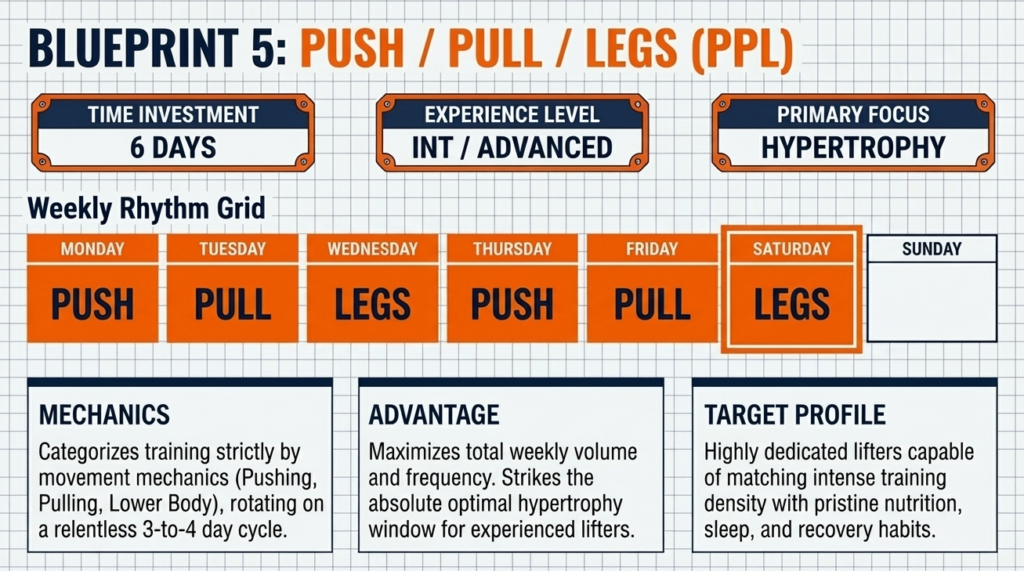
The push/pull/legs (PPL) split is one of the most powerful training systems for maximizing hypertrophy. By training six days per week, it allows each muscle group to be stimulated twice with high volume and intensity. This split is ideal for intermediate to advanced lifters who can handle increased training demands. It provides enough frequency for growth while allowing specific focus on movement patterns. However, recovery becomes critical, requiring proper nutrition, sleep, and stress management. When executed correctly, PPL delivers exceptional muscle gains, improved strength, and better muscle separation, making it a top choice for serious physique development.
Modified Arnold Split: for Advanced Lifters
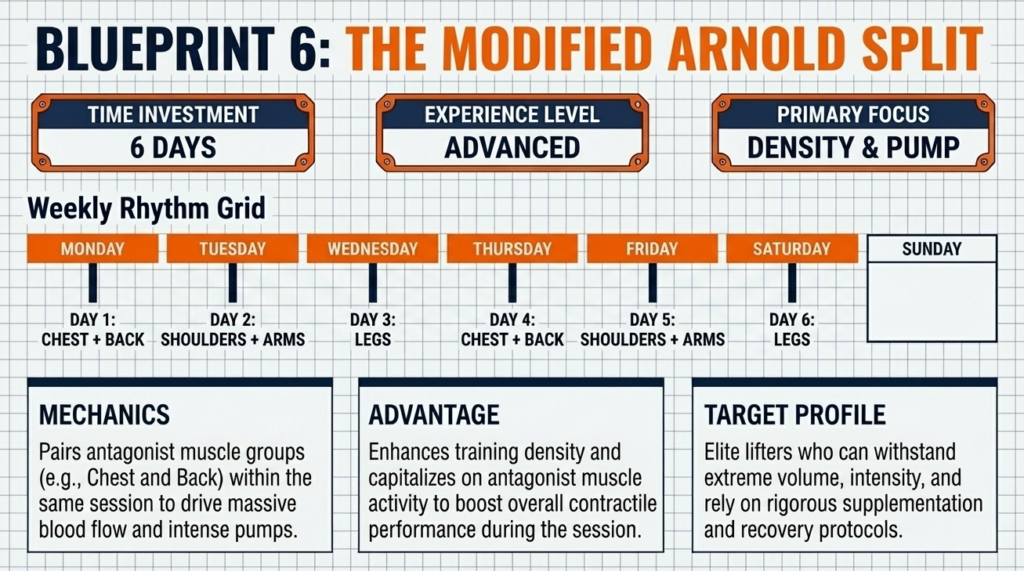
The modified Arnold split is an advanced training system that pairs opposing muscle groups to maximize intensity and muscle pump. By combining chest with back and shoulders with arms, it enhances performance through antagonist muscle activation. This structure allows for high training density and increased blood flow, leading to improved muscle growth. Performed over six days, it ensures each muscle is trained twice weekly. However, it requires excellent recovery capacity, proper nutrition, and disciplined training. This split is best suited for experienced lifters who can handle high volume and intensity while maintaining performance and avoiding overtraining.
Align Your Training Split with Your Lifestyle
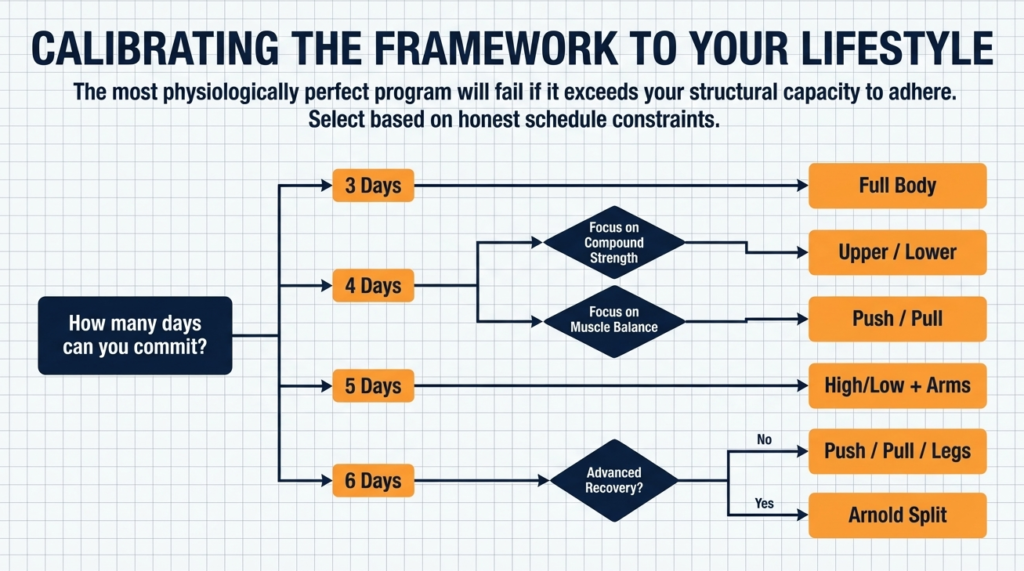
Your training program must align with your lifestyle to be effective. This flowchart demonstrates how to choose the right split based on the number of days you can commit to training. If you have limited time, full body workouts are ideal. With four days, upper/lower or push/pull splits work best. Five-day schedules allow specialization, while six days suit advanced high-frequency training. The goal is not to follow the most complex program but the one you can consistently execute. Consistency drives results, and adherence is the most important factor in long-term progress. Choose a plan that fits your life, not the other way around.
Read more: https://www.muscleandstrength.com/workouts/intermediate-muscle-building-workout.html
The 4 Commandments of Muscle Growth
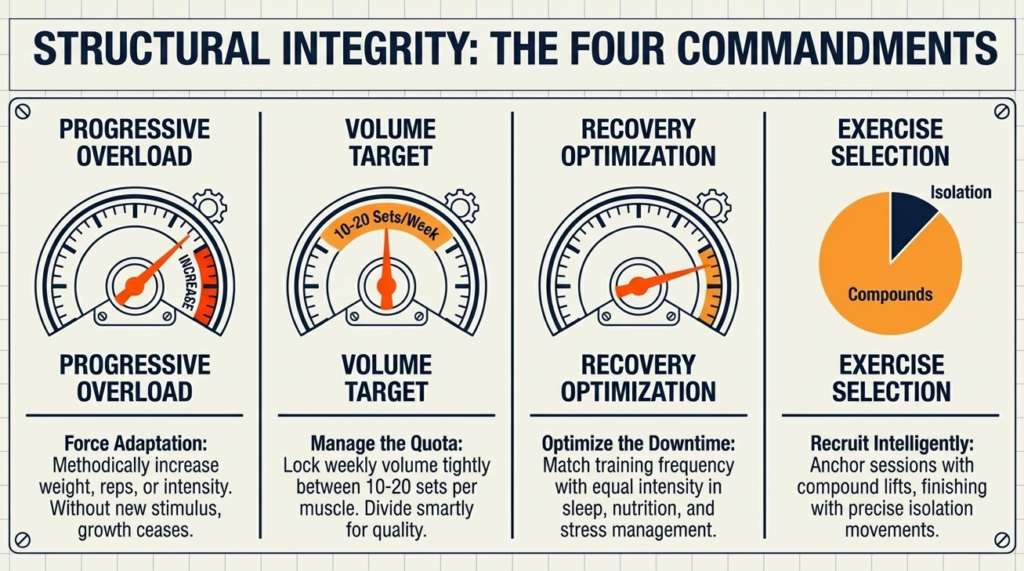
Regardless of the workout split you choose, certain principles remain essential for success. Progressive overload ensures continuous improvement by increasing weight, reps, or intensity over time. Volume management helps maintain the ideal range of 10–20 sets per muscle weekly. Recovery optimization focuses on sleep, nutrition, and stress control to support growth. Finally, exercise selection prioritizes compound movements with targeted isolation work. Together, these four principles form the foundation of effective training. Without them, even the best split will fail. By mastering these fundamentals, you can maximize muscle growth, improve performance, and build a sustainable, long-term fitness routine.
Critical Workout Mistakes to Avoid
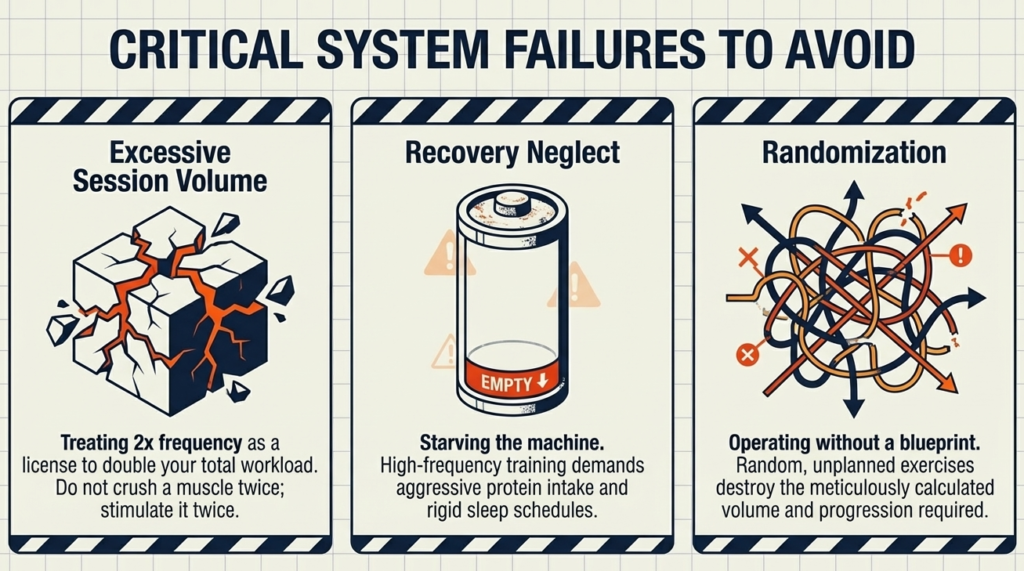
Many lifters fail to see progress not because of poor effort but due to critical training mistakes. One common error is excessive volume, where lifters double their workload instead of distributing it properly. Another mistake is neglecting recovery, which leads to fatigue, poor performance, and stalled growth. Random training without structure also prevents consistent progress. These issues can sabotage even the best workout programs. To achieve results, you must train intelligently, manage your volume, and prioritize recovery. Avoiding these mistakes ensures steady progress, better performance, and long-term success in your fitness journey.
Consistency is the Key to Muscle Growth
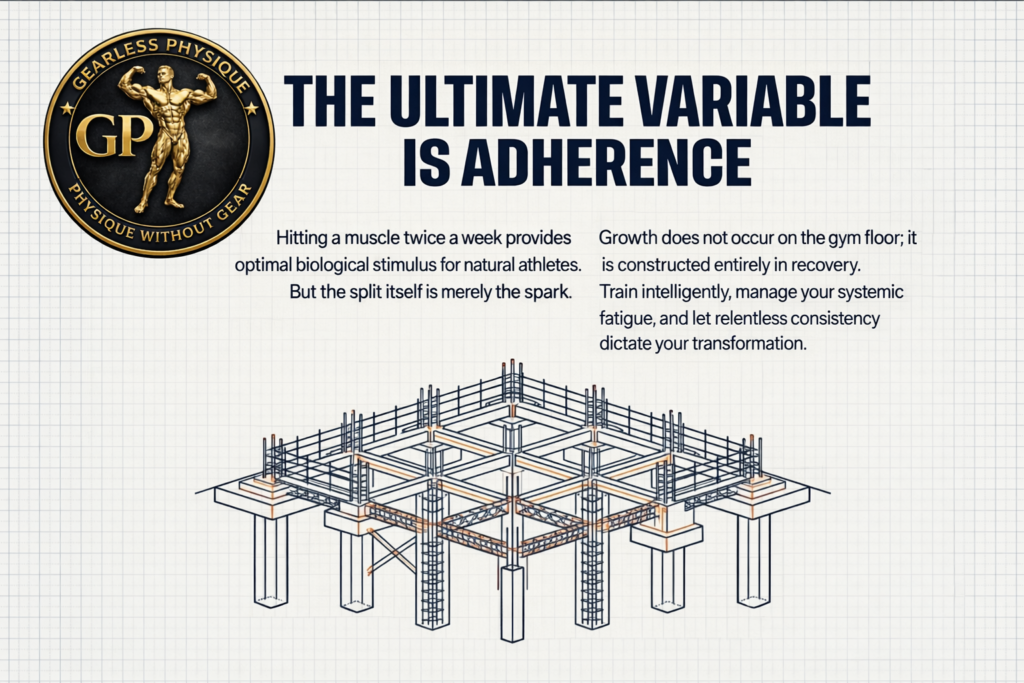
At the end of the day, the most important factor in fitness success is consistency. Training each muscle twice a week provides the ideal stimulus, but results only come if you stick to your plan. Growth does not happen during workouts alone—it occurs during recovery. This means your nutrition, sleep, and stress management play a crucial role. Even the most advanced program will fail without adherence. Focus on building habits, staying disciplined, and following your routine consistently. Over time, these small efforts compound into significant transformations, helping you build strength, muscle, and a balanced physique.

Gearless Physique
Physique Without Gear
Your transformation starts now. Who's with me?