How to gain muscle without steroids: 6 proven tricks
6 Proven Methods to Gain Muscle Without Steroids
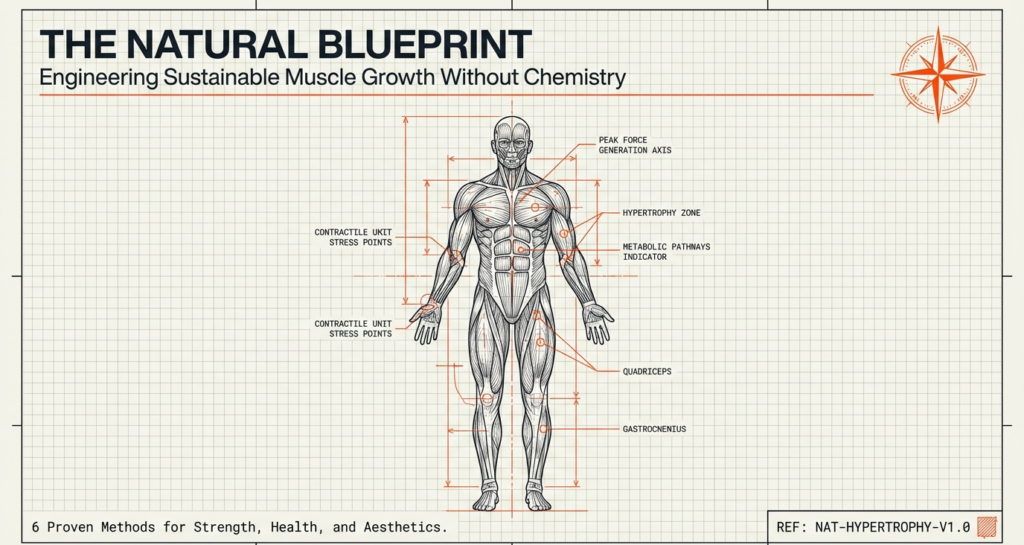
It is not only possible to gain muscle without steroids, it is also more sustainable, healthier and much more rewarding as well. Being a natural athlete, your performance is the result of smart training, strict eating habits, proper rest, and consistency over a long period of time. Whereas the use of performance-enhancing drugs can lead to quick change, building body muscles naturally will lead to the attainment of real strength, balanced hormones, and permanent development.
These six tips have been proven to optimize growth without jeopardizing your health even when you just need to develop a powerful and aesthetic physique the natural way.
Character Over Chemistry: The Foundation of True Muscle Growth
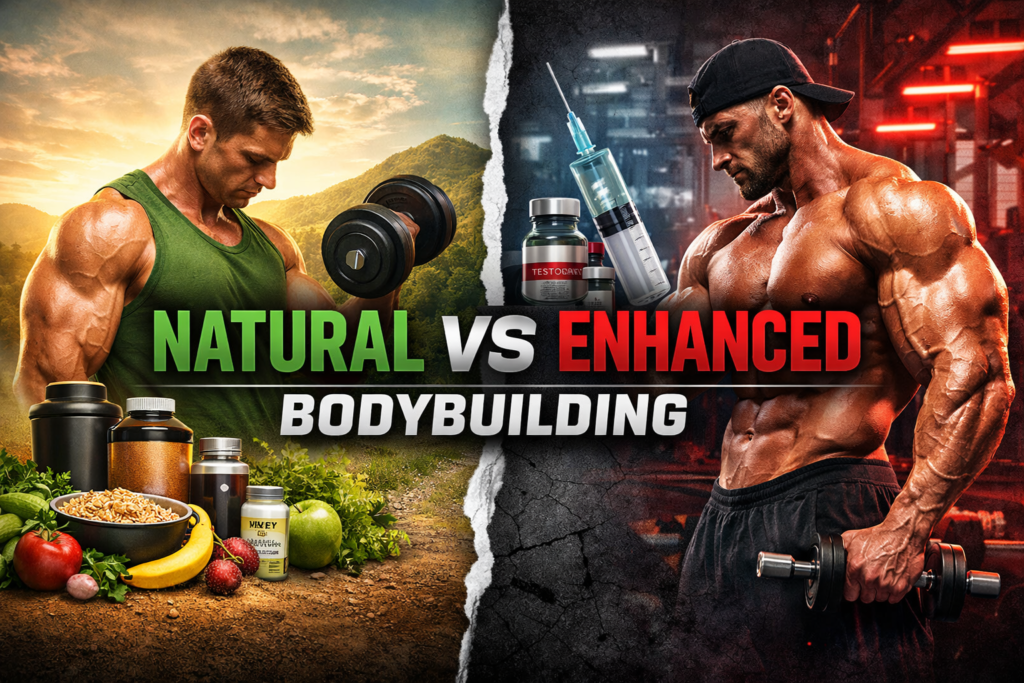
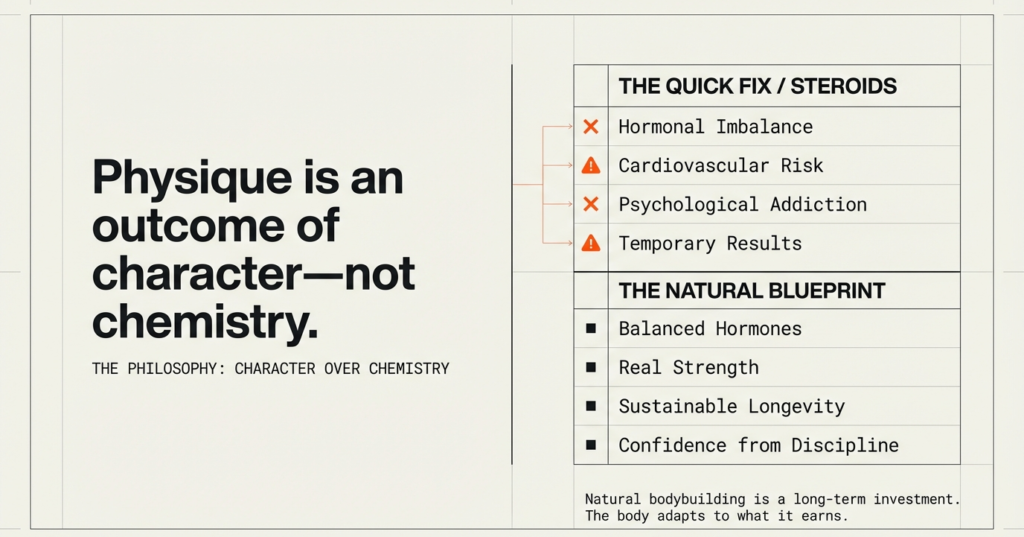
Character is a result of physique–not chemistry. Muscle is made up of real discipline, waiting time, and smart implementation. Though steroids might be fast acting in terms of size and strength, they are accompanied by hormonal disequilibrium, cardiovascular danger, psychological addiction and short term outcomes. Conversely, the natural way builds harmonious hormones, true power, a sustainable health, and confidence gained by discipline.
A successful growth of the muscles needs gradual overloading, organized food intake, good sleep and endurance in the periods of gradual improvement. The body becomes accustomed to what it constantly gets exposed to. When work, rest and dedication are in balance then the body you create is not a product of short-cuts–but one of character made by discipline.
1. Master Progressive Overload
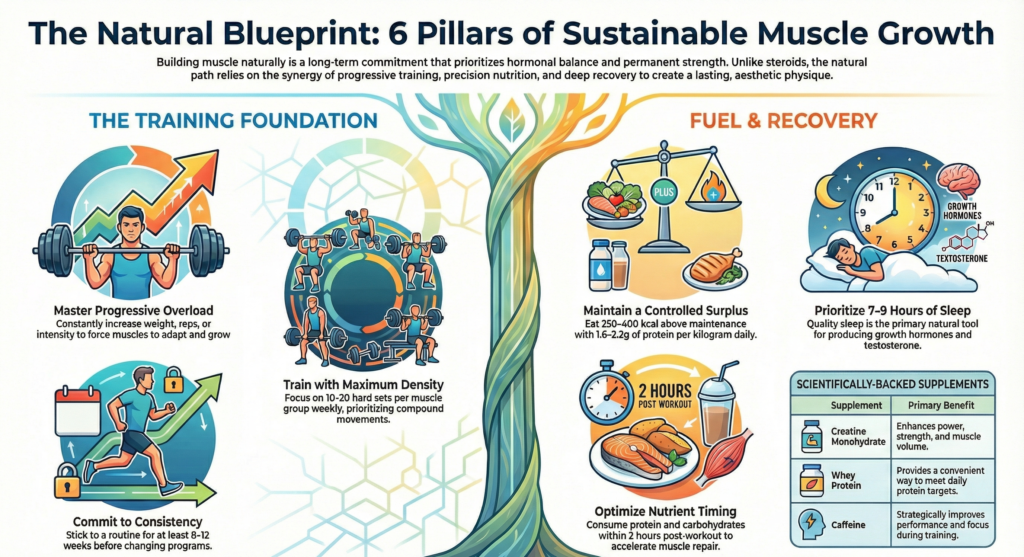
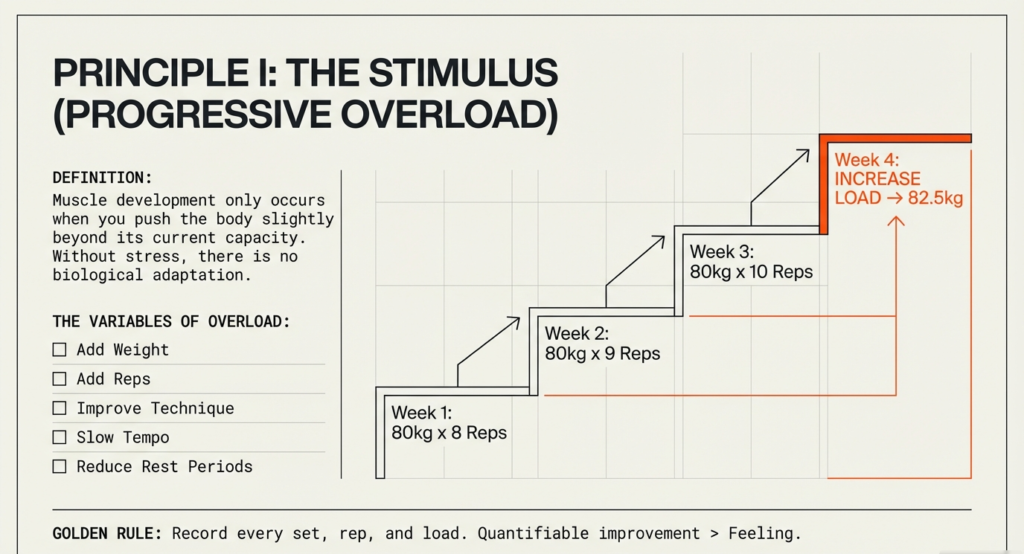
Muscle development occurs when you constantly push your body a little bit more than you are used to. This is known as progressive over load. In its absence, there is no reason why your muscles should develop. Progressive overload does not imply working heavy in each session. It implies creating more stress as time goes on. You can add weight, add reps, add technique, slow tempo, you can reduce rest period or add training volume.
Assuming that you bench press 80 kg, 8 times this week, then you should have a target of 9-10 times, the following week. When you have reached the upper rep range, add a little bit of weight. It is crucial to have a follow-up on workouts. Record sets, reps and loads. Minor changes every week would result in significant changes in months. Natural athletes have to focus on progressing, as they cannot use artificial recovery improvement. Constant, quantifiable improvements triumph.
2. Training With Maximum Power and Density
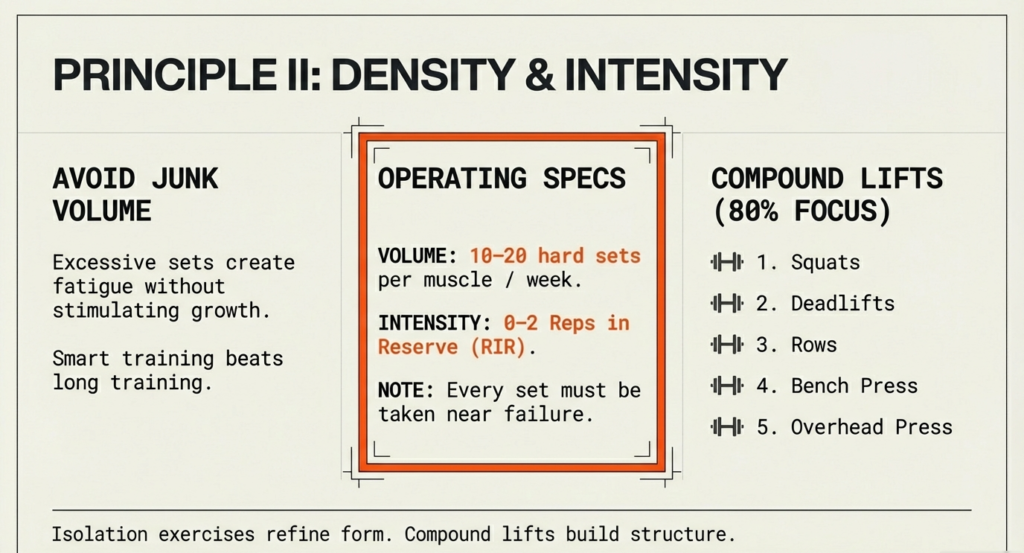
The amount of extra training does not correlate with muscle. Most lifters are confused about intensity and junk volume. Excessive sets do not stimulate further growth and only make one feel tired. Studies indicate that most natural lifters are optimally raised on 1020 hard sets in a muscle group in a week. Every set must be done near failure – preferably with 0- 2 reps of reserve.
The foundation of your routine should be made out of such compound exercises as squats, bench presses, deadlifts, rows, and overhead presses. Isolation exercises augment form and contour but must not be substituted with base exercises. Occasionally, such intensity methods as drop sets or rest-pause can be utilized but only as means, not as the end result.
The smart training is better than the long training. Pay attention to quality representatives, mind-muscle, and systematic programming.
3. Eat in a Calorie Excess that is Controlled
It is impossible to gain muscle during a calorie deficit. In order to develop new tissue, your body requires additional energy.
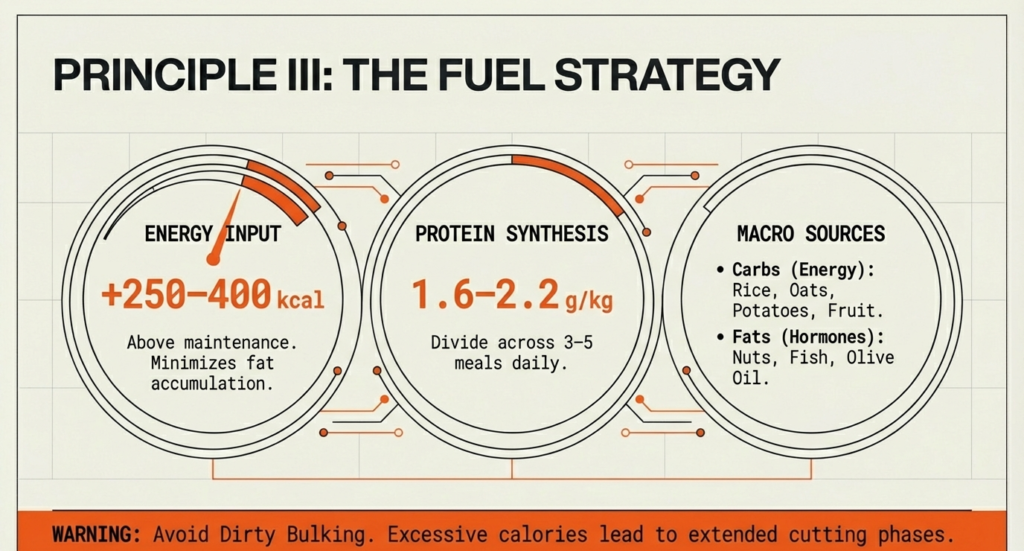
Goal: A moderate energy surplus 250-400 kcal excess of energy over the maintenance. This variety aids in building of muscles and reduces fat accumulation. Protein intake is critical. Take 1.6-2.2 grams of protein per kilo-gram of body weight per day. Divide protein over 3 to 5 meals in order to promote maximum muscle protein synthesis.
Carbohydrates provide energy in performance and recovery. Carbs should not be feared by natural lifers. Grains such as rice, oats, potatoes, fruits, and whole grains are pre-eminence over a long period of energy.
Fats that are healthy aid in the production of hormones. Add nuts, fatty fish, olive oil and seeds.
Avoid dirty bulking. Too much of calories just adds more fat and this lowers one to a lengthy cutting period.
4. Pay attention to Progressive Nutrition Timing and Hydration
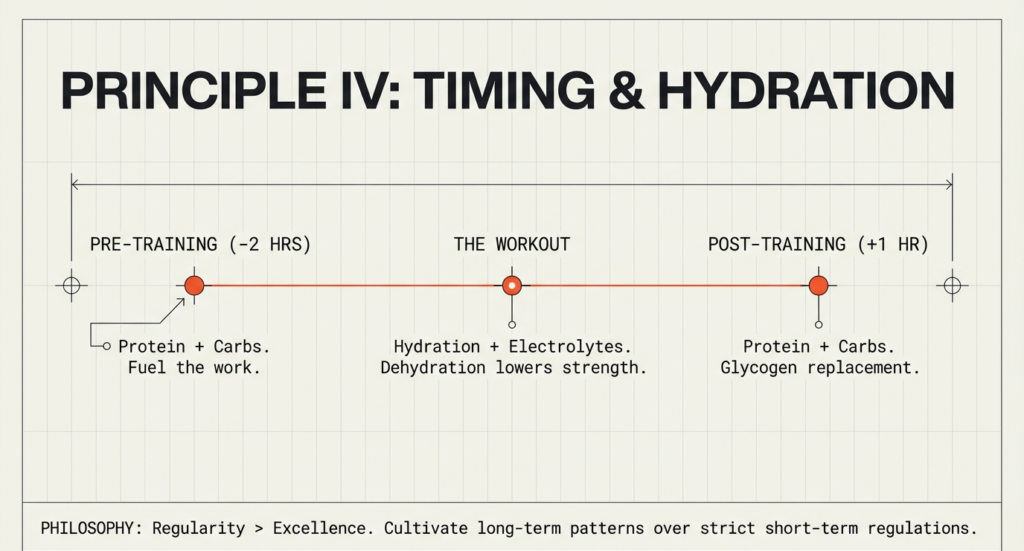
Nutrient timing can enhance performance and recovery whereas total calories and protein are the most important. Eat protein and carbohydrates within 1-2 hours of training as a measure to aid in recovery and glycogen replacement. A basic dish of rice and low-fat meat is effective. Carbohydrates and moderate protein should be eaten in easily digestible form and good to provide the body with energy during the workout.
Hydration has a direct influence on strength and endurance. Mild dehydration even lowers the training intensity. Always drink water all day round and not only during exercises. The use of electrolytes can assist in the intense sessions particularly hot climates.
Regularity is more important than excellence. Cultivate long-term eating patterns instead of having strict eating regulations.
5. Make Recovery and Sleep a Priority
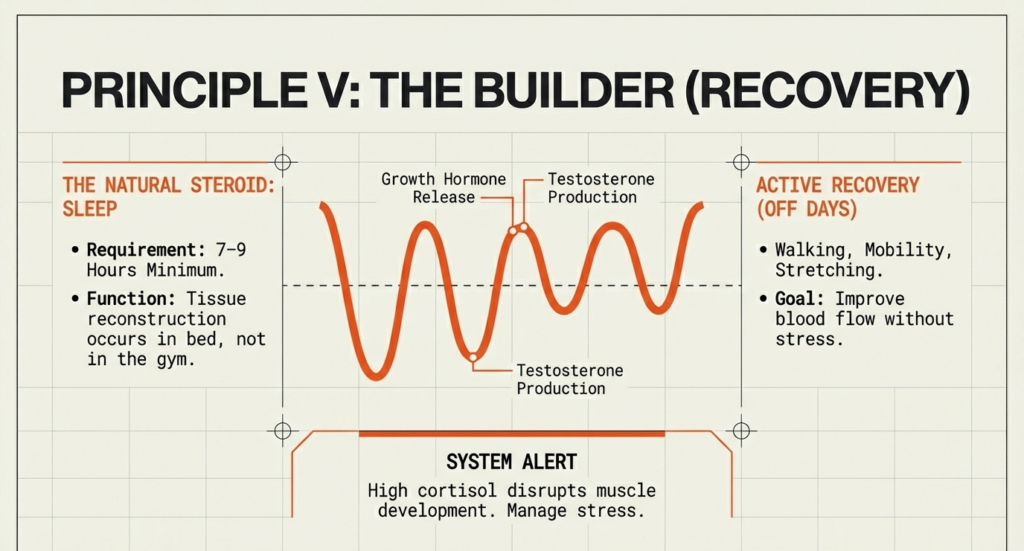
The muscles do not develop in the gym but outside. Training disintegrates the muscle tissue. It is rebuilt stronger by recovery. The greatest anabolic natural tool is sleep. Find 7-9 hours of sleep per night of high quality. It is during deep sleep cycles that the growth hormone and testosterone are created. Sleep deprivation lowers strength, recovery, and muscle-building hormones, which are chronic.
The rest days are also significant. Exercise can halt the progress due to the intense training of 6-7 days a week without the appropriate rest. Walking, mobility work, stretching and light cardio are all examples of exercises that are considered active ways to recover because they improve blood flow and alleviate soreness.
There is also the issue of stress management. An elevated level of cortisol disrupts muscle development. Breathing exercises, meditation and routine patterns can be used to deal with everyday stress.
6. Remain the same and monitor the progress
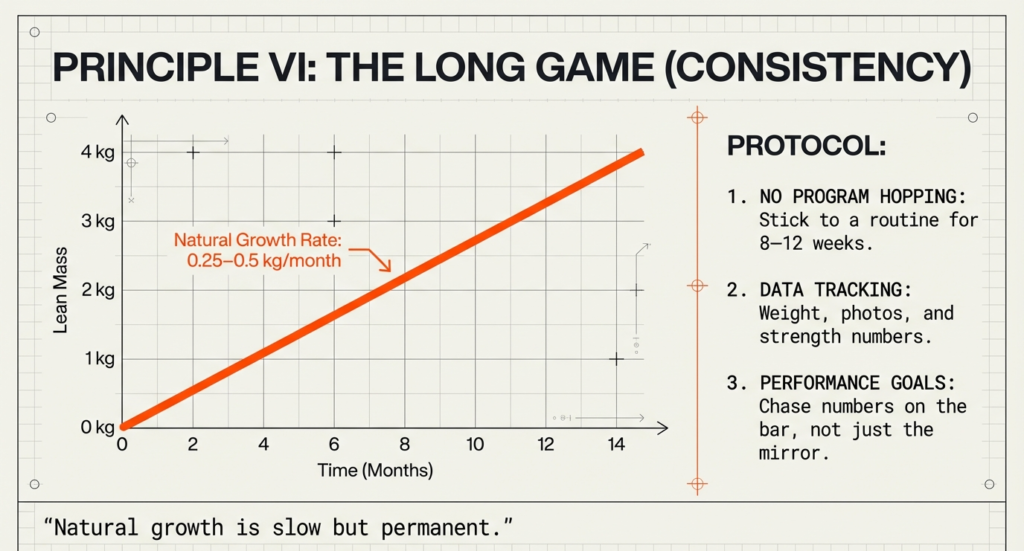
Growth in the muscle is also sluggish, particularly in a natural manner. As an intermediate lifter, the expected realistic growth of 0.25-0.5 kg of lean mass in a month is reasonable. Most people consider taking steroids because they lack patience. Nonetheless, natural bodybuilding is a reward which is based on discipline and longevity.
- Weighing body weight weekly, monthly progress photos and tracking strength improvements. These measures will give objective feedback.
- Avoid program hopping. Give it a system of routine of no less than 8-12 weeks before you can change.
- Set performance-based goals. Rather than pursuing visual gains, work towards increasing 20kg to your squat or pull-ups.
The years of consistency create not only spectacular physiques but also, supportable ones.
The toolkit: Evidence-Based Supplements
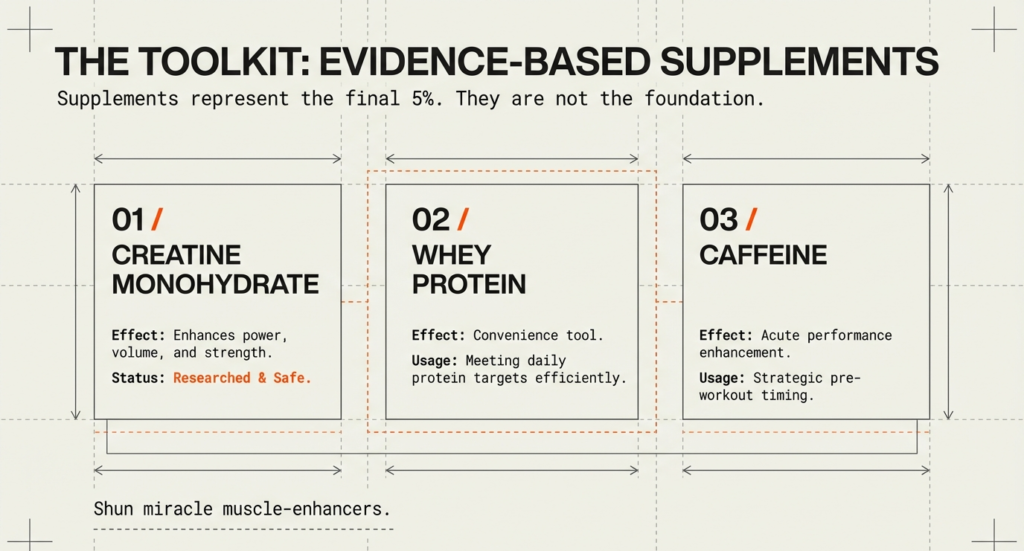
Supplements are not magical but some of them are scientifically proven to boost muscle growth.
- Creatine Monohydrate enhances power response, muscle volume and strength. It is non-dangerous and properly researched.
- Whey Protein assists in the attainment of the daily protein goals easily.
- Caffeine improves performance when taken in a strategic manner.
These are miracle muscle-enhancers. Majority of products promise too much and deliver less.
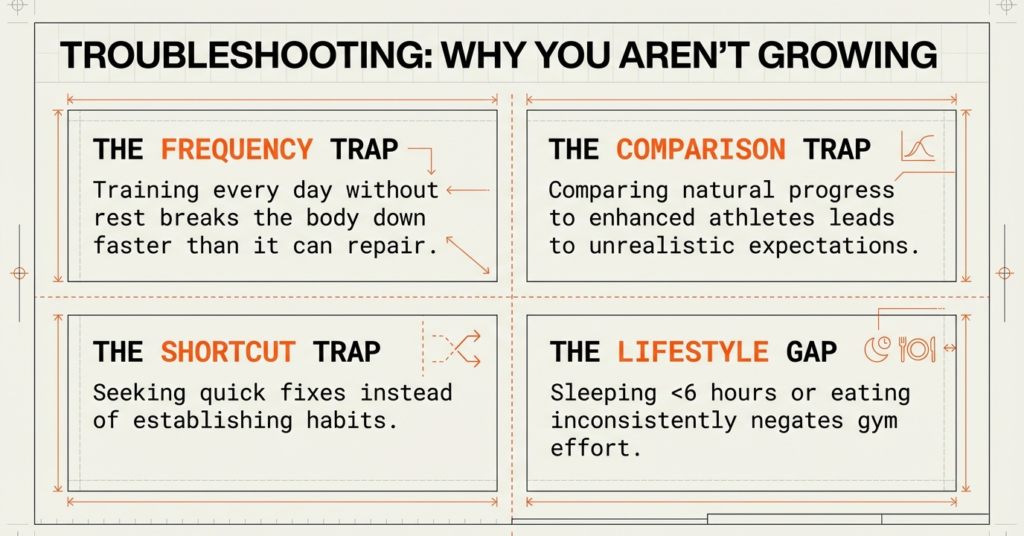
Troubleshooting: why you aren't growing
There are quite a number of lifters who betray their gains.
- Too frequent training without rest.
- Eating inconsistently.
- This is ignoring progressive overload.
- Sleeping less than six hours
- The comparison of progress to superior athletes.
- Shortcuts vs. habits This involves pursuing quick fixes instead of habits.
Natural muscle development is a time consuming and tactical process. Shortcuts can be the cause of burnouts or disappointment.
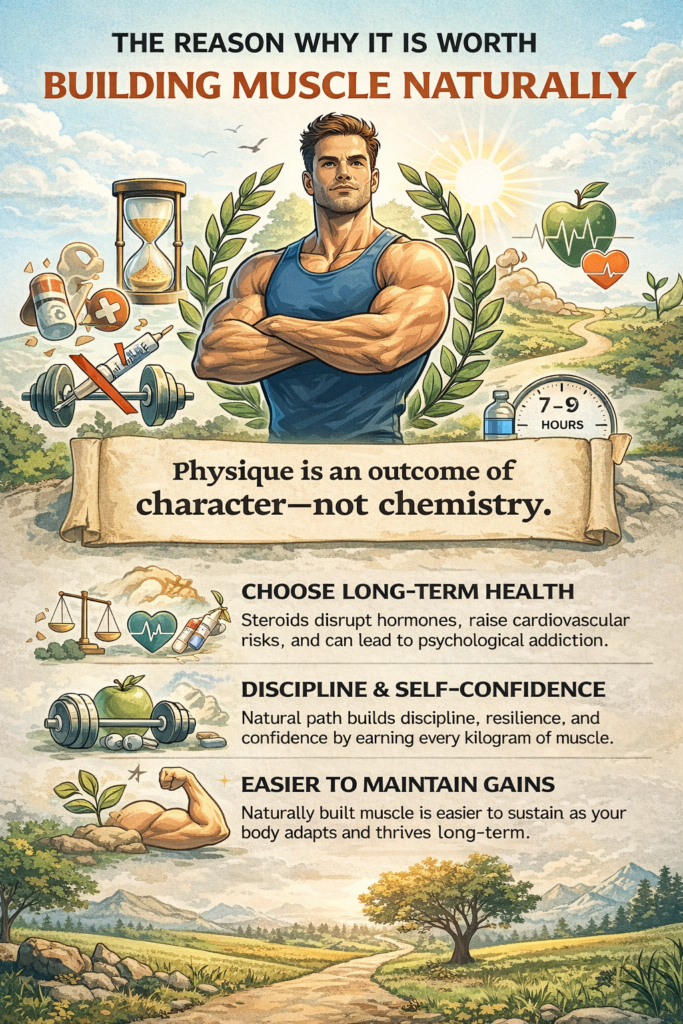
The Reason Why It Is Worth Building Muscle Naturally
Natural path implies choosing the long-term health. Steroids may interfere with the hormonal balance, predispose cardiovascular issues, and produce psychological addiction. Ability training is a way of being trained to be disciplined, to be strong and to live sustainably. There is no equal to confidence obtained due to the possibility of gaining every kilogram of muscle in the natural way.
In addition, it is also easier to maintain muscle that is built naturally in the long run as the body becomes accustomed to it over time. Physique is an outcome of character – not chemistry.
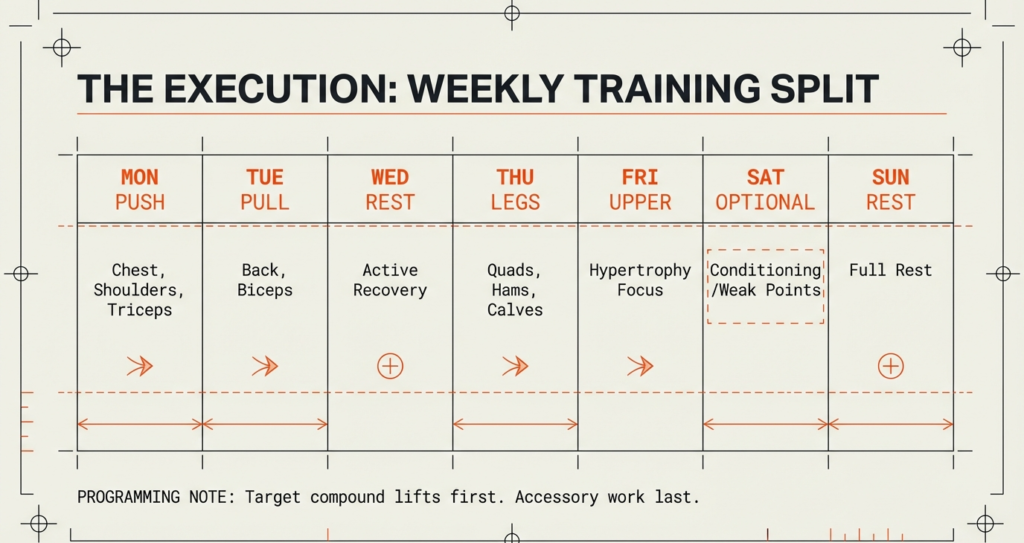
The execution: Weekly training split
A very simple, useful structure is the following:
Day 1– Push (Chest, Shoulders, Triceps)
Day 2 – Pull (Back, Biceps)
Day 3 – Rest or Active Recovery
Day 4 – Legs
Day 5 – Upper Body Hypertrophy
Day 6 -Optional Conditioning or Weak Point Training.
Day 7 – Rest
Target compound lifts in the beginning of the sessions and the accessory work in the end. Control volume to recovery capacity.
Final Thoughts
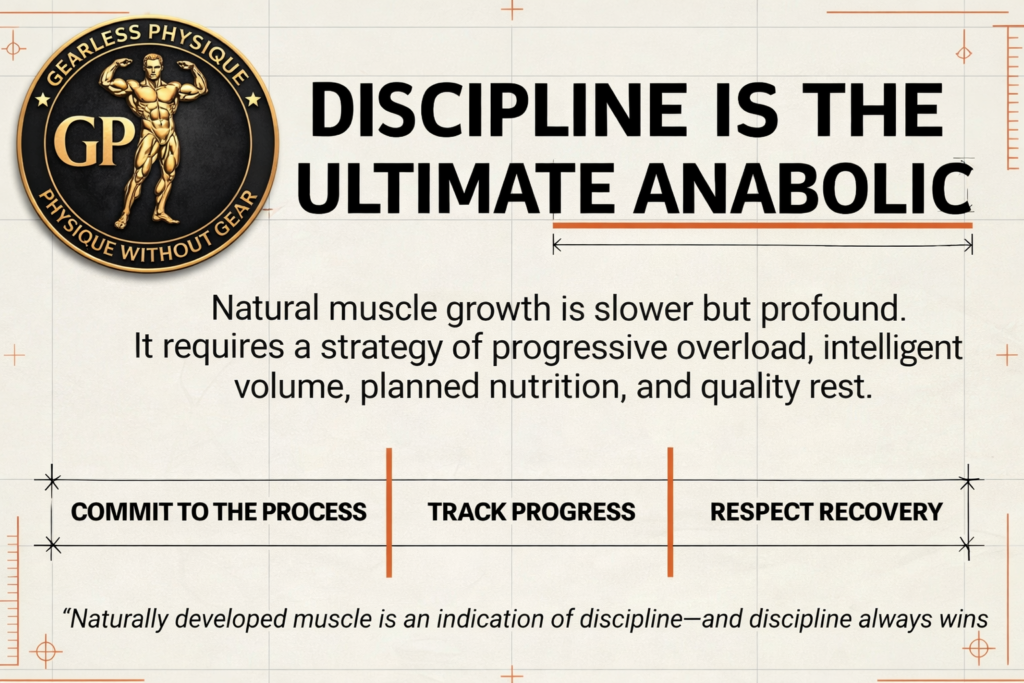
It is completely possible to build muscle without steroids and it will take the right strategy. The principles of natural muscle growth are progressive overload, intelligent training volume, planned nutrition, quality rest, and uncompromising consistency. The outcome may not be as quick as the improved athletes but they are healthier, sustainable and profoundly rewarding.
Commit to the process. Track your progress. Respect recovery. Fuel your body correctly. Naturally developed muscle is an indication of discipline – and discipline is always in the end.
Read more: https://www.menshealth.com/fitness/a19534499/10-muscle-building-tips/

Gearless Physique
Physique Without Gear
Your transformation starts now. Who's with me?