6 Giant Set Techniques to Maximize Muscle Growth
Advanced Giant Set Methods
When you have been training years on, and your body no longer responds to it, it is time to increase your intensity. Giant sets may be your little known secret to thick, full, and stage-conditioned muscle as you are a serious lifter–and particularly those who have adopted the Classic Physique structure as many a high-level athlete does.
Giant sets are brutal. They challenge mental endurance, conditioning and muscular endurance. However, with proper programming, they also open hypertrophy levels that conventional straight sets can hardly reach.
It is time to deconstruct a step-by-step process of how to apply 6 giant set techniques to achieve the maximum muscle growth.
When Standard Training Stops Responding
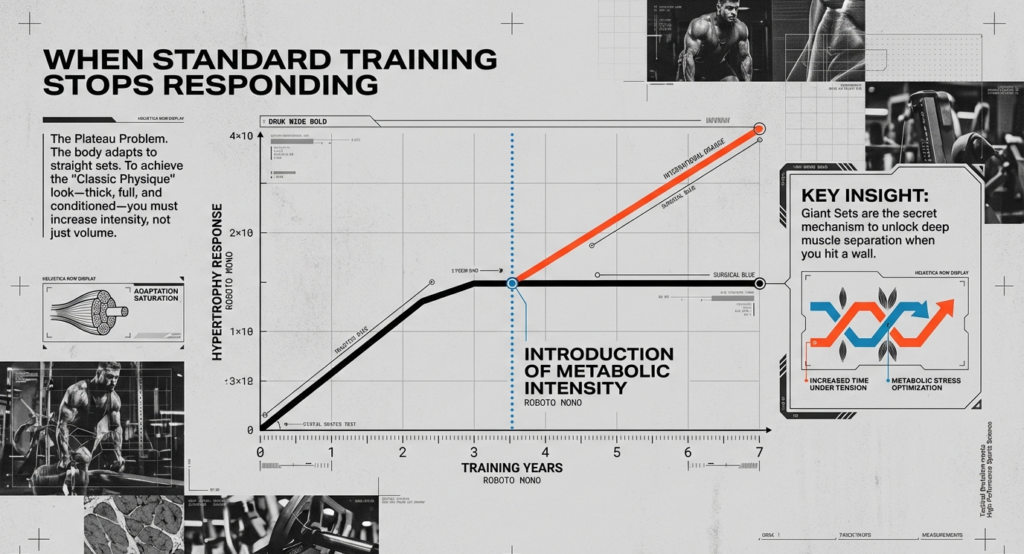
Where the normal training ceases to be responsive, it is not a motivational problem–it is an adaptation problem. In time, the body adapts to straight sets and predictable volume and as a result develops a hypertrophy plateau. The growth is reduced as the progression curve indicates when there is saturation of adaptation. This is the place where metabolic intensity is needed. The addition of giant sets boosts time under tension, metabolic workload and the overall training density, triggering muscle growth once again.
Strategic intensity does not merely increase volume, but rather it introduces a novel stimulus, which the body needs to adjust to. To the lifters that are aiming to gain that dense, traditional body, the most important method to bust out of these stubborn plateaus is to increase the intensity, rather than increase the workload.
What Is a Giant Set?
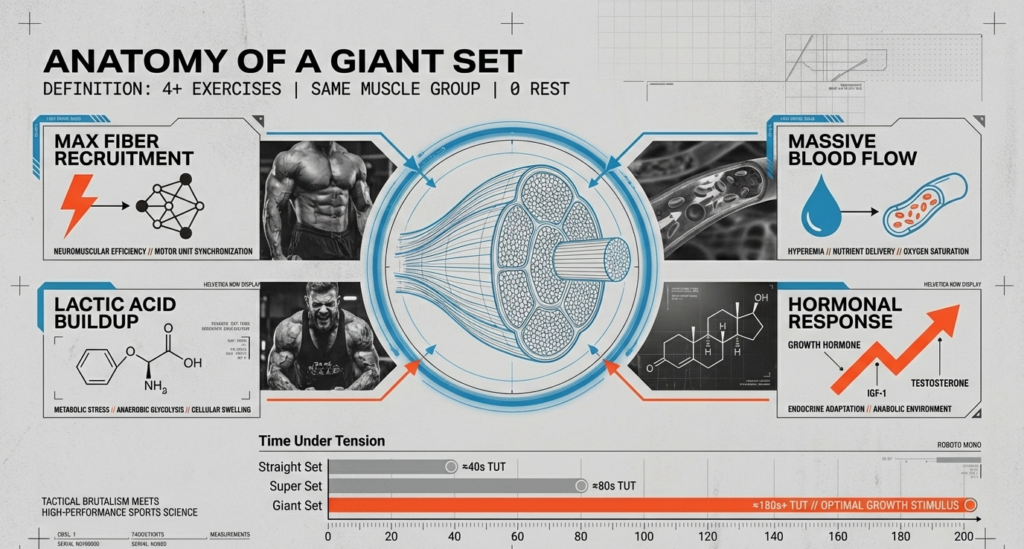
A giant set involves the use of a giant set where four or more exercises are back-to-back against the same muscle group or movement pattern separated by minimal rest between the exercises. As opposed to the supersets (2 exercises) or tri-sets (3 exercises), or more exercises. Giant sets produce dramatic metabolic and time under tension.
Example for chest:
- Incline dumbbell press.
- Flat barbell press.
- Chest fly.
- Push-ups.
No rest between exercises. Rest 60 – 120 seconds following the completion of all four.
This method increases:
- Muscle fiber recruitment.
- Blood flow (massive pump).
- Lactic acid buildup.
- Hormonal response.
And now we shall explore the six best variations.
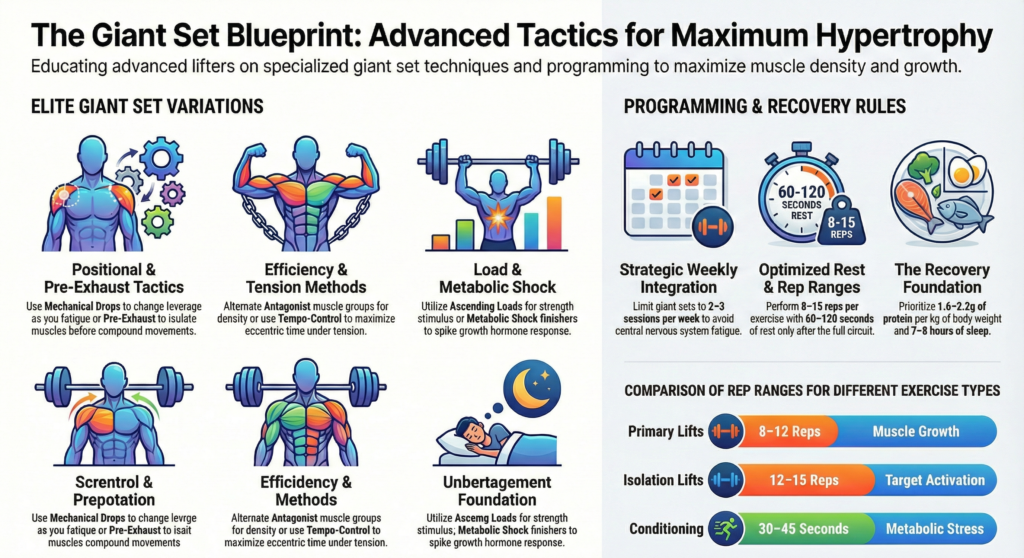
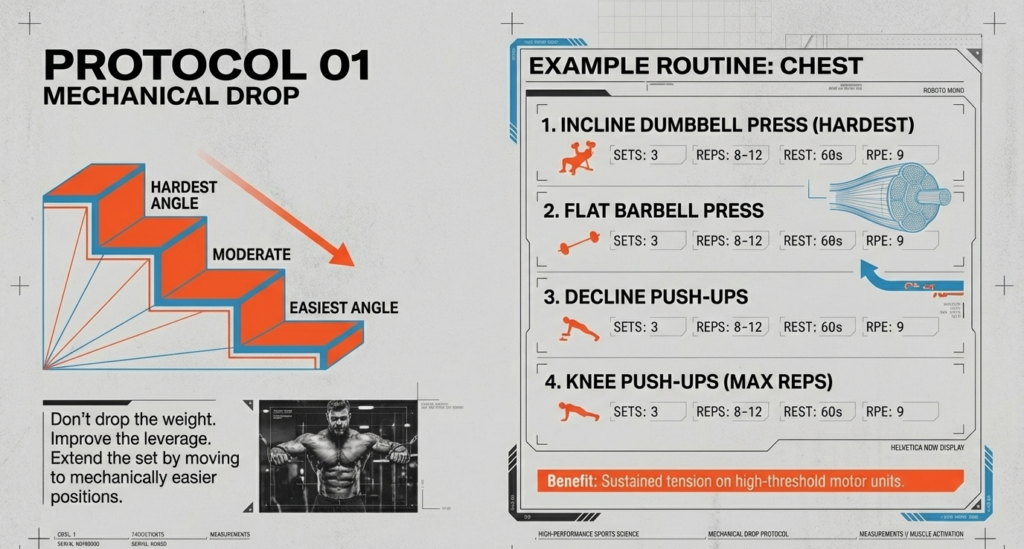
1️⃣ Mechanical Drop Giant Sets
Mechanical drop giant sets do not decrease weight, rather leverage is used. You change the most challenging posture to the simplest with either the same weight or the same sort of resistance.
Example (Chest Focus):
- Incline Dumbbell Press.
- Flat Barbell Press.
- Decline Push-Ups.
- Knee Push-Ups.
Each exercise will be mechanical and it becomes easier to achieve more reps as one gets tired.
Why It Works:
You enlist high-threshold motor units when you are young. With the onset of fatigue, less demanding angles enable more time to be spent under tension without the reduction of safety.
Best For:
- Advanced lifters.
- Breaking plateau.
- Development of upper chest and delts.
Perform 3–4 total giant rounds. Rest after every round 90 seconds.
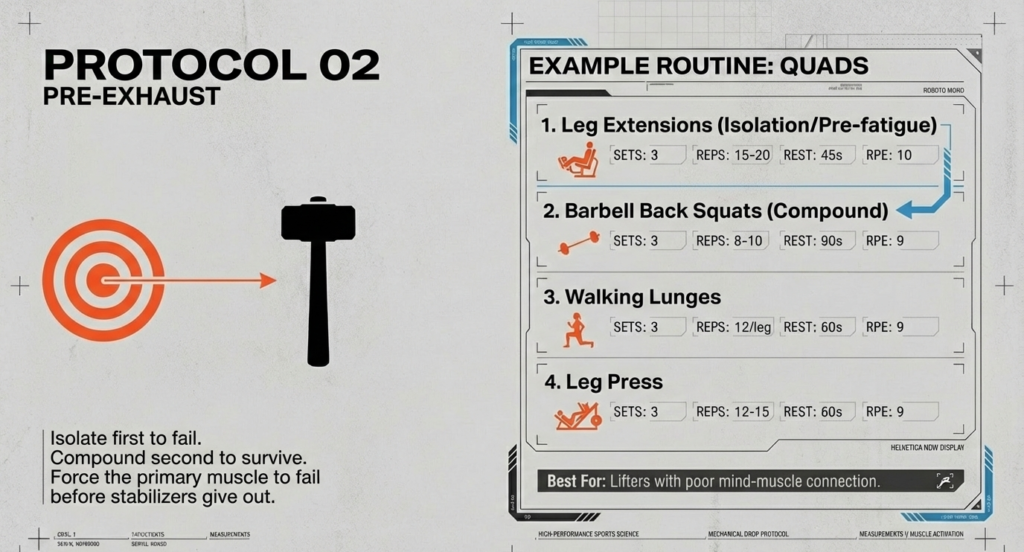
2️⃣ Pre-Exhaust Giant Sets
Pre-exhaust is focused on isolation followed by compounds. This makes sure that primary muscle would not be supporting before muscles would take over.
Example (Quads Focus):
- Leg Extensions.
- Barbell Back Squats.
- Walking Lunges.
- Leg Press.
With squats, you are already tired of your quads. This causes further activation.
Why It Works:
Under normal conditions, glute and lower back will be of great help to the lifts of compounds. Working hard during the compound phase is caused by pre-exhausting the quads.
Best For:
- Lifters with problems with sensation of target muscles.
- Lagging body parts.
- Enhancement of mind-muscle correlation.
Keep reps moderate (10–15). Focus on strict form.
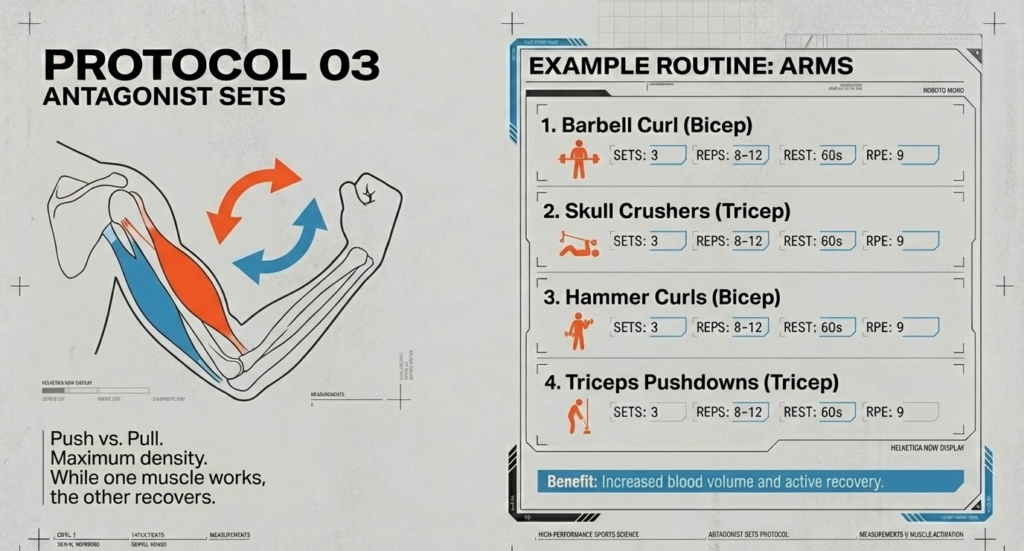
3️⃣ Antagonist Giant Sets
The giant sets are antagonist sets that alternate the opposing muscle groups. This enhances recovery among exercises and does not reduce intensity.
Example (Arms):
Barbell Curl.
Skull Crushers.
Hammer Curls.
Triceps Pushdowns.
Biceps train and triceps rest, and the same.
Why It Works:
You have high training density and no loss of strength.
Benefits:
Increased arm pump
Improved joint stability
Higher calorie burn
Shorter workout time
This technique can be used in the cutting stages when time is limited to train but the intensity is required to be high.
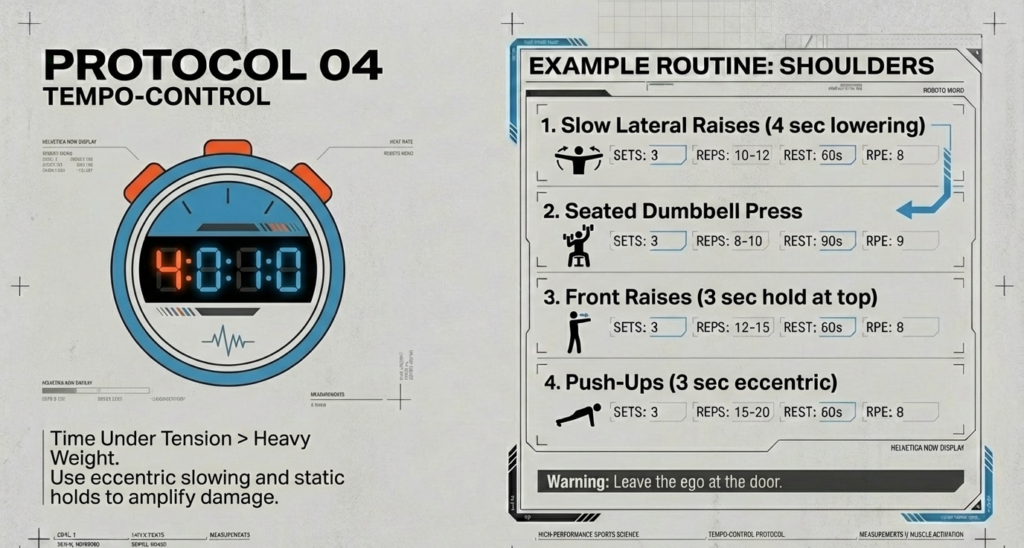
4️⃣ Tempo-Control Giant Sets
Tempo manipulation is an increase in time under tension without adding weight.
Example (Shoulders):
- Slow Lateral Raises (4 sec down).
- Seated Dumbbell Press.
- Front Raises (3 sec hold at top)
- Push-Ups (3 sec eccentric)
- Negatives and pauses are in focus.
Why It Works:
Eccentric tension is a very effective stimulus to muscle growth. Minimization of tempo amplifies muscle deterioration and metabolism.
Ideal Rep Range:
- 8–12 reps with strict execution.
- Avoid ego lifting here. The burn will be intense.
5️⃣ Ascending Load Giant Sets
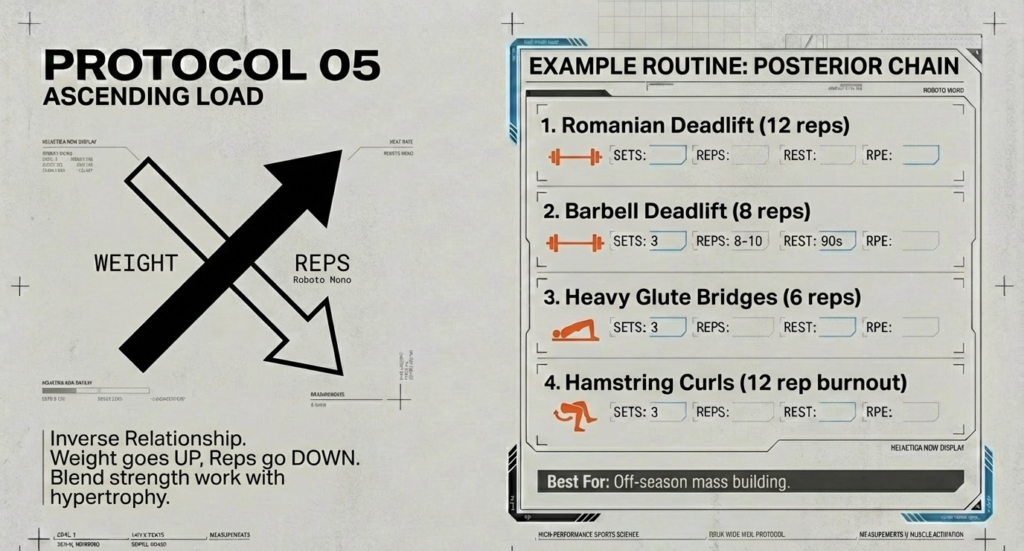
In ascending load giant sets, you will steadily add weight and reduce the number of reps in exercises.
Example (Posterior Chain):
- Romanian Deadlift – 12 reps.
- Barbell Deadlift – 8 reps.
- Heavy Glute Bridges – 6 reps.
- Hamstring Curls -12 reps burnout.
The nervous system increases with the progress.
Why It Works:
It is a sequence of strength stimulus and hypertrophy stress.
Best For:
- Competent middle level lifters.
- Off-season muscle building.
- Increasing density.
Rest 2 minutes following completion of full round.
6️⃣ Metabolic Shock Giant Sets
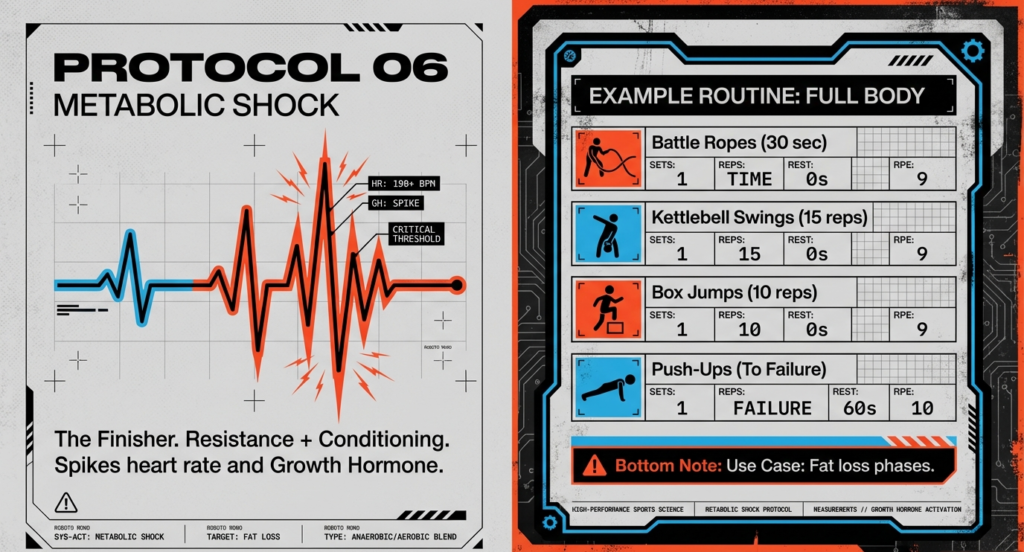
This method is a combination of the resistance and explosive or conditioning movements.
Example (Full Body Finisher):
- Battle Ropes – 30 sec.
- Kettlebell Swings – 15 reps.
- Box Jumps – 10 reps.
- Push-Ups – Failure.
This is highly metabolically stressful.
Why It Works:
You increase the response of growth hormone and enhance the work capacity.
Ideal Use:
- End of workout finisher.
- Fat loss phases.
- Conditioning blocks.
Limit to 2–3 rounds. This is taxing.
How to Program Giant Sets the Right Way
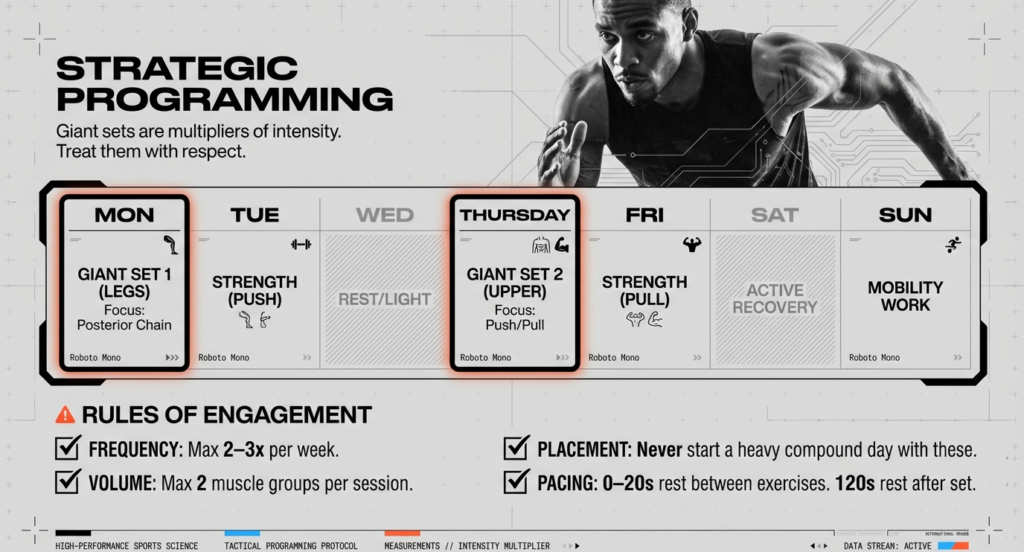
Giant sets do not form part of beginner training equipment. They are multipliers of intensity.
Incorporating the outlined strategy into the project request process is anticipated to enhance the business organization’s situation.
Weekly Integration Strategy:
- Intake 1-2 giant set exercises in sessions.
- Maximum 2 groups of muscles per session.
- Do not start training with giant sets of heavy compound lifts.
Frequency:
- 2–3 times per week max.
- Excess of this causes fatigue of the nervous system.
- Maximum hypertrophy Rep Ranges.
For muscle growth:
- 8–12 reps for primary lifts.
- 12–15 reps for isolation.
- Conditioning movements: 30-45 seconds.
Rest interval between exercises (0-20s).
Take a full rest (60-120 seconds) after entire giant set.
Read more: https://www.muscleandstrength.com/workouts/33-the-giant-set-routine-.html
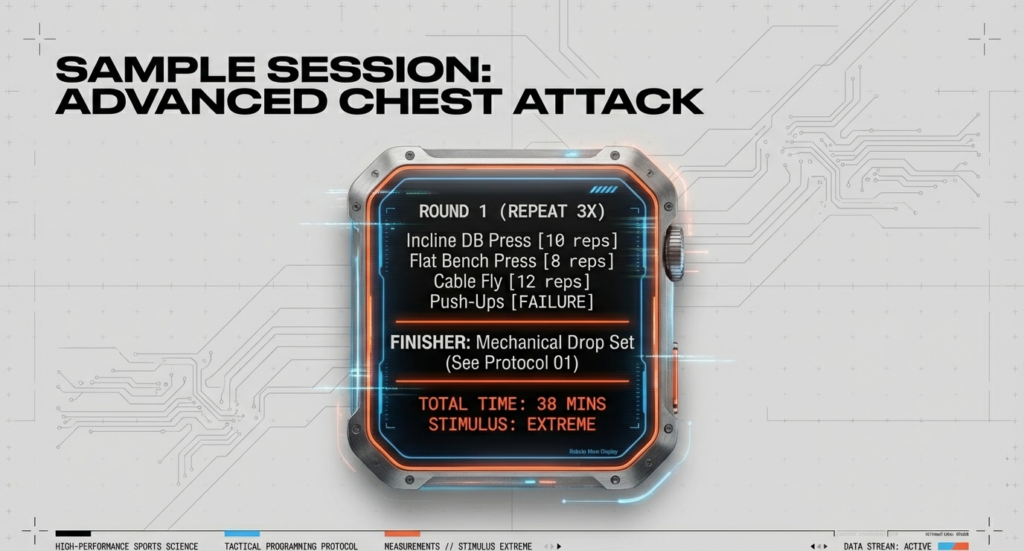
Advanced Giant Set Chest Workout
Round 1:
- Incline Dumbbell Press – 10 reps.
- Flat Bench Press – 8 reps.
- Cable Fly – 12 reps.
- Push-Ups – Failure.
Rest 90 seconds. Repeat 3 times.
Complete with one mechanical drop giant set upper chest.
Total time: 35–40 minutes.
Stimulus: Massive.
Recovery Considerations
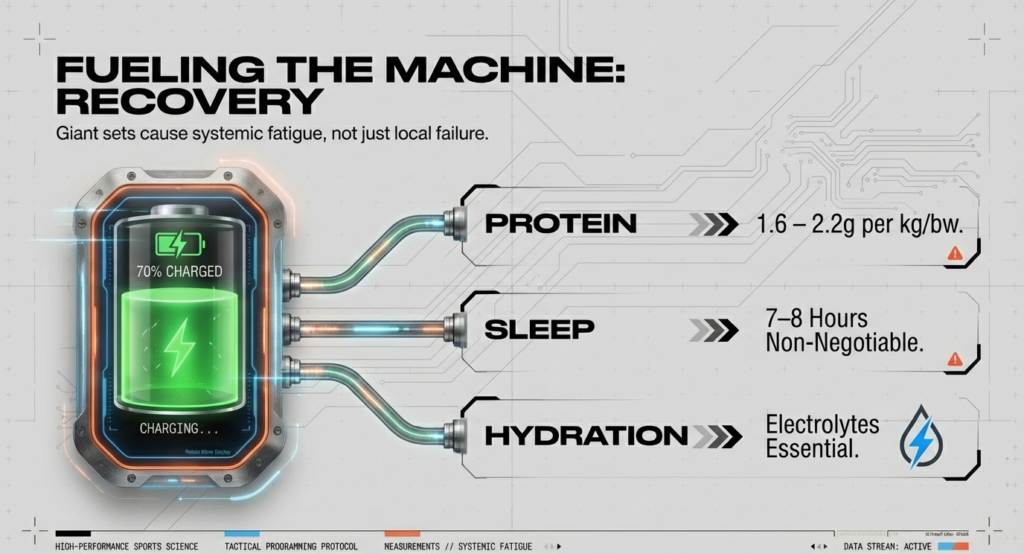
When you are a mature lifter and your body weight and mass is increased, your needs related to recovery are high.
Focus on:
- Protein consumption (1.62.2 g/kg body weight) is high.
- Proper hydration.
- 7–8 hours sleep.
- Electrolytes to use during high sweat sessions.
Giant sets do not only augment muscular fatigue, but systemic fatigue
Common Mistakes to Avoid
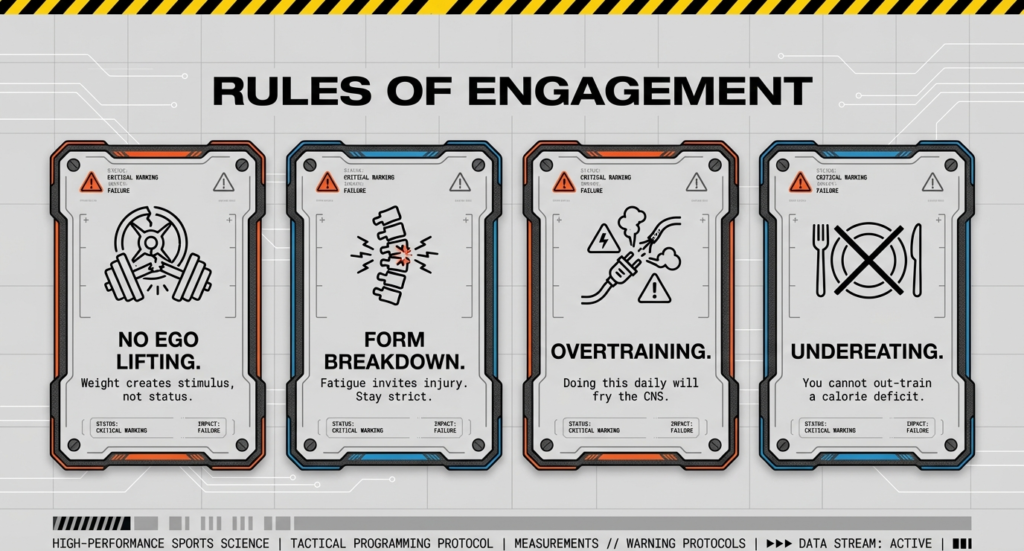
- Using too much weight.
- Poor form under fatigue.
- Excessive volume.
- Training with giant sets on a regular basis.
- Ignoring recovery.
Note that the intensity has to be strategic.
Final Thoughts
Giant sets can be regarded as one of the most effective hypertrophy tools in case of the intelligent usage.
They create:
- Extreme pump.
- Enhanced time under tension.
- Greater metabolic stress
- Better muscular strength.
Efficient workouts:
In advanced athletes that are seeking more dense and mature muscle – particularly in Classic Physique form – then giant sets can be used to create a deeper separation and fullness.
Train hard. Train smart.
Training makes muscles–but tactics make heroes.

Gearless Physique
Physique Without Gear
Your transformation starts now. Who's with me?