Why 90% of People Quit the Gym—and How You Won’t
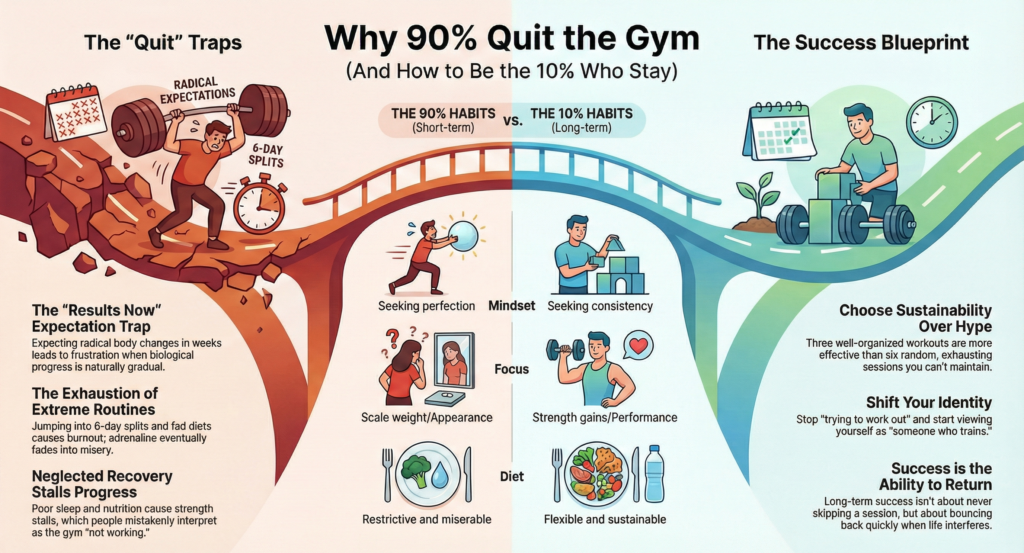
This infographic breaks down the real psychology behind why 90% of people quit the gym and how the remaining 10% stay consistent. Most beginners fall into common traps like unrealistic expectations, extreme training routines, and neglecting recovery, which quickly leads to burnout and frustration.
The visual highlights how short-term motivation fades, while sustainable habits create lasting progress. Instead of chasing fast results, the blueprint focuses on consistency, balanced workouts, flexible nutrition, and an identity-driven mindset. When training becomes part of who you are rather than something you force, staying committed becomes easier. Long-term success is built on patience, structure, and repeatable habits—not hype or temporary motivation.
The Anatomy of consistency
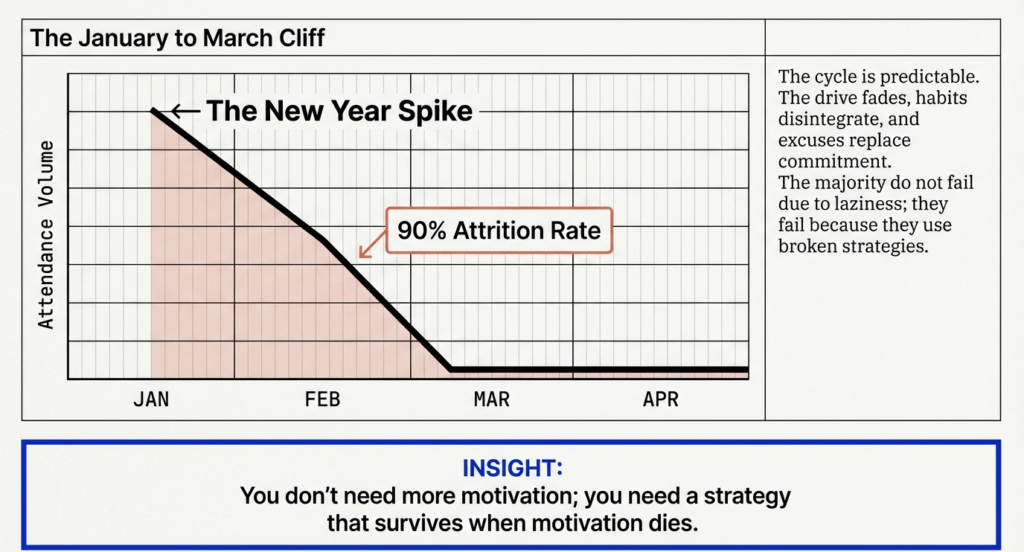
The January to march cliff
Gyms are always full of people every January. By March, they’re quiet again. This is the same cycle in which year after year people do not get wanting results four or five times any less. Research and practical data in the gym has recorded consistently that close to 90 percent of the individuals give up on the gym within the initial few months. The drive goes away, habits are destroyed and excuses gradually substitute commitment.
The reality is ugly yet empowering: the majority of them do not succeed due to laziness or a lack of ability they fail because they do not use the strategies that have been broken. Knowing the reasons why most people quit, you can develop a strategy that will make you stay consistent in the long-term
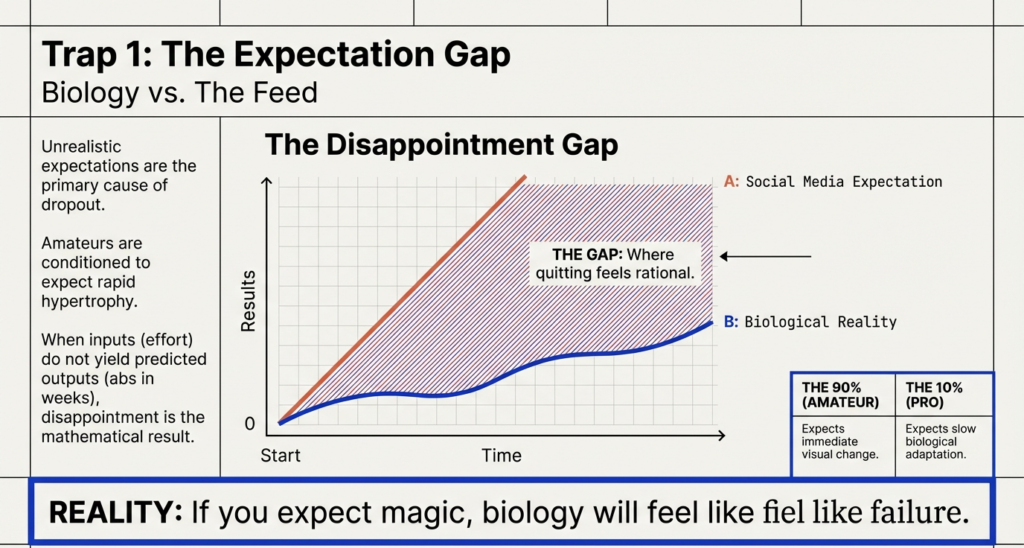
Trap 1: The Expectation Gap
Unrealistic expectations are the greatest cause of dropping out of the gym. Social media has led so many amateurs to believe that they should see abs, such big arms, or lose so much fat within weeks. Frustration sets in when development is not up to those expectations. Individuals begin to double the program, the gym or themselves. The fact of the matter is that the process of fitness advancement is gradual, and at the very outset. It does not happen that the body adjusts immediately.
When the expectations do not match with biology disappointments are just a natural result, and the decision to abandon it seems a rational, but not an emotional one.
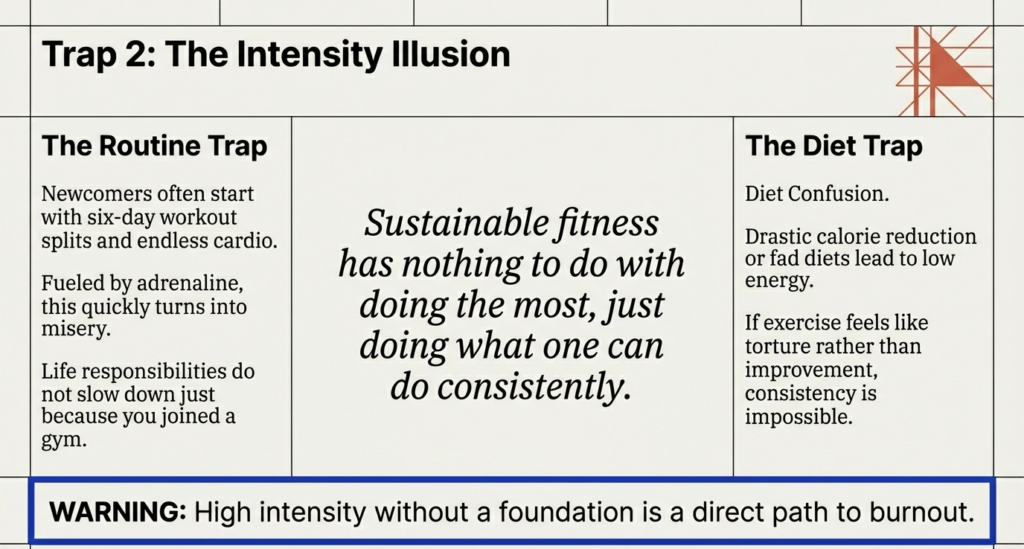
Trap 2: The Intensity Illusion
The other cause that contributes significantly to the quitting is the initiation of extreme routines. Newcomers usually go right into six-day workout divisions, cardio, and fad diets. Initially they are propelled by adrenaline. Then misery, exhaustion and mental burnout accumulate. The fact that a person enrolled in a gym does not mean that he or she is going to slow down on life responsibilities.
Lack of consistency occurs when exercise begins to seem more like torture rather than improvement. Sustainable fitness has nothing to do with doing the most, just doing what one can do consistently each week without hating their life.
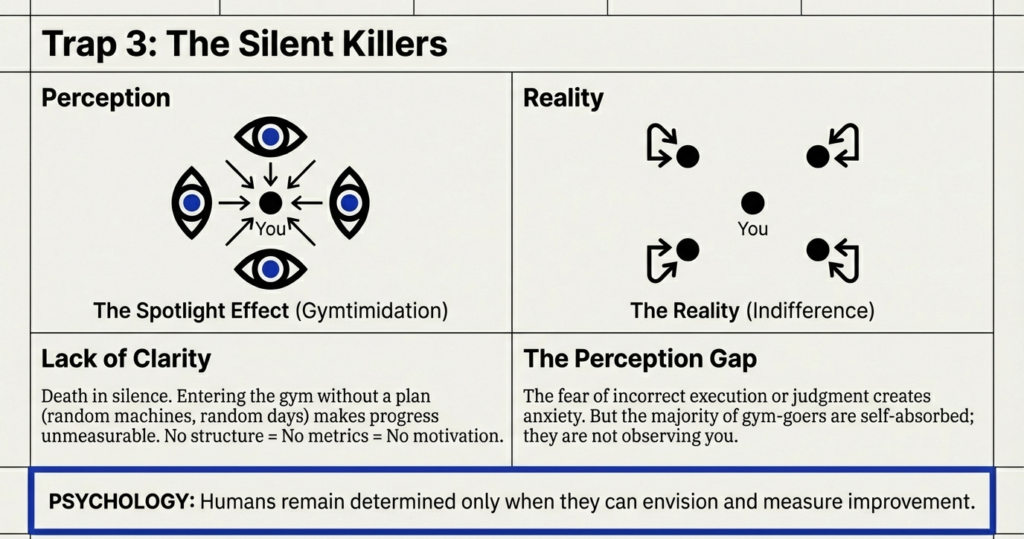
Trap 3: The Silent Killers
Another death in silence of gym consistency is lack of clarity. A lot of individuals enter a gym without a purpose or strategy. One day they do chest training, the next day random machines and the third day is endless cardio. Absence of structure means that progress can not be measured. In situations where progress is impossible to quantify, no motivation exists. Man is programmed to remain determined when he or she can envision better.
An unspecific objective such as becoming fit is not very powerful to commit the long-term action.
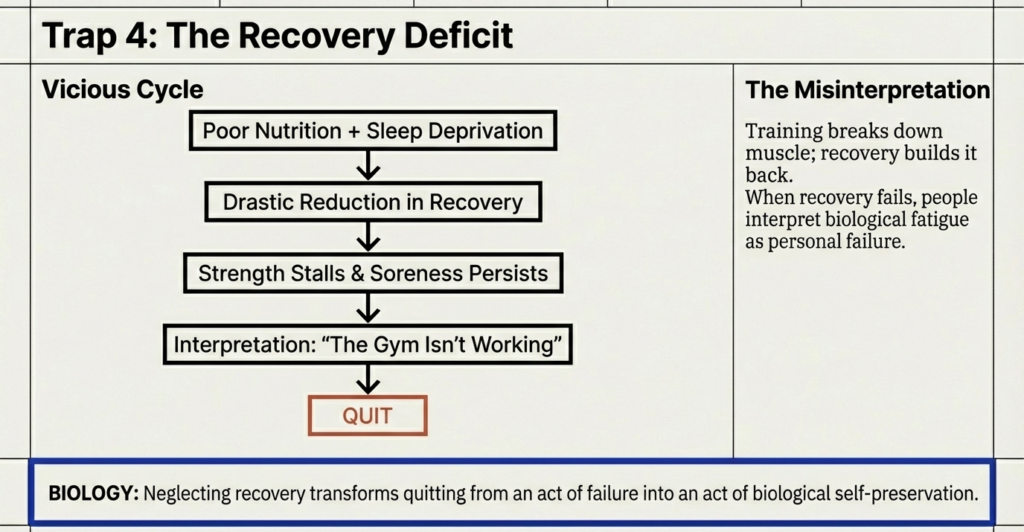
Trap 4: The recovery deficit
Another reason that people quit is poor recovery that was not sufficiently considered. Poor nutrition, sleep deprivation and always being stressed reduce recovery drastically. Workouts are not easy every week because the body does not recover. There is strength stalls, soreness, and drop of energy. This is misunderstood by people to mean that the gym is not working, when it is in fact the recovery process that is not working.
It is true that training breaks down muscle and recovery is the one that makes it stick together more. Neglecting recovery can ultimately transform the process of quitting into self-preservation and not failure.
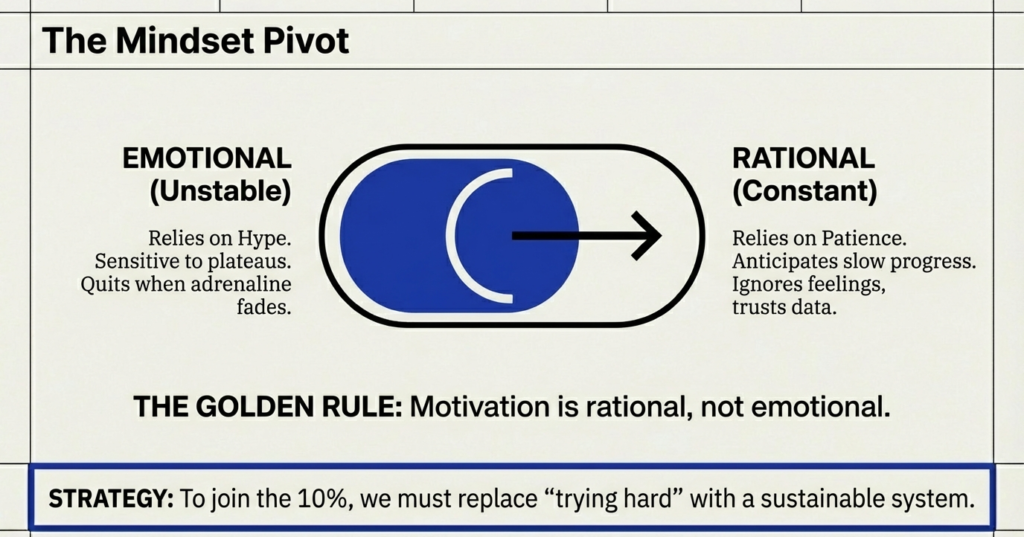
The Mindset Pivot
And now we can discuss how you will not give up. The initial stage is to have realistic expectations. Goal achievement should be in terms of months, not days. The gains of strength, the changes of body structure, and the increase of confidence occur slowly. You are not as emotionally sensitive to plateaus when you anticipate slow progress. You do not give up but make changes.
Such change of attitude is what can distinguish between gym attendees who are short-term and long-term gym attendees. Imitator ship is not fueled by hype but by patience.
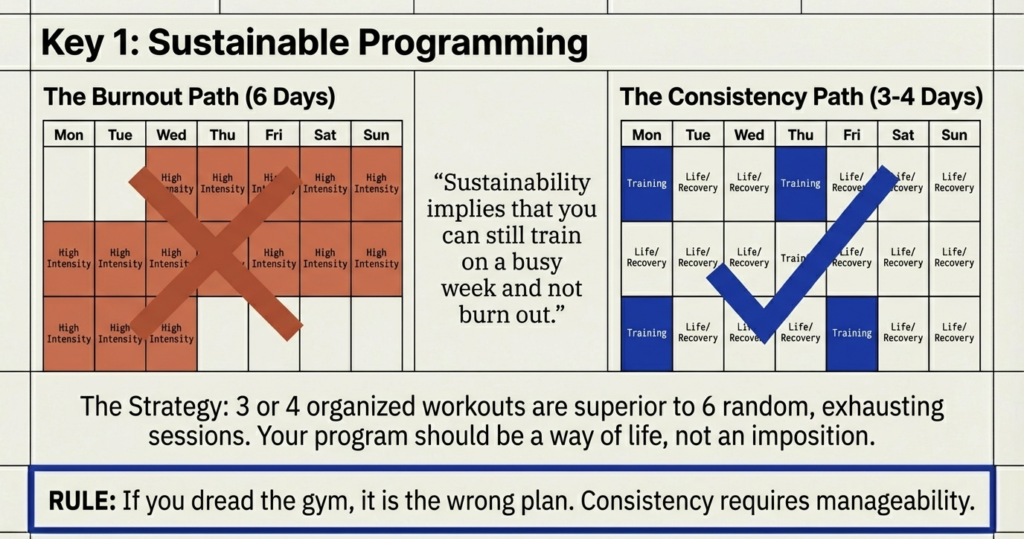
Key 1: Sustainable Programming
The second key is selecting a sustainable plan of training. Three or four workouts are better organized and are better than six random workout exhausting sessions. Your program ought to be your way of life and not to prevail. When it is a plan that makes you constantly sore, stressed, or even if you dread the gym, it is not the right plan. Sustainability implies that you can still train on a busy week and not to burn out.
Consistency would not be created but will be automatic when the training process becomes manageable.
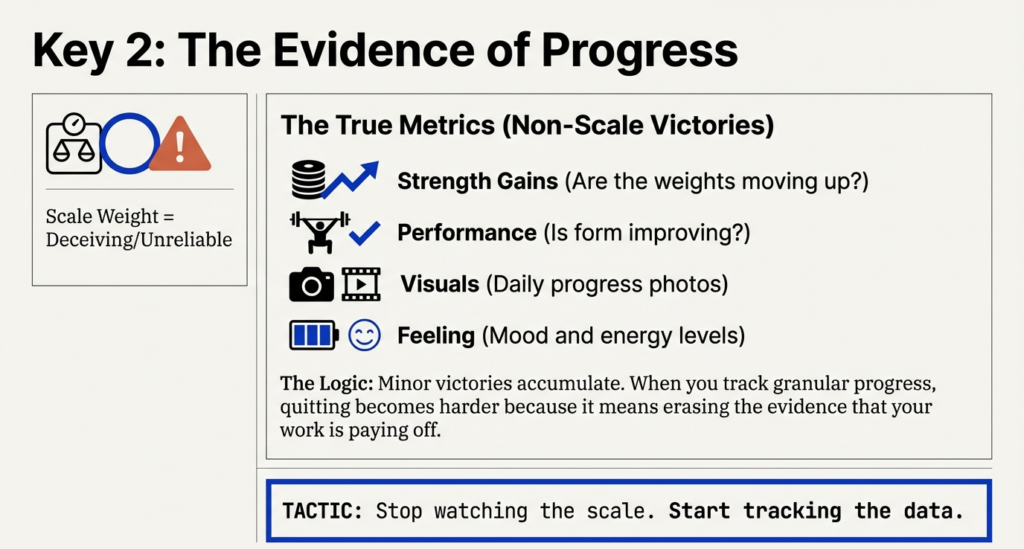
Key 2: The Evidence of progress
Measuring the progress is also a strong weapon against quitting. Scale weight is not a reliable measure and is also emotionally deceiving. Rather, there will be track strength gains, training performance, measurements, daily progress photos, and daily feelings. Minor victories accumulate psyche-wise. Even slight improvement is a boosting factor. Motivation is rational rather than emotional when development is evident.
Track Progresses do not give up easily as it would be hard to do so since giving up would be equating to giving up evidence that their work is paying off.
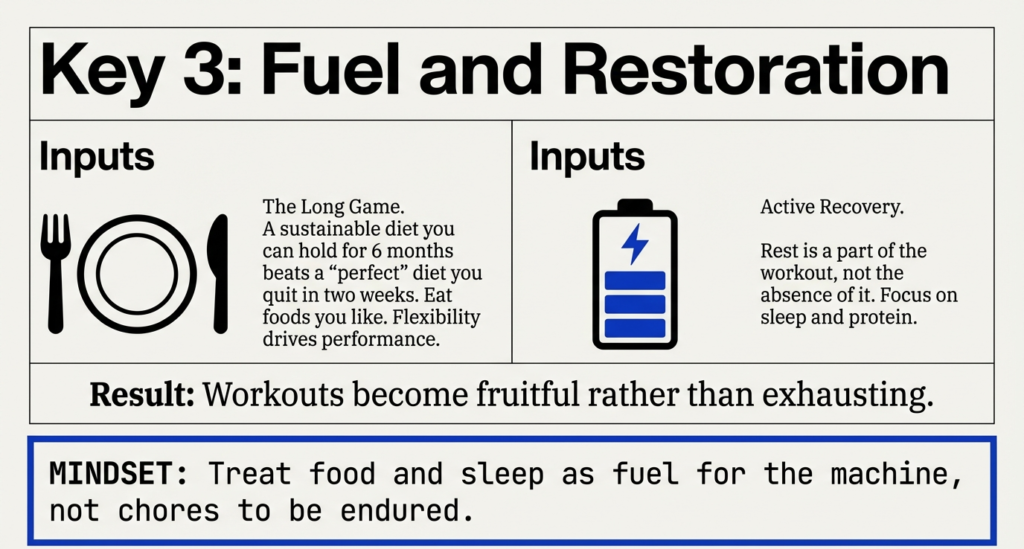
Key 3: Fuel and Restoration
Diet confusion is another factor that forces a lot of individuals out of gym. The drastic reduction of calories or the removal of foods or the diets promoted by influencers make the training miserable. Low energy translates into bad workouts and bad workouts kill motivation. It is quite easy to quit emotionally when one connects the gym to the state of being hungry and tired. Fitness nutrition should not be ideal; it has to be realistic.
A long-term diet will always win over a perfect diet that you can maintain only two weeks.
The training should not be sabotaged by your diet. Foods should be eaten because you like them and should also be flexible and not very strict unless it is required by the doctor. A sustainable diet drives performance, recovery and mood. The motivation will automatically go up when training is strong and energized. The most appropriate diet is the one that suits your culture, tastes and lifestyle.
In case you can envision that in six months you are going to eat in the same manner, then you are on the correct track.
Restoration:
Rest as an activity should not be underrated. Get enough sleep, consume adequate protein and reduce stress wherever feasible. You do not need perfection, you need some awareness. Workouts are fruitful rather than exhausting when the recovery goes up. The energy levels become more stable, pain is reduced, and strength is increased. When the body is in good condition, so is the mind.
Majority of the people do not give up due to the fact that they despise the outcomes; they give up because they despise the process itself.
Key 4: Confidence & Accountability
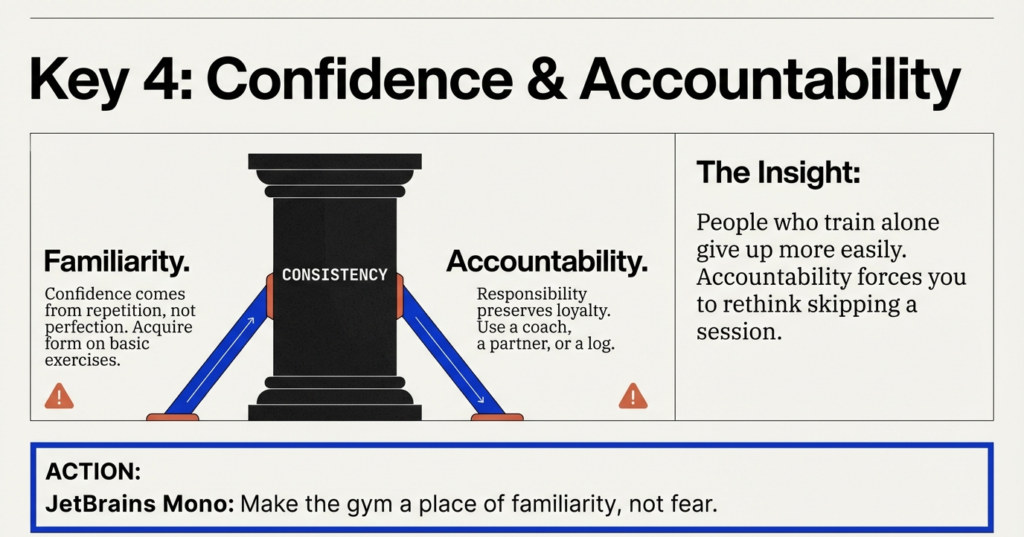
It is important to establish confidence in the gym to be successful in the long run. Acquire the form of basic exercise, inquire, or use a beginner-oriented program. Confidence is not brought about by perfection but familiarity. The more you appear, the more you like the atmosphere. The gym ceases to be a place of fear after some time. When the gym starts to be a normal part of you as opposed to a cause of anxiety, then the process of quitting becomes unnatural.
The Identity Shift
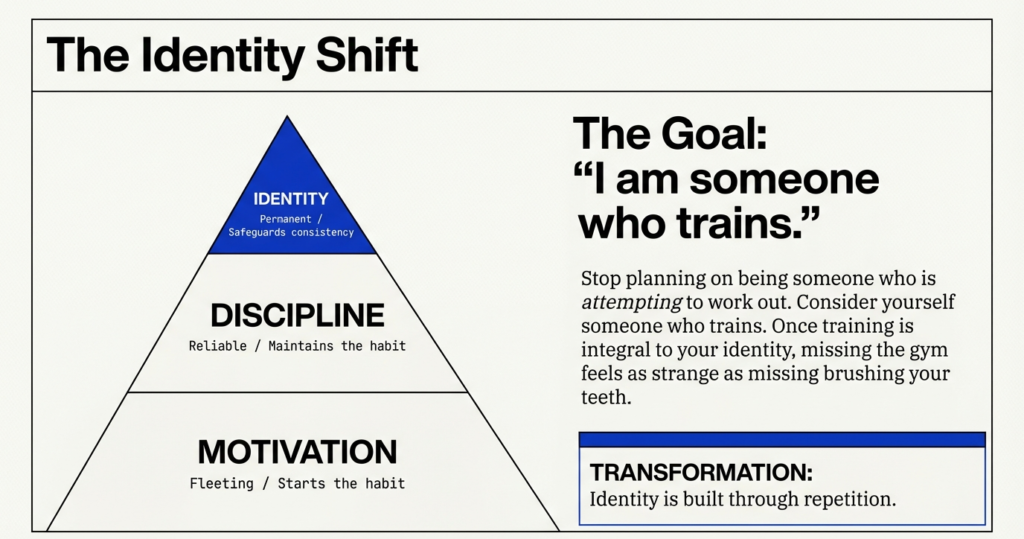
The other potent tactic is identity switching. Do not plan on being someone who is attempting to work out. Consider yourself as somebody who trains. The habits based on identity are more persistent in comparison with those based on motivation. As soon as training is an integral part of who you are, missing the gym is the same as missing brushing your teeth. This psychological reorientation does not come in one day but by practice. Identity is built through repetition and consistency is safeguarded by identity.
The responsibility is also critical in avoiding quitting. This is either a coach, a training partner, a workout log or even a public goal. Responsibility provides an obstacle in quitting. It makes you rethink the necessity of skipping sessions when you do not need to. Individuals who train alone give up more easily than those who are held responsible to something or somebody. Responsibility does not restrain freedom- it preserves loyalty.
Redefining Success
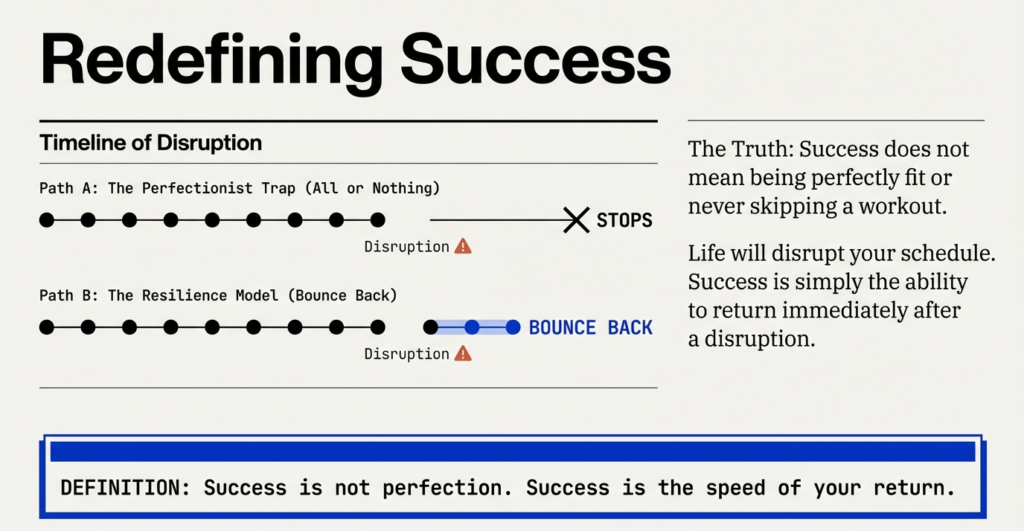
finally, redefine success. Being successful does not mean being perfectly fit, having six-pack abs, or not skipping a workout. Missed sessions are being followed by success. Life will come to disrupt your schedule – accidents, work, family. Quitting occurs when individuals skip a couple of workouts and feel that it is finished. It is the ability to bounce back fast that will bring success to the gym in the long term, rather than staying out of the gym altogether.
It is not difficult to note the discrepancies between 90 percent of those who give up and 10 percent of those who achieve success: they always return.
Conclusion
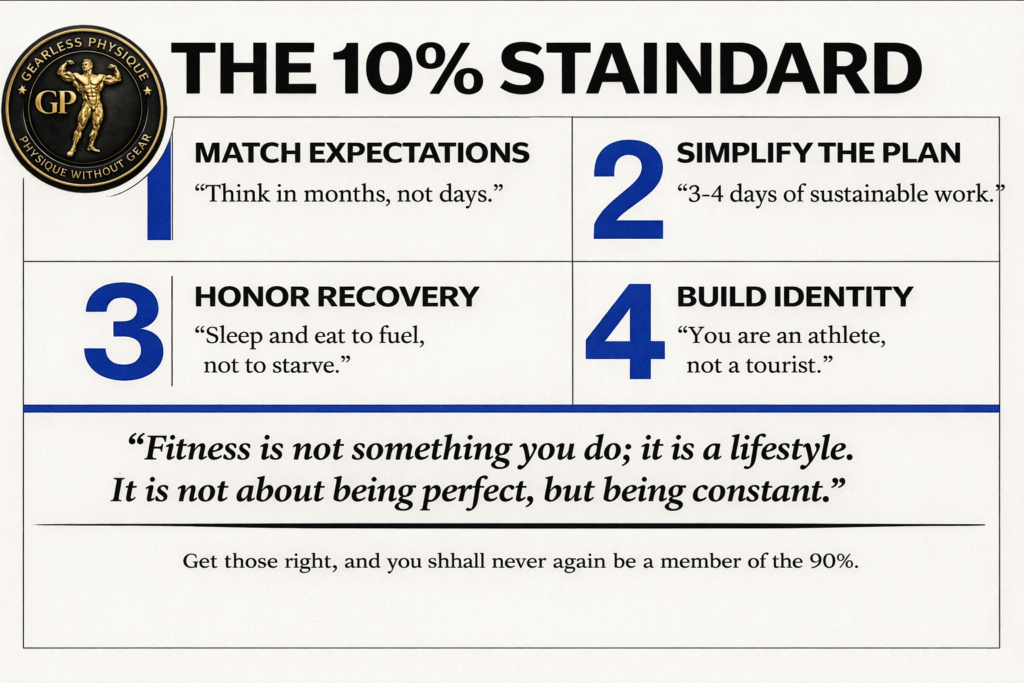
Majority of the individuals do not achieve success on the gym but give up because they did not get the knowledge on how to train realistically. By matching expectations, making your plan simple, honoring recovery and making habits of sustainability, there is no longer any question of quitting. Fitness is not something you do but a lifestyle. It is not to be perfect, but to be constant. Get those, and you shall never again be members of the 90% again.

Gearless Physique
Physique Without Gear
Your transformation starts now. Who's with me?