10 Facts About Supersets vs Straight Sets for Muscle Growth
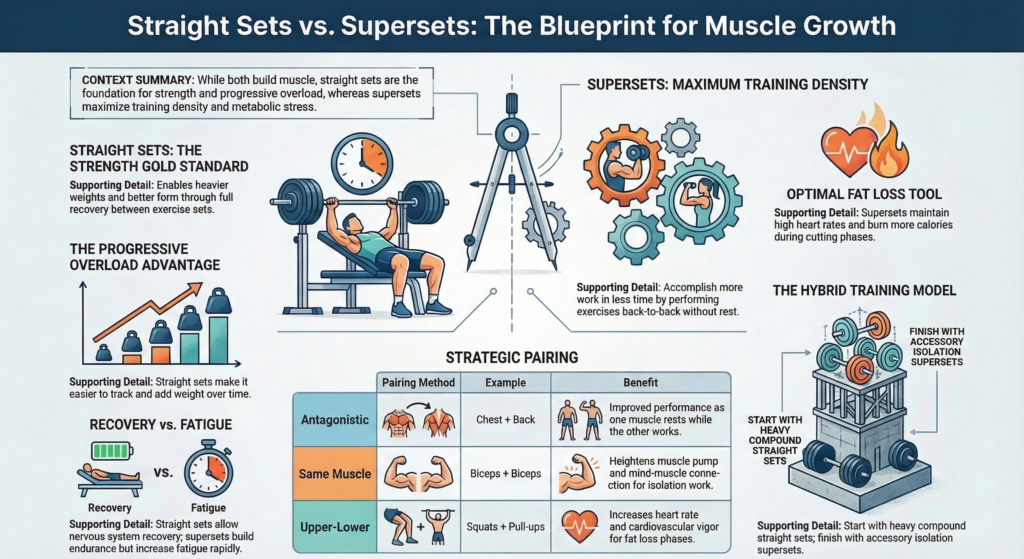
This infographic summarizes the entire concept of supersets vs straight sets in one complete visual. It shows how straight sets build strength through progressive overload, while supersets increase training density and metabolic stress. It also highlights pairing strategies, recovery differences, and the hybrid training model. The key takeaway is that both methods serve different roles in a well-designed program. Instead of choosing one, combining both intelligently leads to the best results. This visual acts as a complete guide for structuring workouts effectively for muscle growth.
Supersets vs Straight Sets Hypertrophy Blueprint Guide
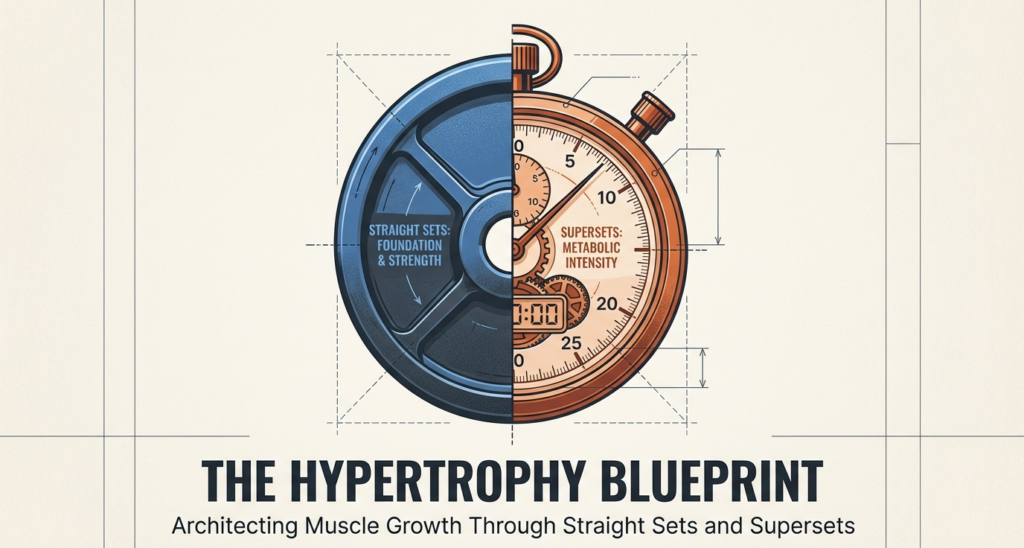
This image represents the foundation of muscle growth by comparing straight sets and supersets as two powerful training tools. Building muscle is not just about effort but also about choosing the right training style based on your goal, experience, and recovery ability. Straight sets focus on strength and progressive overload, while supersets emphasize training density and metabolic stress. When combined intelligently, they create a complete hypertrophy blueprint.
Understanding when to use each method allows you to maximize results efficiently. This visual sets the tone for the entire guide, showing that both approaches are essential for long-term muscle growth success.
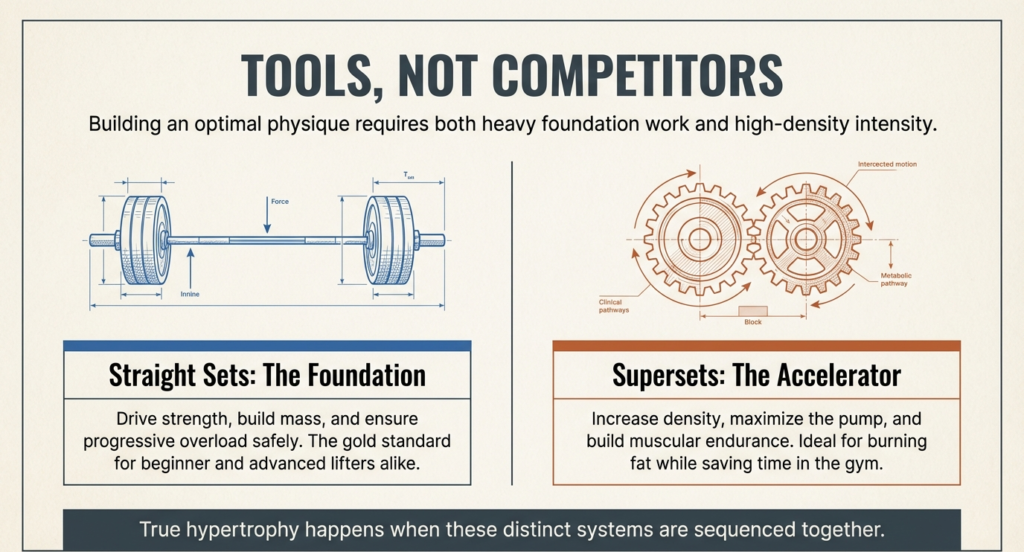
Supersets and Straight Sets Are Tools Not Competitors
This visual highlights an important concept—supersets and straight sets are not competitors but complementary tools. Straight sets build the base of strength and muscle by allowing proper recovery and heavy lifting. On the other hand, supersets increase workout intensity and efficiency by reducing rest time. Both methods serve different purposes depending on your training phase. If your goal is strength, straight sets dominate.
If your goal is fat loss or time efficiency, supersets shine. The key is not choosing one over the other but using both strategically to create a balanced and effective hypertrophy program.
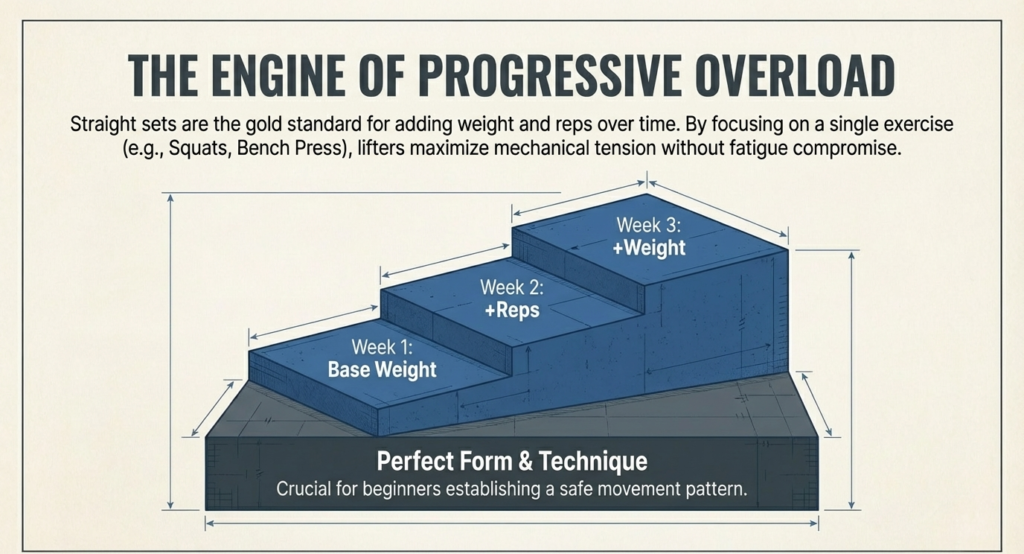
Straight Sets for Progressive Overload in Muscle Growth
This image explains why straight sets are the engine behind progressive overload. Muscle growth depends on gradually increasing weight, reps, or intensity over time. Straight sets make this easier because you are well-rested between sets, allowing consistent performance. This helps you track progress accurately and push heavier weights safely. Supersets, while intense, can limit strength output due to fatigue.
That is why compound lifts like squats, bench press, and deadlifts are best performed using straight sets. This visual reinforces the idea that strength progression is the foundation of long-term muscle growth.
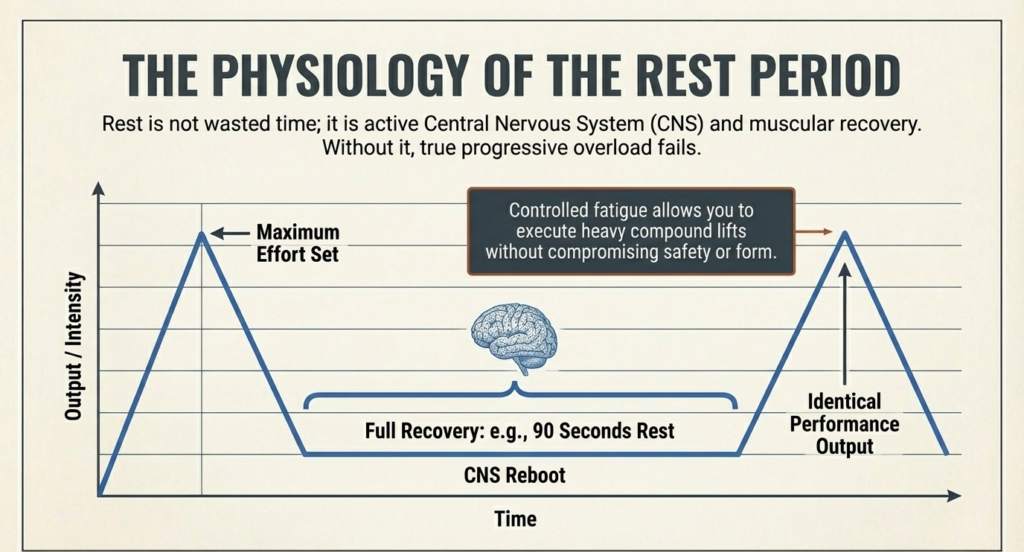
Importance of Rest Periods in Strength Training
This image focuses on the importance of rest and recovery in muscle growth. Rest between sets is not wasted time—it is essential for central nervous system recovery and maintaining performance. Straight sets allow proper recovery, enabling you to perform each set with maximum effort and good form. Without adequate rest, progressive overload becomes difficult.
Supersets reduce rest intentionally to increase intensity, but they also increase fatigue. This visual clearly shows how recovery impacts performance output, highlighting why controlled rest periods are critical, especially when performing heavy compound exercises.
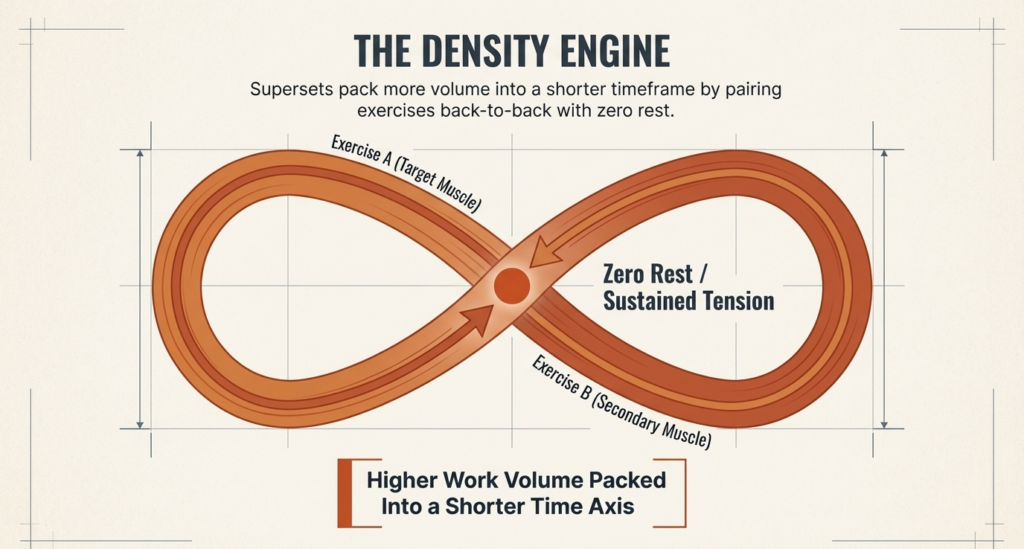
Supersets Density Training for Muscle Growth
This image represents how supersets increase training density by combining exercises with little to no rest. By performing movements back-to-back, you pack more volume into less time. This not only saves time but also increases workout intensity and calorie burn. Supersets are especially effective during fat loss phases, where efficiency and metabolic demand are important. While they may not be ideal for heavy lifting, they are excellent for accessory work and maintaining muscle during calorie deficits. This visual highlights how supersets act as a “density engine” in your training program.
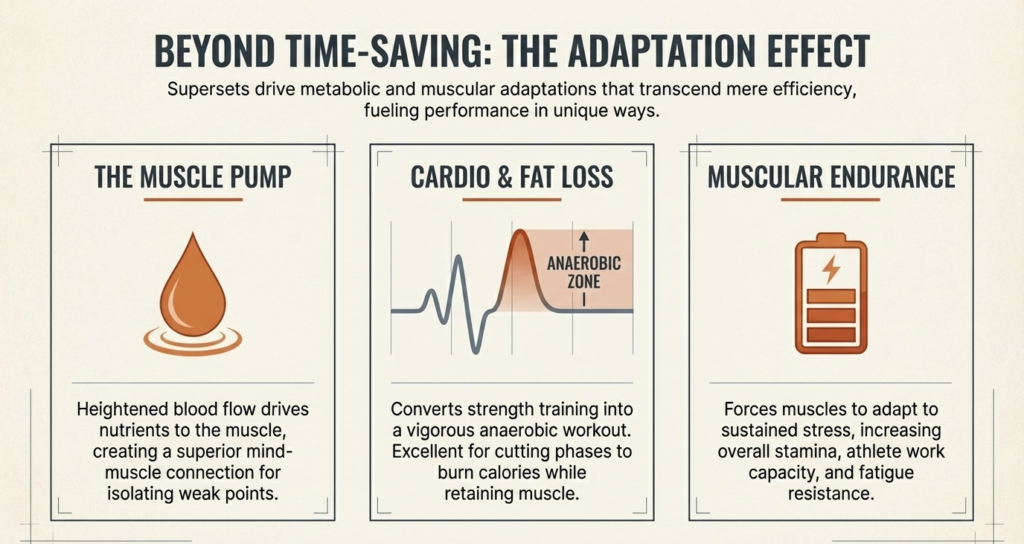
Supersets Benefits for Muscle Pump Fat Loss and Endurance
This image shows the additional benefits of supersets beyond just saving time. Supersets improve muscle pump, increase blood flow, and enhance the mind-muscle connection. They also contribute to fat loss by keeping heart rate elevated and increasing metabolic demand. Over time, this leads to better muscular endurance and work capacity. These adaptations are especially useful for athletes and individuals in cutting phases. While straight sets build strength, supersets improve overall performance and conditioning. This visual emphasizes how supersets create multiple physiological adaptations that support muscle growth indirectly.
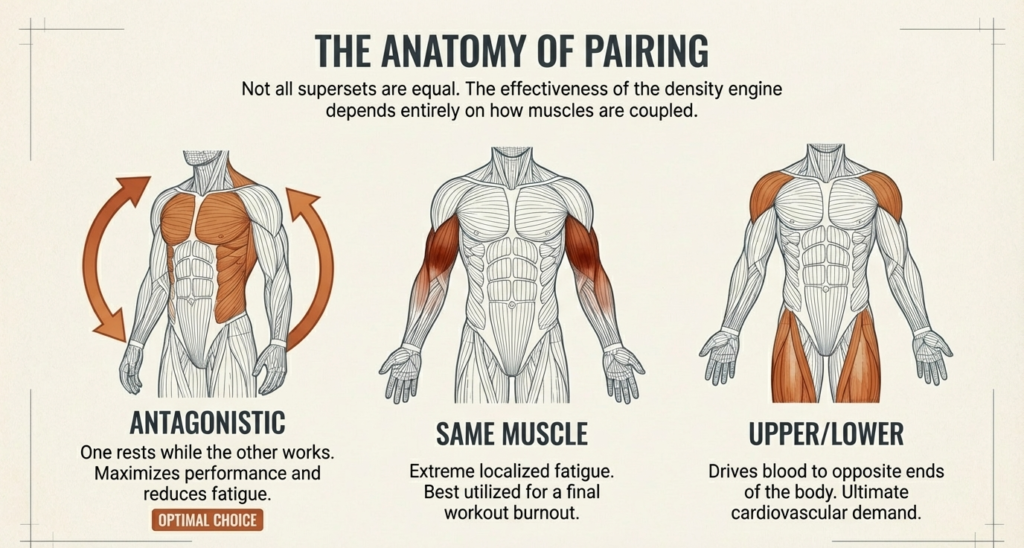
Best Superset Pairing Methods for Muscle Growth
This image explains that not all supersets are equal—the effectiveness depends on how exercises are paired. Antagonistic supersets, such as chest and back, allow one muscle to rest while the other works, improving performance. Same muscle supersets increase fatigue and are best for finishing sets. Upper-lower supersets increase cardiovascular demand and overall intensity. Choosing the right pairing method is crucial for maximizing results and avoiding unnecessary fatigue. This visual teaches that smart programming matters more than just doing supersets randomly.
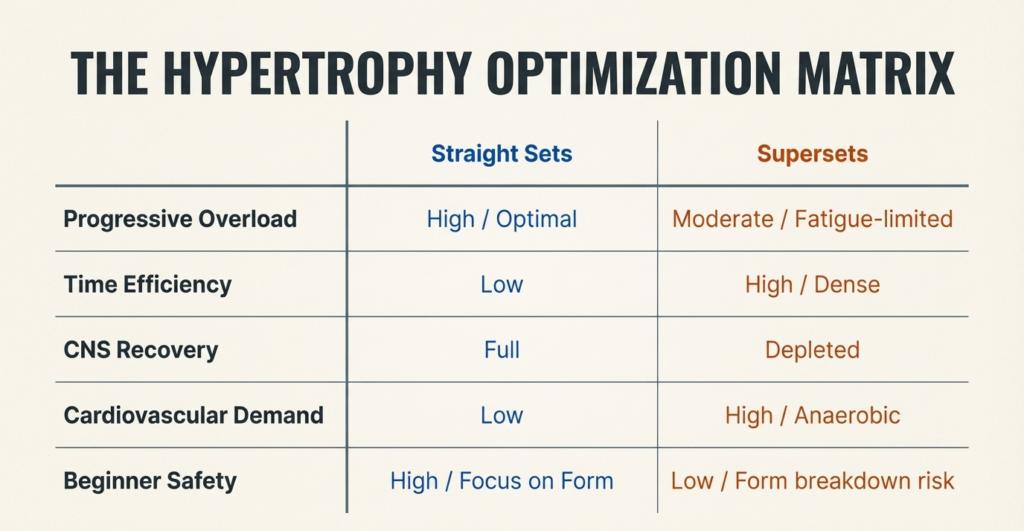
Straight Sets vs Supersets Comparison Chart
This comparison chart clearly shows the differences between straight sets and supersets across key training factors. Straight sets excel in progressive overload, recovery, and strength development. Supersets, on the other hand, provide better time efficiency, higher intensity, and increased cardiovascular demand. However, they may lead to faster fatigue and reduced strength output. This matrix helps you understand when to use each method based on your goal. It reinforces the idea that both training styles have advantages and limitations, and the best results come from using them strategically.
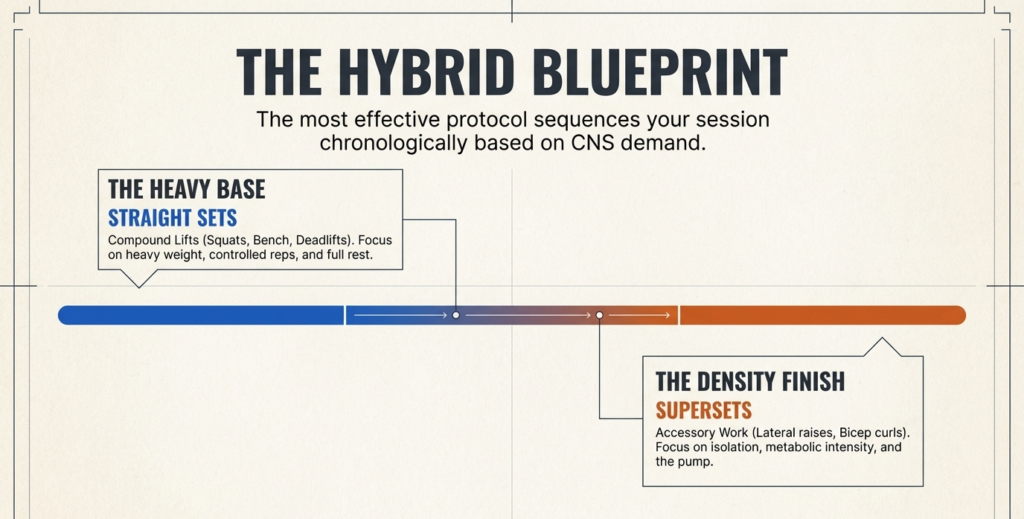
Hybrid Workout Plan Using Straight Sets and Supersets
This image demonstrates the most effective approach—a hybrid training model. Start your workout with straight sets for heavy compound lifts to build strength and apply progressive overload. Once the main lifts are complete, switch to supersets for accessory exercises to increase intensity and efficiency. This structure allows you to get the best of both worlds—maximum strength and maximum muscle pump. It also helps manage fatigue while keeping workouts effective and time-efficient. This hybrid blueprint is ideal for most lifters aiming for overall hypertrophy.
Common Mistakes in Supersets and Straight Sets Training
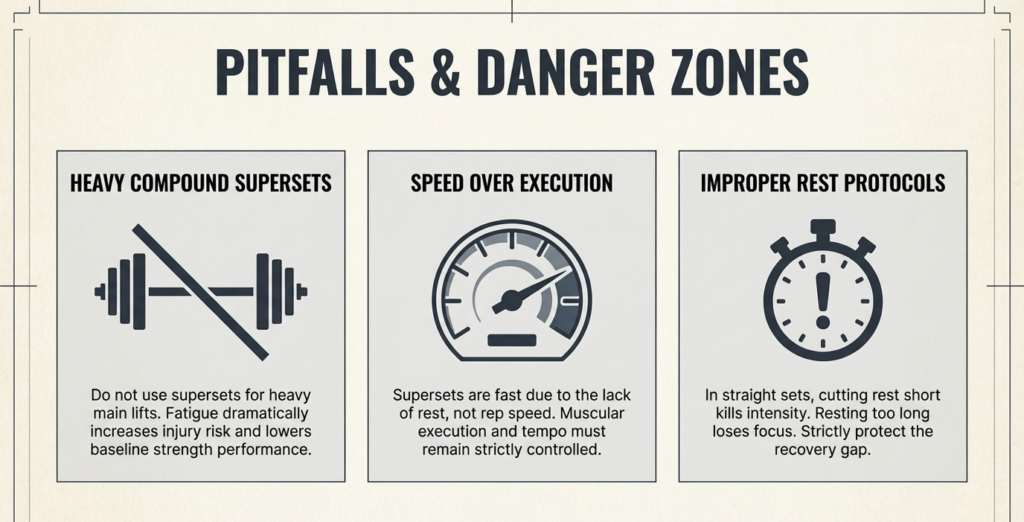
This image highlights common mistakes that can limit your progress. One major error is using supersets for heavy compound lifts, which increases injury risk and reduces strength performance. Another mistake is prioritizing speed over proper form during supersets. In straight sets, incorrect rest timing—either too short or too long—can reduce effectiveness. Avoiding these mistakes is crucial for long-term progress. This visual reminds you that execution, technique, and smart programming matter more than simply choosing a training style.
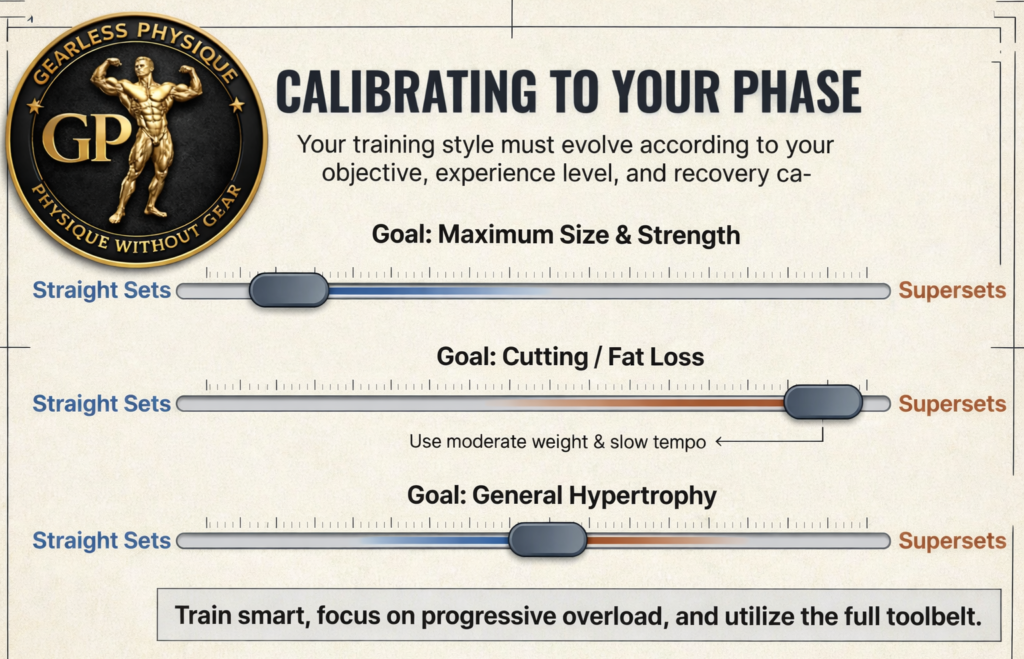
How to Adjust Supersets vs Straight Sets Based on Training Goals
This image explains how to adjust your training style based on your goal. For maximum strength and size, straight sets should be prioritized. During fat loss phases, supersets become more useful due to their intensity and calorie-burning effect. For general hypertrophy, a balanced mix of both works best. Training is not static—it should evolve with your objectives, experience level, and recovery capacity. This visual reinforces the importance of adapting your program instead of following a one-size-fits-all approach.
Read more: https://www.muscleandfitness.com/flexonline/training/trial-straight-sets-vs-supersets/

Gearless Physique
Physique Without Gear
Your transformation starts now. Who's with me?