4 Mental Pillars That Separate Winners from Quitters
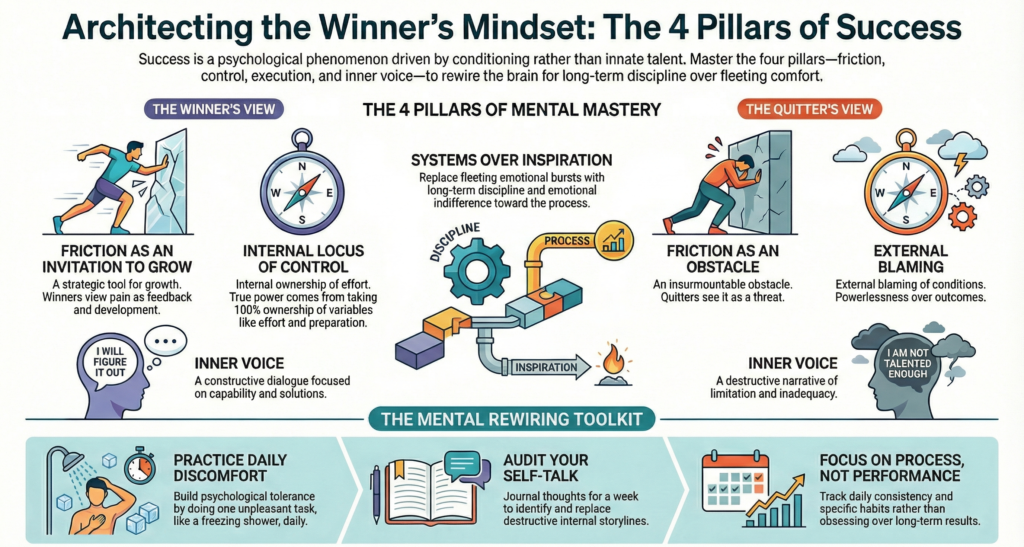
4 Pillar Psychological Differences between winners and quitters
There is hardly success in the field of fitness, business, relationships, and life without talent. I have experienced in my personal experience as a coach with almost twenty years in the iron game how genetically gifted athletes give up, and how average bodied lifters became champions. It is not the muscle mass or IQ that is the genuine separator. It’s psychology.
Winners think differently. They handle disappointments in a different manner. They address themselves in a different way. But above all they react differently when the pressure strikes.

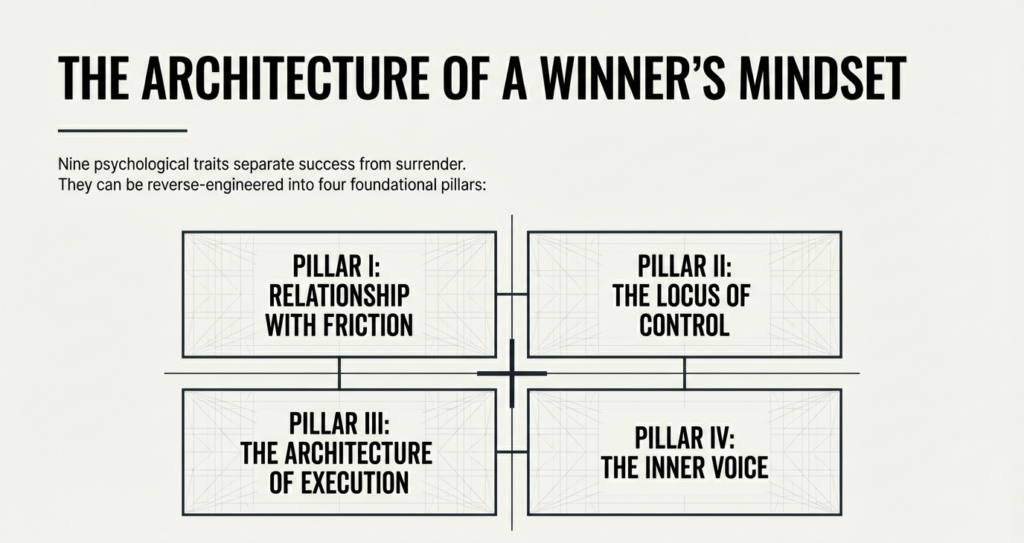
The Architecture of a winner's mindset
The attitude of a winner is not haphazard but organized. It has four pillars which found the behavior during times of pressure. To begin with, the association with discomfort is what will make the difference between growth and avoidance. Second, the locus of control establishes power that is maintained by responsibility or the power that is forfeited by blame. Third, the execution structure makes sure that discipline prevails in the long run over emotion and systems overpower motivation.
Lastly, inner voice is in charge of resilience, self-belief and long term focus. All these pillars make the chaos psychologically stable. Achievement is never something by chance as it is planned. When these four components are congruent, then performance is steady, identity becomes robust and then achievement occurs inevitably.
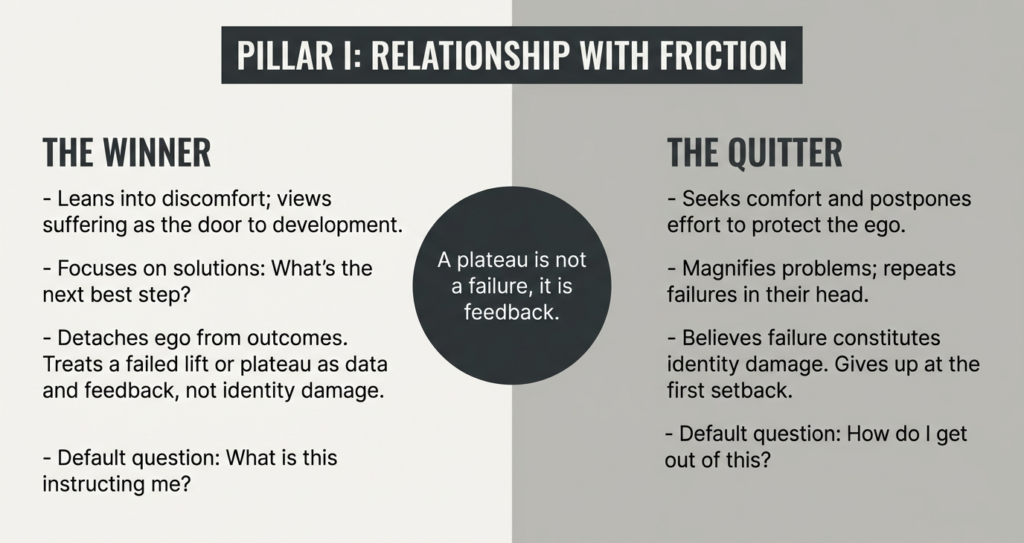
Pillar 1: Relationship with friction
The course of your life is determined by the relations with the friction. Conquerors think that pain is an invitation to develop not negative threat to withdraw. They perceive plateaus as feedback, no longer tie their ego to short-term results, and no longer concentrate on the problem but on the solutions. All failures are information to improve implementation. Quitters, on the contrary, need comfort, re-enacting failures in their minds, and exaggerate the obstacles that make them perceive them as insurmountable.
They simply escape instead of adapting. Growth demands tension. Resistance is necessary in development. Once you start questioning yourself as to what this is teaching me rather than how can I avoid this, you stop struggling, you start utilizing it in a strategic manner.
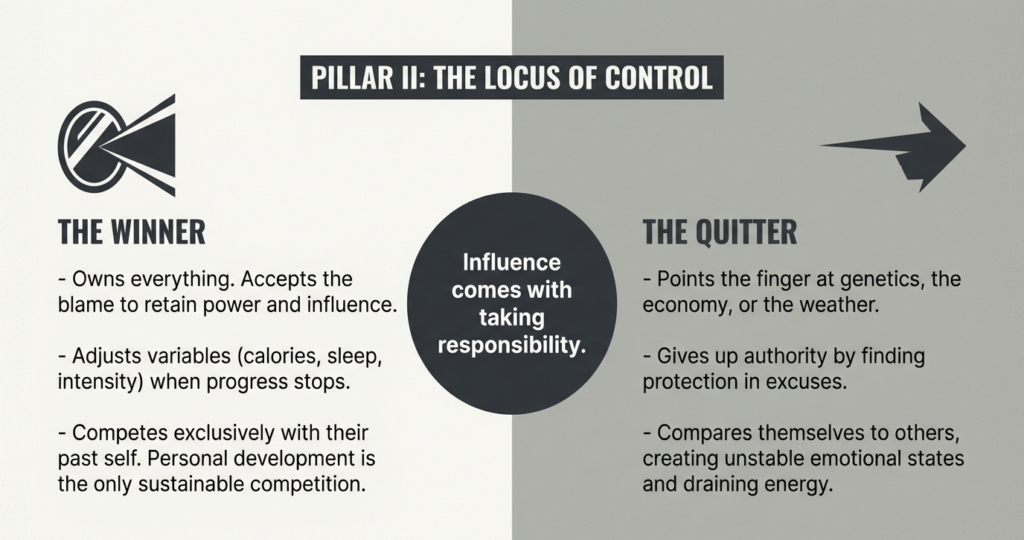
Pillar 2: The locus of control
The scope of your development is determined by the locus of control. Winners work on an internal locus and they accept all the outcomes, even when the situation is not perfect. Instead of attributing it to genetics, timing or fortune, they manipulate variables that can be controlled, such as effort, preparation, sleep, nutrition, strategy, etc. Ownership preserves power. Externalizing of control, however, is done by quitters. They give up their power and hide their ego behind justifications by blaming the economy, other individuals or the poor conditions.
Such a mentality depletes the energy and causes emotional instability by making one always compare. Actual growth starts as soon as you take responsibility. Power grows with the augmentation of responsibility. With everything in possession, you free yourself to make any changes that you can do.
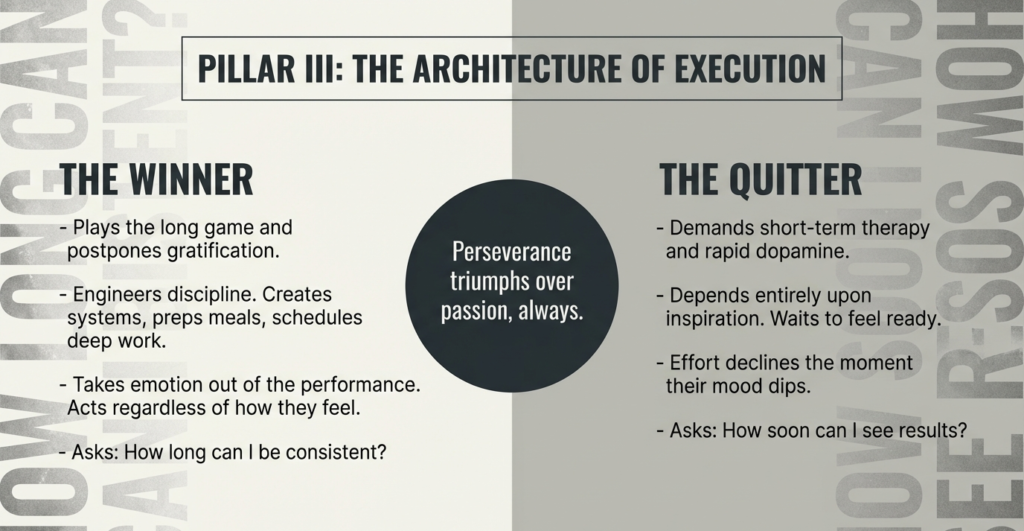
Pillar 3: The Architecture of execution
Action is what sets the difference between a plan and an accomplishment. The winners know that the success systems are made by long-term, rather than inspiratory bursts. They postpone pleasure, create the regime of discipline in the surroundings, and behave whether they are in a good mood or not. They do not look after motivation; they plan deep work and make arrangements beforehand and work on repeat performance. They have no question of how fast but how long can they maintain it. Quitters on the other hand are emotional.
Once excitement is gone, so is the effort. Their work requires swift outcomes and drop the process when something seems to be going slowly. Actual work is a state of emotional indifference. Endurance, discipline and patience will never succumb to a few moments of passion and haphazard work.
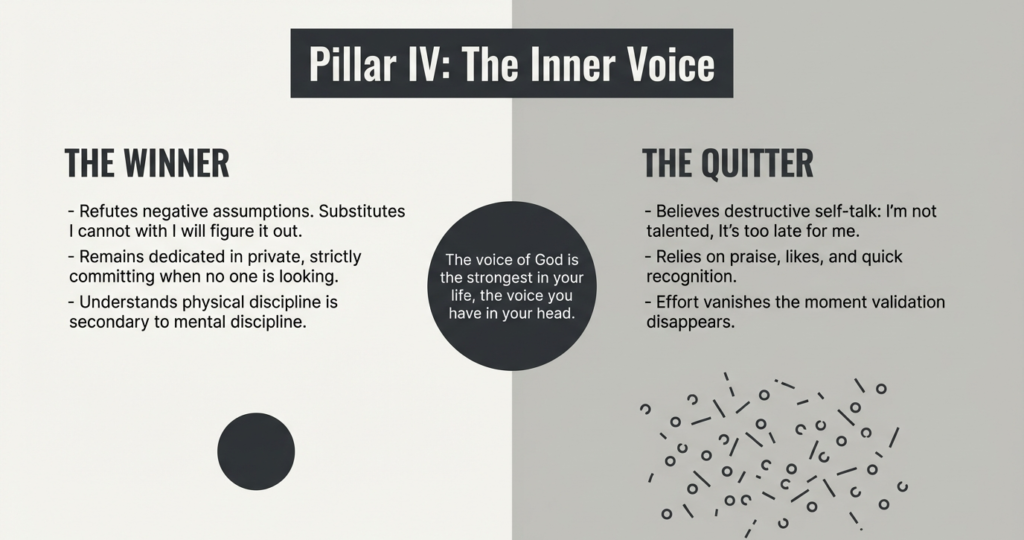
Pillar 4: The inner voice
The most influential in your life is your inner voice. Winners deliberately transform negative thinking, and where they think I can do it, they say instead I’ll figure it out. They will do discipline in secrecy because they know that physical consistency is powered by the mind. Their self-conversation creates resilience, self-reliance, and long-term orientation. Quitters, on the contrary, believe in the destructive storylines such as I am not talented or too late. They rely on approval and external acknowledgement and when the appreciation goes away so does the work.
The development of any kind goes down the drain in the face of poor internal conversation. Talent is not the difference but interpretation. When you master self talk then you master your behavior. Direct the voice inside and you direct the direction of the future[/;.
Awareness Is the First Step to Mental Rewiring
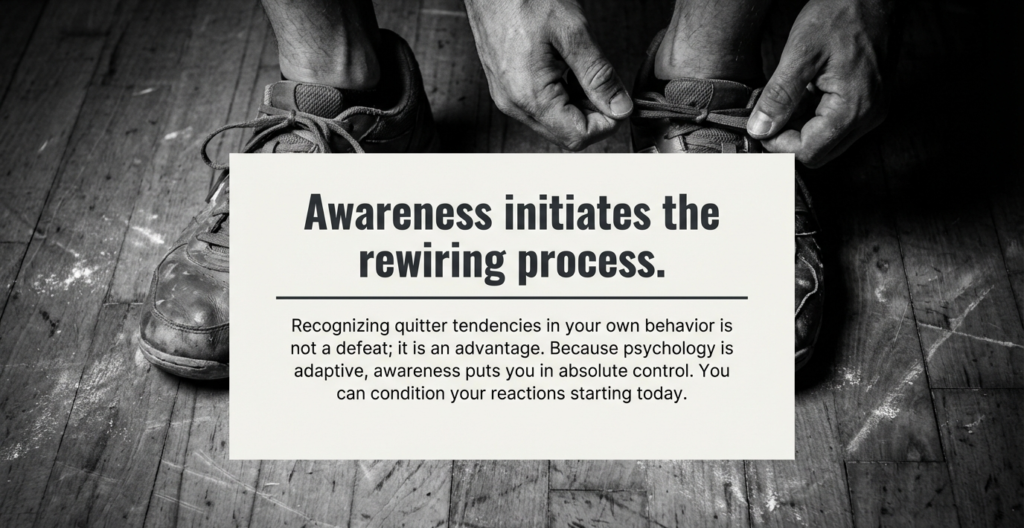
The source of transformation is awareness. Perception should be changed before behavior changes. Being able to identify avoidance, excuse-making, or even emotive decision-making patterns is not a sign of weakness, but rather a sign of strategic intelligence. By being aware of your automatic responses you break them. The disruptive moment produces option. And choice creates control. Most individuals seek to alter results without considering the attitude that generates these results.
Authentic expansion starts within. You can be sure that by not denying the things you think, the words you say, and the actions you perform, you will regain control over your reactions. Psychology is adaptive; it forms the way again. Once you realize that there is a limiting pattern, then you can replace it actively.
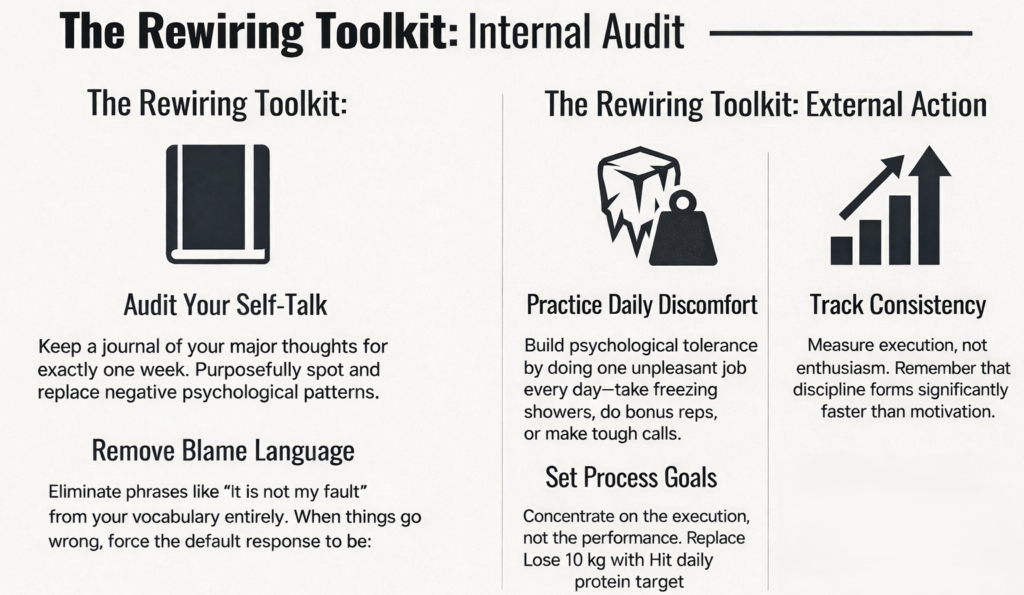
The Rewiring Toolkit: internal Audit
These five useful rewiring techniques to your psychology.
1. Audit Your Self-Talk
Keep a journal of your major thoughts within a week. Deliberately purposefully replace negative patterns.
2. Practice Daily Discomfort
Do one unpleasant job every day. Freezing showers, bonus reps, tough calls. Establish psychological tolerance.
3. Set Process Goals
Concentrate on results, not on performance. Replacing with Lose 10 kg, go with Hit protein target daily.
4. Remove Blame Language
Get rid of such phrases as it is not my fault. Change to What can I improve?
5. Track Consistency
Execution, not enthusiasm. Discipline also forms quicker than motivation.
The Secret There: Winners are Made, not born
There is no difference in how winners are programmed. They have conditioned their reactions. Psychology is adaptive. Rewiring of the brain occurs depending on rehearsed behavior. Whenever you decide to be disciplined instead of being comfortable, you build the winner attitude. Each time you don’t work hard, you will encourage quitting. It is not a matter of a single huge choice. Thousands of small ones it is. It is not talent that differs a winner and a quitter. It is daily psychological routine.
Final Thoughts
Achievement is a psychological phenomenon prior to a physical one. When you learn to control discomfort, responsibility, discipline, and long-term focus, then the outcomes are bound to happen. The gym provides the best lesson on this. Barbell does not care about excuses. It only responds to effort. You do not make a winner talking like one. Being a winner, you think like a winner.
Now the question is simple:
What kind of mindset are you nurturing right now?

Gearless Physique
Physique Without Gear
Your transformation starts now. Who's with me?