7 Powerlifting Meal Prep Tips for Strength & Recovery
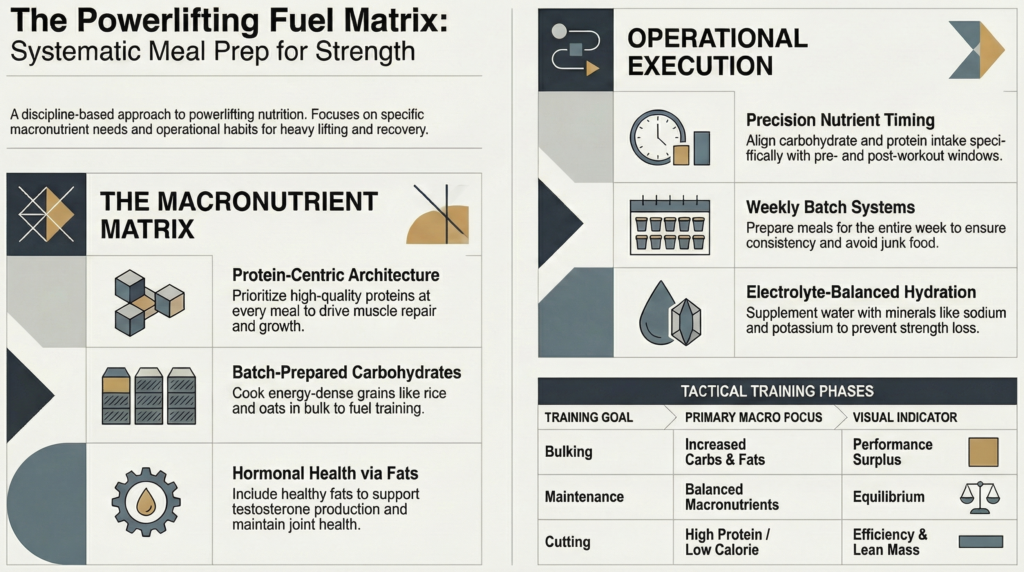
The powerlifting fuel matrix brings together all aspects of nutrition into a single, cohesive system. It combines macronutrient balance, nutrient timing, hydration, and meal prep into a structured approach for strength development. This system emphasizes precision and consistency, ensuring that every aspect of nutrition supports performance and recovery. By integrating these components, lifters can eliminate guesswork and create a reliable routine that drives progress. The matrix also highlights the importance of adapting nutrition based on training phases and individual goals. When executed correctly, this comprehensive approach allows powerlifters to optimize strength, improve recovery, and maintain peak performance over the long term.
The Fueling Framework: Powerlifting Meal Prep System
Powerlifting Meal Prep represents the foundation of powerlifting nutrition, where food is treated as a performance system rather than just consumption. Every successful lifter understands that strength is built not only through training but through structured fueling. This framework highlights how proper meal prep eliminates randomness and replaces it with calculated progression. By aligning nutrition with training intensity, recovery demands, and long-term goals, lifters can maximize output and minimize fatigue. A well-designed nutrition system ensures that every calorie contributes to strength, muscle growth, and recovery. Ultimately, this approach transforms eating habits into a strategic advantage, allowing powerlifters to consistently perform at their highest level without relying on guesswork or inconsistency.
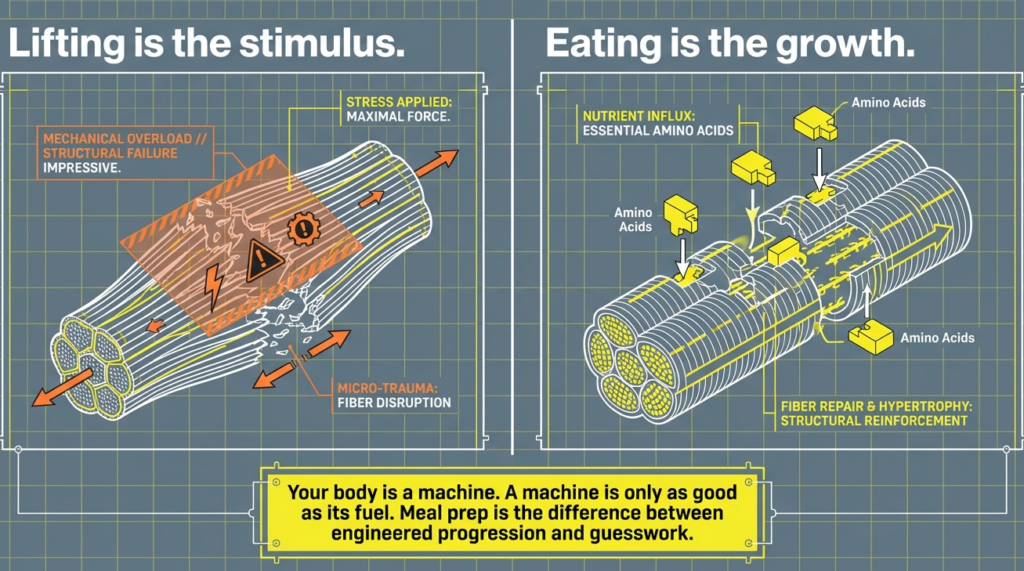
Lifting vs Eating: The Science of Growth
Strength training provides the stimulus for muscle growth by creating microscopic damage within muscle fibers. However, real growth happens during recovery, driven by proper nutrition. This image highlights the relationship between lifting and eating, emphasizing that both are equally important for progress. Without adequate protein and nutrients, the body cannot repair or strengthen muscle tissue effectively. Amino acids from protein act as building blocks, helping rebuild damaged fibers into stronger structures. This process leads to hypertrophy and increased strength over time. Powerlifters who understand this balance prioritize both intense training and consistent nutrition, ensuring that every workout translates into measurable gains instead of wasted effort or incomplete recovery cycles.
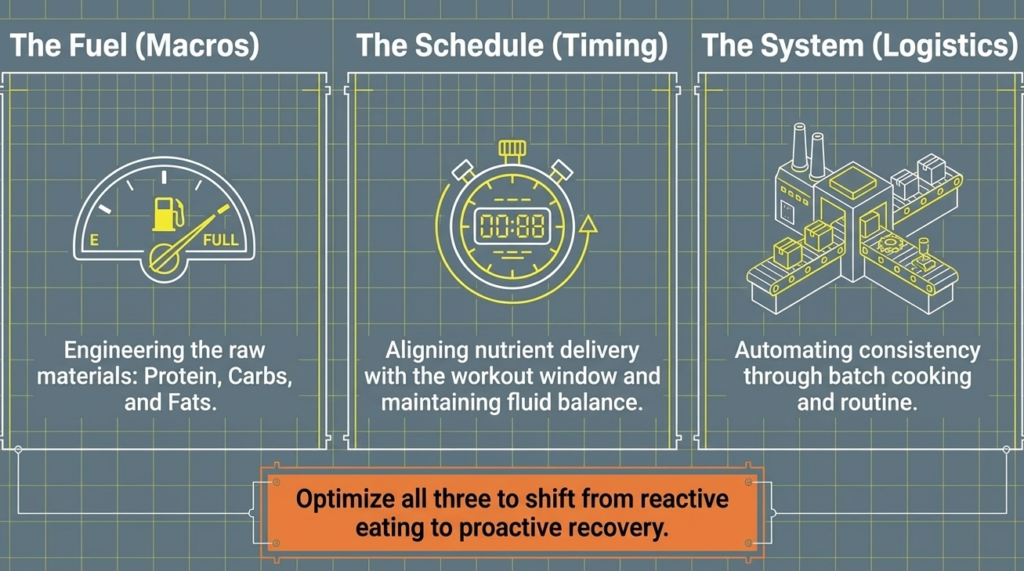
The Powerlifting Nutrition System: Macros, Timing & Logistics
A successful nutrition strategy for powerlifting is built on three pillars: macronutrients, timing, and logistics. Macronutrients provide the raw materials needed for performance, while timing ensures those nutrients are delivered when the body needs them most. Logistics, such as meal prep and consistency, guarantee that the system is executed effectively. Without proper planning, even the best nutrition strategy can fail due to inconsistency. This structured approach shifts eating from a reactive habit to a proactive system designed for strength and recovery. By mastering all three components, powerlifters can maintain energy levels, enhance muscle repair, and eliminate decision fatigue, allowing them to focus entirely on performance and progression in the gym.
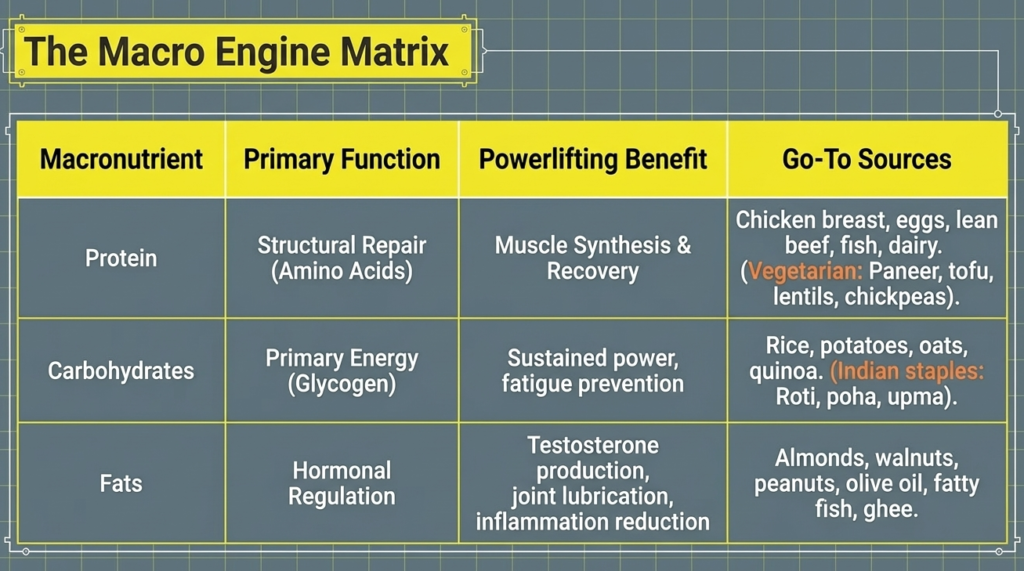
The Macro Engine Matrix for Strength
The macro engine matrix breaks down the role of protein, carbohydrates, and fats in powerlifting performance. Protein is responsible for muscle repair and growth, carbohydrates provide energy for intense lifts, and fats support hormonal balance and joint health. Each macronutrient plays a specific role, and neglecting any of them can limit progress. This structured approach helps lifters understand how to balance their intake based on training demands and goals. By selecting high-quality food sources and maintaining proper ratios, powerlifters can optimize recovery, sustain energy, and improve overall strength output. Mastering macronutrients is essential for building a physique that is both powerful and resilient over time.
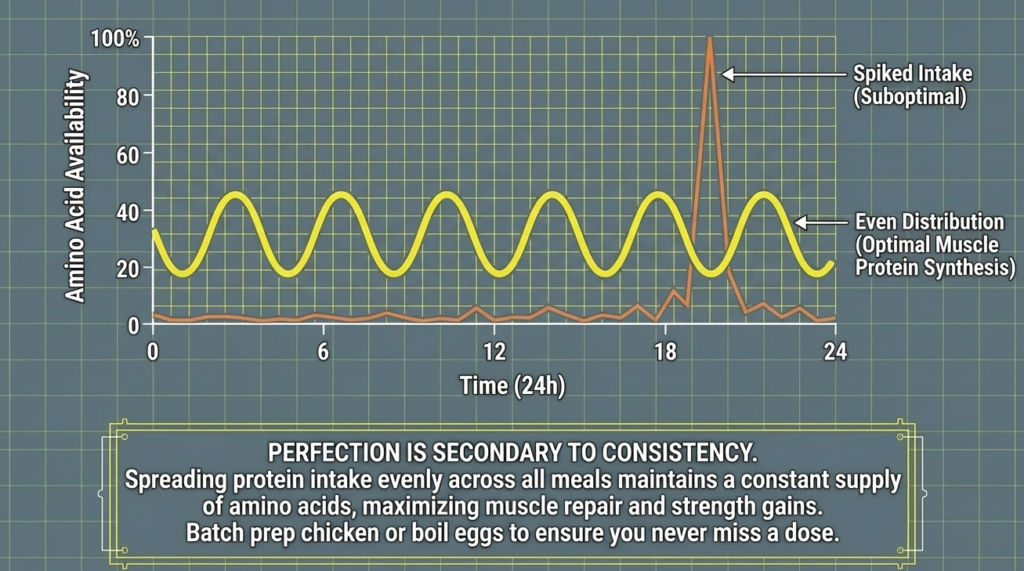
Protein Timing for Maximum Muscle Synthesis
Protein timing plays a crucial role in maximizing muscle protein synthesis and recovery. This image illustrates how evenly distributing protein intake throughout the day maintains a steady supply of amino acids in the bloodstream. Large, infrequent protein meals create spikes that are less effective compared to consistent intake. For powerlifters, maintaining this balance ensures continuous muscle repair and growth. Regular protein consumption also helps reduce muscle breakdown during intense training phases. By planning meals strategically, lifters can optimize recovery and maintain strength levels across sessions. This approach reinforces the importance of consistency over perfection, ensuring that nutrition supports performance every hour of the day.
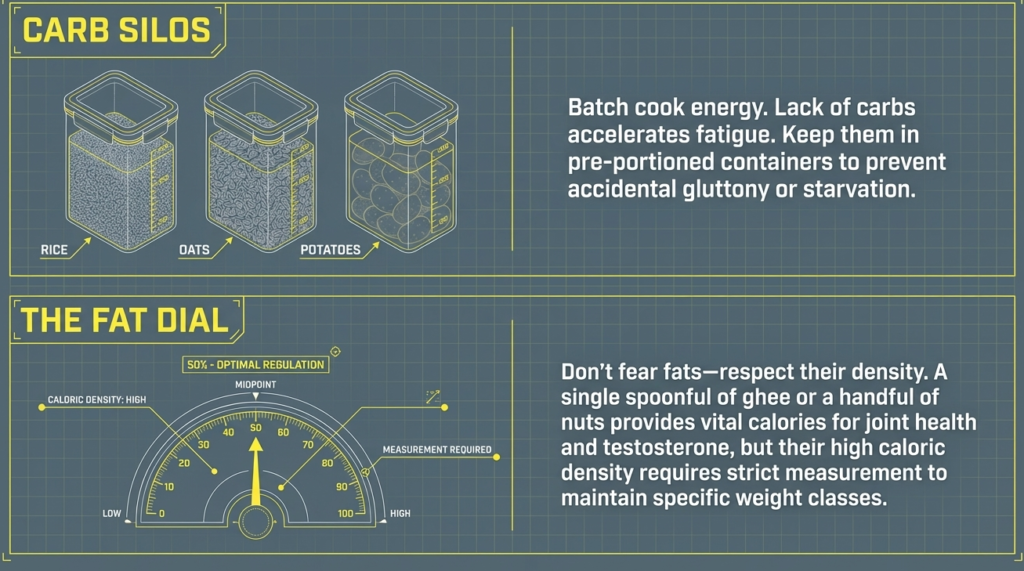
Carb Silos & Fat Dial: Energy and Hormone Balance
Carbohydrates and fats are essential for fueling performance and maintaining hormonal balance in powerlifting. Carbs act as the primary energy source, while fats regulate hormones like testosterone and support joint health. This image highlights the importance of storing carbs in pre-portioned containers to ensure consistent energy intake. It also emphasizes controlling fat consumption due to its high caloric density. Proper balance prevents fatigue, enhances recovery, and supports long-term strength gains. Powerlifters who manage both macros effectively can maintain peak performance without unwanted weight fluctuations. By combining structured carb intake with controlled fat consumption, athletes create a sust
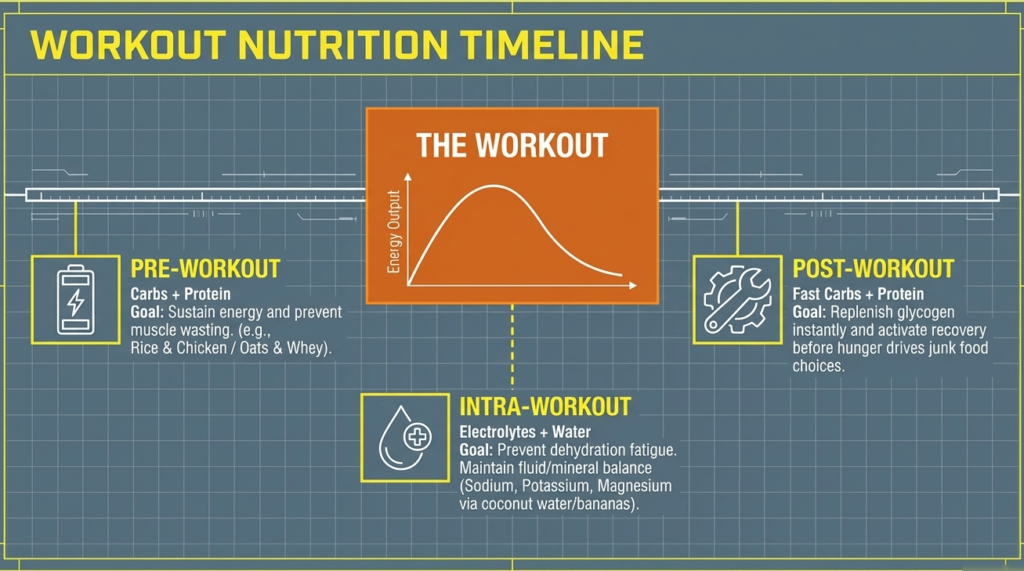
Workout Nutrition Timeline for Strength
Nutrient timing is a powerful tool for enhancing performance and recovery in powerlifting. This timeline highlights the importance of pre-workout, intra-workout, and post-workout nutrition. Pre-workout meals provide energy and prevent muscle breakdown, while intra-workout hydration maintains performance and reduces fatigue. Post-workout nutrition focuses on replenishing glycogen and initiating muscle repair. By aligning meals with training sessions, lifters can optimize energy output and recovery efficiency. This structured approach eliminates guesswork and ensures that the body receives the right nutrients at the right time. Consistent timing not only improves strength performance but also accelerates recovery, allowing athletes to train harder and progress faster over time.
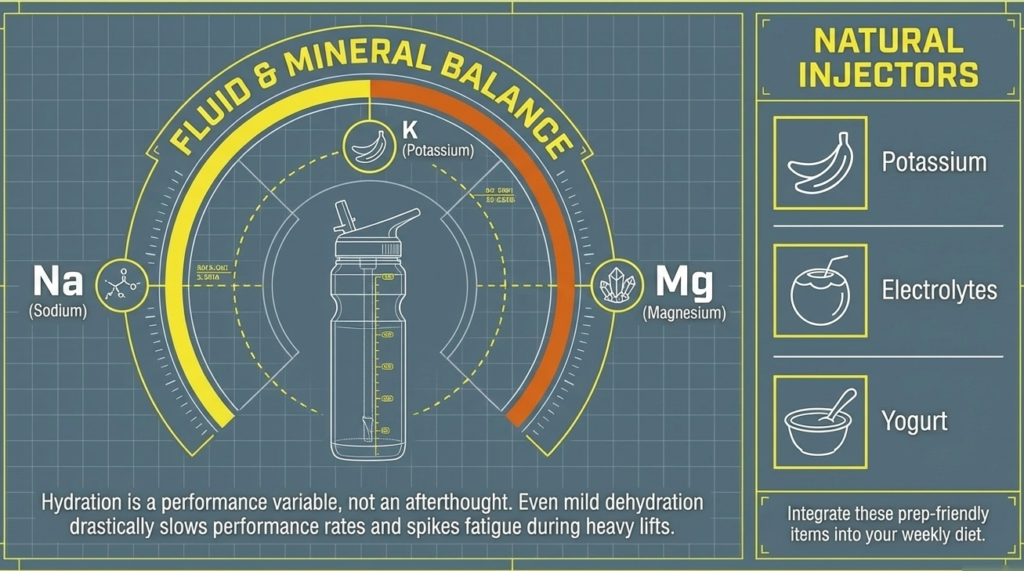
Hydration & Electrolyte Balance for Performance
Hydration is a critical yet often overlooked factor in powerlifting performance. This image emphasizes the importance of maintaining fluid and electrolyte balance, including sodium, potassium, and magnesium. These minerals play a vital role in muscle contraction, nerve function, and preventing cramps. Even mild dehydration can significantly reduce strength and increase fatigue during heavy lifts. Incorporating hydration into meal prep ensures consistent fluid intake throughout the day. Natural sources like bananas, coconut water, and yogurt help maintain electrolyte balance. By prioritizing hydration alongside nutrition, powerlifters can sustain performance, improve recovery, and avoid unnecessary drops in strength caused by fluid imbalances during intense training sessions.
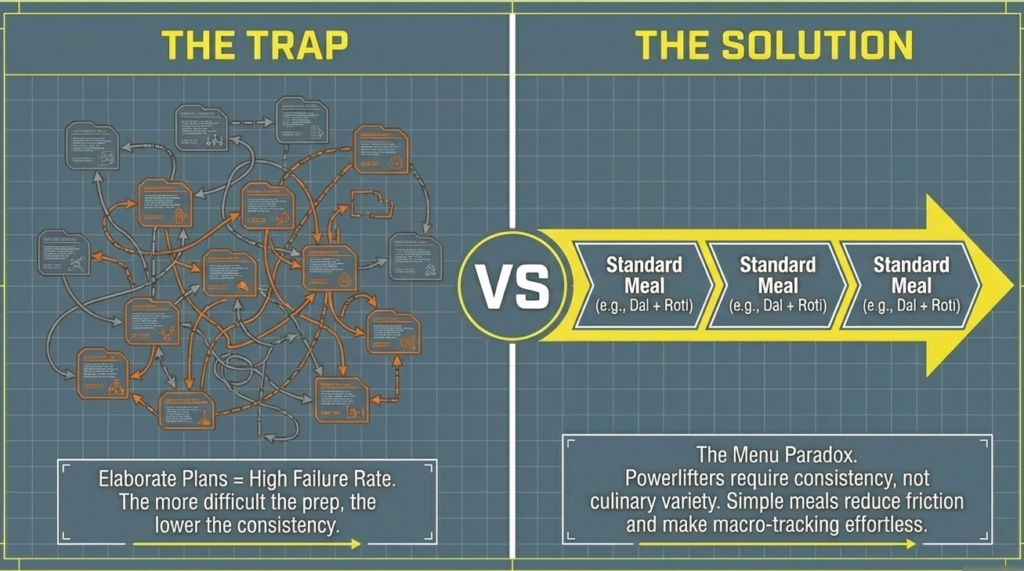
Simple Meal Prep vs Complex Diet Plans
Complex diet plans often lead to inconsistency, while simple meal prep strategies improve adherence and results. This image highlights the contrast between complicated nutrition systems and straightforward, repeatable meals. Powerlifters benefit from reducing decision fatigue by sticking to basic meals that are easy to prepare and track. Simple nutrition plans allow for better macro control and long-term sustainability. Instead of focusing on variety, athletes should prioritize consistency and execution. By simplifying meal prep, lifters can maintain discipline and avoid falling off track during busy schedules. This approach ensures steady progress, making nutrition a reliable tool for strength development rather than a source of confusion or inconsistency.
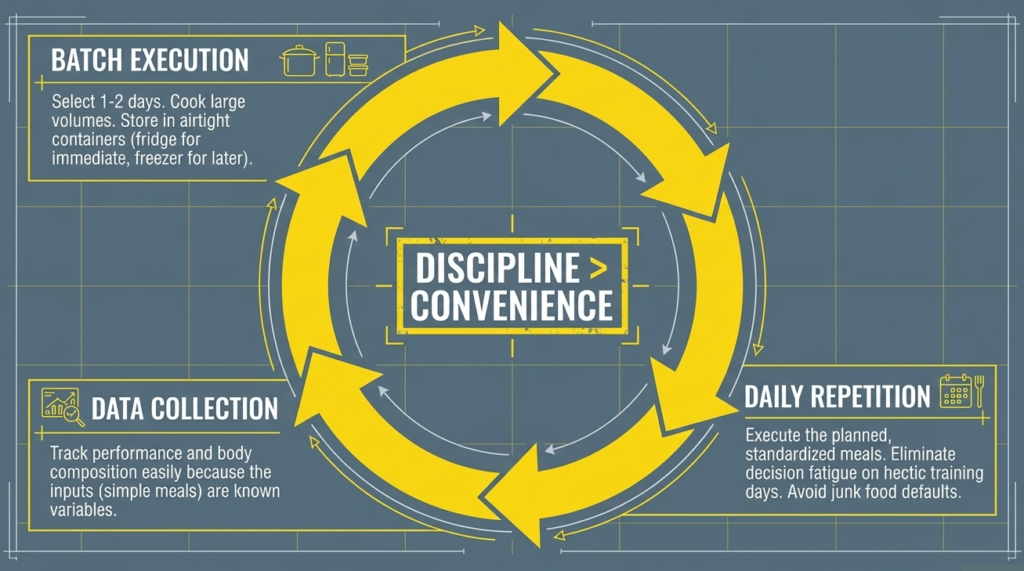
Weekly Meal Prep & Discipline Cycle
Meal prep is not just about convenience; it is about building a disciplined system that supports long-term success. This cycle illustrates how batch cooking, daily repetition, and data tracking work together to create consistency. Preparing meals in advance reduces decision fatigue and ensures that nutrition remains aligned with training goals. Daily execution reinforces habits, while tracking progress allows for adjustments based on performance. This continuous cycle transforms nutrition into an automated system rather than a daily challenge. Powerlifters who adopt this disciplined approach can maintain consistency even during busy periods, ensuring that their nutrition supports strength gains and recovery without interruption or reliance on motivation alone.
Nutrition Adjustments for Bulking, Cutting & Maintenance
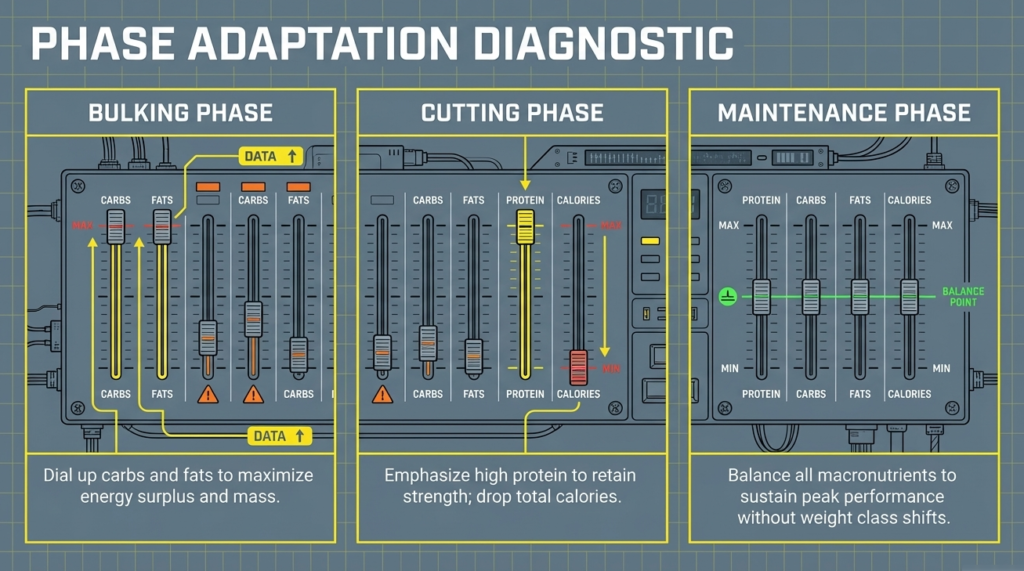
Different training phases require different nutritional strategies, and this image highlights how to adjust macros accordingly. During bulking, increasing carbs and fats supports energy surplus and muscle growth. In cutting phases, higher protein intake helps preserve muscle while reducing overall calories. Maintenance requires a balanced approach to sustain performance without weight fluctuations. Understanding these adjustments allows powerlifters to align their nutrition with their specific goals. This flexibility ensures that progress continues regardless of the phase. By monitoring results and making necessary changes, lifters can maintain strength, optimize body composition, and achieve long-term success without compromising performance or recovery during different stages of training.
Recovery is the Key to Strength
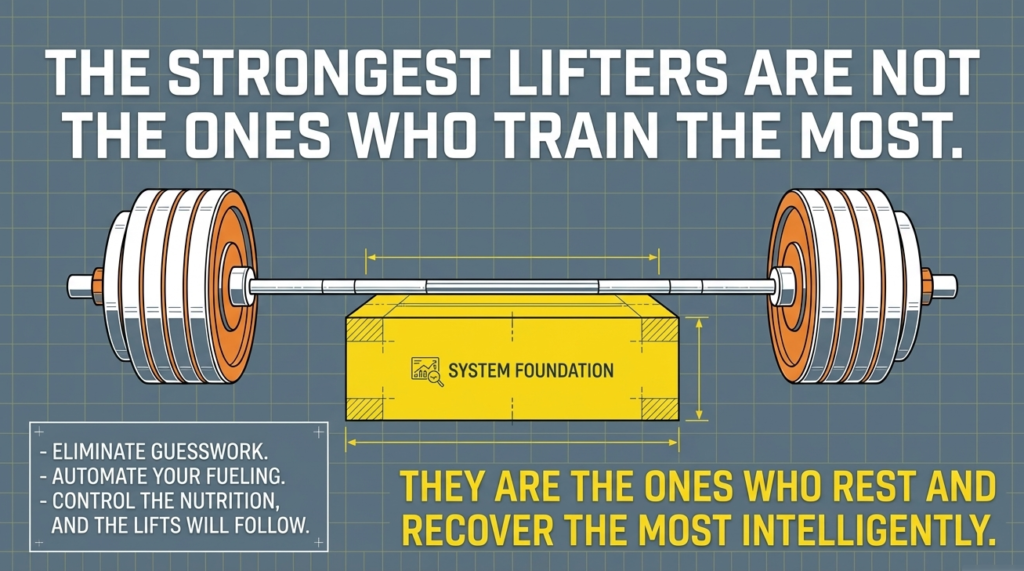
The strongest powerlifters are not those who train the most but those who recover the smartest. This image reinforces the importance of balancing training with proper nutrition and rest. Overtraining without adequate recovery leads to fatigue, injury, and stalled progress. Nutrition plays a vital role in recovery by providing the body with the resources it needs to repair and grow stronger. Meal prep ensures that recovery nutrition is always available, eliminating reliance on poor food choices. By prioritizing rest, hydration, and proper fueling, lifters can maximize performance and longevity. True strength is built through intelligent recovery, not just relentless training intensity.

Gearless Physique
Physique Without Gear
Your transformation starts now. Who's with me?