7 Meal Timing Myths vs Reality You Should Know
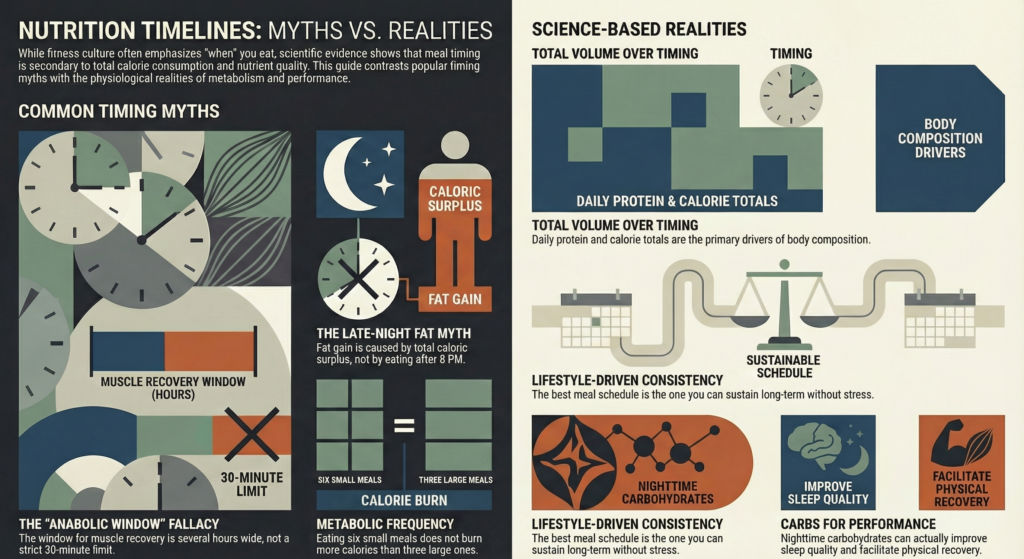
This comprehensive infographic brings together all the key concepts of meal timing myths versus reality. It visually explains how total calorie intake, protein consumption, and consistency are more important than timing. It also highlights the flexibility of modern nutrition approaches and the importance of sustainability. By combining multiple insights into one visual, it reinforces the idea that nutrition does not need to be complicated. The goal is to focus on what truly drives results while using meal timing as a supportive tool. This holistic understanding helps you build a practical, effective, and long-term nutrition strategy.
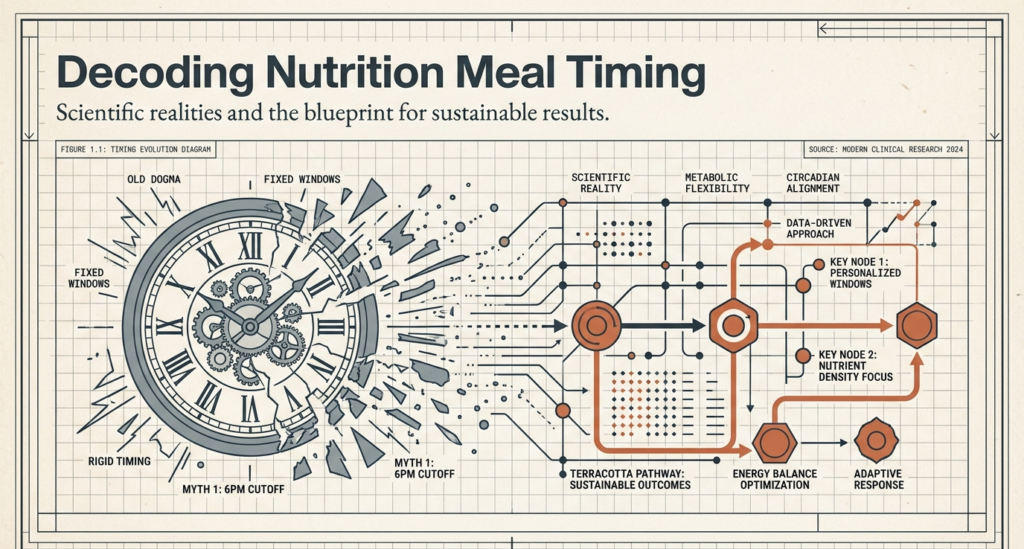
Decoding Nutrition Meal Timing Blueprint
This visual represents the shift from outdated meal timing myths to a science-based approach. For years, rigid rules like fixed eating windows and strict cut-off times dominated fitness culture. However, modern nutrition science emphasizes flexibility, personalization, and sustainability. Instead of blindly following the clock, the focus is now on energy balance, nutrient density, and individual lifestyle. The diagram highlights how understanding real physiology leads to better long-term outcomes. Meal timing is no longer a rigid structure but a tool that adapts to your routine. When you align your nutrition with your goals and habits, you create a system that supports both performance and consistency without unnecessary stress.
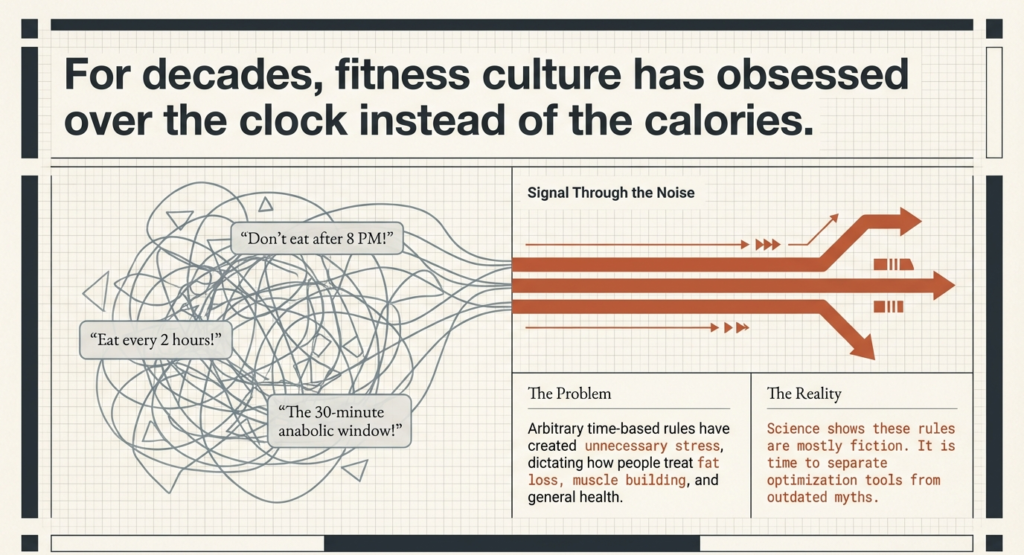
Meal Timing Myths vs Reality Overview
This image captures the confusion created by common meal timing myths. Advice like “eat every two hours,” “never eat after 8 PM,” and “follow the 30-minute anabolic window” has overwhelmed people for years. These rules often contradict each other and create unnecessary stress around food. The reality is that such rigid guidelines are not required for fat loss or muscle gain. Science shows that these ideas are largely exaggerated or misunderstood. By filtering out this noise, you can focus on what truly matters—total calories, protein intake, and consistency. Simplifying your approach removes anxiety and allows you to build a sustainable and effective nutrition strategy.
Nutrition Pyramid: Calories vs Meal Timing
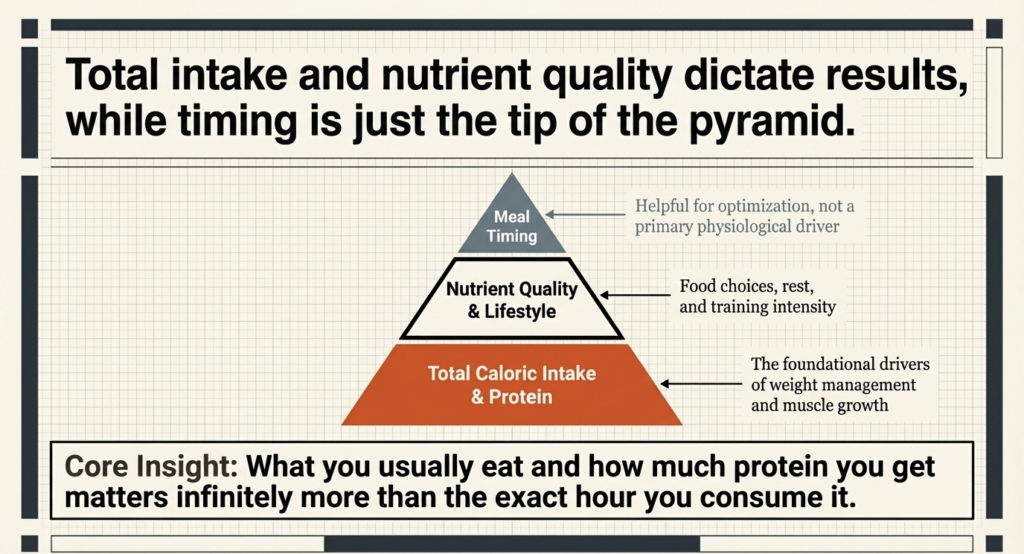
This pyramid clearly explains the hierarchy of nutrition priorities. At the base, total calorie intake and protein determine most of your results, whether your goal is fat loss or muscle gain. Above that comes nutrient quality and lifestyle factors like sleep and training intensity. Meal timing sits at the top, meaning it plays a smaller, supportive role. Many people mistakenly focus on timing while ignoring the foundation. This leads to poor results despite strict discipline. Understanding this structure helps you prioritize correctly. When your foundation is strong, meal timing becomes an optimization tool rather than a strict rule, allowing more flexibility and better long-term adherence.
Meal Frequency and Metabolism Explained
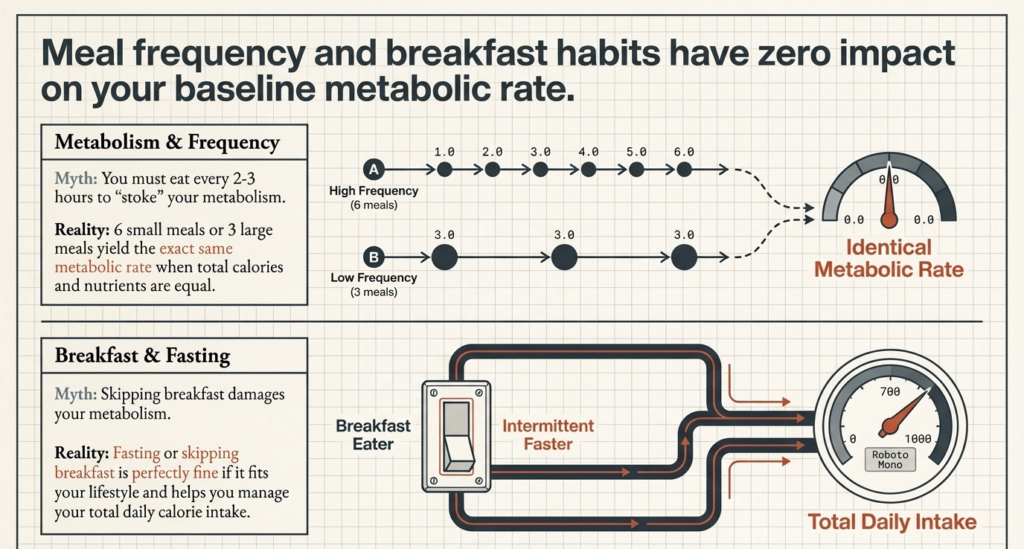
This visual debunks the myth that eating frequently boosts metabolism. Many believe that consuming six small meals keeps the metabolism “active,” but research shows otherwise. Whether you eat three meals or six, your metabolic rate remains nearly identical when calories and nutrients are equal. What truly matters is your total daily intake and body composition. Meal frequency should be based on personal preference, hunger levels, and lifestyle. Some people feel better eating more often, while others prefer fewer meals. Neither approach is superior for fat loss or muscle gain. The key is consistency and adherence to your overall nutrition plan.
Late Night Eating Fat Gain Myth
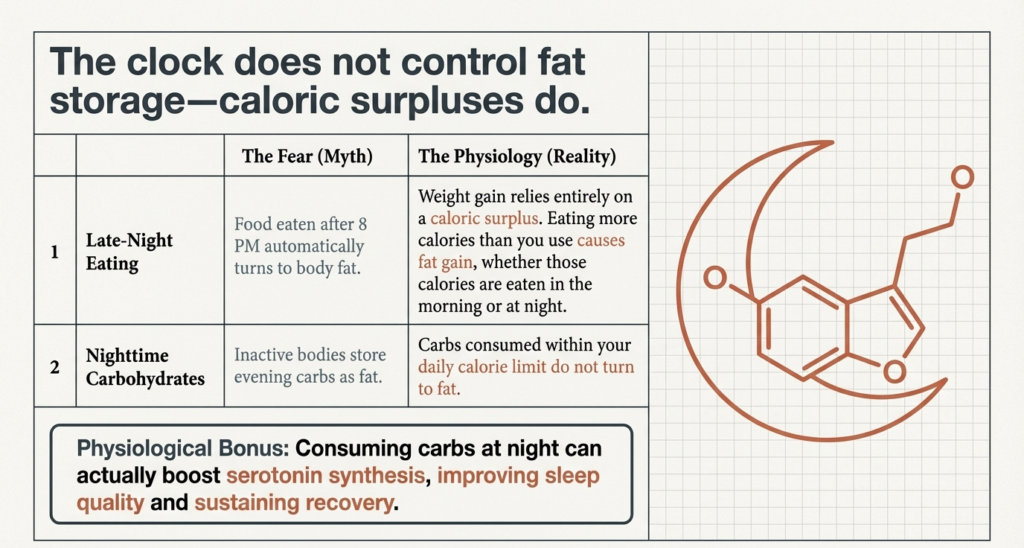
This image highlights one of the biggest misconceptions in nutrition—that eating late at night causes fat gain. In reality, fat gain occurs when you consume more calories than your body needs, regardless of the time of day. The body does not suddenly switch to fat storage mode at night. However, late-night eating can lead to overeating if it includes high-calorie snacks or poor food choices. The focus should always be on total calorie balance. If your daily intake is controlled, eating at night will not harm your progress. Understanding this removes unnecessary fear and allows more flexible meal planning.
Anabolic Window and Fasted Cardio Truth
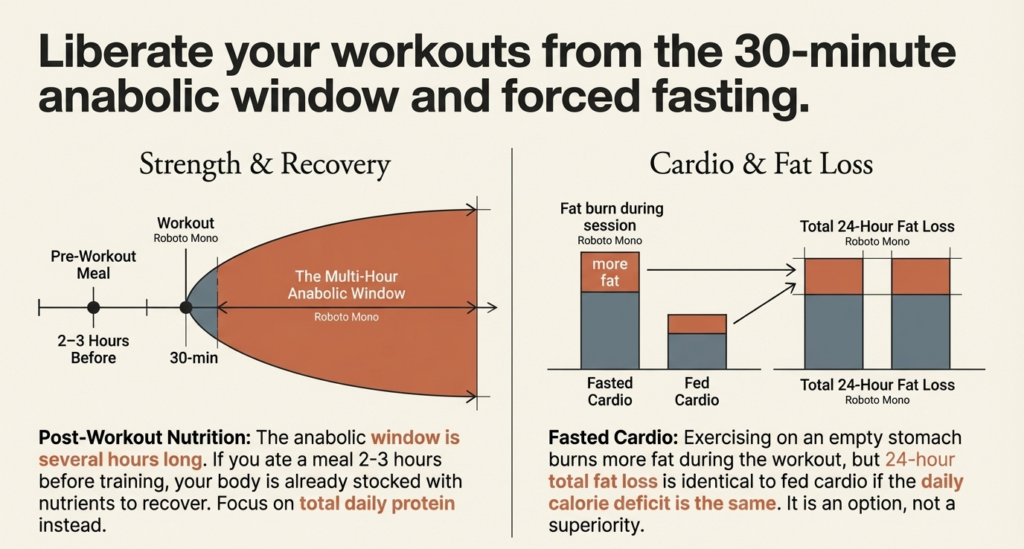
This visual explains two popular myths: the 30-minute anabolic window and fasted cardio superiority. Many believe they must eat immediately after training, but the anabolic window actually lasts several hours. If you’ve eaten before your workout, your body already has nutrients available for recovery. Similarly, fasted cardio may burn more fat during the session, but total daily fat loss remains the same if calories are equal. These concepts are often misunderstood and exaggerated. Instead of stressing over timing, focus on total protein intake and maintaining a calorie deficit. This approach ensures better results without unnecessary pressure.
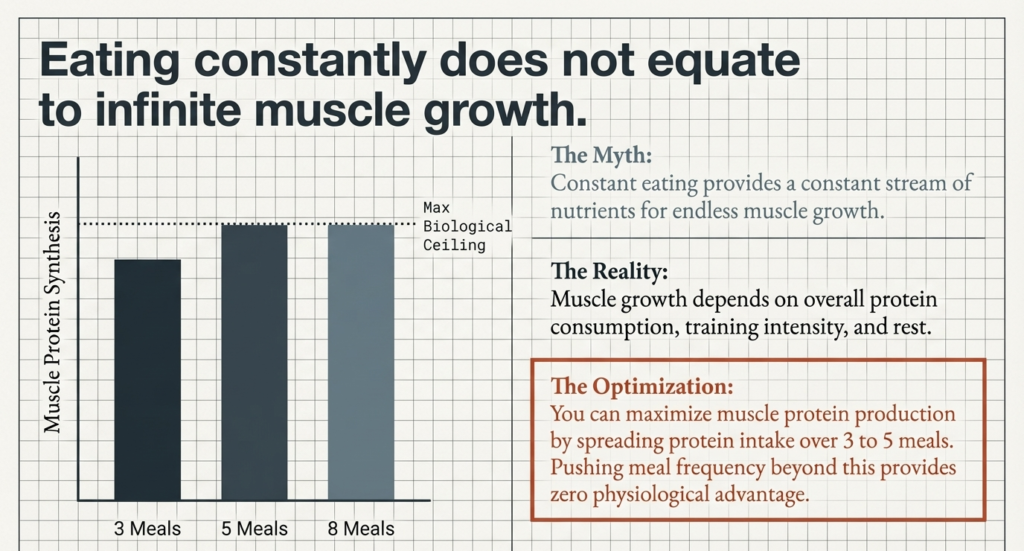
Meal Frequency vs Muscle Growth
This image shows that eating more meals does not automatically lead to more muscle growth. Muscle protein synthesis has a limit, and beyond a certain point, increasing meal frequency provides no additional benefit. What truly drives muscle growth is total protein intake, training intensity, and recovery. Spreading protein across three to five meals can help optimize muscle building, but eating constantly is not required. Many people overcomplicate their diet by focusing on frequency instead of quality. A balanced and consistent approach is far more effective. Prioritize adequate protein and progressive training rather than chasing unnecessary meal timing strategies.
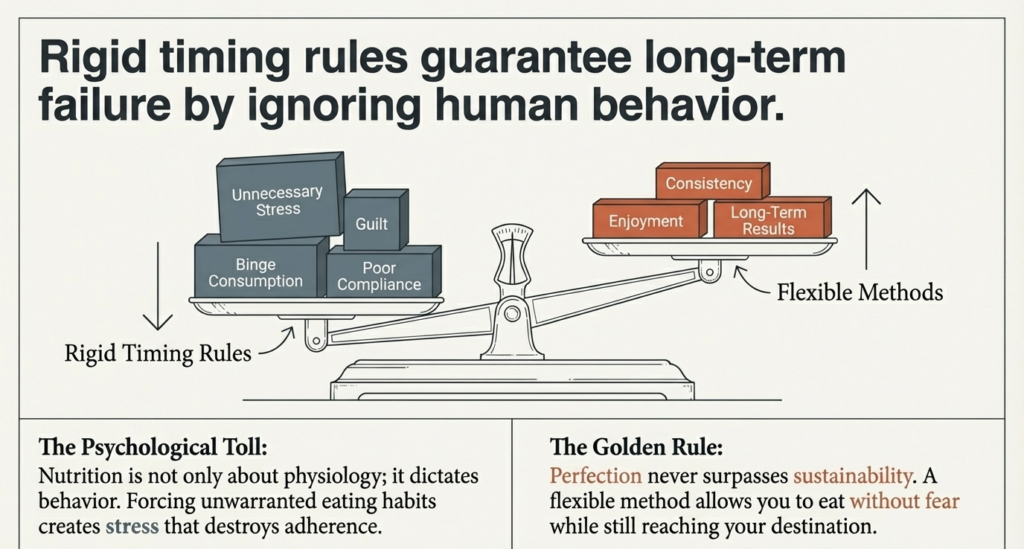
Rigid Dieting vs Flexible Nutrition
This visual highlights the psychological impact of strict meal timing rules. Rigid dieting often leads to stress, guilt, and poor adherence, which can result in binge eating and inconsistency. On the other hand, flexible nutrition promotes enjoyment, sustainability, and long-term success. When you remove unnecessary restrictions, it becomes easier to stick to your plan. Nutrition is not just about physiology—it also affects behavior and mindset. A flexible approach allows you to adapt your meals to your lifestyle while still achieving your goals. In the long run, consistency matters far more than perfection or strict adherence to arbitrary timing rules.
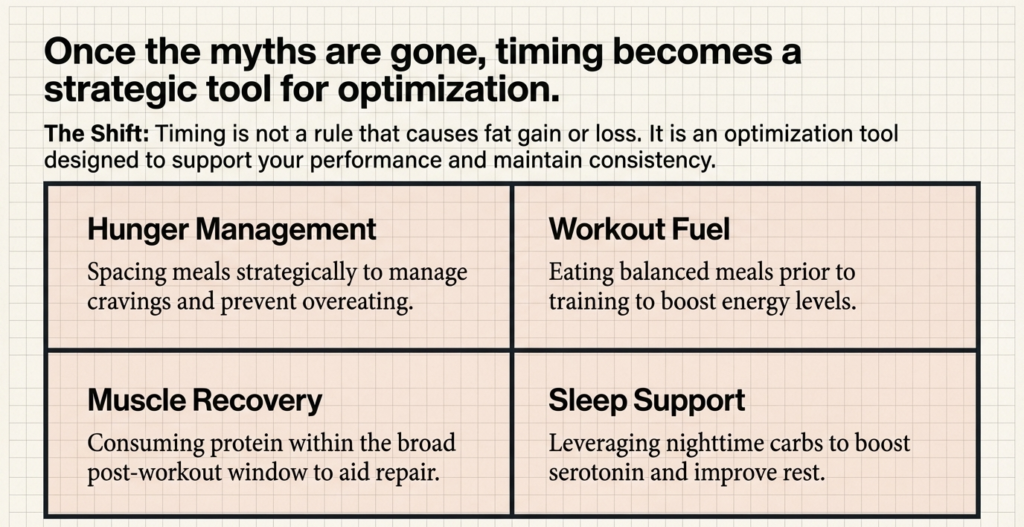
Meal Timing as an Optimization Tool
This image shows how meal timing should be used as a strategic tool rather than a strict rule. Proper timing can help manage hunger, improve workout performance, enhance recovery, and support better sleep. For example, eating before a workout provides energy, while consuming protein afterward aids muscle repair. Nighttime carbohydrates can even improve sleep quality by supporting serotonin production. However, these benefits are secondary to total calorie and nutrient intake. When used correctly, meal timing enhances your routine without controlling it. This balanced approach allows you to optimize performance while maintaining flexibility and long-term consistency.
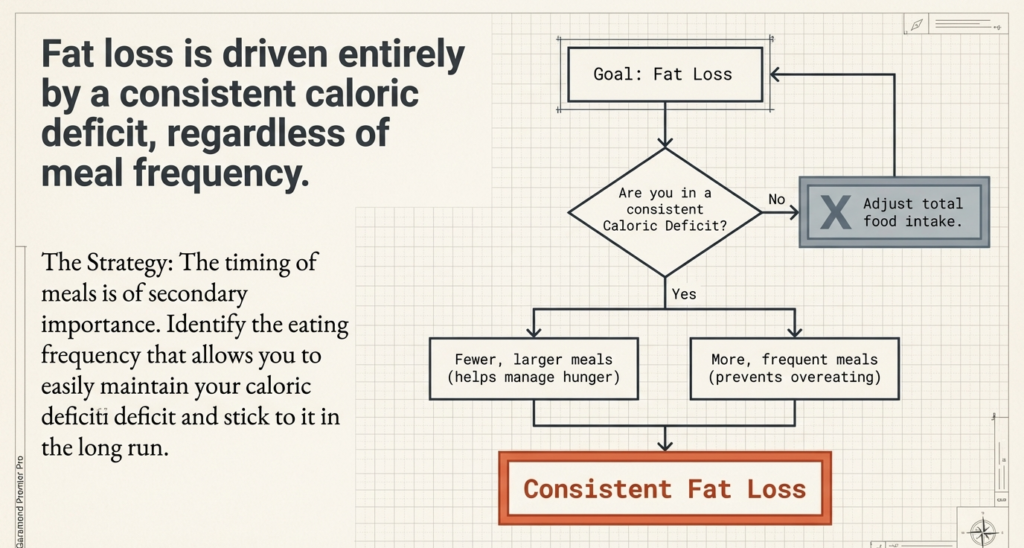
Fat Loss Calorie Deficit Flowchart
This flowchart emphasizes that fat loss is driven by a consistent calorie deficit, not meal frequency. Whether you eat fewer large meals or more frequent small meals, the outcome depends on your total daily intake. The best approach is the one that helps you maintain your calorie deficit comfortably. Some people prefer fewer meals to control hunger, while others benefit from spreading meals throughout the day. Both methods can work effectively. The key is choosing a strategy that fits your lifestyle and is sustainable over time. Consistency in calorie control is what ultimately leads to successful fat loss.
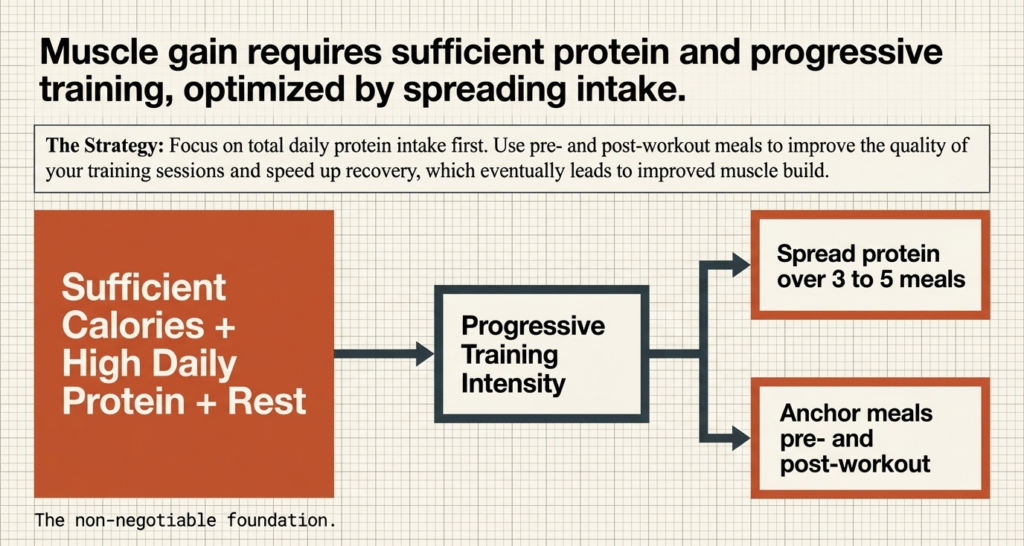
Muscle Gain Nutrition and Training Strategy
This visual explains the key components of muscle growth: sufficient calories, high protein intake, progressive training, and proper recovery. Meal timing can support performance and recovery but is not the primary driver of muscle gain. Spreading protein intake across multiple meals helps optimize muscle protein synthesis, but overall intake remains the most important factor. Pre- and post-workout meals can improve training quality and recovery speed, contributing to better results over time. Instead of focusing on strict timing rules, prioritize building a strong nutritional foundation. This approach ensures consistent muscle growth without unnecessary complexity.
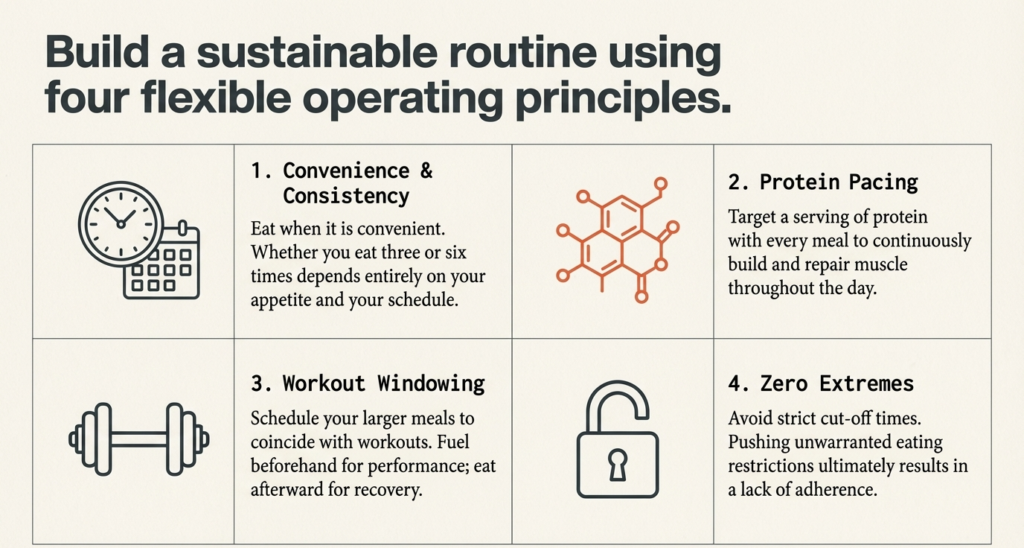
Flexible Meal Timing Principles
This image outlines four key principles for sustainable meal timing. First, prioritize convenience and consistency by eating according to your schedule. Second, focus on protein pacing to support muscle repair and growth throughout the day. Third, align meals around workouts to improve performance and recovery. Finally, avoid extreme restrictions like strict cut-off times. These principles create a flexible framework that adapts to your lifestyle. Instead of following rigid rules, you build habits that are easy to maintain long-term. This approach improves adherence, reduces stress, and helps you achieve better results without overcomplicating your nutrition strategy.
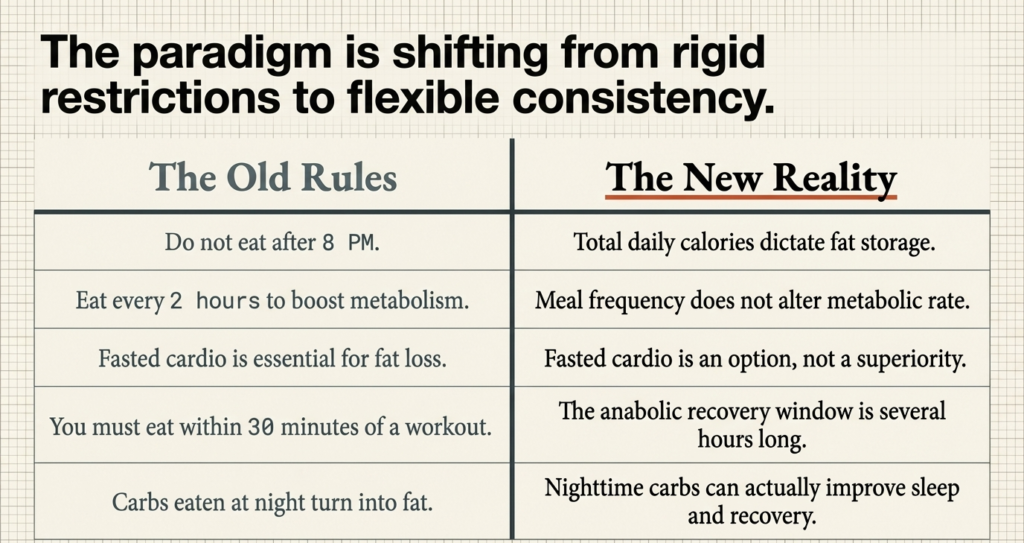
Old Meal Timing Rules vs Modern Science
This comparison highlights the shift from outdated nutrition myths to modern, science-based understanding. Old rules like avoiding food after 8 PM or eating every two hours are no longer supported by evidence. The new reality focuses on total calorie intake, protein consumption, and overall consistency. Meal timing is now seen as optional rather than essential. This shift allows for more flexibility and personalization in nutrition planning. By letting go of outdated beliefs, you can create a routine that fits your lifestyle and goals. This modern approach simplifies nutrition and improves long-term success.
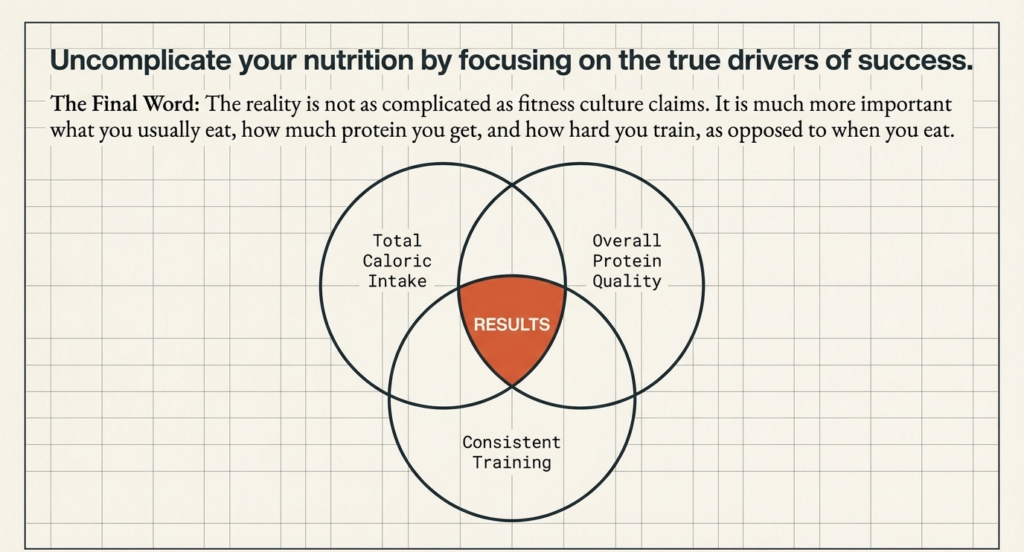
True Drivers of Fitness Results
This diagram emphasizes the three main drivers of fitness results: total calorie intake, protein quality, and consistent training. These factors work together to determine body composition and performance. Meal timing plays a minor role compared to these fundamentals. Many people focus on timing while neglecting these key areas, leading to poor results. By prioritizing these core elements, you create a strong foundation for success. Consistency in these areas leads to sustainable progress over time. When these factors are aligned, meal timing becomes a supportive tool rather than a critical requirement.
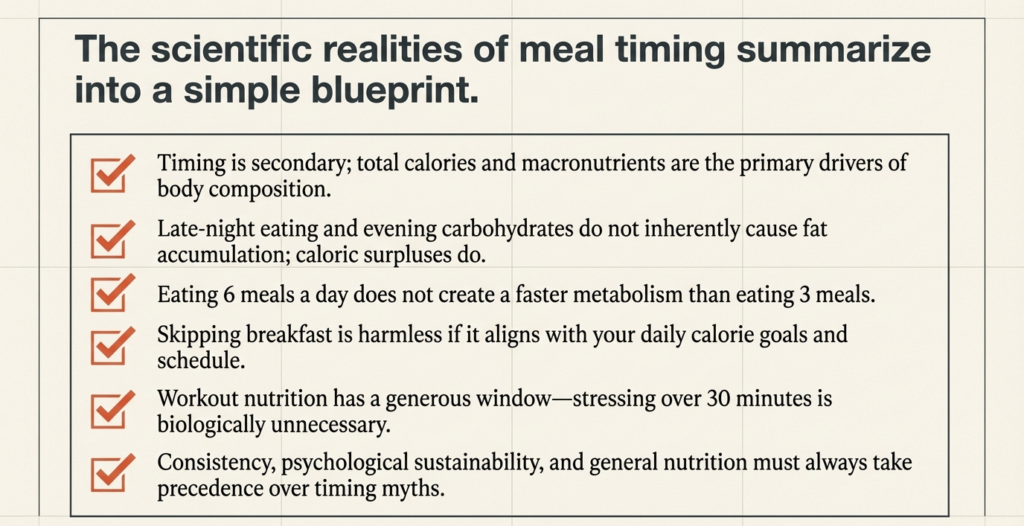
Meal Timing Scientific Summary
This image summarizes the key scientific truths about meal timing. It reinforces that total calories and nutrients are the primary drivers of results. Late-night eating and meal frequency do not inherently affect fat gain or metabolism. Skipping breakfast is not harmful if it fits your routine, and the anabolic window is much longer than previously believed. The main takeaway is that consistency and sustainability matter most. By focusing on these principles, you can simplify your nutrition strategy and avoid unnecessary stress. Understanding these truths allows you to make smarter, evidence-based decisions for long-term success.
Read more: https://www.healthline.com/nutrition/11-myths-fasting-and-meal-frequency

Gearless Physique
Physique Without Gear
Your transformation starts now. Who's with me?