Table of Contents
Toggle10 Post-Workout Nutrition Tips for Muscle Growth
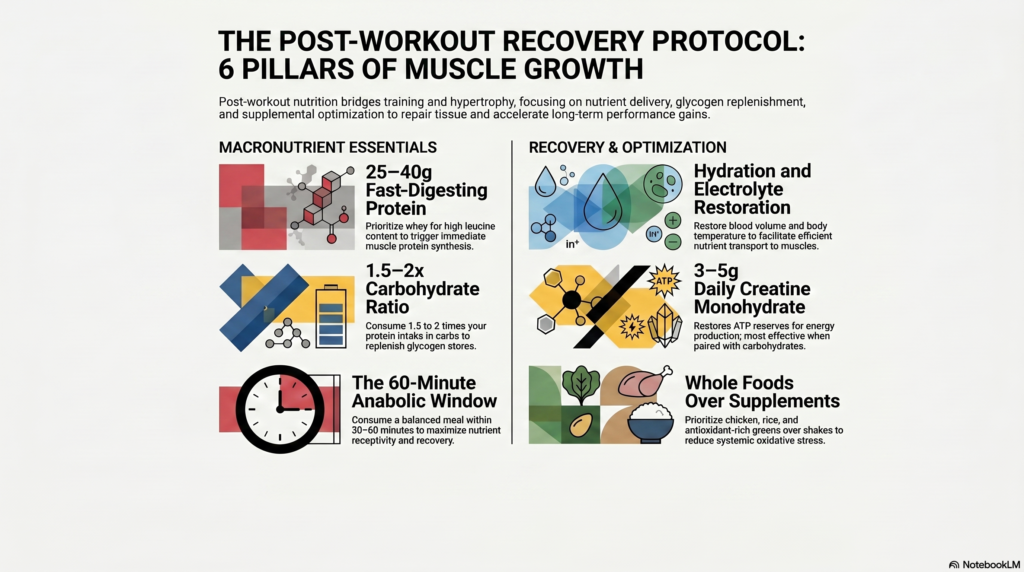
This infographic summarizes the complete 10 Post-Workout Nutrition Tips for Muscle Growth It highlights the importance of macronutrients like protein and carbohydrates, along with hydration and supplementation strategies such as creatine. By combining these elements, you create an ideal environment for muscle repair, glycogen replenishment, and long-term performance improvements. The structured approach ensures that no critical aspect of recovery is overlooked. Whether you are a beginner or an advanced lifter, following this system consistently can significantly enhance your results. It reinforces the idea that muscle growth is not just about training intensity, but about intelligent recovery and nutrition planning.
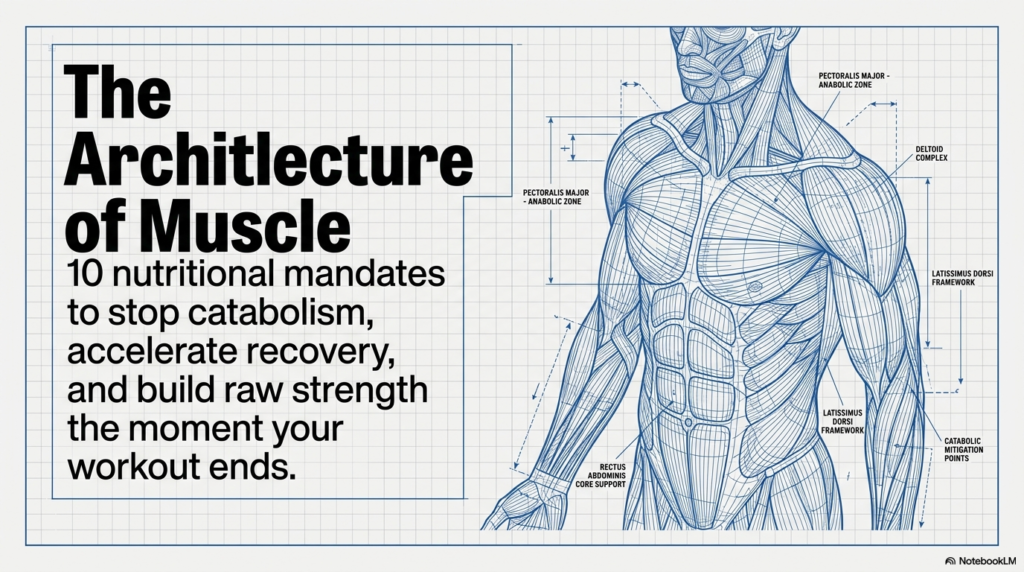
The Architecture of Muscle Growth After Workout
This image highlights the foundation of muscle growth by combining anatomical understanding with nutritional strategy. After intense training, your muscles enter a catabolic state where fibers are broken down and glycogen stores are depleted. Proper post-workout nutrition is essential to shift the body into an anabolic state, where repair and growth begin. By supplying protein, carbohydrates, and key nutrients immediately after exercise, you accelerate recovery and maximize hypertrophy. This visual emphasizes that muscle growth is not just about lifting weights but about how effectively you fuel your body afterward. Understanding this “architecture” helps you build a stronger, leaner, and more muscular physique over time.
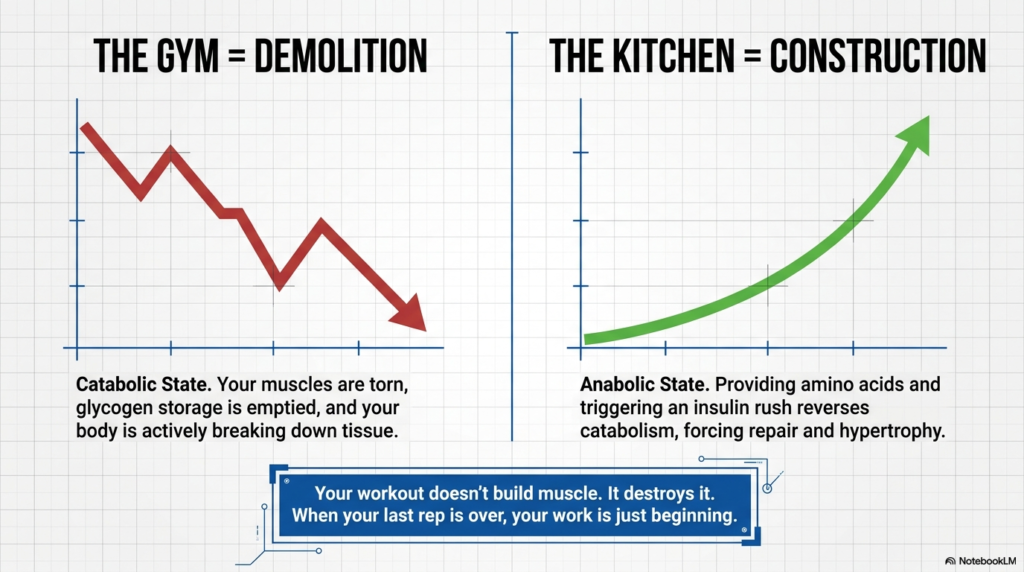
Gym vs Kitchen: The Real Muscle-Building Process
This image perfectly illustrates one of the most important truths in bodybuilding: the gym breaks muscle down, while the kitchen builds it back stronger. During workouts, your body enters a catabolic state where muscle fibers are damaged and energy stores are depleted. Without proper nutrition afterward, recovery slows and muscle growth is limited. However, consuming protein and carbohydrates post-workout shifts your body into an anabolic state, promoting repair and hypertrophy. This balance between training and nutrition is critical for consistent progress. The takeaway is simple—your results depend not just on how hard you train, but how well you recover through proper post-workout nutrition strategies.
Post-Workout Nutrition Hierarchy For Maximum Muscle Growth
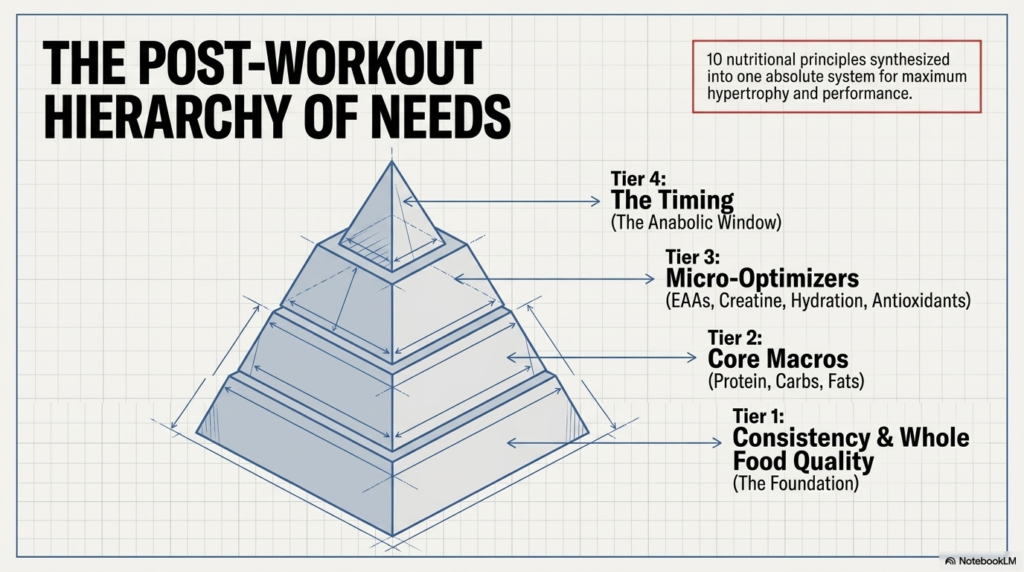
This hierarchy explains how to prioritize your post-workout nutrition for maximum muscle growth. At the foundation lies consistency and whole food quality, which are the most critical factors for long-term results. Above that are core macronutrients—protein, carbohydrates, and fats—that directly support recovery and energy replenishment. The next layer includes micro-optimizers such as creatine, hydration, and amino acids that enhance performance and recovery efficiency. At the top is nutrient timing, often referred to as the anabolic window, where strategic eating boosts muscle protein synthesis. This pyramid demonstrates that while supplements and timing matter, nothing replaces consistent, high-quality nutrition as the backbone of muscle growth.
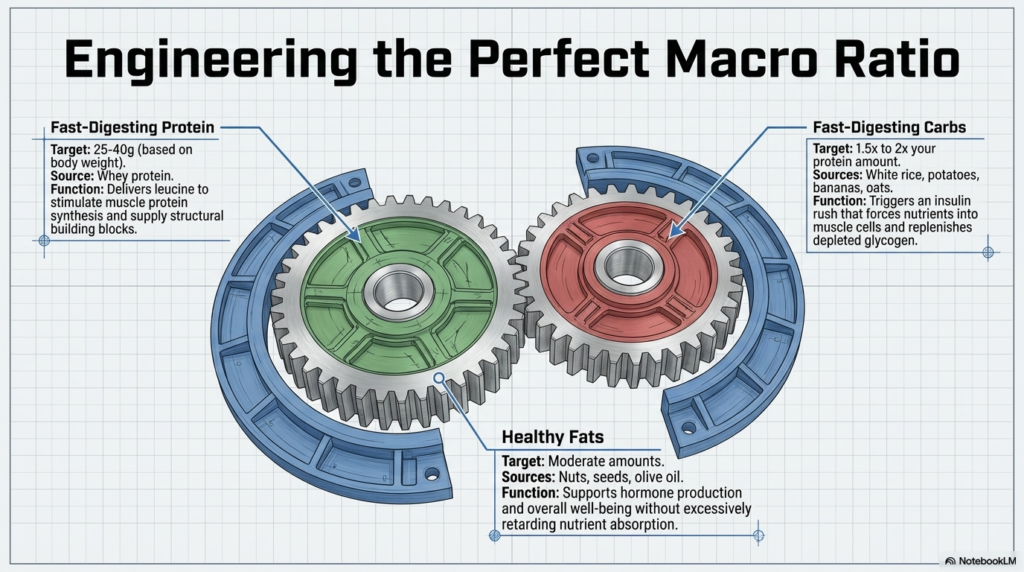
Perfect Macronutrient Ratio for Post-Workout Recovery
This image explains the ideal macronutrient ratio needed after a workout to maximize muscle recovery. Protein plays the primary role by supplying amino acids required for muscle repair and growth. Carbohydrates are equally important as they replenish depleted glycogen stores and trigger insulin release, helping shuttle nutrients into muscle cells. Healthy fats, although needed in smaller amounts, support hormone production and overall health. The key is maintaining the right balance—typically 25–40 grams of protein paired with 1.5–2 times carbohydrates. This optimized ratio ensures faster recovery, reduced muscle breakdown, and improved performance, making it a crucial component of any effective muscle-building nutrition plan.
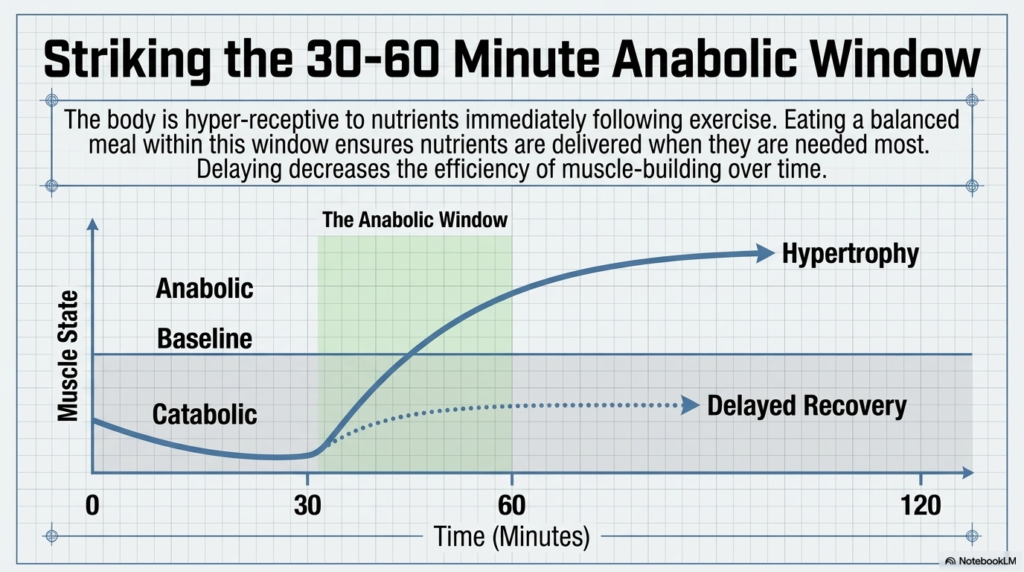
The 30–60 Minute Anabolic Window Explained
This visual highlights the importance of the anabolic window, the period immediately after your workout when your body is highly receptive to nutrients. During this 30–60 minute window, consuming a balanced meal rich in protein and carbohydrates significantly enhances muscle protein synthesis and glycogen replenishment. Delaying your post-workout nutrition can slow recovery and reduce muscle-building efficiency over time. While the anabolic window is not extremely narrow, taking advantage of it provides a clear edge in optimizing results. This concept reinforces the importance of not just what you eat, but when you eat, making nutrient timing a valuable tool for maximizing muscle growth.
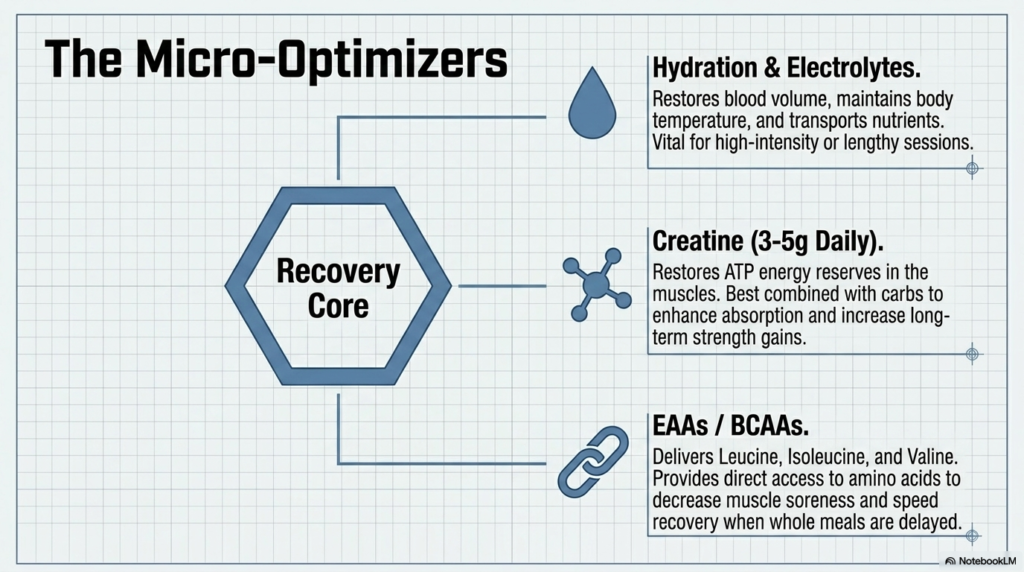
Post-Workout Recovery Boosters: Hydration, Creatine & Amino Acids
This image focuses on the micro-optimizers that enhance post-workout recovery. Hydration is essential for restoring fluid balance, maintaining body temperature, and transporting nutrients effectively. Creatine helps replenish ATP stores, improving strength and recovery over time, especially when taken consistently. Essential amino acids (EAAs) and branched-chain amino acids (BCAAs) provide immediate support for muscle repair and reduce soreness. While these elements are not a substitute for proper nutrition, they significantly enhance recovery when combined with a balanced diet. Incorporating these strategies into your routine can improve performance, reduce fatigue, and ensure your body is always prepared for the next training session.
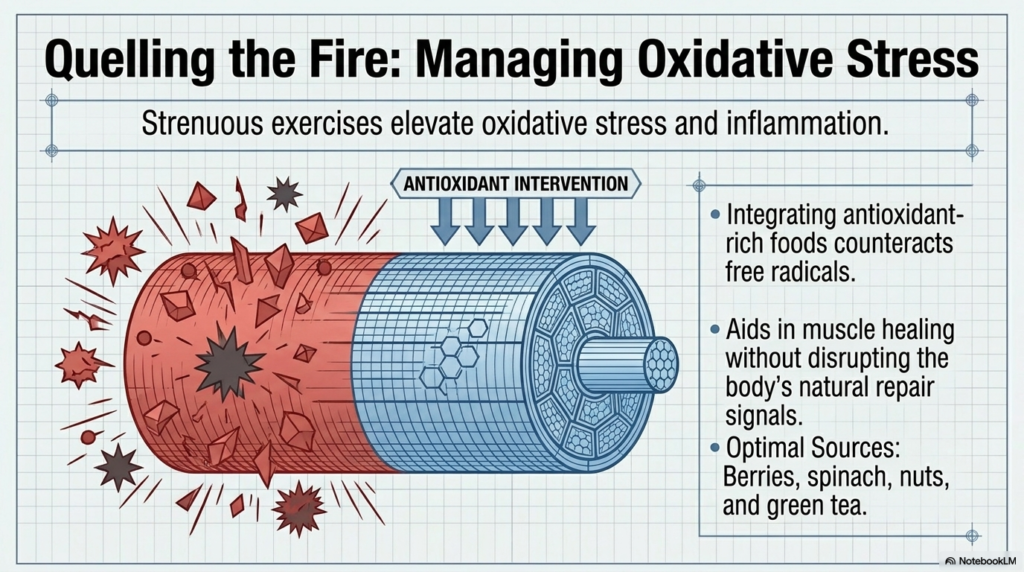
Managing Oxidative Stress After Intense Workouts
Intense workouts increase oxidative stress and inflammation in the body, which can slow down recovery if not managed properly. This image explains how antioxidants play a vital role in neutralizing free radicals produced during exercise. Including foods like berries, spinach, nuts, and green tea in your post-workout meal helps reduce muscle damage and accelerate healing. Unlike supplements that may interfere with natural adaptation, whole-food antioxidants support recovery without compromising performance. This makes them an essential part of a balanced nutrition plan. Managing oxidative stress effectively ensures quicker recovery, reduced soreness, and better long-term muscle growth and performance.
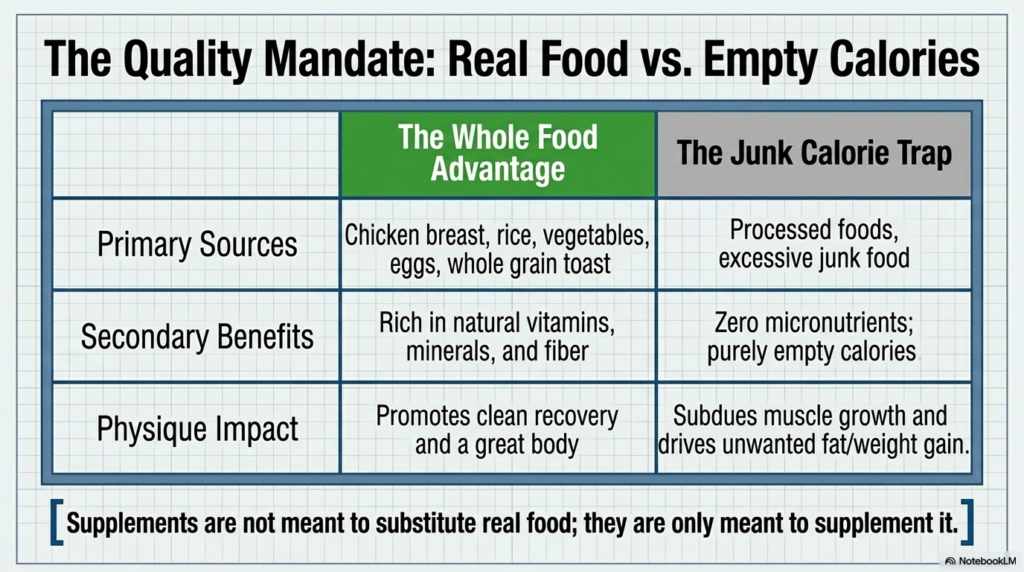
Whole Foods vs Junk Food for Muscle Growth
This comparison clearly shows why whole foods are superior to junk food for muscle growth. Whole foods like chicken, rice, vegetables, and eggs provide essential nutrients, including vitamins, minerals, and fiber, which support recovery and overall health. In contrast, processed foods offer empty calories with little to no nutritional value, leading to poor recovery and unwanted fat gain. While calories are important for muscle growth, the quality of those calories matters even more. Prioritizing nutrient-dense foods ensures your body gets everything it needs to repair and grow efficiently. This approach leads to better physique improvements and long-term health benefits.
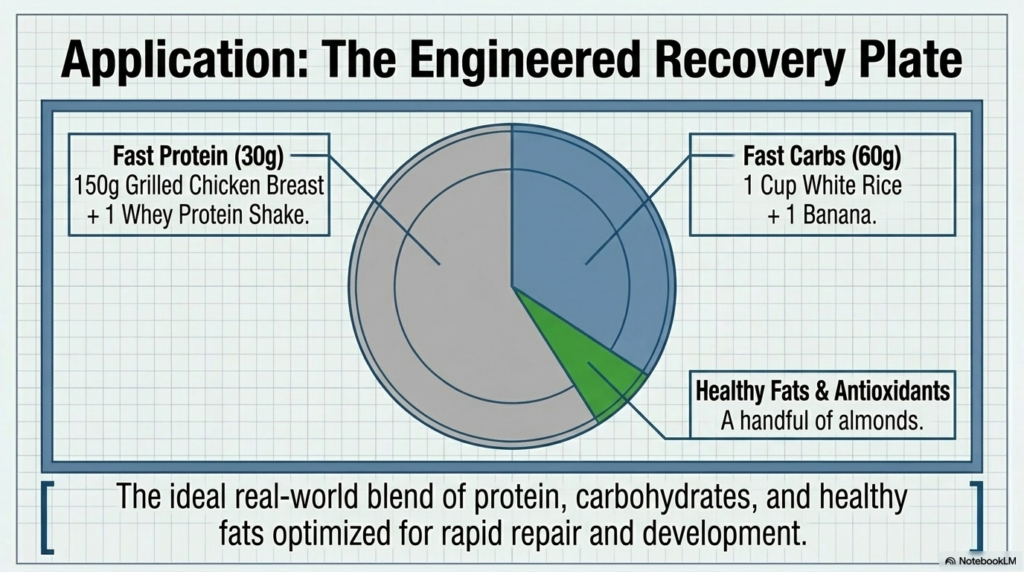
Ideal Post-Workout Meal for Muscle Recovery
This image presents a practical example of an ideal post-workout meal that supports muscle recovery and growth. It combines fast-digesting protein, such as grilled chicken and whey protein, with carbohydrates like white rice and bananas to replenish glycogen stores. A small portion of healthy fats, such as almonds, adds nutritional balance without slowing digestion. This combination provides the perfect blend of macronutrients needed to repair muscle tissue, restore energy, and promote hypertrophy. Following a structured meal like this after training ensures consistent results and improved performance. It’s a simple yet highly effective strategy for anyone serious about building muscle.
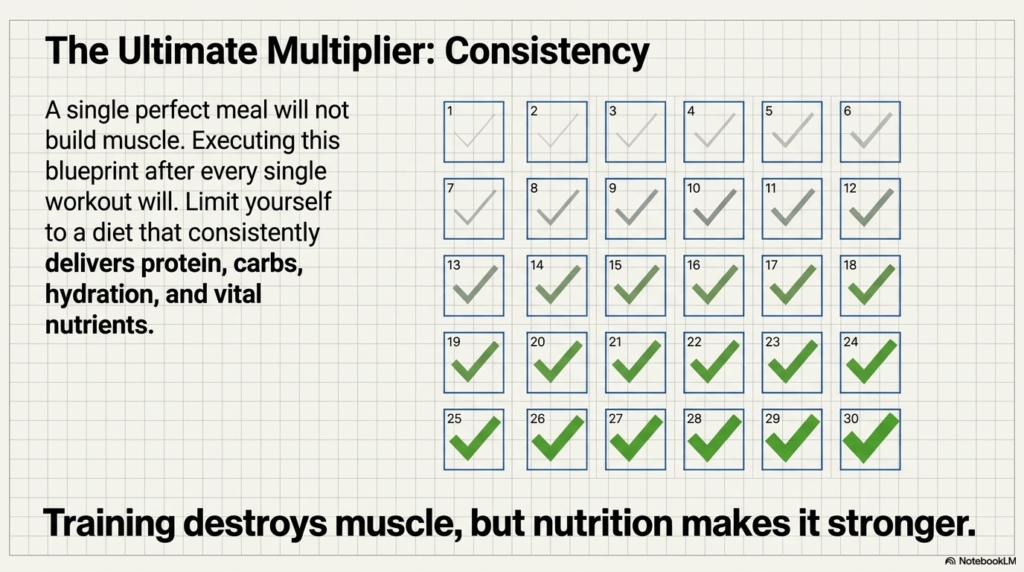
Consistency: The Key to Long-Term Muscle Growth
Consistency is the most powerful factor in achieving long-term muscle growth. This image emphasizes that a single perfect meal will not build muscle, but consistently following proper nutrition after every workout will. By regularly consuming the right balance of protein, carbohydrates, hydration, and essential nutrients, your body remains in a constant state of recovery and growth. Over time, these habits compound, leading to noticeable improvements in strength, size, and overall physique. Skipping meals or being inconsistent with your diet can slow progress significantly. Staying disciplined with your post-workout nutrition routine is the ultimate key to unlocking your full muscle-building potential.
Read more: https://www.menshealth.com/fitness/a19534499/10-muscle-building-tips/

Gearless Physique
Physique Without Gear
Your transformation starts now. Who's with me?