Table of Contents
Toggle6 Pros and Cons of Clean Eating vs Flexible Dieting
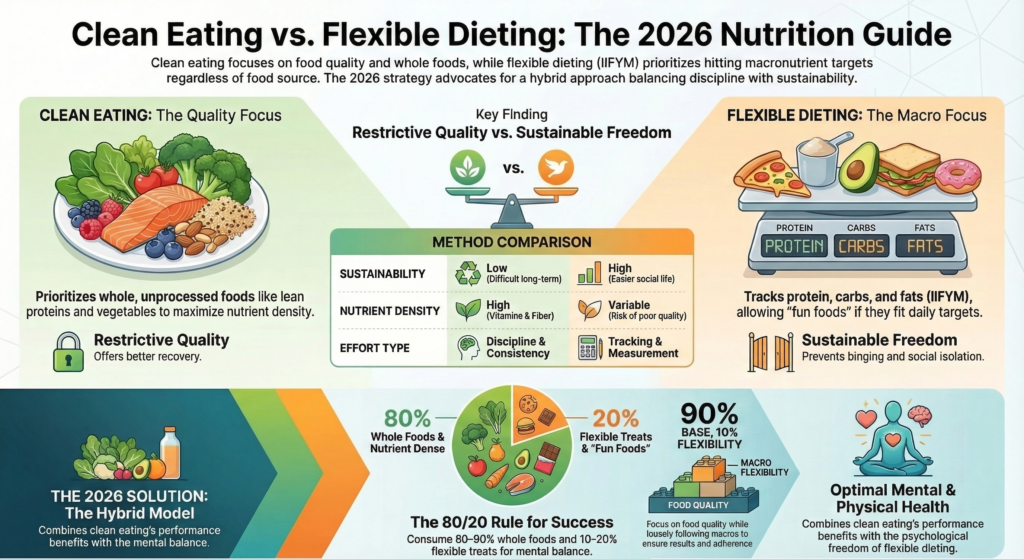
This infographic summarizes the entire clean eating vs flexible dieting debate in a simple and visual format. It highlights the differences in sustainability, nutrient density, and lifestyle adaptability while introducing the hybrid approach as the most effective solution. Clean eating focuses on food quality and discipline, while flexible dieting emphasizes macro tracking and freedom. The hybrid model combines both by maintaining high-quality nutrition with controlled flexibility.
This balanced approach improves adherence, performance, and mental well-being. By understanding and applying these principles, you can build a sustainable diet that delivers long-term results without unnecessary restriction or inconsistency.
The Great Diet Debate of 2026: Clean Eating vs Flexible Dieting
The debate between clean eating and flexible dieting has taken center stage in 2026. Fitness enthusiasts, athletes, and beginners are constantly trying to figure out which approach delivers better results. Clean eating focuses on discipline and food quality, while flexible dieting emphasizes balance and sustainability. Instead of choosing one extreme, modern fitness thinking is shifting toward combining both strategies.
The real question is not which diet is superior, but which one aligns with your lifestyle, mindset, and long-term goals. Understanding both approaches deeply allows you to build a physique that is not only aesthetic but also sustainable for years to come.
Diet Dictates Your Physiological Outcome
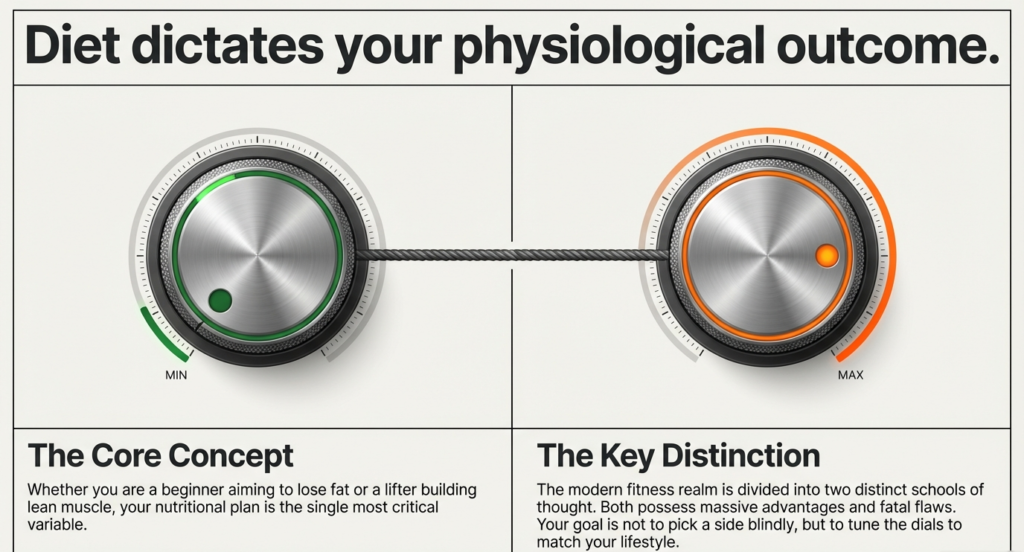
Your diet is the most powerful factor influencing your body composition, performance, and overall health. Whether your goal is fat loss, muscle gain, or maintenance, your nutritional strategy determines your results. Clean eating provides structure and nutrient density, while flexible dieting offers adaptability and convenience. The key concept is not about choosing sides but understanding how each approach impacts your physiology.
When you align your diet with your goals and lifestyle, progress becomes more predictable and sustainable. Instead of blindly following trends, focusing on how your body responds to food is the smartest way to achieve long-term fitness success.
Clean Eating and Nutritional Purity
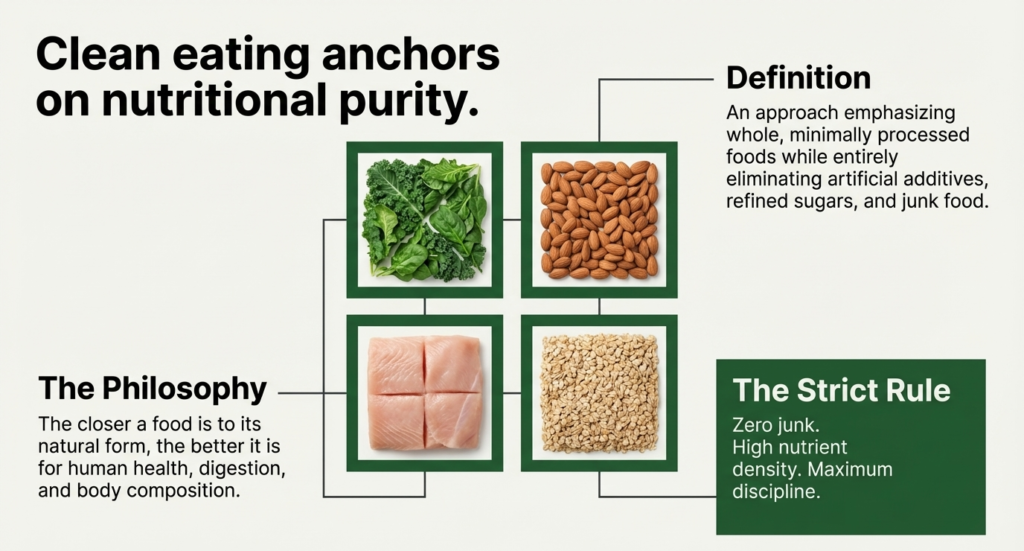
Clean eating is built on the foundation of consuming whole, minimally processed foods. This includes lean proteins, fresh vegetables, fruits, nuts, and whole grains. The philosophy is simple—the closer food is to its natural form, the better it supports your health and body composition. This approach improves digestion, enhances recovery, and provides consistent energy levels. However, its strict nature can sometimes feel restrictive, especially when eliminating processed or favorite foods.
While it is highly effective for fat loss and discipline, maintaining clean eating long term requires strong consistency and mental control to avoid burnout or unnecessary food restrictions.
Flexible Dieting and Macro Tracking (IIFYM)
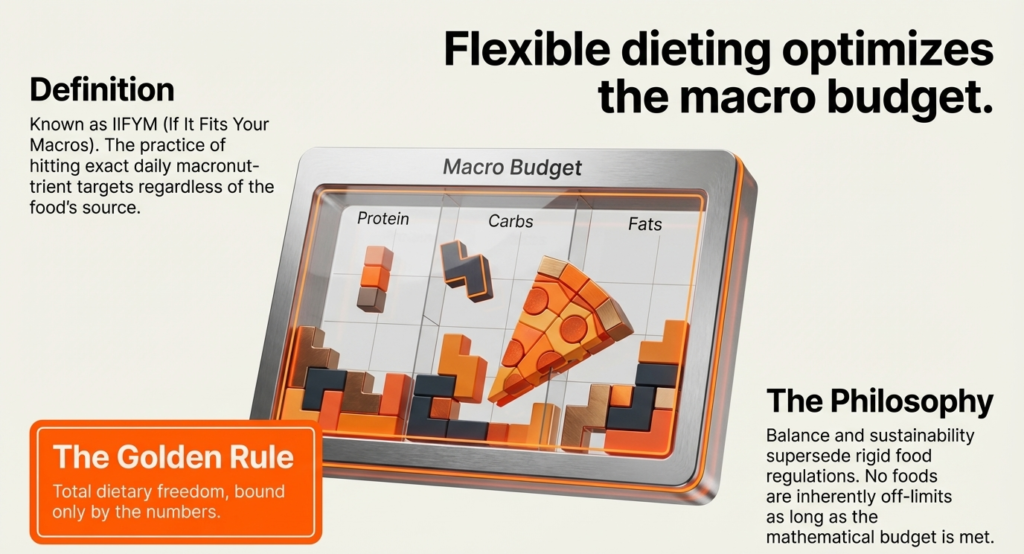
Flexible dieting, also known as IIFYM, focuses on meeting daily macronutrient targets rather than restricting specific foods. This means you can include foods like pizza or sweets as long as your protein, carbs, and fats are within limits. This approach offers freedom and makes dieting more sustainable in the long run. It allows individuals to enjoy their lifestyle without feeling restricted. However, relying too much on processed foods can negatively impact health and performance.
The key to success in flexible dieting is balancing macro tracking with smart food choices to ensure both results and overall well-being are maintained.
Restriction vs Freedom in Dieting Psychology
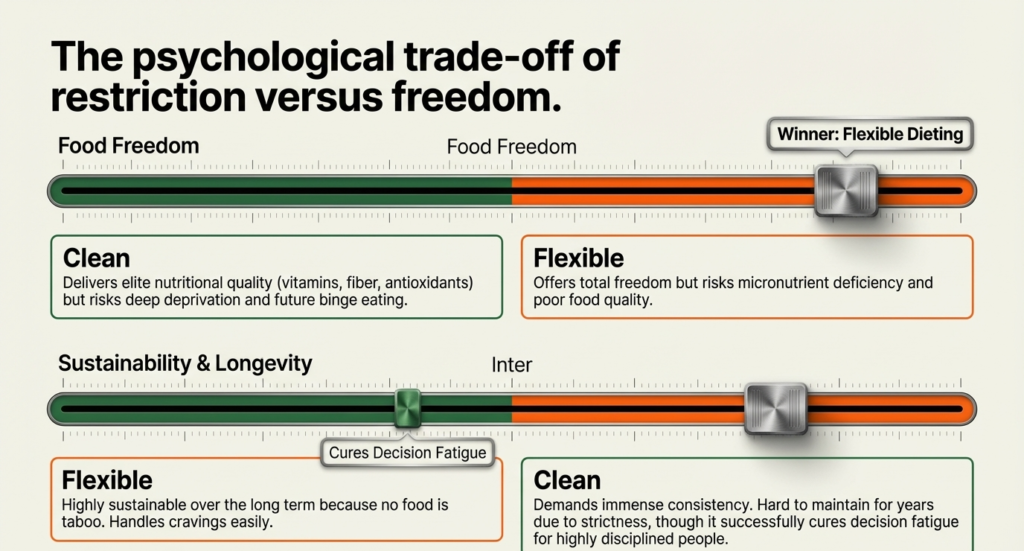
One of the biggest differences between clean eating and flexible dieting lies in psychology. Clean eating promotes discipline but can create a rigid mindset where foods are labeled as “good” or “bad.” This can lead to guilt when deviating from the plan. On the other hand, flexible dieting removes restrictions and reduces stress around food, making it easier to stay consistent. However, too much freedom can lead to poor food choices if not controlled. The ideal approach is understanding how your mind responds to restriction versus freedom and choosing a method that supports both mental health and physical progress.
Food Relationship and Body Composition Balance
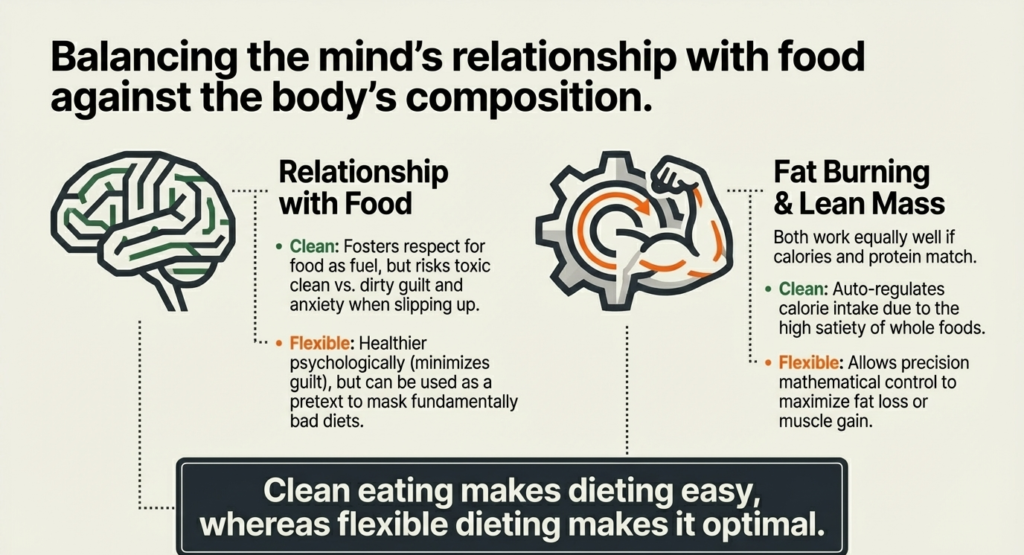
Your relationship with food plays a crucial role in your long-term fitness journey. Clean eating helps you view food as fuel, improving awareness of nutrition and health. However, it can sometimes create anxiety around eating “imperfect” meals. Flexible dieting, in contrast, promotes balance and reduces guilt, allowing you to enjoy food without stress. But it can also be misused as an excuse for poor eating habits.
The goal is to build a healthy mindset where food supports your body without controlling your emotions. When this balance is achieved, both physical transformation and mental well-being improve significantly.
Social Practicality vs Athletic Performance
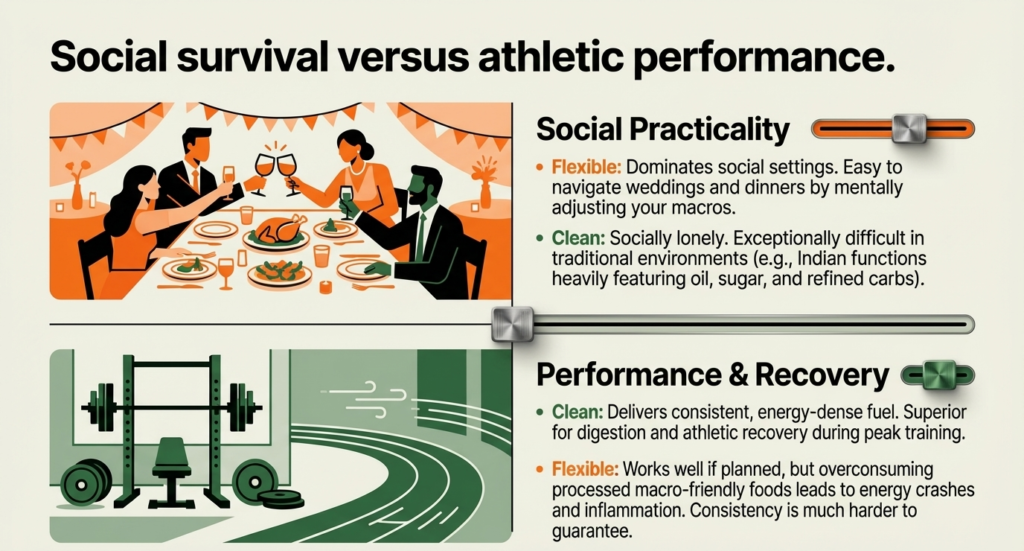
Dieting is not just about results; it’s also about how it fits into your life. Flexible dieting makes social situations easier, allowing you to attend events without stress by adjusting your macros. Clean eating, however, can limit social flexibility, especially in environments where food choices are less controlled. On the performance side, clean eating often provides better energy, digestion, and recovery due to higher food quality.
Flexible dieting can still support performance if managed properly. The challenge is finding a balance where you can enjoy social life without compromising your fitness goals or overall progress.
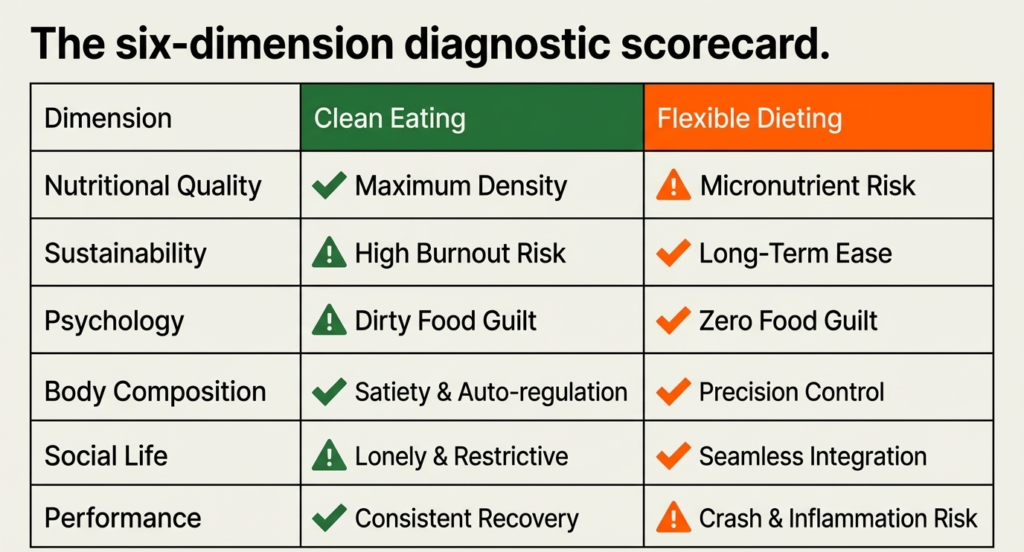
Clean Eating vs Flexible Dieting Scorecard
When comparing clean eating and flexible dieting, both approaches have clear strengths and weaknesses. Clean eating excels in nutrient density, digestion, and consistent recovery but struggles with sustainability and social flexibility. Flexible dieting, on the other hand, offers long-term adherence, customization, and freedom but may risk poor food quality if misused. The ideal strategy depends on your goals, discipline level, and lifestyle.
Instead of viewing one as superior, understanding their differences allows you to use each method strategically. This balanced perspective helps you avoid common pitfalls and achieve better long-term results.
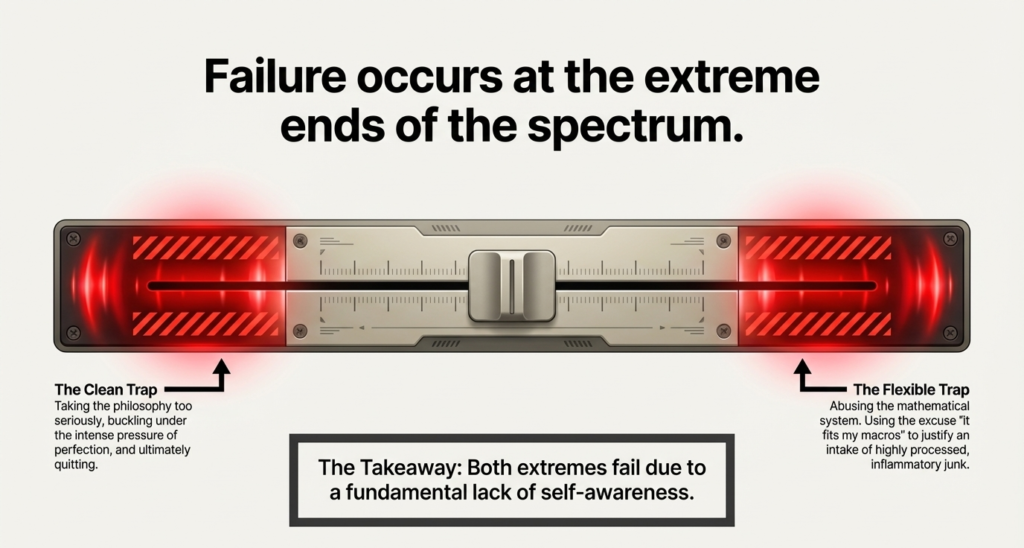
Why Extreme Dieting Approaches Fail
Both clean eating and flexible dieting can fail when taken to extremes. Being overly strict with clean eating can lead to burnout, frustration, and eventually quitting. On the other hand, abusing flexible dieting by eating excessive processed foods can harm health and performance. Extremes create imbalance, which is the main reason people fail in their fitness journey. The key is self-awareness and moderation.
When you understand your limits and adjust accordingly, you avoid these common traps. Success comes from consistency, not perfection, and finding a middle ground that works for your body and lifestyle.
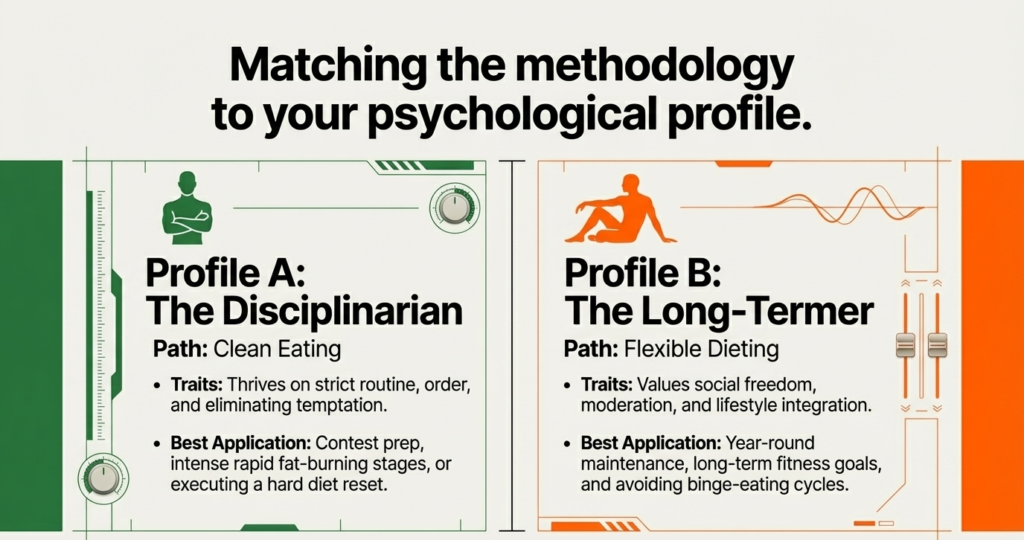
Choosing the Right Diet Based on Personality
Choosing the right diet depends largely on your personality. Individuals who thrive on discipline and routine often succeed with clean eating, as it removes decision-making and simplifies food choices. On the other hand, people who value flexibility and social freedom tend to perform better with flexible dieting. Understanding your behavior, habits, and mindset helps you select the most suitable approach. There is no universal solution in fitness.
The best diet is the one you can follow consistently without feeling restricted or overwhelmed. Matching your diet to your personality increases adherence and long-term success.
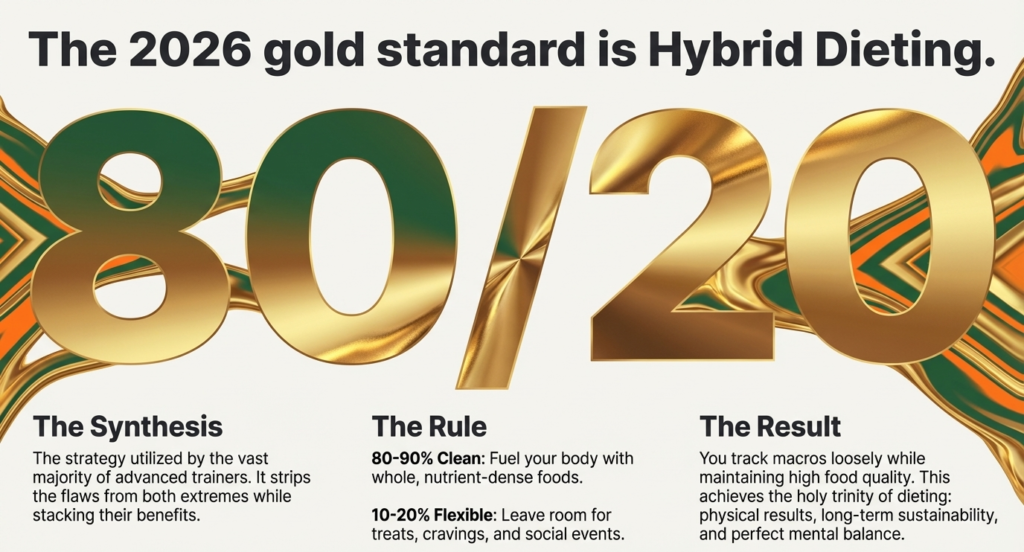
Hybrid Dieting: The 80/20 Rule for 2026
The most effective approach in 2026 is hybrid dieting, which combines the strengths of both clean eating and flexible dieting. This method focuses on consuming 80–90% whole, nutrient-dense foods while allowing 10–20% flexibility for treats and cravings. It provides structure without restriction and freedom without chaos. This balance improves adherence, reduces burnout, and supports long-term progress.
Hybrid dieting allows you to maintain high food quality while still enjoying your lifestyle. It is not about perfection but consistency, making it the most practical and sustainable approach for achieving both physique and health goals.
Sample Hybrid Diet Plan
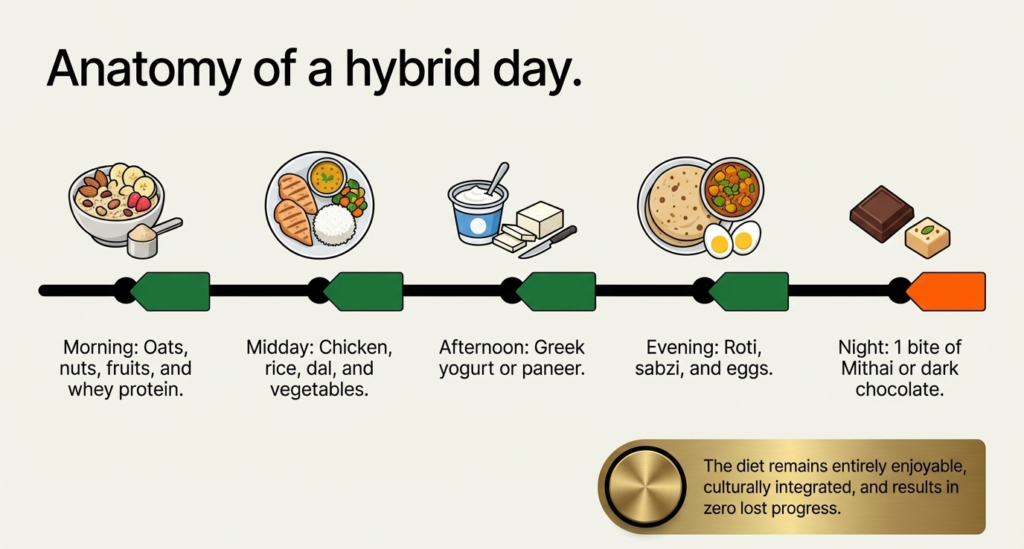
A hybrid diet can be easily implemented in daily life. A typical day might include oats, fruits, and whey protein for breakfast, followed by a balanced lunch of chicken, rice, dal, and vegetables. Snacks like paneer or yogurt provide additional protein, while dinner includes roti, sabzi, and eggs. To maintain flexibility, a small treat like dark chocolate or a piece of sweets can be included. This approach ensures proper nutrition while keeping the diet enjoyable.
It eliminates the feeling of restriction and helps maintain consistency, which is the most important factor in achieving long-term fitness results.
Clean Eating and Flexible Dieting Are Tools, Not Opponents
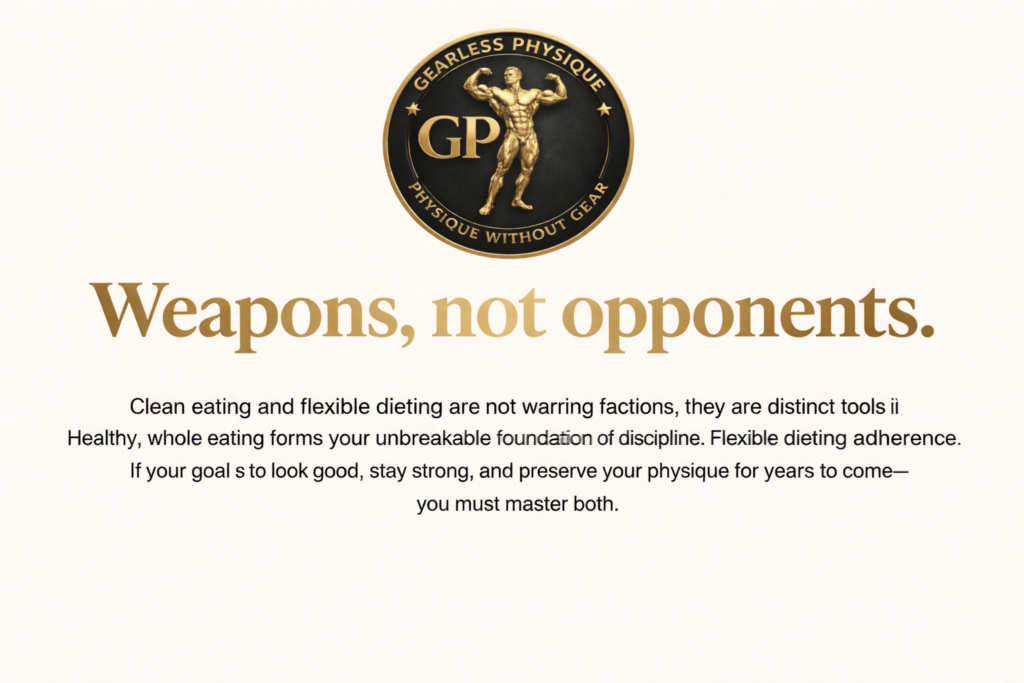
Clean eating and flexible dieting are not opposing forces but complementary tools. Each serves a purpose depending on your goals and situation. Clean eating builds discipline and a strong nutritional foundation, while flexible dieting ensures sustainability and balance. When used together, they create a powerful system that supports both physical and mental progress. The key is not choosing one over the other but learning how to apply both effectively.
This mindset allows you to stay consistent, avoid burnout, and maintain your physique long term without sacrificing your lifestyle or enjoyment of food.

Gearless Physique
Physique Without Gear
Your transformation starts now. Who's with me?