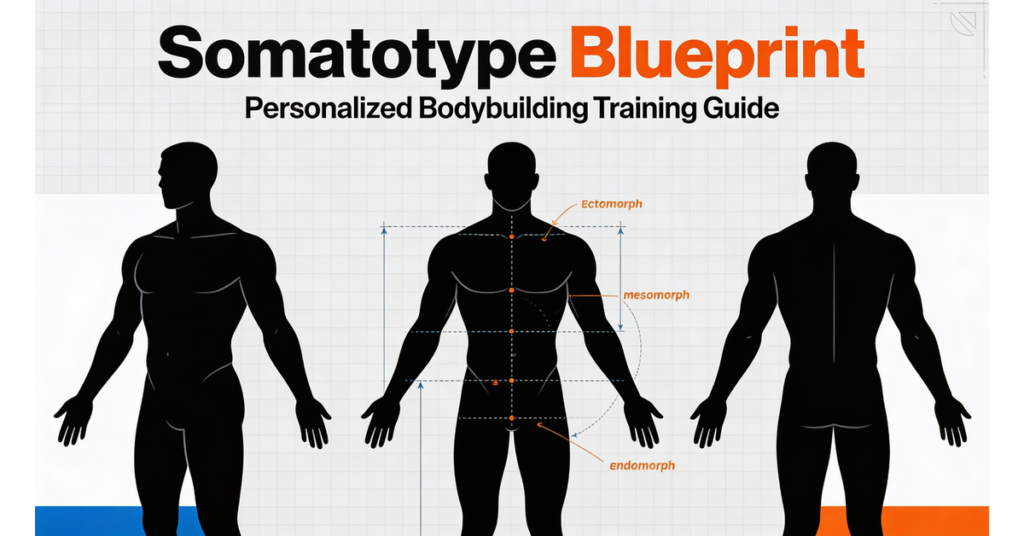
Sleep for Muscle Growth: 5 Ultimate Sleep Secrets Guide(2026)

Sleep for muscle growth: 5 Ultimate Sleep Secrets Guide (2026)

Sleep for muscle growth, where sleep acts as the hidden engine behind muscle growth and recovery. During deep sleep, your body repairs damaged muscle fibers, releases growth hormone, and optimizes protein synthesis. At the same time, proper sleep maintains hormonal balance by supporting testosterone and controlling cortisol levels. On the other hand, sleep deprivation leads to muscle breakdown, increased fat storage, and reduced performance. This comparison clearly shows that sleep is not optional—it is essential for turning training into visible muscle gains.

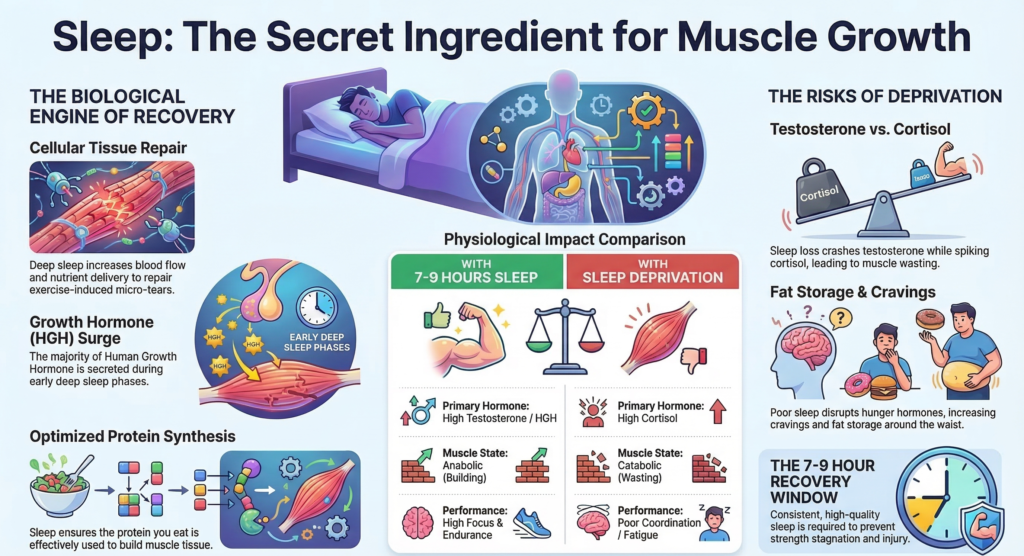
Infographic explaining how sleep improves muscle growth through growth hormone release, protein synthesis, testosterone balance, and recovery compared with sleep deprivation. sleep for muscle growth, muscle growth and sleep, why sleep is important for muscle growth, testosterone and sleep muscle gain.

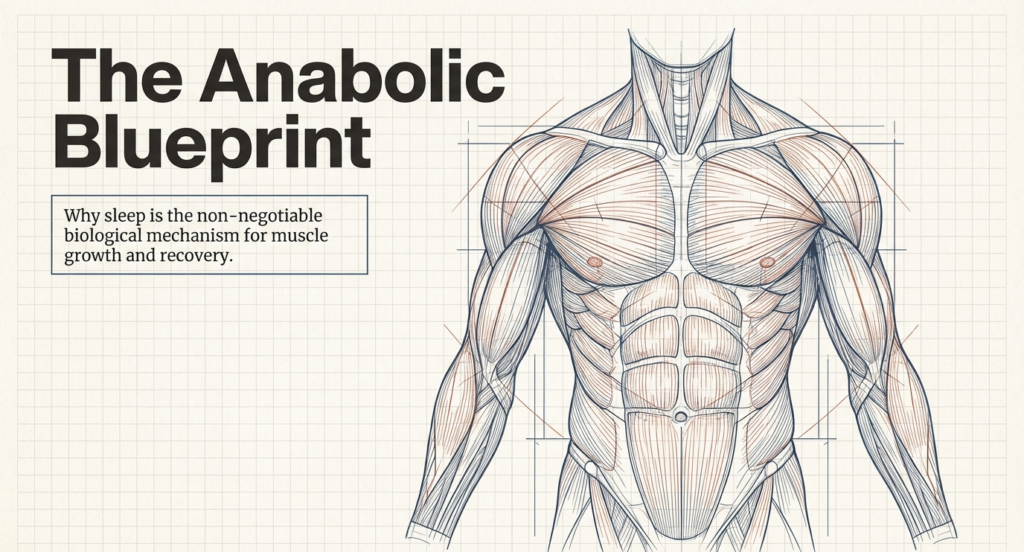
The Anabolic Blueprint

The foundation of muscle growth begins with understanding how the body recovers. Training creates stress and micro-tears in muscle fibers, but real progress happens during sleep for muscle growth. This is when the body shifts into repair mode, rebuilding muscles stronger than before. Without adequate sleep, this recovery process is incomplete, limiting your potential gains. The anabolic blueprint highlights that sleep is not passive—it is an active biological process that directly determines your muscle-building success.

Anatomy diagram showing muscular system with title “The Anabolic Blueprint” explaining why sleep is essential for muscle recovery and growth. sleep for muscle growth, muscle growth and sleep, why sleep is important for muscle growth, testosterone and sleep muscle gain.

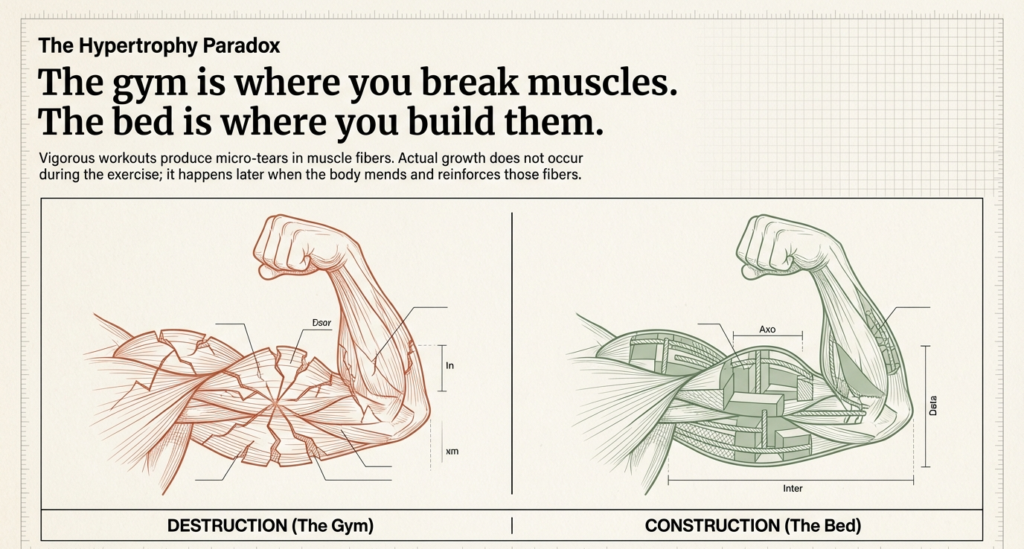
Gym vs Bed – Hypertrophy Paradox

One of the biggest misconceptions in fitness is that muscle is built in the gym. In reality, the gym is where muscle is broken down, while sleep is where it is rebuilt. Intense workouts create microscopic damage in muscle fibers, but growth only occurs when the body repairs those fibers during rest. This process is heavily dependent on sleep quality. Without proper sleep, recovery slows down, and muscle growth is compromised, regardless of how hard you train.

Illustration comparing muscle fiber damage during workouts and muscle repair during sleep to explain hypertrophy and recovery.

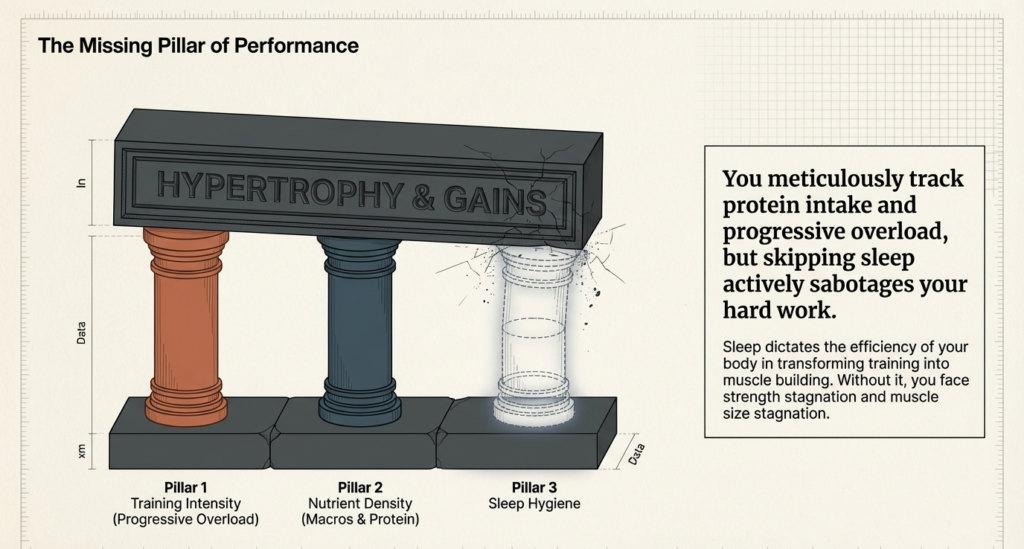
Missing Pillar of Performance

Most people focus on training and nutrition while completely ignoring sleep. However, muscle growth depends on three pillars: training intensity, nutrient intake, and sleep quality. When sleep is missing, the entire system becomes unstable. Even with perfect workouts and diet, poor sleep leads to slower recovery, hormonal imbalance, and stagnation. Sleep is the pillar that holds everything together, making it essential for consistent progress and long-term performance.

Diagram showing three pillars of hypertrophy including progressive overload, nutrition, and sleep hygiene, highlighting sleep as the missing pillar.

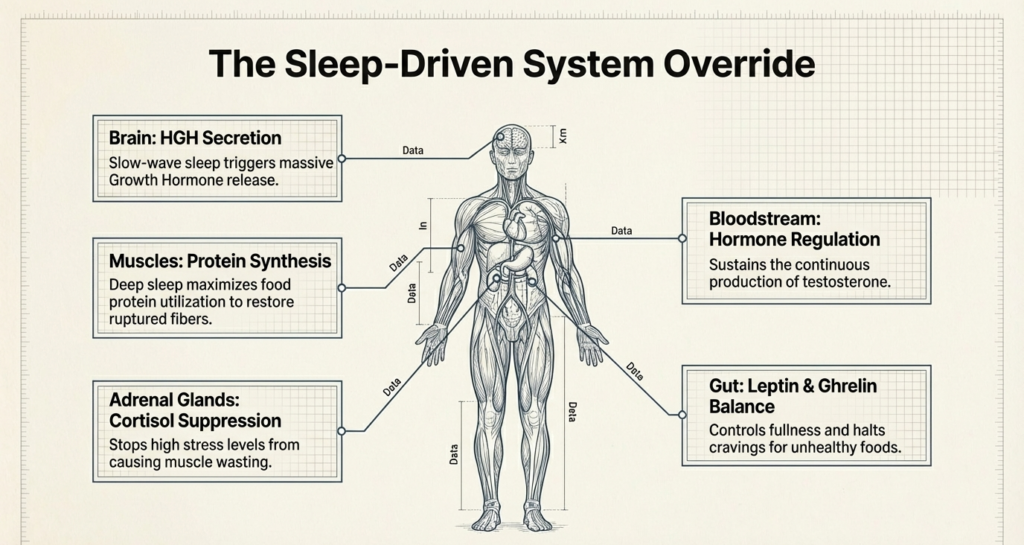
The Sleep-Driven System Override

Sleep activates multiple biological systems that directly support muscle growth. During deep sleep, growth hormone is released, protein synthesis increases, cortisol is reduced, and testosterone levels are maintained. Additionally, hunger hormones like leptin and ghrelin are regulated, preventing unnecessary fat gain. This coordinated system ensures that your body remains in an anabolic state, allowing efficient recovery and muscle development.

Human body diagram showing how sleep regulates growth hormone, testosterone, protein synthesis, cortisol, and appetite hormones.

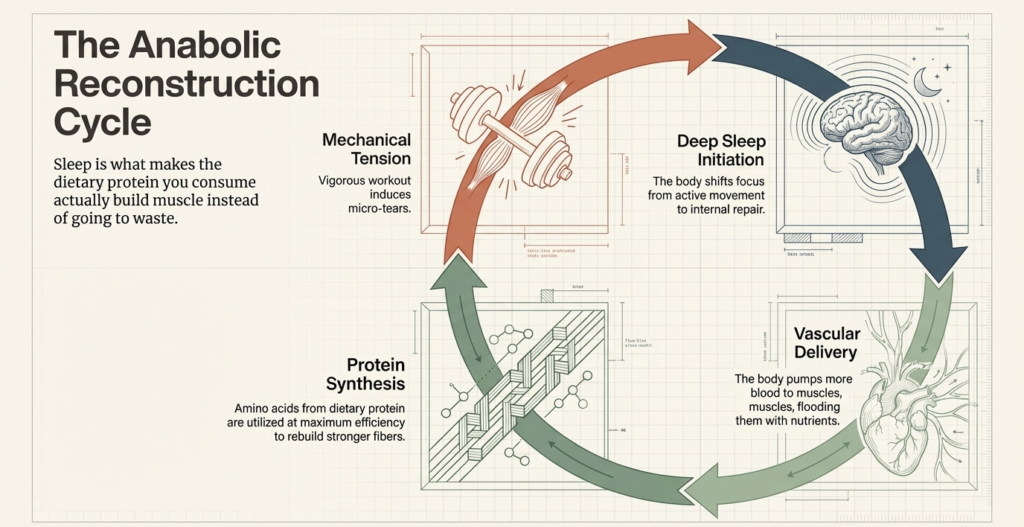
The Anabolic Reconstruction Cycle

Sleep for muscle growth follows a continuous cycle of stress and recovery. Training creates mechanical tension and micro-damage, while sleep initiates the repair process. During deep sleep, the body enhances protein synthesis and increases blood flow to muscles, delivering nutrients needed for rebuilding. This cycle repeats with every workout and recovery phase. Without proper sleep, this cycle is incomplete, leading to slower gains and reduced performance.

Cycle diagram showing stages of muscle growth including mechanical tension, deep sleep initiation, protein synthesis, and nutrient delivery.

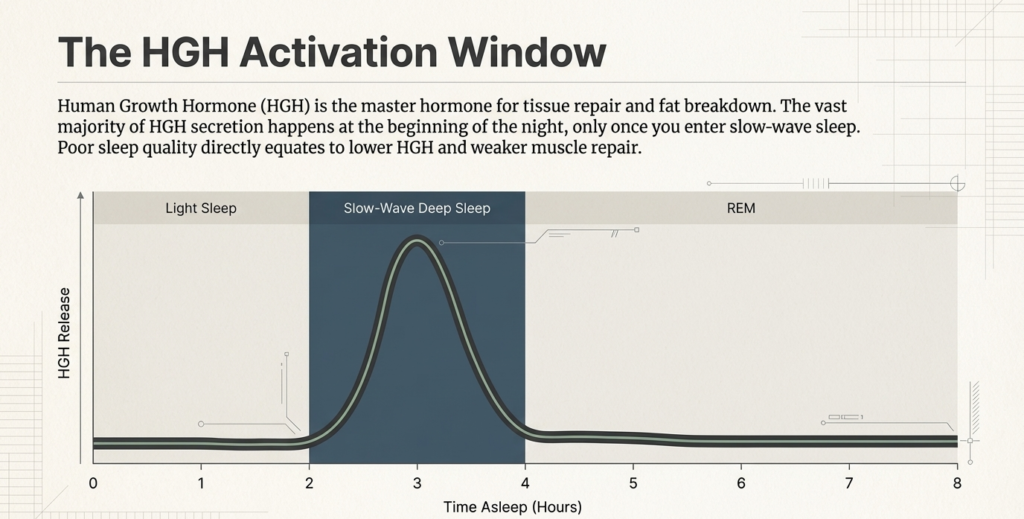
The HGH Activation Window

Growth hormone plays a critical role in muscle repair and fat metabolism, and most of its release occurs during deep sleep. This “activation window” typically happens in the early hours of sleep when the body enters slow-wave sleep. Poor sleep quality reduces this hormone release, directly affecting recovery and muscle growth. Prioritizing deep, uninterrupted sleep ensures that your body can fully utilize this natural anabolic advantage.

Graph showing human growth hormone (HGH) release during slow-wave deep sleep stages throughout the night.

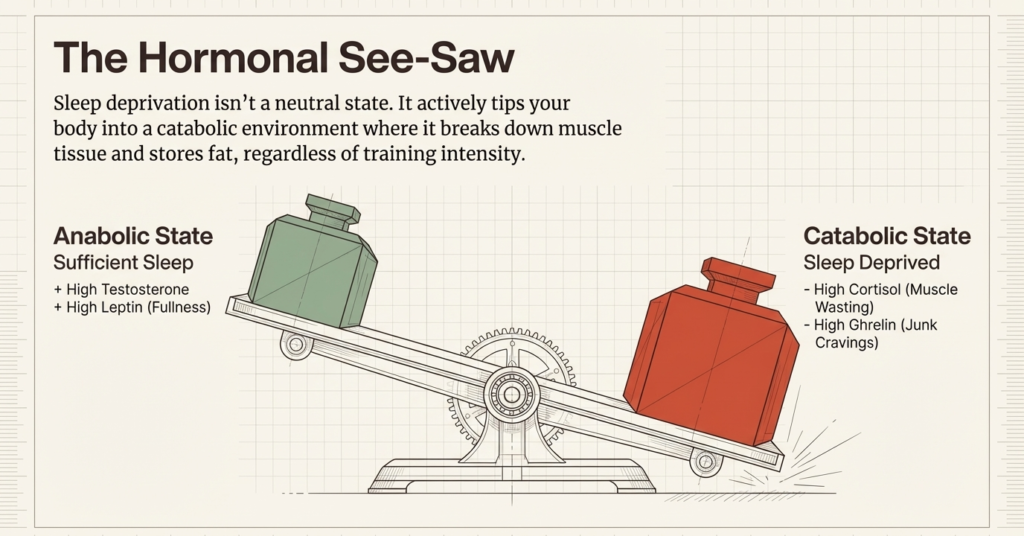
The Hormonal See-Saw

Sleep directly influences your hormonal environment. With adequate sleep, your body stays in an anabolic state characterized by high testosterone and balanced hunger hormones. In contrast, sleep deprivation shifts the body into a catabolic state, increasing cortisol levels and promoting muscle breakdown and fat storage. This hormonal imbalance makes it harder to build muscle, even with proper training and nutrition.

Illustration showing hormonal imbalance caused by sleep deprivation, comparing anabolic and catabolic conditions.

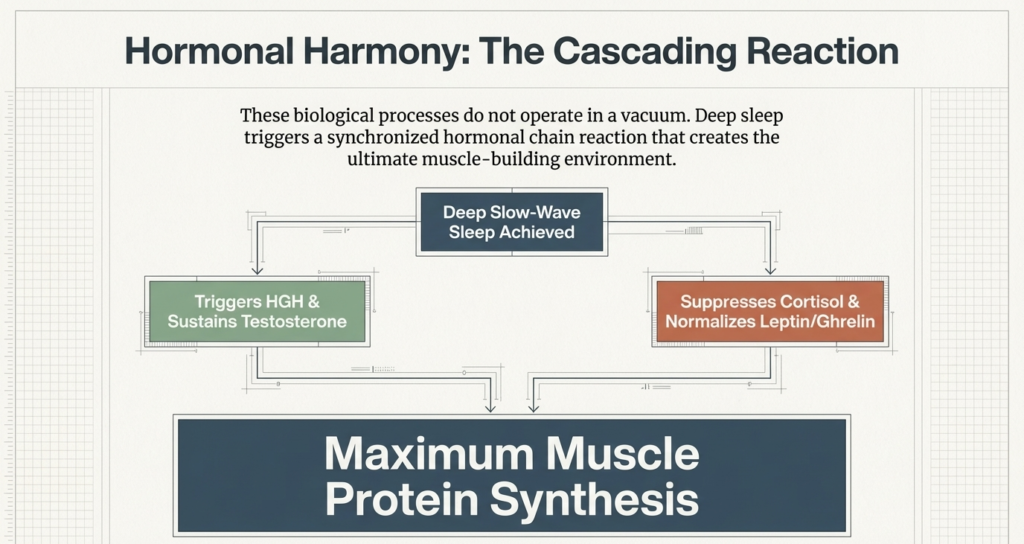
Hormonal Harmony

Deep sleep triggers a powerful chain reaction within the body. It increases growth hormone and testosterone while simultaneously reducing cortisol and stabilizing hunger hormones. This hormonal harmony creates the perfect environment for muscle protein synthesis. When all systems work together, recovery becomes more efficient, and muscle growth is maximized. Sleep is the key that activates this entire cascade.

Flowchart showing how deep sleep triggers growth hormone and testosterone while suppressing cortisol for muscle protein synthesis.

The Biological Balance Sheet

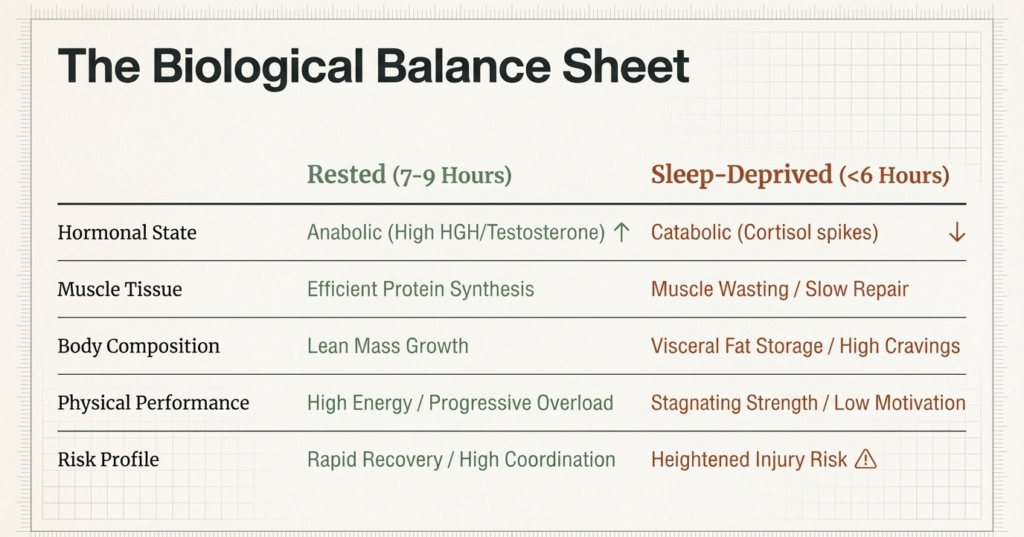
The difference between proper sleep and sleep deprivation is clearly visible in overall performance. With 7–9 hours of sleep, the body stays anabolic, allowing efficient muscle repair, better energy levels, and improved strength progression. On the other hand, lack of sleep leads to muscle wasting, increased fat storage, reduced performance, and higher injury risk. This comparison highlights how critical sleep is for both physique and performance.

Comparison table showing differences between rested and sleep-deprived states affecting hormones, muscle growth, energy, and recovery.

Upgrading The Holistic Athlete

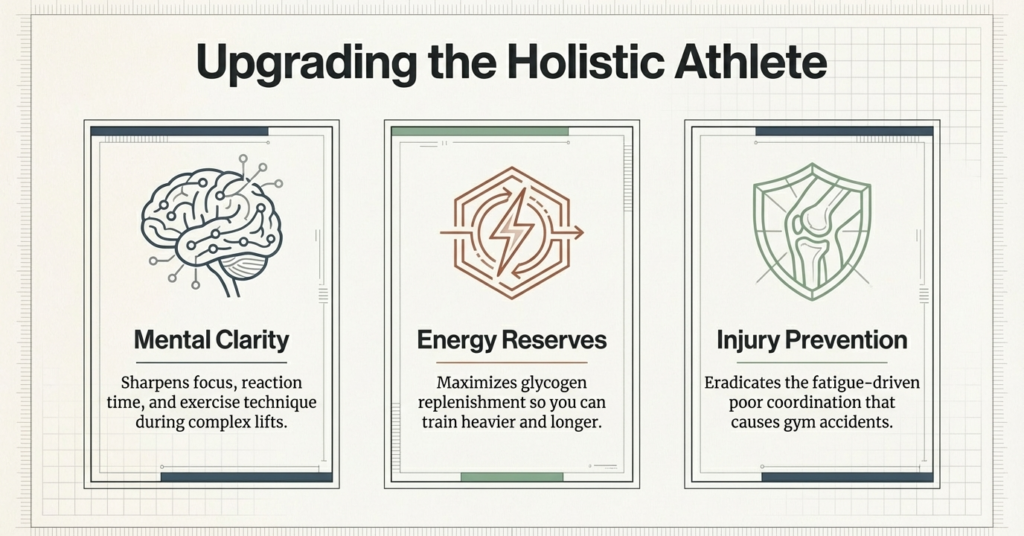
Sleep enhances not only muscle growth but also overall athletic performance. A well-rested body experiences better focus, faster reaction time, and improved exercise technique. Energy levels are higher, allowing more intense and longer workouts. Additionally, proper recovery reduces the risk of injuries caused by fatigue and poor coordination. Sleep transforms an average athlete into a high-performing one.

Infographic showing benefits of proper sleep including mental clarity, energy reserves, and injury prevention for athletes.

The Sleep Target

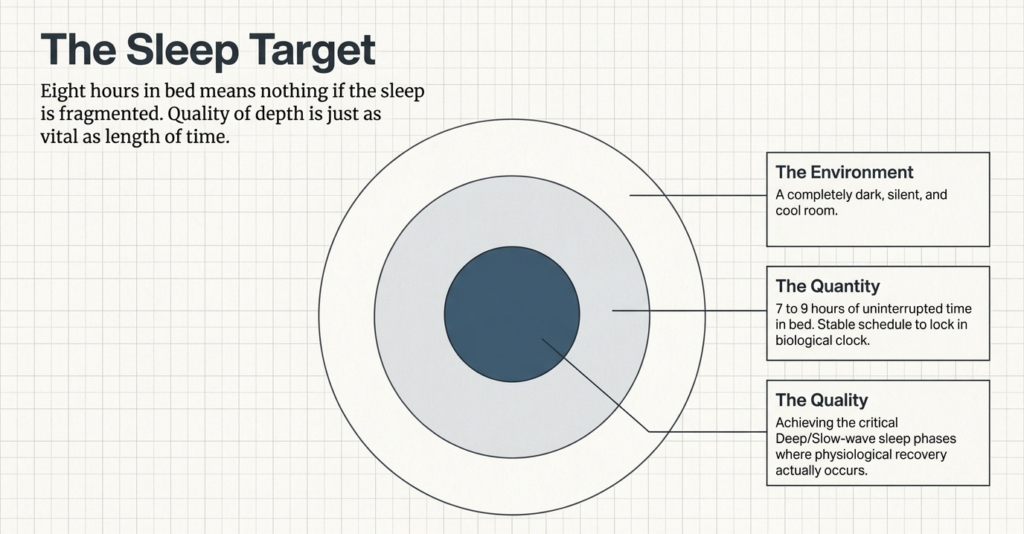
Achieving optimal sleep requires focusing on three key factors: environment, quantity, and quality. A dark, cool, and quiet room helps improve sleep depth. Getting 7–9 hours of uninterrupted sleep ensures proper recovery time. Most importantly, reaching deep sleep stages allows the body to repair and rebuild muscle tissue effectively. All three elements must work together to maximize recovery and performance.

Infographic showing three key sleep factors for muscle recovery including sleep environment, sleep duration of 7–9 hours, and deep sleep quality.

The Circadian Action Plan

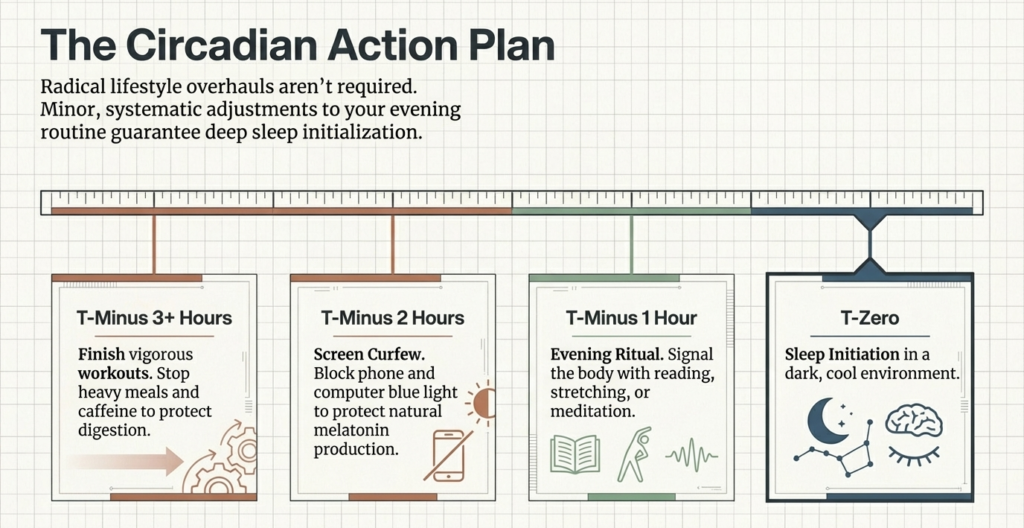
Improving sleep does not require drastic changes—small adjustments can make a big difference. Ending intense workouts and heavy meals a few hours before bed helps the body relax. Reducing screen exposure supports natural melatonin production, while a calming evening routine signals the body to prepare for sleep. Following a consistent schedule aligns your internal clock, leading to deeper and more restorative sleep.

Timeline infographic showing a circadian sleep routine including stopping workouts 3 hours before bed, limiting screens 2 hours before sleep, and relaxing rituals before bedtime.

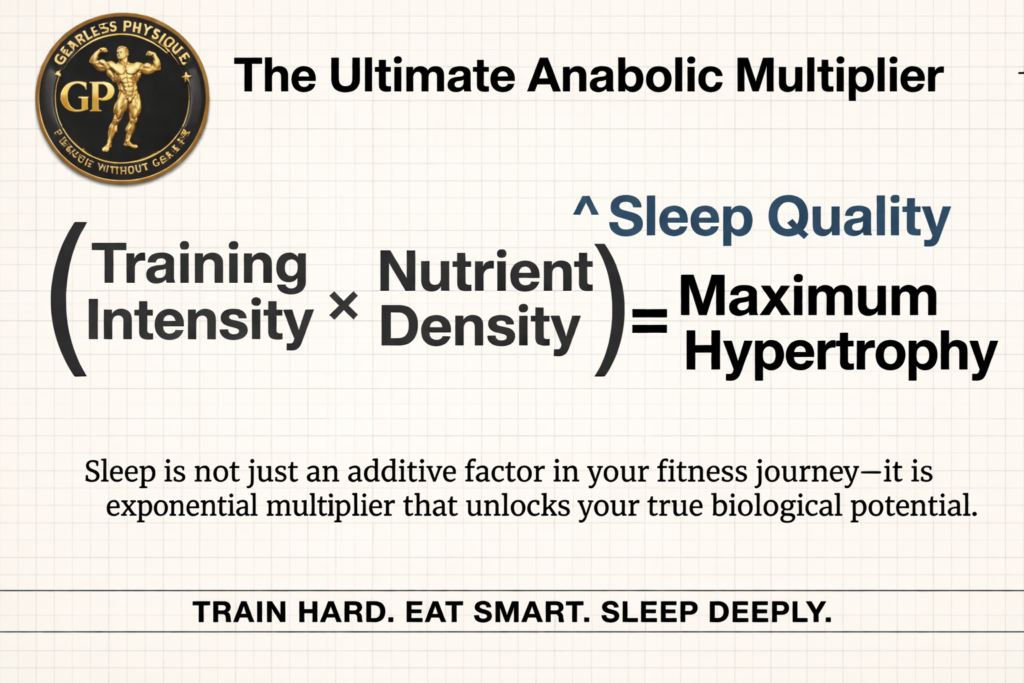
The Ultimate Anabolic Multiplier

Sleep is not just another factor in muscle growth—it is the multiplier that amplifies everything else you do. Training intensity and nutrient density form the foundation, but without quality sleep, their effectiveness drops significantly. When sleep quality is high, your body maximizes recovery, hormone production, and protein utilization. This creates the ideal environment for hypertrophy. In simple terms, sleep transforms your efforts into real results. That’s why the formula is clear: train hard, eat smart, but most importantly, sleep deeply.

Read more: https://www.acefitness.org/resources/everyone/blog/7818/7-benefits-of-sleep-for-exercise-recovery/?srsltid=AfmBOoqBAeAG7fn3_xyWDOKwRG8MjnjWduQ2dp5Faxk24O4LcSbAP8tQ

Infographic explaining muscle growth formula showing training intensity and nutrient density multiplied by sleep quality to achieve maximum hypertrophy.
Scroll to Top