Table of Contents
Toggle5 Carb Cycling Rules for Bigger Muscle Gains in 2026
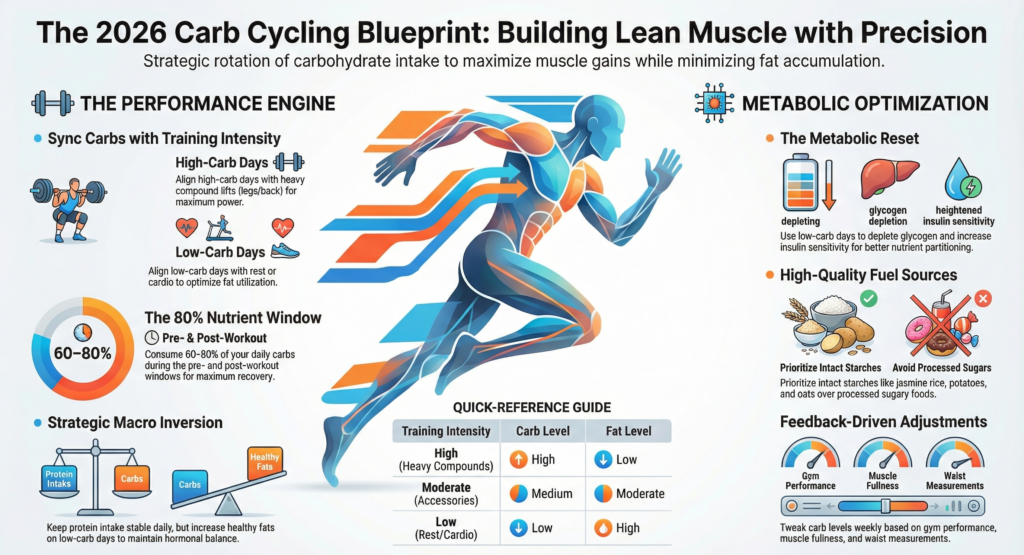
This infographic presents the “5 Carb Cycling Rules for Bigger Muscle Gains in 2026” a strategic approach to building lean muscle while minimizing fat gain. It highlights syncing carbohydrate intake with training intensity, using high-carb days for heavy workouts and low-carb days for rest or light activity. The concept of the 80% nutrient window emphasizes consuming most carbs around pre- and post-workout periods to enhance performance and recovery. It also promotes metabolic optimization through glycogen depletion and improved insulin sensitivity. High-quality carb sources like whole grains are prioritized over processed sugars. Overall, the visual showcases carb cycling as a precise, feedback-driven method to improve body composition, training efficiency, and sustainable muscle growth results.
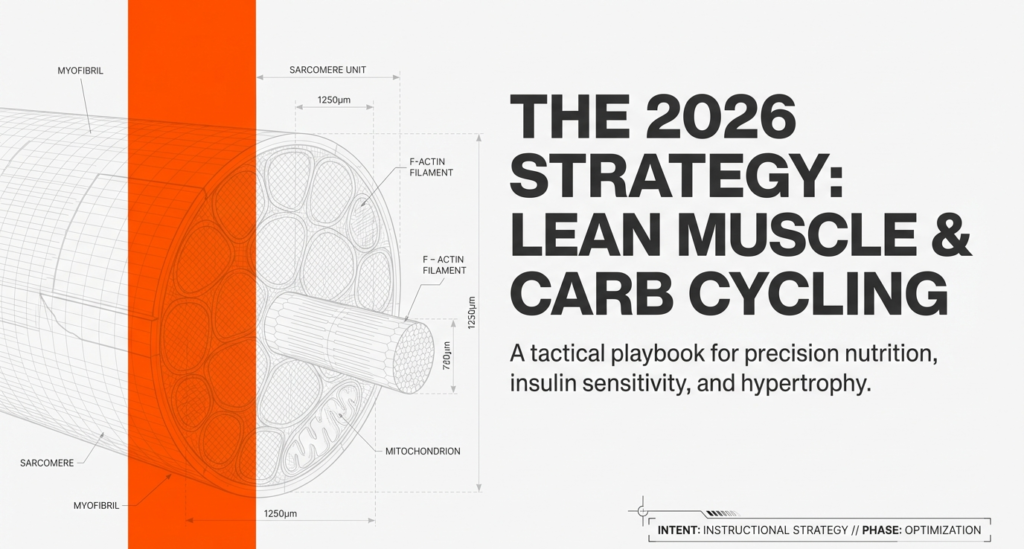
The 2026 Strategy: Lean Muscle & Carb Cycling
Carb cycling can be an effective plan in 2026 to help you pack on muscle without gaining excess weight, and remains lean. Most of the lifters consume liberally high carbs daily or low-carb throughout the week. Each of the two ends is likely to cause fat gain, stalled progress or poor recovery. Carb cycling is not restrictive but time and quantity based. When properly applied, it enhances performance, insulin sensitivity, nutrient partitioning and total body composition.
Move Beyond the bulk & cut rollercoaster
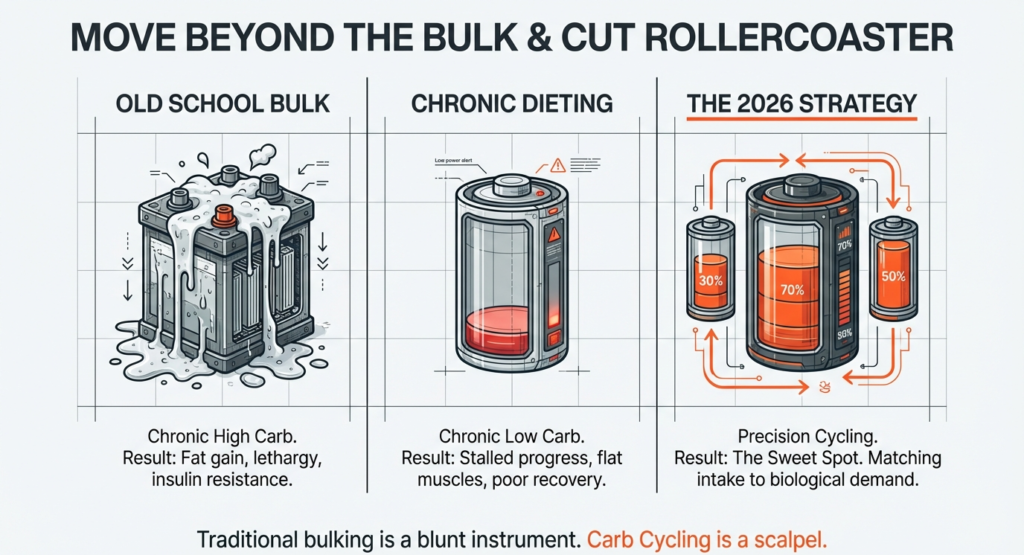
Most lifters languish in the bulk-and-cut rollercoaster between chronic high-carb bulking and violent low-carb dieting. The hybrid-style of bulking can result in the unwarranted fattiness, fatigue, and insulin resistance. Conversely, muscle growth, performance flattening and impaired recovery may occur with chronic low-carb dieting. The wiser 2026 approach is on precision cycling, i.e., carbohydrate consumption to suit training need. It does not aim at extremes but rather at the sweet spot, making heavy sessions but reducing rest days.
This is the best method of enhancing nutrient partitioning, lean mass gains and reduction in fat. The classical bulking is one-dimensional; carb cycling is a more calculative, performance-focused method.
Manipulating insulin sensitivity
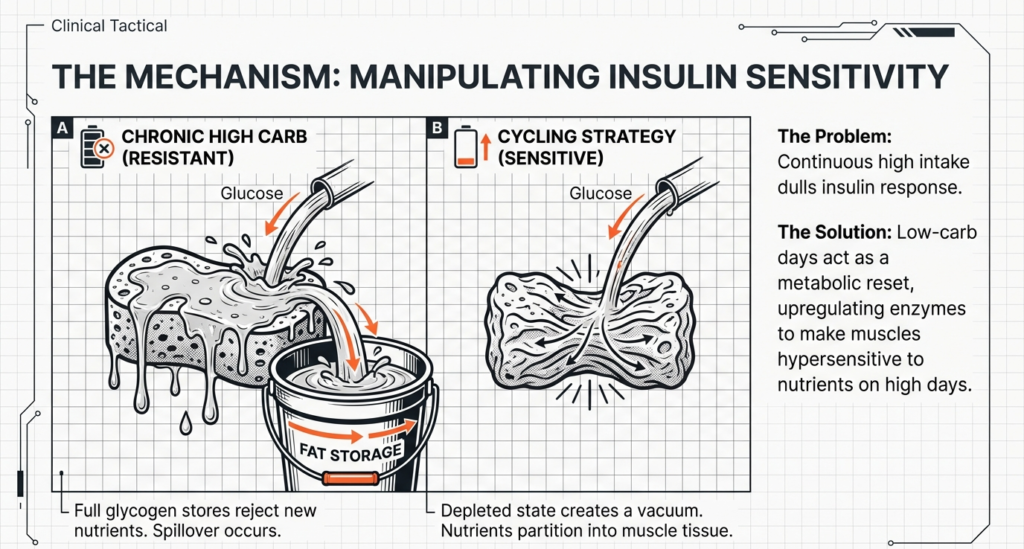
The concept behind carb cycling is that it uses the manipulation of insulin sensitivity to enhance nutrient partitioning. When there is a constant high intake of carbohydrates, the insulin responsiveness of the muscles reduces and spillage of glucose to fats may occur more easily. This high-carb metabolism is chronic and less efficient and leads to fat accumulation. Conversely, low-carb days cause a temporary glycation, which causes an initial reset in metabolism. This exhaustion makes insulin more sensitive i.e. makes muscle cells more receptive to glucose and nutrients.
The introduction of high-carb days again leads to better uptake of carbohydrates in muscles and helps improve performance, recovery, and development with a minimum amount of unneeded fat deposition. This biological advantage is boosted by an accurate timing.
The 5 Pillars of precision performance
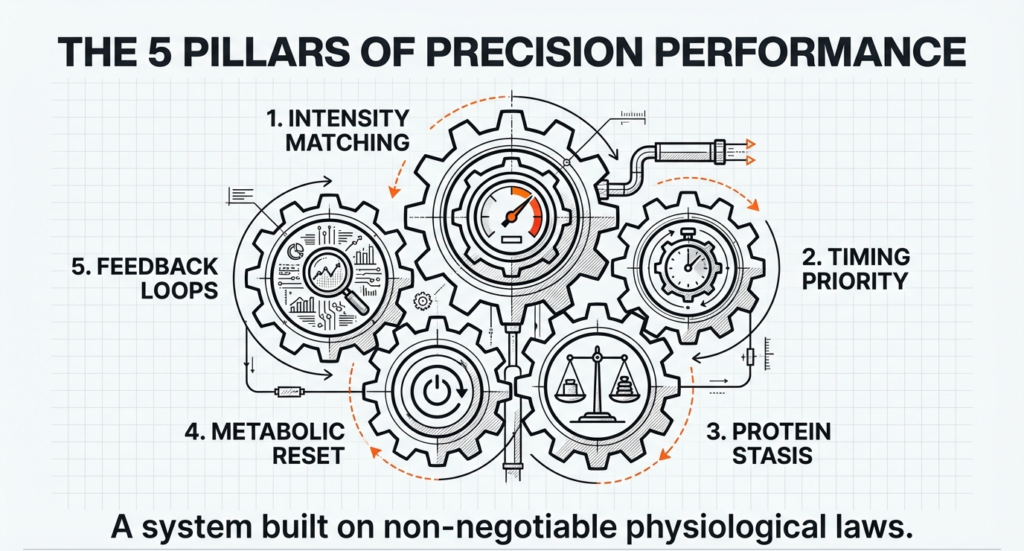
These are the 5 Pillars of Precision Performance:
- Intensity Matching.
- Timing Priority.
- Protein Stasis.
- Metabolic Reset.
- Feedback Loops.
Rule 1: These are the Rules of Carb Intake to Training Intensity
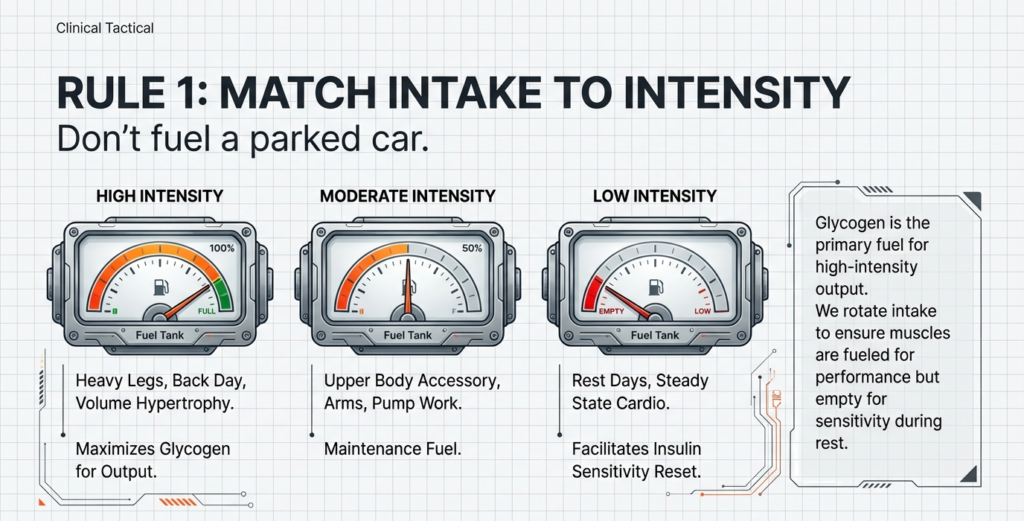
High-intensity training depends mainly on carbs as a source of high-intensity training. Glycogen is very important in heavy squats, deadlifts, presses and volume hypertrophy sessions. When you have a heavy training day, particularly, leg or back day, then you need to increase your carb levels. This will leave your muscles performance and recovery fueled. On light days/rest days, decrease carbs a bit. This assists in increasing the sensitivity of insulin and avoiding too much storage of calories in form of fat.
For example:
- Hot-carb days: Heavy compound training, high-volume hypertrophy.
- Medium-carb days: Upper body accessory exercises.
- Low-carb days: Light or rest cardio on.
By rotating your body, it makes your body utilize carbs efficiently rather than storing them without any need.
Rule 2: Use Carbs around your workout period
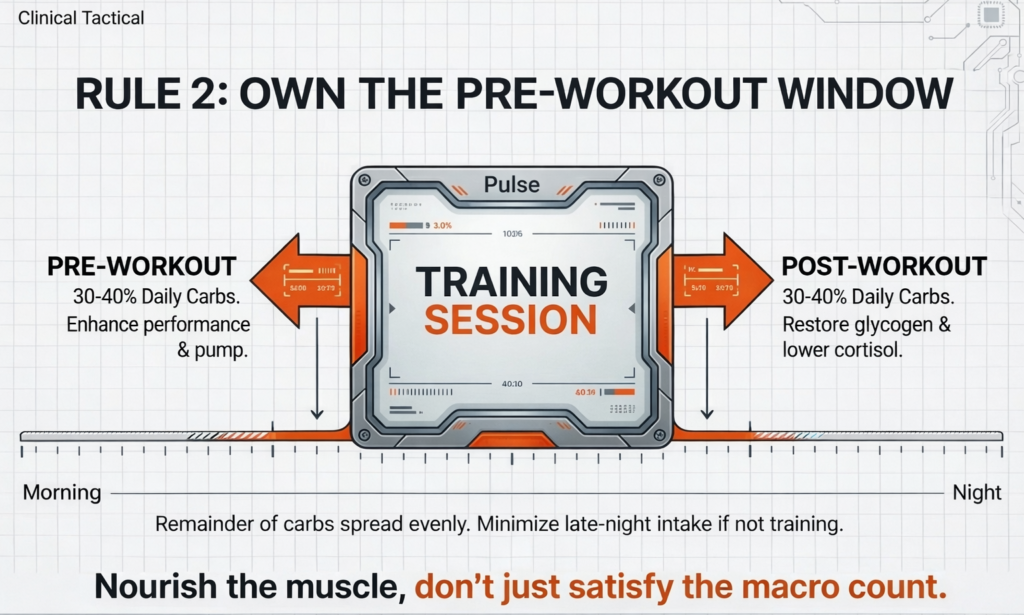
Timing of carbohydrates is better than they believe. The optimum period of taking carbs is when your muscles are highly insulin-receptive: pre- and post-training.
Carbs before workouts enhance performance, strength output and muscle pump. Carbs after the workout restore Glycogen and lower the cortisol.
An efficient system has the following appearance:
- 30–40% of daily carbs pre-workout.
- 30–40% post-workout Carbs leftover in previous meals.
Do not overload the majority of your carbs at the end of the night when you do not train in the evening. It is to nourish the muscle and not simply to satisfy the macros.
Carb cycling is most efficient when the nutrients are matched with the training requirement.
Rule 3: Keep Protein Constant and Fats Strategic
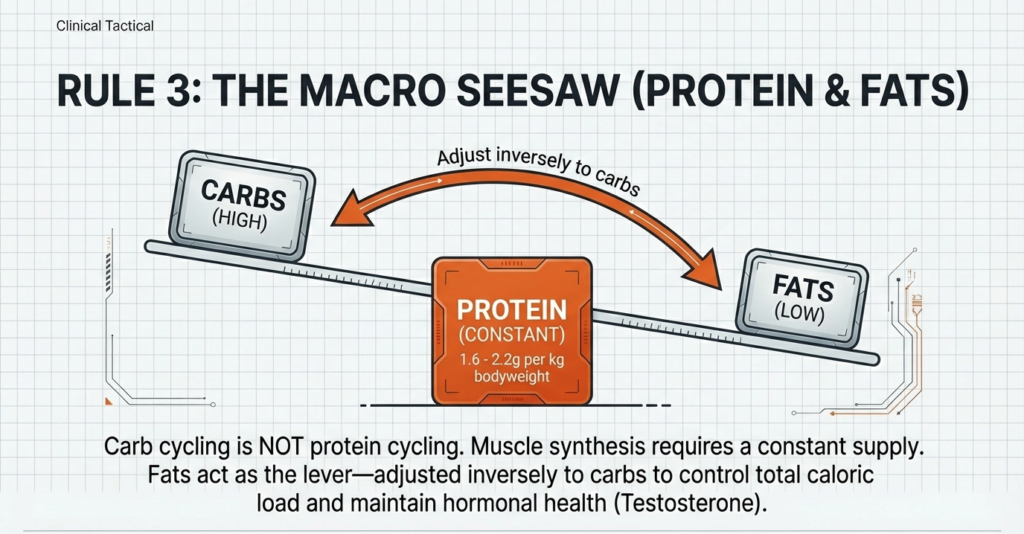
Carb cycling does not involve altering the amount of protein intake. Your protein is to remain the same every day to aid in the muscle protein synthesis. Goal should be approximately 1.6 to 2.2 grams of protein to body weight. This maintains optimality of recovery and growth at all carb levels.
Carbs can however be inversely adjusted with fats:
- On high-carb days → Lower fats
- On low-carb days → International Fats were slightly more.
This maintains the amount of calories under control and the hormonal balance. Olive oil, nuts, whole eggs and fatty fish are healthy fats which aid in testosterone and recovery. It is important to remember that carb cycling does not change the amount of protein structure, but energy source.
Rule 4: Work Low-Carb Days to Enhance Insulin Sensitivity
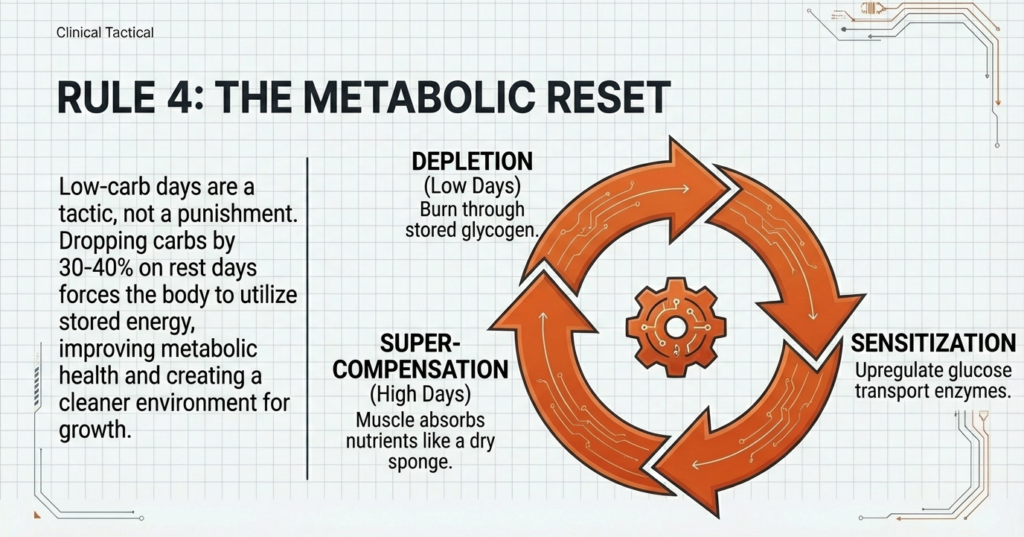
Glucose insensitivity is one of the significant benefits of carb cycling. A continuously high dose of carbs may decrease the efficiency of your body to utilize glucose with time. Low-carb days are a metabolic re-set. They enable your body to use up the stored glycogen and better partitioning of nutrients.
Increased insulin sensitivity entails:
- More carbs go into muscle
- Less carbs stored as fat
- Fuller muscle appearance
- Improved metabolic health
You do not require such low carbs. The intake can be decreased by 30-40 percent on rest days as well, which will make a difference. It is not curbing, it is tactic variation.
Rule 5: Make an Adjustment on the Body Composition Feedback
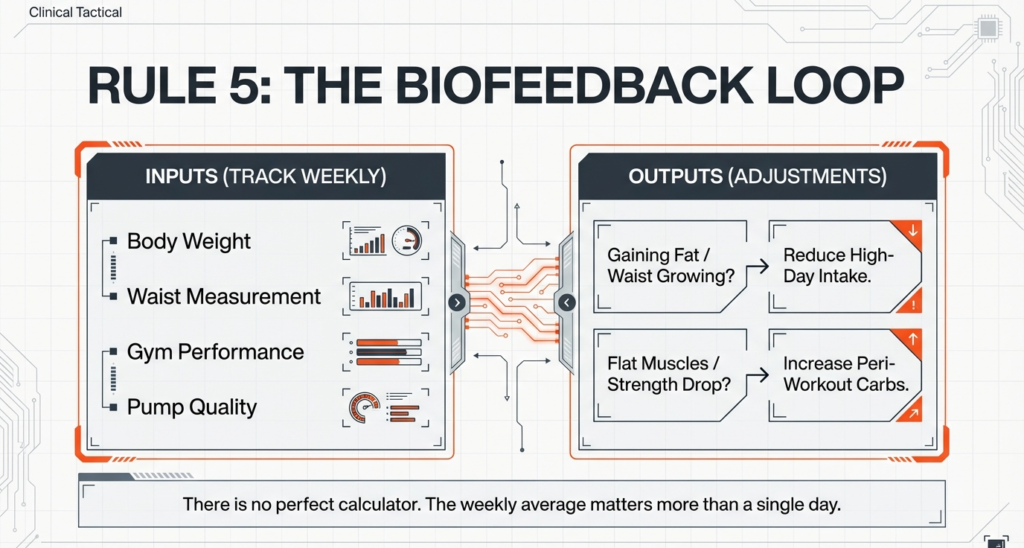
There are no carb cycling programs that are ideal. Your body provides you with feedback every week.
Track:
- Body weight
- Waist measurement
- Gym performance
- Muscle fullness
- Energy levels
When you are adding excess fat, a little less day intake of high-carb. When the strength is declining and the muscles appear flat, then add more carbs during training.
Execution strategy
What is important is the weekly average calories and not a single day.
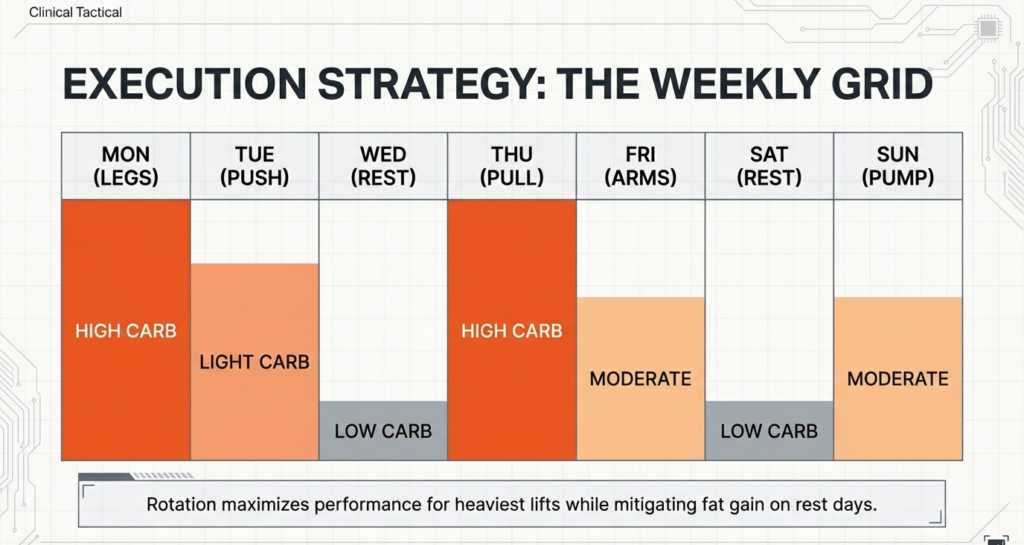
Carb Cycling Structure (Lean Muscle Focus).
An example that a person may use in case of training 5 days a week would be as follows:
- Monday (Heavy Legs):→High Carb.
- Tuesday (Chest/Shoulders):→ Light Carb.
- Wednesday (Rest):→ Low Carb.
- Thursday (Back):→ High Carb.
- Friday (Arms):→ Moderate Carb.
- Saturday (Rest/Cardio):→ Low Carb.
- Sunday (Optional Pump):→ Moderate Carb.
This rotation is good in performance and reduces fat gain. The reason Carb Cycling is better than Bulking up with high-carbs. The conventional bulking usually culminates in the over-addition of fat since the carbs are always high irrespective of the activity.
Read more: https://www.issaonline.com/blog/post/help-clients-get-results-with-carb-cycling
Top Carb sources to build muscle
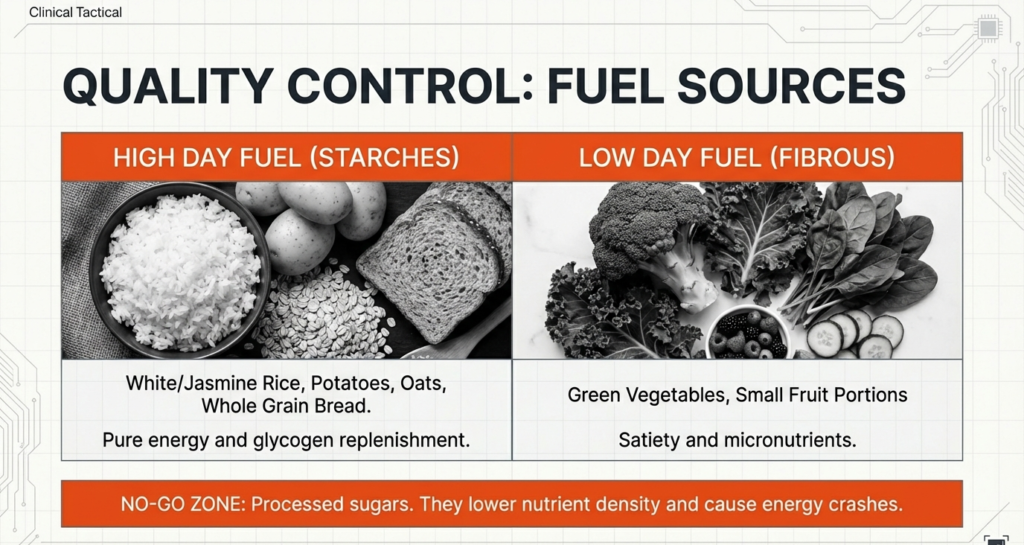
In quantity, quality is as important as quantity is.
Good high-carb day options:
- White rice
- Jasmine rice
- Potatoes
- Oats
- Whole grain
- bread
- Fruits
On intermediate days, combine starches and fibrous carbs. Fruits on low-carb days should be concentrated on small portions of vegetables and small portions of fruits. The processed sugary foods are very high in sugars and they lower the nutrient density resulting in energy crashes. Eat the majority of the carbs intact and performance oriented.
The mistakes in common carb cycling
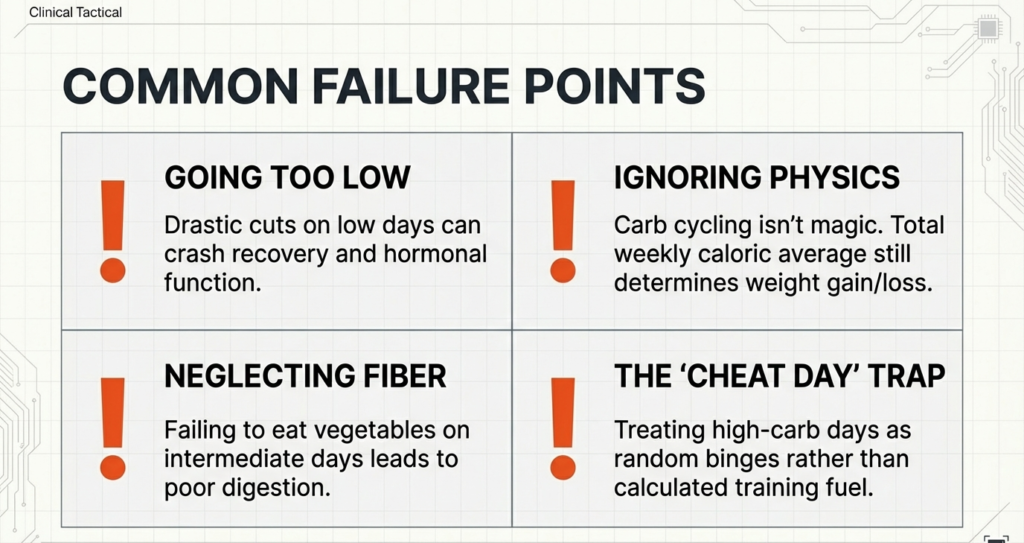
Mistake 1: Undergoing low carb days.
This may be detrimental to recovery and performance.
Mistake 2: failure to monitor calories.
Calories need to be conscious in carb cycling.
Mistake 3: Neglecting fiber and micronutrients.
It is important to have healthy sources of carb: rice, potatoes, oats, fruits, vegetables.
Mistake 4: High-carb cheat days at random.
High-carb days are supposed to be associated with the training, rather than cravings.
These mistakes should be avoided and carb cycling becomes an effective weapon.
Who Should Use Carb Cycling?
Carb cycling works best for:
- In between and advanced lifters.
- Individuals who train 4- 6 days per week.
- Those prone to fat gain.
- The natural bodybuilders desiring the lean mass.
Novices do not necessarily require complicated tactics. They are able to develop on basic calorie excess plans. However, in the higher stages, more intelligent nutrient timing yields higher results.

Quick reference cheat sheet
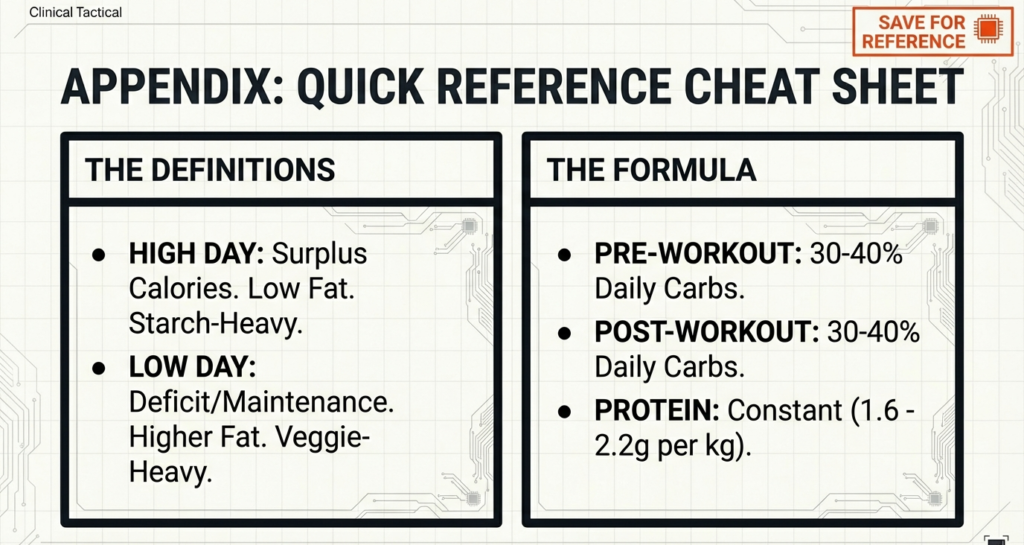
This is a handy reference cheat sheet that makes carb cycling easy and straight forward. A high day is centered on minimal caloric excess, reduced fat intake and high sodium starch foods to achieve optimal glycogen storage and performance. A low day will move towards maintenance or slight deficit, and it will become more healthy fats and more vegetable-oriented to achieve insulin sensitivity and efficiency in metabolism.
During training, 30-40% of the total carbohydrates must be taken in the form of a pre-workout and 30-40% as a post-workout food to increase the output and recovery. Protein is maintained at 1.6–2.2 grams per kilogram bodyweight to aid muscle repair, development and regular muscles protein production irrespective of carbohydrate changes in the body.
Final Thoughts
In the year 2026, Carb cycling will not be about trends it will be about accuracy. Properly applied, it will allow you to remain lean and propel strength and muscle development.
- High carbs with intensity of training.
- Time priority in the workout.
- Keep protein stable.
- Take low-carb days in strategic use.
Adjust based on feedback. The increase in muscle is not merely a matter of calories consumed. It’s about eating smarter. Training and matching your carbs to your efforts will result into improved pumps, quicker recuperation and cleaner gains.
Train with intent. Eat with strategy. Grow with control.


Gearless Physique
Physique Without Gear
Your transformation starts now. Who's with me?