Table of Contents
Toggle10 Powerful Nutrition Basics Every Gym Beginner Must Know
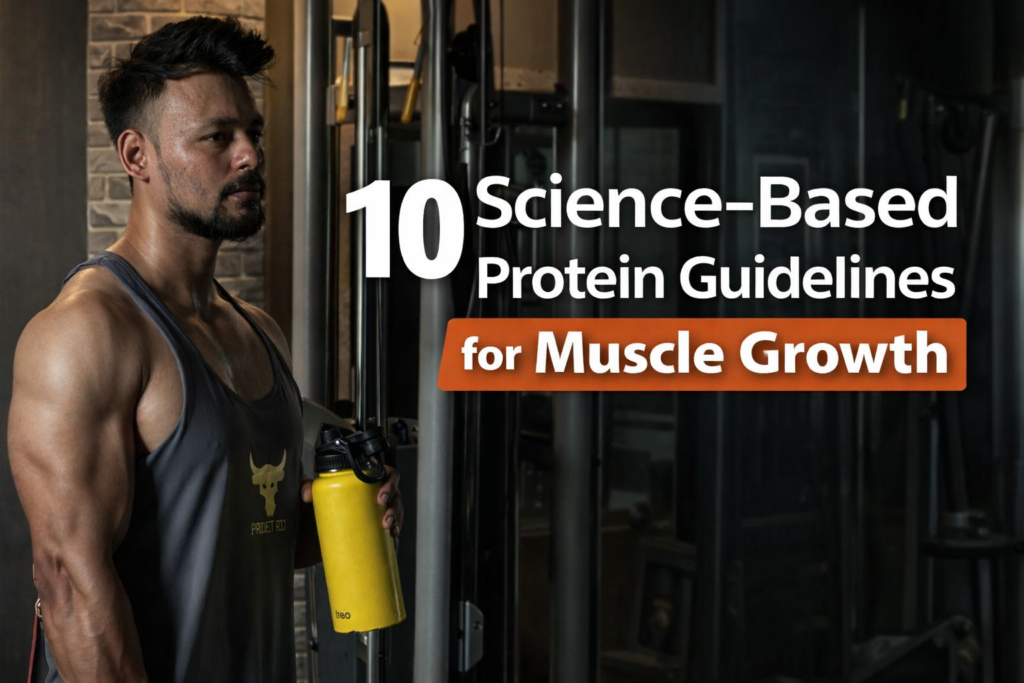
This banner image represents strength, discipline, and the often-overlooked role of hydration in long-term fitness success. The subject’s well-defined physique highlights the results of consistent training, proper nutrition, and optimal water intake. The clean composition, with space for the title, creates a professional blog aesthetic that immediately captures attention. Hydration plays a critical role in muscle performance, recovery, and overall health, helping maintain energy levels and prevent fatigue during workouts. This visual reinforces the message that achieving a strong, lean body isn’t just about lifting weights—it’s about supporting the body with the right habits, where hydration becomes a key pillar of sustainable fitness progress.
Fundamental Nutrition for gym Beginners
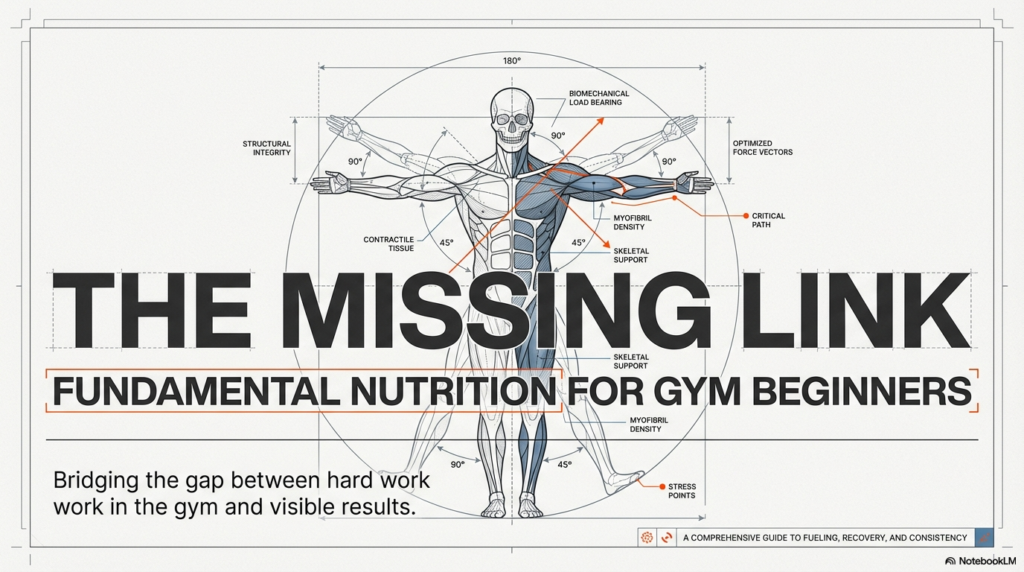
Gyms are very exciting to start with unless the beginners focus on nutrition wherein they either achieve or ruin the whole scenario. You may exercise so hard, sweat so hard, and still not get results at all when you are eating the wrong diet. Nutrition is not complex, however, it needs to be clear and consistent. This guide is a breakdown of the 10 final nutrition tips every person in the gym should know. No fancy jargon. No extreme diets. Genuine, workable, tried and true principles. These basics will have a foundation whether you are fat-losing, building muscle or simply achieving fitness.
You Cannot out-train a diet that fights your goals
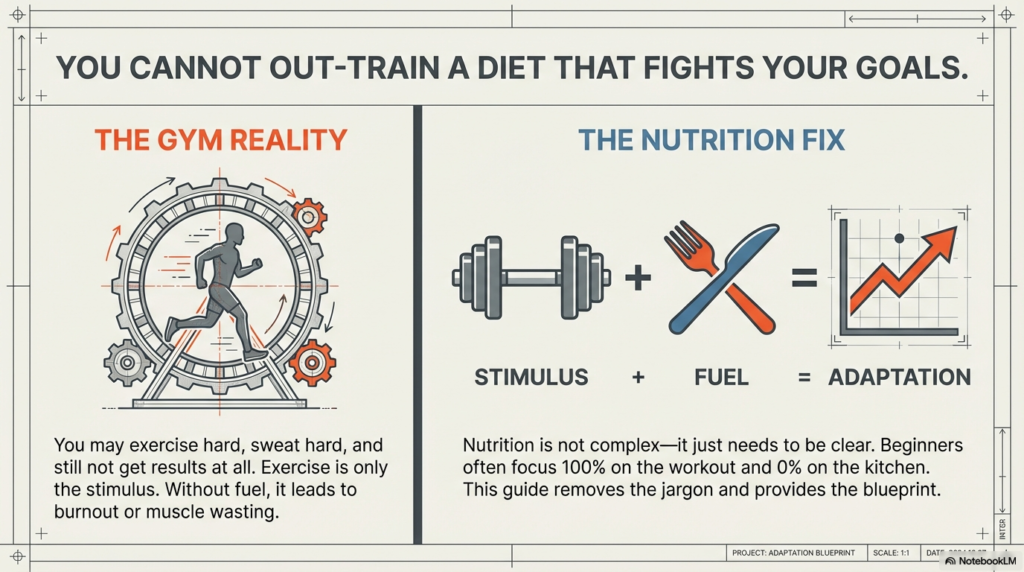
There is no point in working out hard and often and failing to achieve your objectives because of an eating regime that is against you. Training is just the prompt– it tells your body to develop but it is your nutrition that gives you fuel to facilitate that development. Without appropriate calories, protein, and carbohydrates, exercises cause tiredness, exhaustion, and muscle wastage rather than improvement.
Most novices concentrate on workouts and neglect the kitchen hence stalling out. The body reacts in a predictable manner when training and nutrition are combined, which is faster strength improvement, fat reduction and improved recovery. Proper nutrition is that smart and consistent habit that will aid in real transformation when applied in the gym.
Eat With Calories and Destroy Fat
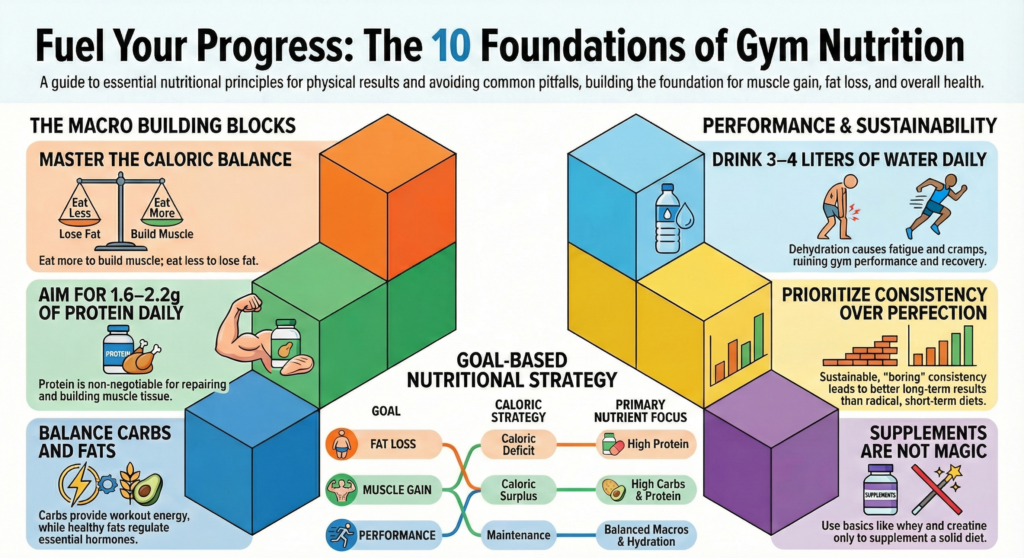
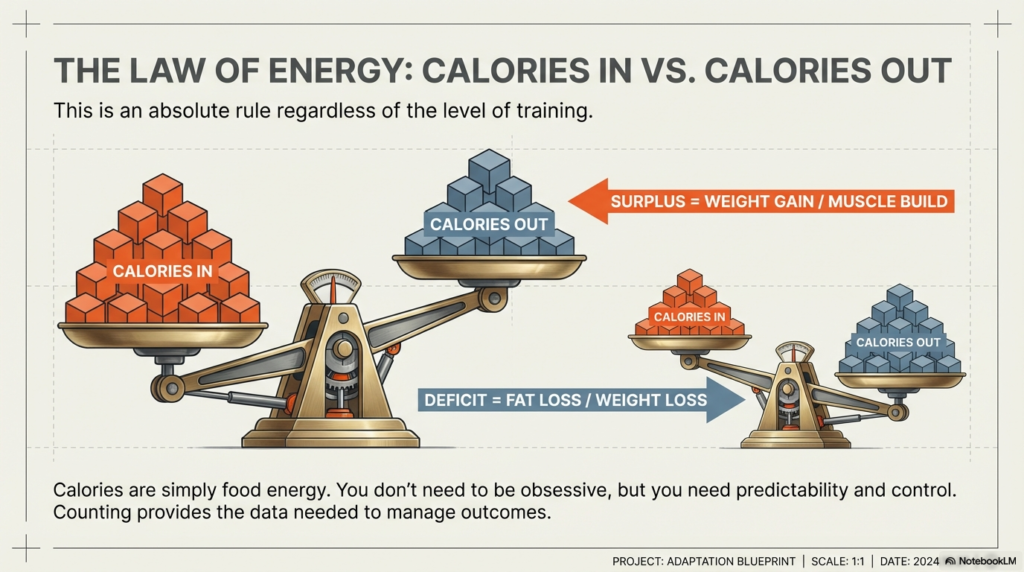
The total food energy is referred to as calories. When you consume a higher number of calories than you use up, then you become overweight. When you consume less calories than you use, you get thin. This is an absolute rule regardless of the level of training. Most of the beginners are only interested in workouts and do not bother at all with calories. It is due to the fact that progress is haphazard. Calorie counting, even an approximation of it, provides predictability and control to your outcomes.
You don’t need to be obsessive. All you need to do is to know how much you are eating each day and balance it to your goal- too much to build muscle, too little to lose fat.
Define the purpose: building or burning?
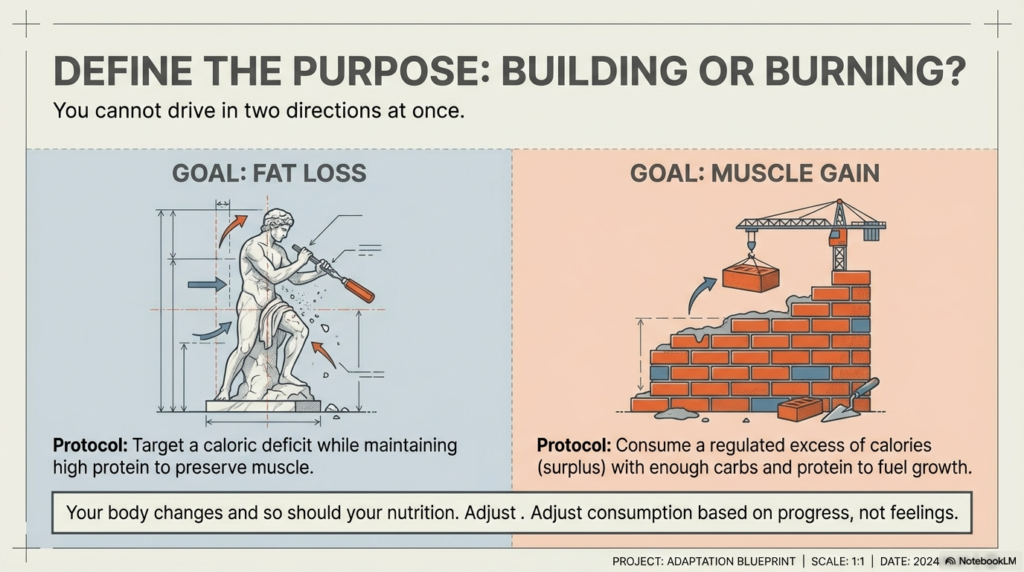
It is also important to define your purpose since muscle gain and fat loss are not achieved with the same nutritional approach. It is impossible to pursue both at once and get clear results. Protein and calorie deficit in moderate amounts are required to promote fat loss and protein surplus in adequate amounts to promote muscle growth, respectively. Nutrition becomes inadequate and slow when you have no clear intention of where to achieve.
Your body will change depending on what you are always giving it. With the change in physique, nutrition has to change. Monitor the progress in an objective way and adjust calories depending on the outcome rather than the feelings. Specific objectives establish specific nutrition, foreseeable consequences, and future achievement.
Protein Is Non-Negotiable
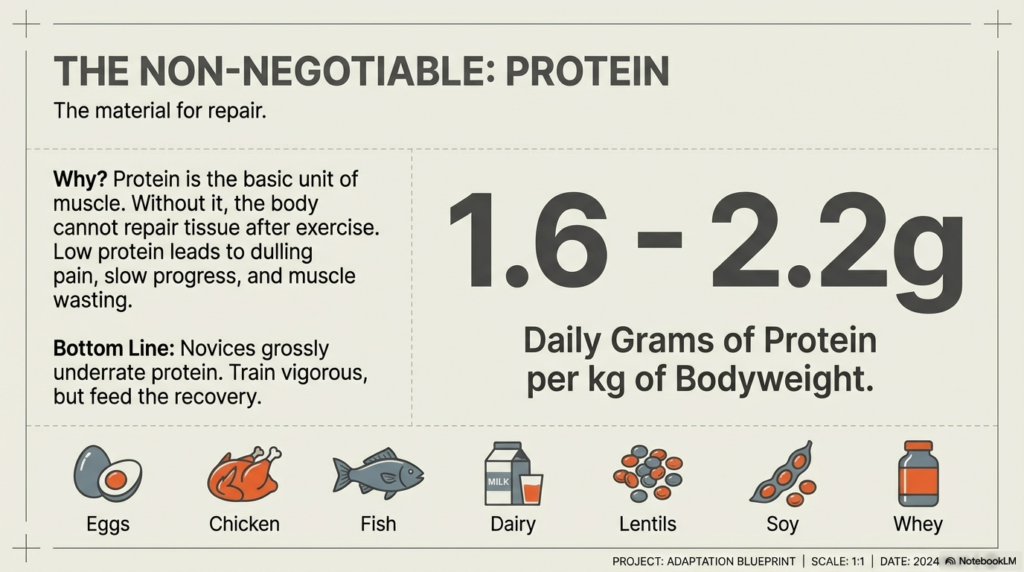
The basic unit of muscle is protein. Without proper supply of protein, then your body will not be able to repair or build up muscle tissues after exercises. This is in relation to men and women beginners, and advanced lifters. Novices in the gym grossly underrate the consumption of protein. They train vigorous yet they do not supply their muscles with what they require to recuperate. This causes dulling pain, slowness in progress, and muscle wasting in losing fats.
Goal is 1.6- 2.2 g protein daily. The best ones are eggs, chicken, fish, dairy, lentils, soy, and whey protein.
Carbs Are Not the Enemy
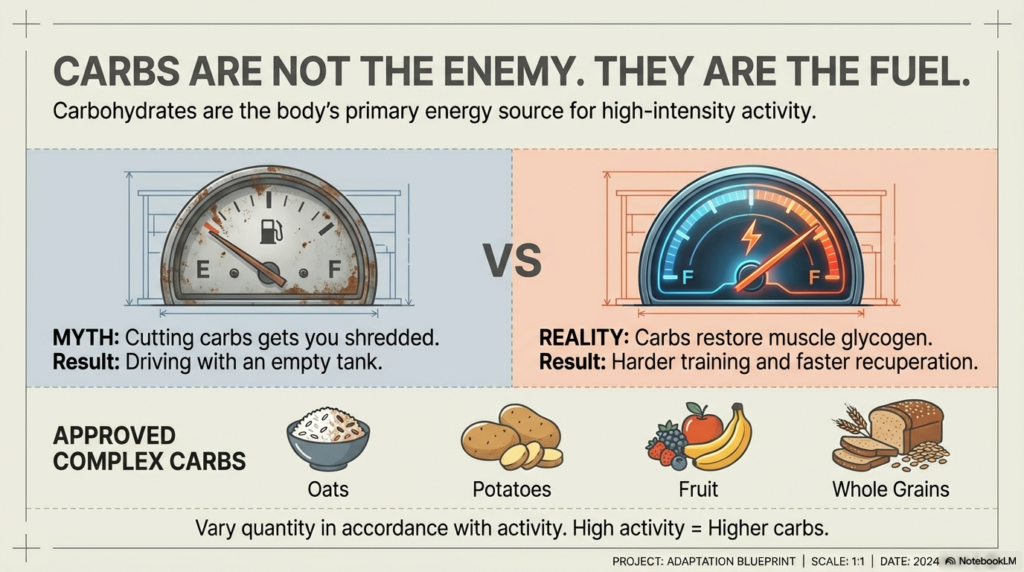
Carbohydrates provide energy to your exercises. You end up being too strict in cutting carbs and this results in loss of energy, loss of strength, and poor workouts. This usually makes newcomers give up early in the gym. Carbs restore glycogen in the muscles enabling you to train more and have faster recuperation. It is only the right type and amount that needs to be selected, not to be removed.
Pay attention to complicated carbohydrates, such as rice, oats, potatoes, and fruit, and whole grains. Vary quantity in accordance with level of activity and objectives. No carbs in training is similar to driving with an empty tank of a car.
Fats are Healthy with Hormones
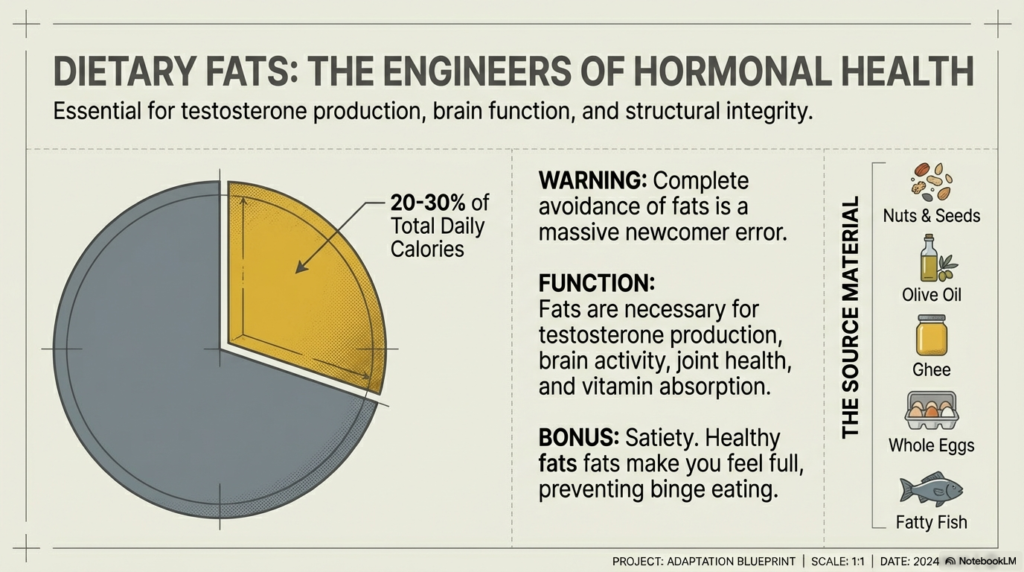
Fats are necessary in the production of hormones, health of the joints and absorption of vitamin. The complete avoidance of fats is a massive newcomer error that may influence recovery and energy levels. The healthy fats are known to aid in the testosterone, brain activity, and health. They also make you feel full and satisfied thus avoiding binge eating in the future. Benefit sources such as nuts, seeds, olive oil, ghee, whole eggs and fatty fish. A typical guideline of most beginners is around 20-30 percent of total caloric content by fats.
Fluid Replacement and Performance and Recovery
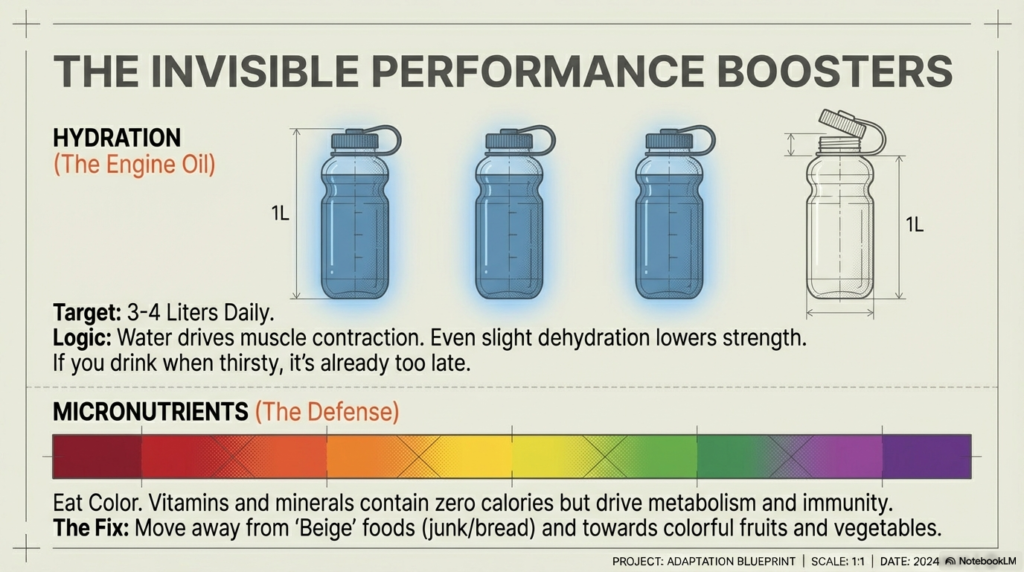
Water is very important in digestion, contraction of the muscles, carrying of nutrients and the recovery process. Even the slight dehydration may lower the strength and stamina during the gym. Most amateurs would consume water when they are already thirsty, and that is already late. When dehydrated, training results in cramps, fatigue, and poor pumps.
Goal: 3-4 liters of water per day, or more when you are sweating. Include electrolytes when exercising vigorously or exercising in hot weather. The unspoken performance booster is hydration.
Micro nutrition is usually overlooked.
Vitamins and minerals do not contain any calories, however, they are necessary to metabolism, immunity and muscle activity. Even the flawless macros may slow it down.
Novice dieters, who are accustomed to consuming junk food, protein shakes, or even the same meals frequently fail to get the essential micro nutrients. This causes body tiredness, poor recuperation and sicknesses. Consume different fruits, vegetables, whole grains, and nuts. Colorful dishes normally translate to healthy eating. With the help of supplements, food should always be the first line.
Timing of meals is not primary, but secondary
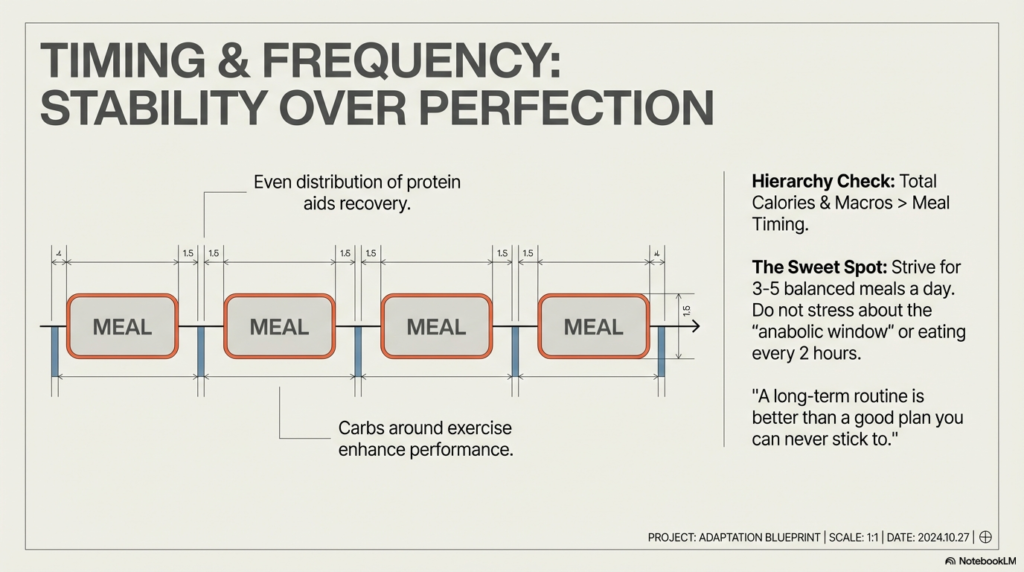
Novices usually worry about dining after every two hours or after time limitations of meals. As a matter of fact, macros and total calories are much more important than timing. With that said, the even distribution of protein throughout the day aids in the muscle recovery. Carbs during exercise have the ability to enhance performance and decrease fatigue. Provided that you have time, you should strive to have 3-5 balanced meals a day. Stability is much more than perfection. A long-term routine is better than a good plan you can never stick to.
In Supplements, There is No Magic
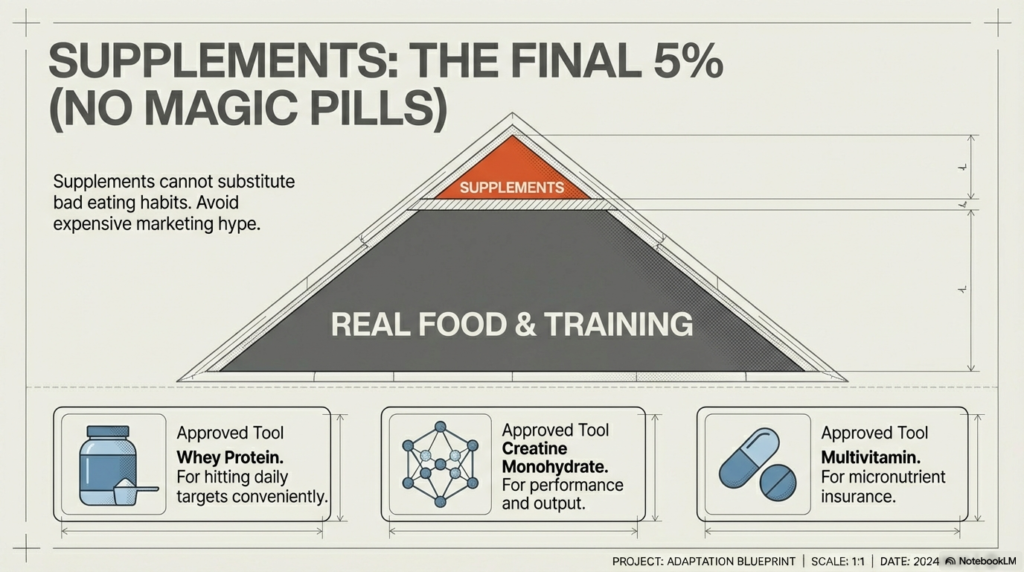
Supplements are what the name implies, supplements to an already wholesome diet. They are not able to substitute bad eating habits and irregular training. Novices tend to spend their money on expensive items without paying attention to their diet. It results in disillusionment and false hopes.
In case of necessity, begin with such basics as whey protein, creatine monohydrate, and a multivitamin. Supplements are to be used to supplement a healthy diet and not to replace laziness and shortcuts.
Unity is Better than Simplicity
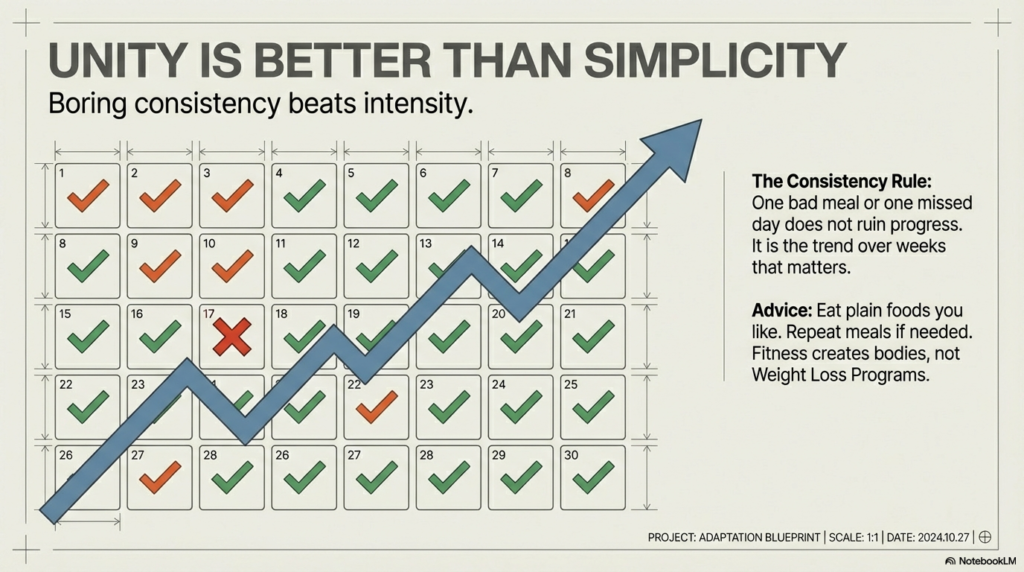
You do not have to have a perfect diet in order to achieve results. You have to have a diet that you can stick to over a period of months. Radical plans do not work since they are not easy to maintain. Not having one meal or going out of plan will not mean the difference every now and then. It is not about how many times you work a week and a month, but about your consistency. Eat plain foods that you like. Repeat meals if needed. It is not motivation spikes that lead to progress but boring consistency. Fitness creates bodies, not Weight Loss Programs.
Nutritional mistakes of Beginners
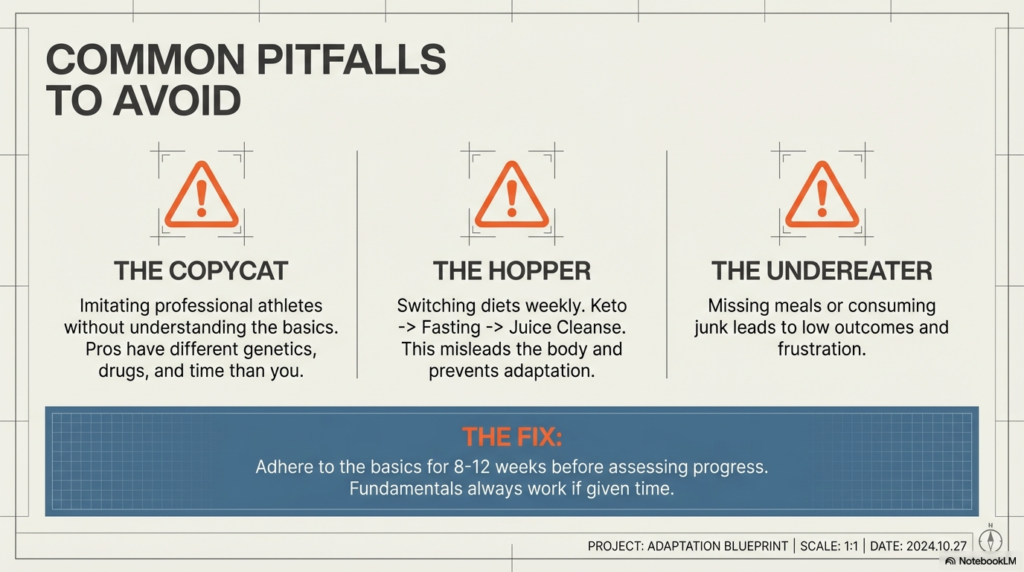
Most novices miss meals, use junk food or even imitate professional athletes without any idea of basics. This contributes to frustration and low outcomes. The other mistake is hopping around with the diet. A week of keto, another of fasting, and then juice cleanses. This misleads the body and puts an end to uniformity. Adhere to basics, at least 8-12 weeks and then assess progress. Outcomes are time consuming, but fundamentals always work when the correct approach is used.
Read more: https://www.muscleandfitness.com/nutrition/gain-mass/top-10-beginner-nutrition-tips/
Final Thoughts
There is no suffering or extreme rules of nutrition. It has to do with feeding your body in ways that will make the difference between a training that is effective and one that is not. Once the beginners have learnt these 10 basics, the outcomes can be expected and maintained. You don’t need perfection. It requires the knowledge, continuity, and tolerance. The best thing about building strong habits is that the farther you go into them, the easier your journey to fitness will become.
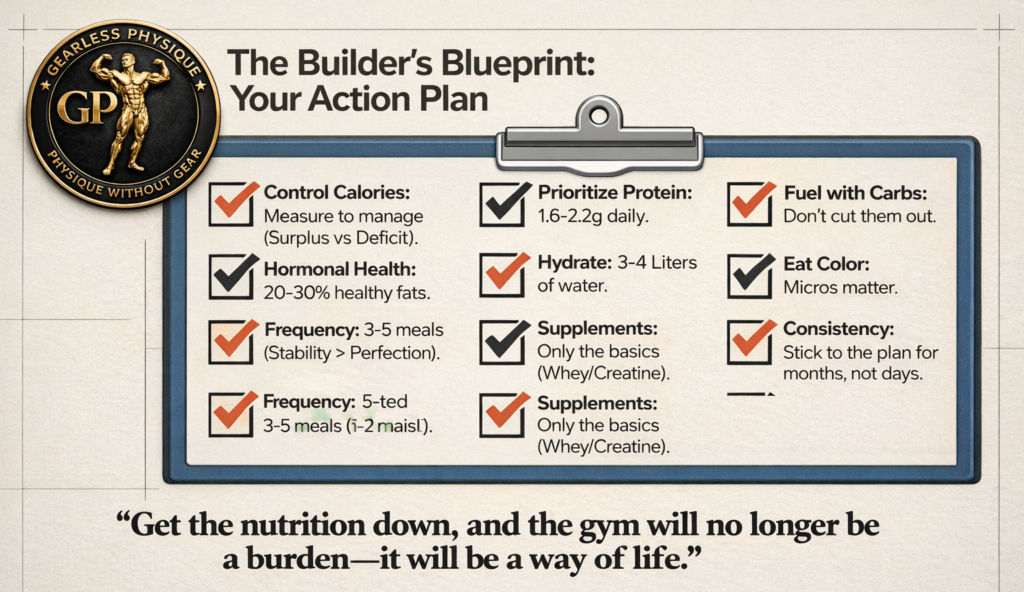
Get the nutrition down, and the gym will not be a burden any longer, it will be a way of life.

Gearless Physique
Physique Without Gear
Your transformation starts now. Who's with me?