Table of Contents
ToggleBodybuilders Intermittent Fasting in 2026: Is it Worth it or Waste?
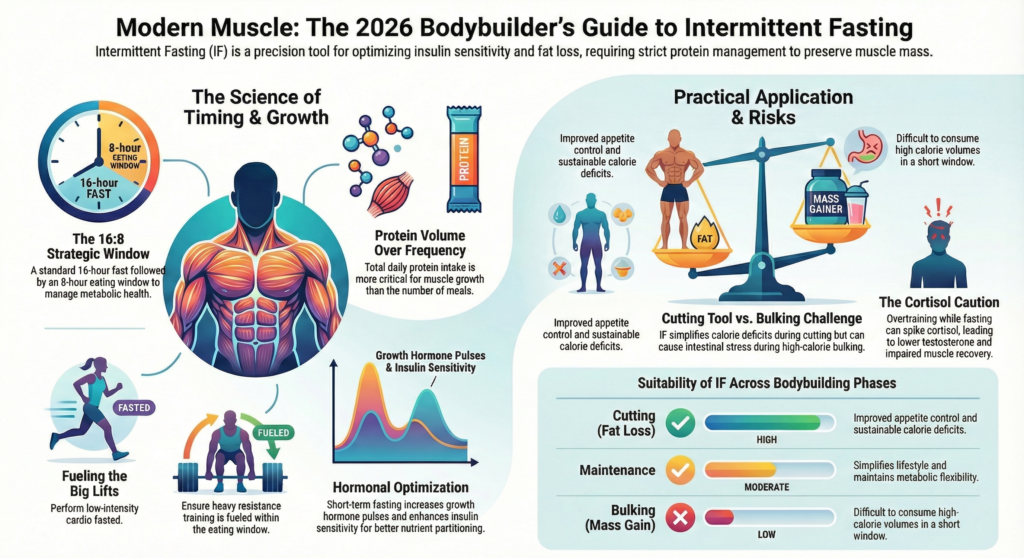
This infographic breaks down how intermittent fasting fits into modern bodybuilding in 2026, focusing on strategy over hype. It highlights the 16:8 protocol as a practical framework for managing calorie intake while maintaining muscle through adequate daily protein. The visual explains how nutrient timing, insulin sensitivity, and growth hormone pulses influence fat loss and recovery. It also clarifies that total protein intake matters more than meal frequency for hypertrophy. Importantly, it separates application by phase—showing why IF works best during cutting, remains moderate for maintenance, and becomes challenging during bulking due to high calorie demands. Overall, it positions intermittent fasting as a tool, not a magic solution.
Modern Muscle: Intermittent Fasting in 2026
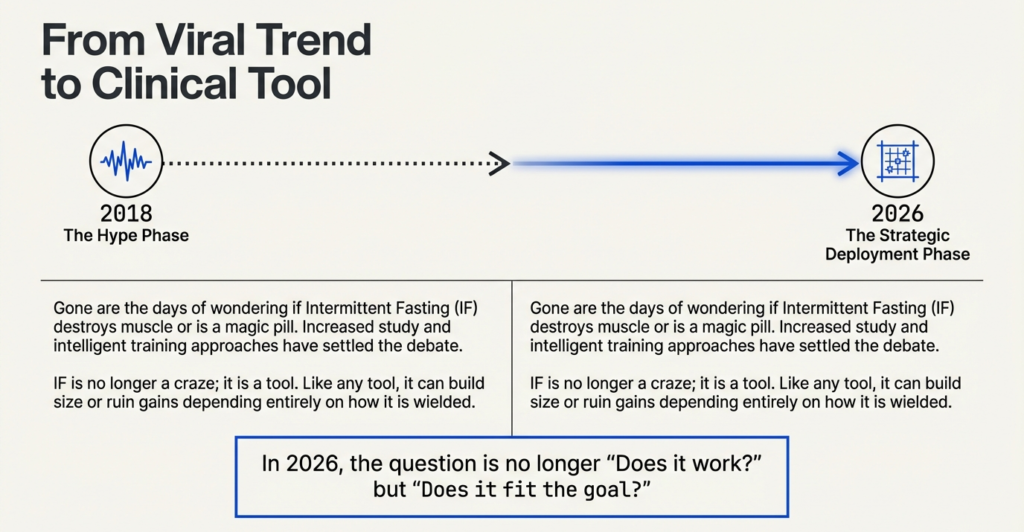
Intermittent fasting (IF) has become one of the most popular trends of interest in recent years, however, in 2026, the discussion has changed. Gone are the days when bodybuilders were wondering what intermittent fasting is: whether it would be effective in muscle building, fat loss, strength and long term performance. Increased study, more intelligent approaches to training, and development of diets, IF is no longer a craze. It’s a tool. It can, however, put on size on your body just as much as it can ruin your gains when misused like any other tool.
Therefore, is the intermittent fasting worth it to bodybuilders in 2026- or is it yet another overrated shortcut? Let’s break it down properly.
The Real Meaning of Intermittent Fasting to Bodybuilders
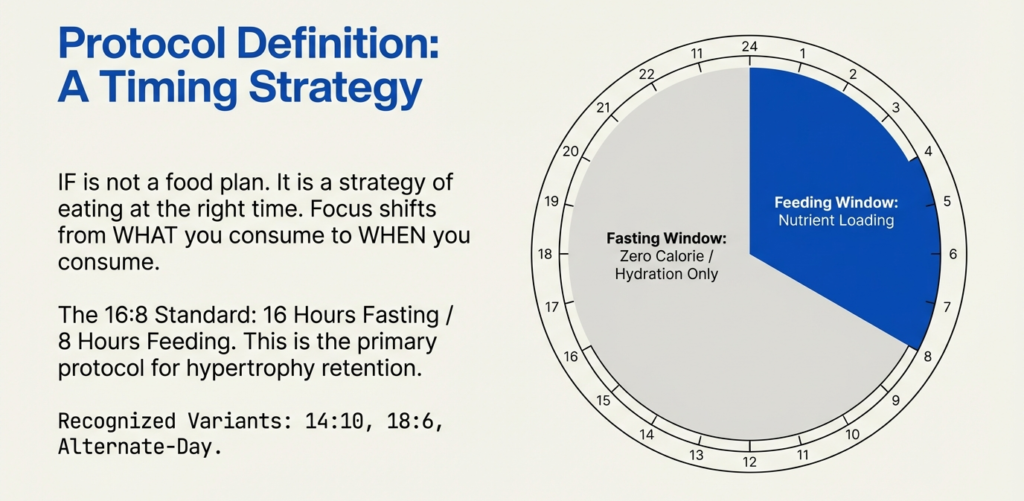
Intermittent fasting is not a food plan; it is a strategy of eating at the right time. Rather than concentrating on the foods that you consume, the IF looks at when you consume. The most popular one is the 16:8 way, which means that you are not allowed to eat during 16 hours, and then you have a 8-hour window of eating. Alternate-day or even 14:10, 18:6 or even alternate-day fasting is also a variation.
In the case of bodybuilders, timings directly affect the synthesis of protein in the muscles, performance during a workout, recovery and hormone levels. Lifters here unlike the sedentary individuals possess increased energy and protein requirements. Thus, IF in the case of bodybuilders should be designed, not without thought, but should be copied rather by those who could be influencing anyone to lose fat.
Why Intermittent Fasting Gained popularity in the Fitness Culture
The popularity of intermittent fasting did not happen by chance. The hectic lives, insulin resistance problem, the increasing obesity, and metabolic conditions compelled individuals toward the simplified eating habits. IF vowed to lose fat without being obsessive in calories, fewer meals, and improved compliance.
On the part of bodybuilders, IF was brought into the limelight as it contributed to staying lean throughout the year. A lot of athletes reported to have increased appetite control, decreased bloating, and improved nutrient partitioning. during the stages of cutting, IF helped to make calorie deficits easier. During bulking phases however, the results were more mixed-in-between-the-lines, hence the debate today.
The Real Science behind Muscle Growth and Intermittent Fasting
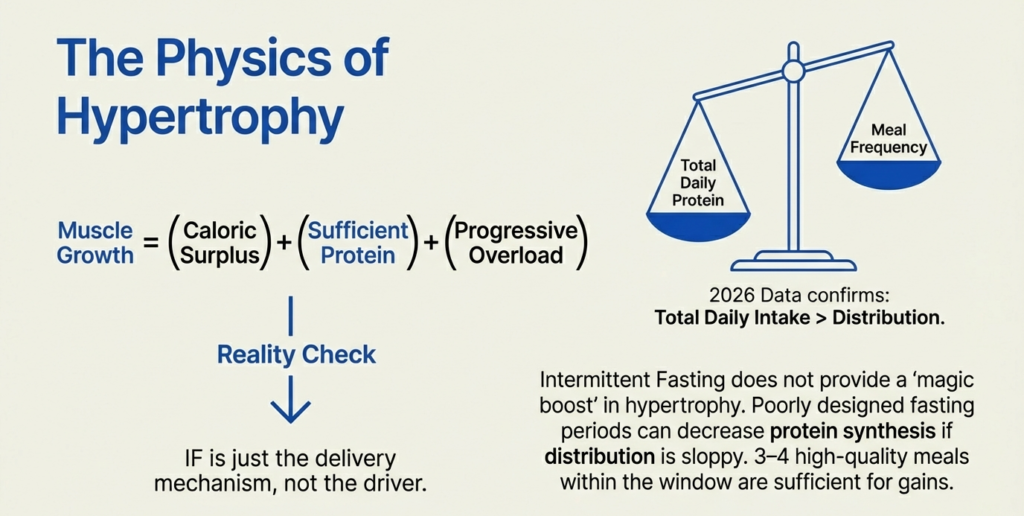
There are three fundamental needs of muscle growth, including caloric excess, sufficient protein and progressive overload. The intermittent fasting does not cause a magic boost in hypertrophy. Actually, poorly designed fasting may decrease protein synthesis in muscles in case there is poor distribution of proteins.
The study (2026) indicates that the amount of protein consumed daily is significant compared to the number of meals per day. Nevertheless, protein consumption as 3-4 high quality meals still provides some muscle gaining benefits. IF will be useful on muscle gain provided that calories and proteins are taken as required- but then it has to be precise.
Effect of Intermittent Fasting on Hormones in Bodybuilders
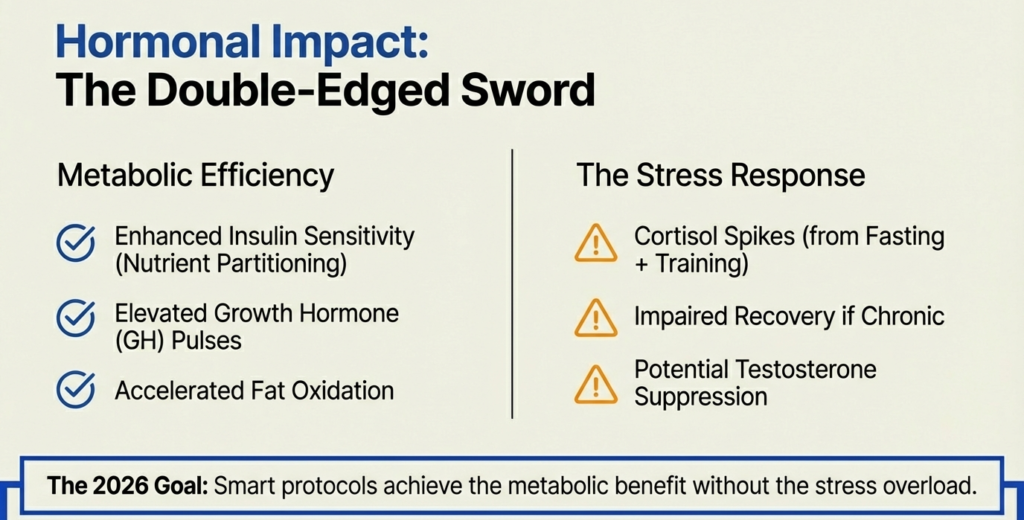
The impact on hormones is one of the factors that made IF popular. Short-term fasting has the ability to enhance insulin sensitivity, raise growth hormone pulses, and improve the process of burning fat. In the case of natural bodybuilders, enhanced insulin sensitivity would imply that nutrients have a high chance of being stored in fat.
Nevertheless, intensive fasting coupled with intense exercise, and calorie deficiency may elevate the amount of cortisol. Chronic cortisol may evidence impaired recovery, lowers testosterone, and has adverse effects on strength. Future smart IF protocols are expected to achieve hormonal benefits without evoking stress overload in the year 2026.
Strength, Performance and Training in Fasting State
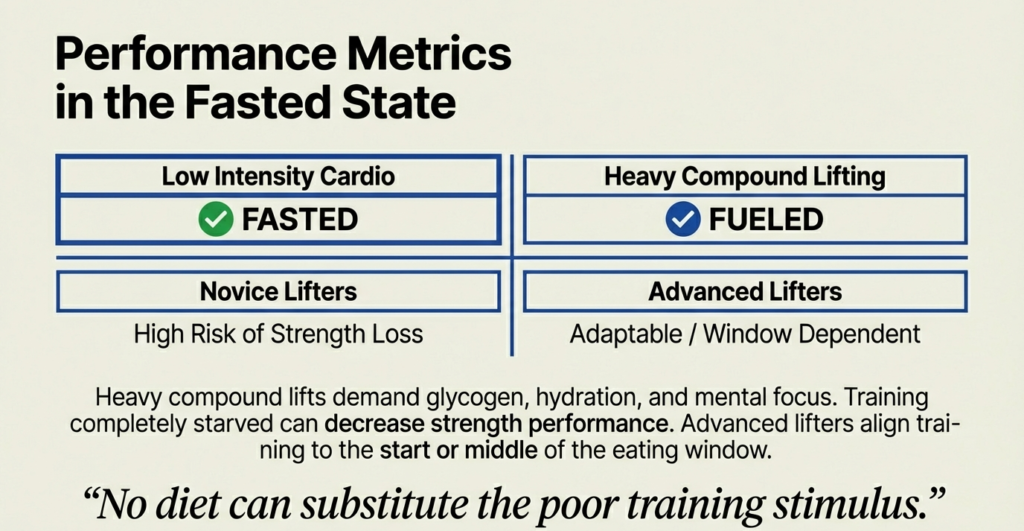
One of the largest issues of intermittent fasting is training performance. Heavy compound lifts demand the use of glycogen, hydration, and focus of the mind. Exercising in a starved condition may decrease strength performance of certain athletes, particularly novices.
With advanced lifters, it is more likely that they would adapt and train closer to the beginning or middle of the eating window. Many bodybuilders in the year 2026 use only fasted training in low intensity cardio, but maintain resistance training fueled. Performance is important- since there is no diet that can substitute the poor training stimulus.
Cutting With Intermittent Fasting
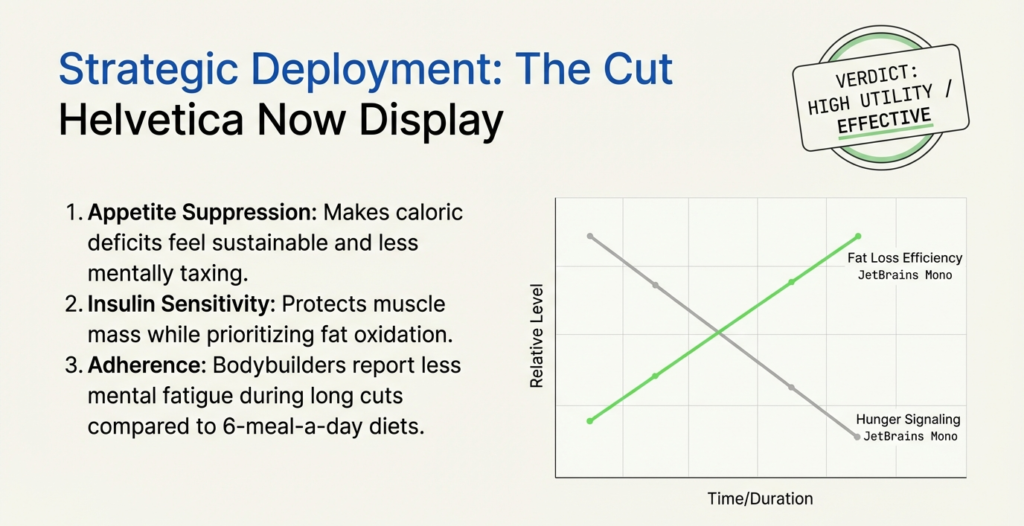
Intermittent fasting is most luminous in the periods of cutting. Reduced appetite, reduced calorie intake, and the ability to respond better to insulin make fat burning more sustainable. According to many bodybuilders, the adherence and mental fatigue are less in case of long cuts.
Bulking with Intermittent Fasting
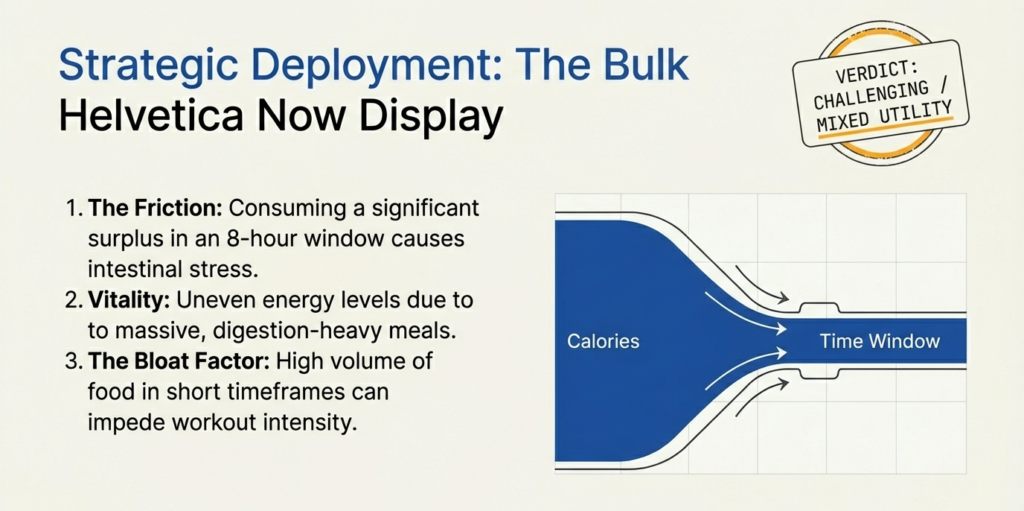
Bulking with IF is more difficult. The significant calorie intake needs to be eaten during a less extended period of time that may lead to intestinal stress and uneven vitality. A lean bulking program using IF, however, can also be performed, though more vigorous phases of mass-gain often respond to a longer eating period.
Mistakes that Bodybuilders are likely to make with Intermittent Fasting
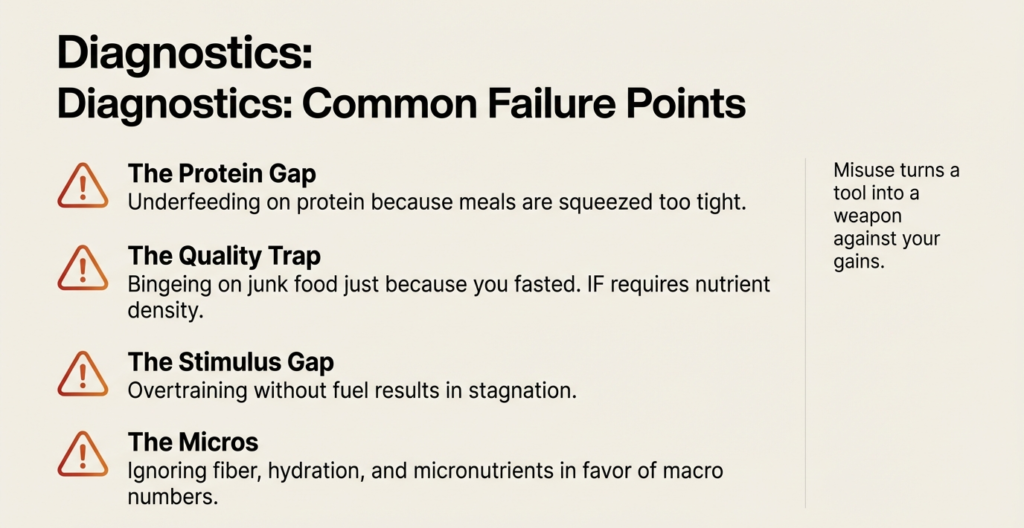
Another of the greatest errors is to underfeed on protein. Meals being squeezed may result in low overall consumption. The other error is overtraining without the right amount of fuel and this will result in stagnation of strength and recovery problems.
Micronutrients, fiber, and hydration are also not paid much attention to by many lifters. Bad food choices are not tolerated in IF. There is no use in skipping meals and then consuming low quality calories and binge-eating. Successful IF protocols in 2026 are based on nutrient density, and not only on the timing of calories.
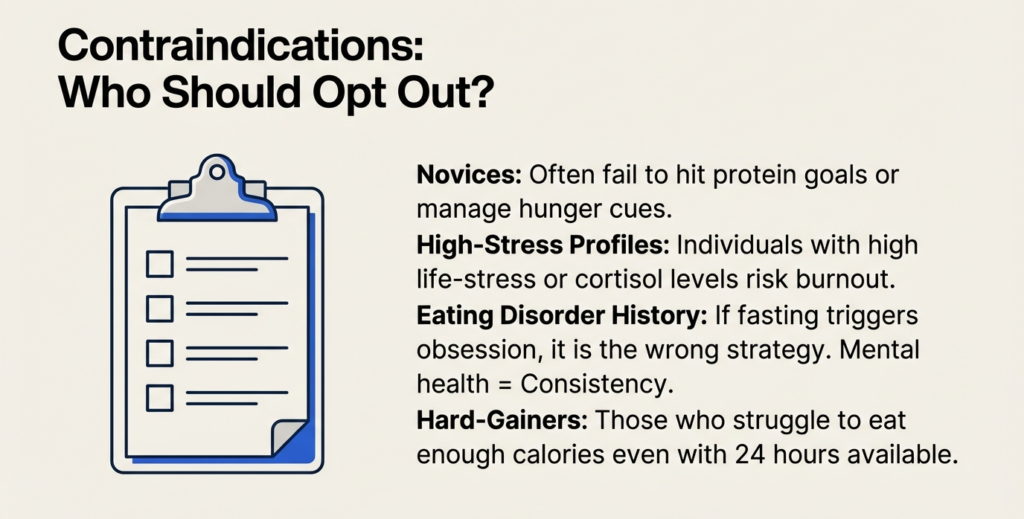
Who Must Not Do Intermittent Fasting?
Not all people can intermittently fast. Novices who have difficulties in achieving protein goals usually do not succeed in IF. There is also a possibility of decreased recovery among people who have very large volumes of training.
Individuals with eating disorders history must take IF with a grain of salt. Very much like physique goals, consistency and mental health do. When fasting causes more stress, obsession, or inaccurate performance, then it is not the correct strategy, regardless of its popularity.
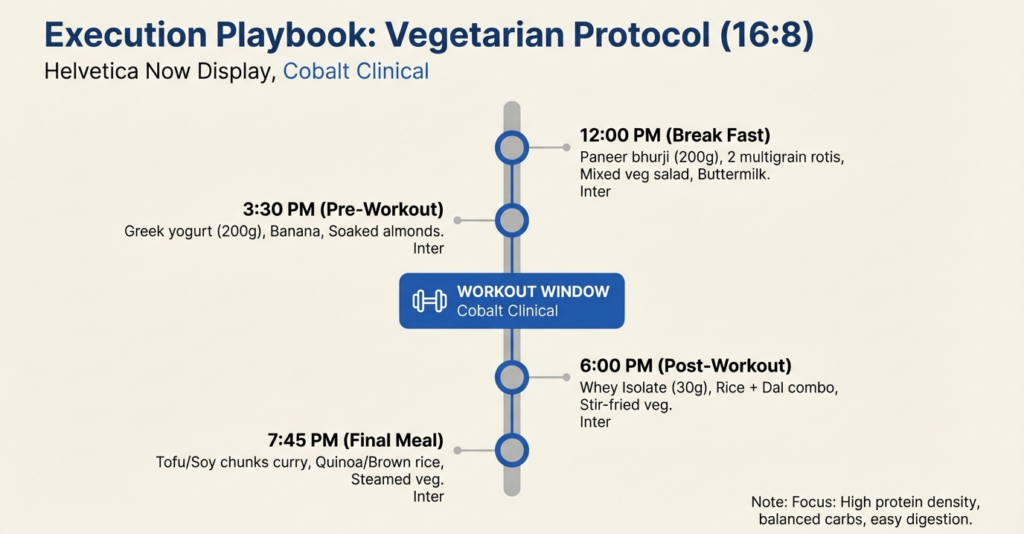
Vegetarian IFD plan 16:8 window
Eating Window: 12:00 PM – 8:00 PM
12:00 PM – First Meal
- Paneer bhurji (200 g).
- 2 multigrain rotis.
- Mixed vegetable salad with olive oil.
- 1 glass buttermilk.
3:30 PM – Pre-Workout Meal
- Greek yogurt or thick curd (200 g).
- 1 banana.
- Handful of soaked almonds.
6:00 PM – Post-Workout Meal
- Whey protein isolate (30 g).
- Rice + dal combo.
- Stir-fried vegetables.
7:45 PM – Final Meal
- Tofu or soy chunks curry.
- Quinoa or brown rice.
- Steamed vegetables.
High protein, Balanced carb, and easy to digest, this plan is presented in a limited eating period.
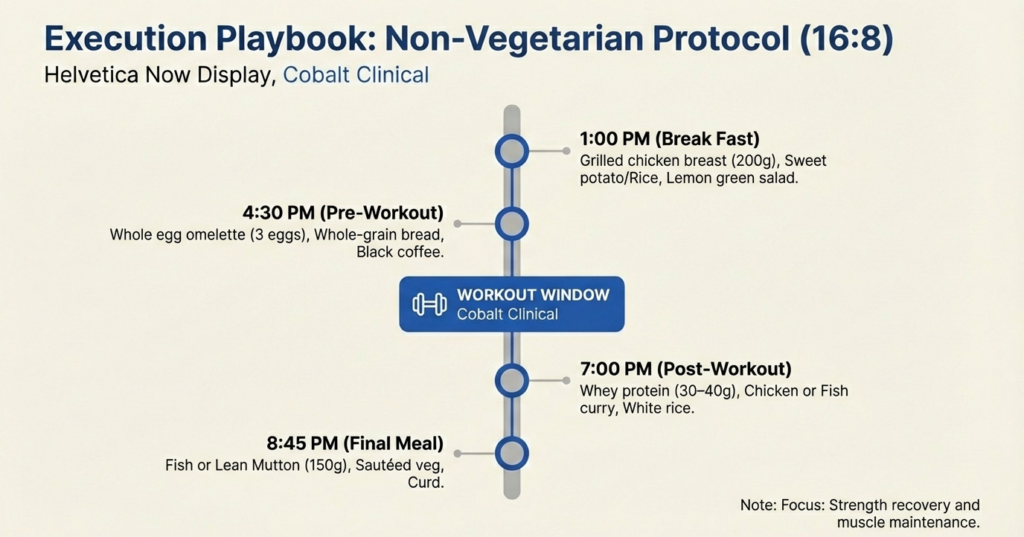
Non-Vegetarian ifd plan 16:8 Window
Eating Window: 1:00 PM – 9:00 PM
1:00 PM – First Meal
- Grilled chicken breast (200 g).
- Cooked sweet potatoes or rice.
- Lemon salad with green salad.
4:30 PM – Pre-Workout Meal
- Whole eggs omelets (3 eggs).
- 1 slice whole-grain bread.
- Black coffee (optional).
7:00 PM – Post-Workout Meal
- Whey protein (30–40 g).
- Chicken or fish curry.
- White rice.
8:45 PM – Final Meal
- Fish or lean mutton (150 g).
- Sautéed vegetables.
- Curd for digestion.
The structure assists in strength, recovery, and muscle maintenance during fasting regimes.
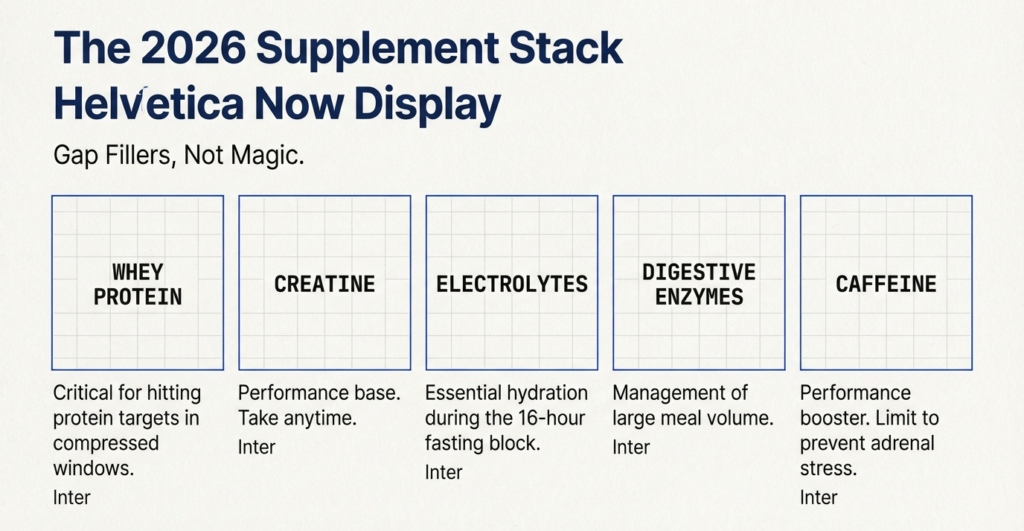
Supplements to aid intermittent fasting.
Supplementation has gone smart in 2026. Whey protein assists in achieving the protein objectives effectively. Creatine helps build strength irrespective of the time of meals. Electrolytes enhance hydration during the fasting hours.
Caffeine has the potential to boost performance, and must be avoided excessively so as to prevent adrenal stress. The digestive enzymes as well as probiotics assist in managing the large meals in limited eating periods. Supplements never substitute food- but when used properly can lead to maximization of fasting success.
Conclusion: Worth the Hustle or Bust?
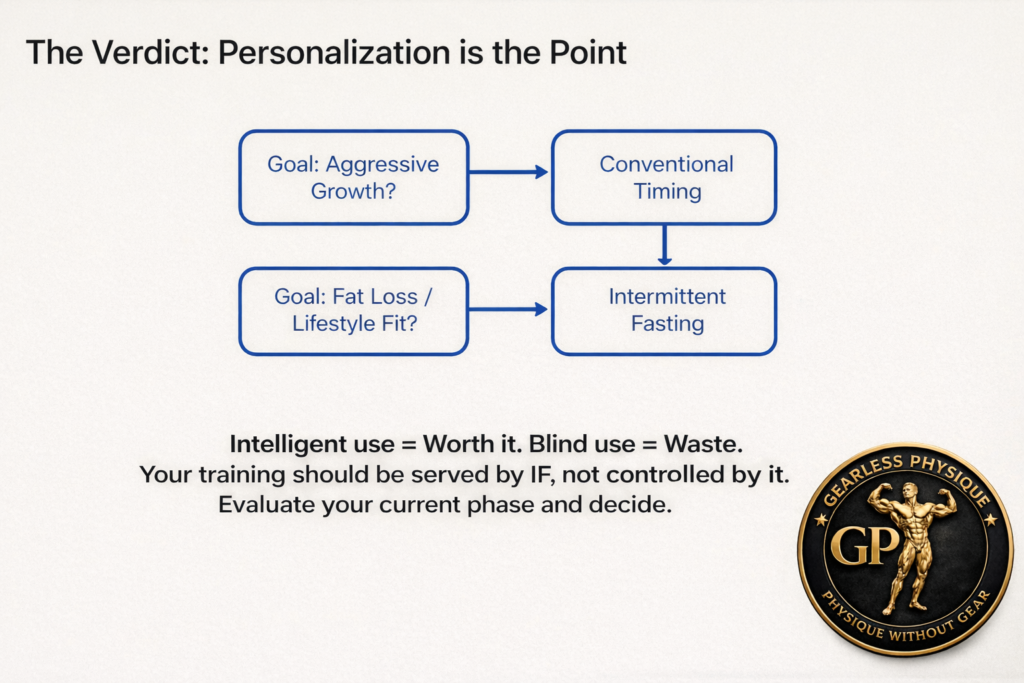
Intermittent fasting is not magic or useless. It is a tool in 2026 that will be flexible and excellent with some bodybuilders and dismal with others. IF is worth it, in case you aim to achieve fat loss, metabolic health and simplicity of lifestyle. In case of aggressive muscle growth and optimum performance, conventional meal timing can still be better.
Personalization is the actual point. Your training should be served by IF and not controlled. With the correct balance between calories, protein, recovery, and performance, intermittent fasting works to their benefit, rather than a shortcoming.
Intermittent fasting is worth it when it is used intelligently. Used blindly, it’s a waste.
Read more: https://www.maxhealthcare.in/blogs/intermittent-fasting

Gearless Physique
Physique Without Gear
Your transformation starts now. Who's with me?