Table of Contents
ToggleSmart Bulking on a Budget in 2026: High-Protein Indian foods that work.
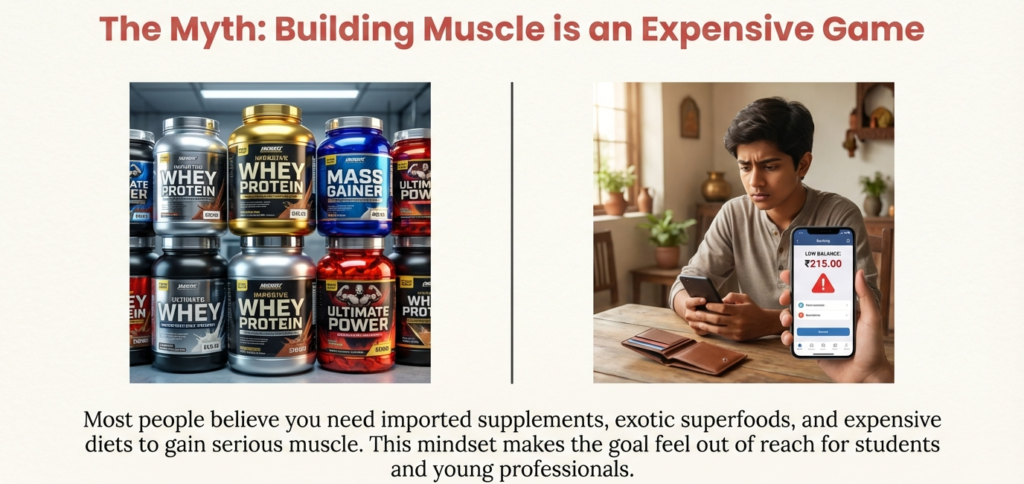
imported supplements, expensive superfoods, and expensive diets to gain weight. The truth is, however, that you can pack on some serious muscle with a budget especially in India when you know what to eat, protein sources and how to plan your meals. Indian kitchens are already well-endowed with cheap protein-rich foods which help in building lean muscles when consumed properly.
Bulking does not mean stuffing ourselves with everything around. It is concerning having sufficient calories, sufficient protein, and foods rich in nutrients on a regular basis. Regardless of whether it is a student, a working individual, or an individual under natural training, an Indian diet can be of great help and can provide substantial outcomes without losing health or effectiveness due to the low cost.

Why Protein Matters Most in Bulking
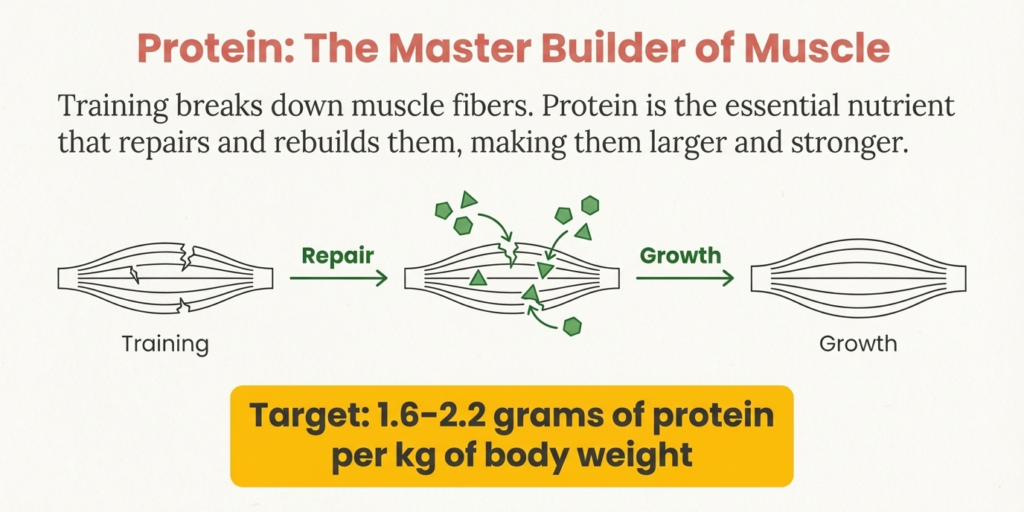
The muscle is made of protein. Training causes a breakdown of muscle fibers. Protein aids their rebuilding and repairing more largely and powerfully. When it comes to bulking, most lifters require roughly 1.62 grams of protein to every kg of body weight and this depends on the intensity and the recovery of the training regimen.
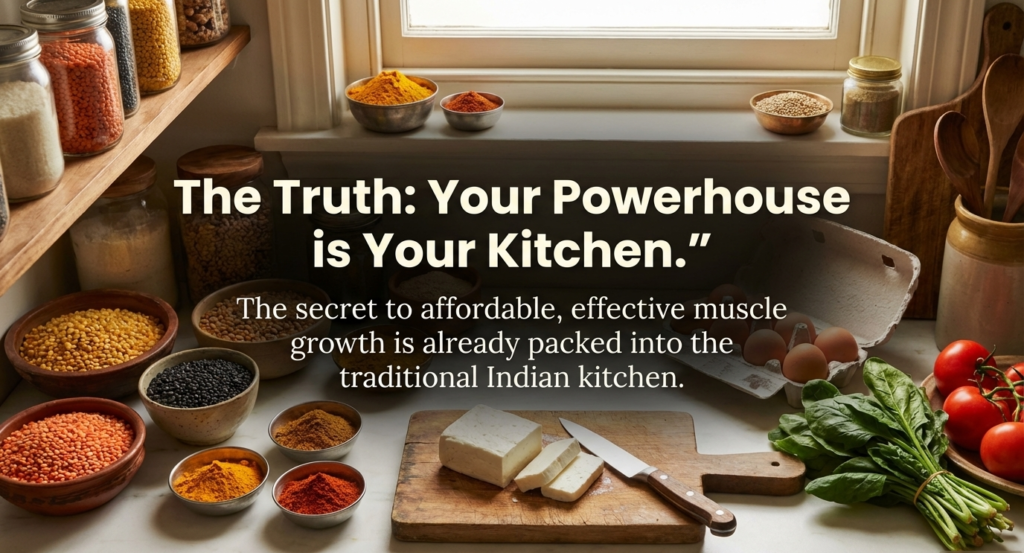
Truth: Your Kitchen Is the Powerhouse
The good news is that, protein need not be sourced at high costs through whey and imported meat. The Indian food culture already provides some of the high-protein choices that are affordable, nutritious, and well-balanced. Traditional Indian kitchen with dal, paneer, eggs, spices, and vegetables for muscle building. Even the plant-based sources can be properly used to provide solid muscle growth when combined.
Protein: The Master Builder of Muscle
Training breaks muscle fibres, but protein repairs and rebuilds them stronger. Aim for 1.6 g per kg of bodyweight. Muscle repair and growth diagram explaining how protein rebuilds muscle fibers.
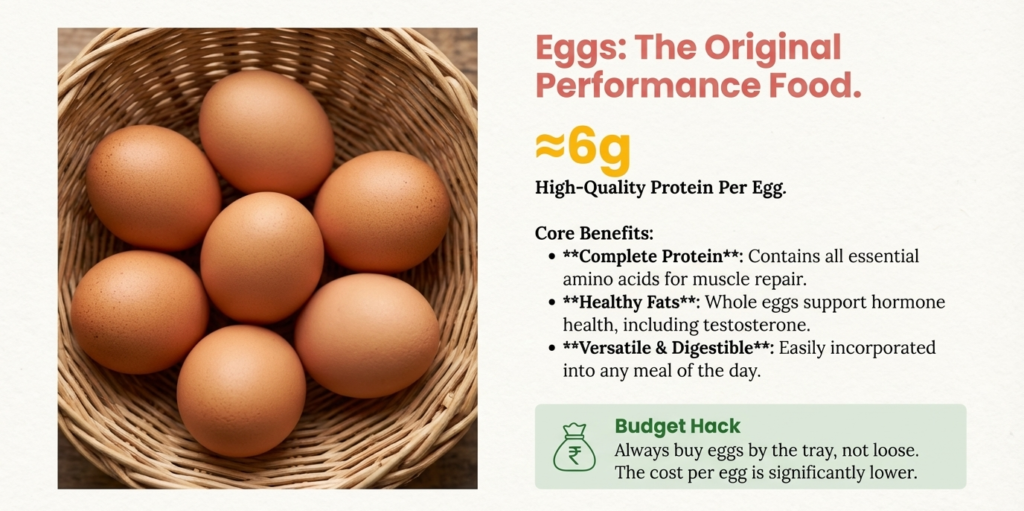
Eggs: King of Low-Fare Protein.
One of the most complete and cheap sources of proteins in India are eggs. A single whole egg contains quality protein, good fats, vitamins, and minerals needed to build up muscles. They can be cooked readily, digested easily and can be included in any meal time.
Eggs are the best when it comes to being bulked on a budget. They may be boiled, scrambled, in form of omelets, or in curry. Full eggs are beneficial in testosterone and general recovery. Whole eggs are much more useful than only the egg whites in case cholesterol is not a health issue of concern.
Budget tip: Use trays rather than loose eggs to save money per piece.
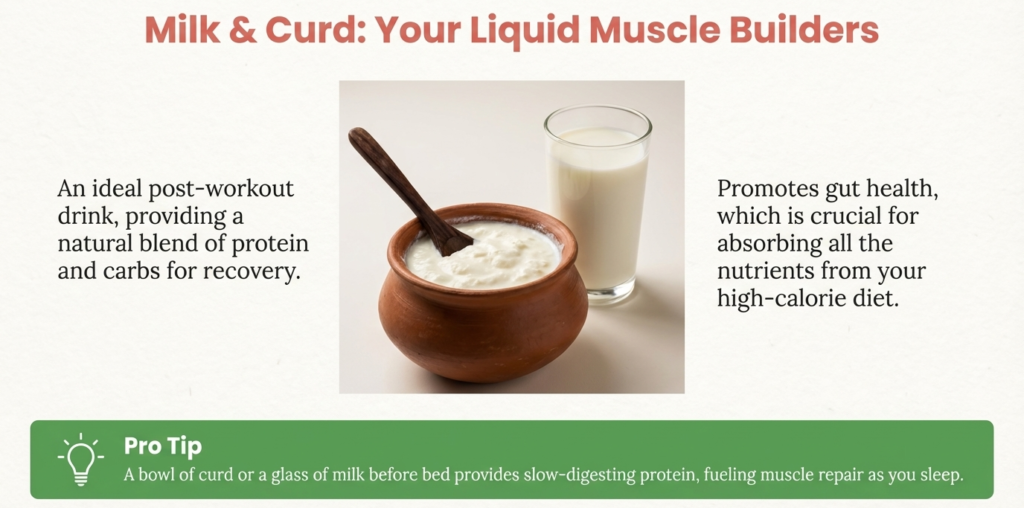
Milk and Curd: Liquid muscle Builders.
The traditional Indian foods are milk and curd (dahi) which are excellent in bulking. Milk is a good source of both protein and carbohydrate hence can be used as a source of post-workout recovery. Curd is good to support the health of the gut, digestion and the absorption of nutrients, which is important when you are adding calories.
The value of curd is particularly high as it is cheaper in comparison to paneer and also more easily digestible. Consistency will enhance appetite and optimize use of proteins. Taking curd with food is also a way of adding a lot of calories without making the person feel full.
Best application: Night control curd or milk helps slow down digestion and assists in repairing muscle tissue overnight.
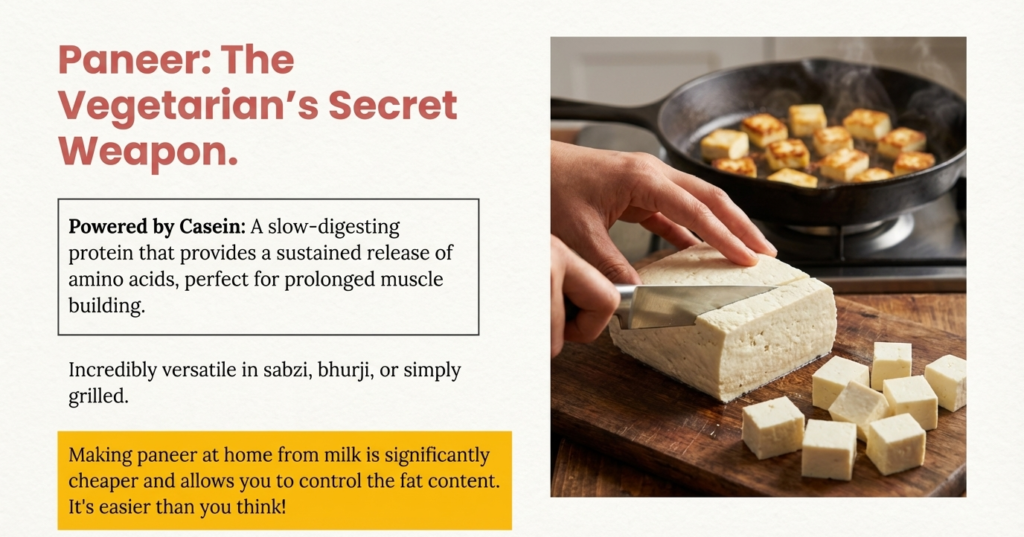
Paneer: Vegan muscle Food.
Paneer is a high-protein vegetarian food that is among the most popular in India. It includes casein protein that decomposes slowly and promotes prolongs muscle building. Although paneer is a little pricier than curd, it is also a rather affordable source of protein in comparison with imported ones.
Home made paneer is also cheaper and gives you an opportunity to regulate fat. Paneer may be served on sabzi, bhurji or grilled dishes. Paneer is also essential in the daily protein requirement of vegetarians.
Clever trick: Add paneer to dal or rice to make the full amino acid profile.
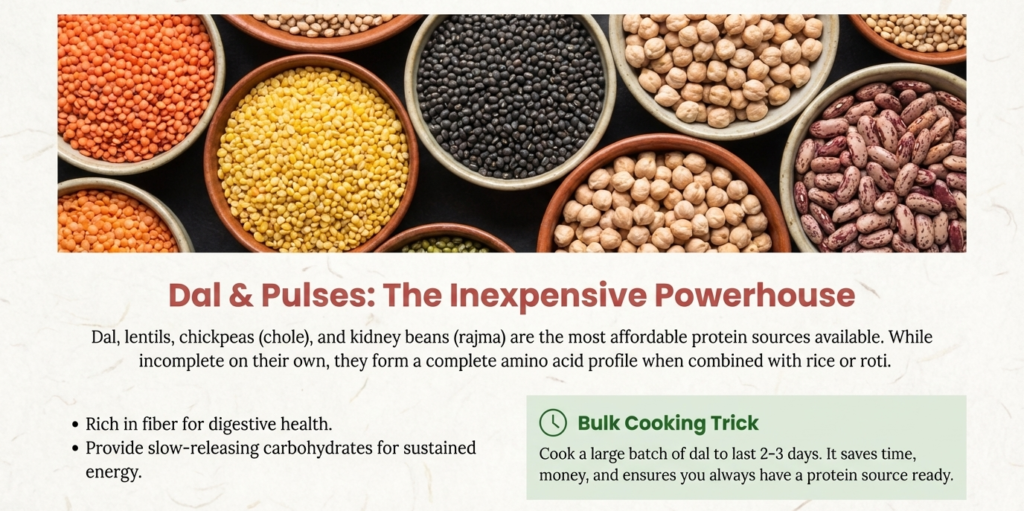
Dal and Pulses: Inexpensive, Powerful and Effective.
Proteins Dal, lentils, chickpeas, rajma, and chole are very cheap. They are not complete proteins in their own right, but when they are combined with rice or roti they make the amino acid profile complete. They are also sources of fiber, iron and slow carbohydrates.
Pulses are good in long lasting energy when bulking is required. They make you feel full, prevent junk cravings and aid in fat gain control. Regular usage enhances the digestion and general health of a person which in its turn enhances the growth of muscles in an indirect manner.
Bulk cooking trick: When preparing dal in large quantities, it saves time and money to store it overnight and use it within 2-3 days.
Soybeans and Soy Chunks: Low Price and High-Protein.
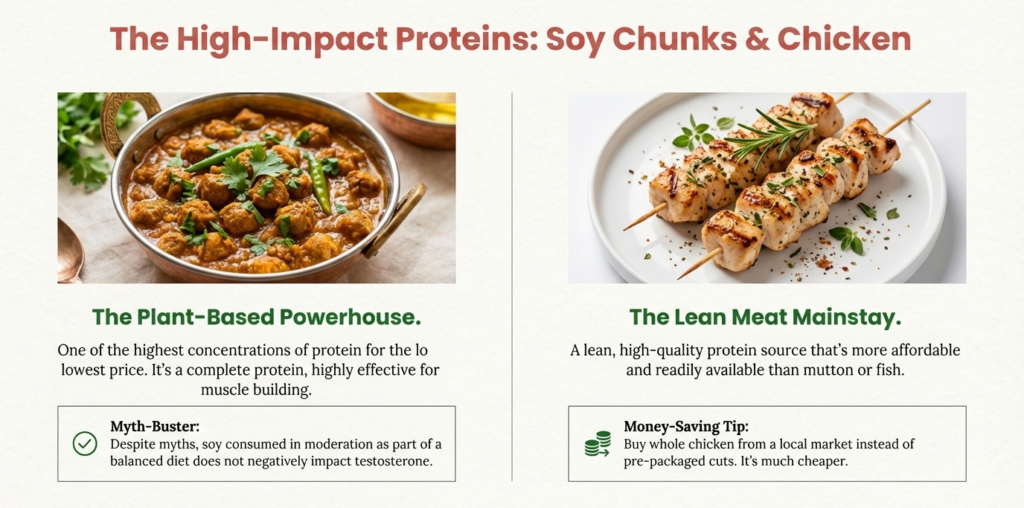
Soy chunks are also considered to be the highest protein foods in India and their price is very low. They come in handy particularly to individuals who have difficulties in achieving protein objectives. Soy protein is complete amino acid profile and is effective in muscle building.
Moderate levels of soy do not damage testosterone in normal people despite the myths. Soy chunks are safe when they are taken as a balanced diet and they can be very effective. They may be incorporated in pulao, sabzi or curry.
Best practice: Cook and boil properly in order to enhance digestion and flavor.
Rice & Roti: Fuel the Fire
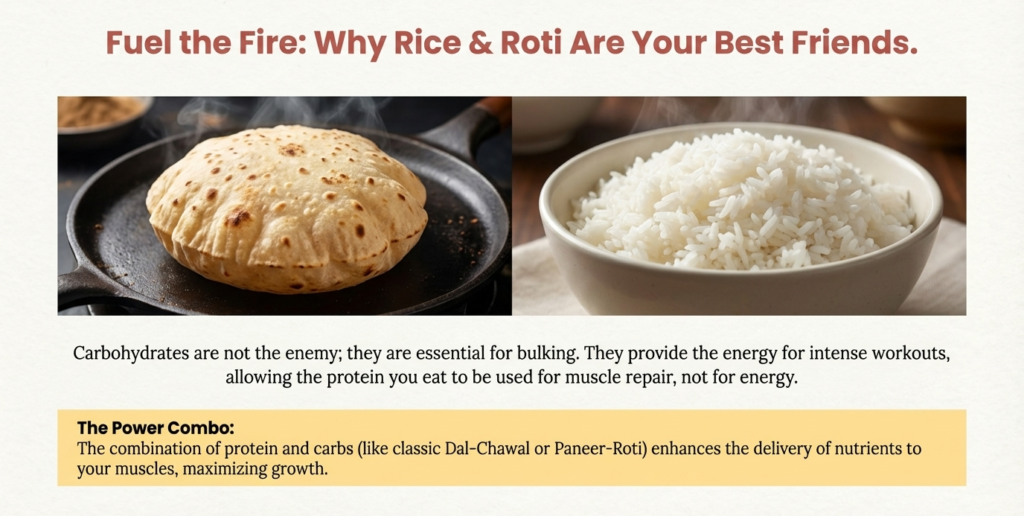
While rice and roti are not protein-rich, they play a crucial role in bulking. Carbohydrates fuel workouts and help spare protein for muscle repair instead of energy use. A low-carb diet often limits muscle gains, especially for ectomorphs.
Combining carbs with protein improves insulin response and nutrient delivery to muscles. Simple meals like dal-chawal or paneer-roti are powerful bulking combinations when eaten consistently.
Chicken: Broilers Protein without Breaking the Bank.
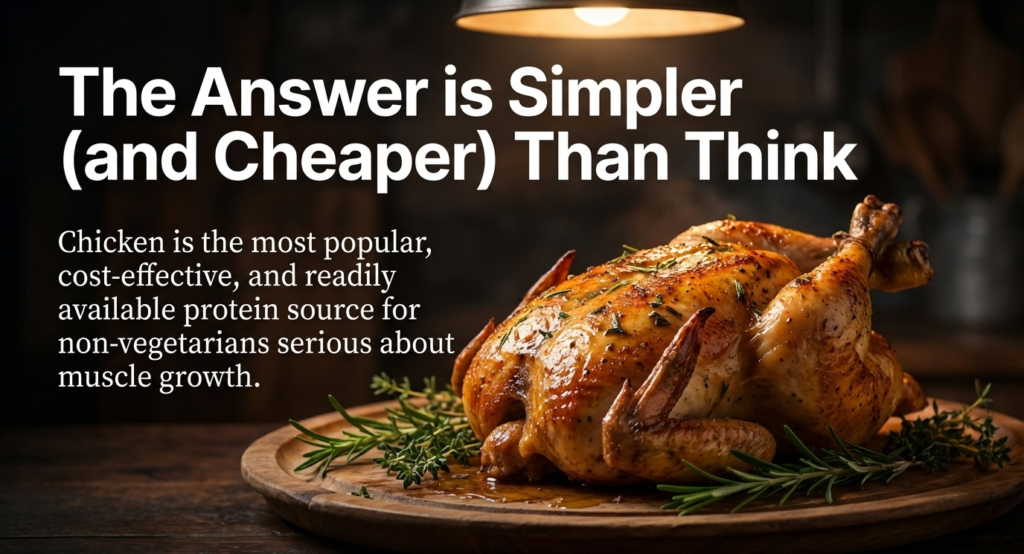
The most popular protein sources that can be used to bulk non-vegetarians include chicken. Chicken is cheaper and more readily available as compared to mutton or fish. When prepared properly, it provides low-fat high-quality lean protein.
Chicken curry, grilled chicken or boiled chicken can be easily included in a budget bulking program. Purchasing whole chicken as opposed to purchasing only breast saves a lot of money. The meals are healthy and tasty using spices instead of oil.
Money saving concert: Purchase at local markets, as opposed to packaged stores.
Peanuts and Peanut Butter: Calorie-High and Low-Cost.
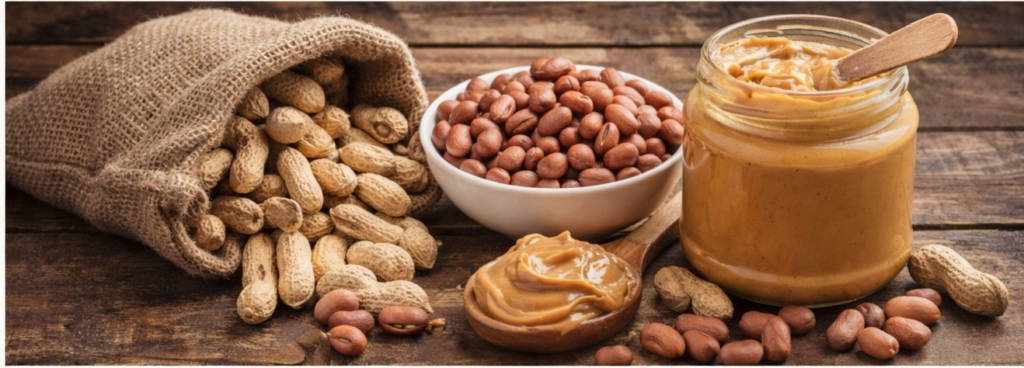
Peanuts contain a lot of calories, they are high in protein and are very cheap. They are also the best to be used with the hard gainers who cannot consume adequate calories. Peanut butter, particularly homemade, can be a good source of calories, as well as it does not add too much meal volume.
Healthy fats in peanuts also promote the production of hormones and the well-being of joints. They are ideal as snacks, after-workout supplements or meal supplements.
Portion size: Peanuts contain a lot of calories, hence a balance is necessary to prevent unnecessary fat increase.
Low-cost Vegetables that promote muscle-growth.
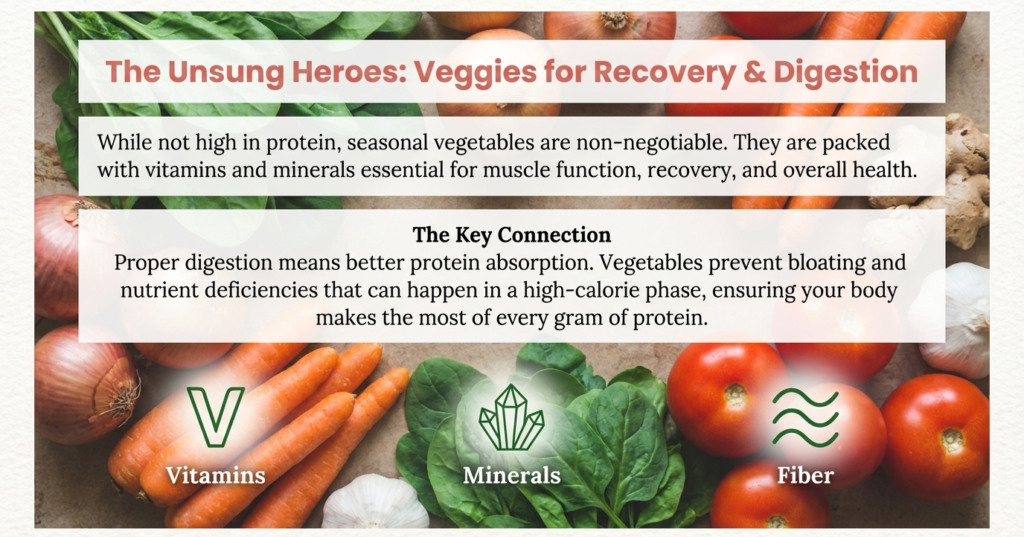
Vegetables do not furnish the body with any protein, but they aid digestion, recovery, and health in general. Spinach, carrots, onions, tomatoes, and vegetables of the season contain vitamins and minerals that are critical to the body in muscle functioning. Proper digestion implies enhanced absorption of proteins. Several vegetable intakes help to avoid bloating, constipation, as well as nutrient deficiency in bulking phases of high calorie.
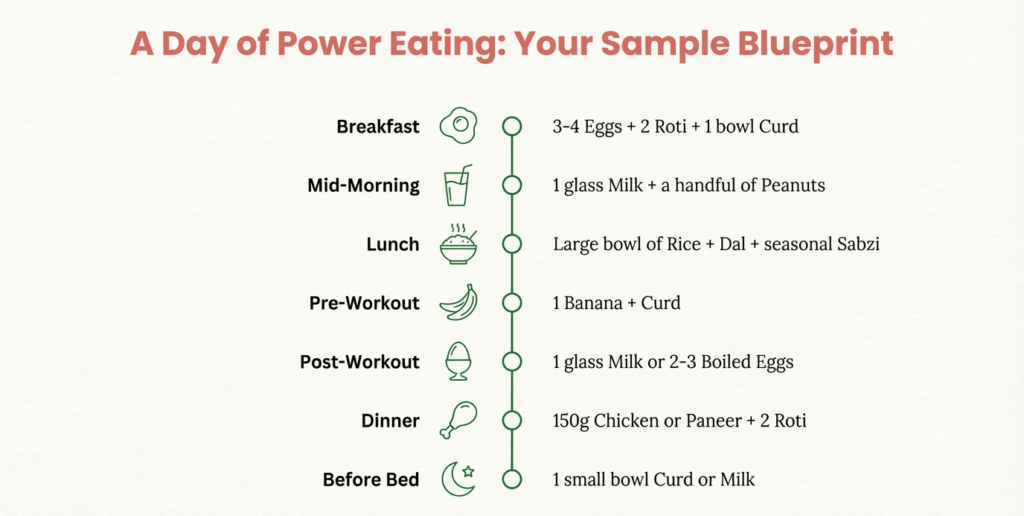
Sample Budget Meal Structure of Bulking.
- Breakfast: Eggs + roti + curd
- Mid-morning: Milk + peanuts
- Lunch: Rice + dal + vegetables
- Pre-workout: Banana + curd
- Post-workout: Milk or eggs
- Dinner: Chicken or paneer + roti.
- Before bed: Curd or milk
This type of structure involves the use of simple foods, low supplementation, and low cost, yet satisfies the protein requirements.
Read more:https://www.muscleandstrength.com/articles/3-healthy-bulking-foods-hardgainers.html
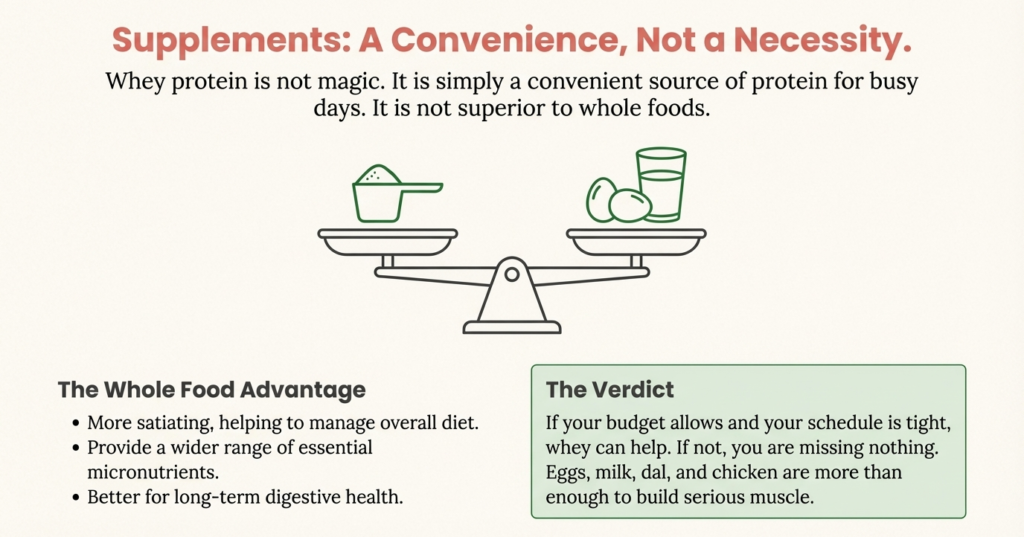
Should You Take Supplements on a Budget?
The supplements are not compulsory. Whey protein is not a necessity but convenient when you have a regular diet. Whole foods are more satiating, digestible and have micronutrients.
Whey will assist provided there is the budget on busy days. Otherwise, eggs, milk, dal and chicken are sufficient enough to gain muscle naturally.
Concluding Remarks: Bulking Clever Beats Bulking Costly.
It is easy, not difficult, to bulk up in India at an affordable cost. Unity, food scheduling, and intelligent eating habits are more significant than costly products. Already, Indian kitchens offer all they need to call serious muscle growth.
Emphasis should be on cheap sources of protein, intake of sufficient calories, training, and rest. Protein may have been found in the supplement jar or just a regular bowl of dal, but muscles do not distinguish. It is about discipline, patience, and the long-run consistency


Gearless Physique
Physique Without Gear
Your transformation starts now. Who's with me?