7 Reasons Scale Weight Lies During Fat Loss
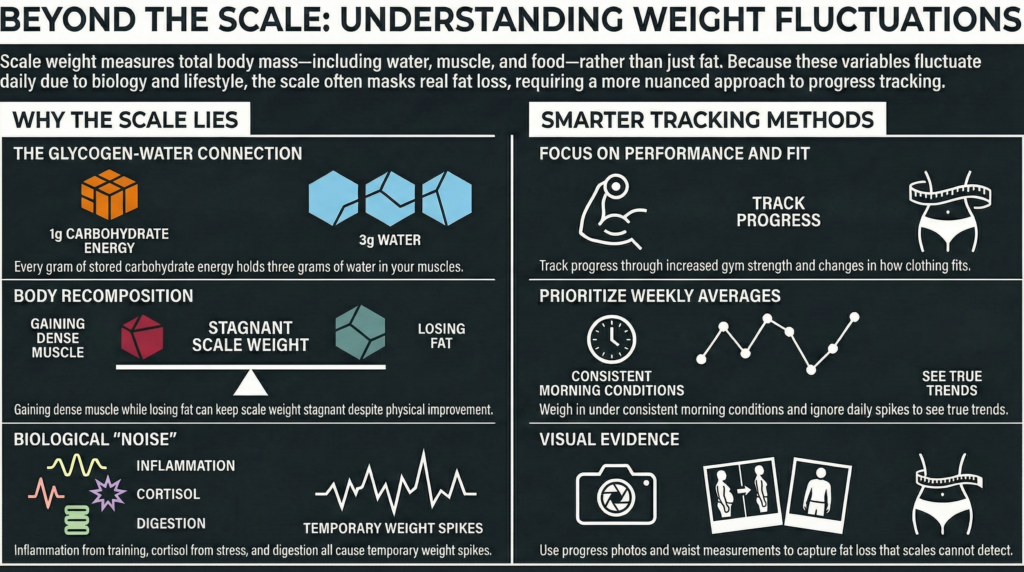
This infographic explains why scale weight is often misleading during fat loss. It highlights how total body weight includes water, muscle, glycogen, and food volume, all of which fluctuate daily. The glycogen-water relationship shows how carbohydrates can increase water retention, while body recomposition demonstrates that gaining muscle while losing fat may keep weight unchanged. Biological factors like inflammation, stress hormones, and digestion create temporary spikes, often mistaken for fat gain. Instead of relying solely on the scale, the image emphasizes smarter tracking methods such as progress photos, strength improvements, and weekly averages. This approach provides a clearer, more accurate picture of fat loss progress over time.
Read more: https://www.rbmafamilydocs.com/7-times-the-scale-is-lying-to-you/
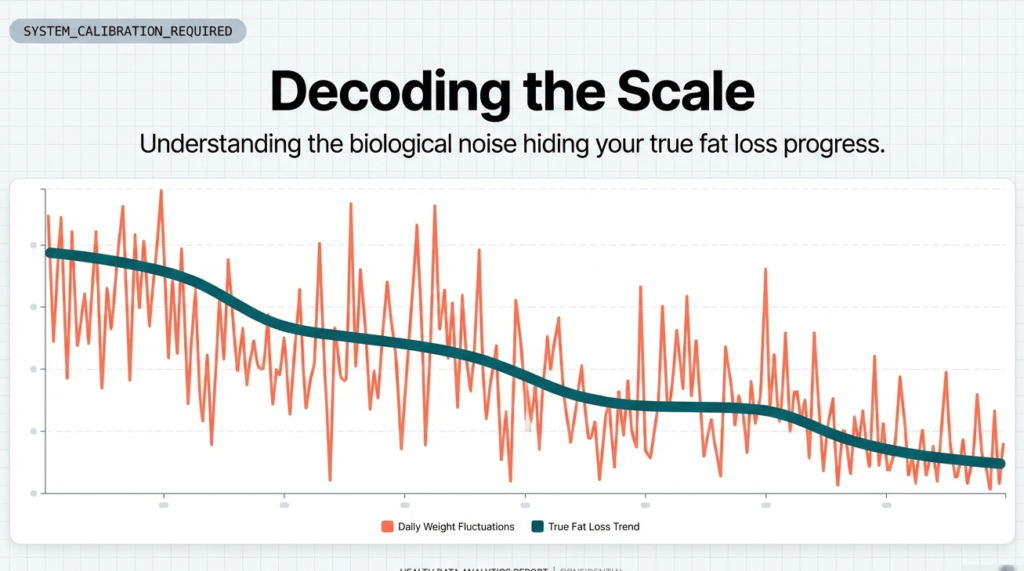
Scale Weight Lies: True Fat Loss vs Daily Weight Fluctuations
Scale weight lies one of the biggest misconceptions in fat loss—daily weight changes do not reflect actual fat loss. The red line represents unpredictable daily fluctuations caused by water retention, glycogen shifts, digestion, and stress. Meanwhile, the smooth downward line shows the true fat loss trend happening over time. Many people panic when the scale spikes, assuming fat gain, but in reality, the body is simply holding temporary water or processing food. Understanding this difference helps you stay consistent and avoid emotional decisions. Fat loss is a long-term process, and only trends over weeks—not daily readings—reveal real progress.
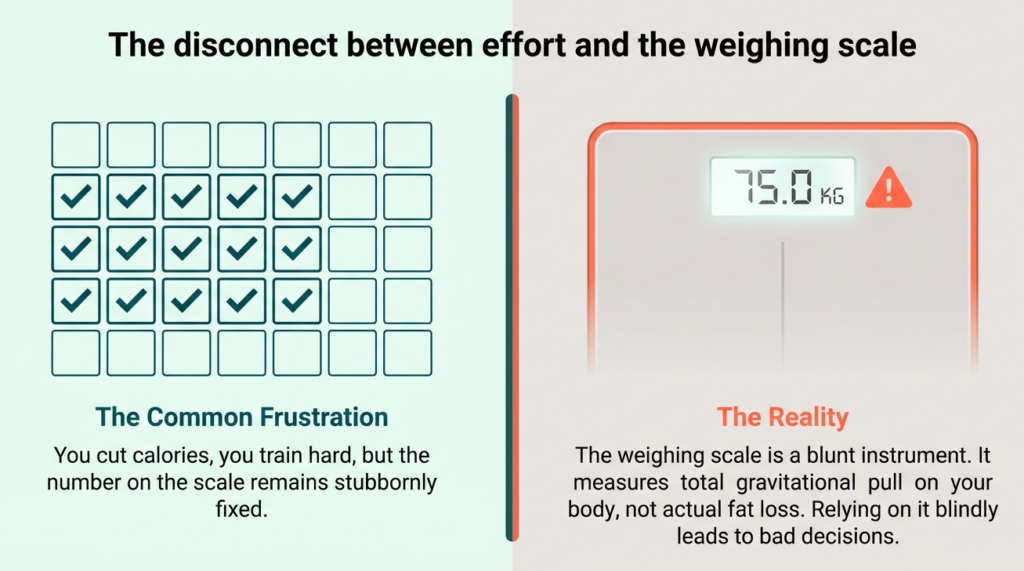
The Disconnect Between Effort and Scale Weight
Scale weight lies is a common frustration in fat loss—putting in consistent effort but seeing no change on the scale. Many individuals follow strict diets and training routines, yet the scale remains unchanged. This happens because the scale measures total body weight, not just fat. Factors like water retention, muscle gain, and digestion can mask real progress. The scale is a blunt tool that cannot differentiate between fat loss and other biological changes. Understanding this disconnect prevents frustration and poor decision-making. Instead of relying solely on scale weight, it is important to track multiple indicators like measurements, strength, and visual changes.
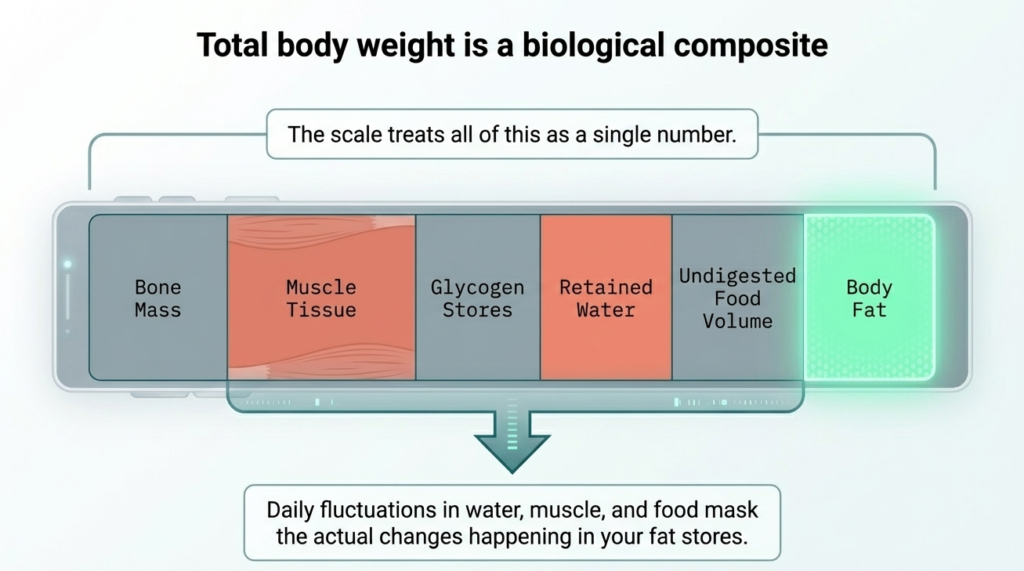
What Makes Up Your Body Weight
This infographic explains that body weight is a composite of several elements, including muscle mass, body fat, glycogen stores, water retention, bone mass, and undigested food. The scale combines all these variables into a single number, which is why it often gives a misleading picture of fat loss. Daily fluctuations in any of these components can shift your weight without any real fat gain or loss. For example, increased water retention or food volume can temporarily increase weight. Understanding this breakdown helps you realize why scale readings fluctuate and why they should not be the sole metric for tracking fat loss progress.
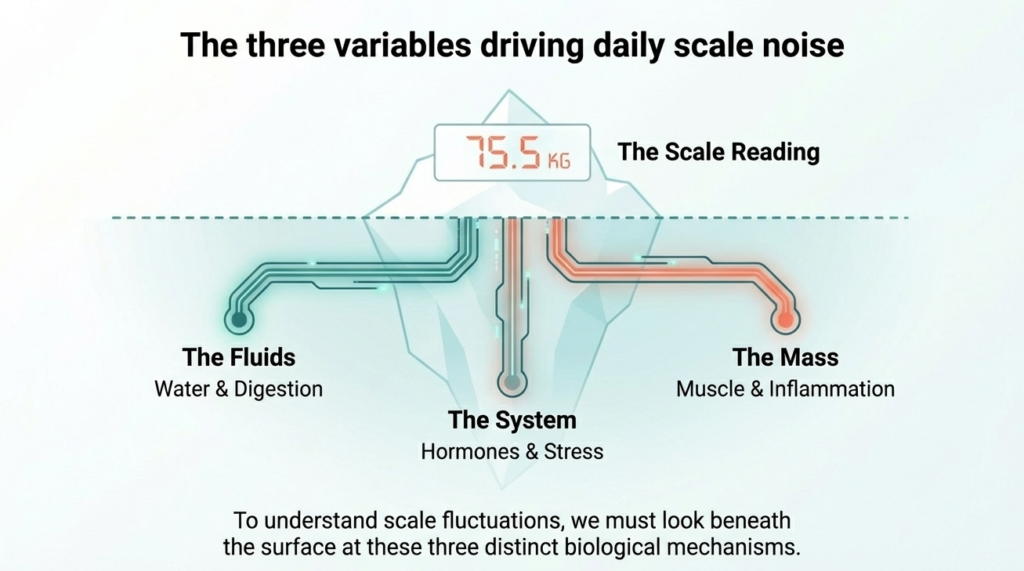
The Three Drivers of Scale Fluctuations
This image breaks down the three main biological drivers behind daily weight fluctuations: fluids, hormonal changes, and muscle-related factors. Water retention due to sodium intake or hydration can quickly alter scale weight. Hormonal changes, including stress and sleep quality, can increase cortisol and lead to temporary weight gain. Muscle inflammation from intense workouts also causes water retention as the body repairs tissue. These factors create “noise” in daily weigh-ins, making it difficult to see true fat loss. By understanding these variables, you can avoid misinterpreting short-term changes and instead focus on long-term progress trends that reflect actual fat loss.
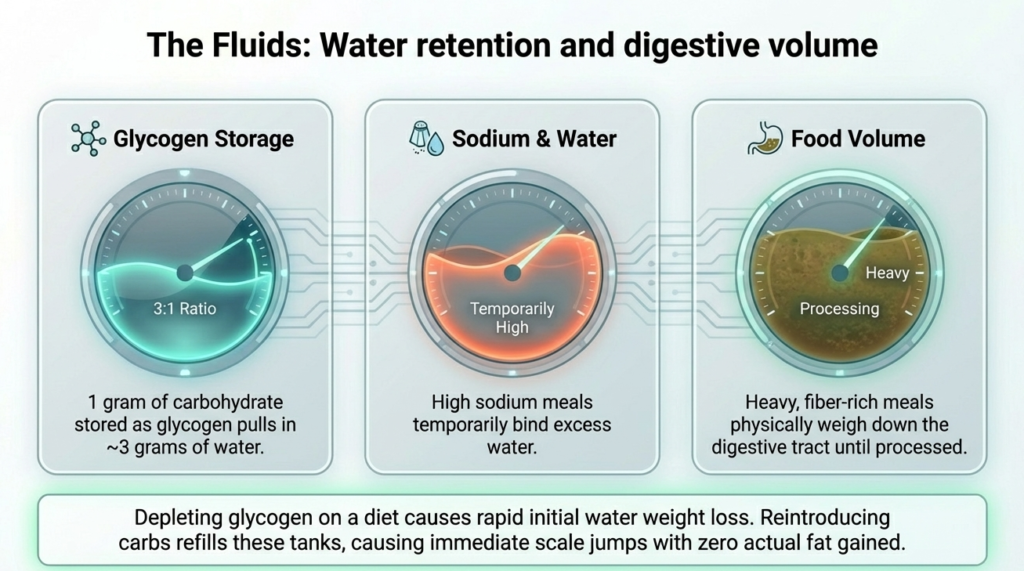
How Water, Glycogen, and Food Volume Affect Weight
This image highlights how glycogen storage, sodium intake, and food volume influence scale weight. Glycogen stored in muscles binds water, meaning higher carbohydrate intake can increase body weight without adding fat. Similarly, high sodium meals cause temporary water retention, leading to scale spikes. Food volume also plays a role, as undigested food adds physical weight to the body. These changes are temporary and do not reflect fat gain. Many people misinterpret these fluctuations and become discouraged. Understanding these factors allows you to stay consistent and trust the fat loss process instead of reacting emotionally to short-term changes on the scale.
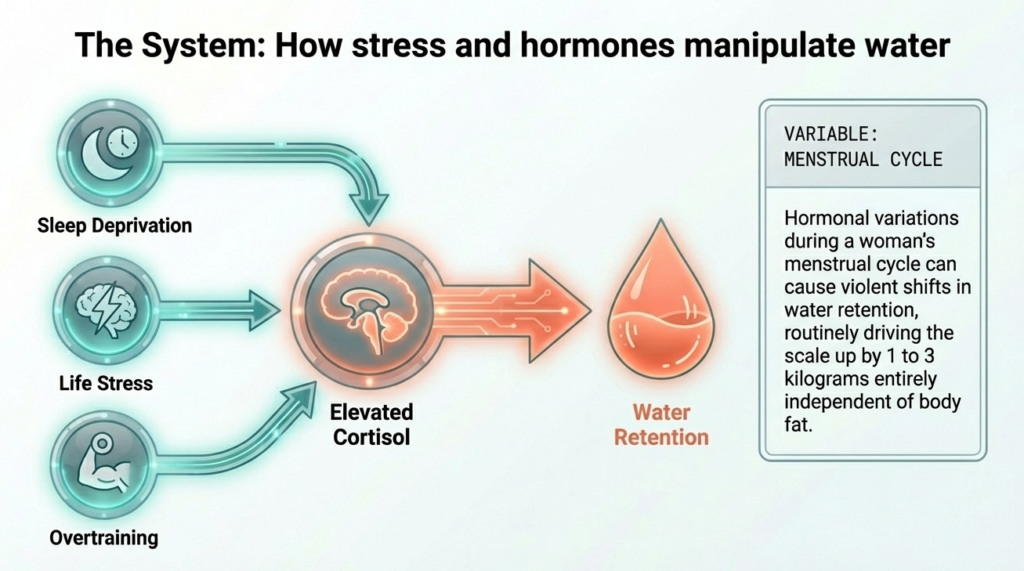
How Hormones and Stress Influence Scale Weight
Hormones play a critical role in weight fluctuations, particularly cortisol, the stress hormone. This image shows how lack of sleep, life stress, and overtraining elevate cortisol levels, leading to increased water retention. This can cause temporary weight gain, even when fat loss is occurring. In women, hormonal changes during the menstrual cycle can also lead to significant fluctuations in weight due to water retention. These shifts are completely normal and not related to fat gain. Understanding hormonal influence helps prevent unnecessary frustration and allows you to stay focused on long-term fat loss rather than reacting to short-term scale changes.
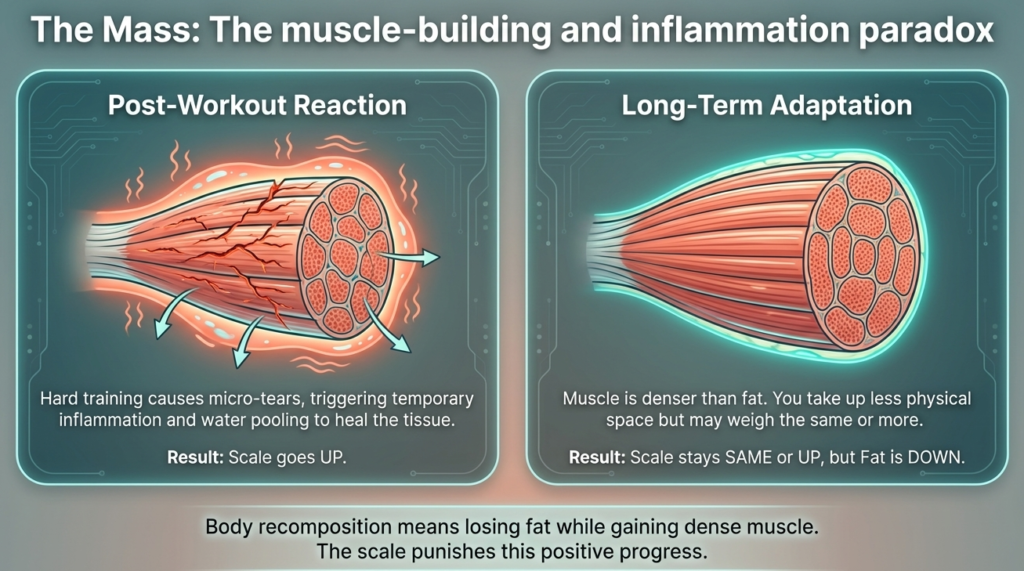
Muscle Gain and Inflammation: Why the Scale Misleads
This image explains the paradox of muscle gain and inflammation during fat loss. After intense workouts, muscles experience micro-tears that trigger inflammation and temporary water retention, causing a short-term increase in weight. Over time, as muscles grow stronger and denser, they may weigh more than fat while occupying less space. This means you can look leaner without losing scale weight. This process, known as body recomposition, is a positive transformation that the scale fails to capture. Understanding this helps you focus on physical changes and performance rather than relying solely on the number on the scale.
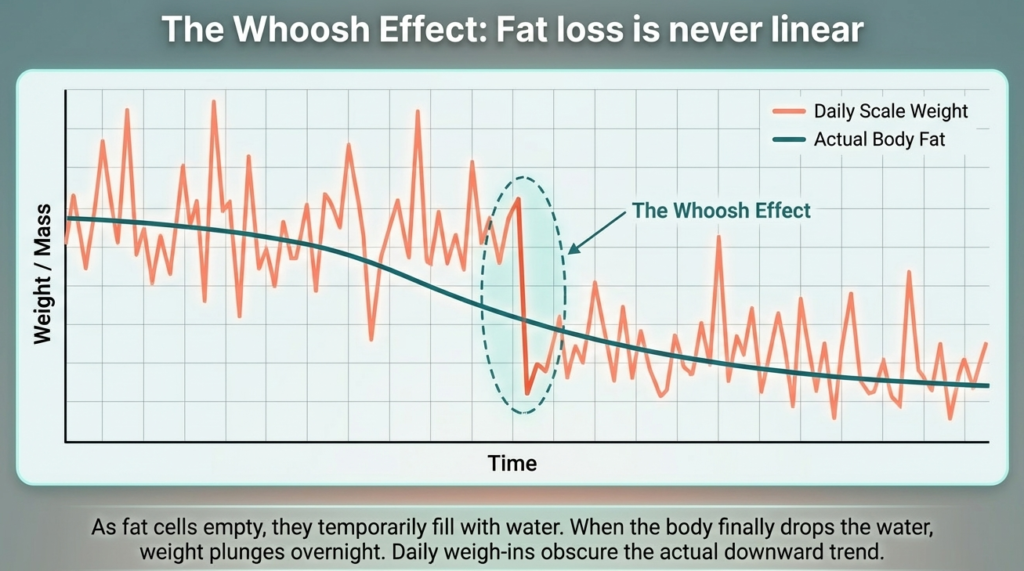
The Whoosh Effect: Non-Linear Fat Loss
This image demonstrates the “whoosh effect,” where fat loss appears suddenly after a period of stagnation. During fat loss, fat cells may temporarily retain water, masking progress on the scale. When the body finally releases this water, weight drops quickly, creating a sudden visible change. This non-linear pattern often confuses people, leading them to believe they are not making progress. In reality, fat loss is happening beneath the surface. Understanding this concept helps you stay patient and consistent. Instead of focusing on daily changes, tracking long-term trends provides a more accurate representation of fat loss progress.
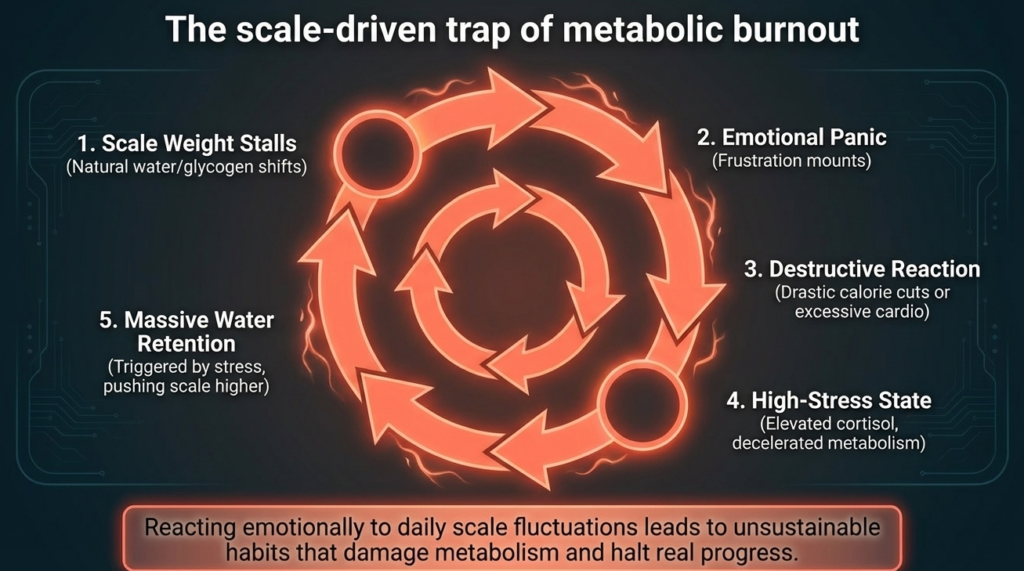
The Dangerous Cycle of Scale Obsession
This image illustrates the harmful cycle created by obsessing over scale weight. When progress stalls, people often panic and drastically cut calories or increase cardio. This leads to elevated stress, hormonal imbalance, and water retention, which can further increase scale weight. The result is frustration, burnout, and slowed metabolism. This cycle prevents real fat loss and can damage long-term progress. Understanding this pattern is crucial for avoiding destructive habits. Instead of reacting emotionally to short-term fluctuations, focus on consistency, proper nutrition, and recovery to achieve sustainable fat loss results.
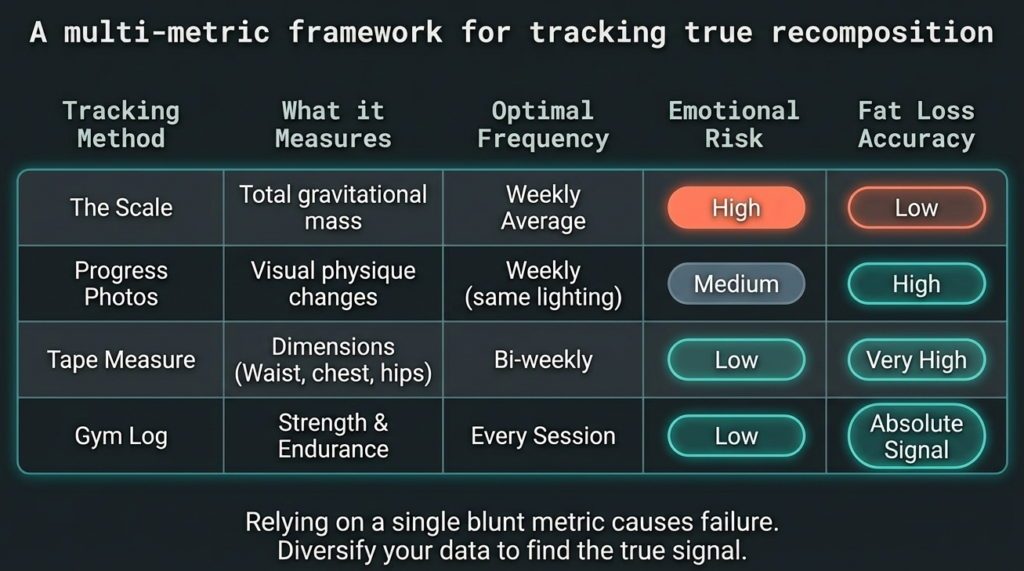
Best Methods to Track Fat Loss Progress
This image highlights the importance of using multiple tracking methods instead of relying solely on the scale. While the scale measures total body weight, progress photos reveal visual changes, measurements track fat loss in specific areas, and gym performance indicates strength and muscle retention. Each method provides unique insights into your progress. Combining these tools gives a more accurate and complete picture of fat loss. This approach reduces emotional stress and prevents misinterpretation of results. By focusing on multiple indicators, you can better understand your body’s changes and stay motivated throughout your fat loss journey.
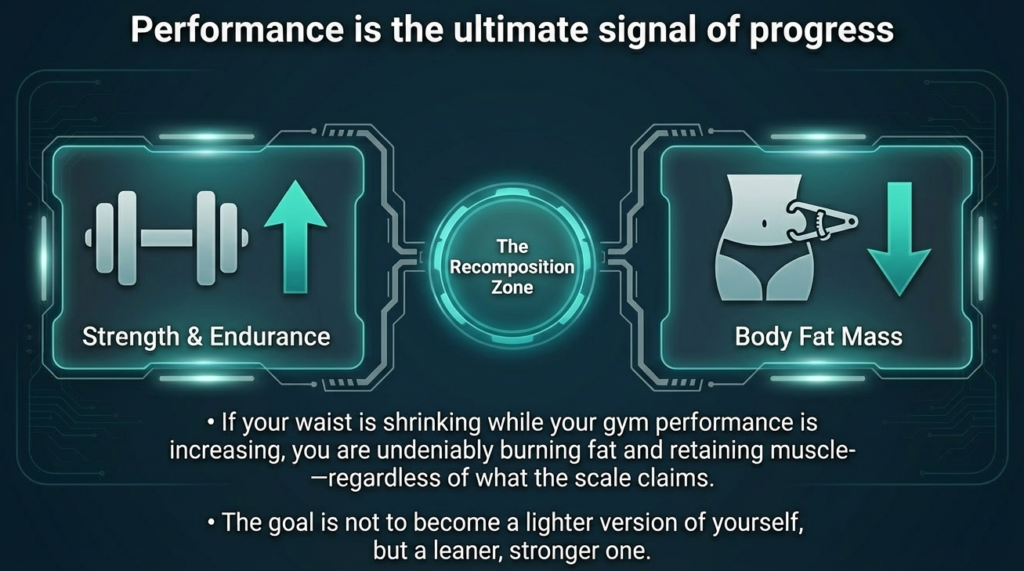
Performance as the True Indicator of Progress
This image emphasizes that gym performance is one of the most reliable indicators of fat loss progress. If you are maintaining or increasing strength while your waist size decreases, it means you are losing fat and preserving muscle. This is the ideal outcome during fat loss. The scale may not reflect these improvements, but your performance and physique will. Strength gains indicate proper nutrition, recovery, and effective training. Instead of chasing a lower number on the scale, focus on becoming stronger and more capable. This mindset shift leads to better long-term results and a more sustainable fitness journey.
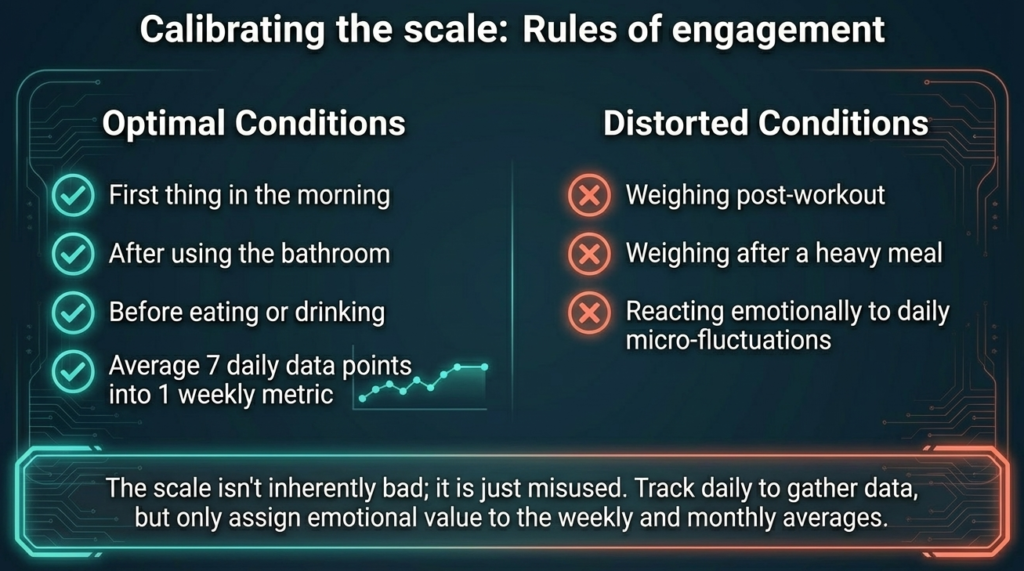
How to Use the Scale Correctly
This image provides practical guidelines for using the scale effectively. To get accurate readings, weigh yourself under consistent conditions—preferably in the morning, after using the bathroom, and before eating or drinking. Avoid weighing yourself after workouts or large meals, as these can distort results. Instead of focusing on daily fluctuations, calculate weekly averages to identify trends. This approach reduces emotional reactions and provides a clearer picture of progress. The scale is not inherently bad, but it must be used correctly. When combined with other tracking methods, it can be a useful tool in your fat loss journey.
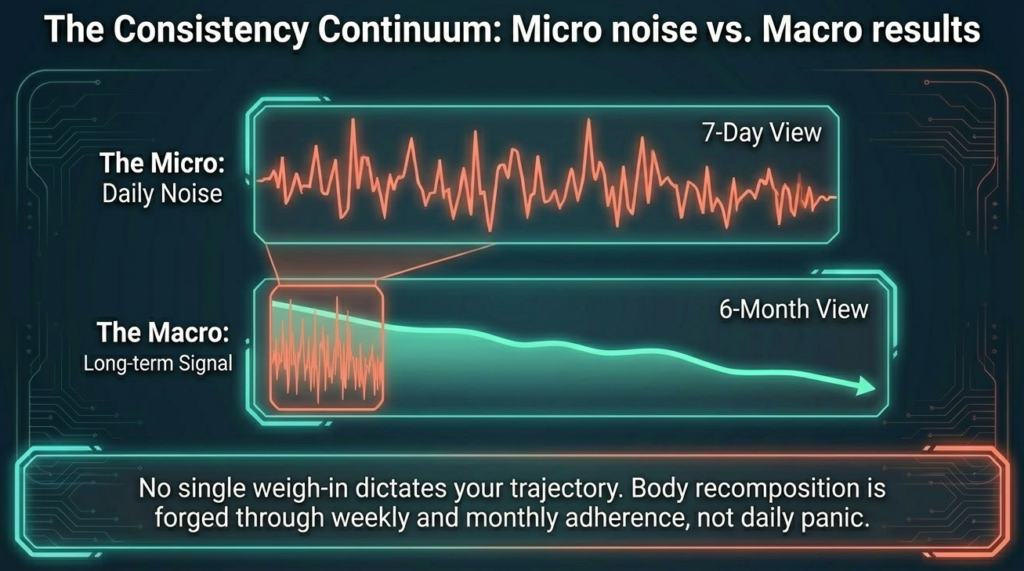
Consistency Beats Daily Scale Noise
This image highlights the difference between short-term fluctuations and long-term progress. Daily weigh-ins often show random changes due to water, food, and hormones, creating “noise.” However, when viewed over weeks or months, a clear downward trend appears, reflecting true fat loss. This demonstrates why consistency is more important than daily results. No single weigh-in determines your progress. By focusing on long-term habits and trends, you can avoid unnecessary stress and stay committed to your goals. Understanding this concept helps you maintain patience and trust the process, which is essential for sustainable fat loss success.
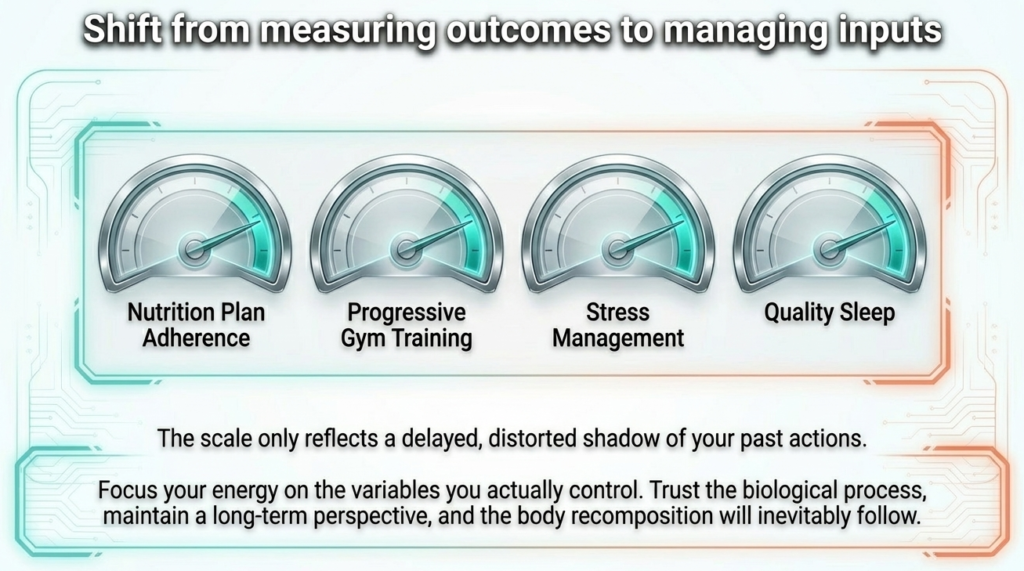
Focus on Inputs, Not Just Outcomes
This image emphasizes the importance of focusing on controllable inputs rather than obsessing over outcomes like scale weight. Key factors such as nutrition adherence, progressive training, stress management, and quality sleep determine fat loss success. The scale only reflects the delayed result of these actions and can often be misleading. By concentrating on daily habits, you create a strong foundation for consistent progress. This approach reduces frustration and keeps you focused on what truly matters. Over time, these inputs lead to sustainable fat loss and improved overall health, regardless of short-term fluctuations on the scale.

Gearless Physique
Physique Without Gear
Your transformation starts now. Who's with me?