10 Powerlifting Frequency Tips for Squat, Bench & Deadlift
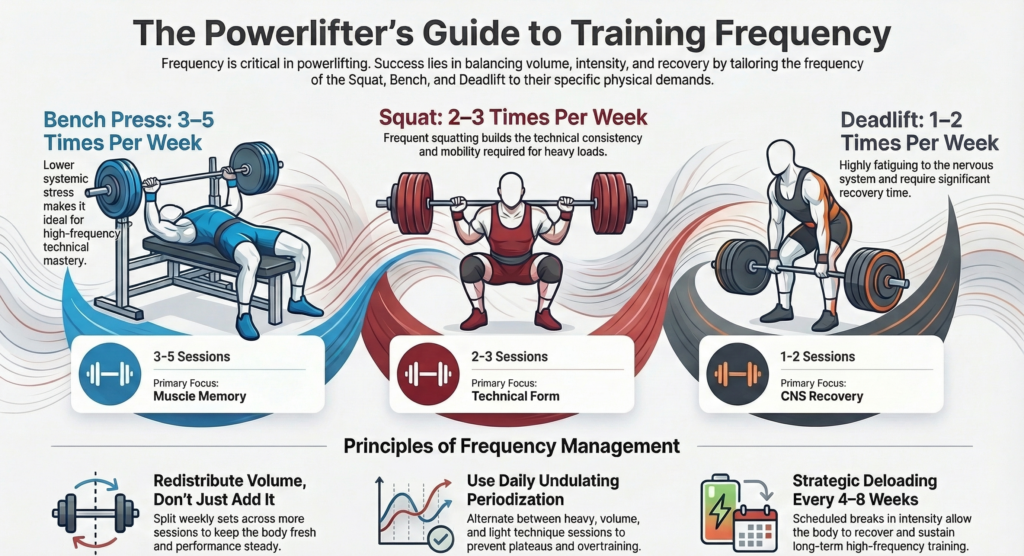
This is complete powerlifting frequency guide brings together all the key principles of powerlifting training. It highlights the importance of balancing squat, bench, and deadlift frequency based on their unique demands. By redistributing volume, using undulating intensity, incorporating variations, and prioritizing recovery, lifters can achieve consistent progress. This infographic serves as a blueprint for structuring effective training programs. Whether you are a beginner or advanced lifter, applying these strategies will help you maximize strength gains while minimizing fatigue and injury risk.
Powerlifting Training Frequency Guide for Squat Bench Deadlift
Training frequency is the foundation of strength progression in powerlifting. Many lifters focus only on weight and volume but ignore how often they train each lift. The right balance between squat, bench press, and deadlift frequency determines how efficiently your body adapts. Instead of pushing harder in one session, spreading workload across the week improves technique, reduces fatigue, and enhances recovery.
This approach allows consistent progress without burnout. When frequency is managed properly, you can train smarter, recover faster, and build strength sustainably. Understanding how to control volume, intensity, and recovery together is what separates advanced lifters from beginners.
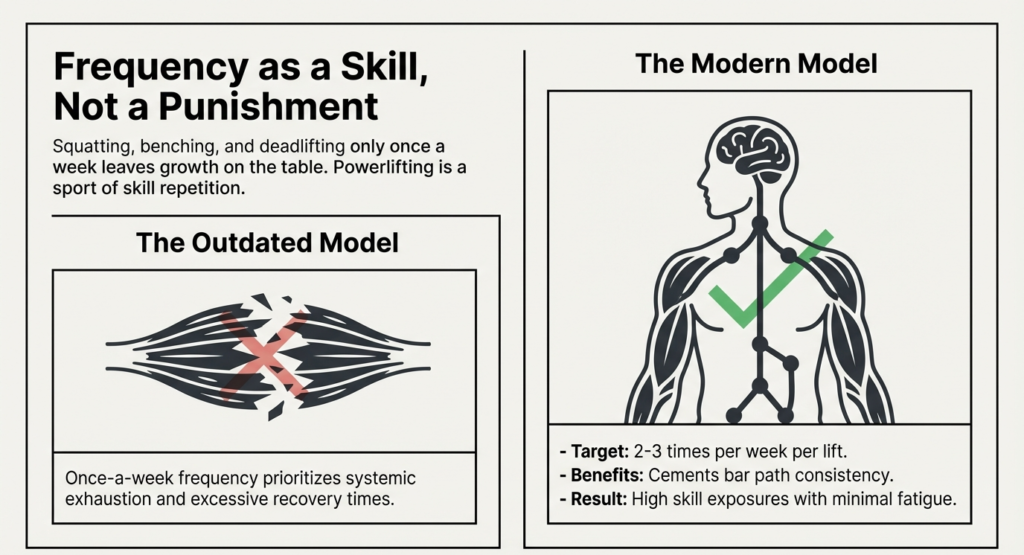
Training Frequency as a Skill Not Punishment
Training frequency should be viewed as a skill rather than a punishment. Many lifters still follow outdated methods of training each lift once per week, which limits practice and slows progress. Powerlifting is a skill-based sport where repetition improves efficiency, bar path, and muscle coordination. By increasing frequency to two or three sessions per week, you create more opportunities to refine technique without excessive fatigue.
This modern approach prioritizes consistent exposure instead of exhaustion. When you treat frequency as a skill, your body adapts better, movements become more efficient, and strength gains become more predictable over time.
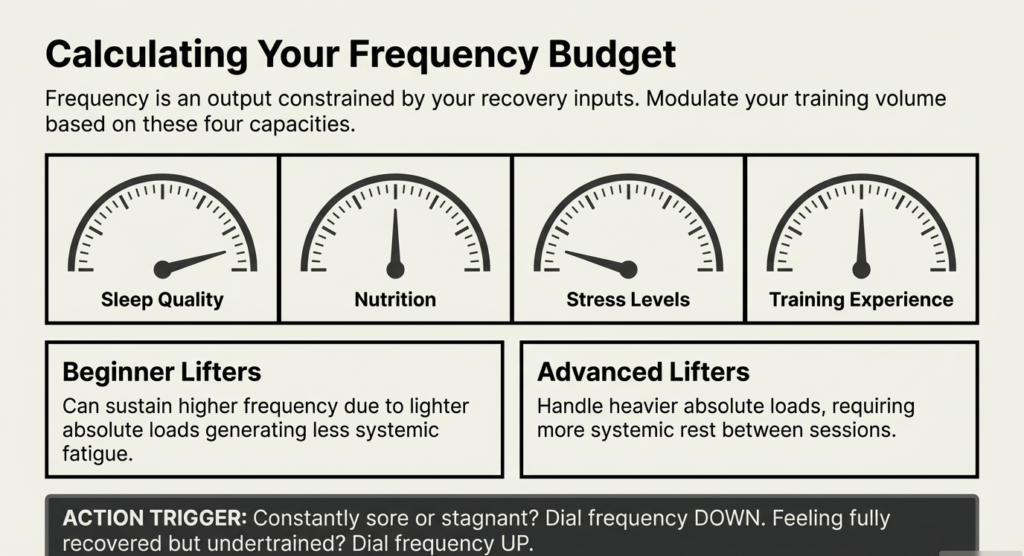
Calculating Training Frequency Based on Recovery Capacity
Your training frequency is directly limited by your recovery capacity. Factors like sleep quality, nutrition, stress levels, and training experience play a critical role in how often you can train effectively. Beginners can often handle higher frequency due to lighter loads, while advanced lifters require more recovery due to heavier intensity. Instead of blindly increasing sessions, you must assess your recovery inputs.
If recovery is poor, adding frequency will lead to fatigue and stagnation. On the other hand, optimizing recovery allows you to increase frequency safely. Managing this balance ensures consistent performance and long-term strength development.
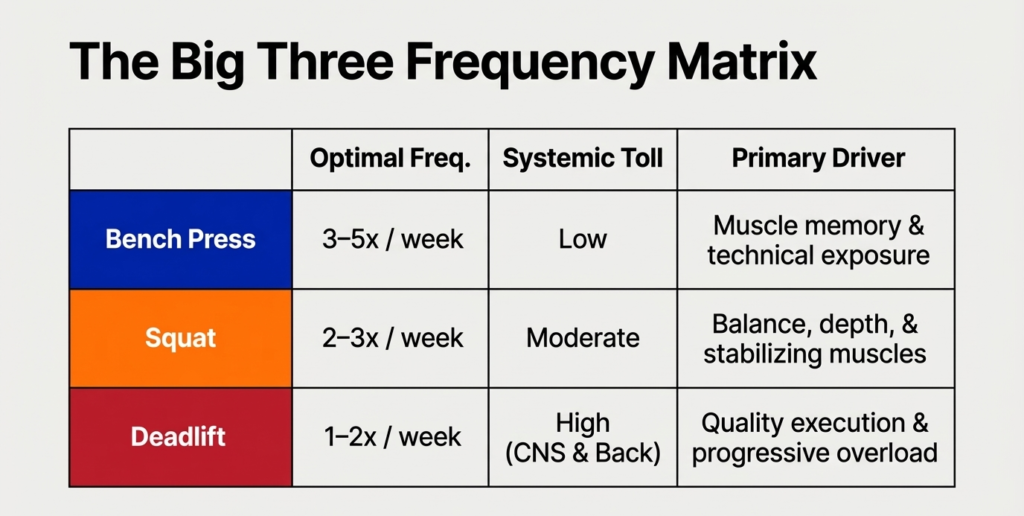
Optimal Frequency for Squat Bench and Deadlift
Each lift in powerlifting responds differently to training frequency. Bench press can be trained more frequently due to lower systemic fatigue, while squats require moderate frequency for technique development. Deadlifts, being the most taxing, need lower frequency to allow proper recovery. This matrix highlights how each lift demands a unique approach rather than a one-size-fits-all strategy.
Understanding these differences helps you design a balanced program that maximizes performance without overtraining. By aligning frequency with the nature of each lift, you can improve efficiency, reduce injury risk, and achieve steady strength progression across all three movements.
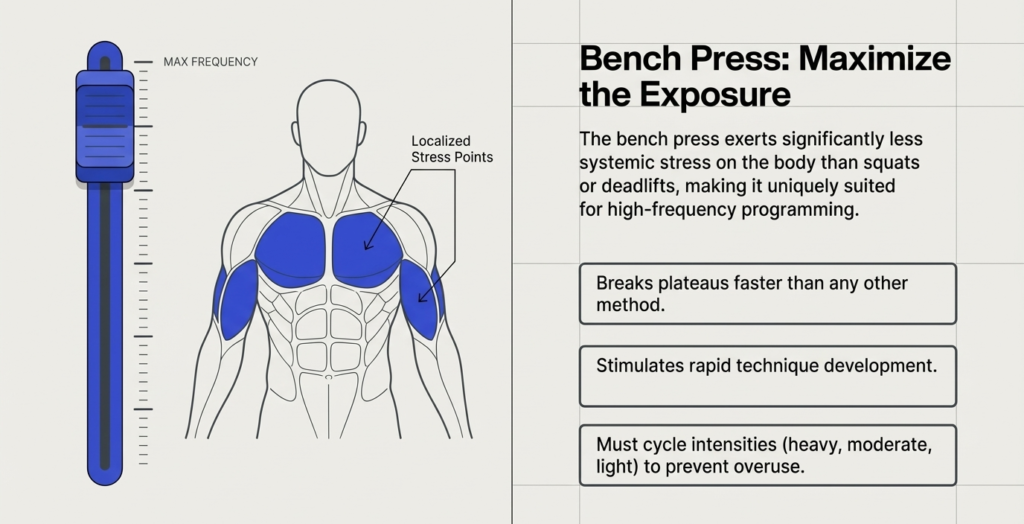
Why Bench Press Benefits from High Frequency Training
The bench press benefits the most from higher training frequency because it places less stress on the central nervous system compared to squats and deadlifts. Training bench press three to five times per week allows you to refine technique, improve bar path, and build muscle memory faster. Frequent exposure also helps break plateaus by reinforcing movement patterns. However, intensity should be varied across sessions to avoid overuse injuries.
Incorporating heavy, moderate, and light days ensures consistent progress. With proper programming, high-frequency bench training becomes one of the most effective ways to increase upper body strength.
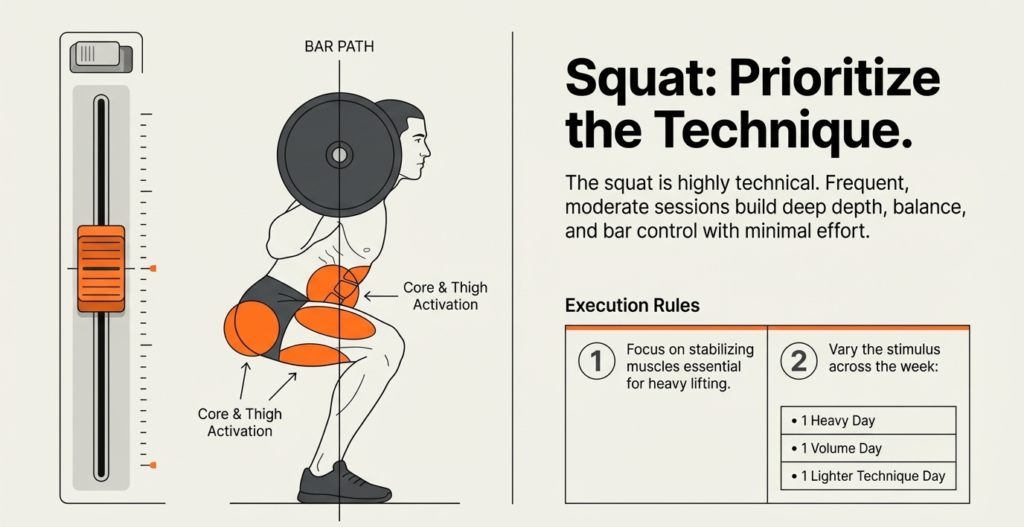
Squat Training Frequency for Better Technique
Squatting is a highly technical movement that improves significantly with increased frequency. Training squats two to three times per week allows you to develop better depth, balance, and control under the bar. Frequent practice strengthens stabilizing muscles and improves coordination, which is essential for heavy lifts. Unlike deadlifts, squats can be performed more often with varied intensity levels. A mix of heavy, volume, and technique-focused sessions helps maintain progress without excessive fatigue.
Consistent squat frequency not only enhances strength but also builds confidence and efficiency in movement execution.
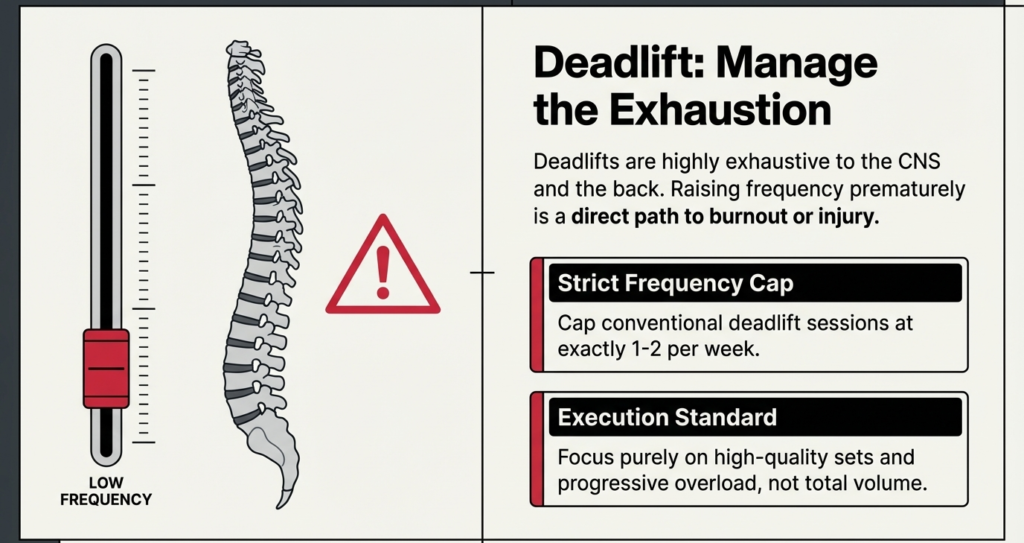
Deadlift Frequency and Recovery Management
Deadlifts are the most demanding lift in powerlifting due to their impact on the central nervous system and lower back. Training them too frequently can lead to fatigue, poor recovery, and increased injury risk. For most lifters, one to two sessions per week are sufficient to build strength effectively. Instead of increasing frequency, focus on quality sets and proper technique. Supplementing with variations like Romanian deadlifts or rack pulls can help improve weak points without overloading the body. Managing deadlift frequency carefully ensures long-term progress while minimizing burnout and physical strain.
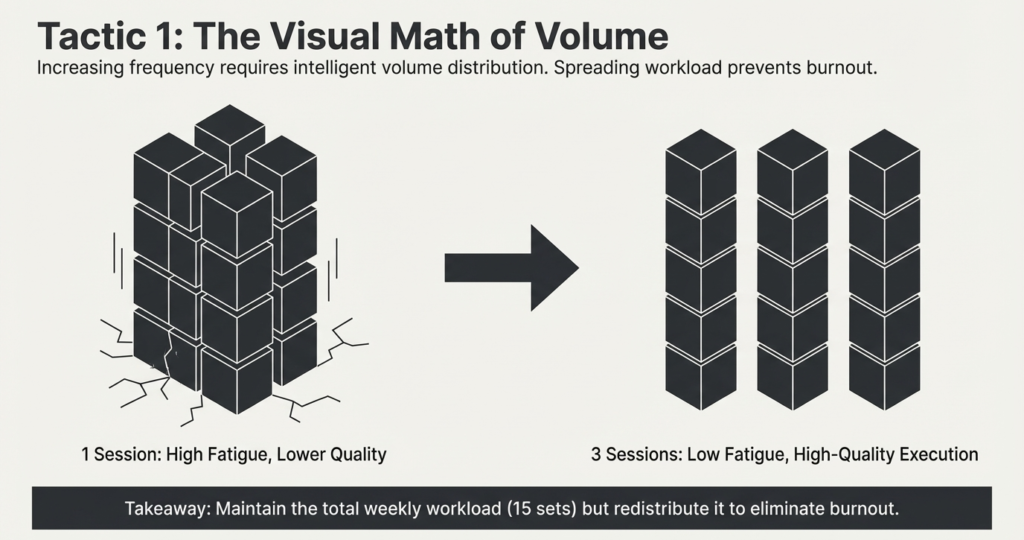
How to Distribute Training Volume Across the Week
One of the smartest ways to increase training frequency is by redistributing volume across multiple sessions. Instead of performing all sets in one workout, spreading them throughout the week reduces fatigue and improves performance quality. This approach allows you to maintain high intensity without overwhelming your body. For example, dividing 15 sets into three sessions keeps energy levels stable and execution precise. Volume distribution not only enhances recovery but also improves consistency in training.
By focusing on quality over quantity, you can maximize strength gains while minimizing the risk of overtraining.
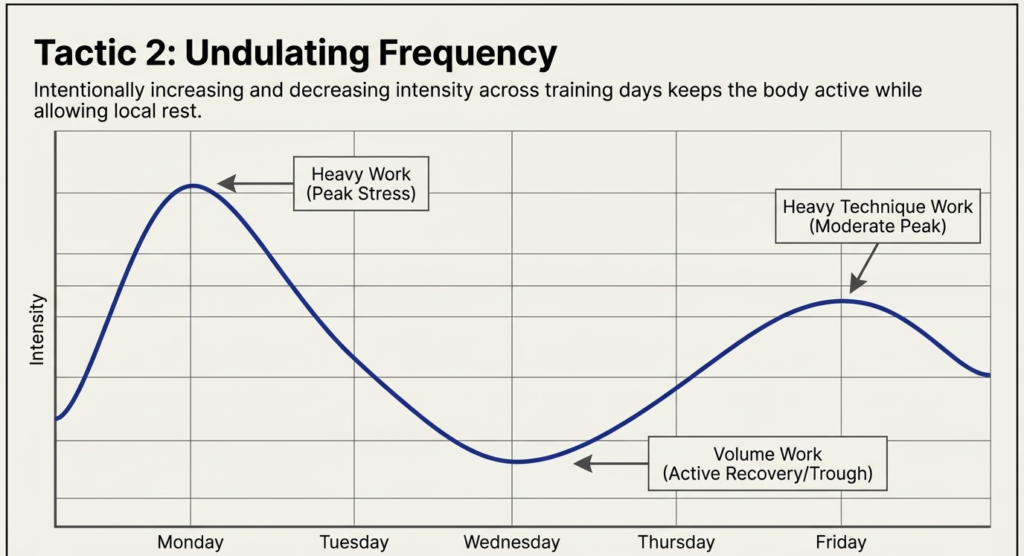
Undulating Training Frequency for Strength Gains
Undulating frequency involves varying intensity and volume across different training days to optimize recovery and performance. Instead of repeating the same workout, you alternate between heavy, moderate, and light sessions. This approach keeps the body stimulated while preventing excessive fatigue. For example, a heavy day can be followed by a lighter technique-focused session to allow recovery. Undulating frequency is highly effective for breaking plateaus and maintaining long-term progress.
It ensures that you train consistently without overloading your system, making it a key strategy in advanced powerlifting programs.
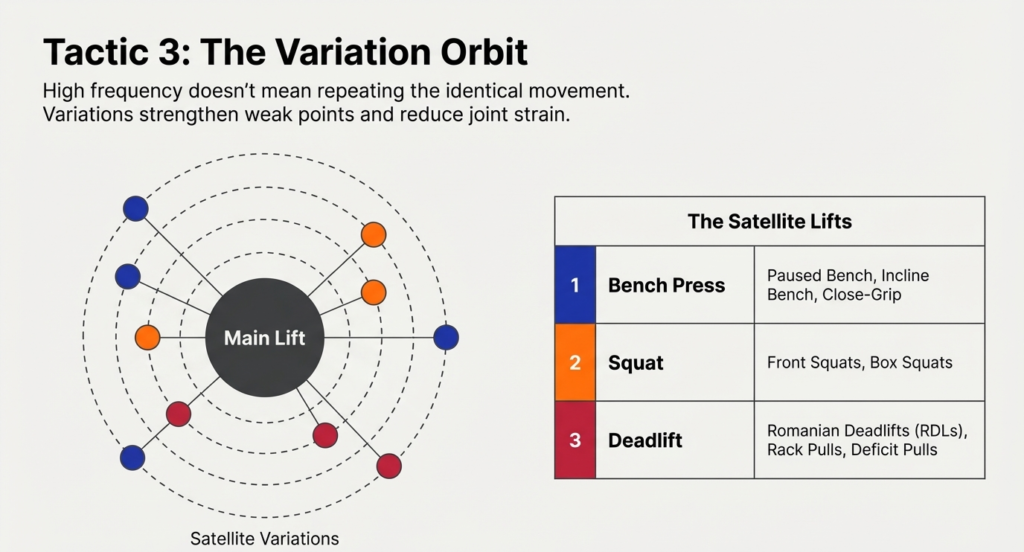
Using Variations to Improve Strength and Reduce Injury
Training frequency does not mean repeating the exact same movement every session. Incorporating variations allows you to increase frequency while reducing joint stress and improving weak points. For example, using paused bench, front squats, or Romanian deadlifts adds variety while maintaining overall workload. These variations target different muscle groups and movement patterns, enhancing overall strength development. They also prevent mental burnout by keeping workouts engaging. By rotating exercises strategically, you can train more frequently without compromising recovery or risking overuse injuries.
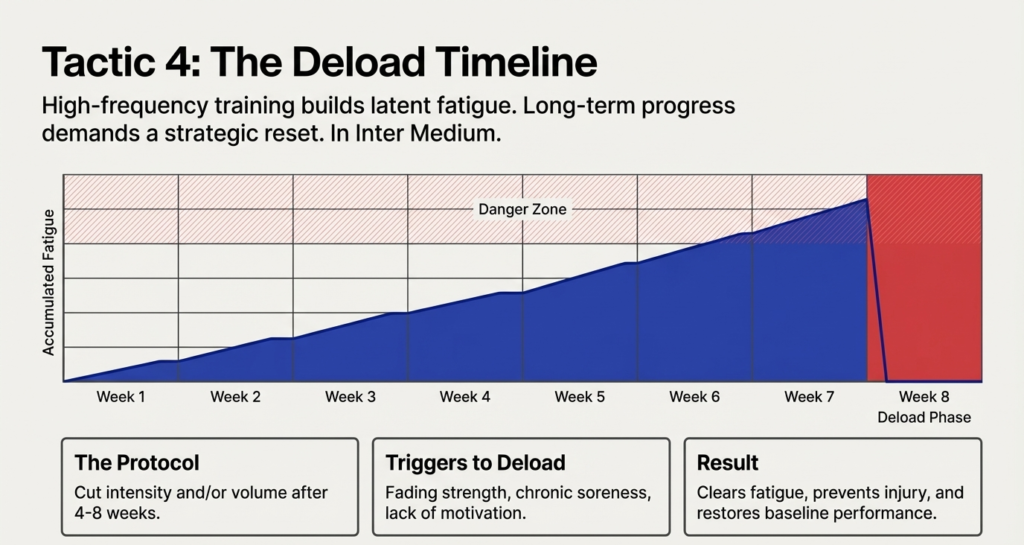
Deload Timeline for High Frequency Training
High-frequency training can lead to accumulated fatigue over time, making deloading essential for long-term progress. A deload phase involves reducing intensity, volume, or both to allow the body to recover fully. This reset helps restore strength, improve performance, and prevent injuries. Most lifters benefit from a deload every four to eight weeks, depending on training intensity. Ignoring the need for recovery can result in stagnation or burnout. Strategic deloading ensures that your body stays fresh and ready for continuous progress in high-frequency training programs.
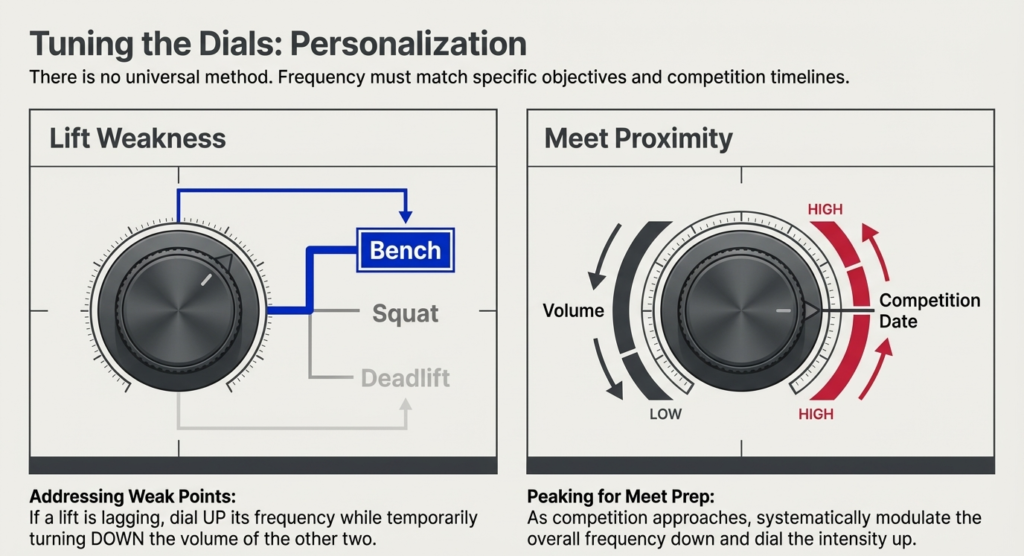
Personalizing Training Frequency Based on Goals
There is no universal approach to training frequency, as it must be tailored to individual goals and needs. If a particular lift is lagging, increasing its frequency can accelerate progress while maintaining lower frequency for others. Similarly, competition preparation requires adjustments in intensity and volume. Personalizing frequency allows you to address weaknesses while optimizing overall performance. By understanding your body’s response to training, you can create a program that aligns with your goals, lifestyle, and recovery capacity, leading to better and more sustainable results.
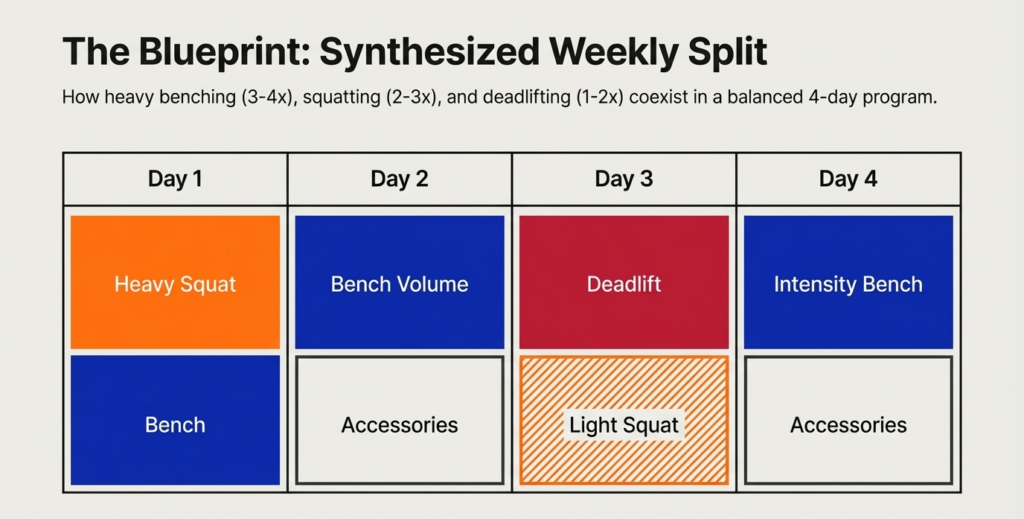
Balanced Weekly Powerlifting Training Split
A well-structured weekly training split is essential for balancing frequency, volume, and recovery. A four-day split, for example, can include heavy squat and bench sessions, followed by volume and accessory work, and a dedicated deadlift day. This structure allows each lift to be trained at optimal frequency without excessive fatigue. By organizing workouts strategically, you can maintain consistency and ensure adequate recovery between sessions. A balanced split helps maximize performance while reducing the risk of overtraining, making it a crucial component of effective powerlifting programming.
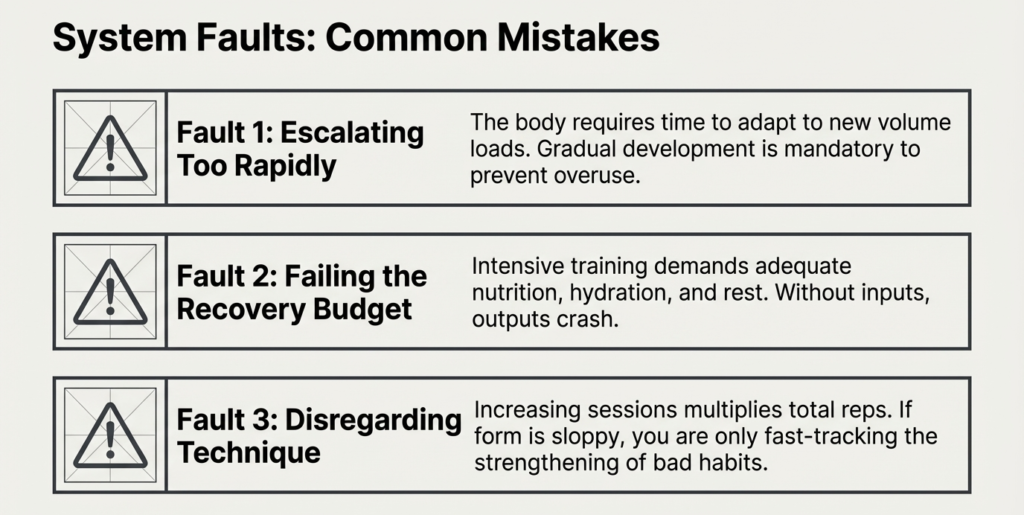
Common Training Frequency Mistakes in Powerlifting
One of the biggest mistakes lifters make is increasing training frequency too quickly without considering recovery. This often leads to fatigue, poor performance, and potential injuries. Another common issue is neglecting technique while focusing on volume, which reinforces bad habits. Additionally, inadequate nutrition and sleep can limit the benefits of high-frequency training. Avoiding these mistakes requires a balanced approach that prioritizes recovery, proper form, and gradual progression. By training smarter instead of harder, you can achieve consistent strength gains without compromising your health.
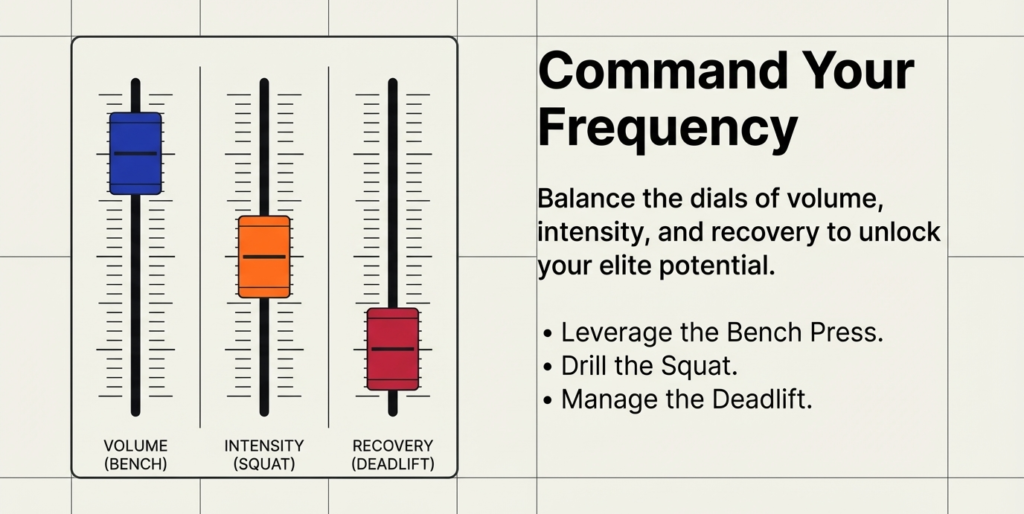
Frequency Control Visual
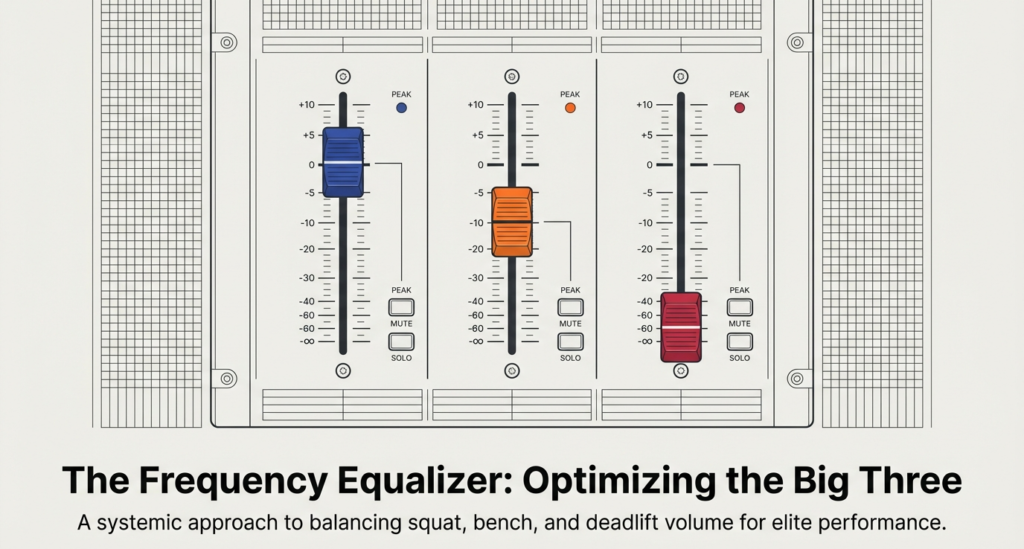
Balancing volume, intensity, and recovery is the key to mastering training frequency. These three factors must work together to create an effective program. Increasing one without adjusting the others can lead to imbalance and fatigue. For example, higher frequency requires lower per-session volume to maintain recovery. Understanding how these variables interact allows you to fine-tune your training for optimal results. When managed correctly, frequency becomes a powerful tool that enhances performance, builds strength, and supports long-term progress.

Gearless Physique
Physique Without Gear
Your transformation starts now. Who's with me?